



Bitcoin’s blistering rally to record highs paused just shy of the $110,000 milestone on May 26, yet institutional demand continued to swell in the background, cushioning any immediate downside pressure.
The flagship cryptocurrency dipped after momentum faded during Asia-Pacific trading, lingering near $108,500 as traders weighed looming United States inflation data and the imminent earnings release from chipmaker Nvidia.
Market watchers attributed the hesitation in part to President Donald Trump’s decision to delay retaliatory European Union tariffs until July 9, a move that eased equity jitters but left macro uncertainty hanging over risk assets.
Even so, derivatives desks reported a steady uptick in the Bitcoin two-month futures premium, which climbed from 6.5% to 8% in twenty-four hours, signaling that sophisticated traders were confidently rebuilding long exposure rather than capitulating.
Institutional appetite offsets price lull
Evidence of that confidence was nowhere clearer than in spot Bitcoin exchange-traded funds, which attracted $2.75 billion of net inflows between May 19 and May 25, according to preliminary custodial data.
Wall Street giants appear increasingly comfortable marketing those vehicles to core clients; JPMorgan chief executive Jamie Dimon told investors the bank would “finally allow clients” to purchase the products, creating a new pathway for its $6 trillion deposit base to gain indirect crypto exposure.
MicroStrategy founder Michael Saylor underlined the theme by revealing a fresh $427 million Bitcoin acquisition at an average price of $106,237, lifting the business-intelligence firm’s holdings to more than 239,000 BTC.
Options data delivered a complementary bullish signal: the 30-day put-call delta skew turned negative 6%, implying traders were paying a premium for upside hedges while pricing limited probability of a violent sell-off.
Macro cross-currents in focus
For now, analysts caution that headline economic releases could dictate the next directional break.
The Richmond Fed manufacturing index is due on May 28, followed two days later by the Fed’s preferred inflation gauge, the PCE price index, and a hotter-than-forecast print could rekindle concerns about higher-for-longer interest rates.
Nvidia’s earnings, expected after the closing bell on May 28, represent another wildcard; a disappointing read-through on artificial-intelligence hardware demand could sap risk appetite across equities and spill into crypto.
Nevertheless, bulls argue that Bitcoin’s structural bid, driven by ETFs and treasury strategies, should limit any retracement toward $105,000, the level that marked last week’s low.
Path to new highs
Bitcoin remains just 2.6% below its all-time high of $111,957, and several desks believe a decisive break above $112,000 could trigger systematic short covering and ignite a fresh leg toward the psychologically potent $120,000 handle.
Skeptics counter that rising U.S. government debt worries and a softer housing market, highlighted by a 5.1% weekly drop in mortgage applications, might cap enthusiasm until clearer evidence emerges that the economy can navigate tight monetary conditions.
With U.S. markets closed for the Memorial Day holiday, liquidity is expected to thin, raising the likelihood of abrupt moves driven by a handful of large orders on offshore exchanges.
Until then, traders are parsing every macro headline while keeping one eye on the persistent wall of institutional money waiting for dips—money that, so far, has proven more than willing to “gobble up” available supply.

ARK Invest chief executive Cathie Wood believes exchange-traded funds will remain a mainstay for mainstream investors, no matter how quickly self-custody wallets gain traction.
“I think ETFs are an important stepping stone because, you know, wallets seem so complicated, so much friction for consumers, they just wanna push a button,” she told ETF analyst Eric Balchunas at the Solana Accelerate conference in New York on May 23.
“So ETFs for those who want the convenience, I don’t think, will lose a lot of their luster.”
Wallets still offer vital protection, Wood argues
While praising the ease of a ticker-based purchase, Wood stressed that personal wallets provide an extra buffer against failures in traditional finance.
“These are insurance policies against something going wrong in the traditional world,” she said.
Bitbo estimates roughly 200 million active Bitcoin wallets exist worldwide, a number Wood expects to grow as onboarding improves.
ETF inflows keep mounting after record-setting price action
The week ending May 23 saw about $2.75 billion flow into U-S spot Bitcoin ETFs, coinciding with BTC’s new peak above $111,900.
Since their January 2024 debut, the products have attracted roughly $44.5 billion, according to Farside Investors.
Spot Ether ETFs, launched in July 2024, have accumulated about $2.77 billion despite the S E C’s refusal to permit staking rewards.
Wood called that restriction a key reason Ether funds were “less successful than people were expecting.”
Ether still the gateway to smart-contract ecosystems
Even so, the ARK Invest founder views Ether as the logical first step for investors exploring smart-contract platforms.
“So they might start in the smart contract world with Ether, but once they study the technology, and follow the developers, and see the uptake by consumers, I think they will get there,” she said, referring to interest in alternatives such as Solana.
Wood acknowledged that President Donald Trump’s January launch of the “Official Trump” memecoin on Solana may have unnerved some institutions.
“I think they might be a little turned off by what happened with the Trump memecoin,” she conceded, noting the token’s 50 percent plunge days after release.
Long-term targets and the road ahead
ARK in April raised its “bull case” Bitcoin price target to $2.4 million by 2030, citing growing institutional demand and BTC’s status as “digital gold.”
Wood said she is still finalizing a comparable forecast for Solana.
For now, her message is clear: convenience products such as ETFs will coexist with, not replace, self-custody solutions as the crypto market matures.
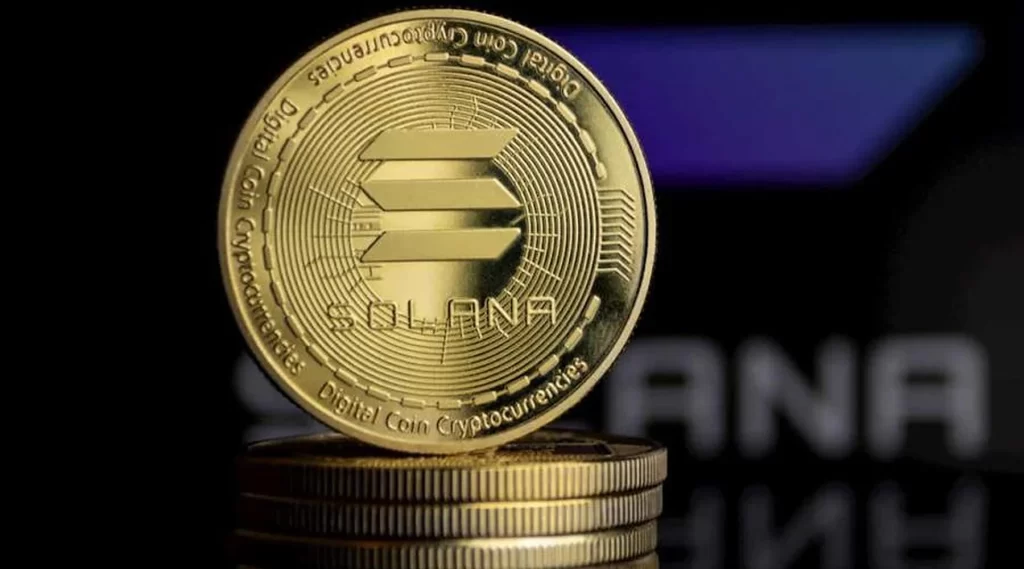
Solana bulls have fresh reason for optimism after technicians spotted a bullish fractal reminiscent of the token’s late-2024 surge.
Bull Flag Builds Beneath $180 Ceiling
SOL spent two weeks consolidating below $180, carving out a textbook bull-flag pattern that typically precedes further upside.
The daily relative strength index sits at 64, far from overheated territory, suggesting room to run if buyers step in.
Fractal Echoes 2024’s Explosive Breakout
Crypto trader Robert Mercer highlighted similarities to October 2024, when Solana cleared $180 and sprinted to an eventual $260 peak.
He argues a decisive weekly close above $180 “could trigger a sharp upward rally, mirroring the late-2024 move.”
Analyst Javon Marks added that a hidden bullish divergence on the three-day chart once sparked a 1,332 percent rally, implying even $450 is conceivable should history rhyme.
Volume Remains the Missing Ingredient
Skeptics point out that spot buying volumes have faded during consolidation, leaving the breakout thesis contingent on renewed demand.
Failure to conquer $180 could send SOL toward support in the $140-$150 corridor, invalidating the flag.
Popular trader XO recommends watching for a clean flip of $180 into support before entering longs.
Macro Rotations Could Help
With Bitcoin setting records, some speculators anticipate a rotation of profits into major altcoins, a pattern seen in prior cycles.
Whether that shift materializes will depend on risk appetite, macro data, and how quickly new capital filters through ETFs into the broader crypto complex.
For now, Solana sits at the crossroads, with chart watchers fixated on a single number: $180.

Binance secured a significant, though partial, courtroom victory this week when Britain’s Court of Appeal struck out the bulk of a £8.9 billion lawsuit tied to the delisting of Bitcoin SV in 2019.
The judgment narrowed an investor claim that exchanges conspired to choke the token’s growth by removing trading pairs, effectively slashing potential damages from $11.9 billion to a fraction of that sum.
Court rejects speculative losses
In a written opinion, judges dismissed the so-called “foregone growth effect,” explaining that “BSV was obviously not a unique cryptocurrency without reasonably similar substitutes.”
Plaintiffs had argued Bitcoin SV might have ascended into the digital-asset elite had liquidity remained intact, a scenario the court deemed too hypothetical for restitution.
Mitigation duty emphasized
Master of the Rolls Sir Geoffrey Vos wrote, “They had a duty to mitigate their losses,” adding, “They cannot recover losses that they could reasonably have mitigated.”
The panel found that investors could have sold holdings or rotated into other coins, undercutting claims for windfall damages.
‘Loss of a chance’ theory fails
Lawyers for the class tried to revive a “loss of a chance” doctrine, asserting that delisting deprived holders of future price gains.
The court labeled the argument “flawed as a matter of principle,” stressing that “cryptocurrencies are, by their nature, volatile investments.”
Implications for broader litigation
The ruling may influence parallel suits targeting exchange decisions on token listings, reinforcing the idea that damages must be anchored to measurable economic harm.
Binance, still facing limited residual claims from investors unaware of the delisting, welcomed the outcome as validation of its strike-out strategy.
Separate FTX battle
The exchange is also seeking to dismiss a $1.76 billion action brought by the FTX estate, insisting that mismanagement, not external manipulation, doomed the rival platform.
With regulatory scrutiny intensifying worldwide, the U.K. decision offers Binance a precedent to cite in future cases involving allegations of market interference.
For Bitcoin SV proponents, however, the latest setback highlights the uphill task of proving that missed market opportunities translate into legally recoverable damages.
The case now proceeds with a sharply reduced scope, leaving remaining plaintiffs to quantify losses tied directly to the delisting date rather than imagined bull runs.
Legal analysts say the judgment underscores the courts’ reluctance to back-stop speculative bets in an asset class famous for double-digit swings.
Exchanges, they add, are likely to view the decision as affirmation that listing choices, while consequential, do not guarantee price trajectories.
For investors navigating an ever-changing roster of tradable coins, the message is clear: diversification and timely risk management remain paramount.
As digital-asset litigation matures, courts appear increasingly unwilling to entertain what one lawyer called “counterfactual moonshots” dressed up as damage claims.
Binance’s limited victory may not end its legal headaches, but it sharply limits exposure on one of the more ambitious suits filed against a crypto exchange.
The precedent could ripple through the sector, curbing similar claims and nudging market participants toward clearer contractual terms on token availability.
For now, Bitcoin SV must seek relevance in the marketplace, not the courtroom.

Bitcoin climbed to $108,000 on 21 May, edging within 1.5 % of January’s record and stoking talk of a breakout.
A flash dip of around $1,000 shortly after the surge underlined the market’s volatility, yet bulls quickly regrouped as order-book data showed thickening bid walls near $106,000.
Traders now treat $109,356 on Bitstamp as the final psychological barrier before true price-discovery kicks in.
Crypto trader Michaël van de Poppe called the level a “point of interest” and argued that reclaiming it could ignite a run toward $116,000 and beyond.
“It’s always a good morning with Bitcoin at $108,000 and close to a new ATH,” he said on X.
Support zones firm up
Keith Alan of Material Indicators said multiple moving averages and the 2025 yearly open are coalescing into a “formidable support block” between $100,000 and $102,000.
“The 50-Day MA is on a trajectory to golden-cross the 200-Day MA,” he noted, adding, “You can’t really ask for stronger technical support than that.”
Alan conceded a retest of $100,000 would be healthy but now sees that scenario as increasingly unlikely if momentum holds.
Meanwhile, trader Merlijn interprets the recent consolidation as a bullish pennant and points to a technical target of $116,000.
Others, including analyst Henry, set their sights even higher, forecasting a $128,000 “blow-off top” should liquidity remain skewed to the buy side.
Macro tailwinds boost sentiment
The rally coincides with risk-on flows in global markets after US CPI eased for a second straight month and the Federal Reserve signaled patience on further tightening.
Institutional demand also remains robust; spot-Bitcoin ETFs recorded a sixth consecutive week of net inflows, with BlackRock’s IBIT alone pulling in more than $1 billion over the period.
On-chain metrics echo the optimism as dormant supply trends upward and active addresses climb to their highest level since March.
Options data from Deribit shows a growing cluster of open interest at $120,000-strike calls for June expiry, underscoring trader conviction that fresh records are imminent.
Still, skeptics warn that funding rates on perpetual futures are near three-month highs, raising the risk of a flush if spot prices stall below resistance.
Even so, the prevailing narrative is that a clean break above $110,000 would drag short sellers into an aggressive round of liquidations, potentially catapulting BTC toward the oft-cited $128,000 ceiling before any meaningful pullback.

Bitcoin topped $105,000 in U.S. trading, completing what chartists describe as a textbook double-bottom on the one-hour chart.
The formation matches a corridor that preceded March’s surge to record levels.
Range support between $102,500 and $103,500 absorbed sell-side pressure, sweeping liquidity and clearing an overhang of weak longs.
Technical Targets Eye $110,000 This Week
Fractal mapping shows the current band of $106,300 to $100,600 echoing an earlier zone of $97,900 to $92,700.
If the analogy holds, analysts say a decisive break of $107,000 could propel prices above $110,000 within days.
Should momentum accelerate, secondary objectives sit between $120,000 and $130,000.
Accumulation Trend Strengthens Across Cohorts
Glassnode’s Accumulation Trend Score reveals intensified buying by addresses ranging from under 1 BTC to 10,000 BTC.
Only the 1–10 BTC bracket continues to distribute, suggesting broader conviction among retail and institutional players alike.
Historically, synchronised accumulation of this sort has preceded prolonged advances.
Divergence Signals Keep Traders Cautious
Not all indicators flash green.
Chartist Bluntz pointed to a daily bearish divergence that could cap gains if strength wanes.
Analyst Matthew Hyland warned, “BTC is now on the clock and probably needs to make a move to $120k–$130k in the coming weeks to make a higher high on the RSI and avoid any weekly bearish divergence from being confirmed.”
Critical Levels and Risk Scenarios
Failure to hold $103,500 on a closing basis would negate the bullish fractal and open a slide toward $102,000.
Conversely, a clean candle above $107,000 is expected to attract momentum traders and option desks seeking topside exposure.
Broader Context
Macroeconomic conditions remain supportive, with falling U.S. real yields and sustained ETF inflows.
While near-term volatility is inevitable, most on-chain data favour continuation of the primary uptrend.
Bitcoin slid more than 4.5 % from its May 19 intraday top, tumbling to about $102,000 and flashing the first notable bearish divergence in over a month.
The retreat sparked warnings that the market could pierce the psychologically important $100,000 mark if buyers fail to defend near-term support.
Divergence hints at trend reversal
Technical analysts flagged a lower high in the relative strength index versus a higher price high, a classic sign of waning momentum.
Chartist Bluntz cautioned traders to “be careful with [placing] longs” until the signal plays out or is invalidated by a strong rebound.
Swissblock research showed Bitcoin had “grabbed liquidity” above the $104,000–$106,000 band but lacked follow-through, leaving price vulnerable to a deeper pullback.
Key zones come into view
Volume-profile data identifies $97,000–$98,500 as heavy support if the immediate $101,500–$102,500 floor dissolves.
Failure there would open the way to a potential inverse head-and-shoulders retest around $91,000, where the 50-period EMA sits on the three-day chart.
Such a move would echo reversals seen in December 2024 and January 2025, when repeated rejections at the $107,000 neckline preceded sizable drawdowns.
Longer-term outlook intact
Despite near-term weakness, the broader structure still points to a possible surge toward $150,000 once consolidation completes and the neckline flips to support.
Macro drivers, including Moody’s weekend downgrade of U.S. sovereign credit, have added stress to risk assets but could ultimately aid Bitcoin if dollar softness persists.
Derivatives markets show funding rates resetting toward neutral, suggesting leverage has been flushed and setting the stage for a healthier advance when momentum returns.
For now, bulls must prove their resilience by preventing a decisive daily close beneath $100,000, or risk ceding control to short sellers eyeing deeper value zones.

The United Kingdom has set 1 January 2026 as the date on which every crypto-asset service provider must begin reporting granular customer-transaction data to His Majesty’s Revenue and Customs.
The policy, unveiled on 14 May, is meant to close tax loopholes, align with international standards and protect consumers from fraud.
Mandatory data collection
Exchanges, brokers and custodians will be required to record the name, address and tax identification number of both sender and recipient for every trade or transfer.
They must also note the token type, quantity, sterling value and execution timestamp.
HMRC emphasised that errors or late filings could trigger penalties of up to £300 per affected user.
Officials urged companies to start gathering the necessary information immediately, even though technical guidance will be issued “in due course.”
Balancing compliance and innovation
Treasury staff say the mandate brings crypto disclosure into line with the transparency expected of banks and stockbrokers.
Industry lobbyists, however, warn that small start-ups may struggle with the added cost of sophisticated know-your-customer systems.
Chancellor Rachel Reeves acknowledged the concern while introducing a draft bill that extends regulatory oversight to crypto exchanges, custodians and broker-dealers.
“Today’s announcement sends a clear signal: Britain is open for business — but closed to fraud, abuse, and instability,” she told Parliament.
Divergence from Brussels
London’s plan integrates the OECD’s Crypto-Asset Reporting Framework directly into the existing financial-services rulebook.
By contrast, the European Union’s Markets in Crypto-Assets Regulation creates a parallel licensing regime and imposes volume caps on stablecoins.
Observers say Britain’s decision to allow foreign stablecoin issuers to operate without a domestic subsidiary could attract firms from across the Channel.
Yet the divergence raises operational headaches for platforms serving both jurisdictions.
Rising retail participation
A Financial Conduct Authority survey last November found that 12 percent of UK adults held crypto in 2024, tripling the rate recorded in 2021.
Policymakers cite the jump as evidence that clearer rules are now essential.
HMRC previously relied on court orders to obtain exchange data, a process criticised as slow and adversarial.
The new system flips the default, obliging firms to send annual reports proactively.
Data will feed into a global exchange mechanism modelled on the Common Reporting Standard that already covers bank accounts.
Treasury insiders believe uniform rules will also burnish London’s credentials as a responsible fintech centre in the wake of several high-profile exchange collapses abroad.
They point to last year’s failure of offshore platform Globex, which left thousands of British investors scrambling to retrieve funds that HMRC could not initially trace.
Consumer advocates agree that stronger oversight is overdue but urge the government to pair enforcement with public-awareness campaigns on phishing and romance scams.
Civil-liberties groups remain uneasy, warning that centralised troves of transaction data could become lucrative targets for hackers.
They are calling for end-to-end encryption of all submissions and mandatory breach-notification rules.
Officials say security standards will be addressed in forthcoming technical guidance.
Industry preparations
RegTech vendors are pitching software that maps blockchain transactions to verified customer identities and generates ready-to-file HMRC returns.
Larger exchanges are expanding compliance teams and consulting Big Four auditors on control frameworks.
Smaller operators are pressing for phased implementation or de-minimis thresholds to avoid being priced out of the market.
Lawyers warn that abrupt account freezes aimed at collecting missing data could trigger lawsuits, urging a pragmatic approach.
Institutional investors, meanwhile, welcome the clarity, arguing that tax certainty will encourage pensions and insurers to allocate to digital assets.
Looking ahead
Secondary legislation fleshing out the details is expected later this year, giving stakeholders a final chance to shape the rules.
HMRC plans educational campaigns to alert taxpayers to their obligations once the regime takes effect.
Officials will publish annual statistics outlining the amount of previously undeclared crypto income captured by the new system.
Analysts estimate the treasury could collect hundreds of millions of pounds in additional revenue within the first few years.
Critics, however, fear that heavy-handed surveillance will drive traders toward decentralised platforms beyond regulatory reach.
Regulators counter that most such protocols still rely on fiat on-ramps squarely within scope.
As the 2026 deadline looms, British crypto companies face a stark choice: invest now in robust compliance infrastructure or risk fines and reputational damage later.
Consultants say early adopters could gain a competitive edge by courting institutional clients who insist on high governance standards.
Either way, the era of lightly regulated crypto trading in Britain is drawing to a close.
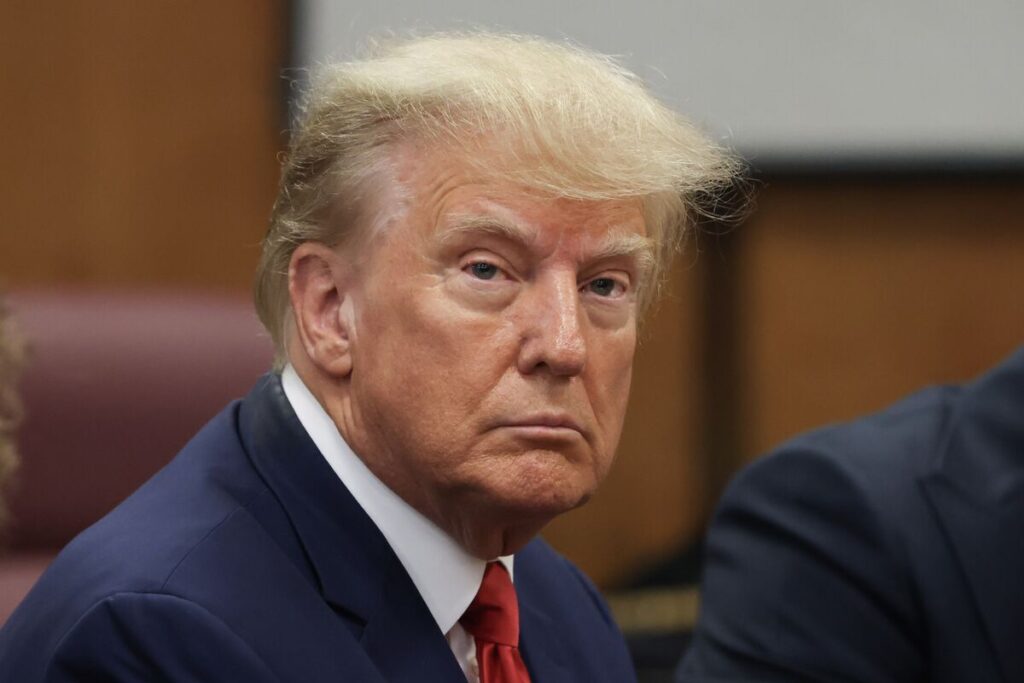
World Liberty Financial, the crypto venture backed by members of the Trump family, is pushing back against calls on Capitol Hill for a formal probe into its operations.
Letter Rejects “False Choice”
Co-founder Zach Witkoff released a May 15 letter to Senator Richard Blumenthal in which company attorneys said lawmakers’ concerns were based on “fundamentally flawed premises and inaccuracies.”
“The Company rejects the false choice between innovation and oversight,” the letter argued. “What it opposes is the misuses of regulatory authority and uncertainty to suppress lawful innovation.”
WLFI maintains that questions surrounding its USD1 stablecoin do not warrant sweeping investigations that could stall development.
Democrats Press Conflict-of-Interest Angle
Blumenthal, ranking member of the Senate Permanent Subcommittee on Investigations, has rallied Democrats to examine potential conflicts stemming from former President Donald Trump’s stake in WLFI, his TRUMP memecoin, and a forthcoming dinner for top tokenholders.
The senator warned that “WLFI’s financial entanglements with the President, his family, and the Trump Administration present unprecedented conflicts of interest and national security risks, including potential violations of the foreign emoluments clause.”
Stablecoin Bill Could Decide the Matter
Attention is now fixed on the GENIUS Act, a Republican-sponsored measure that would grant payment-instrument status to certain stablecoins.
Should USD1 qualify under the legislation, critics fear Trump could benefit financially while also influencing the regulatory environment in which the product operates.
Some Democrats have proposed amendments to ensure no sitting or former president can profit from a stablecoin they could later help legitimize.
WLFI Says It Is “Too Busy Building”
Despite the political storm, Witkoff insists the team is focused on launching products and onboarding users rather than lobbying.
He characterizes oversight efforts as distractions that risk pushing stablecoin innovation offshore.
What Happens Next
The GENIUS Act’s timeline remains unclear, and Senate leadership has not scheduled a vote.
If the bill advances, expect renewed scrutiny of WLFI’s cap table and the extent of Trump family involvement.
Conversely, a prolonged stalemate may give the platform breathing room to scale before facing a fresh round of hearings.

U.S. District Judge Analisa Torres has denied a joint motion from Ripple Labs and the Securities and Exchange Commission that sought to slash Ripple’s civil penalty to $50 million and dissolve a standing injunction.
The ruling, dated May 15, declared the filing “procedurally improper” under federal rules.
Procedural Misstep
In her order, the judge stressed that a request to vacate a final judgment must satisfy Rule 60’s “exceptional circumstances” test.
“By styling their motion as one for ‘settlement approval,’ the parties fail to address the heavy burden they must overcome to vacate the injunction and substantially reduce the civil penalty.
Relief from judgment under Rule 60 is granted only upon a showing of exceptional circumstances,” the order reads.
Because neither side cited that rule nor argued that standard, the court declined to consider the deal.
Ripple’s Legal Position
Ripple remains bound by an August 2024 finding that it violated securities laws by selling XRP to institutional investors without registration.
Stuart Alderoty, Ripple’s chief legal officer, maintained that “nothing in today’s order changes Ripple’s wins.”
He emphasized that the decision revolves around procedure, not substance, and said both parties will refine their submission and try again.
Stakes for Crypto Regulation
The outcome preserves the original $125 million penalty and maintains pressure on Ripple, which has long argued that its native token should not be treated as a security.
Regulators and industry watchers see the case as a bellwether for how aggressively the SEC can police token sales in the United States.
Some analysts fear the setback could embolden regulators to demand tougher settlements in future enforcement actions.
Path Forward
Both Ripple and the SEC must now craft a compliant motion that meets Rule 60 criteria if they still want relief from the injunction and a reduced fine.
Legal experts say they could submit fresh evidence, demonstrate changed circumstances, or pursue an appeal to a higher court.
Until then, Ripple continues operating under the limitations imposed by the 2024 judgment, even as it markets payment products abroad and looks to expand onshore once clarity emerges.