

VanEck is looking to expand its footprint in the crypto ETF space with a bold new move: a proposed exchange-traded fund (ETF) that directly tracks BNB, the native token of the BNB Chain. The investment management firm filed a Form S-1 registration with the U.S. Securities and Exchange Commission (SEC) on May 2, marking a significant step toward launching the first BNB-focused ETF in the United States.
Aiming to Break New Ground in Crypto ETFs
Should the SEC approve the proposal, VanEck’s BNB ETF would be the first of its kind in the U.S. market to offer direct exposure to BNB through physical token holdings. The fund’s ticker symbol has not yet been revealed. This initiative follows VanEck’s recent registration of a trust entity in Delaware last month, a strategic move intended to lay the legal groundwork for this novel offering.
BNB is the fifth digital asset VanEck has targeted for a dedicated ETF registration in the U.S., joining the ranks of Bitcoin, Ethereum, Solana, and Avalanche. This continued push illustrates VanEck’s commitment to expanding crypto accessibility through regulated financial products.
Potential for Passive Income Through Staking
In a notable feature, the preliminary prospectus suggests that the ETF might incorporate staking mechanisms, depending on the approval from the listing exchange. If allowed, investors could benefit from passive income via staking rewards. VanEck indicated that staking operations could be conducted through approved providers, including potentially affiliated entities.
This aspect sets the BNB ETF apart from traditional crypto funds, as it introduces an income-generating element that could appeal to long-term holders and institutional investors alike.
VanEck’s Track Record in Digital Assets
VanEck is no stranger to pioneering crypto ETFs. The firm launched spot Bitcoin and Ethereum ETFs last year after securing long-awaited approval from the SEC. It was also one of the early players to propose a Bitcoin futures ETF as far back as 2017.
These achievements have positioned VanEck as a leader in the evolving landscape of digital asset investment products. The firm’s experience and proactive approach could work in its favor as it navigates regulatory hurdles with the BNB ETF.
BNB’s Market Position and Utility
BNB currently ranks as the fifth-largest cryptocurrency by market capitalization. At the time of the filing, the token was trading around $608 with minimal fluctuations. As the utility token of the BNB Chain, BNB is widely used to power transactions, smart contracts, and various services across the Binance ecosystem.
The introduction of a regulated investment vehicle for BNB could significantly expand its appeal to mainstream investors, especially those seeking exposure through familiar structures like ETFs.

COTI has been selected as a Pioneer Partner in the European Central Bank’s (ECB) Digital Euro project, a major step toward developing a central bank digital currency (CBDC) for the eurozone. As part of this initiative, COTI will join forces with the ECB and other stakeholders to explore innovative technologies that could support a secure and private Digital Euro.
The Digital Euro is envisioned as a digital complement to physical cash, designed to facilitate private and safe payments across the eurozone’s $15 trillion economy. COTI’s selection builds on its past involvement with the Bank of Israel’s Digital Shekel trials, reflecting its growing credibility in the CBDC field.
In this partnership, COTI will test its privacy-focused solution for conditional payments using simulated ECB systems. This technology aims to verify asset origins while safeguarding user privacy—an essential element for any future CBDC.
“Being invited to work with the ECB on such a consequential project is humbling, and a testament to the expertise and hard work of the COTI team,” said Shahaf Bar-Geffen, COTI co-founder and CEO. “Privacy is a vital component for the future of Web3, ensuring user security and organizational compliance, and the same benefits apply to CBDCs. It’s critical that confidentiality is built into the core of these new systems, rather than merely being added as an afterthought.”
COTI previously contributed to Israel’s Digital Shekel Challenge by creating a proof-of-concept for private, trustless cross-border transactions using garbled circuits—technology it will now adapt for the ECB project.
The ECB’s innovation platform brings together a broad mix of financial institutions, banks, fintechs, and experts, with conditional payments as a key focus. COTI plans to keep its community informed as its involvement in the project continues.

Former President Donald Trump has reaffirmed his strong support for cryptocurrency, asserting that the United States must take the lead in digital asset innovation or risk being left behind by global competitors like China. In a recent interview, Trump emphasized crypto’s growing popularity and resilience amid market challenges.
“I Want Crypto,” Trump Declares
Speaking to NBC’s Meet the Press, Trump underlined the urgency for American leadership in the crypto space. When asked about concerns over profiting from his presidential role, Trump steered the conversation toward the strategic importance of digital currencies.
“I want crypto,” he said. “I think crypto is important because if we don’t do it, China is going to. It’s new. It’s very popular. It’s very hot.” Trump noted that even during periods of market turbulence, cryptocurrencies held up better than many traditional financial assets.
Highlighting Adoption and Attacking Biden
According to Trump, the sheer level of adoption and interest in crypto makes it impossible to ignore. He criticized the Biden administration for what he described as inconsistent and politically motivated regulation of the crypto industry.
He accused the current administration of initially cracking down on crypto, only to later relax its stance when it became politically convenient. Trump positioned himself as a consistent supporter of the digital asset space.
Addressing Allegations of Personal Gain
With questions swirling around the Official Trump Token (TRUMP), the former president sought to downplay any suggestion that he is financially benefitting from its existence. He insisted that his interest in crypto predates his latest presidential campaign.
“I’m not profiting from anything,” Trump said. “I haven’t even looked.” He added, “If I own stock in something, and I do a good job, and the stock market goes up, I guess I’m profiting.”
Trump reiterated that he donated his entire presidential salary during his time in office and intends to continue that practice. When pressed on whether he would contribute any potential crypto earnings, he responded candidly: “Should I contribute all of my real estate that I’ve owned for many years if it goes up a little bit because I’m president and doing a good job? I don’t think so.”
Market Decline and Token Performance
Despite Trump’s endorsement, the TRUMP token has seen a significant drop in value since his inauguration. Once boasting a market cap nearing $15 billion, it has since plummeted to around $2 billion, according to CoinMarketCap.
However, the token experienced a brief resurgence last week, surging over 70% on the news that Trump would host an exclusive event for top token holders.
Exclusive Dinner Sparks Controversy
Scheduled for May 22 at Trump National Golf Club, the invitation-only dinner will include the top 220 wallets holding TRUMP tokens. This high-profile gathering has prompted concern across the political spectrum.
Democratic Senators Elizabeth Warren and Adam Schiff have called for an ethics investigation, alleging that the event might be an example of “pay to play” and could signal the monetization of presidential access.
Even some Republicans have voiced discomfort. Senator Cynthia Lummis, known both for her support of Trump and her advocacy for Bitcoin, openly expressed her concerns.
“This is my president that we’re talking about, but I am willing to say that this gives me pause,” Lummis told CNBC.
Balancing Influence and Ethics
As Trump continues to lean into crypto as part of his political messaging, the intersection of personal branding, digital assets, and presidential influence is drawing scrutiny. His outspoken support for crypto may resonate with younger and tech-savvy voters, but it also raises fresh questions about transparency, conflicts of interest, and ethics in governance.
With a high-stakes election looming and digital assets becoming a key part of political and economic discourse, Trump’s crypto push could shape not only campaign rhetoric but also the regulatory landscape ahead.
Online trading platform eToro could go public in the US as early as next week after delaying its IPO due to recent market volatility. The move would mark a significant return to form for one of fintech’s most highly anticipated public debuts.
IPO Delay Triggered by Trump’s Tariffs
Originally planning to go public earlier this year, eToro hit pause following President Trump’s sweeping tariff announcement on April 2. The move triggered a sharp increase in market instability and raised fears of a global trade war, forcing companies like Klarna, StubHub, and Medline to rethink their IPO timelines.
eToro, which offers access to stocks, ETFs, and digital assets, was among them. But with markets now showing signs of stability, the path to its IPO appears clear again.
$5 Billion Valuation Targeted
According to the Financial Times, eToro confidentially filed for a US IPO with backing from investment banks Goldman Sachs, UBS, and Jefferies. The company is aiming for a $5 billion valuation and plans to list its shares on the Nasdaq Global Select Market under the ticker symbol “ETOR.”
The filing outlines strong growth metrics, with the company reporting $931 million in total commission revenue for 2024 — a significant increase from the $639 million earned the previous year. Net income surged as well, jumping from $15 million in 2023 to $192 million in 2024.
No Final Decision Yet on Launch Timing
Despite the momentum, eToro has not yet finalized its IPO timing. Sources familiar with the matter suggest that while the company is prepared to move forward next week, plans could still change if the market outlook shifts again.
Even so, the recent stabilization in financial markets provides a favorable backdrop, especially for a company with exposure to both equities and cryptocurrencies.
Crypto-Friendly Regulatory Environment Helps
Another key factor supporting eToro’s IPO ambitions is the shifting regulatory environment in the US. The appointment of Paul Atkins, a pro-crypto figure, as SEC Chair has led to a more favorable outlook for firms in the digital asset space.
This change has reignited interest in crypto-adjacent listings, with other big names like Circle, Kraken, and Gemini also advancing plans to go public. These companies have benefited from recent regulatory settlements that have cleared long-standing hurdles.
What Comes Next for eToro?
With a renewed focus on expanding its US footprint, eToro appears well-positioned to take advantage of the evolving landscape. If successful, the IPO could open the door for further growth and solidify its role as a leading global platform for retail trading.
Should the firm proceed with its Nasdaq listing, it would mark a significant milestone not just for eToro but for the broader fintech and crypto sectors — both of which are looking to rebound in 2025 after a rocky start.
A major shift has occurred in the crypto investment space as Two Prime, a US-based investment advisory firm, has decided to abandon Ethereum (ETH) in favor of an exclusive focus on Bitcoin (BTC). This move follows ETH’s significant price decline in early 2025, which prompted the firm to reassess its strategy.
From Dual Lending to Bitcoin-Only
Over the past 15 months, Two Prime facilitated $1.5 billion in loans using both Bitcoin and Ether. However, citing Ethereum’s instability and underwhelming performance, the firm announced on May 1 that it would now concentrate entirely on Bitcoin for both asset management and lending operations.
“ETH’s statistical trading behavior, value proposition, and community culture have failed beyond a point that is worth engaging,” Two Prime stated, signaling a complete pivot.
ETH’s Unpredictability a Major Concern
A key reason behind the firm’s decision is what it describes as Ethereum’s loss of predictable trading behavior. As an algorithmic trading firm, Two Prime emphasizes the importance of consistent data patterns for its models.
“Ether no longer trades predictably,” the firm said. “As an algorithmic trading firm, we value data more than narratives… the data suggests ETH has fundamentally changed.”
The firm explained that Ether has decoupled from Bitcoin and now behaves more like a memecoin. They noted ETH experienced “several multi-standard deviation moves” during Q1 2025, in contrast to Bitcoin’s relatively steady behavior.
“It trades now like a memecoin rather than a predictable asset,” the company added. “Even during the turbulence of Q1 2025, Bitcoin remained within its fundamental behavior, whereas ETH saw several multi-standard deviation moves.”
Impact on Algorithmic Trading and Lending
Such volatility poses serious challenges for firms like Two Prime that rely on quantitative strategies. The unpredictability of ETH’s price action not only complicates trading but also undermines ETH-backed lending practices, which rely on certain levels of price stability.
The firm remarked that ETH’s behavior creates a “headache” for algorithmic trading and undermines lending reliability, “even by the high volatility expectations of digital asset markets.”
Criticism Triggers Community Reaction
Two Prime’s harsh assessment of Ethereum didn’t go unnoticed. Some crypto enthusiasts saw the firm’s exit as a contrarian indicator — a possible sign that ETH is nearing a price bottom.
One user commented, “What a retarded essay statement,” referencing the S&P 500’s own 4.7% decline year-to-date. Others questioned Two Prime’s relevance altogether: “Never even heard of them. Seems irrelevant.”
“If this isn’t a bottom signal for ETH idk what is,” another person noted, suggesting that the worst might be over for Ethereum.
Weak ETH ETF Performance Adds Pressure
Adding to ETH’s woes, Two Prime pointed to the underwhelming performance of Ethereum-based ETFs. While Bitcoin ETFs have attracted substantial institutional investment, ETH ETFs have lagged far behind, with BTC ETF purchases outpacing ETH by nearly 24 times.
“The failure of ETH’s ETF creates a reflexive loop whereby institutions like BlackRock dedicate fewer resources to their promotion and sale. BTC has found the mainstream while ETH has floundered,” Two Prime stated.
Despite this, Ethereum still dominates among altcoin ETFs in terms of assets under management (AUM). Recent data shows Ether-based exchange-traded products hold $9.2 billion in AUM, well ahead of Solana and XRP, which have $1.4 billion and $1 billion, respectively.
ETF Landscape Adds to ETH Struggles
Following the US SEC’s approval of spot Ether ETFs in May 2024, the asset saw a muted reception. Investor enthusiasm has waned, and some issuers have backed away — VanEck halted Ether futures ETF trading, WisdomTree withdrew its proposal, and ARK dissolved its futures ETFs for both Bitcoin and Ether in March 2025.
Founded in 2019 by Alexander Blum and Marc Fleury, Two Prime had been active in both Bitcoin and Ethereum lending until this dramatic pivot. Whether their exit marks a low point for ETH or simply reflects a broader trend remains to be seen.
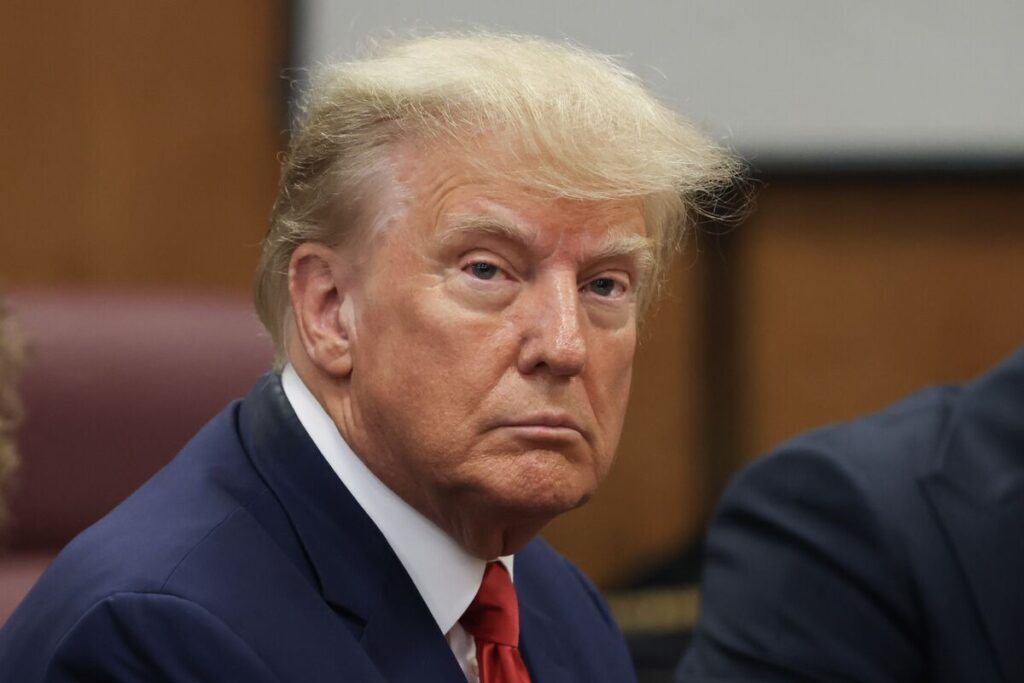
Former President Donald Trump is once again in the political spotlight—this time for blending politics with crypto in a way that has raised eyebrows, even among members of his own Republican Party. A recent announcement offering exclusive access to a White House tour and dinner for top holders of his TRUMP memecoin has sparked ethical concerns from both sides of the aisle.
GOP Senators Criticize Trump’s Crypto Incentives
Republican Senators Cynthia Lummis and Lisa Murkowski have voiced concern over the implications of Trump’s crypto-driven incentives. According to a report from CNBC on May 2, Lummis said that the idea of the president offering White House access to token holders “gives [her] pause.” Murkowski echoed those concerns, stating plainly, “I don’t think it would be appropriate for me to charge people to come into the Capitol and take a tour.”
The criticism stems from Trump’s April 23 announcement that top holders of his TRUMP memecoin would be eligible to apply for a White House dinner and tour—a move many interpreted as monetizing presidential access.
Legislative Support Despite Reservations
Despite her reservations about Trump’s memecoin strategy, Senator Lummis also took to social media on May 2 to praise the former president’s support for crypto legislation. She posted a video on X in which she said she was “particularly pleased” with Trump’s backing of the BITCOIN Act—short for Boosting Innovation, Technology, and Competitiveness through Optimized Investment Nationwide. The act would formalize a strategic national reserve of Bitcoin in the United States, aligning with Trump’s recent pro-crypto rhetoric.
This duality illustrates the complicated position many lawmakers face: balancing concern over ethical optics with policy alignment on digital assets.
Ongoing Ethics Concerns and Accusations
The TRUMP token, launched on January 17, has drawn significant criticism from both lawmakers and the crypto community. Critics argue that it creates potential conflicts of interest and could open the door for foreign influence in U.S. politics by enabling anonymous crypto transfers that benefit Trump directly.
“Trump once claimed he is so rich he cannot be bought,” said Craig Holman, an ethics specialist with Public Citizen. “But his obsession with money means he apparently can be bought for a meme.”
Holman’s remark underscores the perception that the memecoin scheme may be undermining the very principles Trump once touted.
Impeachment Demands Resurface
The controversy escalated when Democratic Senator Jon Ossoff called for Trump’s impeachment during a town hall meeting on April 25. Ossoff criticized the TRUMP coin dinner offer as a form of “selling access for what are effectively payments directly to him,” framing the move as a blatant conflict of interest. Though Trump was impeached twice during his presidency and acquitted both times, the memecoin saga has reignited impeachment talk—this time from the perspective of financial impropriety.
Who Will Dine With Trump?
With the planned dinner set for May 22, speculation has swirled around who might actually attend. The TRUMP coin leaderboard lists top wallet holders, though only usernames are visible. This has led to rumors that high-profile figures like Tron founder Justin Sun or Tesla CEO Elon Musk could be among the invitees.
As of May 2, neither individual nor their companies had confirmed any involvement, leaving the dinner’s guest list shrouded in uncertainty.
Ethical and Political Ramifications Continue to Unfold
As Trump continues to build his crypto presence, his memecoin initiative stands at the intersection of innovation and political controversy. While some view it as a clever move to rally support and funding from a tech-savvy base, others see it as a dangerous precedent that commercializes access to political power.
Whether this controversy fades or grows into a larger ethical scandal remains to be seen—but the pushback from both Democrats and Republicans suggests that this is more than just a digital gimmick. It’s a political flashpoint in the ongoing debate over crypto’s role in government and campaign finance.

The Blockchain Group (TBG), a publicly traded Bitcoin treasury company, has revealed plans to amass as much as 260,000 Bitcoin over the next decade—a move that could see it hold approximately 1% of the total Bitcoin supply by 2034.
A Long-Term Bitcoin Accumulation Strategy
Outlined in its latest financial disclosure, TBG’s strategy focuses on an incremental acquisition approach. The company aims to increase its current holdings of 620 BTC to between 1,000 and 3,000 BTC by the end of this year. It has set an ambitious mid-term goal of owning 100,000 BTC by 2032 and hopes to reach between 170,000 and 260,000 BTC by 2034.
“If Bitcoin reaches €1-2 million per coin by 2033-2035, holding 210,000 BTC could represent between €210 billion and €420 billion in net asset value,” the report states.
This long-term vision is underpinned by a projection that Bitcoin’s value will appreciate substantially in the coming years. To measure progress, the company is tracking its proprietary “BTC Yield” metric, which saw a dramatic 709% increase in Q1 2025. During this period, its Bitcoin-per-share figure jumped from 41 to 332 satoshis.
Strategic Backing and Funding Pipeline
The firm, which trades under the ticker ALTBG on Euronext Growth Paris, underwent a strategic pivot in November 2024 to become a full-fledged Bitcoin Treasury Company. Since then, it has boosted its Bitcoin reserves significantly—from just 15 BTC in December 2024 to over 620 BTC by April 2025. The increase was achieved via equity placements and Bitcoin-denominated convertible bonds.
TBG’s strategy has attracted support from well-known names in the crypto investment space, including Fulgur Ventures, UTXO Management, and TOBAM. Prominent cryptographer and Blockstream CEO Adam Back has also joined as a strategic advisor.
Despite acknowledging the risks associated with the plan, the company maintains a clear goal: “accumulate as much BTC as possible, as fast as possible, in the most accretive way possible.”
To fund this effort, TBG has projected a capital-raising potential ranging from €150 million to €100 billion over eight years, depending on market conditions and investor appetite. If the roadmap unfolds as planned, TBG could soon become Europe’s top corporate holder of Bitcoin.
Share Price Soars in Six Months
Since adopting its Bitcoin-focused model, TBG’s stock performance has mirrored other successful Bitcoin treasury firms. Its share price surged by 120% within the first month, 265% by the third month, and 474% after six months. This trend draws strong parallels to the early growth patterns of companies like Strategy and Metaplanet, both of which committed to the Bitcoin treasury model before TBG.
“Bitcoin treasury companies are the fastest-growing companies in Europe,” TBG stated.
Currently, Strategy remains the leading publicly listed corporate Bitcoin holder with 553,555 BTC—around 2.6% of the global circulating supply.

Ripple Labs recently made an ambitious move to acquire Circle Internet Financial, the company behind the widely-used USDC stablecoin. According to sources familiar with the negotiations, Ripple offered between $4 billion and $5 billion, but Circle turned down the proposal, reportedly viewing it as undervalued.
Crypto M&A Activity Heats Up
This attempted acquisition comes during a surge in crypto-related mergers, acquisitions, and IPOs. With digital assets experiencing renewed momentum and investor enthusiasm, several major players are preparing to go public. Firms such as Kraken, BitGo, Gemini, and Bullish are expected to seek IPOs in 2025, encouraged by the current pro-crypto political climate under the Trump administration.
Circle itself has shown public market ambitions. Earlier this month, it filed for an initial public offering (IPO) with the U.S. Securities and Exchange Commission, aiming for a listing on the New York Stock Exchange under the ticker symbol ‘CRCL’. However, just days later, reports suggested that Circle was considering delaying the IPO due to economic uncertainty stemming from shifting U.S. trade policies. Similar caution has been seen with companies like Klarna and StubHub, which are also weighing the risks of an IPO delay.
Ripple’s Strategic Playbook
Ripple’s interest in Circle aligns with its broader acquisition strategy. Notably, Ripple recently agreed to acquire Hidden Road, a prime brokerage firm, for $1.25 billion. This acquisition underscores Ripple’s desire to expand its ecosystem through strategic purchases rather than public fundraising.
Monica Long, Ripple’s president, made it clear that Ripple is not currently considering an IPO. In an interview with CNBC, she emphasized the company’s strong financial position: “We have billions in cash reserves. We don’t need to raise capital or increase market exposure by going public.” She added, “Companies usually IPO to raise funds or elevate their brand. We’re not in need of either right now.”
The Stablecoin Race: Ripple vs. Circle
Ripple has also entered the stablecoin market with RLUSD, signaling its intent to compete with Circle’s dominant USDC. However, it has a long road ahead. As of May 1, RLUSD had a market cap of $317 million, dwarfed by USDC’s $62 billion valuation, according to CoinGecko.
Despite the setback with Circle, Ripple may still pursue a revised offer. The company’s long-term strategy seems focused on acquisitions and internal growth rather than going public, especially after resolving its long-standing legal battle with the SEC.

In a landmark move that could set a national precedent, Arizona lawmakers have passed two innovative bills designed to integrate Bitcoin and other digital assets into the state’s financial infrastructure. If signed into law, these measures would make Arizona the first U.S. state to establish a formal Bitcoin reserve.
Two Key Bills Receive Legislative Approval
The Arizona House of Representatives passed Senate Bill 1025 and Senate Bill 1373, both of which are now on Governor Katie Hobbs’ desk awaiting final approval. SB 1025 enables the state to allocate up to 10% of its treasury and pension assets into digital assets, including Bitcoin. Meanwhile, SB 1373 lays the foundation for a Digital Assets Strategic Reserve Fund, designed to hold and manage these crypto assets for future use.
Together, the bills represent a strategic pivot toward blockchain-based asset management, aligning Arizona with other crypto-forward states such as Texas, Florida, and New Hampshire.
Funded by Seized Crypto and Future Appropriations
The legislation authorizes the use of seized digital assets as well as future budget appropriations to fund the reserve. These assets will be managed under strict audit protocols, featuring on-chain transparency and risk controls to ensure responsible stewardship.
Supporters argue that integrating Bitcoin into Arizona’s financial strategy could offer protection against inflation and traditional market volatility. The effort marks a bold step into crypto adoption at the state level—one that could ripple across the country if successful.
Bitcoin Prices Surge Amid Legislative Buzz
Shortly after the bills passed, Bitcoin’s price surged to nearly $95,000, a 25% increase from early-April lows. The price jump appears to be driven by renewed institutional interest and speculation over state-level crypto integration.
Crypto analysts view Arizona’s move as a confidence boost for broader adoption, potentially attracting similar initiatives elsewhere. If implemented, the state-backed reserve could serve as a blueprint for how governments can securely incorporate decentralized finance into their public asset strategies.
Governor Hobbs’ Decision Looms
Governor Hobbs has not yet taken a public position on the bills. Previously, she had threatened to veto all legislation over unresolved disability funding disputes. However, that blockade was lifted following a bipartisan deal reached on April 24.
Her final decision could determine whether Arizona takes the lead in Bitcoin adoption or faces a legislative override attempt to push the plan forward. However, it should be noted that she has vetoed dozens of Republican-sponsored bills, including legislation related to crypto and digital assets, so there is a high chance these bills will also be vetoed by Hobbs.
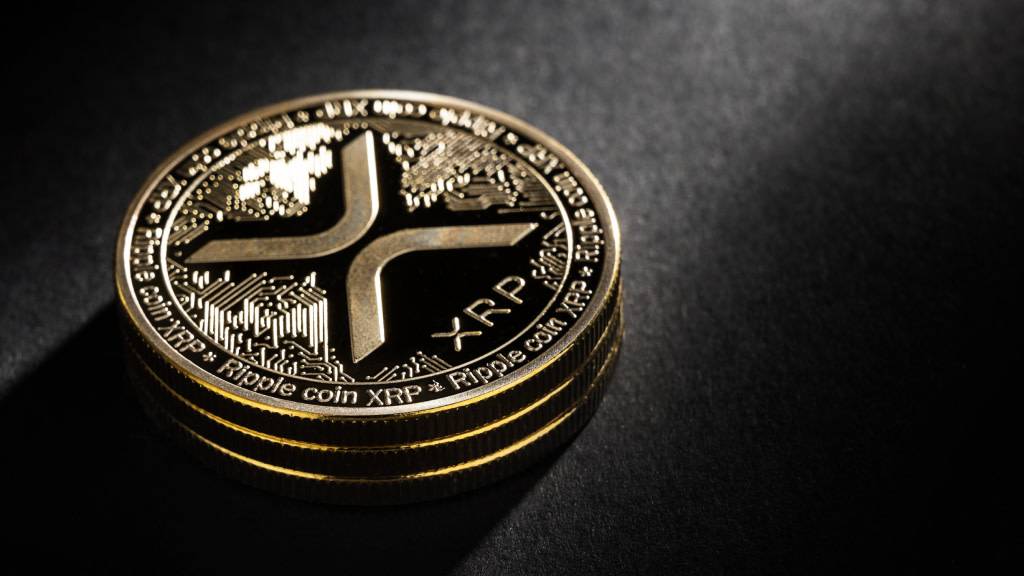
The U.S. Securities and Exchange Commission (SEC) has extended its review timeline for Franklin Templeton’s spot XRP exchange-traded fund (ETF), now setting a decision deadline of June 17, 2025. The regulator announced the delay in a notice issued earlier this week, stating it needed more time to consider the proposed rule change filed by the Cboe BZX Exchange.
More Time Needed for Evaluation
Originally submitted on March 13 and published in the Federal Register on March 19, the application was initially under a 45-day review period set to expire on May 3. The SEC explained its rationale for the delay, saying, “The Commission finds it appropriate to designate a longer period… so that it has sufficient time to consider the proposed rule change and the issues raised therein.”
Franklin Templeton is aiming to launch the Franklin XRP Fund, joining a growing list of asset managers—including Grayscale, Bitwise, 21Shares, and WisdomTree—seeking approval for crypto-backed investment products.
XRP Price and Market Position
XRP, which ranks as the fourth-largest cryptocurrency by market capitalization, was trading at around $2.30 at the time of the notice. The token saw a 7% increase over the past week, according to CoinGecko.
The ETF would allow traditional investors to gain exposure to XRP through a regulated investment vehicle, without the need to hold the crypto asset directly.
Other Delays in Crypto ETF Decisions
The SEC didn’t stop with the XRP fund. It also postponed decisions on other crypto-related ETFs, including Fidelity’s spot Ethereum ETF with staking capabilities, Bitwise’s Dogecoin ETF, and Franklin Templeton’s proposed Solana ETF.
These delays, while frustrating to some market participants, are not unexpected. The SEC often extends review periods to collect more information, open comment windows, and evaluate broader regulatory implications.
Analysts: Delay Is “Standard Procedure”
Industry experts were quick to interpret the delays as routine rather than signs of rejection. Bloomberg Intelligence analyst James Seyffart emphasized that the pause was “standard procedure” and wouldn’t necessarily hurt the ETF’s approval odds.
“This doesn’t change our (relatively high) odds of approval,” Seyffart said. He also noted that the final deadlines for these ETF decisions aren’t until October.
Echoing this view, Bloomberg’s Eric Balchunas referenced prior delays for Bitcoin and Ethereum ETFs that ultimately received regulatory approval. According to Balchunas, the current setbacks fit the established pattern used in past crypto fund evaluations.
Patience Required as Crypto ETF Landscape Evolves
For now, investors will have to wait a little longer to see if XRP will be available as a spot ETF on major exchanges. The SEC’s extended timeline may be part of a broader strategy to approach crypto-based financial products cautiously while balancing innovation with consumer protection.
While these procedural pauses are unlikely to derail the applications entirely, they highlight the SEC’s careful approach to regulating the fast-evolving digital asset market.