

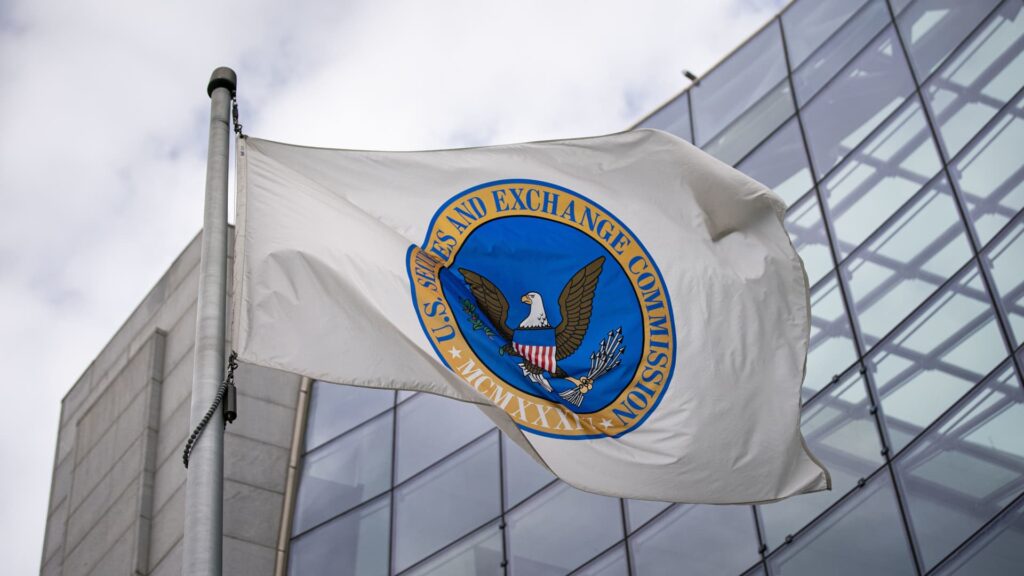
The U.S. Securities and Exchange Commission has postponed its verdict on Grayscale’s proposed Solana and Litecoin exchange-traded funds, extending a review that now stretches well into the summer.
At the same time the agency invited public comments on BlackRock’s plan to shift its flagship Bitcoin ETF to an in-kind redemption model and on Nasdaq’s bid to list the 21Shares Dogecoin ETF.
The moves underscore Washington’s cautious yet increasingly structured approach to bringing a wider range of crypto assets into the regulated fund universe.
Solana Trust Under Microscope
Staff will spend the coming weeks determining whether Grayscale’s Solana Trust satisfies investor-protection and market-integrity requirements set out in Section 6(b)(5) of the Securities Exchange Act.
If approved the vehicle would hold SOL tokens in cold storage and trade on NYSE Arca, giving retail investors indirect exposure without setting up self-custody.
The SEC has up to 240 days—and multiple chances to pause the clock—before issuing a final ruling, meaning the earliest green light could slip past September.
Litecoin Also Waits
Grayscale’s Litecoin Trust received a parallel delay as commissioners opened formal proceedings to gather additional evidence and rebuttals.
Questions center on whether Litecoin markets are sufficiently surveilled to detect manipulation and whether existing futures oversight on the Chicago Mercantile Exchange offers a viable benchmark.
Both altcoin filings remain on hold until staff completes the deeper dive mandated by Tuesday’s notice.
BlackRock Reworks Bitcoin Redemption Model
Separately, Nasdaq’s filing to amend the iShares Bitcoin Trust is now in a 21-day comment window that will test appetite for so-called in-kind redemptions.
Under the proposal authorized participants could exchange ETF shares directly for Bitcoin rather than cash, a structure BlackRock says would reduce tracking error and capital-gains events.
The SEC approved the fund in January with a cash-only mechanism but signaled openness to alternative workflows once operational safeguards were in place.
Industry lawyers expect a decision on the amendment before the fourth quarter, provided no major objections arise during the rebuttal phase.
Dogecoin ETF Opens to Feedback
Nasdaq also submitted paperwork to list the 21Shares Dogecoin ETF under Rule 5711(d), the same framework used for commodity-based trust shares like gold.
The passive fund intends to mirror Dogecoin’s price via a CF Benchmarks reference rate and store coins with regulated custodian Coinbase.
Backers view the meme-coin product as a litmus test for how far the SEC is willing to extend spot-crypto approvals beyond the large-cap duo of Bitcoin and Ether.
Why the SEC Is Pressing Pause
New Chair Paul Atkins has vowed to replace the previous regime’s enforcement-first posture with clearer rulemaking but insists each novel ETF “meets the law as written.”
Delays allow staff to solicit data on trading volumes, offshore liquidity, and correlation between spot and futures prices—metrics commissioners say are key to detecting wash trades.
The agency also weighs whether surveillance-sharing agreements with major platforms will meaningfully curb insider manipulation before retail money can flow in.
Altcoin ETF Pipeline Widens
At least a dozen issuers, including 21Shares, Bitwise, and WisdomTree, have registered or signaled intent to launch funds tied to XRP, Avalanche, and even meme-tokens like Shiba Inu.
Bloomberg Intelligence estimates that more than $15 billion could migrate into altcoin funds within two years if the SEC gives even a handful the green light.
For now, however, only Bitcoin and Ether spot products have crossed the finish line, and both required multiyear legal tussles.
Market Reaction and Outlook
Prices for SOL and LTC drifted lower after the notice, though most analysts attributed the dip to broader risk-off sentiment rather than the procedural delay.
Dogecoin held steady near $0.28 as traders judged the start of a comment period to be net positive, keeping hopes alive for a first-of-its-kind meme-coin ETF.
Strategists at Galaxy Digital wrote in a note that the SEC’s staggered approach “signals momentum, not resistance,” provided applicants can supply robust market-surveillance data.
Still, they cautioned that a single high-profile hack or manipulation incident could prompt regulators to reapply the brakes.
Timeline From Here
Commenters have until June 4 to weigh in on BlackRock’s amendment and until June 7 on the Dogecoin proposal, after which rebuttals may be filed for an additional 35 days.
The Solana and Litecoin dockets now await a second SEC extension, a step that would push the ultimate decision into early autumn.
Market participants will track those deadlines closely, viewing each incremental action as a barometer of how quickly U.S. regulators are prepared to mainstream the next wave of crypto assets.
Bitcoin’s illiquid supply has climbed to an unprecedented 14 million BTC, underscoring powerful accumulation trends as the 2025 bull market matures.
The latest Glassnode figures show a 30-day jump of roughly 180,000 BTC, the sharpest increase since late 2022.
Long-term investors are moving coins off exchanges into wallets that historically refrain from spending, reducing the freely tradable float.
How Glassnode Defines “Illiquid”
Illiquid entities are wallets whose cumulative inflows far exceed outflows, signaling a preference to hoard rather than trade.
“This ratio yields a number L between zero and one, with larger values indicating higher liquidity,” the firm explained.
“Liquidity is therefore the extent to which an entity spends the assets it receives. Illiquid entities are those that hoard coins in anticipation of a long-term BTC price appreciation.”
Context of the 2025 Rally
The metric’s new high arrives as BTC hovers near six-figure territory after doubling year-to-date.
Yet supply constraints appear to be tightening faster than price is rising, suggesting demand is outpacing new issuance.
Analysts view the pattern as a powerful tailwind, noting that spot Bitcoin ETF inflows and corporate treasury purchases are absorbing freshly mined coins almost as quickly as they appear.
Whales Keep Buying Above $100K
On-chain data also highlights aggressive accumulation by so-called whale and shark addresses holding 10–10,000 BTC.
“Bitcoin’s key whale & shark tier (holding 10-10K BTC) have now accumulated 83,105 more BTC in the past 30 days,” research firm Santiment reported.
“Meanwhile, the smallest retail holders (holding less than 0.1 BTC) have dumped 387 BTC in the same time period. For both tiers, these are significant movements relative to how much they hold in total.”
Historical Comparison
Previously, the illiquid-supply record of 14.95 million BTC was set in November 2023 as markets clawed back from the post-FTX bear low.
Today’s resurgence suggests experienced market participants remain determined not to sell into strength.
At the same time, speculative short-term holders have thinned out, reducing the likelihood of abrupt supply shocks from panic selling.
Pressure on Exchange Reserves
Rising illiquidity is mirrored by shrinking balances on major trading venues, where combined reserves have fallen to multi-year lows.
The squeeze leaves fewer coins available for margin traders or new buyers, intensifying competition each time momentum accelerates.
Glassnode analysts warn that price discovery can turn “disorderly” when illiquid supply dominates and fresh demand persists.
Institutional Influence Grows
Corporate treasuries and United States spot Bitcoin ETFs continue to mop up circulating stock, adding a structural layer of demand absent in prior cycles.
Observers note that ETF inflows alone have periodically exceeded daily miner issuance, effectively hard-forking the supply schedule through market forces.
With another block-subsidy halving due in 2028, some strategists argue that a long-term supply “cliff” is forming earlier than many models projected.
Outlook for the Remainder of 2025
Bulls contend that so long as the illiquid-supply curve points upward, any pullbacks will be shallow and short-lived.
Bears counter that macro-economic shocks, such as renewed rate hikes, could still jolt dormant holders into distribution mode.
For now, however, the data tilt unmistakably toward continued hoarding—and the market is watching to see how high price must go before these steadfast investors feel compelled to sell.
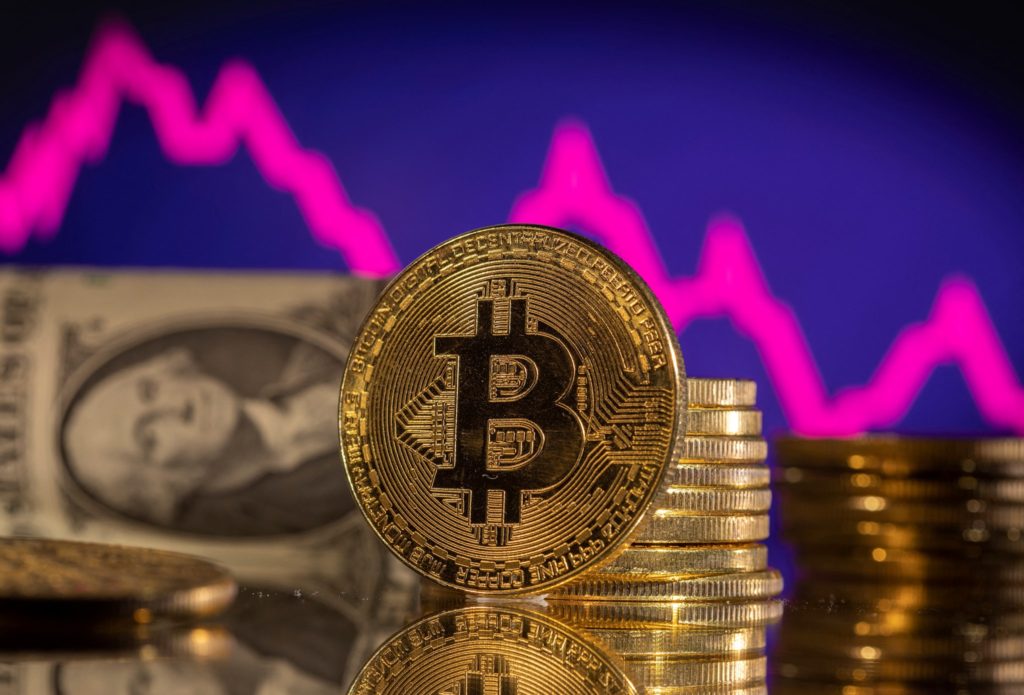
Bitcoin pierced the $105,700 level on May 12, its highest price in more than three months, yet the rally fizzled within hours and the market slipped toward $102,000. The reversal surprised traders because it coincided with a welcome 90-day pause in U.S.–China tariff hostilities—news that, on paper, ought to boost risk appetite.
Why a Trade Truce Didn’t Translate Into Crypto Gains
Washington and Beijing agreed to roll back some levies and open talks on issues such as “currency manipulation,” “steel price dumping,” and controls on semiconductor exports. Although those concessions gave equities a lift, Bitcoin’s steep 24% advance over the previous month left little room for further outperformance. The digital asset’s 30-day correlation with S&P 500 futures sits near 83%, so a healthy stock rally can sometimes sap the perceived need for an alternative store of value.
Market Cap Milestone Raises Questions
Bitcoin’s latest climb pushed its market capitalisation above that of silver and Google, ranking it the world’s sixth-largest tradable asset. That landmark, however, sharpened debate about concentration risk. Between May 5 and May 11, Strategy acquired another 13,390 BTC, bringing the combined holdings of Strategy and BlackRock to roughly 1.19 million BTC—or about 6% of the circulating supply. Critics such as gold proponent Peter Schiff argue that so much accumulation by one publicly listed company invites trouble if its “ever-increasing average purchase price” forces a future sale to cover borrowing costs.
Macro Winds Favor Equities Over Scarce Assets
While crypto watchers parse blockchain flows, the broader macro picture exerted more influence. The tariff reprieve brightened earnings prospects for multinational manufacturers, favouring stocks over finite assets. Gold, another scarcity play, dropped 3.4% the same day Bitcoin faltered, underscoring how a stronger U.S. dollar can drain demand for hedges.
ETF Inflows Offer a Safety Net
Even so, fundamentals have not turned bearish. U.S. spot-Bitcoin exchange-traded funds absorbed $2 billion of net inflows between May 1 and May 9. Steady institutional buying after a 24% monthly rally implies that the move is no longer driven by retail FOMO but by allocation models adjusting to Bitcoin’s maturing profile. That support makes a slide below the psychologically important $100,000 threshold look unlikely in the near term, barring an unexpected spike in Treasury yields or a disappointing U.S. inflation print on May 13.
Near-Term Outlook
With the détente only temporary, traders will scrutinise whether negotiators can extend the pause beyond its 90-day window. Should talks stall and tariffs snap back, scarce assets like Bitcoin and gold may regain the momentum they surrendered this week. Until then, the path of least resistance seems sideways, oscillating in a broad band whose upper edge—$105,000—has now been tested and rejected.
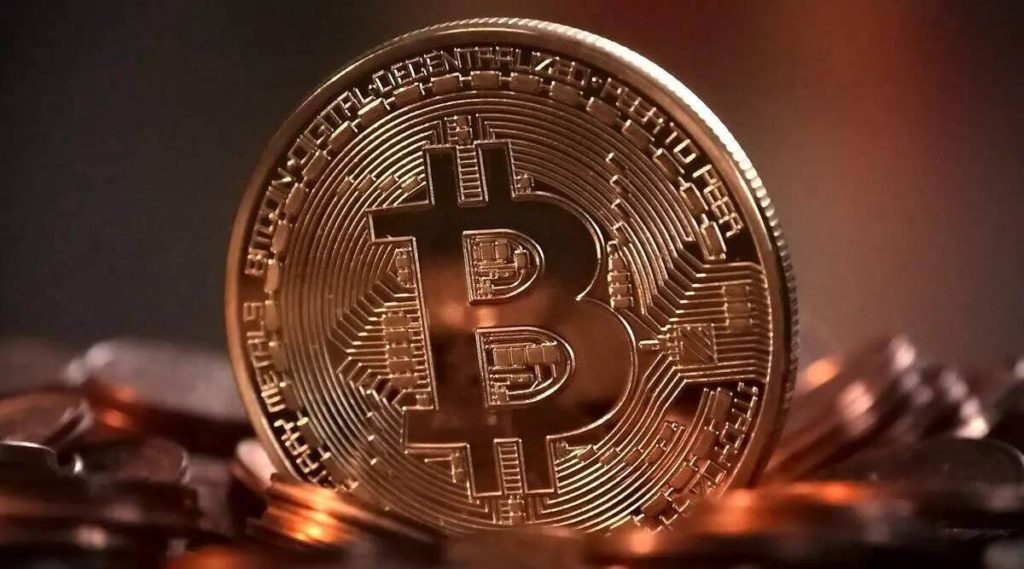
Bitcoin held onto strong gains as it closed the week of May 11, keeping the crypto market in suspense with prices lingering around the $104,500 mark.
After a surge driven by weekend volatility, traders are eyeing whether the world’s top cryptocurrency is on the brink of a new breakout.
Volatility Fuels Multimonth Highs
Data showed Bitcoin reaching a high near $105,000 over the weekend.
This jump occurred during low liquidity trading hours and coincided with renewed speculation about a positive shift in US-China trade relations.
According to analyst Rekt Capital, the current price level is crucial. “Can Bitcoin do it? Can Bitcoin Weekly Close above the Range High of its recently reclaimed Re-Accumulation Range to kickstart the breakout process?” he asked on X.
He suggested that Bitcoin may be entering the second phase of its “Price Discovery Uptrend,” a period historically characterized by steep gains.
Bull Market May Still Have Room to Run
Rekt Capital’s analysis pegged the current bull market as 85.5% complete but noted that some of the most volatile gains may still be ahead.
Market monitoring site CoinGlass showed a concentration of sell orders just under $106,000, while buy orders stacked below $102,000 indicated strong interest around the current trading band.
This dense liquidity zone suggests both bulls and bears are gearing up for the next significant price move.
Skeptics Warn of a Fakeout
Despite the optimism, some traders remain cautious.
A popular trader known as HTL-NL suggested the current upswing could be a “fake out,” aimed at trapping latecomers betting on more gains.
“Will $BTC close/open the week remaining within the range, will it do a ‘fake out (UTAD)’ or was this really a reaccumulation range as many want to believe,” he said.
He admitted that while a genuine reaccumulation phase is possible, his primary expectation is that the rally may not sustain itself.
Correction Risks Still Linger
Il Capo of Crypto, a well-known bearish voice in the space, echoed similar warnings.
“This is the time to scale out, not in,” he posted on May 10, cautioning that the rebound since early 2024 could eventually be wiped out if Bitcoin fails to break through resistance convincingly.
With strong resistance being tested, the coming days could determine whether Bitcoin will soar to new highs or retreat once again.

Goldman Sachs has significantly increased its exposure to BlackRock’s iShares Bitcoin Trust (IBIT), with a 28% jump in its holdings over the first quarter of 2025. The investment bank now owns over 30.8 million IBIT shares, valued at more than $1.4 billion.
This new data was revealed in a recent SEC filing, first reported by MacroScope. Goldman had previously held 24 million shares at the end of 2024, making the increase notable amid growing institutional interest in spot Bitcoin ETFs.
Minimal Change in Fidelity Exposure
While Goldman has expanded its IBIT position, its stake in Fidelity’s Bitcoin fund (FBTC) appears largely unchanged. Back in February, the firm reported about $1.2 billion in IBIT holdings and $288 million in FBTC. The latest filing shows no significant shifts in FBTC exposure.
According to financial analytics platform Fintel, Goldman now ranks as the top institutional holder of IBIT. Brevan Howard follows closely behind, with over 25 million shares valued at nearly $1.4 billion. Other institutional participants include Jane Street, Symmetry Investments, and D.E. Shaw & Co.
Strategic Shift in Derivatives Exposure
A notable change in Goldman’s approach is the absence of Bitcoin ETF options in the new disclosure. In December, the bank held call options worth $157 million and put options totaling $527 million on IBIT, along with $84 million in puts on FBTC. Those options have either been closed out or allowed to expire, signaling a pivot in strategy.
This shift suggests Goldman may now favor direct equity exposure in Bitcoin ETFs over derivatives as a way to manage risk or express confidence in Bitcoin’s medium-term outlook.
IBIT Dominates the Market
IBIT remains the largest spot Bitcoin ETF, managing approximately $62.8 billion in assets. Since its debut in January 2025, the fund has attracted over $44 billion in net inflows. This week alone, it has logged roughly $674 million, according to Farside Investors.
The ETF’s price also saw a gain during Friday’s trading session, rising $1.04 to close at $58.66. As institutional adoption accelerates, IBIT continues to be the central vehicle for Bitcoin exposure in traditional markets.

Meta Platforms is once again venturing into the digital currency space, with a renewed focus on stablecoins as a tool for facilitating global payments, according to insiders familiar with the company’s strategy.
Following its exit from the Diem project in early 2022, Meta is reportedly holding early-stage talks with crypto infrastructure firms to explore stablecoin applications across its platforms.
Rekindling Its Digital Currency Ambitions
Originally launched as Libra in 2019 and later rebranded as Diem, Meta’s first major crypto initiative aimed to create a global stablecoin. However, it was shelved in January 2022 amid intense regulatory scrutiny.
Now, under new leadership, Meta appears ready to re-enter the space. Ginger Baker, a fintech veteran and former Plaid executive, has been appointed as Vice President of Product. Baker also sits on the board of the Stellar Development Foundation, giving her strong credentials to lead Meta’s new stablecoin push.
A Focus on Cross-Border Efficiency
Sources indicate that Meta’s renewed interest is centered on enabling cross-border payments using stablecoins as a faster, cheaper alternative to wire transfers. The company sees stablecoins as a viable tool to reduce transaction fees, particularly for small payments across international borders.
An executive from a crypto infrastructure provider said Instagram could be one of the early adopters, using stablecoins to compensate creators in different regions. This would allow Meta to cut down on fees for transactions as low as $100.
Booming Stablecoin Market Provides Tailwind
The timing of Meta’s move coincides with significant growth in the stablecoin sector. According to DeFiLlama data, the total stablecoin market cap has doubled to $245 billion over the past year.
Tether (USDT) remains the dominant player with a market cap of approximately $150 billion. Meanwhile, USD Coin (USDC) has also expanded, growing from $33 billion to around $60 billion, according to CoinGecko.
This market expansion suggests an increasing appetite for blockchain-based payment solutions, adding momentum to Meta’s plans.
Regulatory Winds Still Blowing
Despite favorable market conditions, the regulatory environment remains fluid. The GENIUS Act, a bill aimed at creating a legal framework for stablecoins, failed to pass in the Senate earlier today. However, Senator John Thune has announced plans to file a motion next week to reconsider the bill.
This continued legislative activity highlights the growing importance of stablecoin regulation and may influence how quickly Meta can bring its vision to market.
While Meta’s efforts are still in the exploratory phase, the company appears poised to reassert itself in the digital finance space—this time, with a sharper focus and potentially broader support.

Arizona has taken a significant step in integrating digital assets into state-level finance with the enactment of House Bill 2749. Signed into law by Governor Katie Hobbs, the bill creates a reserve fund composed of Bitcoin and other digital assets without relying on taxpayer dollars.
Hobbs Chooses Caution Over Aggression
This move comes shortly after Hobbs vetoed Senate Bill 1025, a more aggressive proposal that would have allowed the state to invest up to 10% of its treasury and pension assets in Bitcoin.
In her veto statement, Hobbs said, “Arizonans’ retirement system is strong because it sticks to proven investment strategies,” expressing concern about exposing public retirement funds to untested digital assets.
By contrast, House Bill 2749 gained her support thanks to its conservative, budget-neutral design. Dennis Porter, CEO of the Satoshi Action Fund, highlighted that of all the crypto legislation presented, HB 2749 was Hobbs’ preferred choice.
How the Reserve Fund Will Work
Backed by Representative Jeff Weninger and supported across party lines, the bill directs the state treasurer to manage a reserve fund consisting of digital assets received via airdrops, interest, and staking rewards.
Assets held for more than three years without any activity—such as logging in, initiating a transaction, or contacting the custodian—will be considered abandoned. In such cases, any earnings from those assets will be transferred into the reserve fund.
Importantly, the law mandates that the state must sell any digital assets at or above prevailing market prices. These sales will take place via regulated exchanges or other “commercially reasonable methods” for less-liquid tokens.
Comparison to New Hampshire’s Proactive Stance
Arizona’s law is more conservative compared to New Hampshire’s recently signed HB 302, which authorizes the direct allocation of up to 5% of state funds into Bitcoin. Unlike Arizona’s fund, which passively accumulates assets, New Hampshire’s legislation permits active investment and long-term crypto holding.
Nevertheless, Arizona’s HB 2749 lays crucial groundwork by integrating digital assets into public financial planning in a cautious, controlled way. It signals the state’s willingness to innovate without taking on undue financial risk.

Space and Time (SxT) has completed the launch of its mainnet and hailed the event as an opportunity to supercharge dapp development. While the project was already doing plenty of business both in enterprise and web3, its mainnet launch will allow it to kick things up a notch. SxT already has a clear idea of the sort of use cases its zero-knowledge proofs will be supporting. Not surprisingly, AI is near the top of that list.
Rich Data and Cryptographic Proofs
One of the challenges with complex projects, particularly those working with cryptographic proofs – in this case of the zero-knowledge variety – is conveying to the average web3 user the significance of it all. Thankfully for Space and Time, its target audience is developers rather than end users, which helps significantly: it’s in the middleware game. It also helps that SxT has done a very good job of explaining how its core products slot together and why they’re such a big deal.
As the project’s Scott Dykstra explains, “Prior to Space and Time, onchain applications had no way to query basic user data from a database of blockchain activity without introducing security risks and tampering. In addition, enterprises had no way to securely connect their cloud databases with smart contracts.” With the launch of SxT’s mainnet, Dykstra is confident that the quality of decentralized applications is about to level up now they can access more data with greater reliability from on- and off-chain sources.
Petabyte-Scale Storage
Space and Time has a lot of moving parts to it, centered around its Proof of SQL solution which serves as a sub-second ZK coprocessor. Among its bold promises is the ability to deliver “petabyte-scale” blockchain storage though an elastic scaling solution. This effectively means that dapps will never run out of storage, even when addressing memory-intensive use cases.
But this is about more than simply multiplying web3’s storage capacity: Space and Time is equally interested in ensuring that this data can be accessed in a private manner. This is particularly vital for enterprises, which struggle to reconcile the transparency of public blockchains with the need to keep sensitive financial data to themselves. With Space and Time, this data can be securely stored off-chain and then a ZK proof transmitted onchain.
Microsoft and Chainlink Rally Round
While the quality of Space and Time’s tech is its primary selling point, it’s also got some quality backers behind it. Most famously, Microsoft has invested in the web3 startup, while Chainlink has also forged close ties, its Co-Founder Sergey Nazarov noting how, “Chainlink provides the connective tissue for data to move securely across systems, and Space and Time brings powerful new compute capabilities that complement that vision.”
This compute is going to be dialed up in the coming years as AI agents take over and artificial intelligence permeates everything. Creating dapps that consume vast amounts of computational resources without relying on centralized sources is difficult at present due to the inherent limitations of Layer 1 blockchains. Ethereum’s struggling to scale just to match the demands of ordinary DeFi usage; how’s it meant to handle the exponentially larger burden placed by AI-intensive dapps?
It’s here that Space and Time is likely to gain ground, positioning itself as the scaling solution aspiring AI dapp developers can rely on. As the project’s website summarizes, “Smart contracts can use Space and Time to ask data-driven questions about activity on their own chain, other chains, or offchain sources and get back a ZK-proven answer next block.” Apply that formula to an emerging generation of AI-powered applications and it’s easy to see why Microsoft and Chainlink are so bullish.
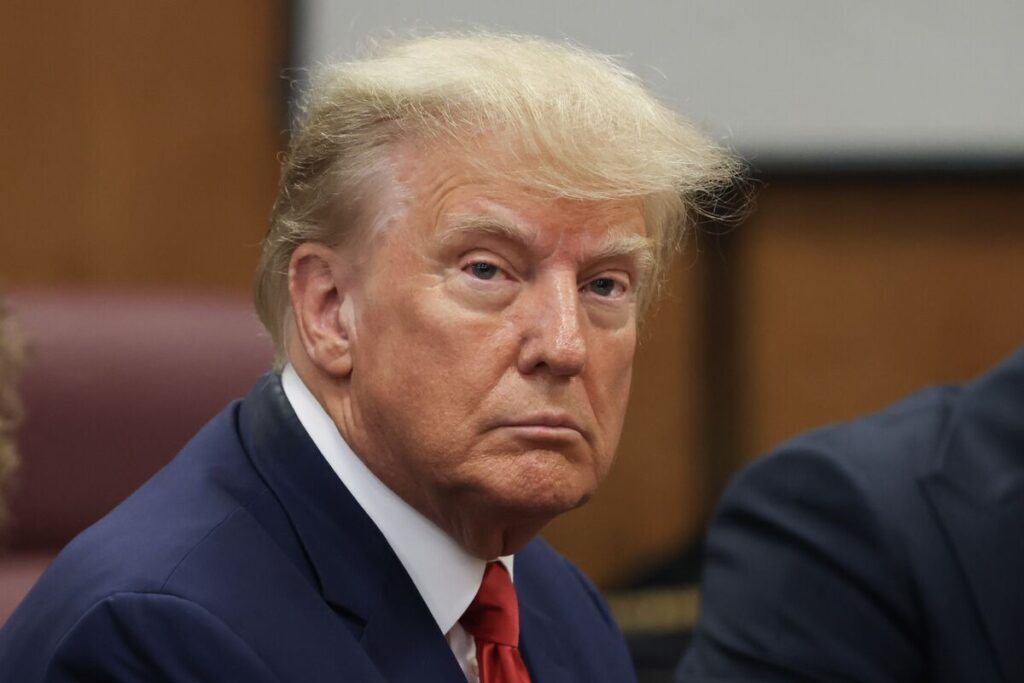
A sovereign wealth fund proposed by Treasury Secretary Scott Bessent and Commerce Secretary Howard Lutnick has encountered resistance within the White House, despite being developed at the direction of President Donald Trump.
Trump’s Initial Vision Sparks Speculation
Trump’s February executive order instructed the Treasury and Commerce Departments to draft a framework for a U.S. sovereign wealth fund within 90 days. This prompted speculation that such a fund might invest in Bitcoin or other digital assets, especially given Trump’s increasing interest in crypto.
While this sparked hope among crypto advocates, Bessent and Lutnick clarified early on that the focus would be on traditional financial assets such as equity and warrants. Nonetheless, David Sacks—appointed by Trump as his crypto adviser—hinted that Bitcoin could still be considered as part of the fund’s assets.
That possibility now seems unlikely following a separate move by Trump. In March, he signed an executive order to establish a dedicated Strategic Bitcoin Reserve and a digital asset stockpile, signaling a parallel but independent strategy for managing crypto assets.
Funding Source and Structure Remain Unclear
There were also discussions around whether tariffs or other government revenues could finance the fund, but Lutnick later dismissed the idea of using tariffs. “Tariffs will not be used to support the sovereign wealth fund,” he confirmed.
Although the plan was submitted to Trump in early May, no final decision has been reached. Kush Desai, a spokesperson for the White House, confirmed that the departments have fulfilled their directive, but emphasized that “no final decisions have been made.”
Desai added that the proposed sovereign wealth fund aligns with Trump’s broader objectives to bolster national and economic security.
Ongoing Deliberations and Potential Uses
The details surrounding how the fund will operate, or what it will invest in, remain unsettled. According to sources familiar with the matter, Trump has yet to decide how any returns from the fund would be used. One possibility he has floated is acquiring a stake in TikTok—currently facing a U.S. ban unless Chinese parent company ByteDance sells its stake.
Meanwhile, Bessent and Lutnick are also spearheading the development of the U.S. Strategic Bitcoin Reserve and Digital Asset Stockpile. These crypto-specific initiatives will include frameworks for acquisition, custody, and operation, and are being designed to have no impact on the federal budget.
As deliberations continue, both crypto and traditional finance communities are watching closely to see how the Trump administration’s vision for long-term national investments takes shape.

MicroStrategy Chairman Michael Saylor has called on Microsoft to abandon traditional financial strategies like stock buybacks and bonds in favor of Bitcoin, which he claims offers better long-term value and reduced risk.
A Radical Proposal for Microsoft’s Capital Allocation
Speaking at the Strategy World 2025 conference, Saylor said, “Microsoft should be powered by digital capital. Bitcoin is the highest-performing uncorrelated asset.” He pointed out that Bitcoin has significantly outperformed Microsoft stock over the past five years, yielding over 950% gains compared to MSFT’s 148%.
Despite this disparity, Saylor criticized Microsoft’s use of its large cash reserves, arguing that the current focus on stock repurchases and low-yield bonds weakens the company’s flexibility and leaves shareholders more exposed to risk. “Buying Bitcoin would be 10x better than buying your own stock,” he said.
Critique of Bonds and Buybacks
Saylor was scathing in his view of bonds, calling them “toxic,” and claimed that stock buybacks “destroy 97% of your capital over 10 years.” Instead, he advocated redirecting funds toward Bitcoin, which he believes could increase Microsoft’s enterprise value by up to $5 trillion.
“Bitcoin…emerged as the alternative to bonds in 2024. That was the point at which the SEC endorsed Bitcoin ETFs,” he noted. “That was kind of year zero. We’re now in year one.”
Bitcoin as the Future of Capital
Saylor characterized Bitcoin as the modern alternative to outdated investment strategies. “Bitcoin is the universal, perpetual, profitable merger partner,” he declared. He believes it is a “dirt cheap, one-time revenue that’s growing 30% to 60% a year.”
Previously, Saylor made a direct pitch to Microsoft’s board, delivering a three-minute presentation with 44 slides urging a strategic shift toward Bitcoin. However, a shareholder proposal to allocate 1% of Microsoft’s cash into Bitcoin was ultimately voted down, following opposition from the board.
Despite the rejection, Saylor’s push highlights a growing debate over how corporations should manage capital in a rapidly changing economic landscape.