

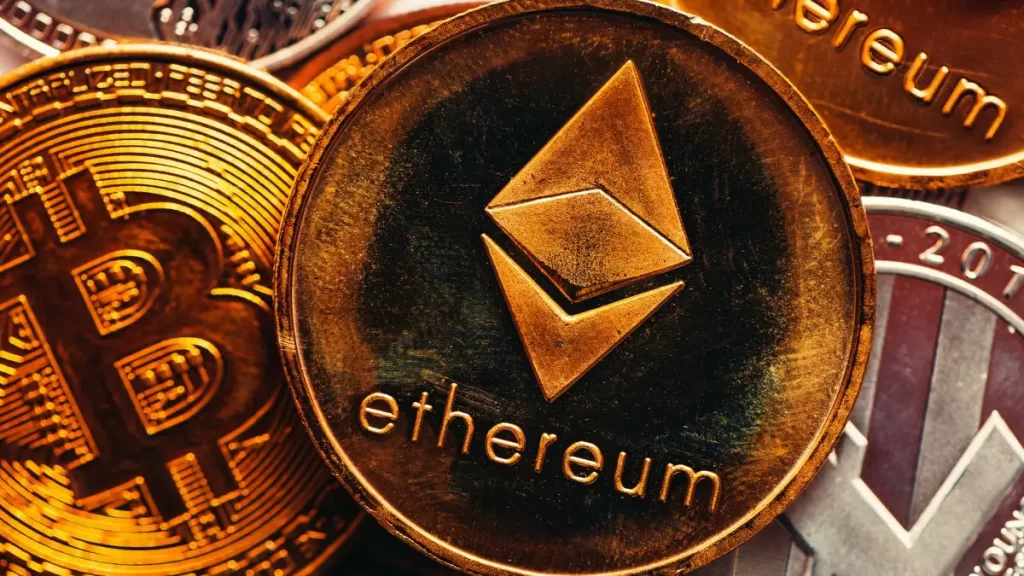
Ethereum (ETH) has provided investors with substantial capabilities to determine levels of compliance amid current efforts to regulate cryptocurrency markets, reports show.
Sanctions in the United States Office of Foreign Assets Control (OFAC) have forced compliance for roughly 60 percent of Ethereum blocks after the Merge update.
This major compliance rate has allowed Ether to receive a high degree of compliance. Data shows that 67 out of 100 Ethereum blocks had forced compliance with OFAC regulations.
Miner’s Remorse?
Ethereum’s censoring capacity on miner extractable value (MEV) relays has caused speculators to question the blockchain ecosystems’ neutrality, reports show.
Currently, Binance, Coinbase, Kraken and others use MEV relays, which mediate between block producers and builders, on their platforms. Censorship in the blockchain ecosystem has sparked other cryptocurrency platforms to develop non-censoring MEV-boost relays to mitigate the issue.
Non-censoring platforms for validators and relay operators include Aestus, Ultra Sound Money, BloxRoute Ethical, Manifold, and others.
Ethereum ‘Scourge’ Combats Censorship
The news comes after Ethereum co-founder Vitalik Buterin announced in November he would add his Scourge technical roadmap to the cryptocurrency.
The update aimed to boost the platform’s proof-of-stake network to provide “reliable and credibly neutral transaction inclusion” while avoiding protocol risks from MEVs. This hopes to combat miners exploiting transactions on the network and censoring investors, reports showed at the time.

Bitcoin (BTC) hit a fresh six-month low for exchange outflows over the holiday season, Glassnode data shows.
BTC volatility indexes have reached a new low after users adopted the cryptocurrency following trends in the ongoing bear market. The ongoing FTX bankruptcy and crisis have also failed to slow down cryptocurrency withdrawals and outflows.
Glassnode data also showed outflow peaks of around 143,000 BTC but have subsided tenfold from 14 November, when FTX filed for Chapter 11 bankruptcy, to 25 December.
Christmastime saw outflows slow to just 9,352 BTC, nosediving to 93.5 percent. On-chain data also reveals a trend of holding onto coins and a stronger conservative approach to transactions.
According to a HODL Waves metric, based on unspent transaction outputs (UTXOs) categorised by age, users have begun moving coins, featuring wallets unused for one to two years, in December.
The news comes after PeckShieldAlert noted a massive transfer from accounts on crypto trading platforms Poloniex and Genesis, totalling 9.878 Ether (ETH) and 13,103 ETH, respectively.
The account transactions took place on 19 December and had not seen any activities for roughly four years, triggering speculation across social media.

MicroStrategy, a software analytics firm based in the United States, recently acquired more Bitcoin (BTC) holdings, triggering mixed reactions from social media.
Company executive chairman Michael Saylor tweeted recently that his business had bought more Bitcoin, with its total holdings reaching 132,500 BTC at $4.03 billion at the time of purchase.
Its total holdings plummeted to just $2.1 billion to date, sparking discussions on Twitter.
While some praised him as a “rock star,” others stated Bitcoin backers should not celebrate the extra purchase as it could centralise ownership of the cryptocurrency.
Massive Bitcoin Sale Strategy?
The news comes after a recent sale of its Bitcoin holdings on Thursday, revealing further scrutiny from Bitcoin supporters. In a Yahoo! Finance analysis, the executive cited tax purposes for the sale.
He said at the time: “I think that this is going to be really helpful for Bitcoin because this is an educational moment. And people are realizing the benefits of buying a crypto asset that’s backed by the world’s most powerful computing network and by 10 gigawatts of energy and the difference between that and the 20,000 other cryptos that are, in essence, backed by nothing, and they’re just like other fiat currencies”
According to Yahoo!’s David Hollerith, MicroStrategy had launched a tax loss harvesting strategy by buying Bitcoin and later partially selling it. This allows it to use the losses at the middle selling period to hedge against capital gains taxes for the current fiscal tax year.
Recently, Saylor also stated his firm planned to adopt the Lightning Network in 2023, adding it was searching for software solutions to facilitate the measures.
The Lightning Network is a Layer-2 feature that helps boost Bitcoin capacity and faster transaction rates at scale. Exchanges such as CoinCorner and Bitnob adopted the Lightning Network in mid-December to facilitate cryptocurrency transactions and global remittances for African users.
Fidelity Investments, a major financial firm in the United States, recently filed trademarks for a wave of Web3 offerings such as cryptocurrency, investment, and non-fungible token (NFT) services, it was revealed on social media on Tuesday.
Mike Kondoudis, a licensed trademark attorney for the US Patent Trademark Office (USPTO), tweeted at the time documents detailing the filings.
The new patents focus on technologies linked to the metaverse, the successor to the mobile internet. It will involve several investment services such as mutual funds, retirement funds, financial planning, and others, for people travelling the virtual landscape.
Fidelity Investments could launch payments systems in the Metaverse for paying bills, transferring funds to other users, and “financial administration of credit card accounts in the metaverse and other virtual worlds.”
It could launch cryptocurrency services for asset management, buying, selling, and trading across the Metaverse. This would also facilitate coin holdings in digital wallets.
The filing states: “Electronic wallet services in the nature of electronic storage and processing of virtual currency for electronic payments and transactions via a global computer network; digital currency, virtual currency, cryptocurrency digital token.”
The company currently hosts its Metaverse platform on Decentraland, the world’s largest Metaverse platform. Visitors can soon join its online marketplace to buy and sell digital assets.
Services Portfolio Expansion
To expand on its portfolio of services, Fidelity Investments will provide educational programmes by “conducting classes, workshops, seminars and conferences in the field of investments and in the field of marketing financial services.”
Another filing reads: “Providing business information to financial service providers by means of an internet web site, in the field of business marketing in the metaverse and other virtual worlds; referral services in the field of investment advice and financial planning in the metaverse and other virtual worlds.”
It also plans to incorporate NFTs in its metaverse ambitions. The investment firm stated it may also launch an “online marketplace for buyers and sellers of digital media, namely, non-fungible tokens,” however further details on such are sparse.
Despite the ongoing cryptocurrency and tech bear markets, fuelled by the collapse of FTX and Meta Platform’s metaverse priority shifts, Fidelity will continue to push for a workable platform for its current and future Web3 users.
It also urged in a response letter to US senators to tighten restrictions on cryptocurrency markets. A spokesperson for the financial firm stated it had “always prioritized operational excellence and customer protection.” It added that recent events in the cryptocurrency industry had “underscored the importance of standards and safeguards.”
On its metaverse website, Fidelity stated: “Our presence on Metaverse platforms is a place for you to learn more about personal finance and to access information from Fidelity. While we are pleased to be in the Metaverse, keep in mind that communications in our industry are highly regulated.”
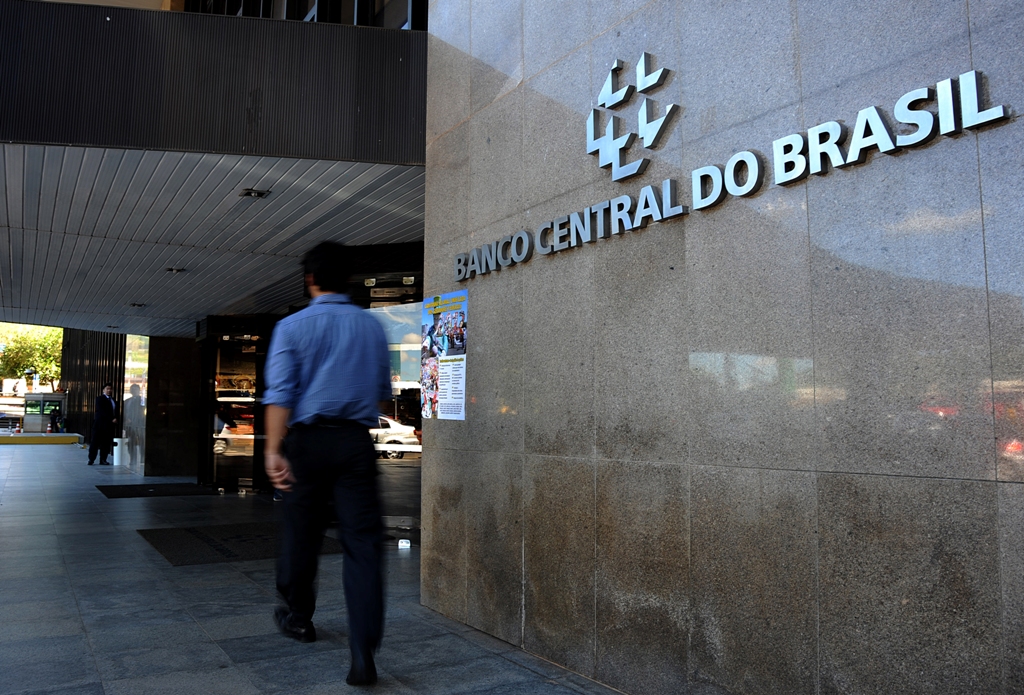
Brazil’s Securities and Exchange Commission (CVM) approved cryptocurrency assets for inclusion in sanctioned investment funds, it was revealed ahead of the Christmas holiday.
The government body allowed investment funds to keep crypto assets on Friday. It explained that it will allow cryptocurrency funds to operate under regulations based on the ownership and integrity of held assets.
The news comes ahead of a debate among members of the Financial Innovation Laboratory (LAB) on crypto assets and decentralised finance (DeFi).
According to its website, the CVM-linked organisation aims to “promote the study, analysis and development of models and conceptual structures in the Brazilian financial and capital market that use crypto-assets and functionalities and models adopted by Decentralized Finance, preserving investor protection, market efficiency and other objectives of national regulation.”
It also aims to create and develop crypto prototypes for Brazil’s capital markets.
What’s in the New Bill?
The new government regulatory framework, signed into law by former Brazilian president Jair Bolsonaro last Thursday, will determine sets of regulations for crypto assets.
The new bill will provide rules for establishing fraud charges for digital assets, totalling four to six years of jail and monetary penalties.
The bill also requires digital asset companies to apply for licences for designated “virtual service providers.” This also covers exchange and trading intermediaries and determines which digital currencies qualify as legal payment methods in Brazil.
The new law also determines rules for inclusion in investment funds. For example, crypto assets must receive authorisation from the CVM, local supervisory firms, or Brazil’s Central Bank, the Banco Central do Brasil.
All supervisory entities involved must remain legally capable of conducting operations and follow regulatory guidelines, including anti-money laundering and counter-financial terrorism rules.
Market agents must also scrutinise cryptocurrency assets on whether they are securities, as market guidelines have outlined.
Toronto, Canada, 28th December, 2022, Chainwire
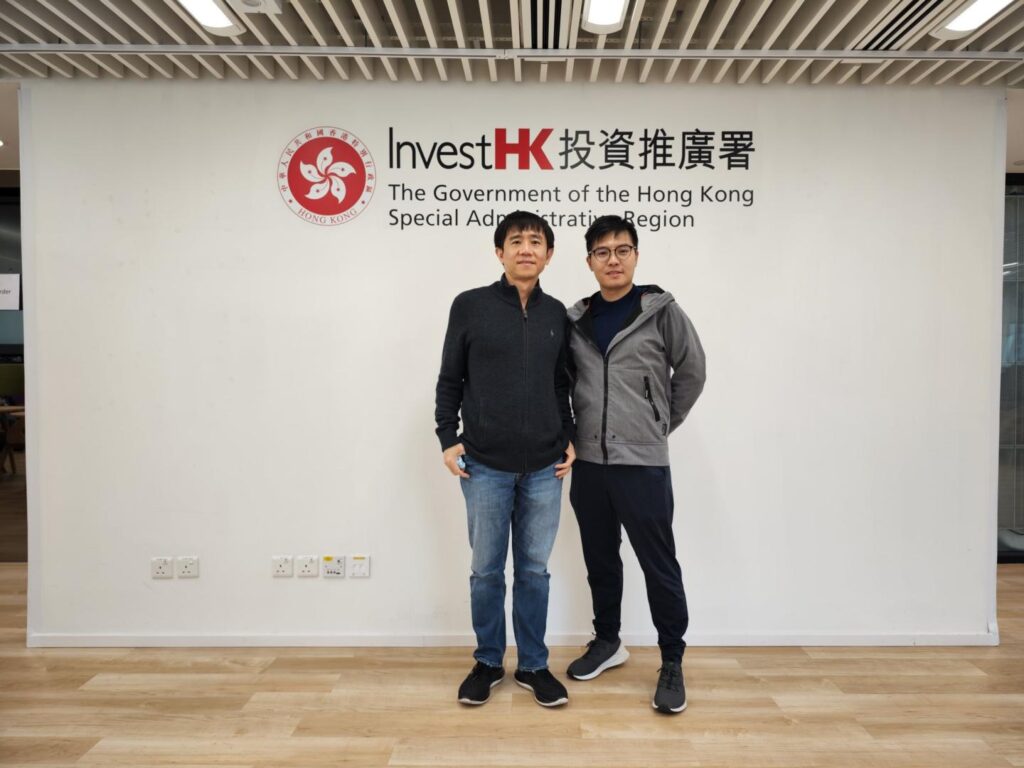
- Dr. Ming Wu, co-founder of Conflux Network, was invited to Hong Kong to speak with various government and private organizations about the digital economy, innovation and technology, and has reached an initial strategic cooperation intention.
- Conflux is already in the process of registering related entities for the entry into Hong Kong, solidifying its role as foundational infrastructure for Web3.
- This follows October’s announcement of the “Policy Declaration on the Development of Hong Kong Virtual Assets” which has paved the way for a more hospitable blockchain environment in Hong Kong.
Dr. Ming Wu, Co-Founder of Conflux Network, was invited by the Hong Kong Government to discuss the rise of tech innovation through Web3 and how the Conflux Network could play a foundational role in these developments. During the visit, Dr. Ming Wu had an in-depth discussion with the heads and reception staff of various institutions under the new “Policy Declaration on the Development of Hong Kong Virtual Assets” officially released in October.
Over the past several years, stringent COVID-19 travel control measures and regulatory uncertainty saw many Hong Kong blockchain and crypto companies shift their businesses to more hospitable areas. This policy shows a significant refocus on digital assets and coincides with the launch of the first two exchange-traded funds for cryptocurrency in Hong Kong.
Dr. Ming Wu introduced the Conflux Tree-Graph public chain, explaining it is the only compliant, public and permissionless chain in China and has achieved 3000+ TPS, 5000+ nodes and 0.5s block generation. In terms of throughput, confirmation time, and cost of use, it has 2-3 orders of magnitude advantages over the international first-generation public chain “Bitcoin” and the second-generation public chain “Ethereum”. The system performance ranks first in the world.
Dr. Mig Wu said ‘Hong Kong’s open environment for crypto provides more opportunities for practitioners in Web3 and Metaverse, especially for those from China. People here have more freedom to make the technique and business innovations in a compliant manner. This will also accelerate the integration of Web3 into the traditional internet business and economies to maximally extract its value. By expanding to Hong Kong, Conflux will be able to take a whole different strategy and have the potential to become the foundation to fulfill the Web3 vision of Hong Kong.’
The expansion follows Conflux Network being named a potential unicorn, a private startup company valued at over $1 billion, in the Emerging Giants in Asia Pacific joint report from HSBC and KPMG. One of only five blockchain-related companies to make the prestigious list.
About Conflux
Conflux is a permissionless Layer 1 blockchain connecting decentralized economies across borders and protocols. Recently migrated to hybrid PoW/PoS consensus, Conflux provides a fast, secure, and scalable blockchain environment with zero congestion, low fees, and improved network security.
As the only regulatory-compliant public blockchain in China, Conflux provides a unique advantage for projects building and expanding into Asia. In the region, Conflux has collaborated with global brands and government entities on blockchain and metaverse initiatives, including the city of Shanghai, McDonald’s China, and Oreo.
To learn more about Conflux, visit confluxnetwork.org
Contact
Melissa Tirey
Shift6 Studios
[email protected]

Bitcoin enthusiasts have seen the cryptocurrency’s network hash rates recover to normal levels following a massive cold snap across the United States.
Due to the adverse weather, US power grids faced disruptive strains, forcing hash rates to dip temporarily. The country battled sub-zero temperatures, killing more than 28 people.
Bitcoin’s hash rate fell from up to 300 exahashes per second (EH/s) to around 170.60 EH/s on Christmas Day (25 December). It returned the following day to 241.29 EH/s, Blockchain.com data found.
Bitcoin (BTC) mining operations in Texas, where much of the nation’s hash rate takes place, temporarily halted or slowed to help with power shortages.
Bitcoin Capitals of the World
Texas is one of the leading producers of Bitcoin hash rates and is now one of the largest places in the world for Bitcoin mining.
As with many locations, power grid operations must accommodate the huge power consumption rates of BTC mining industries. Locations dependant on such sectors can affect global markets if hash rates slide due to power consumption problems or grid instability.
Data from Sunbird DCIM shows that countries with the largest Bitcoin hash rates include Dalian, China, the Genesis Mining Farm in Reykjavik, Iceland, Moscow, Russia, the GigaWatt Factory in Washington State, US, Linthal, Switzerland, and the Bitfury crypto facility in Amsterdam, Netherlands.
The top four locations produce 360,000 terahertz, 1,000 gigahertz, 38 petahertz, 1.3 petahertz, respectively.
The report also found that 65 percent of all BTC hash rates come from China. Firms such as Beowulf Mining aim to boost crypto mining capacities to 500 megawatts by 2025.
FTX paid lead lawyers from Sullivan & Cromwell LLP more than $12 million USD before filing for Chapter 11 bankruptcy in the US, court filings revealed.
According to reports from Bloomberg Law, the New York City-based law firm used just over $3 million of the total retainer funds to conduct services for the now-bankrupt cryptocurrency exchange platform.
West Realm Shires Services Inc offered the retainer on behalf of FTX to cover the legal services from Sullivan & Cromwell.
The court filings show that the law firm provided services to advise debtors on its Chapter 11 bankruptcy, and liaise with “local and federal governmental authorities and regulators.”
It will also help with investigations on “all potential estate causes of action,” advise sell-offs of the business and facilitate negotiations on the debtor’s behalf.
FTX also paid out $15.5 million to retain services from the firm, data revealed. Currently, the law firm holds $9 million in retainer funds, the court filing added.
Developments on FTX Crisis, Arrests
The news comes after FTX filed for bankruptcy on 11 November after facing a massive liquidity crisis, sparking a bank run on its native FTT token.
Bahamian authorities recently arrested the company’s former chief executive, Sam-Bankman Fried, on the island nation. The ex-CEO was released on $250 million bail, secured with home equity from his parent’s Palo Alto, California house.
Courts have ordered the disgraced former executive to remain under house arrest with monitoring equipment as he awaits trial for mismanagement of funds and other offences.

New York, United States, 27th December, 2022, Chainwire
With sales of non-fungible tokens falling for the 6th straight month, and falling by 60% in just Q3 to Q4 this year, it’s understandable to say the market is feeling pessimistic. A number of factors contribute to this such as interest rate increases cooling the economy and the novelty of purely aesthetic NFTs failing to attract investor attention.
Pessimistic Donkey College, hopes to rally the bear market by introducing the NFT project that provides a new investment opportunity with a focus on long-term growth of an investor community. This new project will be launching on January 15, 2023.
In order to help support investors, the project is also going to be run on a royalty-free model to encourage trading and participation in the project post-launch. This is in line with the innovative stake system being developed to run alongside it.
As an addition to launching the NFT, Pessimistic Donkey College will be producing a weekly mental health podcast to raise awareness and educate their audience on the increasingly important topic. This approach of pairing an NFT with a socially conscious project is a new step for the industry and demonstrates that NFT projects can be used for the public good.
The evolutionary goals of the project and their commitment to bringing pessimistic investors together in the bear market show an understanding that NFT projects need to change and develop past tools of investment and move into community-driven environments and can enact a positive social impact.
About Pessimistic Donkey College
Pessimistic Donkey College is a new NFT project by co-founders: JAY, Draco, DEL, TT, and their teams. One of the project’s major goals is to reinvigorate interest in the face of the bear market by offering a new collection of images as well as utilities and a royalty-return system.
The plans for this project are to take another step in the NFT space beyond previous competitors.
In addition to the minting of NFTs, the project will also produce a weekly mental health podcast.
Contact
Draco
Pessimistic Donkey College
[email protected]
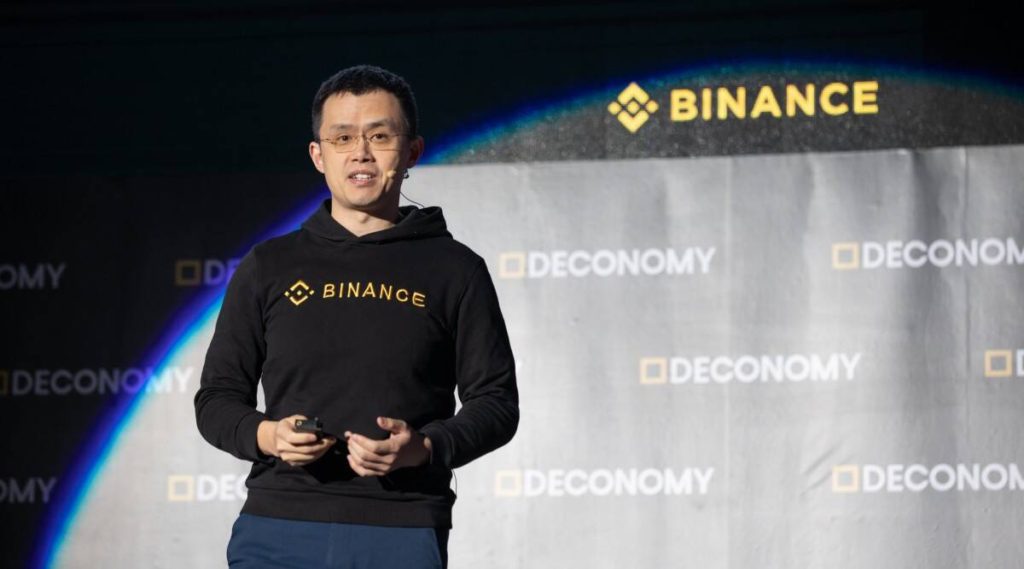
Binance, the world’s largest cryptocurrency exchange platform, has hit back at critics it claims have spread fear, uncertainty, and doubt (FUD) over its operations in a recent blog post.
In the post, it addressed seven key issues as it remains under severe scrutiny due to what it states are accusers that would like to see the exchange fail.
It aimed to firstly explain concerns over the stablecoin USD Coin (USDC), which was suspended earlier in December. A spokesperson from Binance said it wanted to consolidate all stablecoins to the ones with the most liquidity, including its native Binance USD (BUSD).
It also responded to claims it did not have sufficient liquidity to allow users to continue withdrawals.
According to the Chinese firm, Binance kept sufficient reserves between 12 and 14 December, with net withdrawals topping $6 billion at the time.
In a subsequent audit, CryptoQuant later confirmed Binance reserves were roughly 99 percent accurate. The latter confirmed it had entered talks with firms to provide services to verify reserves, adding that the world’s Big Four—Deloitte, KPMG, Ernst and Young (EY), and PricewaterhouseCoopers (PwC)–could not properly audit encrypted company reserves.
According to Binance’s fourth counterpoint, it addressed why it provided just Bitcoin (BTC) verification, stating it “takes the most cautious attitude towards” work involving user assets.
Due to the massive number of currencies, volumes, teams, and reserves needed to conduct verification processes, it needed to carefully conduct such verifications. The company added it did not have to disclose financial information as it was a private firm.
It also added: “Binance does not need to disclose detailed financial status for two reasons: First, listed companies must disclose company financial details to their investors, but Binance is a private company, not a listed company; second, Binance is financially healthy [and] self-sufficient, [has] no external financing needs and external investors, and no intention to go public at this stage.”
Citing a Reuters report, it stated in its sixth counterargument that mainstream media sources stated “ambiguities” and accused readers of only seeing “eye-catching headlines.”
It assured that it had the world’s largest number of approvals and licences, and aimed to tackle crime, responding to over 47,000 requests from law enforcement agencies since last year.
Concluding, Binance hit back at firms claiming it had “destroyed FTX,” stating the latter had “destroyed itself” due to misappropriation of user assets, citing a 6 December tweet from company chief executive Changpeng Zhao (CZ).
It said: Binance will not regard other exchanges as ‘competitors’. The current industry touches less than 6% of the population. We are more focused on continuously promoting and expanding industry adoption. We also hope to see more exchanges, blockchain, Wallet, etc. coexist in this ecosystem, so that more people can enter the field of blockchain cryptocurrency, without spending time and resources on any unhealthy ‘competition’ within the existing scope.”