

A key United States Securities and Exchange Commission (SEC) official has cautioned investors to avoid fully trusting claims of proof-of-reserves (PoR) from global centralised crypto firms.
Paul Munter, SEC acting chief accountant, said in a Wall Street Journal interview that investors should remain “very wary of some of the claims that are being made by crypto companies.”
Munter added ongoing audits did not indicate companies were in a sound financial position, stating, “Investors should not place too much confidence in the mere fact a company says it’s got a proof-of-reserves from an audit firm.”
He continued that PoR lacked sufficient information to allow stakeholders to determine if companies held enough assets to cover liabilities.
The news comes as numerous crypto companies, including Binance, Crypto.com, and Kraken, among others, have offered to show customers their PoR data amid the ongoing FTX collapse.
The measures aim to ease fears of further bankruptcies and ensure customers of financial liquidity.
The news comes after Munster voiced concerns over cryptocurrency platforms at a recent conference in the US Capitol in mid-December.
In the subsequent WSJ article, he stated that, should the SEC find additional patterns in the industry, it could escalate matters with law enforcement agencies.
Earlier claims from former SEC Internet Enforcement chief John Reed Stark accused Binance of failing to address internal financial controls over its proof-of-reserves.
The news comes after three key crypto exchanges—Celsius, Three Capital Arrows, and FTX—have filed for administration in their respective markets over severe liquidity crunches triggering bank runs, among other problems.

Bankrupt cryptocurrency exchange platform FTX has requested judges in the United States to block crypto lending enterprise BlockFi from receiving $450 million in Robinhood shares.
BlockFi recently took legal action against the disgraced exec’s holding firm, Emergent Fidelity Technologies, where Sam Bankman-Fried, FTX’s former chief executive, holds the purchased shares.
The lawsuit demands that the holding firm release 56 million Robinhood Markets shares recently designated as collateral for BlockFi’s bailout loans to Alameda Research.
FTX and Alameda Research filed for Chapter 11 bankruptcy on 11 November prior to resolving loans with BlockFi. The bankruptcy companies later argued its case in a court filing alleging laws protected it from debt collections.
The filing read: “In the alternative, if the Court were to determine that Alameda has failed to show that the Shares arguably are property of the bankruptcy estate, the Court should exercise its discretion to extend the automatic stay to Emergent and EDFM (the nondebtor defendants named in the BlockFi Adversary Proceeding), and ensure that all creditors—including BlockFi and the others—can participate in an orderly claims process before this Court.”
In the filing, FTX claimed that Alameda Research owned the shares and that FTX-linked firms would keep shares during ongoing investigations to resolve ownership claims.
Parties claiming ownership of the shares include FTX creditor Yonathan Ben Shimon, Sam Bankman-Fried, and BlockFi. Currently, Bankman-Fried has only $100,000 in his bank account ahead of his release while on $250 million USD bail conditions, secured by his parents’ house equity.

As some people face account lock-outs from their banks, some have turned to Bitcoin and other cryptocurrencies to receive their salaries.
One such Bitcoin enthusiast, SVN, received his entire salary in Bitcoin for 2022, paid in fortnightly instalments.
In a Twitter thread, he stated that he used Coinbase’s direct deposit method, then migrated to Bitwage, Cash App, where his company paid him directly in cryptocurrency.
Took my entire salary in #Bitcoin this year. 100% net wage paid bi-weekly.
— svn ⚡️ (@rarepassenger) December 20, 2022
Started off with Coinbase direct deposit, migrated to Bitwage, Cash App, then got the company to pay me directly.
He stated direct deposit services were “simple and straightforward” from then.
He said: “Payment would go direct to wallet. Would send a % straight to cold storage for saving, the rest would use as needed.”
Explaining further, he stated the benefits of receiving his yearly wage in Bitcoin was that “accountants didn’t need to know [Bitcoin]” and that tax reporting was “easy.”
Conversely, he stated Know Your Customer (KYC) coins were a challenge.
Continuing, he said: “Getting the company to pay direct was a better experience. Because I was taking 100% net every other week, it required the business to change strategies for accumulation and earning.”
On the positive, he did not have to use KYC and was paid directly to his wallet. Despite this, he faced an “accounting nightmare.”
Getting the company to pay direct was a better experience. Because I was taking 100% net every other week, it required the business to change strategies for accumulation and earning.
— svn ⚡️ (@rarepassenger) December 20, 2022
Benefits:
Non-KYC coin
Direct to wallet
Cons:
Accounting nightmare
SVN added that obstacles to receiving his coins were transition tracking, with several wallets such as Sparrow Wallet and Mobile LN wallets offering separate transaction record-keeping.
Concluding, he wrapped up his analysis of a year’s worth of Bitcoin salaries, stating,
“Anyway, a whole year of accepting #BTC as pay has been interesting. Some days there’s a gain, some days a loss, other days neutral. It makes you take care of responsibilities faster, purchases are more considerable during drops and builds time horizon. Savings increases too.”
Anyway, a whole year of accepting #BTC as pay has been interesting.
— svn ⚡️ (@rarepassenger) December 20, 2022
Some days there’s a gain, some days a loss, other days neutral.
It makes you take care of responsibilities faster, purchases are more considerable during drops and builds time horizon. Savings increases too.
He added he would do things differently such as using less “off-ramps” or avoid automatic clearing house (ACH) payments, which conduct transactions between banks and credit unions.
Finally, he recommended using stablecoins more than other cryptocurrencies.
He concluded: “Haven’t had ANY banking issues considering I don’t have a bank account anymore. Would I go back? No. I really love the freedom having custody of my [hard-earned] funds feels.”

Ex-Alameda Research chief executive Caroline Ellison has reached a plea agreement with US authorities, allowing her to escape prosecution for seven charges. This would leave her with just charges of tax violations with immediate release on $250,000 bail.
Ellison struck a deal with the United States Attorney for the Southern District of New York, a document published on Wednesday revealed. The deal noted that Ellison would avoid most of the biggest charges totalling up to 110 years in prison.
Charges levied against Ellison include two counts of wire fraud, conspiring to commit wire fraud and one count of commodities fraud. She also received one count of conspiracy to commit securities fraud against equity investors and a final count of conspiracy to commit money laundering.
In exchange for dropping the largest charges against the former exec, she must fully disclose all information, documents, and other requested data to prosecutors. Despite the plea deal, she may still face charges from authorities in other affected countries.
Along with the $250,000 bond, authorities have required Ellison to surrender her passport, travel documents, and right to leave the US.
FTX Scandal Continues
Sam Bankman-Fried, the disgraced former chief executive for FTX, has been extradited to the US and is heading to the Southern District of New York to stand trial for his crimes.
Bankman-Fried, Ellison, and other executives will face charges of monetary malfeasance over their roles in the collapse of the now-bankrupt crypto exchange platform. FTX filed for Chapter 11 bankruptcy on 11 November after facing a massive bank run on its native token, FTT.
This triggered a huge liquidity crisis and subsequent collapse, triggering market volatility and tightening regulations across multiple countries.

The United Kingdom has categorised “designated crypto assets” for Investment Manager Exemption (IME) for the 2022-2023 fiscal tax year.
Commissioners for His Majesty’s Revenue and Customs (HMRC) have enacted the legislation which lawmakers announced in April this year. The tax body of the UK government passed the new regulation this week, which will enter force on 1 January next year.
While the government has not defined “designated crypto assets,” the new regulations refer to “investment transactions” cited in Section Two of the Investment Transactions (Tax) Regulations 2014.
IME allows the UK to boost its status as a financial hub and allows non-UK investors residing in the country the right to select British investment managers. The latter can conduct some investments on their behalf without becoming subject to British taxation rules.
The new IME will place “designated cryptoassets” as stocks, included in Whitehall’s FinTech Sector Strategy in early April.
According to the consultancy paper, the measures,
“will provide certainty of tax treatment to U.K. investment managers and their non-U.K. resident investors who are seeking to include cryptoassets within their portfolios, and we anticipate that this will also encourage new cryptoasset investment management businesses to base themselves in the U.K.”
The news comes as multiple countries recommend financial regulations tighten across their respective governments. Countries such as Israel, South Korea, Australia, and the United States have submitted recommendations linked to the collapse of several key crypto exchanges.
This comes after FTX, one of the world’s largest cryptocurrency exchange platforms, filed for Chapter 11 bankruptcy after mismanaging billions in funding. Bahamian authorities have arrested the company’s former chief executive, Sam Bankman-Fried, who awaits extradition to the United States for his malfeasance.

Alaska is set to launch monetary regulations for virtual currencies starting 1 January next year, reports revealed this week.
According to the Cooley Law Firm, Alaska will force enterprises using virtual currencies to apply for and obtain money transition licences with the state government.
Alaska, the most northwestern state in the United States, changed money transmission regulations to determine the meaning of a “virtual currency.”
State Crypto Rules
The state’s Division of Banking and Securities (DBS) adopted changes to its local Administrative Code, stating: “[Virtual currencies are a] digital representation of value that is used as a medium of exchange, unit of account, or store of value; and is not money, whether or not denominated in money.”
The code will also require individuals “engaging in money transmission activity involving virtual currency” to submit licencing applications to conduct such transactions.
It also defines “permissible investments” and “monetary value,” but states reward programmes and online gaming virtual coins are not included as virtual currencies.”
Agreements Broken
Previously, crypto-linked platforms have received Limited Licensing Agreement (LLA) from Alaska’s DBS, but digital currencies were not included.
Under the current changes, Cooley Law Firm wrote: “As a result of the explicit inclusion of virtual currency activity as money transmission activity requiring a license, the DBS is phasing out the LLA requirement, and LLAs currently in effect will be voided and removed from the Nationwide Multistate Licensing System record on January 1, 2023. It is not clear if the change to the regulations will require current Alaska licensees that engage in virtual currency activity to take any action.”
Other nations such as Israel, Australia, South Korea, and others may require crypto firms to apply for licences under stricter regulations. The news comes amid the ongoing crisis with FTX, which collapsed into administration on 11 November this year, due to fraud and monetary misappropriation.
A key executive from one of the world’s largest cryptocurrency exchanges has backed decentralised protocols, adding open-source code and smart contracts were the “ultimate form of disclosure.”
In a blog post, Coinbase chief executive Brian Armstrong advocated tightening regulations on centralised platforms. He also outlined steps government regulators could take to reinstate trust in the crypto industry amid the ongoing FTX crisis.
In the post, he said:
“Second, smart contracts, which power DeFi and Web3 apps, are public and open source by default. This means anyone can go audit the code to see if it really does what it claims to do. This is the ultimate form of disclosure. Instead of ‘don’t be evil’ [we] can have ‘can’t be evil’, where you can trust the laws of math instead of human beings.”
A List of Recommendations
According to the executive, the industry needed “additional transparency and disclosure” to counter human error and fiscal malfeasance. Armstrong continued that the fall of disgraced crypto exchange FTX would “be the catalyst we need to finally get new legislation passed.”
He added that US lawmakers should pass stablecoin regulations to build standard financial service laws, where regulators could monitor implementing a state trust charter or similar mandate.
Stablecoin issuers should also meet “basic cybersecurity standards” and offer blacklisting [procedures] to comply with global sanctions regimes, he said.
Also, one major bill from US senator Bill Hagarty, the Stablecoin Transparency Act, is set to pass the Senate in the near future. Armstrong recommended targeting crypto exchanges and custodians with federally-sanctioned licencing and registration.
This would take place after Congress passed sufficient stablecoin regulation, according to the CEO. He also urged lawmakers to force the US Securities Exchange Commission (SEC) and the Commodities Future Trading Commission (CFTC) to sort the world’s top 100 crypto coins by market capitalisation and label them as securities or commodities.
Continuing, Armstrong stated: “If asset issuers disagree with the analysis, the courts can settle the edge cases, but this would serve as an important labelled data set for the rest of the industry to follow, as, ultimately, millions of crypto assets will be created.”
Foreign Sources, Domestic Consequences
He also called on regulators to determine how crypto exchanges from foreign sources operated in their respective subsidy branches worldwide.
He said: “If you are a country who is going to publish laws that all cryptocurrency companies need to follow, then you need to enforce them not just domestically but also with companies abroad who are serving your citizens.”
Concluding, Armstrong wrote,
“Don’t take that company’s word for it. Actually go check if they are targeting your citizens while claiming not to […] If you don’t have the authority to prevent that activity […] you will unintentionally be incentivizing companies to serve your country from offshore.”
The news comes as global regulators determine the next steps against cryptocurrencies amid the ongoing bankruptcy and prosecution of FTX and its executives. Currently, Bahamian authorities have detained FTX’s ex-chief executive Sam Bankman-Fried and may extradite him to the US.
Numerous countries, including Australia, South Korea, Israel, the United States, and others have begun developing recommendations for regulating cryptocurrency markets. The plans come amid a volatile bear market, which has seen numerous exchanges collapse due to fraudulent or mishandling of funding.

Tokyo, Japan, 23rd December, 2022, Chainwire
Astar Network, the smart contract platform for multichain, has been awarded the Product of the Year at the 4th annual Blockchain Award by the Japan Blockchain Association. Astar Network’s founder and CEO Sota Watanabe bagged the Person of the Year award for the second consecutive year at the same event.
Both Astar Network and Sota Watanabe emerged as the favorites of the Japanese Web3 community in a survey conducted by the Japan Blockchain Association (JBA). The JBA is the largest blockchain association in Japan, consisting of 171 companies including bitFlyer, Coincheck, Microsoft, GMO, EY, Deloitte, PwC, KPMG, Toyota, and ConsenSys.
Sota Watanabe, the founder and CEO of Astar Network, said, “We are delighted to have been recognized by the Japanese Web3 community. As Japan’s leading blockchain project, we remain committed to accelerating Web3 innovation through Astar. In 2023 and beyond, we will leverage our presence in Japan to unlock opportunities for entrepreneurs, developers, and users alike.”
Astar Network is the leading Layer-1 chain in Japan. As a parachain of Polkadot, it enables developers to build interoperable dApps. It supports both EVM and WASM smart contracts with cross-consensus messaging (XCM) and cross-virtual machine messaging (XVM).
As the Japanese government has made Web3 a part of its national strategy, Sota Watanabe is helping the government on the path forward. Sota has also been featured in the Forbes 30 Under 30 for both Asia and Japan. He has also been picked as one of the top entrepreneurs in Japan, and graces the cover of the latest edition of the Forbes Japan magazine.

Astar Network is the go-to blockchain for developers and enterprises interested in exploring the Japanese Web3 space. It’s also the first public blockchain from the country to be listed there despite Japan’s strict listing regulations. Astar’s native token ASTR is registered as a cryptocurrency, not a security, by the Japanese government.
About Astar Network
Astar Network supports the building of dApps with EVM and WASM smart contracts and offers developers true interoperability, with cross-consensus messaging (XCM) and cross-virtual machine (XVM). We are made by developers and for developers. Astar’s unique Build2Earn model empowers developers to get paid through a dApp staking mechanism for the code they write and dApps they build.
Astar’s vibrant ecosystem has become Polkadot’s leading Parachain globally, supported by all major exchanges and tier 1 VCs. Astar offers the flexibility of all Ethereum and WASM toolings for developers to start building their dApps.
For more information, visit: Website | Twitter | Discord | Telegram | GitHub | Reddit
Contact
Maarten Henskens
[email protected]
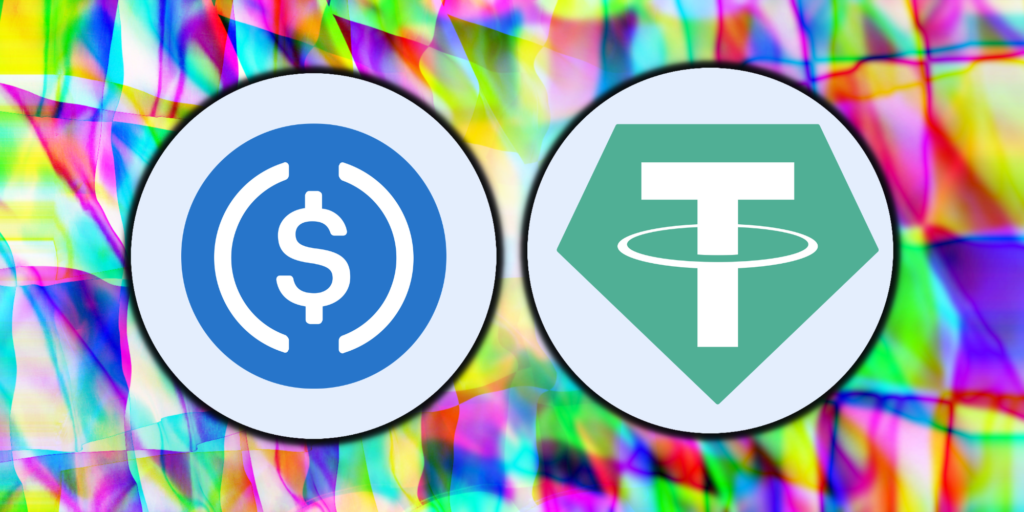
Stablecoins have gained popularity in the crypto industry despite ongoing market volatility.
A Coin Metrics report found that on-chain stablecoin settlements topped $7 trillion this year and is set to reach $8 trillion by the end of the year.
Peter Johnson, venture co-head at Brevan Howard Digital, said in a Wednesday tweet that stablecoin settlements had surpassed those from Mastercard and American Express.
Currently, Visa, the largest card platform, processes $12 trillion a year. According to Johnson, on-chain stablecoin volumes would exceed those from Visa.
Despite his observations, others have noted that credit card and stablecoin settlement volumes are completely different. The former involves consumer spending, with the latter involving cryptocurrency trading and decentralised financing.
Regulations remain the largest obstacle for stablecoins as they are an emerging technology compared to credit cards.
Some lawmakers in the United States Senate have submitted legislation to allow non-state and non-bank entities to issue stablecoins. Such institutions would need to receive a federal licence from the US Office of the Comptroller of the Currency (OCC) backed by “high-quality liquid assets.”
According to current figures, stablecoins also have a market capitalisation of 16.5 percent of the total market, or roughly $140 billion, with Tether (USDT) consisting of 66.3 billion.

South Korea’s northeastern and second-largest city Busan has announced it would drop most of its cryptocurrency partners on centralised global exchanges. The decision comes after several prominent exchanges and projects – FTX, Terra/Luna, and Voyager – collapsed in recent months.
The coastal city has been named South Korea’s blockchain capital and recently revealed an 18-person steering committee. None of the people sitting on the body were from major centralised platforms, including Binance, Gate.io, Huobi Global, FTX, and Crypto.com.
The steering committee aims to advise government authorities and investors on operating cryptocurrencies along with other digital assets. It also hopes to deepen cooperation for cryptocurrency frameworks and cooperate with foreign entities.
Second Thoughts?
News of FTX’s collapse forced Busan authorities to rethink including centralised exchanges. However, it stated it could proceed with its plans without assistance from outside sources.
According to reports, committee members stated problems with crypto platforms like FTX and others “seem to have influenced [the decision].” Other stated centralised exchanges were never included in city and supported initial liquidity offerings.
The city also plans to outline how it will separate securities and non-securities assets, along with listing and monitoring channels for assets. It established a fund for the initiative in the first half of the year, leading to the city founding a regulation-free zone for blockchain in July 2019.
Efforts to back the initiative increased after telecoms giant Korea Telecom (KT) collaborated with the city to develop infrastructure to support blockchain technologies.