


Core Scientific, a key Bitcoin (BTC) mining firm, has reportedly filed for Chapter 11 bankruptcy shortly after creditors extended a lifeline to the embattled firm.
The company received the protections in Texas, citing poor earnings and plummeting BTC values.
Financial services platform B Riley offered the $72 million non-cash financing bailout to Core Scientific. The deal included zero contingencies and $32 million with stipulations. The news comes after the firm’s value plummeted from $4.3 billion in July last year to $78 million to date.
To remain in operation, Core Scientific sold off 9,618 BTC in April this year. While it can continue with its mining operations, the firm cannot earn enough revenues to cover costs due to operations.
While the company continues to generate positive cashflows, the income is not sufficient to cover the operational costs, which involve repaying the lease for its Bitcoin mining equipment.
The firm previously filed for financial distress with the United States Securities and Exchange Commission (SEC) in late October. The company stated in its filing that high electricity fees, Bitcoin hash rate hikes, and low BTC prices led to the collapse of crypto lending firm Celsius, eliminating the latter’s Core Scientific debts.
Courts ordered Celsius to pay back clients a total of $44 million following its collapse. The news follows an agreement the lending firm reached with stakeholders, stating crypto held in custody accounts belonged to users and not centralised platforms.

News reports have found a video of officers searching a suspect’s vehicle, which contained seed phrases for a self-custody cryptocurrency wallet.
The video emerged and triggered outrage on social media. The incident took place in Nevada, where State Police revealed his seed phrase on body cam footage.
According to the video, the two officers showed his self-custody phrase written on a piece of paper, inadvertently publicising the information to the general public.
Social Media Response
The camera footage later sparked replies from the global crypto community. Binance chief executive Changpeng Zhao (CZ) cautioned people investing in crypto on the risks linked to storage methods.
Responding, he said: “I am a proponent of free choice. Feel free to hold your crypto anyway you wish. But learn the risks of each method.”
He added that investors should “learn to hold your own keys [by] starting with a small amount” until mastering the setup method and its technologies.
Others recommended memorising the seed phrase, with most consisting of 12 to 24 words. However, CZ warned investors that forgetting the passcode would become a major flaw when storing data on the “brain wallet.”
The news comes after Paxful chief executive Ray Youssef urged investors to keep their wallets in self-custody to avoid the pitfalls of bankrupt centralised platforms such as FTX. He added he would send weekly reminders to Paxful users to move to self-custody to protect their holdings.
Ahead of FTX’s collapse, Sam Bankman-Fried tweeted that “everything is fine” and stated investors were assured their holdings were safe and accessible.
The company filed for Chapter 11 bankruptcy on 11 November, locking millions of customers out of their custodial wallets due to what authorities later discovered was the company’s misappropriation of funds.
Bahamian authorities recently detained Bankman-Fried and could extradite him to the United States for his role in the collapse of FTX, Alameda Research, and 130 linked affiliates.

The ongoing cryptocurrency bear market has sparked investors to hold Bitcoin (BTC) and Ether (ETH) amid increasing economic uncertainty.
This aims to hedge against losses, triggering speculation on the growing trend. The news comes two cryptocurrency addresses transferred a massive 22,982 ETH to new crypto wallets after a four-year lull.
The total fund transfers came from Poloniex and Genesis at 9,878 ETH and 13,103 ETH, respectively. The accounts had not moved since Ether remained priced at $190 USD to $230 USD, according to Peckshield, a blockchain investigator. Conversely, the transaction took place after the cryptocurrency reached $1,200 per coin.
The website monitors suspicious activities across cryptocurrency exchanges. It provides key information such as networks, amounts, suspicion levels, and other key data.
Following Ethereum’s Merge upgrade, Ether has seen a massive surge in popularity after its energy consumption was slashed 99.9 percent and set its carbon footprint at roughly 0.1 million tonnes of CO2 each year, placing it as an attractive cryptocurrency to use.
Follow the Money
The news comes after numerous government watchdogs monitor crypto exchanges amid increasing tumultuous crypto market activity.
South Korean authorities stated in September it had found unusual foreign exchange transactions of $680 million USD, totalling $7.2 billion since mid-2022.
The nation’s Financial Supervisory Service (FSS) added in its investigation that 82 firms had transferred ‘abnormal’ funds across exchanges to local companies or locations abroad, triggering follow-ups from authorities.
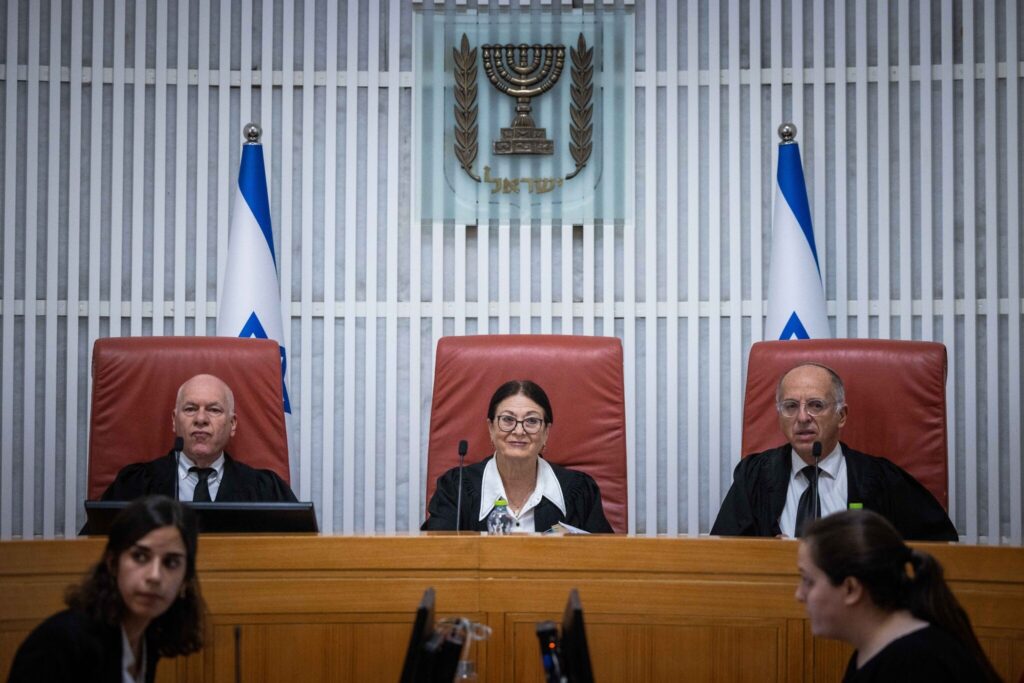
Israeli courts have ruled the Government can legally seize cryptocurrencies from over 150 digital wallets allegedly linked to terrorist funding sources.
Citing a blacklist of crypto wallets, the Jewish News Syndicate reported that the Tel Aviv Magistrate Court would allow the nation to seize an additional $33,500 in funding with alleged ties to Hamas.
Previous court rulings allowed the seizure of crypto assets over ties to militant groups, but blocked additional funds in digital wallets.
According to reports, Hamas rules Palestine’s Gaza Strip and is a designated terrorist organisation by the United States, European Union, the United Kingdom, and Israel. It allegedly used Bitcoin to circumvent global sanctions, blockades, and other restrictions.
This sparked an executive order in July last year, allowing authorities to seize cryptocurrency accounts allegedly tied to Hamas. Most involved Tether (USDT), Ether (ETH), Binance Coin (BNB), and others.
Regulators Crack Down on Crypto
The news comes after Shira Greenberg, Israel’s Ministry of Finance chief economist, outlined recommendations for an enhanced digital asset regulatory framework in early December.
Her report recommended restrictions on cryptocurrency trading platforms, crypto issuers, and safe management of digital assets, among others, in the 109-page report.
The official submitted the recommendations’ list amid sustained scepticism and low rates of adoption of cryptocurrencies across the Middle Eastern nation. To date, only 0.04 percent of the world’s total crypto transactions take place in Israel.

Solidus Labs, a company that assesses and monitors blockchain risks for the cryptocurrency sector, reported this month that fraudsters created over 350 fake crypto tokens per day to scam investors.
According to the firm’s Rug Pull Report, scammers deployed 117,629 fraudulent tokens, up 41 percent from 83,400 tokens found in 2021.
The report also found that BNB Chain contained 12 percent of the world’s fake BEP-20 tokens, topping the list of scam token holders to date. The Ethereum network arrived second place at 8 percent of scammy ERC-20 tokens.
Shamcoins and Sticky Situations
The news comes amid a rise in cryptocurrency schemes, including rug pulls and honeypots.
Rug pulls take place when groups create tokens, rapidly increase their value, and then abandon the coin after extracting the project’s value. Honeypots, the most popular form of fraud, is a smart contract for tokens prohibiting coin buying and reselling.
Most centralised exchanges (CEXs) and custodial wallets, namely under US regulators, have faced massive rug pulls in recent history, scamming over 153 exchanges for $11 billion in Ether (ETH) cryptocurrencies.
Recently, Avraham Eisenberg launched a major rug pull on Mango Markets, defrauding investors of $117 million with his exploit altcoin Mango Inu.
He later stated he “did nothing wrong” and had conducted “legal” actions in the rug pull.
According to figures, US CEXs top the list of countries with fraudulent transactions, followed by the Bahamas, where FTX ex-chief executive Sam Bankman-Fried was arrested by authorities.
The Squid Game (SQUID) token ballooned 45,000 percent before its founders disappeared with its funds, costing investors $3.3 million.
Such concerning instances have been on the rise since September 2020, following the collapses of Voyager, Celsius, and most recently, the massive bankruptcy of crypto exchange FTX.
Prosecutors in the United States have charged nine individuals connected to crypto firms accused of defrauding investors of roughly $8.4 million in separate cases, it was reported on Wednesday.
Courts charged New York native and IcomTech founder David Carmona with conspiracy to commit wire fraud, which could earn up to 20 years in jail.
Forcount founder and Brazilian national Francisley da Silva also received counts of wire fraud, wire fraud conspiracy, money laundering conspiracy, and others. Charges could earn da Silva up to 60 years in prison.
Which Charges Are on the Table?
The US Attorney’s Office for the Southern District of New York laid the charges on 14 December, stating IcomTech and Forcount, crypto mining and trading enterprises, offered supposed guaranteed daily returns to double investments in up to six months for coin holders.
The firms later used the funds from purchasers to pay initial investors and additionally bought expensive luxury goods and properties, the indictment said.
It accused them of buying “lavish expos” in the US and other locations to promote its brand. Sporting pricey vehicles, expensive clothing, and other luxury items, employees aimed to attract investors with promising returns on investment with the campaigns. Users later found they could not withdraw funds from the exchange, triggering the collapse of the company.
The US Securities and Exchange Commission (SEC) later slapped charges on Forecount’s founders and key employees, stating they aimed to seek out Spanish-speaking investors. This earned the firms over $8.4 million from fake memberships with the promise of shares in the companies trading and mining earnings.
Tokens, Cellphones, and Denials
IcomTech and Forcount also opened respective native Icoms and Mindexcoin tokens to pay back investors of both platforms. The plan later fell through last year and investors failed to receive payments.
The indictment read: “In addition to promoting the Forcount scheme, SILVA and TACURI also sought to conceal their fraud by laundering Victim funds through shell companies and making large personal expenditures on things like real estate and bulk cellphone purchases. On or about June 27, 2022, law enforcement officers with HSI stopped and interviewed HERNANDEZ as she was returning to the United States from Mexico. During the interview, HERNANDEZ falsely denied, among other things, being a Forcount promoter, recruiting investors, and taking money from them.”
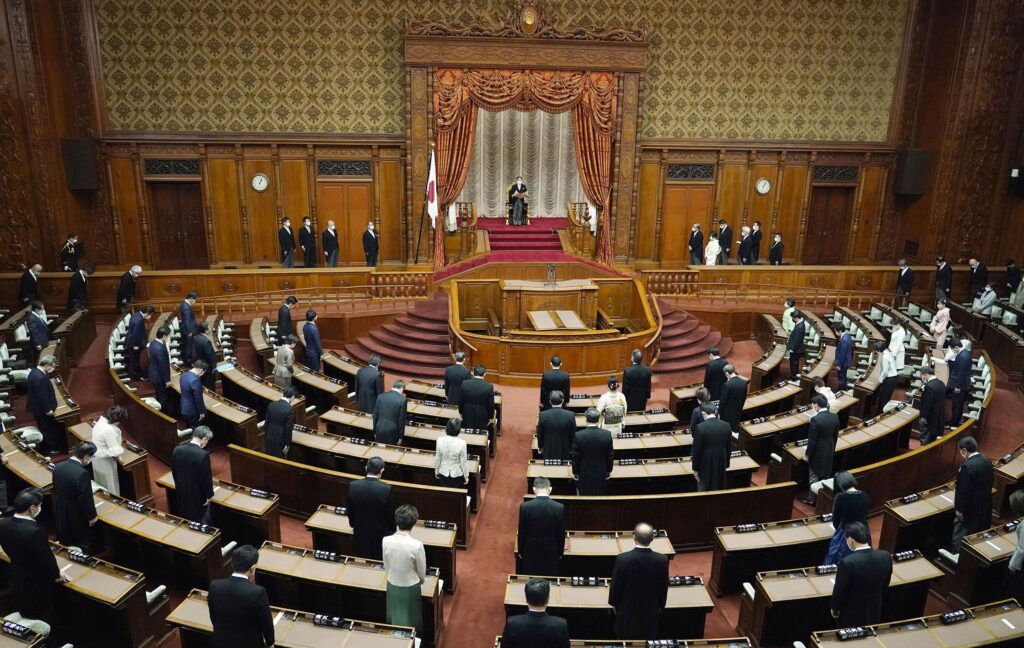
Japan’s government is preparing to ease regulations for taxes on crypto firms in the country to boost investment and growth in its fintech market.
To date, Japanese crypto companies pay 30 percent corporate tax rates on holdings, triggering an exodus of cryptocurrency enterprises from the island state over the past few years.
A tax committee meeting took place for Japan’s Liberal Democratic Party (LDP) on Thursday, leading to an approved proposal to eliminate paper gains tax requirements for crypto holders.
Japan’s Parliament is expected to receive the proposal next month and implement the new rules on 1 April, according to reports.
Akihisa Shiozaki, Web3 policy officer, told Bloomberg at the time: “This is a very big step forward […] It will become easier for various companies to do business that involves issuing tokens.”
Japanese Prime Minister, Fumio Kishida, said in October that numerous emerging technologies such as blockchain, non-fungible tokens (NFTs), and the Metaverse would facilitate the nation’s digital transformation. The nation would also digitise national identity cards.
The developments come after the recent bankruptcy of FTX, its research arm Alameda Research, and 130 affiliates following a massive bank run on the company’s native FTT token on 11 November.
In recent years, multiple nations, regions, and cities have pushed for similar initiatives with emerging technologies. Dubai, China, South Korea, the United States, United Kingdom, Saudi Arabia, and many others have launched plans to promote national digital transformations with Web3 technologies.

Are you interested in starting your crypto exchange in the UK and obtaining a crypto exchange license requisite for your project? Are you afraid of possible failures because of the too-complicated regulatory framework? You are right at some points – the risk of rejection due to the failed compliance requirements is huge here. But, this risk can be minimized thanks to the tested experience of professional lawyers.
At the same time, the opportunities for raising big funds are enormous in the UK as well. The country has one of the biggest capital markets in the world. So, if you wish to start your own exchange or any other crypto startup and are called to obtain a UK crypto exchange license for that purpose, lawyers of Prifinance company are ready to guide you through the procedure to ensure a winning application in the end.
Steps to Get the So-called Crypto License in the UK
Why does the “so-called” license? That is because authorization in the UK is anticipated only – the Financial Conduct Authority (FCA) ensures that. This registration is some kind of alternative procedure that is implemented instead of licensing in its traditional meaning. Still, without authorization from the FCA, it is impossible or extremely risky to close any crypto deals within the UK territory.
In order to validate a crypto license in the UK (as we call it conditionally), it is necessary to pass these preliminary registration steps:
- Incorporate a separate UK legal entity that will serve as an authorized person for the purpose of arranging crypto deals.
- Open bank and/or EMI accounts.
- Find the company’s officers with the respective qualifications. In particular, it is necessary to emphasize the role of a compliance manager.
- Gather all the particulars of the company’s founders and affiliate entities. Precisely, natural persons need to share copies of personal IDs; and legal persons have to provide copies of their statutory documents and the confirmation of good standing. Providing the financial statements is also required.
- Form the registration package, providing among others:
- properly filled registration form;
- business plan;
- organizational chart;
- monitoring, risk management, AML, record tracking, and reporting policies;
- description of IT facilities available (the standardized templates are provided).
- Paying all application fees.
- Handling all the negotiations with the FCA officials, including providing extra documents and details that may be requested.
A registration plan may vary from case to case. Prifinance lawyers are ready to assist with your case and draft a personalized plan that will maximize the chances of success.
How Prifinance Lawyers Can Facilitate You
If you wish to start your crypto project exactly in the UK, Prifinance lawyers are ready to facilitate you with the easiest practical realization of this business objective, including:
- evaluating comprehensively your commercial background and particulars to find the best solutions for your future UK crypto project;
- registering a separate legal entity in the exact legal and organizational form to serve as a future crypto exchange;
- guaranteeing the overall compliance with the risk management and AML/CTF demands, developing all the required policies for this purpose;
- opening any bank and/or EMI accounts;
- handling all the required local negotiations with state officials;
- supporting with resolving all possible issues that may come on the agenda in the course of the next functioning of your crypto UK project.
Provide the details of your current business situation to get a more precise assessment and business solutions to the point. Prifinance lawyers are ready to share with you tested registration expertise to facilitate your project’s success.

Binance, the world’s largest crypto exchange, has shrugged off concerns about its liquidity amid a surge in investor redemptions.
On Saturday, the cryptocurrency giant told Crypto Intelligence News that its management is “not worried” about the growing withdrawals, as many investors seek self-storage or move their holdings to rival crypto platforms.
They added that Binance meets strict liquidity requirements and is 1:1 backed, with all investor assets being held in segregated accounts and wallets.
This comes hot on the heels of FTX, another rival crypto exchange, going bankrupt after experiencing a surge in withdrawals.
Binance initially considered taking over FTX, before deciding against the takeover due to concerns about the firm having mishandled customers’ funds.
The company’s native token, BNB, is currently down by around 15 percent in the last week, after falling a further six percent in the most recent 24 hours of trading.
Earlier this week, on Thursday, Binance CEO Changpeng Zhao said “We are financially OK” when asked if the exchange could handle a $2.1bn repayment – an amount they could have to pay back to FTX.
Zhao’s comments have done little to settle investors, with billions continuing to flow out of Binance and the exchange’s native token continuing to get hammered.
Silvergate Bank, Silvergate Capital Corporation, and its chief executive Alan Lane face a class-action lawsuit in California courts, it was revealed this week.
The California Southern District Court received the lawsuit against the company with ties to the now-defunct crypto exchange platform FTX and Alameda Research.
It aims to hold Silvergate accountable for facilitating illegal money deposits, triggering massive bank runs across crypto platforms and their subsequent collapses.
Lawsuit Details
Joewy Gonzalez and others filed the litigation, which accuses FTX of failing to deliver on promises it would “store assets securely as they gained in value, cash them out or trade them for other assets.”
He and the linked plaintiffs alleged Silvergate facilitated FTX and its mismanagement of funds and illegal money transfers, lending, and mixing funding sources.
The lawsuit, represented by Girard Sharp and Hartley LLP, states that Silvergate engaged in “furthering FTX’s investment fraud” and called for the firm to return owed money to defrauded investors.
A Letter of Intent
United States Senators Elizabeth Warren, Roger Marshall, and John Kennedy, wrote to Silvergate on 6 December inquiring about its loss of billions in client holdings.
It read: “Given these concerns about Silvergate’s failure to apply extensive review processes to FTX and Alameda, and the possible role the bank may have played in the loss of billions of dollars-worth of customer funds, the senators are asking Silvergate to answer a set of questions to provide the public a full accounting of its relationship with FTX and Alameda and information about its safety and soundness by December 19, 2022.”
The news comes as lawyers for the embattled exchange requested authorities to sell its European and Japanese operations. They also plan to sell LedgerX and Embed, FTX’s stock-clearing platform, with lawyers citing regulatory pressures and asset risks.