


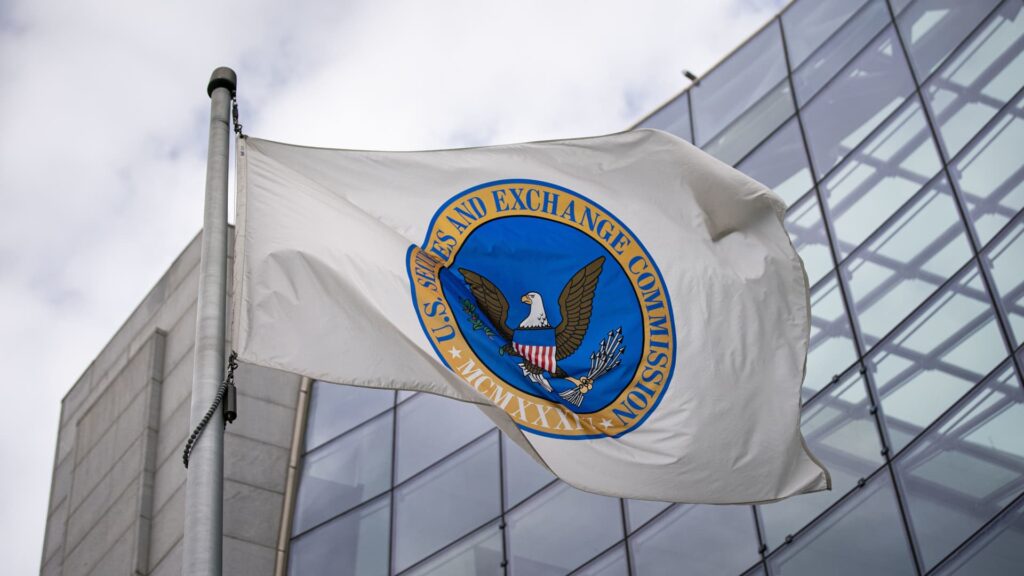
The Securities and Exchange Commission (SEC) has officially closed its investigation into Robinhood Markets’ cryptocurrency activities without pursuing any enforcement action. This development marks a significant milestone for Robinhood, which has been under regulatory scrutiny regarding its crypto offerings.
Background of the Investigation
The SEC’s inquiry primarily focused on whether Robinhood had failed to register certain crypto assets available on its platform as securities. This concern arose amid broader regulatory debates on the classification and oversight of digital assets. Misclassification could have led to substantial legal repercussions for the company.
Robinhood’s Response
Dan Gallagher, Robinhood’s Chief Legal Officer, expressed satisfaction with the SEC’s decision, stating, “We have always sought to adhere to federal securities laws in our operations.” This outcome allows Robinhood to continue its cryptocurrency services without the looming threat of legal challenges from the SEC.
Regulatory Climate Under the Current Administration
This development occurs in a regulatory environment where several lawsuits against cryptocurrency platforms have been dismissed. The current administration has adopted a more lenient stance toward cryptocurrency markets compared to previous leadership, reflecting a growing recognition of the industry’s potential and a desire to foster innovation within the financial sector.
Industry Implications
The closure of the SEC’s investigation into Robinhood may set a precedent for handling similar cases in the future. It suggests a trend toward more favorable regulatory outcomes for crypto platforms that demonstrate a commitment to compliance and transparency. This could encourage other companies in the sector to enhance their regulatory practices, knowing that adherence to guidelines may lead to positive resolutions in potential investigations.
Robinhood’s Future Plans
With the investigation behind them, Robinhood is poised to expand its cryptocurrency services. The company has been diversifying its offerings, venturing into retirement accounts, election betting contracts, and credit card services. Notably, Robinhood recently acquired crypto exchange Bitstamp for $200 million, aiming to attract institutional clients and broaden its market presence.
The appointment of Paul Atkins, a known crypto advocate, as the new SEC Chair, is anticipated to create a more innovation-friendly regulatory environment. This could further support Robinhood’s ambitious plans to rapidly innovate within the U.S. market, including the introduction of stablecoins and tokenized assets.
Conclusion
The SEC’s decision to close its investigation into Robinhood’s crypto operations without enforcement action is a significant victory for the company and the broader cryptocurrency industry. It reflects a shifting regulatory landscape that appears more accommodating to digital asset platforms. As Robinhood continues to expand its services, this development may pave the way for increased innovation and growth within the crypto sector.

As Bitcoin’s price experiences fluctuations, the cryptocurrency market is closely monitoring key support levels that could determine the next phase of its bull market. This week presents several factors that traders and investors should consider to assess Bitcoin’s trajectory.
Current Market Overview
Bitcoin recently surpassed the $100,000 mark, reaching an all-time high of $108,309 on December 17, 2024. However, it has since experienced volatility, with prices oscillating between $93,000 and $100,000. This movement has raised questions about the sustainability of the current bull market and the potential for further gains or corrections.
Historical Cycles Suggest Imminent Peak
Analyzing Bitcoin’s historical data reveals a pattern of cyclical peaks following significant rallies. If history repeats itself, Bitcoin could reach a new all-time high by January 17, 2025. This projection aligns with the typical duration from the first to the last record high observed in previous cycles. Such patterns are often influenced by Bitcoin’s four-year halving events, which reduce the supply of new coins and can impact price dynamics.
Potential Barriers to New Highs
Despite optimistic projections, several factors could impede Bitcoin’s ascent to new highs:
- Diminishing Halving Effects: The impact of halving events on Bitcoin’s price may be decreasing over time, potentially leading to less pronounced price increases.
- Market Sentiment: A softening in investor enthusiasm could result in reduced buying pressure, limiting upward momentum.
- Trading Volumes: Decreased trading activity may indicate lower market engagement, which can affect liquidity and price stability.
Technical Analysis Highlights Key Levels
From a technical standpoint, Bitcoin’s ability to maintain certain support levels is crucial for sustaining its bullish trend. A significant support level to watch is $91,500. A drop below this threshold could signal a deeper correction, potentially targeting the $73,400 range. Conversely, reclaiming and holding above the $100,000 mark could reinforce bullish sentiment and pave the way for further gains.
On-Chain Metrics and Network Activity
On-chain analysis provides additional insights into Bitcoin’s current state:
- Network Activity: A decline in active addresses and transaction volumes may suggest reduced user engagement, which can impact demand.
- Liquidity Indicators: Monitoring the flow of Bitcoin into and out of exchanges can offer clues about potential selling or buying pressure.
Macroeconomic Influences
External economic factors also play a role in Bitcoin’s price movements:
- Inflation Concerns: Rising inflation rates can drive investors toward assets like Bitcoin, perceived as hedges against currency devaluation.
- Regulatory Developments: Changes in cryptocurrency regulations, especially in major markets like the United States and China, can significantly impact investor confidence and market dynamics.
Conclusion
As Bitcoin navigates this critical juncture, a combination of historical patterns, technical indicators, on-chain metrics, and macroeconomic factors will influence its next move. Traders and investors should remain vigilant, keeping a close eye on key support levels and broader market conditions to make informed decisions in the coming days.

The cryptocurrency market has recently exhibited signs of weakness, prompting analysts to adjust their forecasts for Bitcoin’s price trajectory. Amidst this cautious sentiment, a new price target of $86,000 has emerged, reflecting the current market dynamics and investor behavior.
Recent Market Performance
Bitcoin has experienced a notable decline from its peak of $108,309 on December 17, 2024, trading between $93,000 and $100,000 in recent sessions. This downward movement has raised concerns about the sustainability of the previous bullish trend and the potential for further corrections.
Technical Indicators Signal Potential Downside
Technical analysis suggests that Bitcoin’s recent price action has breached critical support levels, indicating a possible continuation of the downward trend. The next significant support is identified at $91,500. A decisive break below this level could open the path toward the $86,000 target, representing a substantial retracement from recent highs.
On the other hand, if Bitcoin can sustain itself above the $91,500 threshold, it may have a chance to recover and attempt a retest of the $100,000 resistance zone. However, for bullish momentum to return, it would need to establish strong support above this level.
On-Chain Analysis Reflects Reduced Activity
On-chain metrics reveal a decline in network activity, with reduced transaction volumes and active addresses. This decrease suggests waning user engagement and may contribute to the selling pressure observed in the market. Such trends often precede further price declines as demand diminishes.
Additionally, Bitcoin reserves on exchanges have slightly increased, indicating that some investors may be preparing to sell rather than hold. When exchange inflows rise, it often signals a shift toward short-term profit-taking or risk-off sentiment among traders.
Macroeconomic Factors Influence Investor Sentiment
Broader economic conditions, including concerns over inflation and monetary policy adjustments, have contributed to increased uncertainty in financial markets. These factors have led investors to reassess their risk exposure, impacting assets like Bitcoin that are often viewed as speculative investments.
Geopolitical tensions and regulatory uncertainties have also weighed on investor confidence. Recent developments in China and the United States regarding cryptocurrency regulations have caused market participants to exercise caution, limiting the influx of new capital into the market.
Historical Context and Future Projections
Historically, Bitcoin has experienced cyclical patterns of rapid appreciation followed by corrections. The current market behavior appears to align with these historical trends, suggesting that the recent weakness may be a natural part of Bitcoin’s long-term price movements.
Many analysts believe that if Bitcoin does drop to $86,000, it could present a buying opportunity for long-term investors. Institutional interest in Bitcoin remains strong, and any significant pullback could encourage accumulation before the next potential leg up in price.
Conclusion
The current market weakness has raised concerns about Bitcoin’s short-term trajectory, with analysts setting an $86,000 price target as a potential bottom if selling pressure intensifies. However, whether Bitcoin reaches this level depends on key technical support holding firm and broader macroeconomic conditions stabilizing.
For now, traders and investors should remain cautious while monitoring critical support levels and market sentiment. Despite short-term uncertainty, the long-term outlook for Bitcoin remains optimistic, particularly with continued institutional interest and the upcoming impact of Bitcoin’s next halving cycle.

Wintermute, a leading crypto market maker, has withdrawn $38 million worth of Solana (SOL) from Binance, sparking speculation about its strategy ahead of a major $2 billion Solana token unlock. The move has caught the attention of market analysts, with some suggesting that it could be a sign of anticipated price volatility.
Massive Token Unlock Raises Questions
Solana’s upcoming token unlock event is one of the largest in recent memory, with over $2 billion worth of SOL set to be released into the market. Token unlocks can significantly impact asset prices, often leading to increased supply and downward pressure on value.
Given the scale of this event, Wintermute’s decision to withdraw a large quantity of SOL from Binance has raised questions about whether it anticipates a price surge or is positioning itself to manage liquidity as volatility increases.
Potential Market Impact of the Unlock Event
Large token unlocks can have varied effects on the market. In some cases, they lead to a sell-off as early investors or project teams liquidate their holdings. However, if market demand is strong, the additional supply can be absorbed without significantly affecting prices.
Solana has been one of the best-performing cryptocurrencies in recent months, rebounding from its 2022 lows and reclaiming a strong position in the market. Investors are now closely watching whether the upcoming unlock will be met with buying interest or lead to a short-term correction.
Wintermute’s Role in Market Liquidity
As a market maker, Wintermute plays a crucial role in maintaining liquidity and facilitating trading across exchanges. Its decision to move SOL off Binance could indicate preparations for increased trading activity or plans to deploy liquidity in decentralized finance (DeFi) applications.
Historically, market makers have used large-scale token unlocks as opportunities to profit from price movements, whether through short-term trading strategies or arbitrage across different platforms.
Broader Implications for Solana’s Ecosystem
The Solana ecosystem has been growing rapidly, with a surge in decentralized applications (dApps), non-fungible tokens (NFTs), and DeFi platforms utilizing its blockchain. While the token unlock represents a potential challenge in terms of market dynamics, strong adoption and institutional interest in Solana could help mitigate any negative effects.
Some analysts believe that if Solana can maintain its momentum despite the unlock, it could reinforce confidence in its long-term growth. Others caution that if selling pressure intensifies, the asset could face short-term volatility before finding a new price equilibrium.
Conclusion
Wintermute’s withdrawal of $38 million in SOL ahead of the $2 billion unlock has added an extra layer of uncertainty to an already significant event for Solana. While token unlocks often lead to increased supply and volatility, Solana’s strong fundamentals and market positioning could help counteract potential selling pressure.
Investors will be closely monitoring how the market reacts to the unlock event and whether demand remains strong enough to absorb the new supply. As one of the most-watched cryptocurrencies in the market, Solana’s price action in the coming days could provide valuable insights into broader market sentiment.

A hacker who targeted crypto exchange Bybit has reportedly swapped $3.64 million worth of stolen funds into the stablecoin DAI using decentralized exchanges. The move has drawn attention from security analysts and the wider crypto community, as it showcases the evolving tactics of cybercriminals in laundering stolen digital assets.
Hacker Moves Stolen Funds to DEXs
According to blockchain security firms, the hacker exploited a vulnerability on Bybit’s platform before transferring the stolen funds to multiple wallets. To obscure the origin of the funds, the hacker converted them into DAI using decentralized exchanges (DEXs), bypassing centralized platforms that could have flagged the transactions.
Since DEXs operate without intermediaries and allow permissionless transactions, they have become an attractive tool for cybercriminals looking to launder stolen crypto assets. Unlike centralized exchanges (CEXs), which require Know Your Customer (KYC) verification, DEXs provide a higher level of anonymity.
Tracking the Funds: Blockchain Analysis
On-chain data reveals that the hacker initially moved the stolen assets through multiple wallets before swapping them for DAI, likely to avoid detection. The stolen funds were broken into smaller transactions, a common tactic used to prevent automated tracking systems from flagging large, suspicious transfers.
Security firms are monitoring the wallets involved, but tracing funds that have been converted into stablecoins on DEXs remains challenging. Since DAI transactions occur on Ethereum and other blockchain networks, blockchain investigators can follow their movements but may struggle to identify the hacker’s real-world identity.
Bybit’s Response and Security Measures
Following the attack, Bybit issued a statement confirming the security breach and reassuring users that it is working with cybersecurity firms and law enforcement to track the hacker. While the exchange has not disclosed the full extent of the breach, it has emphasized that user funds remain secure and that additional security measures are being implemented.
“We are actively investigating the incident and working with security experts to recover the stolen assets. Our priority remains the safety and security of our users,” Bybit stated.
The exchange has also encouraged affected users to reach out to its support team for further assistance.
Implications for the Crypto Industry
This latest exploit highlights the ongoing security challenges faced by crypto exchanges. While centralized platforms have strengthened their security measures in recent years, hackers continue to find new ways to exploit vulnerabilities. The use of decentralized exchanges as laundering tools has also raised concerns about the need for improved tracking solutions in the DeFi space.
Regulators have been pushing for stricter oversight of the crypto sector, and incidents like this may prompt further scrutiny. Some industry experts argue that while DeFi provides financial freedom, it also requires better security frameworks to prevent illicit activities.
Conclusion
The Bybit hacker’s successful laundering of $3.64 million in stolen funds through decentralized exchanges underscores the security risks present in the crypto industry. As exchanges and regulators work to prevent such incidents, the need for enhanced security measures and improved tracking solutions remains crucial.
With investigations ongoing, the crypto community will be closely watching whether Bybit and law enforcement agencies can recover the stolen assets and hold the perpetrator accountable.

Cardano (ADA) has faced a downturn in price, leaving investors questioning what’s causing the latest dip. The cryptocurrency, which has seen both bullish and bearish swings throughout 2024, is experiencing selling pressure amid broader market trends.
Several key factors, including macroeconomic conditions, technical market movements, and investor sentiment, are contributing to ADA’s recent decline.
Market Trends Impacting Cardano’s Price
One of the primary reasons for Cardano’s price decline is the general weakness in the crypto market. Bitcoin and Ethereum have both seen retracements after recent highs, dragging down altcoins like ADA. When Bitcoin experiences a correction, it often leads to a ripple effect across the broader cryptocurrency sector.
Additionally, declining trading volume and reduced market enthusiasm for altcoins have put pressure on ADA. Some traders are rotating their investments into assets perceived as more stable during uncertain periods, leading to a short-term drop in demand for Cardano.
Cardano Faces Technical Resistance and Profit-Taking
From a technical perspective, ADA recently hit a resistance level that triggered selling pressure. After reaching a high of $0.75 earlier this year, the price has struggled to break above $0.80, resulting in multiple rejections at this level. Traders who bought in at lower prices may be taking profits, further contributing to the downward pressure.
“We are seeing resistance around the $0.80 level, and if ADA fails to break through, we could see further corrections,” said a crypto market analyst.
If selling pressure continues, ADA could test lower support levels, with key zones around $0.60 and $0.55 being watched closely by traders.
Macroeconomic Factors Affecting Crypto Markets
Broader economic conditions are also influencing the crypto market, including Cardano’s price. Rising interest rates, regulatory uncertainty, and global financial market volatility have made investors more cautious about high-risk assets.
With the U.S. Federal Reserve maintaining a hawkish stance on interest rates, riskier assets like cryptocurrencies tend to face downward pressure. Institutional investors are often the first to adjust their positions, leading to significant outflows from crypto markets.
Cardano’s Development Progress and Adoption Trends
Despite the current price dip, Cardano continues to make progress in its development and adoption. The network’s expansion into decentralized finance (DeFi), smart contracts, and non-fungible tokens (NFTs) remains strong.
Cardano founder Charles Hoskinson recently reaffirmed the project’s long-term vision, emphasizing that network upgrades and ecosystem growth are ongoing. However, short-term market sentiment does not always reflect the fundamental progress being made.
What’s Next for ADA?
Investors are watching key support levels to determine whether ADA can stabilize or if further declines are likely. If Bitcoin and the broader crypto market regain strength, ADA could follow suit and attempt another breakout toward higher resistance levels.
For long-term holders, the current pullback may represent a buying opportunity, particularly if Cardano continues to expand its utility and adoption. However, traders should remain cautious of short-term volatility.

Crypto exchange-traded products (ETPs) have experienced another week of significant outflows, with $508 million exiting the market. This marks the second straight week of substantial withdrawals, raising concerns about investor sentiment and the future of institutional involvement in digital assets.
Why Are Investors Withdrawing from Crypto ETPs?
The recent trend of outflows comes amid increased market uncertainty, regulatory developments, and macroeconomic factors that have influenced investor sentiment.
One major driver behind these outflows is the cooling enthusiasm for Bitcoin and Ethereum after their recent rallies. As prices consolidate or decline, some investors are moving capital to less volatile assets, reducing exposure to crypto-backed financial products.
Additionally, regulatory concerns continue to weigh on the market. The U.S. Securities and Exchange Commission (SEC) has maintained a strict stance on crypto regulation, causing hesitation among institutional investors who rely on clarity before making long-term commitments.
Bitcoin ETPs Lead the Outflows
A large portion of the $508 million outflows came from Bitcoin-focused ETPs. Investors who had previously entered the market during Bitcoin’s rally to new all-time highs may now be cashing out as the asset experiences corrections.
“We’ve seen increased selling pressure in Bitcoin ETPs, which suggests that some investors are locking in profits after the recent bull run,” noted an institutional market analyst.
Ethereum-based ETPs also saw declines, although at a smaller scale. Altcoin-focused products, including those tied to Solana and other Layer 1 networks, experienced relatively minor movements in comparison.
Broader Implications for Institutional Investment
While outflows from ETPs indicate short-term caution, the long-term outlook for institutional crypto investment remains mixed. Some analysts believe that these movements are temporary and could reverse once market conditions stabilize.
Crypto ETPs have been a gateway for traditional investors to gain exposure to digital assets without directly holding cryptocurrencies. A continued trend of outflows could signal broader hesitation among institutions, while a reversal in sentiment could bring fresh capital into the market.
What’s Next for Crypto ETPs?
Investors will be watching for signs of renewed inflows, particularly if Bitcoin and Ethereum regain bullish momentum. If macroeconomic conditions improve and regulatory clarity emerges, institutional interest in crypto ETPs may rebound.
For now, the trend of withdrawals suggests that market participants are reassessing their positions, potentially waiting for a stronger confirmation of crypto’s long-term price direction before re-entering.

Bitcoin exchange-traded funds (ETFs) have recorded significant outflows totaling $1.14 billion over the past two weeks. The sell-off comes as global financial markets face increasing uncertainty, with geopolitical tensions between the U.S. and China adding to investor caution.
Investor Sentiment Shifts as Bitcoin Pulls Back
After experiencing strong inflows earlier in the year, Bitcoin ETFs are now seeing a reversal as traders and institutions take profits. The outflows coincide with Bitcoin’s price correction, which has seen the asset struggle to maintain momentum after reaching record highs.
Some analysts suggest that investors are reallocating capital into traditional assets, particularly amid rising concerns over global economic instability.
“Bitcoin ETFs have been a popular investment vehicle, but with geopolitical risks increasing, some investors are choosing to reduce exposure to volatile assets,” one analyst explained.
Impact of US-China Trade Tensions on Crypto Markets
The ongoing trade disputes between the U.S. and China have created economic uncertainty, affecting various financial markets, including cryptocurrencies. Bitcoin, often seen as a hedge against inflation and geopolitical risks, has faced mixed reactions in this environment.
While some investors view Bitcoin as a safe-haven asset, others are moving away from riskier investments amid economic instability. The result has been a shift in Bitcoin ETF flows, reflecting broader sentiment changes in global finance.
ETF Market Trends and Institutional Behavior
The $1.14 billion in outflows suggests that some institutional investors are adjusting their portfolios in response to market conditions. However, it remains unclear whether this trend will persist or if inflows will return once uncertainty eases.
Bitcoin ETFs have played a crucial role in bringing institutional capital into the crypto space, and any prolonged decline in demand could influence Bitcoin’s price trajectory. However, previous trends have shown that ETF interest can fluctuate based on market cycles and macroeconomic developments.
Conclusion
The recent outflows from Bitcoin ETFs highlight the impact of broader financial market trends on crypto investments. As U.S.-China trade tensions continue to evolve, investors will closely monitor how Bitcoin and ETF markets react.
For now, Bitcoin remains a key asset in the global financial landscape, but its price and institutional adoption will likely be influenced by ongoing geopolitical and economic developments.

Canary, a financial services firm specializing in digital asset investment products, has announced the launch of a new HBAR exchange-traded fund (ETF) on Nasdaq, marking a significant milestone for Hedera (HBAR) adoption in traditional financial markets.
The listing aims to provide institutional investors with regulated exposure to the Hedera network, further integrating distributed ledger technology (DLT) into mainstream finance.
HBAR ETF Brings Institutional Investment to Hedera
The listing of an HBAR-focused ETF is a crucial step toward expanding Hedera’s reach beyond the cryptocurrency sector and into traditional investment portfolios. ETFs provide institutional investors with a regulated vehicle to gain exposure to digital assets without directly purchasing or holding cryptocurrencies.
With increasing demand for blockchain-based assets in regulated markets, the HBAR ETF on Nasdaq is expected to attract a new class of investors who were previously hesitant due to regulatory uncertainties surrounding direct crypto investments.
“This is a major step forward in our mission to bridge traditional finance and the digital asset ecosystem,” said a Canary spokesperson.
Hedera’s Growing Adoption and Use Cases
Hedera has been gaining traction as one of the leading DLT platforms, offering high-speed transactions, low fees, and enterprise-grade security. Unlike conventional blockchains, Hedera operates as a hashgraph-based network, making it faster and more energy-efficient than many competing platforms.
The Hedera ecosystem has attracted partnerships from major corporations, including Google, IBM, Boeing, and LG, all of which are part of the Hedera Governing Council. These companies use the Hedera network for applications such as supply chain tracking, tokenized assets, and digital identity solutions.
With the introduction of an HBAR ETF, institutional investors now have a structured way to gain exposure to Hedera’s growth and adoption trends without navigating the complexities of buying and storing HBAR tokens.
Impact on HBAR Price and Market Sentiment
The announcement of the HBAR ETF listing on Nasdaq has already sparked excitement among Hedera supporters, with expectations that increased institutional access could drive demand for HBAR tokens.
Historically, the launch of ETFs for other major crypto assets, such as Bitcoin and Ethereum, has led to price surges due to the influx of new capital from traditional investors. However, whether HBAR will experience a similar rally depends on broader market conditions and the level of institutional interest.
“The listing of an HBAR ETF is a game-changer for Hedera’s adoption, potentially increasing liquidity and mainstream recognition,” said a crypto market analyst.
Regulatory Landscape and Institutional Confidence
The approval and listing of the HBAR ETF also signal a positive shift in regulatory sentiment toward digital asset investment products. While regulatory concerns continue to loom over some crypto projects, the ability of an HBAR-based ETF to meet Nasdaq’s listing standards suggests that institutional confidence in Hedera’s compliance and long-term viability is growing.
This move aligns with a broader trend of crypto ETF adoption following the approval of Bitcoin spot ETFs in various jurisdictions. As more asset management firms explore regulated crypto investment vehicles, the HBAR ETF could set a precedent for other altcoins seeking mainstream financial market exposure.
What’s Next for HBAR and Institutional Adoption?
With Canary’s HBAR ETF now trading on Nasdaq, investors will be closely monitoring its performance and the overall impact on Hedera’s ecosystem. If the ETF sees strong demand and inflows, it could pave the way for additional Hedera-based financial products, further legitimizing HBAR as an institutional-grade digital asset.
Additionally, if other blockchain networks follow suit by introducing their own ETFs, the market could witness an acceleration in institutional crypto adoption, reinforcing digital assets’ role in modern investment strategies.
Conclusion
The launch of the HBAR ETF on Nasdaq represents a major milestone for Hedera’s institutional adoption, opening the door for regulated investors to participate in the Hedera ecosystem. As crypto ETFs continue gaining traction, this move could contribute to wider adoption of distributed ledger technology while enhancing HBAR’s role as a mainstream financial asset.
With institutional confidence growing and Hedera’s enterprise adoption expanding, the HBAR ETF listing marks a key moment in the ongoing evolution of the crypto investment landscape.

MicroStrategy, the business intelligence firm led by Michael Saylor, has successfully completed a $2 billion convertible note offering, with the proceeds expected to be used for further Bitcoin acquisitions. The move reinforces the company’s ongoing commitment to accumulating Bitcoin as a core component of its corporate strategy.
MicroStrategy’s Bitcoin Investment Strategy
Since 2020, MicroStrategy has positioned itself as one of the largest institutional holders of Bitcoin. Under Michael Saylor’s leadership, the company has aggressively acquired BTC, viewing it as a superior store of value compared to traditional assets.
With this latest $2 billion fundraising, the company intends to expand its Bitcoin holdings even further. Given the recent price movements of Bitcoin, the purchase could have a significant impact on market sentiment.
Details of the Convertible Note Offering
The convertible notes issued by MicroStrategy have a maturity date set for 2030, with an annual interest rate of 2.25%. Investors purchasing these notes will have the option to convert them into shares of MicroStrategy stock at a predetermined price.
According to a company statement, the offering was oversubscribed, reflecting strong investor interest in MicroStrategy’s Bitcoin strategy.
“The demand for our convertible notes demonstrates the confidence investors have in our long-term Bitcoin vision,” Saylor stated.
Potential Impact on Bitcoin’s Price
MicroStrategy’s Bitcoin acquisitions have historically influenced the crypto market, often triggering short-term price increases. Given that this $2 billion investment will likely be deployed in purchasing Bitcoin over the coming weeks, analysts speculate that it could provide additional bullish momentum for BTC.
However, some skeptics warn that such aggressive Bitcoin buying strategies come with risks, particularly if Bitcoin experiences significant price volatility. If the market enters a prolonged correction, MicroStrategy’s highly leveraged position could face challenges.
Institutional Interest in Bitcoin Remains Strong
Despite concerns about Bitcoin’s recent volatility, institutional interest in the asset remains strong. Several major firms have either increased their Bitcoin holdings or introduced new investment vehicles that provide exposure to BTC.
The completion of MicroStrategy’s convertible note offering signals continued institutional confidence in Bitcoin’s long-term potential. Other companies may follow suit, seeking alternative ways to gain exposure to digital assets.
Conclusion
MicroStrategy’s successful $2 billion convertible note offering underscores its unwavering commitment to Bitcoin. While the move is seen as a bullish sign for the cryptocurrency market, it also highlights the risks associated with heavily leveraging corporate finances for Bitcoin acquisitions.
As the company moves forward with its latest BTC purchase, all eyes will be on how the market reacts and whether MicroStrategy’s continued accumulation will further fuel Bitcoin’s price trajectory.