
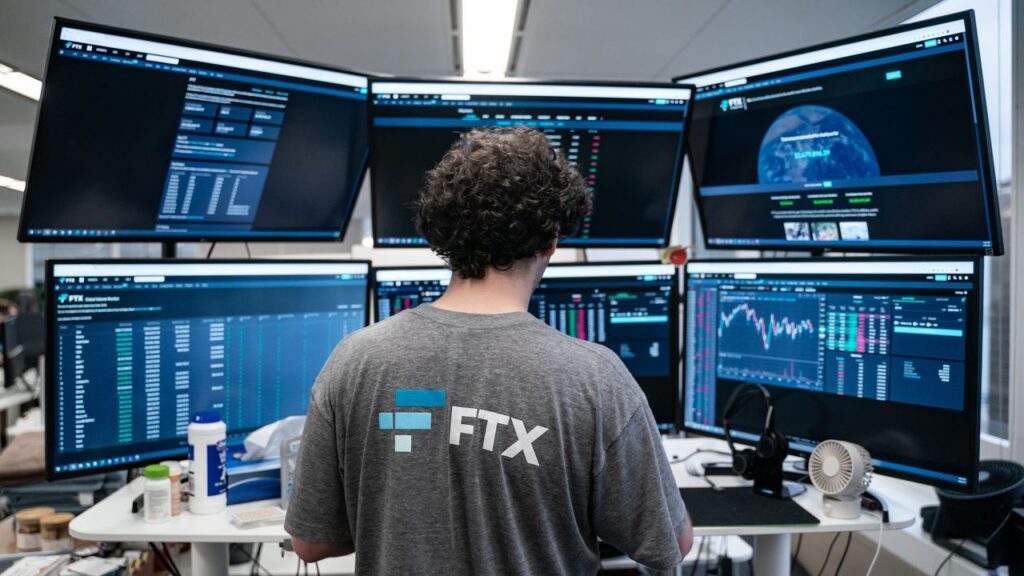
In a recent development in the United States government’s legal battle against Sam “SBF” Bankman-Fried, former CEO of FTX, prosecutors have moved to liquidate two luxury aircraft before finalizing forfeiture procedures.
The action, detailed in a filing on March 22 with the U.S. District Court for the Southern District of New York, stems from efforts led by U.S. Attorney Damian Williams to mitigate the financial losses on two planes associated with FTX and Bankman-Fried.
The government’s strategy aims to address the depreciation of the assets in question, specifically a Bombardier Global and an Embraer Legacy, which were previously flagged in October 2023 as liable for seizure due to their connection with Bankman-Fried’s criminal activities.
The financial specifics regarding the aircraft, which were initially purchased for $15.9 million and $12.5 million respectively, remain somewhat ambiguous.
Nevertheless, the prosecution plans to allocate up to $1.8 million for their maintenance and an additional $183,000 for the Embraer Legacy’s transfer, contingent upon the sales’ returns being adequate.
An agreement facilitated between the prosecutors, FTX, and its affiliates has paved the way for the Embraer Legacy to be relocated to a Florida airport, facilitating the U.S. Marshals Service (USMS) to initiate the sale process expediently.
The USMS had already taken control of the Bombardier Global earlier in February 2023, pursuant to a legal warrant.
These aircraft represent a fraction of the assets linked to Bankman-Fried that are earmarked for forfeiture following his conviction on multiple criminal charges.
A list of assets disclosed in March included shares in Robinhood, various currencies, cryptocurrencies, and political donations made by SBF during his tenure at FTX.
Neither Bankman-Fried nor his legal representative, Marc Mukasey, have contested the sale of the planes.
Bankman-Fried was found guilty of seven felony charges in November 2023 and is currently incarcerated, awaiting a sentencing hearing scheduled for March 28.
The prosecution has proposed a sentence ranging from 40 to 50 years, while his defense has suggested a more lenient sentence of 6.5 years.
To submit a crypto press release (PR), send an email to [email protected].

In a notable development within the cryptocurrency security landscape, a blockchain security firm, CertiK, reported on March 21 that an account implicated in a major phishing scam in September 2023 has recently transferred $10 million worth of Ether to Tornado Cash, a crypto-mixing protocol.
This account was part of a larger hack totaling $24 million, originating from an attack on a significant cryptocurrency investor, or “crypto whale,” on September 6, 2023.
The victim of this phishing attack lost a substantial amount of staked Ether (ETH) through the liquid staking provider Rocket Pool.
The attackers managed to siphon funds in two separate transactions, extracting 9,579 stETH and 4,851 rETH respectively.
According to Scam Sniffer, an anti-scam initiative, the breach occurred when the victim approved an “Increase Allowance” transaction, inadvertently granting the hackers permission to access their ERC-20 tokens via a token allowance mechanism—a feature that enables third parties to spend tokens on behalf of the token holder.
The conversation around token allowances has been prominent within the cryptocurrency community, with many voicing concerns over the potential for misuse through the deployment of malicious smart contracts.
Further investigation by another blockchain security firm, PeckShield, revealed that the fraudsters converted their illicit gains into 13,785 ETH and 1.64 million Dai, dispersing a portion of these funds through the FixedFload exchange and other digital wallets.
This incident underscores the persistent risk of phishing scams in the cryptocurrency domain, which continue to result in significant financial losses.
A recent report by Scam Sniffer highlighted that nearly $47 million was stolen through crypto phishing in February alone, with the majority of these incidents occurring on the Ethereum network and primarily involving ERC-20 tokens.
Moreover, token approvals emerged as a focal point of vulnerability once again on March 20, when an outdated contract from the Dolomite exchange was exploited to withdraw $1.8 million from unsuspecting users.
This incident prompted Dolomite’s developers to advise users to revoke any permissions granted to the compromised contract address.
While the cryptocurrency community has seen its share of successful security interventions, such as the Layerswap team’s quick response to a breach on March 20, preventing further losses after hackers had already extracted about $100,000 from 50 users, these episodes serve as a stark reminder of the ongoing challenges and risks associated with digital asset security.
To submit a crypto press release (PR), send an email to [email protected].

In a recent legal move, John Buza, representing Irinia Dilkinska, the former “head of legal and compliance” for the infamous OneCoin cryptocurrency scheme, has sought leniency from a U.S. court.
Dilkinska admitted to her involvement in the OneCoin fraud, pleading guilty to both conspiracy to commit wire fraud and conspiracy to commit money laundering in November 2023.
These admissions came as part of the fallout from the OneCoin scandal, a cryptocurrency operation unveiled as a sham in 2015, which bilked investors of an estimated $4 billion.
The request for leniency was made in a sentencing memorandum filed on March 20 in the United States District Court for the Southern District of New York.
Buza’s plea centered on the argument that further incarceration for Dilkinska was unnecessary, citing her unique situation and the hardships she faces.
“I respectfully submits that any sentence more than time-served would be greater that necessary,” Buza emphasized, advocating for a sentence of time served as fitting and appropriate given the circumstances.
Dilkinska’s involvement with OneCoin connected her with co-founders Karl Sebastian Greenwood and Ruja Ignatova, the latter notoriously dubbed the “Cryptoqueen.”
READ MORE: Starknet Expands Airdrop Eligibility, Addressing Immutable X and ETH Staker Concerns
While Greenwood has been sentenced to 20 years in prison with a $300 million restitution order, Ignatova remains elusive, with her whereabouts unknown.
The gravity of Dilkinska’s potential sentence under U.S. law could lead to a decade behind bars, a fate already met by Mark Scott, another OneCoin lawyer found guilty of related charges and sentenced to 10 years in January.
Ahead of Dilkinska’s sentencing, her defense submitted character letters, highlighting her exemplary behavior in detention and her importance as a family figure, to bolster their case for leniency.
In a related judgment, Konstantin Ignatov, brother of the still-absent Ignatova, received a sentence for time served after 34 months in custody, having pled guilty to money laundering and fraud in 2019.
This precedent forms part of the context in which Dilkinska’s legal team seeks a similar outcome, arguing against the additional imprisonment for Dilkinska to avoid “a massive injustice,” as Buza stated, emphasizing her role as a “loving wife and mother.”
To submit a crypto press release (PR), send an email to [email protected].

The Saudi Arabian government is actively considering the establishment of a massive $40 billion investment fund dedicated to advancements in artificial intelligence (AI).
This strategic move, expected to unfold in the latter half of the year, aims to position Saudi Arabia as a leading player in the AI domain.
This initiative is being spearheaded by the Public Investment Fund of Saudi Arabia, which is reportedly in talks with the Silicon Valley-based venture capital giant Andreessen Horowitz (a16z) to manage the AI investments, according to a March 19 report by The New York Times, which cited three individuals familiar with the discussions.
The collaboration might not only bring additional venture capital firms into the fold but could also lead to a16z establishing a presence in Riyadh, the capital of Saudi Arabia.
Ben Horowitz, a co-founder of a16z, shares a personal connection with Yasir Al-Rumayyan, the governor of the Saudi fund, highlighting the close ties between the venture capital firm and the Saudi initiative.
With the proposed $40 billion investment, Saudi Arabia is set to eclipse other major players in the AI investment space, including Microsoft, which has invested $13 billion into OpenAI, the creator of ChatGPT.
READ MORE: Best Crypto to Buy Now: We Analyzed the Top Coins for 2024
The funding for Saudi Arabia’s ambitious AI project will be sourced from its $900 billion sovereign wealth fund, with investments targeting chip manufacturers and large data centers capable of supporting AI technologies.
The Kingdom is also exploring the possibility of launching its own AI companies.
These discussions between Saudi Arabia and a16z have been ongoing since at least April 2023.
Horowitz has lauded Saudi Arabia as a burgeoning “startup country,” contrasting it with what he perceives as a slowdown in the United States’ startup ecosystem.
The backdrop to these developments includes recent actions by U.S. President Joe Biden, who, in October last year, issued an executive order establishing new AI safety standards.
This initiative has garnered support from 15 leading AI firms and involves measures such as the invocation of the Defense Production Act to ensure AI companies report crucial information, including safety test results, to the Department of Commerce.
This comes in a context where OpenAI’s CEO, Sam Altman, sought a staggering $7 trillion investment from the United Arab Emirates, a neighbor to Saudi Arabia, for the development of more advanced semiconductor chips.
To submit a crypto press release (PR), send an email to [email protected].

In a significant legal victory, Apple co-founder Steve Wozniak has advanced in his legal challenge against YouTube following an appeals court decision that overturned a previous ruling.
This dispute stems from incidents in 2020, where doctored videos of Wozniak were used in a Bitcoin scam on YouTube.
The appellate court in San Jose has determined that YouTube’s defense, rooted in a controversial communications law, is insufficient for absolving the platform of liability related to the fraudulent use of Wozniak’s image.
This pivotal judgment stems from a larger lawsuit initiated by Wozniak and 17 other high-profile figures, including tech magnates Bill Gates, Elon Musk, and Michael Dell, against YouTube and its parent entity, Google.
They argued that YouTube failed to adequately police its platform against misleading videos that promised Bitcoin rewards in exchange for payments, misleading viewers with manipulated content featuring trusted industry leaders.
The scam videos were sophisticated in their deception, incorporating additional text and imagery to entice viewers into sending Bitcoin with the false promise of receiving double the amount in return.
READ MORE: Binance Offers Up to $5 Million Reward for Insider Trading Tips Amid Memecoin Listing Controversy
This case’s progression is particularly noteworthy because it challenges the protective boundaries of Section 230 of the Communications Decency Act, which has historically shielded platforms like YouTube from liabilities associated with user-posted content.
A crucial element of the appellate court’s decision was its focus on YouTube’s practice of issuing verification badges.
The court found that YouTube and Google had “materially contributed” to the scam’s proliferation by verifying and failing to de-verify channels that were hijacked to promote the scam.
This action, or lack thereof, played a significant role in the court’s finding that Section 230 protections might not apply when a platform contributes to the perpetration of a scam.
Wozniak’s attorney, Joe Cotchett, hailed the decision as a critical moment for holding social media giants accountable.
He emphasized that the verdict sends a clear message that platforms like “Google and YouTube take responsibility for their actions and cannot use Section 230 as a total shield for their conduct.”
This case not only marks a victory for Wozniak but also signals potential shifts in how legal protections for online platforms are interpreted and applied in the context of digital fraud and content management.
To submit a crypto press release (PR), send an email to [email protected].
A Binance executive, Nadeem Anjarwalla, reportedly managed to escape from detention in Nigeria using a counterfeit passport, a situation revealed by local sources.
This development is part of a broader controversy involving the cryptocurrency exchange, as the Nigerian government has initiated criminal charges against Binance for alleged tax evasion, with legal proceedings starting at the Federal High Court in Abuja.
Anjarwalla, alongside Tigran Gambaryan, was held in Abuja, detained in a guest house for an extended period.
The escape occurred after Anjarwalla was allowed to leave for prayers, subsequently boarding a flight from Abuja with a Kenyan passport, despite his original British passport being held by Nigerian authorities.
Questions have arisen on how he managed to acquire this Kenyan passport and board an international flight without his primary travel documents.
The detention of these Binance executives, Anjarwalla serving as the regional manager for Africa and Gambaryan leading the criminal investigations team, began on February 26 following a magistrate court’s decision.
The court’s actions were based on a criminal complaint, granting the Economic and Financial Crimes Commission (EFCC) permission to detain them for 14 days, a period which was later extended due to non-compliance by Binance with a court order to provide data on Nigerian traders.
The Binance spokesperson stated, “We were made aware that Nadeem is no longer in Nigerian custody.
Our primary focus remains on the safety of our employees and we are working collaboratively with Nigerian authorities to quickly resolve this issue.”
This statement highlights the organization’s concern and ongoing cooperation with local authorities regarding the situation.
The case has shed light on the Nigerian government’s strict stance against financial crimes, especially those involving terrorist financing and money laundering.
Reports suggest Binance’s platform has been implicated in laundering nearly $21 billion, prompting stringent measures against the exchange and individuals associated with it.
This incident not only underscores the complexities of regulating cryptocurrency exchanges but also the challenges in maintaining the integrity of financial transactions on a global scale.
To submit a crypto press release (PR), send an email to [email protected].
A leading player in the Brazilian Web2 finance sector, Acura Capital, with a robust portfolio of $1.8 billion in managed assets and an additional $3 billion in custody, is thrilled to announce its upcoming collaboration with a paramount Web3 partner, Patex. This partnership heralds the launch of a novel offering aimed squarely at the burgeoning blockchain landscape of Latin America, marking a significant milestone in the region’s digital financial ecosystem.
Transforming Digital Banking in Latin America
Acura Capital is setting the stage to introduce a pioneering digital banking solution, crafted with the digital era’s demands at its core. This new venture is set to revolutionize the banking sector by focusing on enhancing security measures, boosting operational efficiency, and expanding access to financial services.
Destined to transform the digital banking landscape in Latin America, this innovative digital bank is tailored to cater to the region’s specific financial nuances. It seamlessly merges the reliability of traditional banking with the agility of modern cryptocurrency functionalities.
Transforming Digital Finance Across the Continent
By combining Acura Capital’s financial experience with Patex’s blockchain knowledge, the venture is poised to address the distinct economic challenges prevalent in Latin America. The digital bank is designed to offer a broad spectrum of digital and crypto banking solutions, catering to an expansive user base of over 670 million across the region.
A Spectrum of Innovative Services:
- Digital wallet. This feature offers a secure and user-friendly platform for managing digital currencies and financial assets, utilizing advanced encryption for unparalleled safety and privacy. Its intuitive design enables swift transactions, supporting a multitude of currencies for a consolidated portfolio management experience.
- RWA tokenization. Patex integrates tokenized real-world assets into the $6 trillion Latin American economy. The bank assists in converting physical assets into tradable securities on conventional stock exchanges. These securities subsequently underpin the development of tokenized assets, set to be launched via security token offerings and tradable on a secondary market, with the assurance of compliance through KYC/AML protocols.
- Floating rates. Offering dynamic interest rates for savings and loans, this service adjusts to market fluctuations, ensuring optimal terms for clients. It promotes transparency in financial dealings — a much-valued trait in today’s market.
- Currency exchange. The bank’s exchange platform allows for the efficient conversion of various currencies, including fiat and cryptocurrencies. It guarantees competitive rates and minimal fees, operating non-stop to deliver real-time market insights for strategic trading.
- Patex Tokens for Payments. Pix, the instant payment system launched by the Central Bank of Brazil, has quickly become notable for its efficiency and user-friendliness. Utilizing blockchain technology, Pix transactions can now be conducted with Patex tokens, representing digital assets securely held in blockchain wallets.
- Instant transfers. Facilitating immediate money movements 24/7, this service ensures transactions are processed within seconds, significantly reducing the wait times associated with traditional banking methods.
- Crypto cards. Extending the utility of traditional payment cards, these cryptocurrency cards enable a wide range of transactions, including retail purchases and online payments, with seamless integration into digital wallets like Apple Pay and Google Pay.
- E-commerce integration. Tailored for online merchants, this feature enhances transaction speed and includes tools for sales monitoring, revenue management, and instant financial reporting.
- Personal loans. The bank offers competitive personal loans with flexible terms and an easy application process, prioritizing rapid approval and minimal paperwork.
- Wealth management. Clients can access bespoke financial planning and investment management services, leveraging state-of-the-art tools and insights to foster asset growth and strategic wealth accumulation.
A Unified Vision for Innovation and Security
Fernando Luiz de Senna Figueiredo, the Management Director at Acura Capital, envisions the partnership with Patex as a perfect alignment of strengths, creating a digital banking solution that expands the horizons of technological innovation while catering to the unique needs of Latin American consumers.
“By combining our respective strengths, we’re creating a digital banking platform that pushes the boundaries of what’s possible with technology. Our teams also deeply understand how to cater to the needs of Latin American users,” Fernando Luiz said.
“We’re confident that our digital bank will deliver a secure, intuitive, and comprehensive banking experience that bridges the gap between traditional financial services and the digital economy in such a promising region like Latin America.”
About Acura Capital
Acura Capital stands as an investment, portfolio analysis, and risk management service provider, managing $1.8 billion and holding a steadfast commitment to innovation, aiming to provide top-tier financial solutions to its clientele.
About Patex
Patex, the leading blockchain ecosystem in Latin America, plays a crucial role in the region’s blockchain domain, particularly in the evolving crypto market. Its comprehensive offerings, including the Patex Network, C-Patex Exchange, and Patex Campus, position the company to effectively tackle the financial and technological challenges of Latin America, ranging from infrastructure lack in launching Central Bank Digital Currencies (CBDCs) to enhancing blockchain literacy among the populace.

In a significant move within the cryptocurrency community, a notable Bitcoin whale, identified only as “37X,” has shifted an enormous sum of over $6 billion in Bitcoin to three separate addresses, marking the first such transaction since 2019.
This transfer saw the whale relocating nearly its entire stash of 94,500 Bitcoin, valued at $6.05 billion as of March 23, leaving a mere 1.4 BTC in the original wallet.
The details of this massive transaction were shared by Arkham Intelligence on March 25, stating, “$5.03B BTC was sent to bc1q8yj, with addresses bc1q6m5 and bc1q592 receiving $561.46M and $488.40M in BTC respectively. bc1q592 has since sent those funds onwards.”
This whale activity coincided with a surge in Bitcoin interest from institutional investors, partly fueled by the anticipation of the upcoming Bitcoin halving event set for late April.
This event is expected to cut the reward for mining new blocks in half, a significant change that has historically impacted Bitcoin’s price.
Despite Bitcoin achieving a record price level prior to this halving, experts believe the market has yet to fully account for the impending reduction in supply.
A D8X co-founder and former UBS executive director highlighted to Cointelegraph that the price increase does not fully reflect the anticipated supply squeeze.
The timing of the whale’s transfer was also noteworthy, occurring just as Bitcoin surpassed the $70,000 mark on March 25 after a 10-day absence from this price point.
This resurgence is part of a broader trend of Bitcoin accumulation off exchanges, with Coinbase’s Bitcoin supply dropping to a nine-year low.
According to CoinMarketCap, Bitcoin’s price saw a 6.4% increase in the 24 hours leading up to March 25, reaching $71,222.
The current Bitcoin rally is largely attributed to halving anticipation and increased institutional investment, including from traditional financial institutions launching Bitcoin-related products.
Ten Squared’s partner, Christopher Cheung, mentioned to Cointelegraph, “The involvement of traditional financial institutions like BlackRock and Fidelity in launching BTC products is further legitimizing cryptocurrency as an alternative asset class.
“This reduces the ‘career risk’ for investors who were previously hesitant to enter the crypto market.”
The growth in Bitcoin ETFs, with a combined total of $58.3 billion in on-chain holdings, underscores the increasing acceptance of Bitcoin as a legitimate asset class among investors.
To submit a crypto press release (PR), send an email to [email protected].

The first phase of the Driving Cats NFT Club public sale got underway on 29 March at 8:30 AM (GMT) on OpenSea.
Cryptocurrencies like Shiba Inu (SHIB), Dogecoin (DOGE), Bonk (BONK) and Pepecoin (PEPE) have been attracting huge inflows from retail investors in recent weeks and months, amid the beginning of the bull run.
While these altcoins can deliver significant returns during the current cycle – potentially over 200% – investing in NFTs at the beginning of the drop can potentially generate even higher returns, in a much shorter period of time.
One such opportunity that has emerged is the Driving Cats NFT Club (DCNC.)
The first phase of the public sale of the Driving Cats NFT Club started today at 8:30 AM (GMT), and investors can now buy and mint their NFT from this collection.
During the first phase, each of the 999 NFTs that make up this collection will be available to buy for just 0.07 ETH (around $240).
Once the first phase of the public sale ends in late April, each NFT will be priced at 0.25 ETH – over four times its price during the first phase.
However, as the NFT collection is expected to sell out during the first phase, and as most buyers will likely hold onto their NFTs rather than trying to flip them in the secondary market, the price of each NFT could rally much higher than 0.25 ETH.
For investors who buy and mint their NFT during the first phase of the public sale, the Driving Cats NFT Club could be a great investment, potentially delivering much higher returns than if you were to invest in Shiba Inu (SHIB), Dogecoin (DOGE), Pepecoin (PEPE), or Bonk (BONK).
Despite concerns regarding the U.S. Securities and Exchange Commission’s (SEC) engagement level with spot Ether (ETH) exchange-traded funds (ETFs) applicants, Grayscale remains optimistic about approval prospects in May.
Grayscale Chief Legal Officer Craig Salm, in a recent X post, underscored his confidence, stating, “I don’t think perceived lack of engagement from regulators should be indicative of one outcome or another […] I personally am not deterred by it and believe the ETFs should be approved.”
Salm highlighted that the groundwork laid by the approval process for spot Bitcoin ETFs has addressed many issues relevant to spot Ether ETFs, including the mechanics of creation and redemption, asset protection strategies, and custody concerns.
He suggested that the SEC’s prior engagement in these areas means that there’s less new ground to cover this time, with the exception of the complexities introduced by staking in spot Ether ETF proposals.
Notably, firms such as Ark 21Shares, Fidelity, and Franklin Templeton, which are looking to include staking features in their ETFs, face additional regulatory scrutiny.
Bloomberg analysts Eric Balchunas and James Seyffart have expressed reservations about the SEC’s apparent disengagement, recently adjusting their approval odds to a “pessimistic 25%.”
Balchunas indicated that the SEC’s stance appears more strategic than procrastinatory.
Nevertheless, the path for spot Ether ETFs seems paved by the recent approval and regulation of Ether Futures ETFs.
The classification of these products as commodity futures suggests a favorable precedent for spot Ether ETFs, given the historical correlation between futures and spot markets.
This view is supported by Coinbase Chief Legal Officer Paul Grewal and former Commodity Futures Trading Commission Commissioner Brian Quintenz.
With several prominent financial institutions, including BlackRock, VanEck, ARK 21Shares, Fidelity, Invesco Galaxy, Grayscale, Franklin Templeton, and Hashdex, applying for SEC approval, the decision anticipated by May 23 is keenly awaited.
The outcome for VanEck’s application on this date is expected to signal the fate of all pending spot Ether ETF proposals.
To submit a crypto press release (PR), send an email to [email protected].