


In a recent development, India’s Finance Minister, Nirmala Sitharaman, announced that cryptocurrencies will now be included under Section 158B of the Income Tax Act, which addresses undisclosed income. This move subjects unreported crypto gains to block assessments, aligning them with the tax treatment of traditional assets such as money, jewelry, and bullion.
The amendment defines crypto assets under the existing category of Virtual Digital Assets (VDAs). As per the new guidelines, a reporting entity, as prescribed under section 285BAA of the Act, is required to furnish information on crypto assets.
Notably, the new crypto tax provisions will be retrospectively applicable from February 1, 2025.
This announcement follows a report from December 2024, where India’s Minister of State for Finance, Pankaj Chaudhary, revealed that the government had identified unpaid goods and services taxes (GST) totaling 824 crore Indian rupees (approximately $97 million) from several crypto exchanges.
In a related context, Indian authorities may impose a tax penalty of up to 70% on previously undisclosed crypto profits. This penalty applies to crypto gains that remained undisclosed for up to 48 months after the relevant tax assessment year. The document specifies a penalty of “70% of the aggregate of tax and interest payable on additional income disclosed in the updated income tax return [ITR].”
These developments come shortly after the Bybit exchange suspended its services in India on January 10, citing regulatory pressures as it seeks a full operational license from India’s Financial Intelligence Unit.
Globally, crypto tax regulations are gaining prominence. In June 2024, the U.S. Internal Revenue Service (IRS) issued new regulations subjecting crypto transactions to third-party tax reporting requirements for the first time. Starting in 2025, centralized crypto exchanges and other brokers in the U.S. will begin reporting sales and exchanges of digital assets, including cryptocurrencies.
These measures reflect a growing international trend toward stricter regulation and taxation of cryptocurrency transactions.

RUNE, the native token of the ThorChain ecosystem, is witnessing a huge sell-off as whales dump their positions amid concerns that the project is insolvent and will be officially declared bankrupt on Monday.
An insider told Crypto Intelligence News on Saturday that ThorChain will declare insolvency on Monday, causing the value of RUNE to crash to $0.00, in a meltdown similar to the Terra-Luna crash.
“Validators have voted to leave the network and insiders and whales are already selling all of their RUNE,” the insider said.
“ThorChain will publicly declare insolvency on Monday, after insiders have finished selling off their positions.”
RUNE is currently trading at around $1.53 per token on Binance, and it is predicted to fall below $0.80 before the end of Saturday.
The token has already plunged by over 20% so far today, as investors dump their positions to avoid losing all of their investment before RUNE becomes worthless.
Why is Rune About to Collapse?
In January, THORChain, a decentralized cross-chain liquidity protocol, faced a significant crisis due to its controversial lending program. The platform had accumulated approximately $200 million in liabilities, primarily in Bitcoin (BTC) and Ethereum (ETH), through its lending and savers programs. This substantial debt raised concerns about the protocol’s solvency, as it lacked sufficient assets to cover these obligations.
To address the mounting insolvency risks, THORChain’s node operators decided to suspend withdrawals from the lending and savers products for 90 days. This pause aimed to stabilize the ecosystem and provide time to develop a restructuring plan.
Despite these measures, the platform’s native token, RUNE, experienced a significant decline, dropping approximately 44% in value within a week. This decline exacerbated concerns about the platform’s financial health and drew parallels to the Terra/Luna collapse of 2022.
The crisis highlighted vulnerabilities in THORChain’s economic model, particularly its reliance on RUNE for its lending mechanism. When loans are repaid, RUNE is minted, which can lead to inflationary pressures, especially if RUNE underperforms against BTC and ETH.
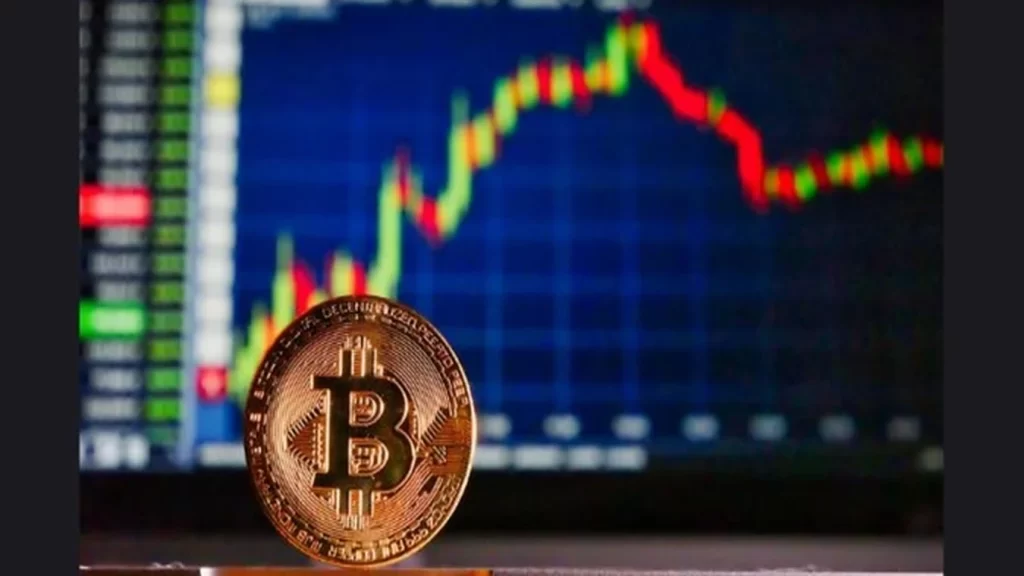
Bitcoin (BTC) has achieved a historic milestone by closing January 31 at $102,400 on Binance, marking its first monthly close above the $100,000 threshold.
This significant close occurred despite a late-month price dip influenced by macroeconomic factors. On January 31, U.S. President Donald Trump announced impending tariffs on Canada, Mexico, and China, effective February 1. This announcement led to a downturn in U.S. stock markets and affected investor sentiment, as indicated by data from the Fear & Greed Index.
Analysts remain optimistic despite these developments. Aksel Kibar, a well-known market analyst, remarked, “At every 1% correction, panic and crash forecasts is not characteristics of a market top. IMO.” He emphasized that true market tops are typically accompanied by widespread euphoria and a disbelief in even short-term corrections.
Michaël van de Poppe, a crypto trader and analyst, shared a similar sentiment, stating, “I shouldn’t worry about this news, ultimately it will lead to higher crypto prices anyways.”
The pseudonymous analyst PlanB highlighted the current phase of Bitcoin’s price cycle by updating the Stock-to-Flow model, indicating that the most intense phase is underway.
Historically, February has been a strong month for Bitcoin, with average gains of 14.4%. If this pattern continues, Bitcoin could see its next monthly close around $117,000. Fedor Matviiv, founder and CEO of CryptoRank, noted, “This time, it’s a post-halving February as well, and every previous one saw major upside. If history is any indication, $BTC might be gearing up for a big move.”
Analyst Rekt Capital added that “8 out of the past 12 February’s dating back to 2013 have produced double-digit upside,” suggesting a favorable outlook for Bitcoin in the coming month.
In summary, Bitcoin’s unprecedented monthly close above $100,000, coupled with historical performance trends, indicates potential for continued growth in the near term.
Ethereum (ETH) has been on a downward trajectory for nearly six weeks, dipping below the $4,000 mark on December 16, 2024. Since then, it has declined over 20%, currently trading at approximately $3,260.
To reverse this trend and approach its previous highs, Ethereum needs to bolster fundamental blockchain activity. Aurelie Barthere, principal research analyst at Nansen, noted, “Other layer-1s are catching up with Ethereum regarding apps, use cases, fees and amount staked.” She emphasized the importance of increased collaboration with both private and public sector entities, especially in the U.S., given recent regulatory momentum favoring blockchain and crypto.
Barthere also highlighted the potential impact of the Elon Musk-led Department of Government Efficiency (DOGE), which has reportedly explored blockchain-based solutions for expense tracking and financial management. Additionally, Joseph Lubin, co-founder of Ethereum and founder of Consensys, suggested that the Trump family might be considering building an Ethereum-based cryptocurrency business, which could further drive adoption.
In the options market, Ether trading volume has surged to its highest levels in over a month, indicating a potential recovery from the recent sell-off. Analysts have observed a growing number of bullish Ether options contracts, suggesting traders are betting on a price rebound. However, for ETH to continue its uptrend, it needs a daily close above $3,400, which would pave the way for a rally towards $4,000. Overcoming the significant resistance at $3,400 could trigger over $1.09 billion worth of cumulative leveraged short liquidations.
Some industry observers anticipate an Ether resurgence in February, driven by continued institutional buying from Trump’s World Liberty Financial protocol.
In summary, for Ethereum to reclaim its previous all-time high, it must enhance blockchain activity, foster new use cases, and strengthen collaborations across various sectors to regain investor confidence.

Do Kwon, the co-founder of Terraform Labs embroiled in allegations of fraud, has been released from Montenegrin custody.
His freedom comes as the Supreme Court weighs the merits of extradition requests from both the United States and South Korea.
Bloomberg reported his release on March 23, following a suspension by the Supreme Court of a lower court’s decision to extradite Kwon to South Korea.
This legal drama unfolds against the backdrop of the Terra collapse in 2022, which erased about $60 billion from the crypto market. Kwon, facing fraud charges in both South Korea and the U.S., was released from prison as his sentence for possessing forged documents concluded.
Darko Vukcevic, a prison official, stated, “We released Do Kwon from prison as his regular prison term for traveling with fake papers ended.
Since he is a foreign citizen and his documents were withheld, he was taken for an interview to the police directorate for foreigners, and they will deal with him further.”
The Supreme Court’s Council is now poised to decide on Kwon’s potential extradition to South Korea, where he faces less severe penalties compared to the U.S.
READ MORE: StaFi Liquid Staking Protocol Launches Testnet Awaiting StaFi 2.0 Mainnet Launch
In the latter, he could be charged with eight felonies related to TerraUSD’s dramatic $40-billion implosion in 2022.
Kwon’s legal representative confirmed his client’s release and mentioned that his passport had been confiscated to prevent him from leaving Montenegro.
Subsequently, Kwon was moved to a facility for foreigners, with his lawyer signaling intentions to seek legal permission for Kwon to stay free pending extradition decision.
This legal tangle was further complicated by the chief prosecutor’s intervention, pointing out procedural flaws in the extradition process favoring South Korea.
As courts deliberate without a clear timetable, Kwon’s fate hangs in the balance, with significant charges awaiting him in the U.S. following his arrest in March 2023 for using counterfeit travel documents.
The extradition saga continues, reflecting the international legal complexities surrounding high-profile crypto fugitives like Kwon.
To submit a crypto press release (PR), send an email to [email protected].
Grayscale Investments has introduced a new investment fund designed for affluent clients seeking to diversify their portfolios with income derived from staking cryptocurrency tokens.
Named the Grayscale Dynamic Income Fund, it targets individuals with assets exceeding $1.1 million or a net worth above $2.2 million.
The fund’s strategy involves converting staking rewards into U.S. dollars on a weekly basis, with plans to distribute these earnings to investors quarterly.
Grayscale emphasizes the thorough vetting process for selecting proof-of-stake (PoS) tokens to include in the fund, aiming to manage the intricacies of staking and unstaking various tokens, each with unique requirements.
The firm prioritizes maximizing staking income, viewing capital growth as a secondary goal.
Staking, a process that contributes to the security and efficiency of blockchain networks, involves holding cryptocurrency tokens to earn rewards.
Grayscale has disclosed that its fund will comprise three specific PoS tokens: Osmosis (OSMO), Solana (SOL), and Polkadot (DOT), with respective shares of 24%, 20%, and 14%.
READ MORE: Ripple Launches Groundbreaking Automated Market Maker on XRPL, Revolutionizing DeFi Landscape
The remaining 43% of the fund is allocated to other tokens.
According to Staking Rewards data, the staking reward rates for OSMO, SOL, and DOT are 11.09%, 7.42%, and 11.9%, respectively, with only SOL ranking in the top 10 PoS tokens by market capitalization on CoinMarketCap.
In related news, Grayscale’s venture into a spot Bitcoin exchange-traded fund (ETF) on January 11 has faced challenges, with over $14 billion in outflows since its inception, as reported by Cointelegraph on March 26.
The Bitcoin ETF, which incurs a 1.5% management fee annually—significantly higher than the 0.30% average of other Bitcoin ETFs—has not met the firm’s expectations.
Additionally, Grayscale’s application for an Ethereum Futures ETF has been met with delays by the United States Securities and Exchange Commission, further complicating the company’s ambitious cryptocurrency investment endeavors.
To submit a crypto press release (PR), send an email to [email protected].
In the week leading up to March 29, BNB’s value saw a 12% increase, reaching a high of $620, marking a notable upturn and closing the valuation gap with its rival, Ether, which saw a 5% rise in the same period.
Despite this growth, the BNB Chain’s on-chain data sends mixed signals, indicating that the rally might be overextended.
This recent surge in cryptocurrency value has been linked to inflows into spot Bitcoin BTC exchange-traded funds (ETFs).
However, a setback was observed in the week ending March 23, with a net outflow of $890 million from these ETFs, marking their first net outflow since their introduction in January.
Yet, there was a silver lining with a significant decrease in outflows from the Grayscale GBTC fund, which only saw $104 million leave on March 28.
BNB’s momentum in the first half of March, with a 61.7% increase, was dampened after peaking at $645.
This peak brought BNB’s market capitalization to $96.4 billion, down from its all-time high of $116 billion in November 2021.
The total value locked (TVL) in BNB Chain also saw a decline, from $15.7 billion at its peak to $7.1 billion, a 55% reduction.
The crypto market, especially decentralized finance (DeFi), has seen significant contractions since late 2021.
READ MORE: Bitcoin Braces for Supply Crunch as Demand Skyrockets, Warns CryptoQuant
This downturn isn’t unique to BNB Chain, as the total market data for blockchains tracked by DefiLlama decreased by 25%, from nearly $205 billion to $155 billion.
Despite these challenges, BNB Chain remains a key player in the crypto market, rivaling Ethereum’s layer-2 networks in activity levels.
Nearly 2 million active addresses engaged with DApps on BNB Chain in the past week.
The blockchain also stood out for its trading volume, which, unlike Solana and Ethereum, saw an 11% increase, reaching $12.4 billion.
Looking ahead, the future of the cryptocurrency sector is difficult to predict, but derivative metrics like the demand for leverage in BNB perpetual futures contracts offer insights.
The steady 8-hour funding rate of around 0.03%, equivalent to about 0.6% weekly, suggests a cautiously optimistic market sentiment, despite the price challenges at the $620 level.
This careful optimism is bolstered by the enduring interest in leveraged long positions, despite the uncertain market trajectory.
To submit a crypto press release (PR), send an email to [email protected].

Since the launch of the United States spot exchange-traded funds (ETFs) for Bitcoin, the cryptocurrency market has seen a significant shift in Bitcoin holdings on exchanges.
Over $9.5 billion in Bitcoin has been withdrawn from exchanges, as reported by Glassnode, an on-chain analytics firm.
This withdrawal trend started on January 11 and has led to a reduction of over 136,000 BTC from exchange balances.
The dynamics of Bitcoin supply are increasingly favoring bulls with continued mass withdrawals observed this quarter.
The volume of Bitcoin on exchanges has dipped to its lowest since April 2018, with only 2,320,458 BTC remaining, indicating a substantial decline in available BTC for trading.
This trend continued with one of the largest single-day withdrawals occurring on March 27, where over 22,000 BTC, equivalent to $1.54 billion, were withdrawn.
The impact of U.S. spot Bitcoin ETFs, though they have been operational for just under three months, is becoming a pivotal factor in the market.
Additionally, notable market activities include a significant transfer of the stablecoin USD Coin (USDC) to Coinbase, highlighted by J.A. Maartunn from CryptoQuant.
READ MORE: Anthropic Shuns Saudi Investments Amid FTX Bankruptcy Sale, Citing National Security Concerns
This record transfer raised speculations about potential buying pressure in the market. Such movements underscore the evolving dynamics in the cryptocurrency market, particularly in the context of Bitcoin supply and demand.
Experts are closely watching the ETFs’ impact on Bitcoin’s supply, anticipating a possible “squeeze” where demand surpasses the available supply, potentially affecting prices.
This scenario is expected to intensify, especially with the upcoming block subsidy halving event in mid-April, which will further reduce the rate of new BTC entering the market to just 3.125 BTC per block.
Charles Edwards, founder of Capriole Investments, commented on the significance of the upcoming halving event, noting it as “the biggest Halving in Bitcoin’s history.”
He pointed out that Bitcoin would become even more scarce than gold, with the supply growth rate halving.
Edwards anticipates increased institutional demand through ETFs, a supply squeeze from the Halving, and Bitcoin’s new status as the world’s hardest asset, making April a month to watch for the cryptocurrency sector.
To submit a crypto press release (PR), send an email to [email protected].
Bitcoin has experienced unprecedented success in 2024, setting a new record high of $73,679 on March 13, maintaining its value around $70,000 since then.
This surge represents an impressive growth of over 140% compared to the previous year.
During its peak this year, Bitcoin momentarily eclipsed silver, becoming the eighth most valuable commodity worldwide by market capitalization.
Looking ahead, projecting similar growth rates into the future suggests that by April 2025, Bitcoin could potentially hit $170,574.
This forecast not only positions it above silver but also surpasses major corporations like Amazon, Alphabet (Google), Saudi Aramco, Nvidia, and Microsoft in CompaniesMarketcap’s rankings of top commodities by capitalization.
This speculative growth assumes a static market environment, using current market caps as a baseline for comparison.
Currently, Bitcoin’s market cap closely trails that of silver, which stands at $1.412 trillion.
To edge past silver again, Bitcoin would need to increase its value to $71,732, reaching a market cap of around $1.413 trillion.
READ MORE: Ripple Launches Groundbreaking Automated Market Maker on XRPL, Revolutionizing DeFi Landscape
Moreover, Bitcoin is poised to leapfrog other major entities.
For instance, surpassing Google’s $1.885 trillion market cap requires Bitcoin to reach approximately $95,642.
To dethrone Microsoft from the second spot, Bitcoin would need to surpass a market cap of $3.126 trillion, achievable at a price of roughly $165,608 per BTC.
These projections are grounded in Bitcoin’s recent yearly growth of about 144.82%.
If this trend continues, Bitcoin could see its price soar to $170,574 by next year, boosting its market cap to approximately $3.224 trillion, thereby overtaking Microsoft.
Ultimately, for Bitcoin to claim the top position and surpass gold’s market cap of $15.141 trillion, its value would need to skyrocket to $800,476 per BTC, achieving a market cap of $15.15 trillion.
This scenario underscores Bitcoin’s potential trajectory as the leading commodity by capitalization, highlighting the cryptocurrency’s remarkable growth and its increasingly significant role in the global financial landscape.
To submit a crypto press release (PR), send an email to [email protected].

In the documentary 5 Months with Logan Paul, the YouTuber Logan Paul addressed the controversy surrounding his CryptoZoo NFT gaming project, which has been criticized for causing financial losses to investors.
Speaking with journalist Graham Bensinger, Paul faced questions about the allegations against him, particularly the accusation that his involvement led to monetary losses for people.
Paul conceded that there was some truth to these claims but firmly rejected the notion that CryptoZoo was a scam.
He explained, “Everything you just said has an element of truth to it. Here’s the problem. What you just described isn’t a scam.
“I took on a project that I was simply incapable of handling at the time.”
Despite the backlash, Paul revealed he did not profit from the venture, instead losing $500,000 himself, which led him to question, “Where is the scam?”
The project’s failure had a profound impact on Paul’s mental health, driving him to consider suicide due to the ensuing backlash and personal spiraling.
Paul also indicated his intention to address the narrative that paints him as the primary architect behind what some have deemed a fraudulent scheme.
He suggested the criticism, particularly from YouTube journalist Stephen Findeisen, also known as Coffeezilla, was biased, asserting, “The CryptoZoo saga is far from over because it was a one-sided story.
“He [Coffeezilla] told it how he wanted to tell it and told it a certain way that made me look like the captain of the ship.”
Previously, Paul had threatened legal action against Findeisen for his coverage but later apologized and retracted his threats.
Furthermore, Paul discussed his efforts to ameliorate the situation for those impacted by the project’s failure, mentioning a $1.5 million recovery plan launched after a year and following a class-action lawsuit.
However, the plan came with a stipulation that participants waive any potential legal claims against him.
The documentary and Paul’s comments arrive amidst ongoing legal challenges, including a class-action lawsuit filed by investors in February 2023.
These investors accused CryptoZoo and Paul of executing a “rug pull,” alleging that they were defrauded out of millions.
In response to these allegations, Paul announced the commencement of a buyback program on Jan. 5, conditioned upon participants forgoing any legal actions against him, an attempt to provide restitution while navigating the complex aftermath of the project’s downfall.
To submit a crypto press release (PR), send an email to [email protected].