



Michael Saylor’s Strategy, the largest public Bitcoin holder globally, has increased its holdings past 700,000 BTC following a major purchase.
The company acquired 22,305 Bitcoin for $2.13 billion last week, according to filings with the US Securities and Exchange Commission.
The purchase price averaged $95,284 per BTC, with Bitcoin briefly climbing above $97,000 midweek.
This acquisition pushed Strategy’s total Bitcoin holdings to 709,715 BTC, purchased at a total of around $53.92 billion with an average cost of $75,979 per coin.
Largest Purchase Since February 2025
The latest purchase marks the company’s largest single acquisition since February 2025, when it bought 20,356 BTC for approximately $2 billion.
Earlier this month, on January 12, Strategy announced a smaller purchase of 13,627 BTC worth $1.3 billion, which had been its biggest acquisition since July of the previous year.
The acceleration in Bitcoin buying highlights Strategy’s ongoing commitment to expanding its digital treasury holdings.
Market Impact
Strategy’s stock (MSTR) experienced gains alongside Bitcoin’s recent price movement, rising past $185 amid a multi-month high for the cryptocurrency.
The momentum followed a decision by Morgan Stanley Capital International not to exclude digital treasury companies from its market index in early January, adding further investor confidence.
With Strategy continuing its accumulation strategy, market observers are watching closely for potential ripple effects on Bitcoin’s broader market sentiment.
This latest acquisition reinforces the company’s status as the world’s largest institutional Bitcoin holder and signals its long-term conviction in the asset class.

Blockchain technology is rapidly gaining traction across multiple sectors, from finance and healthcare to logistics and gaming.
Its decentralized and immutable nature offers businesses enhanced security, transparency, and efficiency, making it an increasingly attractive solution for modern challenges.
As enterprises continue to explore blockchain applications, adoption rates have surged, signaling that this technology is moving beyond early experimentation into mainstream use.
Financial Sector Leads the Way
The financial industry remains the largest driver of blockchain adoption, particularly through applications like cryptocurrencies, tokenized assets, and decentralized finance (DeFi).
Banks and investment firms are integrating blockchain to streamline transactions, reduce settlement times, and mitigate fraud risks.
Central bank digital currencies (CBDCs) are also gaining traction, with pilot programs launched in several countries to evaluate blockchain’s potential for national payment systems.
Institutional interest in blockchain-based financial instruments, including Bitcoin exchange-traded funds (ETFs), has increased in parallel with growing investor confidence in digital assets.
Experts say that the transparency and auditability of blockchain make it an ideal tool for financial oversight and compliance.
Blockchain in Supply Chain and Logistics
Beyond finance, supply chain management has emerged as a key area for blockchain implementation.
Companies are using blockchain to track goods in real time, verify product authenticity, and reduce the risk of counterfeiting.
For example, logistics providers are leveraging blockchain to monitor shipments, improving efficiency and reducing delays caused by manual tracking processes.
This technology also allows consumers to verify the origin and handling of products, creating trust and accountability in industries such as food and pharmaceuticals.
Blockchain adoption in supply chains is expected to grow as more organizations recognize its potential to prevent fraud and enhance operational efficiency.
Gaming and Blockchain Casinos
The gaming sector, particularly online casinos, has embraced blockchain to improve transparency, fairness, and payment speed.
Blockchain-based casinos allow players to verify the integrity of games and transactions without relying on centralized operators.
Many platforms also provide instant payouts and provably fair gaming mechanics, appealing to users seeking trustless systems.
For those exploring these platforms, the Deadspin detailed guide offers comprehensive insights.
As a result, blockchain casinos are attracting a growing audience of tech-savvy gamers and investors interested in decentralized entertainment experiences.
Healthcare and Data Security
Healthcare organizations are also experimenting with blockchain to secure sensitive patient data, improve interoperability, and streamline administrative processes.
By storing medical records on blockchain networks, hospitals and clinics can reduce data breaches and enable authorized personnel to access accurate information in real time.
Blockchain can also help track pharmaceuticals throughout the supply chain, ensuring authenticity and preventing counterfeit drugs from reaching patients.
While adoption in healthcare is still in its early stages, pilot projects show promising results for improving patient safety and operational efficiency.
Challenges to Widespread Adoption
Despite its potential, blockchain adoption faces challenges, including regulatory uncertainty, scalability issues, and energy consumption concerns.
Regulators worldwide are still determining how to classify digital assets and enforce compliance without stifling innovation.
Public blockchain networks, particularly those using proof-of-work mechanisms, can consume significant energy, prompting calls for greener alternatives such as proof-of-stake systems.
Businesses must also address integration challenges when connecting blockchain platforms with existing legacy systems, which can be complex and costly.
Looking Ahead
As technology matures, blockchain is poised to reshape industries by providing secure, transparent, and decentralized solutions.
Companies that adopt blockchain strategically may gain a competitive edge, enhancing trust with customers and improving operational efficiency.
From financial services and supply chains to gaming and healthcare, the potential applications are vast, signaling a new era of digital transformation.
Experts predict that as regulatory clarity improves and technology becomes more accessible, blockchain adoption will accelerate, influencing the way businesses and individuals interact with digital systems.
The growing interest in blockchain casinos, supply chain solutions, and financial instruments illustrates that decentralized technologies are becoming an integral part of modern industry.

Nearly four out of five crypto projects that suffer a major hack never fully regain stability, according to industry security experts. The damage, they argue, stems less from stolen funds and more from how projects respond in the critical hours after an exploit is discovered.
Mitchell Amador, chief executive of Web3 security platform Immunefi, said most protocols are unprepared for large-scale security incidents. “Most protocols are fundamentally unaware of the extent to which they are exposed to hacks, and are not operationally prepared for a major security incident,” he said.
The Dangerous Delay After a Breach
Amador warned that the first hours following a breach are often the most destructive. Teams without predefined incident plans frequently hesitate, debate internal responsibilities and underestimate the scope of the attack.
“Decision-making slows as teams scramble to understand what happened, leading to improvisation and delayed action,” he said. According to Amador, this window is when additional losses often occur.
Projects are often reluctant to pause smart contracts out of fear of reputational damage. However, Amador cautioned that silence and inaction usually amplify panic rather than contain it.
“Nearly 80% of projects that suffer a hack never fully recover,” he said. “The primary reason is not the initial loss of funds, but the breakdown of operations and trust during the response.”
Trust Collapse After Major Exploits
Alex Katz, CEO and co-founder of Web3 security firm Kerberus, said even technically resolved exploits can mark the beginning of a project’s decline. In most cases, user confidence never fully returns.
“There are always exceptions, but in most cases a major exploit is a death sentence,” Katz said. He explained that users withdraw funds, liquidity evaporates and reputational damage becomes permanent.
Trust, he added, has become the most fragile asset in the crypto ecosystem.
Human Error Overtakes Smart Contract Bugs
While smart contract vulnerabilities once dominated crypto headlines, recent losses increasingly stem from operational and human-layer failures. Katz said users approving malicious transactions or exposing private keys now account for most losses.
“Human error is clearly the weakest link in crypto security,” he said.
Earlier this month, one crypto user lost more than $282 million worth of Bitcoin and Litecoin in a social engineering attack. The victim was reportedly deceived by an attacker impersonating hardware wallet support and revealing their seed phrase.
Hacks Reach Multi-Year Highs
Crypto-related hacks surged in 2025, driving total losses to $3.4 billion, the highest level since 2022. Just three incidents accounted for 69% of losses by early December.
The $1.4 billion hack on Bybit alone contributed nearly half of the annual total. “Beyond Bybit, we’ve seen a rise in similar attacks that bypass smart contracts entirely,” Amador said.
Why Experts Still See Hope Ahead
Despite grim statistics, security experts remain cautiously optimistic. Amador believes smart contract security is improving rapidly due to stronger audits, better tooling and real-time monitoring.
“I think 2026 will be the strongest year yet for smart contract security,” he said. However, he stressed that response readiness remains the industry’s biggest unresolved weakness.

The White House is considering withdrawing its support for a major crypto market structure bill following Coinbase’s decision to step back from the legislation.
According to a source familiar with internal discussions, administration officials were caught off guard by the exchange’s move and view it as a serious breach of trust.
The draft legislation, known as the Digital Asset Market Clarity Act, was previously seen as a cornerstone of the administration’s crypto policy agenda.
Tensions Between Administration And Coinbase
The situation escalated after Coinbase publicly announced it could not support the current version of the bill.
Officials described the decision as a “unilateral” action that blindsided the White House and broader industry stakeholders.
One source characterized the move as a “rug pull,” arguing it undermined ongoing negotiations and momentum behind the legislation.
The same source suggested the administration could abandon the bill entirely unless Coinbase returns to talks and agrees to compromise.
“This is President Trump’s bill at the end of the day, not Brian Armstrong’s,” the source said, underscoring the growing rift.
Coinbase Raises DeFi And Stablecoin Concerns
Coinbase CEO Brian Armstrong defended the decision, arguing the draft bill would do more harm than good in its current form.
“We’d rather have no bill than a bad bill. Hopefully we can all get to a better draft,” Armstrong said earlier this week.
He pointed to provisions that he believes amount to a de facto ban on tokenized equities and impose sweeping restrictions on decentralized finance.
Armstrong also criticized expanded government access to financial records, warning it could erode user privacy protections.
Another key concern involves regulatory balance, with Armstrong arguing the proposal weakens the Commodity Futures Trading Commission while concentrating authority at the Securities and Exchange Commission.
The SEC has faced sustained criticism from the crypto industry for its enforcement-heavy approach in recent years.
Stablecoins At The Center Of The Dispute
Stablecoins have emerged as a major flashpoint in the debate.
Armstrong warned that the bill risks “killing rewards” on stablecoins, echoing industry fears that banking interests are shaping the legislation.
Banking groups have argued that stablecoin yields of around 5% could draw deposits away from traditional savings accounts.
Crypto advocates counter that these concerns are overstated and designed to limit competition rather than protect consumers.
Industry Reaction Remains Split
The broader crypto community remains divided over Coinbase’s stance.
Many users praised the exchange for pushing back against what they view as overreach by lawmakers and banks.
“Then the banks should stop trying to screw everyone over,” Coin Metrics cofounder Nic Carter wrote in support of Coinbase’s position.
Others criticized the company for exerting outsized influence over legislation that affects the entire industry.
“Coinbase is not crypto. Coinbase is one exchange in crypto,” one user commented, reflecting frustration with the power dynamics at play.
As negotiations stall, the future of the market structure bill remains uncertain, with political tensions now threatening to derail months of policy work.

Bitcoin has traded firmly above its opening price for the year, gaining roughly 9.5% and consolidating near the $95,000 level as traders assess its next directional move.
Market participants increasingly view the short-term trend as positive, with price action approaching a key technical barrier closely watched by analysts.
Focus Turns To Short-Term Holder Cost Basis
Bitcoin’s ability to reclaim six-figure territory depends on overcoming resistance near $98,000, which aligns with the short-term holder cost basis.
This level represents the average acquisition price of recent buyers and is often viewed as a threshold for renewed upside momentum.
“$BTC is approaching a key inflexion point,” said Glassnode analyst Chris Beamish in a Friday post on X.
“Reclaiming the STH cost basis would signal that recent buyers are back in profit, typically a prerequisite for momentum to re-accelerate,” he added.
Analysts See Broader Trend Support
MN Capital founder Michael van de Poppe said the broader trend remains constructive as long as Bitcoin holds above its 21-day moving average near $91,200.
He said maintaining that level would likely set the stage for an eventual move beyond $100,000.
Another analyst known as Mags highlighted Bitcoin’s bounce from a long-term trendline that has held since March 2023.
“Bitcoin is bouncing from the long-term trendline support it has been holding since March 2023,” Mags said.
“Each time the price has bounced from this support, we have witnessed a strong run-up,” the analyst added.
Historical Context Strengthens Bullish Case
The last significant bounce from this trendline occurred in October 2023, preceding a 172% rally that carried Bitcoin to a previous record high in March 2024.
That historical performance has strengthened expectations that the current consolidation phase could resolve to the upside.
Analysts also point to whale accumulation, steady institutional demand, and improving onchain metrics as supportive factors.
Ascending Triangle Points Higher
From a chart perspective, Bitcoin is retesting the upper boundary of an ascending triangle formation on the daily timeframe.
Resistance remains concentrated between $96,000 and $99,500, corresponding to the 100-day and 200-day exponential moving averages.
A confirmed breakout would imply a measured move toward roughly $113,200, based on the height of the pattern.
“Bitcoin is consolidating in an ascending triangle along with confirmed weekly hidden bullish divergence,” said analyst Matthew Hyland.
“Price goes up,” he added.
Momentum Indicators Remain Constructive
The relative strength index has climbed to 64 after emerging from oversold conditions late last year, suggesting strengthening momentum without immediate overheating risks.
“There’s definitely a good amount of room to move higher for now,” said analyst Daan Crypto Trades.
“Just need the bulls to hold the lower timeframe bullish market structures,” he added.

Bank of America CEO Brian Moynihan has warned that stablecoins could redirect trillions of dollars away from the US banking system, highlighting tensions between traditional banks and the digital asset sector.
Speaking during the bank’s Wednesday earnings call, Moynihan said up to $6 trillion in deposits, around 30% to 35% of all US commercial bank deposits, could shift to stablecoins under certain regulatory scenarios.
Moynihan noted that this estimate is based on Treasury Department studies and linked the potential outflow to ongoing debates over interest-bearing stablecoins.
Banks argue that yield-bearing stablecoins resemble bank deposits but lack the regulatory protections of traditional banking products, creating the risk of accelerated deposit outflows.
“Many stablecoin models resemble money market mutual funds rather than traditional deposits,” Moynihan said.
Reserves for these stablecoins are typically held in short-term instruments such as U.S. Treasurys, rather than being recycled into loans for households and businesses.
“If you take out deposits, they’re either not going to be able to loan or they’re going to have to get wholesale funding,” he added.
This alternative funding often comes at a higher cost for banks, potentially limiting lending capacity.
Lawmakers are currently debating legislation to limit passive yield on stablecoins while allowing activity-based rewards for staking, liquidity provision, or collateral posting.
The draft bill released by Senate Banking Committee Chair Tim Scott in early January drew more than 70 amendments ahead of a planned markup, reflecting intense lobbying by both banks and crypto firms.
Galaxy Research has raised concerns the bill could expand Treasury Department oversight of digital asset transactions.
Meanwhile, Coinbase CEO Brian Armstrong stated the exchange cannot support the bill as drafted, arguing that certain provisions would eliminate stablecoin rewards.
Scott later postponed the markup, saying negotiations are ongoing and all parties remain engaged in discussions to find common ground.

Bitcoin moved toward one-week highs at the start of Tuesday’s Wall Street session as markets reacted positively to lower-than-expected US inflation data.
The largest cryptocurrency gained around 1.5% as December Consumer Price Index figures came in largely in line with forecasts.
Headline CPI matched expectations at 2.7%, while core CPI printed at 2.6%, slightly below anticipated levels.
US equity markets responded immediately, with the S&P 500 pushing to fresh record highs.
Traders pointed to improving inflation conditions as supportive for risk assets, including cryptocurrencies.
Market observers also highlighted the growing tension between President Donald Trump and Federal Reserve Chair Jerome Powell.
The Federal Reserve is widely expected to keep interest rates unchanged at its January meeting.
Trump has continued to publicly pressure the Fed to cut rates further, arguing that lower borrowing costs would boost economic growth.
Following the CPI release, Trump renewed calls for rate cuts, a move that could increase liquidity flowing into crypto markets.
He also suggested US trade tariffs have helped cool inflation, an issue currently facing legal scrutiny.
Traders Warn Of Heavy Resistance Ahead
As Bitcoin approached the $93,000 level, analysts cautioned that significant buying pressure would be required to break higher.
Several traders identified a dense resistance zone between roughly $92,600 and $94,000.
Volume-weighted average price levels were highlighted as forming a major technical barrier.
“The chop from the past few days has made it so there’s some decent liquidity built up on both sides,” said trader Daan Crypto Trades.
He noted that downside liquidity remains concentrated between $89,800 and $88,700.
Data showed nearly $170 million in crypto liquidations over a 24-hour period, reflecting heightened volatility.
Despite the range-bound conditions, traders broadly agreed that the current consolidation phase may not last much longer.
“No doubt that this current ~$90K-$92K range won’t last much longer,” Daan Crypto Trades added.

Bitcoin briefly climbed above $92,000 following reports of a Department of Justice investigation involving Federal Reserve Chair Jerome Powell.
Despite the initial rally, traders remained cautious as broader market indicators pointed to weak demand and persistent selling pressure.
The move failed to change the prevailing tone, with exchange-traded fund outflows continuing to weigh on sentiment.
Store-Of-Value Narrative Faces Scrutiny
Bitcoin remains down roughly 23% since October 2025, even as gold and silver pushed to new all-time highs in 2026.
This divergence has raised questions about whether Bitcoin’s digital store-of-value narrative is losing traction among investors.
Some traders argue that even a further 14% rally toward $105,000 may not be enough to trigger broad bullish positioning.
Expectations for additional U.S. economic stimulus have also faded, reducing support for risk assets.
Goldman Sachs recently said it no longer expects an interest rate cut in March, citing persistent inflation and resilient labor markets.
Powell Investigation Adds Political Dimension
Powell’s term as Federal Reserve chair is set to end in April, opening the door for a potential successor with a looser policy stance.
The investigation into the Fed’s building renovation project has raised questions about central bank independence.
Some analysts believe political pressure on the Fed could, in theory, favor alternative scarce assets such as Bitcoin.
Powell said the scrutiny should be viewed within the broader context of threats directed at the central bank.
So far, markets have shown little evidence that this dynamic is meaningfully altering Bitcoin’s risk profile.
ETF Outflows And Derivatives Signal Caution
Bitcoin failed to hold above $94,000 over the past month despite renewed corporate buying.
Strategy added $1.25 billion worth of Bitcoin, marking its largest purchase since July 2025.
Even so, derivatives data showed limited appetite for bullish leveraged positions.
The annualized premium on Bitcoin futures hovered around 5%, a level typically associated with neutral to bearish sentiment.
By contrast, sustained bull markets usually see futures trading at a premium of 10% or more.
Spot Bitcoin ETFs recorded $1.38 billion in net outflows over four consecutive trading days.
Dollar Strength Limits Upside
Despite concerns about fiscal deficits, there is little evidence of a confidence crisis in the U.S. dollar.
The U.S. Dollar Strength Index rebounded to 99 after hitting a low of 96.7 in late November 2025.
Yields on five-year U.S. Treasurys have remained below 3.8%, signaling steady demand for government debt.
If markets were anticipating an imminent downturn, the dollar would likely have weakened more sharply.
For now, muted ETF flows and limited leverage demand suggest low odds of a surprise Bitcoin rally in the near term.

Bitcoin is approaching what analysts describe as a decisive moment, with long-term valuation models pointing to a critical support zone that could define the remainder of the cycle.
Fresh analysis from Fidelity Investments’ global macro director Jurrien Timmer highlights $65,000 as a pivotal level if market conditions deteriorate into a traditional bear phase.
After closely tracking its long-term power law trend during the recent bull run, Bitcoin may now be due for a broader consolidation or corrective move.
Timmer suggested that price behavior is increasingly aligned with a slower adoption curve rather than aggressive exponential growth.
“It is following the internet S-curve a lot closer now than the power law curve,” Timmer acknowledged.
Historically, Bitcoin’s deepest drawdowns have coincided with moves toward the lower boundary of its power law valuation range, often marking major long-term bottoms.
“For now, the line in the sand for Bitcoin is $65k (previous high), and below that $45k. The latter is the power law trendline,” Timmer continued.
“That’s still far away but if Bitcoin consolidates for the next year, that trendline could get closer to $65k and could become a do-or-die line in the sand for Bitcoin.”
Do Bitcoin Cycles Still Matter?
The analysis has reignited debate around whether Bitcoin remains governed by four-year halving cycles that historically shaped bull and bear markets.
Timmer believes the halving’s influence is gradually diminishing as Bitcoin matures, though he maintains that bear markets are unlikely to disappear entirely.
That view was echoed by executive David Eng, who pushed back against claims that Bitcoin has entered a perpetual growth phase.
“The idea that Bitcoin has ‘graduated’ into a no-bear-market S-curve price regime misunderstands how prices form,” he argued.
“Bitcoin is a scarce fixed asset inside the financial system, not a standalone S-curve like the internet.”
Eng added that longer cycles and reduced volatility are natural outcomes as liquidity deepens and institutional participation expands.
Compressed Price Signals Point Higher
Questions around cycle theory intensified after Bitcoin ended 2025 in negative territory, breaking a long-standing post-halving pattern.
Despite that anomaly, Eng believes current valuation models suggest pent-up upside rather than prolonged stagnation.
“Bitcoin isn’t stalling it’s coiling below its long-term growth law, and history says resolution comes by price catching up, not the law giving way,” he told followers.
If that pattern holds, a relief rally could emerge even if broader macro conditions remain uncertain through 2026.
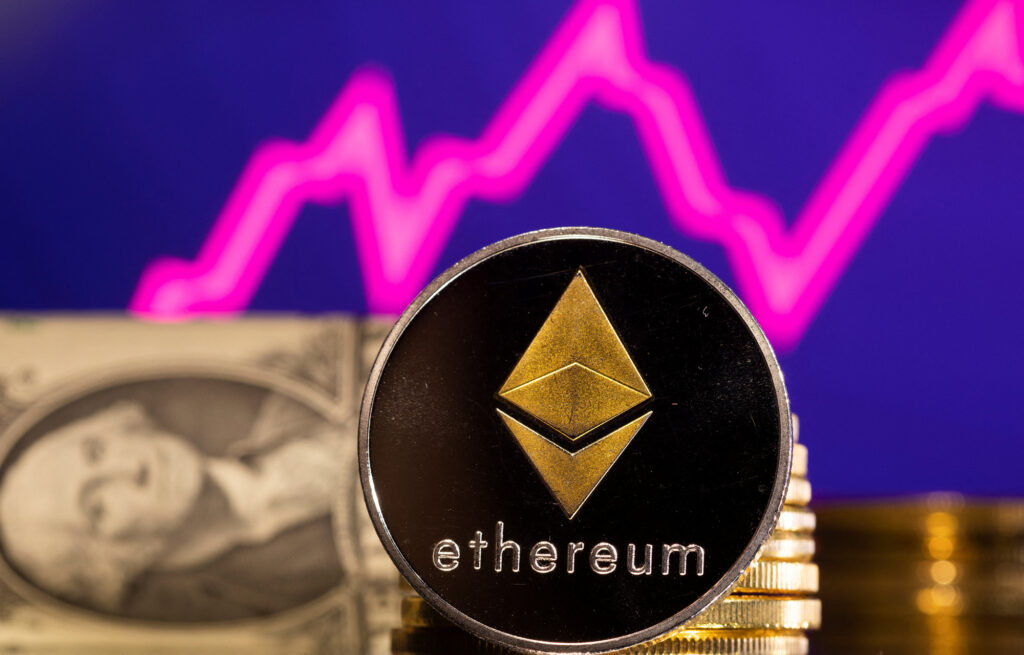
Ethereum’s social media sentiment has fallen to levels similar to those seen before its 2025 price surge, according to a crypto sentiment analyst.
The pattern has drawn comparisons to a period that preceded Ethereum’s return to its 2021 all-time highs.
“Ethereum is actually way down, this would argue against us falling too much further,” Santiment analyst Brian Quinlivan said in a YouTube video published Saturday.
“This is kind of reminiscent of what we saw before Ethereum went on its major run last year,” he added.
Echoes Of The 2025 Ethereum Rally
Quinlivan pointed to Ethereum’s sharp rebound during 2025 as a reference point.
On August 23, Ether surged back to its 2021 peak of $4,878.
That move represented a near 70% gain over four months.
The rally followed a steep decline earlier in the year, when Ether fell to a low of $1,472 in April.
According to Quinlivan, the breakout occurred as market confidence in Ethereum was fading.
“Ether’s price took off just as people were really starting to write-off Ethereum,” he said.
Ethereum Holds Firm As Market Number Two
Since hitting its all-time high, Ether has fallen roughly 36%.
It was trading near $3,089 at the time of publication.
The decline followed a $19 billion crypto market liquidation event in October that dragged down the broader market.
Despite the pullback, Quinlivan does not believe Ethereum faces the same skepticism seen earlier in 2025.
“I wouldn’t say that is happening now,” he said.
“Ethereum is kind of back to being an expected number two market cap for a lot of people.”
Coinbase Asset Management president Anthony Bassili has expressed a similar view.
“There’s a very, very clear view in the investor community,” Bassili said previously.
“The right first portfolio is Bitcoin. The next is Bitcoin, Ethereum,” he added.
Network Growth And Staking Interest
Quinlivan remains optimistic about Ethereum’s underlying fundamentals.
He described the network’s growth as “absolutely going bonkers.”
He linked the expansion to rising interest in staking.
Staking discussions have become increasingly prominent across social media platforms.
That trend suggests users are engaging with Ethereum beyond short-term price speculation.
Broader Crypto Market Remains Cautious
The wider cryptocurrency market continues to show signs of caution.
Sentiment has hovered between “Fear” and “Extreme Fear” since early November.
On Sunday, the Crypto Fear and Greed Index posted a score of 29.
Market participants remain largely risk-off outside of Bitcoin.
The Altcoin Season Index currently signals a “Bitcoin Season” environment.
The index score of 34 out of 100 reflects weaker relative performance among altcoins.
This backdrop highlights Ethereum’s challenge in gaining momentum despite improving fundamentals.