


The introduction of euro-denominated Bitcoin and Ether futures by CME Group is poised to significantly influence institutional cryptocurrency adoption within the eurozone.
Giovanni Vicioso, executive director at CME Group, shared insights with Cointelegraph, emphasizing the potential for broadening participation in the cryptocurrency markets.
According to Vicioso, the existing U.S. dollar-denominated cryptocurrency products have attracted a diverse group of participants, including traditional proprietary trading firms.
He expects these firms to also engage with the new euro-based products.
Vicioso revealed that the forthcoming euro-denominated futures have already sparked interest among various investors, including macro hedge funds, small asset managers, and dedicated crypto investors.
This move by CME, the leading derivatives marketplace comprising four exchanges, to introduce Micro Bitcoin and Micro Ether futures in euros, scheduled for March 18, marks a significant expansion in its cryptocurrency derivatives offerings.
The euro-denominated futures are anticipated to essentially function as a foreign exchange (FX) contract, attracting additional market participants.
Vicioso explained the mechanics, noting that investors could long the U.S. dollar contract while shorting the euro version, or vice versa, effectively creating an FX contract with Bitcoin and Ether.
The launch of Bitcoin-based exchange-traded products (ETPs) and the approval of the first spot Bitcoin ETFs in the U.S. on January 11 have already generated significant interest.
READ MORE: Crypto Whale Swaps PEPE for SHIB, Signalling Massive Bullish Momentum for Shiba Inu Token
This interest was underscored by the over $2 billion in combined daily volume recorded by the new spot Bitcoin ETFs, excluding the Grayscale Bitcoin Trust ETF conversion.
Vicioso pointed out that the anticipation and regulatory approval of U.S.-based spot Bitcoin ETFs have fueled an uptick in institutional interest in Bitcoin.
He highlighted the increase in Euro-denominated Bitcoin and Ether volumes since September and mentioned the growing customer interest in euro-denominated cryptocurrency products.
Furthermore, CME has seen a substantial increase in its average daily Bitcoin trading volume, which has nearly doubled from $1.6 billion in 2023 to over $3 billion in 2024.
Despite these advancements, Bitcoin’s price saw a slight decline of 0.62% in the 24 hours leading up to 1:15 pm UTC, trading at $62,383.
However, it has shown a significant increase of 22.50% on the weekly chart, indicating the cryptocurrency’s enduring appeal and volatility.
Tether, the cryptocurrency stablecoin, has achieved a significant milestone by reaching an all-time high market capitalization of $100 billion.
This represents a 9% growth since the beginning of the year, solidifying Tether’s lead over its closest competitor, USD Coin (USDC), by more than $71 billion.
The peak was recorded on March 4, based on data from CoinGecko, although fluctuations in market cap are common due to changes in price and circulating supply.
In comparison, other platforms like CoinMarketCap have not yet registered Tether reaching this landmark.
Tether’s remarkable market cap positions it alongside major global companies such as the British oil conglomerate BP and surpasses e-commerce giant Shopify in value.
Tether operates on 14 different blockchains and protocols and is considered the third-largest cryptocurrency by market cap, trailing only behind Ether.
It plays a vital role in the cryptocurrency market, offering traders a stable asset amidst the volatile crypto environment.
The cryptocurrency market as a whole has experienced a resurgence, with the total market cap exceeding $2 trillion.
Bitcoin, in particular, has seen a 50% increase in price, achieving two-year highs.
READ MORE: US Energy Officials Reach Agreement with Texas Blockchain Council and Riot Platforms
Tether, the company behind the USDT token, supports each token with a 1:1 ratio of independently audited reserves, primarily consisting of U.S. Treasury Bills (T-Bills).
The company reported a record quarterly profit of $2.85 billion in the fourth quarter of 2023, with $1 billion attributed to its T-Bill investments, showcasing over $80 billion in T-Bill holdings.
Despite its success, Tether has faced scrutiny regarding the quality of its asset backing. Efforts have been made to diminish exposure to higher-risk assets.
The company had planned to cease lending funds from its reserves by the end of 2023, yet $4.8 billion in loans remained on its books at year-end.
These loans are reportedly fully collateralized, with a commitment to reduce them to zero by 2024.
The majority of USDT tokens circulate on the Tron blockchain, which a United Nations report criticized for facilitating cyber fraud and money laundering activities in Southeast Asia.
Tether has contested these claims, emphasizing its cooperation with law enforcement and the traceability of its tokens.
VanEck, a renowned asset management firm, is venturing into the nonfungible token (NFT) domain with the introduction of a novel self-custody platform named SegMint.
This move aims to mirror the success of its Bitcoin exchange-traded fund (ETF) in the United States.
The platform is designed to let users vault and fractionalize digital assets, offering keys that are tradable on its exclusive exchange.
Matthew Bartlett, the NFT community and Web3 head at VanEck, shared insights with Cointelegraph just before SegMint’s unveiling at NFT Paris.
As the first U.S. asset manager to propose a spot Bitcoin ETF back in 2017, VanEck has since been recognized for its active engagement in cryptocurrency ETFs and digital asset ownership realms.
Bartlett, who brings nearly two decades of experience from traditional finance and a passion for NFTs, spearheads the firm’s NFT and Web3 initiatives.
His assignment to build an in-house platform for NFT ownership and digital asset fractionalization was motivated by Jan van Eck’s directive and Bartlett’s own interest in NFTs, which he humorously described as being an “NFT degen.”
Bartlett’s journey into the NFT space began in 2017, involving activities such as minting and auctioning in Decentraland, as well as spearheading a free NFT giveaway linked to physical events at the New York Stock Exchange and Nasdaq.
Over the past seven years, VanEck has developed a comprehensive digital asset team, focusing on cryptocurrency investments and digital asset management.
READ MORE: Demigod NFTs: Army of Fortune’s Next Generation of Gaming NFTs
SegMint distinguishes itself by prioritizing self-custody and fractional ownership.
Bartlett emphasized the platform’s solution to common issues faced by other NFT platforms, particularly regarding custodial practices that restrict asset control and benefits like airdrops.
SegMint ensures users retain ownership through Web3 wallet-based vaults, allowing for the minting of tradable SegMint keys without relinquishing asset control.
The platform, which debuted on February 28, necessitates a Know Your Customer process for creating vaults and keys.
Bartlett expressed hope that SegMint would appeal to holders of prominent NFT collections, aiming to make top-tier NFTs more accessible globally.
Looking ahead, Bartlett sees potential in tokenizing real-world assets, such as real estate, vintage wines, and luxury watches, through partnerships with blockchain platforms.
He envisions a scenario where, for example, a vacation home is fractionally owned through tradable keys, democratizing access to high-value assets in a manner akin to a hybrid between Airbnb and traditional timeshares.
While acknowledging the challenges and time required to realize these ambitious projects, Bartlett remains optimistic about the innovative applications of blockchain technology in asset ownership and management.
VanEck’s Bitcoin ETF, approved by the U.S. Securities and Exchange Commission in January 2024, has already attracted significant investment, highlighting the growing interest in cryptocurrency investments among investors looking to diversify their portfolios.
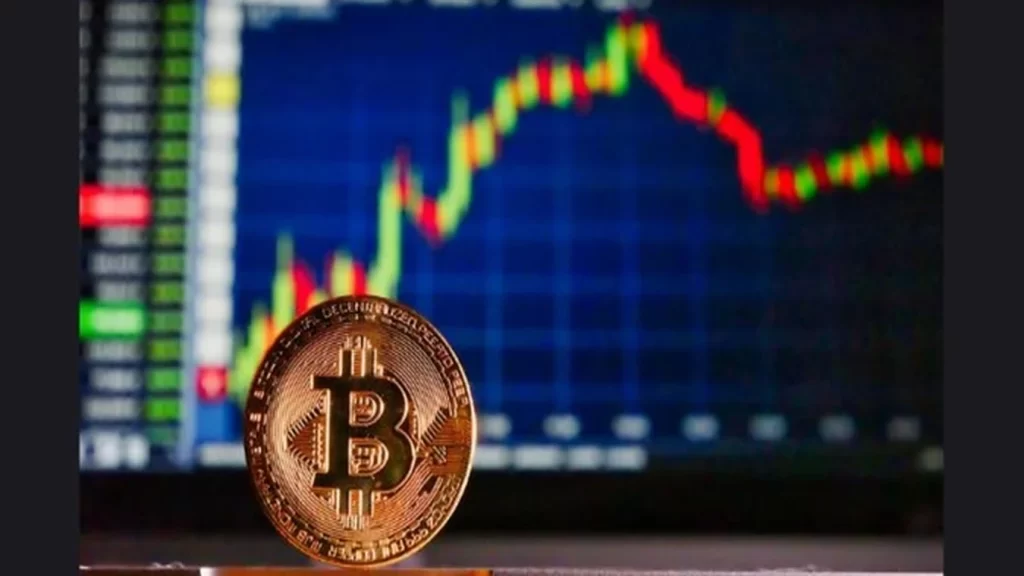
Bitcoin has recently achieved a significant milestone, setting a new record high against the euro, with its value surging to an unprecedented $65,000.
This remarkable achievement marks a new multi-year high for the cryptocurrency, highlighting its growing strength in the financial market.
On March 4, Bitcoin surpassed the 60,000-euro mark, a historical event as it reached this level against the euro for the first time.
TradingView data shows that Bitcoin hit 60,393 euros at 8:30 am UTC, witnessing a roughly 5% increase from its intraday low of 57,521 EUR.
Currently, Bitcoin’s value stands at 59,981 euros, boasting a significant 56% increase since the beginning of the year.
Before this achievement, Bitcoin had already been setting records, breaking the 53,000-euro mark on February 28, a record previously set in late September 2021.
This year, Bitcoin has been on a record-breaking spree against various fiat currencies, including the Chinese yuan (CNY), which is the largest fiat currency by market capitalization globally.
Late February saw Bitcoin surpass its previous all-time high against the CNY, reaching 467,506 CNY from an earlier high of around 414,000 CNY, as per Xe.com.
Balaji Srinivasan, a prominent angel investor and former Coinbase CFO, noted that as of February 28, Bitcoin had surpassed all-time highs in over 30 countries, including major economies like China, India, Japan, South Korea, and Argentina.
READ MORE: Massive Transfer of 3 Trillion Shiba Inu Tokens to Robinhood Wallet Sparks Crypto Frenzy
Despite these achievements, Bitcoin has yet to set new records against several major currencies, such as the U.S. dollar, British pound, Swiss franc, Brazilian real, and Mexican peso.
As it stands, Bitcoin is trading at $65,000, approximately 6% below its all-time high of $69,000 recorded on Coinbase in November 2021.
Sam Wouters, River Intelligence marketing head, identifies the Mexican peso as a particularly challenging target for Bitcoin, noting its current value at 1.1 million pesos, a 24% decrease from its peak of about 1.4 million pesos in November 2021.
The cryptocurrency’s recent success can be attributed to increased exposure following the launch of spot Bitcoin exchange-traded funds (ETFs) in the U.S. on January 11, 2024.
Since the launch, ETF issuers have acquired at least 340,000 BTC by March 1, not including significant sales by the Grayscale Bitcoin Trust ETF, further cementing Bitcoin’s growing influence in the global financial landscape.
Bitcoin’s movement away from exchanges is accelerating at a notable pace, with the cryptocurrency’s price striving to reach unprecedented highs.
James Van Straten, a research and data analyst at CryptoSlate, highlighted significant Bitcoin withdrawals from exchanges in a recent post, marking a trend reminiscent of 2021.
Despite the lack of mainstream investor return to cryptocurrency, Bitcoin reserves on exchanges are diminishing.
Van Straten, utilizing data from Glassnode, pointed out that on March 1, approximately $2 billion in Bitcoin was withdrawn from exchanges.
This activity, he remarked, was unprecedented.
“I don’t think I’ve quite seen anything like this before,” he said, noting that the day saw one of the largest Bitcoin withdrawals in more than five years, totaling over $2.3 billion.
Glassnode’s data suggests that the daily Bitcoin outflows around this period were comparable to those observed on June 28–29, 2021, a time of record withdrawals.
The influence of United States spot Bitcoin exchange-traded funds (ETFs) was notable, excluding around $200 million transferred to Coinbase Pro for custody.
READ MORE: US Energy Officials Reach Agreement with Texas Blockchain Council and Riot Platforms
Binance experienced approximately $400 million in outflows, with Coinbase handling the remainder. Van Straten found Binance’s outflows particularly intriguing, as they were not related to ETF activities.
According to Glassnode, the total Bitcoin assets held on major trading platforms dropped to 2,286,347 BTC ($142.5 billion) by March 2, reaching its lowest since March 2018 when the price of Bitcoin was around $8,000.
Further analysis by Crypto Dan from CrryptoQuant in a Quicktake market update revealed shifts in Bitcoin’s market composition.
The analysis highlighted an increase in activity from “younger” coins, while “older” ones, dormant for six months or more, began to circulate again.
This trend signals the arrival of new investors and suggests an impending influx of individual investors.
“New investors are flowing in, and in the near future we can expect the influx of many new ‘individual’ investors,” he summarized, indicating a sharp decline in the ratio that could herald the onset of a true bull market.

In a recent decision by United States District Court Judge Analisa Torres, a motion by the U.S. Securities and Exchange Commission (SEC) to delay the deadline for a critical submission in its ongoing litigation against Ripple Labs has been approved.
The legal documents, filed on March 1, have allowed the SEC additional time to submit discovery materials related to remedies against Ripple.
This extension sets new deadlines, giving the SEC until March 22 to file its opening brief, Ripple until April 22 to submit its opposition brief, and the SEC a final deadline of May 6, 2024, for a reply.
The case between the SEC and Ripple Labs has been a focal point of regulatory discussion since December 2020.
It was then that the SEC charged Ripple and its leading executives, CEO Brad Garlinghouse and co-founder Chris Larsen, with orchestrating a $1.3 billion unregistered securities offering via the sale of the XRP token.
The SEC argues that XRP qualifies as a security, necessitating adherence to stringent regulatory guidelines, a classification Ripple disputes by maintaining that XRP is not a security and criticizing the SEC for not providing adequate notice of its status.
This lawsuit has traversed various legal avenues and arguments, particularly focusing on the Howey test, a criterion to assess if a transaction constitutes an “investment contract” and thus, a security under U.S. law.
READ MORE: Elon Musk Takes Legal Action Against OpenAI Over Alleged Nonprofit Agreement Breach
The SEC posits that XRP satisfies the Howey test conditions, a stance contested by Ripple.
A pivotal moment in the litigation came in July 2023 when Judge Torres delivered a mixed verdict.
She ruled that XRP did not qualify as a security in its sales on digital asset exchanges through programmatic sales, marking a partial victory for Ripple Labs.
However, she also determined that sales of XRP to institutional investors did classify the token as a security, highlighting the nuanced and complex nature of the legal and regulatory challenges facing cryptocurrency and digital assets.
This ongoing case continues to be a significant point of interest for the cryptocurrency industry, regulatory bodies, and legal observers, as it may set important precedents for the classification and regulation of digital assets.

The UK government has recently taken a significant step towards strengthening its legal framework against the misuse of cryptocurrencies in criminal activities.
In a statutory instrument issued on February 29, it was announced that from the end of April, UK law enforcement will have the authority to freeze crypto assets tied to criminal acts without the necessity of a prior conviction.
This development is a part of the amendments to the Economic Crime and Corporate Transparency Act 2023, which grants the National Crime Agency expanded powers to confiscate and seize cryptocurrencies linked to illegal activities, bypassing lengthy legal processes.
The documentation further clarifies that this will enable the authorities to directly access cryptocurrencies held in exchanges and by custodian wallet providers.
An additional measure included in the amendment is the authority to eliminate crypto assets if deemed necessary.
Although the method for this was not specified, the common practice involves “burning” the crypto tokens by transferring them to a wallet from which they cannot be retrieved, effectively removing them from circulation.
This new law is scheduled to be enforced starting April 26.
READ MORE: Eight State Attorneys General Challenge SEC’s Authority in Kraken Lawsuit
The legislation, reported by Cointelegraph in September 2022, is designed to enhance the capability of UK authorities in combating crypto-related crimes, including cybercrime, scams, and drug trafficking.
It includes a provision for the recovery of crypto assets linked to criminal activities without the prerequisite of an arrest, addressing the challenge of perpetrators evading conviction by staying abroad.
Despite these advancements, concerns have been raised by a British national, a victim of crypto fraud who lost around $46,000, about the UK’s preparedness in dealing with cryptocurrency crimes, criticizing the agency’s response to his case.
In addition to these measures, the UK government is planning to introduce new regulations on stablecoins and crypto staking within the next six months.
At a Coinbase-hosted crypto event in London on February 19, Economic Secretary to the Treasury Bim Afolami expressed the government’s commitment to finalizing these regulations before the next election, slated for no later than January 28, 2025.
Afolami emphasized the urgency of these regulatory efforts, stating, “We’re very clear that we want to get these things done as soon as possible. And I think over the next six months, those things are doable.”
FTX, the cryptocurrency exchange embroiled in bankruptcy proceedings, has initiated a claim window for affected crypto asset holders, offering payouts at rates considerably lower than the prevailing market values.
According to Wu Blockchain, the valuations set by FTX for major cryptocurrencies like Bitcoin (BTC), Ether (ETH), Solana (SOL), and Binance Coin (BNB) are markedly below their current market rates.
Specifically, BTC is priced at $16,871, ETH at $1,258, SOL at $16.24, and BNB at $286, in stark contrast to their market prices of $62,144, $3,424.62, $129.96, and $411.32, respectively.
This significant disparity in pricing has sparked outrage and concern among cryptocurrency investors, leading many to question FTX’s transparency and fairness.
The discontent has been palpable on social media platforms, where users are vocally demanding accountability from the exchange.
In response to the mounting criticism, PricewaterhouseCoopers (PwC) released a statement explaining the ongoing Chapter 11 bankruptcy proceedings involving FTX Digital Markets and its associated debtors.
The objective is to consolidate assets for a more streamlined settlement process.
PwC has announced a deadline of May 15, 2024, for creditors to file their claims through a dedicated portal, with the first interim distribution anticipated for late 2024 or early 2025. All claims are to be calculated in U.S. dollars.
Adding to the complexities, FTX has issued warnings about unauthorized third parties making bids on behalf of certain FTX debtors.
READ MORE: Bitcoin Trader Recovers $13,000 Mistaken NFT Purchase Thanks to Seller’s Generosity
This has led to a clarification regarding the sale of digital assets, which, as per a bankruptcy court order, is to be managed exclusively by Galaxy Asset Management.
FTX emphasizes that only Galaxy is authorized to oversee any transactions related to the bankruptcy proceedings, urging institutional buyers and regulatory-compliant entities to adhere strictly to this directive.
Moreover, FTX has received court approval to liquidate its over $1 billion investment in Anthropic, an artificial intelligence company, highlighting the extensive measures being taken to address the financial turmoil and fulfill creditor claims.
This development underscores the ongoing efforts to navigate the fallout from FTX’s bankruptcy and the intricate process of asset liquidation and creditor compensation.

Non-fungible tokens (NFTs) entered gaming with a lot of hype in early 2022. But just as quickly as they had risen, they fell. Within just a few months, gaming NFTs had become associated with having a horrible user experience (UX).
The new technology had failed to do what it had promised; it did not empower the player. Instead, it had sidelined the player. Technical barriers and the high costs of early web3-powered gaming had done the opposite and alienated a large player base. This caused a widespread dislike for NFTs in gaming.
And this is the kind of environment that the AOFVerse project finds itself operating in. But despite how hostile it might seem, the team is confident that their approach to web3 gaming will make a difference. Central to their plans are the newly-launched Demigod NFTs.
What Are Demigod NFTs?
Demigod NFTs, or “Demigods” for short, are the first NFTs created for the Army of Fortune Metaverse (AOFverse). The AOFVerse is an expansive virtual world that the studio plans to fill with mobile games that use blockchain technology. Here, every Demigod will be an enhanced NFT version of in-game heroes and characters (known as troops) with unique abilities.
Every character in the AOFVerse will have its own set of demigod NFTs of different rarities. 5 on-chain traits will determine this rarity so that, in total, there will be 5 Demigod rarities: Common, Rare, Epic, Legendary, and Champion. Each character will have a total of 100,000 Common NFTs, 10,000 Rare ones, 1,000 Epic ones, 100 Legendary, and 10 Champion NFTs.
Why Are They Different?
Most early attempts at blockchain gaming were underwhelming. Even those that seemed to be fairing pretty well eventually succumbed to the same problem: a hyper fixation on monetary gain. Play had been reduced to grinding NFTs in boring, uninspiring gameplay loops where the ultimate goal was to collect enough tokens to trade at a later time.
Seeing this, the AOFVerse team developed a new framework for web3 gaming. It is called Game 3.0, and at its core, it looks to elevate the standards of web3 gaming by preserving the gameplay and social mechanics that people have always enjoyed in gaming.
Simply put, Game 3.0 doesn’t turn gaming into an NFT minting race. Video games remain games. For example, a shooter game will be primarily about eliminating enemies with key gameplay mechanics designed around that to keep it fun and engaging. Blockchain technology only enters the picture to enhance the player experience.
The technology is also integrated seamlessly within a largely familiar user interface (UI). According to the project, it should be impossible for players to tell if they are playing a web3-powered game.
In this case, Demigod NFTs will not be the primary focus of the AOFVerse. That will be providing high-quality mobile games that people enjoy playing. The NFTs will only come along as a way to enhance the player’s experience within the virtual world.
So, what role do they play in this ecosystem?
The Functionality of Demigod NFTs
Demigod NFTs possess cross-game interoperability. Thus, players can use them across the entire AOF metaverse in multiple games.
The NFTs will function similarly to other in-game units. They can be used in decks and deployed in the arena for battles or stored in the player’s collection alongside normal troop cards.
Demigods will also have staking power. They can be staked in specific locations in the Army of Fortune universe to unlock special perks. For example, staking Demigods in Buildings unlocks additional production queues, while staking in warehouses expands storage space. That’s not all; the NFTs are also a requirement for starting a clan.

AOFVerse’s Clans are formed when players team up. Members can chat and lend and borrow character cards and NFTs from one another. The feature is yet to be released, but once it does, users looking to begin a clan (and become a clan leader) will need to have and stake a Demigod.
Generally, Demigods are a way to empower the player in the Army of Fortune Metaverse. They can be used in-game as part of the gameplay loop and also in the wider digital realm that the game is part of, all to the benefit of the player.
How Does One Obtain Demigod NFTs?
Within the AOFVerse, players have the opportunity to mint their very own Demigods. But to do that, players must reach Island level three in the Army of Tactics game. This is currently the only game released in the AOFVerse.
Additionally, the minting of Demigods necessitates the use of Crystals. Crystals are a valuable in-game resource. The need to be forged, a process that requires another resource known as Jewelry, which is a specific class of in-game items consisting of rings and necklaces that can only be acquired through quests or by opening treasure chests
It is worth noting that players can only forge Crystals from level 3 onwards. The level of a Crystal is directly correlated to the island the player is currently located on. For instance, level 1 Crystals are granted upon reaching Island 3, level 2 Crystals on Island 4, level 3 Crystals on Island 5, and so forth. Utilizing a Crystal of a higher level enhances the player’s chances of minting a rare Demigod.
Besides minting, Demigod NFTs can be obtained through various alternative methods. These are opening Crystal Forge treasure chests or trading with other players on various NFT marketplaces. Players can use this guide to learn how to use the official exchanges AOFverse has partnered with.
The Army of Fortune team first plans to generate and release 200 common Demigods for the initial release before unlocking full rarities at a later date. These will be evenly split between Blick the Gobbler and Frog Pikeman.
A staggering 3 trillion Shiba Inu tokens, valued at approximately $50 million, were recently transferred to a wallet named after the popular trading platform Robinhood.
This transfer coincides with a remarkable surge in SHIB’s value, experiencing a 70% increase within a mere 24-hour period.
Whale Alert detected the transaction, announcing on X the transfer of 3,023,255,579,400 SHIB tokens from an unidentified wallet directly to the address labeled “Robinhood.”
Following this substantial transfer, SHIB surpassed many leading cryptocurrencies, including Bitcoin and Ethereum, in terms of price performance.
SHIB even outpaced DOGE, climbing to the 11th position in global market capitalization rankings, boasting a valuation exceeding $12.8 billion.
As of the time of writing, SHIB’s price has surged by 62.62% over the past day, reaching $0.00002158.
READ MORE: Hong Kong Halts Crypto Exchange License Applications
This surge positions the meme coin for its most impressive weekly close since October 2021, marking a remarkable 129% increase, according to CoinMarketCap data.
Analysts attribute SHIB’s price explosion to several key on-chain activities observed days before the rally.
One notable transaction involved a “smart trader” purchasing 75.91 billion SHIB from Binance, resulting in over $614,000 in profit.
MakerDAO co-founder Rune reportedly made his first SHIB purchase with 100,000 USDC, gaining approximately $47.1 billion.
Additionally, a wallet under the name of Upbit amassed 2.13 trillion SHIB, now valued at $42.3 million, further propelling the token’s ascent.
As the cryptocurrency community buzzes with excitement over SHIB’s unexpected rally, market observers are closely monitoring “Robinhood’s” next moves, speculating on the impact this significant acquisition could have on SHIB’s future market performance.