



U.S. energy officials have come to terms with the Texas Blockchain Council (TBC) and Riot Platforms, a Bitcoin mining company, to halt its proposed emergency survey targeting cryptocurrency miners nationwide.
In a filing dated March 2, it was disclosed that the U.S. Department of Energy, along with the Energy Information Administration (EIA) and the Office of Management and Budget (OMB), has reached an agreement with TBC and Riot to discontinue the collection of information from crypto miners for the proposed three-year emergency survey filed under the “EIA-862 Emergency Collection Request.”
The agreement stipulates that all previously gathered information from crypto miners, which was deemed intrusive by TBC and Riot, will be deleted, and any future data collected will also be discarded.
The settlement effectively terminates the temporary restraining order, which was initially slated to remain in effect until March 8.
Earlier, on Feb. 23, it was reported that the court had temporarily halted the U.S. energy regulators from gathering data while the lawsuit was ongoing.
READ MORE: Bullish Bitcoin Signals Point to Potential $180,000 Price Surge, Analysts Say
This decision followed arguments from TBC and Riot, convincing the judge that irreversible harm would occur without ceasing further data collection.
The plaintiffs contended that the survey could result in non-recoverable compliance costs, a credible threat of prosecution for non-compliance, and the disclosure of proprietary information.
While the EIA estimated that the survey would take approximately 30 minutes to complete, the court deemed this estimation “extremely inaccurate.”
TBC and Riot challenged this estimate, claiming that the compliance cost had already exceeded 40 hours.
However, both parties have consented to allowing the EIA to issue a new notice soliciting public feedback for a period of two months regarding the information it is permitted to collect.
“Defendants agree that EIA will allow for submission of comments for 60 days, beginning on the date of publication of the New Federal Register Notice,” the filing stated.
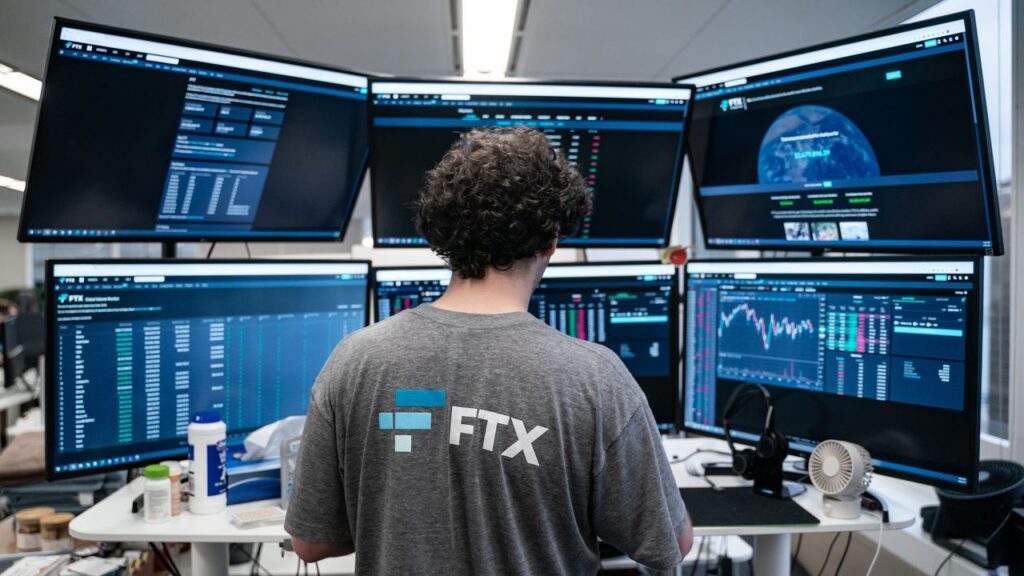
FTX, the bankrupt exchange striving to settle its obligations to creditors following its 2022 collapse, has issued a cautionary note regarding its authorized investment manager as it proceeds with asset sales.
In a post dated March 1, FTX clarified that the sale of digital assets mandated by the bankruptcy court is exclusively overseen by Galaxy Asset Management, the authorized investment manager.
The exchange warned of unauthorized third parties attempting to solicit bids on behalf of FTX Debtors.
Moreover, FTX emphasized that any sale of locked digital assets would adhere to the existing terms and conditions governing the unlocking schedule.
The exchange has been actively engaged in restructuring efforts and repaying creditors, having recovered assets amounting to $7 billion for this purpose.
READ MORE: Chainalysis Report Reveals Surge in Darknet Market Revenue Amidst Crypto Crime Landscape
Approval was granted by the United States Bankruptcy Court for the District of Delaware during a hearing on Feb. 22 for the sale of FTX’s stake in Anthropic, an artificial intelligence (AI) firm, valued at over $1 billion.
This decision followed a motion filed by FTX seeking authorization to sell its 7.84% stake in Anthropic, an investment made in April 2022 prior to its bankruptcy filing in November of the same year.
In December 2023, FTX proposed reimbursing claimants based on crypto asset prices at the time of bankruptcy.
While creditors advocated for “in kind” repayments for crypto holdings, Judge John Dorsey ruled in favor of the debtors in a Jan. 31 verdict, citing clarity in the law.
Former FTX CEO Sam Bankman-Fried was convicted on seven charges including wire fraud, securities fraud, and money laundering conspiracy in a criminal trial on Nov. 3, 2023.
His sentencing, scheduled for March 28, carries a maximum penalty of 110 years in prison.

The Bitcoin bull market officially commenced on March 1, as stated by the pseudonymous quantitative analyst PlanB, renowned for the contentious stock-to-flow (S2F) model for Bitcoin’s price.
The accumulation phase for Bitcoin (BTC) has drawn to a close, along with the easily accessible Bitcoin buying opportunities, as highlighted in a recent post by PlanB, referencing the S2F chart.
“Bull market has started. If history is any guide, we will see ~10 months of face-melting [fear of missing out] FOMO: extreme price pumps combined with multiple -30% drops.”
This forecast from the anonymous analyst emerged just two days following Bitcoin’s surge past $60,000 for the first time in over two years.
Bitcoin observed a slight decline of 0.75% in the 24-hour period ending at 3:00 pm Central European Time, settling at $62,472.
Despite its popularity during the 2021 bull run, the S2F model isn’t infallible.
As per the chart, Bitcoin was projected to surpass the $100,000 mark in early August 2021, when it was hovering around $44,000.
READ MORE: Shido Token Plummets by 94% Following Exploit on Ethereum-Based Staking Contract
Ethereum co-founder Vitalik Buterin has also criticized the S2F model, citing it gives investors a “false sense of certainty.”
PlanB’s projections align with those of other analysts. According to Vetle Lunde, a senior analyst at K33 Research, Bitcoin typically consolidates immediately post-halving before rallying in subsequent months.
“While the immediate post-halving performance has tended to be sluggish, each halving has proven to be a solid point to enter the market.
150–400 days after the halving tends to be the sweet spot where the compounding effects of subdued miner selling pressure impact BTC positively directionally.”
Besides the much-awaited halving, the approval of spot Bitcoin exchange-traded funds (ETFs) has also bolstered investor interest in Bitcoin, contributing to its price appreciation.
Although Bitcoin prices corrected by 3% after Grayscale’s recently converted Grayscale Bitcoin Trust ETF offloaded $598.9 million worth of BTC on Feb. 29, they have surged over 22% in the past week, according to CoinMarketCap data.

A significant move has shaken the crypto market as a whale relinquishes a substantial portion of their PEPE investment in favor of Shiba Inu’s native token, SHIB.
According to Lookonchain, a blockchain analytics platform, an anonymous crypto whale has strategically shifted their investment focus.
Previously heavily invested in the frog-themed PEPE token, the whale has now redirected their holdings towards SHIB, a move that has caught the attention of the crypto community.
The analytics platform revealed that the whale deposited a staggering 1.97 trillion PEPE tokens, valued at over $6.07 million, into Binance.
This strategic maneuver resulted in a profit of $3.49 million, exceeding half of their initial $6 million investment in PEPE.
Following this massive PEPE deposit, the whale acquired approximately $75.9 billion SHIB, worth $893 million, from Binance, transferring it to an undisclosed crypto wallet.
This shift underscores the whale’s confidence in SHIB’s potential, sparking speculation about future gains for the meme-inspired cryptocurrency.
Interest in SHIB has surged in recent times, with investors eyeing substantial returns. In January 2024, SHIB whale transactions spiked by over 1300%, indicating a growing demand for the dog-themed token.
While the motivations behind these large-scale transactions remain undisclosed, such whale activities often trigger price rallies within the cryptocurrency market.
READ MORE: Chainalysis Report Reveals Surge in Darknet Market Revenue Amidst Crypto Crime Landscape
The broader crypto community is closely monitoring the impact of these developments on SHIB’s dynamics.
SHIB’s price has experienced remarkable gains, with a nearly 60% increase in the past 24 hours, trading at $0.000020 at the time of writing.
Over the last seven days, SHIB has surged by an impressive 113.83%, driven by successful SHIB burns and the expansion of its ecosystem and community.
With a market capitalization surpassing $11 billion and a 24-hour trading volume exceeding $4 billion, SHIB continues to attract attention.
Derivatives data indicates a potential uptrend for SHIB, with a 74.06% rise in open interest and a 220.54% surge in volume, highlighting the token’s strength and prominence in the cryptocurrency market.

Elon Musk, the visionary behind SpaceX, Tesla, and X, finds himself embroiled in a legal dispute with OpenAI and its CEO, Sam Altman, alleging a violation of their nonprofit agreement.
In a recent filing with the Superior Court of California for the County of San Francisco, Musk contends that OpenAI’s collaboration with Microsoft strays from its core mission of advancing open-source artificial general intelligence (AGI) for the betterment of humanity.
Musk’s legal action enumerates grievances including breach of contract, violation of fiduciary duty, and unfair business practices.
He implores OpenAI to return to its roots of openness and seeks an injunction to halt the commercialization of AGI technology.
The filing points to the launch of ChatGPT-4 in March 2023 as a significant departure from OpenAI’s founding principles.
Despite being hailed as an AI breakthrough, GPT-4 is a proprietary model unlike its predecessors.
Musk argues that this shift towards proprietary technology serves Microsoft’s financial interests, contradicting OpenAI’s original nonprofit vision.
Founded in 2015 as a nonprofit AI research lab, OpenAI morphed into a commercial entity after establishing a business arm in 2020.
Critics, including Musk, a co-founder of OpenAI, assert that the company now prioritizes profit over positive societal impact.
READ MORE: Bitcoin Surges to Highest Point in Over Two Years on Institutional Endorsement and ETF Optimism
Financial reports cited by the Financial Times reveal OpenAI’s staggering annual revenues exceeding $2 billion, propelled by the runaway success of ChatGPT, solidifying its status as one of the fastest-growing tech firms.
Musk has long regarded AI as a looming threat to humanity, advocating for stringent government oversight and responsible research practices.
His central tenet has been the necessity of acquiring comprehensive knowledge to effectively address the challenges posed by AI.
Musk further criticizes the technical expertise of OpenAI’s current board, alleging a lack of proficiency essential for the responsible development of AGI.
He highlights the November 2023 episode involving Altman’s removal and subsequent reinstatement as evidence of a profit-driven agenda aligned with Microsoft’s interests.
Having served as an original board member of OpenAI until 2018, Musk underscores the discord between the board and Altman, particularly concerning the development of ChatGPT-4 and subsequent AGI iterations, expressing apprehensions about their implications for public safety.
A Bitcoin Ordinals trader recently recounted their unfortunate experience of mistakenly purchasing a nonfungible token (NFT) valued at $13,000 on the Bitcoin network.
The trader, expressing regret over what they described as their “biggest mistake” in Bitcoin-based NFT trading, shared their story on X on March 1.
Initially believing they had acquired the NFT for 0.021 Bitcoin (BTC), equivalent to approximately $1,287, the trader was taken aback upon realizing post-transaction that the actual listing price was 0.21 BTC, or around $12,877.
Feeling embarrassed and disheartened, the trader acknowledged that their oversight resulted in another party benefiting greatly.
They chose to disclose their mishap to caution fellow traders about the importance of verifying digital asset transactions prior to finalizing them.
Although the trader had come to terms with the loss, Dan Anderson, the NFT’s seller, came across the post on X and promptly offered to refund the funds.
Anderson, identifying himself as the seller, had already initiated a buyback offer in the marketplace at the original listing price of 0.21 BTC.
READ MORE: OANDA Launches Crypto Trading Services in UK Amidst Regulatory Landscape Shift
Encouraging the trader to accept the offer, Anderson emphasized his intention not to take advantage of an inadvertent error.
“I listed it at 0.21 BTC because it’s dank not to fish for a fat finger. I was like ‘huzzah’ tho until I saw your post,” Anderson conveyed.
Following the acceptance of the buyback offer, the funds were promptly returned to the trader, and the NFT was relisted in the market at the original price of 0.21 BTC.
While this trader was fortunate enough to recover their funds, not all recipients of mistakenly sent crypto display a willingness to return the money.
Recent court documents revealed that on Feb. 26, the Australian crypto exchange OTCPro mistakenly credited a user with $653,000 instead of $65,300 due to an error.
Despite attempts to reach out, the user has not responded to communications or appeared in court.
This incident echoes past cases, such as the couple who received $10.5 million in error from Crypto.com in 2022 and opted to spend the funds on luxury items instead of returning them.
Subsequently, legal actions were taken, resulting in consequences for those involved, as evidenced by Thevamanogari Manivel’s sentence of 18 months of community corrections and her husband’s guilty plea to a theft charge in December 2023.
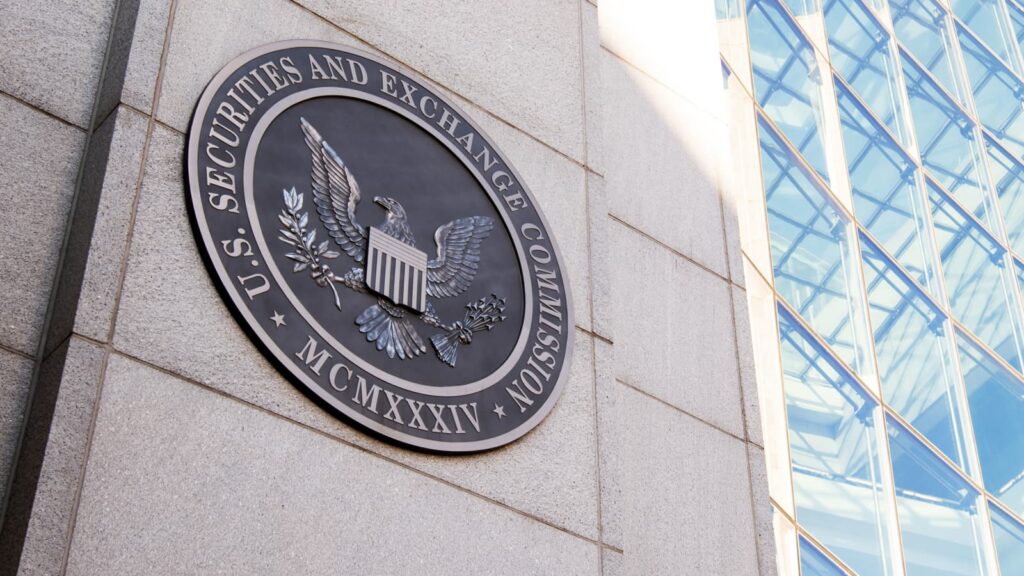
Eight state attorneys general in the United States, including officials from Arkansas, Iowa, Mississippi, Montana, Nebraska, Ohio, South Dakota, and Texas, alongside industry lobbyists, jointly filed an amicus brief on Feb. 29, challenging the Securities and Exchange Commission’s (SEC) authority in the lawsuit against Kraken, a cryptocurrency exchange.
The filing, not aligning with either party, contests the SEC‘s jurisdiction over crypto assets, stating that Congress hasn’t granted such authority.
The attorneys general argued against the SEC’s broadening definition of “investment contract,” emphasizing the need for state regulation to protect consumers from potential overreach by the SEC. They emphasized:
“The court should reject categorizing crypto assets as securities absent an investment contract.
The SEC’s exercise of this undelegated authority puts state consumers at risk by preempting state statutes better tailored to the specific risks of non-securities products.”
“The SEC’s enforcement action exceeds its delegated powers,” they reiterated.
“Some state laws are more protective of consumers than the federal securities laws.”
READ MORE: OpenAI Accuses The New York Times of Hacking AI Systems in Copyright Lawsuit
Kraken had previously filed a motion on Feb. 22 seeking dismissal of the lawsuit, echoing concerns of regulatory overreach.
The exchange criticized the SEC for lacking a clear boundary and expressed apprehension that a ruling in the SEC’s favor would grant excessive authority to the agency.
In response, Kraken released a blog post contesting the SEC’s allegations of operating as an unregistered entity and conducting unauthorized securities activities.
Kraken refuted the characterization of crypto tokens as “investment contracts” and highlighted the absence of any contractual agreements between customers and the exchange.
The SEC’s lawsuit against Kraken, initiated in November, alleged regulatory violations, including operating without registration, mingling client funds, and neglecting to address conflicts of interest.
Similar complaints have been levied against other crypto firms, such as Coinbase and Binance, with ongoing cases.

Decentralised finance (DeFi) lending platform and stablecoin issuer Seneca Protocol has fallen victim to exploitation, as stated in a Feb. 28 announcement on the protocol’s official X account.
According to a report disclosed to Cointelegraph, blockchain analytics firm CertiK has estimated the losses at $6.4 million thus far.
The Seneca team has urged users to revoke approvals for the affected contracts and has asserted that its personnel are “presently collaborating with security specialists to investigate the bug”.
Seneca Protocol is a DeFi lending application enabling users to deposit various cryptocurrencies as collateral, which can then be utilised to mint and borrow the protocol’s native stablecoin, SenecaUSD.
Blockchain data reveals that an account ending in 42DC managed to transfer approximately 1,385.23 Pendleton Kelp restaked Ether (PT Kelp rsETH) from a Seneca collateral pool by invoking the “performOperations” function.
Subsequently, this account exchanged these tokens for approximately $4 million worth of Ether (ETH) through three transactions.
Following these swaps, the account proceeded to transfer an additional 717.04 ETH derivative tokens from various collateral pools and exchanged them for ETH.
According to CertiK’s report, these transfers were maliciously executed due to a flaw in the protocol’s “performOperations” function.
The bug permits any account to invoke the function while specifying OPERATION_CALL as the action to be executed.
Consequently, the attacker gains the ability to “perform external calls to any address as the callee and callData are fully controlled by the attacker”.
READ MORE: Overdare Partners with Circle to Integrate Web3 Wallets and USDC Payouts for Gaming Creators
Hence, CertiK contends, the attacker managed to drain funds from the collateral pool not under its ownership.
Blockchain investigator Spreek also alerted users about the exploit on X, describing it as a “critical vulnerability”.
Spreek recommended that users should revoke approvals for the addresses used in the exploit.
According to security researcher ddimitrov22, Seneca suffers from an additional vulnerability preventing developers from pausing the Seneca contracts, as the pause and unpause functions within them are labelled as “internal”, rendering them inaccessible.
In their acknowledgment of the attack, the development team stated that they are currently conducting an investigation and will provide an update “shortly”.
Hacks and exploits continue to pose threats to Web3 users in 2024.
On Feb. 23, Axie Infinity co-founder Jeff “Jihoz” Zirlin lost $9.7 million due to a hack of his personal wallets. Concurrently, on the same day, DeFi protocol Blueberry was exploited for 457 ETH.

The cryptocurrency industry continues to grapple with cybercrimes, with darknet markets standing out as one of the two sectors experiencing a surge in revenue in 2023, as per the latest findings from blockchain analysis firm Chainalysis.
Released on February 29, the Chainalysis “2024 Crypto Crime Report” unveils that darknet marketplaces amassed a minimum revenue of $1.7 billion in 2023.
This marks a recovery from the data of 2022, when authorities dismantled Hydra, the world’s largest darknet marketplace.
Although no single marketplace has replaced Hydra, the report highlights the emergence of smaller marketplaces catering to specific niches and adopting more “specialised roles.”
Mega Darknet Market leads the pack with over $500 billion in crypto inflows.
Nevertheless, the revenue from darknet markets hasn’t yet reached the peak levels observed during the reign of Hydra.
The report forecasts ongoing scrutiny and crackdowns by law enforcement agencies, particularly due to the availability of fentanyl products on many of these platforms.
Eric Jardine, cybercrime research lead at Chainalysis, noted that the phenomenon of “niche darknet marketplaces” vying for market share isn’t new and mirrors trends seen after the closures of platforms like the Silk Road and AlphaBay.
READ MORE: Bitcoin Scaling Tokens and BRC-20 Coins Surge, Outpacing Crypto Markets
In addition to the rise in darknet market revenue, 2023 witnessed a doubling of crypto-linked sanctions by the United States Office of Foreign Assets Control (OFAC), totalling 18 sanctions on individuals or entities, all with cryptocurrency addresses tied to them.
Such inflows to sanctioned entities and regions constituted 61.5% of all illicit transaction volume, amounting to $14.9 billion in 2023.
Moreover, the report indicates a shift in crypto-linked OFAC sanctions towards individual actors and groups, moving away from major darknet markets like Garantex and Hydra, as well as mixers like Tornado Cash.
However, amidst these concerning trends, there are some positive indicators. Revenue from crypto-based scams experienced a year-over-year decline, dropping to $4.6 billion in 2023 from $5.9 billion in the previous year.
Nonetheless, new types of scams emerged, including romance scams, which more than doubled in revenue year-over-year, showing an 85-fold increase since 2020.
Jardine highlighted the rising prevalence of romance scams, attributing it to their effectiveness in exploiting victims’ trust over extended periods.
He underscored the importance of vigilance in online interactions and advocated for a collaborative effort among public and private sector entities, as well as individuals, to create a safer digital environment.

Bitcoin is potentially poised for a meteoric rise, with projections suggesting it could reach $180,000, spurred by a bullish signal reminiscent of historical gains.
Caleb Franzen, founder of Cubic Analytics, disclosed on March 1 that BTC price returns may surge by 260% from current levels during this cycle, in a post on X.
Franzen highlighted the significance of an ultra-rare Williams%R Oscillator signal, which has appeared only four times in history.
This indicator, analyzed on three-year timeframes, recently surpassed the overbought level, signifying a bullish trend for Bitcoin.
“The 36-month Williams%R Oscillator just closed above the overbought level for the 4th time in history,” Franzen remarked, emphasizing the bullish sentiment.
This oscillator, instrumental in predicting Bitcoin’s recovery from the 2022 bear market lows, is now indicating a potential surge into “overbought” territory above -20, a phenomenon observed only thrice before in 2013, 2016, and 2020.
Franzen cautioned against dismissing overbought signals, emphasizing their bullish momentum implications.
READ MORE: Bitcoin Surges to Highest Point in Over Two Years on Institutional Endorsement and ETF Optimism
Despite diminishing returns in each cycle, with 2020 yielding 260%, matching this performance would propel Bitcoin to $180,000.
However, Franzen stressed the unpredictability of market behavior despite historical trends, urging caution in interpreting these signals as guarantees of future performance.
Another bullish indicator, the Relative Strength Index (RSI), has also surged into overbought territory on daily timeframes, reaching levels above 80/100 on Feb. 28.
This follows a reset in late December, preceding Bitcoin’s upward momentum fueled by the launch of spot Bitcoin exchange-traded funds (ETFs) in the United States.
Monthly RSI trends further reinforce the optimism, with the indicator just entering the overbought zone, suggesting potential further upside for Bitcoin.
While indicators point to a bullish trajectory for Bitcoin, Franzen’s cautionary stance underscores the need for prudent interpretation and consideration of market dynamics beyond historical patterns.