


The Ethereum Name Service (ENS) developer is poised to resolve its dispute with Manifold Finance over ownership of the eth.link domain following the approval of a $300,000 settlement by its decentralised autonomous organisation (DAO).
A vote by the ENS DAO concluded on Feb. 26, with approximately 88% endorsing the settlement.
This agreement will see ENS Labs dropping its lawsuit and paying $300,000 to Manifold while retaining the domain name.
Additionally, 84% of voters approved a $750,000 reimbursement for ENS Labs’ legal expenses.
This settlement brings an end to an 18-month-long conflict that saw ENS Labs suing Manifold and domain registrars GoDaddy and Dynadot in an Arizona District Court.
The lawsuit resulted in an order preventing the domain from being transferred away from ENS Labs.
ENS founder Nick Johnson explained in a Feb. 13 forum post that Manifold’s settlement terms included a demand for $300,000 from ENS Labs, alongside confidentiality and non-disparagement clauses.
Johnson stated, “In return, they are offering an all-parties settlement, which would result in the dismissal of the case and ENS Labs retaining the eth.link domain name.”
ENS functions as a blockchain equivalent of the Domain Name System (DNS), translating domain names like cointelegraph.com into IP addresses for browser accessibility.
Due to the incompatibility between the two systems, ENS utilises the eth.link domain to support “.eth” ENS-based domains.
READ MORE: Carlson Group Adds Top Bitcoin ETFs to RIA Offerings, Prioritising Low Fees and Growth
The ownership of eth.link lapsed in July 2022, as the early contributor Virgil Griffith, who owned it, could not renew it while serving a jail sentence.
Subsequently, GoDaddy, the registrar for eth.link, allowed the domain to expire, enabling Manifold to acquire it through auction on Dynadot in September 2022.
ENS initiated legal action against the three entities, obtaining a court order halting the domain’s transfer after they failed to appear at a court hearing.
Following months of legal proceedings, Arizona District Judge John Tuchi ordered Dynadot to unlock eth.link in July 2023 for transfer to ENS.
It appears that ENS and GoDaddy have reconciled over the matter, as they recently collaborated to offer .eth ENS domain holders the opportunity to link their domains with traditional domains for free earlier this month.

The perpetrator of the assault on the decentralised exchange (DEX) KyberSwap has been observed shifting millions in digital assets from one blockchain to another.
On the 26th of February, the blockchain analytics firm PeckShield disclosed movements from the wallet address of the KyberSwap attacker.
According to blockchain data, the hacker transferred 798.8 Ether (ETH), valued at nearly £2.5 million, from Arbitrum to the Ethereum network.
In addition to the £2.5 million, the hacker also relocated almost one million dollars in stablecoins. A wallet associated with the exploiter sent £826,500 of the Dai (DAI) stablecoin to another wallet.
The KyberSwap breach stood out as one of the major breaches of 2023. On the 23rd of November, the DEX notified its community that it had encountered a “security incident” and advised its users to withdraw their funds.
It was initially revealed that around £46 million in digital assets were siphoned off during the breach. However, it later emerged that the total amount lost nearly reached £49 million.
On that day, the hacker also left a message on-chain for the KyberSwap team, stating that negotiations would commence when he was “fully rested.”
In response, the KyberSwap team proposed a bounty of £4.6 million in return for the return of 90% of the pilfered funds.
READ MORE: US Attorney Requests Tighter Travel Restrictions for Former Binance CEO CZ
However, the bounty negotiations took a sour turn when the hacker began to express discontent with KyberSwap’s approach.
On the 29th of November, the hacker posted a message on-chain threatening to prolong negotiations further if the KyberSwap team persisted with their threats of legal action and what the hacker described as unfriendliness.
Subsequently, the hacker made an unexpected demand, seeking total control over the KyberSwap company and all of its assets.
The hacker also insisted on temporary full authority and ownership over KyberDAO, which serves as the governance mechanism for Kyber, along with all documents related to Kyber.
The company was given until the 10th of December, 2023, to decide before the “treaty falls through.”
In response to the hacker’s demands, the KyberSwap team opted to initiate treasury grants for the victims of the breach.
On the 2nd of December, 2023, the team announced it would provide a grant to those who lost funds in the breach and have not been compensated.
The breach also had a profound impact on the company, leading to a 50% reduction in its workforce a month after the incident.
Overdare, a venture centred on the Metaverse, has unveiled a collaboration with Circle, the issuer of USD Coin, aimed at incorporating in-game Web3 wallets and USDC payments for its gaming content creators.
Circle declared on February 26th a strategic alliance with Overdare, designed to facilitate crypto payments for creators of gaming content.
As per the proclamation, Overdare will integrate the stablecoin issuer’s Programmable Wallets service to enable in-game wallets and USD Coin payments for gaming content remunerations.
This facilitates content creators in receiving stablecoins in return for their gaming creations.
Overdare stands as a nonfungible token (NFT)-centric metaverse game, a joint effort between the software entity Naver Z and video game publisher Krafton, renowned for its involvement in launching the widely popular battle royale game PUBG: Battlegrounds.
The venture was unveiled on September 15, 2023, as a Roblox-esque mobile game constructed utilising the Unreal Engine 5.
In addition to the wallet integration, Circle emphasised that the metaverse game will incorporate the USDC stablecoin as an alternative method for creators to settle transactions and accrue revenue.
The metaverse enterprise views this as an opportunity to aid gaming creators in transitioning from Web2 platforms to the Web3 realm.
READ MORE: Reddit and Google Forge AI Partnership to Boost Model Training
Henry Park, CEO of Overdare, conveyed the team’s enthusiasm for the collaboration with Circle.
The executive lauded the stablecoin issuer’s adherence to regulatory standards and remarked that the partnership would “assure creators dependable access to their earnings.”
Jeremy Allaire, co-founder and CEO of Circle, expressed his conviction that the partnership could contribute to shaping the “future of digital entertainment” and foster a Web3 ecosystem for all.
Allaire also underscored their eagerness to furnish Web3 wallets and USDC payout support to Overdare in supporting the creator economy.
The latest development within Overdare arises amidst a surge in interest in blockchain gaming tokens.
On February 22nd, the crypto token of Web3 game Pixel approached a valuation of $2.7 billion subsequent to its listing on the crypto exchange Binance.
By then, the PIXEL token had surged to a peak of $0.53, marking a more than tenfold increase from its listing price of $0.04.

Bitcoin scaling tokens and BRC-20 coins experienced a notable surge on Monday, surpassing the broader crypto markets and even outshining Bitcoin itself, despite achieving its own 25-month high.
Tokens operating on the Bitcoin layer-2 network, such as Stacks and RSK Infrastructure Framework (RIF), witnessed significant double-digit gains amidst a broader crypto market rally.
Stacks, a platform focusing on smart contracts for Bitcoin, surged by 30% from an intraday low of $2.44 to a peak of $3.21 in early trading on February 27, doubling its value over the past month, as reported by CoinGecko.
This substantial leap propelled the STX token to within a 9% reach of its all-time high of $3.39 recorded in December 2021.
According to social intelligence company LunarCrush, Stacks has observed some of the most substantial spikes in social engagement over the past year, with social interactions soaring by nearly 16,000%, driven by mounting enthusiasm surrounding Bitcoin layer 2 solutions.
Similarly, the native token of the RSK Infrastructure Framework, RIF, also saw a surge, climbing 25% from an intraday low of $0.193 to $0.242 before experiencing a slight pullback.
READ MORE: Carlson Group Adds Top Bitcoin ETFs to RIA Offerings, Prioritising Low Fees and Growth
The Rootstock Infrastructure Framework serves as a layer of service built upon the Rootstock blockchain, facilitating smart contract functionalities for Bitcoin while enabling the deployment of decentralized applications (DApps) without compromising Bitcoin’s foundational principles.
According to DefiLlama, Rootstock accounts for slightly over half of the total value locked across all Bitcoin sidechains, amounting to approximately $161 million, while Stacks boasts a TVL (Total Value Locked) of $138 million, roughly constituting 43%.
Other Bitcoin-related scaling and smart contract tokens also demonstrated noteworthy performances, with MAP, the native token of the Bitcoin L2 peer-to-peer omni-chain MAP Protocol, witnessing a 16% surge to reach $0.035 during early trading on February 27, according to CoinGecko.
Additionally, BRC-20 tokens showcased signs of substantial momentum, with tokens like Multibit (MUBI), OriginTrail (TRAC), INSC, Pepe, and MEME all experiencing surges of at least 20% on the day.
Meanwhile, Bitcoin reached its highest price since December 2021, peaking at $56,700 during early trading on February 27, before slightly retracting to trade at $55,684 at the time of composing this article.

Grayscale’s spot Bitcoin exchange-traded fund (ETF) has encountered its third consecutive trading day of dwindling net outflows, plummeting to a record low of £22.4 million as ETFs collectively achieved a two-week net inflow peak.
Farside Investor data for 26th February reveals that the Grayscale Bitcoin Trust (GBTC) experienced three successive days of diminishing net outflows on 22nd, 23rd, and 26th February.
The trading week culminated on Friday with a daily net outflow of £44.2 million, which further halved on 26th February.
Daily net GBTC outflows reached their zenith on 22nd January, amounting to £640.5 million.
Nevertheless, Grayscale has endured 31 consecutive trading days of outflows since its transition to an ETF on 11th January, with a total of £7.47 billion drained from the ETF.
CEO of Bitcoin technology firm Blockstream, Adam Back, shared on X on 26th February that he is “waiting for the day GBTC flashes an inflow.”
Back suggested that while it “could happen,” it would necessitate “just enough premium” to motivate traders to arbitrage the ETF.
Henrik Andersson, Chief Investment Officer at asset manager Apollo Crypto, concurred in a separate X post, asserting that when Grayscale’s fund records a net inflow for the first time, it “will be a mega signal to the market.”
READ MORE: US Attorney Requests Tighter Travel Restrictions for Former Binance CEO CZ
Meanwhile, Farside’s data for 26th February indicates that the combined net inflows of all Bitcoin ETFs excluding Invesco and Galaxy’s reached £515.5 million — the highest in two weeks.
The ETFs attained a combined net inflow of £631.3 million on 13th February but have struggled to sustain the momentum since, witnessing even a net outflow of £35.6 million on 21st February due to a comparatively larger outflow day from GBTC and smaller inflows to other funds.
Fidelity’s ETF garnered the majority of the inflows on 26th February, exceeding £243 million, constituting nearly half of the day’s net total.
It marks FBTC’s second-highest inflow day ever, following behind 17th January.
The remaining half of the net inflow stemmed from BlackRock’s ETF, along with ARK Invest and 21Shares fund, which received respective inflows of nearly £112 million and over £130.5 million.

Trading volumes for the “new nine” spot Bitcoin exchange-traded funds (ETFs) have hit a fresh daily record as BTC surged to as high as $54,938 on Monday.
On February 26, trading volumes for the nine surpassed $2.4 billion, surpassing the previous record of $2.2 billion set on the inaugural trading day, January 11, according to data disclosed by Bloomberg ETF analyst Eric Balchunas.
The figures for both days excluded volume from Grayscale’s converted Bitcoin ETF product, the Grayscale Bitcoin Trust (GBTC).
BlackRock’s IBIT led the pack on February 26 with £1.29 billion, establishing its own daily record by approximately 30%, while Fidelity’s FBTC trailed at £576 million.
Flows from the ARK 21Shares (ARKB) and Bitwise (BITB) ETFs totalled £276 million and £81 million, respectively.
Balchunas remarked he wasn’t “totally sure” where the new interest stemmed from but highlighted that volumes typically surge on the first day of the trading week.
Fellow Bloomberg ETF analyst James Seyffart observed February 26 marked the second-largest trading day recorded at £3.2 billion when incorporating flows from Grayscale’s Bitcoin ETF.
Earlier in the trading session, when IBIT surpassed the £1-billion milestone, Balchunas pointed out that IBIT had secured the 11th largest volume among all ETFs.
“Insane number for newbie ETF (especially one with ten competitors). £1b/day is big boy level volume, enough for (even big) institutional consideration.”
READ MORE: China’s Supreme Prosecutorial Authority Targets Cybercrime Surge Using Blockchain Projects
Meanwhile, Bitcoin’s price surged to £54,938 on February 26 — reaching a two-year high — although it still falls short of Bitcoin’s all-time peak of £69,044 on November 10, 2021, as per CoinGecko data.
Related: BlackRock’s Bitcoin ETF reaches top 0.2% of all ETFs so far this year
While flow data for February 26 is pending, over £583 million streamed into spot Bitcoin ETFs in the four-day trading week prior, as per BitMEX Research.
A net outflow of £35.7 million was recorded on February 21, marking the first day without inflows since January 25.
Year-to-date inflows have now surpassed £5.5 billion.
IBIT, FBTC, ARKB, and BITB have accumulated the most substantial inflows of £5.9 billion, £4 billion, £1.4 billion, and £1 billion, respectively, while GBTC has witnessed outflows of £7.4 billion.

Decentralised blockchain platform Aleo has reportedly exposed certain users’ information on 25th February, as per reports on X (previously Twitter).
The platform, centred on zero-knowledge (zk) cryptography, utilises a third-party protocol for Know Your Customer (KYC) purposes.
A pseudonymous user, @0xemirsoyturk, disclosed that Aleo erroneously forwarded KYC documents to his email.
These documents contained selfies and ID card photos of another individual, prompting concerns about the safeguarding of his own details.
Another user, @Selim_jpeg, corroborated the assertion, revealing that he also received KYC documents of a different person in his email.
To be eligible for a reward on Aleo, users must fulfil KYC/AML requirements and clear the Office of Foreign Assets Control (OFAC) screening, as stipulated by Aleo’s internal regulations.
This process is mandatory upon registration with HackerOne – a third-party protocol for gathering users’ unencrypted KYC data.
Zero-knowledge layer-1 blockchain platforms concentrate on furnishing heightened privacy and security for users.
They employ zero-knowledge proof cryptographic techniques to enable transactions without disclosing specific details, thereby ensuring confidentiality.
READ MORE: Coinbase Advocates for Ether ETP Approval Amid SEC Scrutiny
This privacy-oriented strategy renders it arduous for external entities to track or access sensitive information, furnishing users with greater control over their data.
These platforms strive to enhance privacy in blockchain transactions, rendering them more secure and confidential for participants.
Mike Sarvodaya, the founder of Galactica, a layer-1 blockchain infrastructure, highlighted that theoretically, such a protocol should never allow access to user data. He remarked:
“It’s ironic that a protocol for programmable privacy uses a third party to collect users’ unencrypted KYC data after that leaks to the public.
Apparently, when your zk stack is so advanced, you might just forget how to practice basic opsec.”
According to Sarvodaya, the Aleo incident ironically underscores the importance of developing storage and proof systems for sensitive data, such as Personally Identifiable Information (PII), based on zero knowledge or fully homomorphic encryption (FHE). In such systems, protocol rules must ensure that no single party can disclose stored data.
Aleo Foundation executive director Alex Pruden mentioned in an interview with The Block that the Aleo mainnet is slated for launch in the coming weeks, once final bugs are addressed, aiming to introduce privacy to crypto transactions.
Bankrupt cryptocurrency exchange FTX has resolved a dispute concerning its European arm, reverting ownership back to its original proprietors.
Reported by Reuters on 24th February, FTX consented to vend FTX Europe back to its founders for $32.7 million, indicating challenges in securing alternative buyers.
The Swiss startup Digital Assets AG, later rebranded as FTX Europe, was procured in a $323 million transaction in 2021.
Before agreeing to the sale, FTX endeavored to recuperate the expenditure incurred in the acquisition.
Alleging that the purchase was bankrolled with client funds and contending that the acquisition price was excessively high, the exchange lodged a lawsuit.
The founders of the startup, Patrick Gruhn and Robin Matzke, refuted the accusations and retaliated by demanding $256.6 million from FTX.
Reuters disclosed that the dispute was ultimately settled on 21st February.
FTX Europe was encompassed in FTX’s Chapter 11 filing in the United States in November 2022.
READ MORE: Bitcoin Struggles Amidst Institutional Investment Slowdown
Following its insolvency, several cryptocurrency exchanges endeavored to procure the European segment, aspiring to seize a portion of FTX’s local market.
For instance, the American cryptocurrency exchange Coinbase made two attempts to acquire FTX Europe: firstly in November 2022, subsequent to its parent company’s dramatic downfall, and then in September 2023.
Interest was also expressed by cryptocurrency firms Trek Labs and Crypto.com.
Operating in the region for merely eight months, FTX Europe launched a website for European clients to initiate withdrawals in March 2023, marking the first such action since declaring bankruptcy.
FTX is nearing the conclusion of its bankruptcy proceedings, intending to fully reimburse billions of dollars to its clients.
As part of its endeavours to recoup funds for creditors, the company was authorised on 22nd February to divest more than $1 billion in shares in the artificial intelligence company Anthropic.
Liquidity has challenged decentralized finance since its very earliest days. Today, liquidity is fragmented across multiple protocols, platforms, and liquidity pools.
For traders, fragmentation increases the risk of price slippage. For liquidity providers, fragmentation means lower capital efficiency and lower returns. For everyone, a lack of interoperability increases the complexity of DeFi, raising barriers to participation.
Fragmentation means that absolutely everyone gets a raw deal. Solving the issue is the Holy Grail of decentralized finance – the ultimate prize.
CrossCurve unifies liquidity
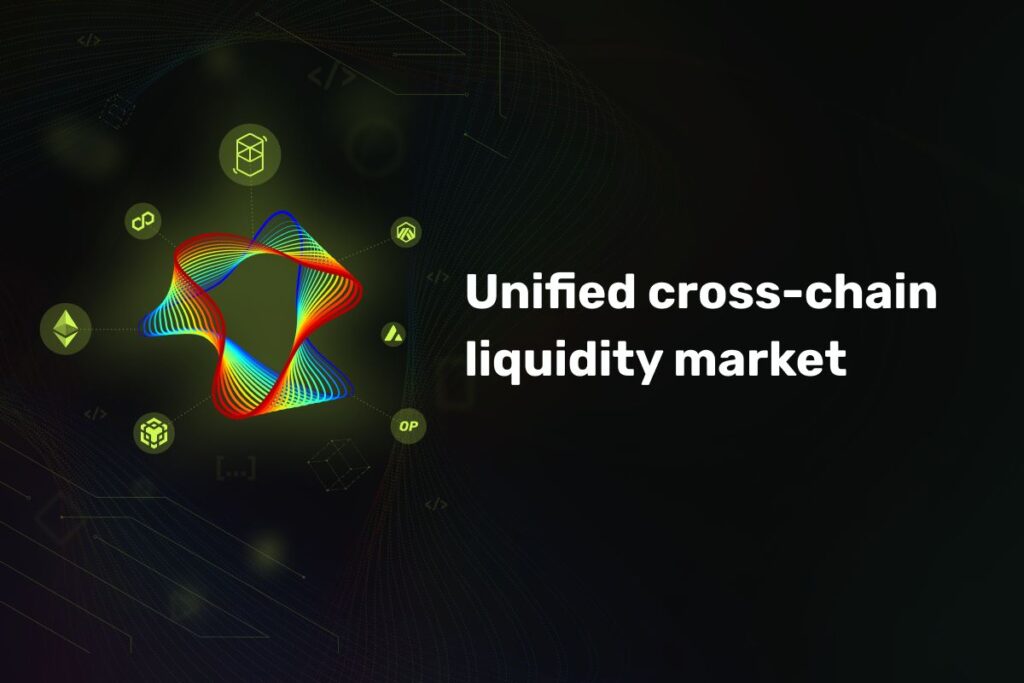
Enter CrossCurve, the game changer that ends fragmented liquidity. CrossCurve enables low-slippage cross-chain swaps of any asset type, from stablecoins to liquidity provider tokens, and liquid staking tokens, supported by Curve’s deep liquidity in the billions of dollars.
CrossCurve, a cross-chain trading and yield protocol, is the product of a partnership between EYWA and Curve. CrossCurve reshapes the DeFi landscape, taking all the pain and hassle out of cross-chain transfers. It is a unified, one-stop-shop solution.
CrossCurve connects Ethereum, Optimism, Arbitrum, BSC, Polygon, and Avalanche under one roof. A simple and intuitive interface harnesses unparalleled power in the DeFi market, with slippages to rival centralized exchanges.
CrossCurve will undoubtedly please experienced users who are all too aware of the sector’s challenges.
From magic to reality with Curve’s founder investment
The partnership between EYWA and Curve came after the former caught the attention of Curve’s founder and CEO, Michael Egorov. Egorov was so impressed by EYWA’s work he became the lead investor in the project. Egorov led a successful $5 million funding round that also featured other notable backers including Big Brain Holdings, Mulana Capital, and Mapleblock Capital.
As Egorov explained, the decision to invest was an easy one given the potential of CrossCurve.
“EYWA builds a very interesting solution: it’s not just your typical bridge. They solve the problem of liquidity fragmentation between chains by creatively composing Curve meta pools and the actual bridge. Having one liquidity pool working across multiple chains sounds like magic, and it is exciting to have Curve AMMs in the core of this magic.”
And though EYWA’s solution may seem like magic, Egorov is clearly a believer. The possibilities of unifying the DeFi market are just too compelling to pass over.
Pioneering Change in DeFi with Cross-Chain
Through collaboration with Curve and EYWA, CrossCurve is poised to revolutionize the DeFi sector. This “magic” solution means big changes are coming to decentralized finance.
For traders, CrossCurve offers increased capital efficiency and low cross-chain slippages, even when dealing with large volumes. Slippages are further reduced by CrossCurve’s unique architecture, which improves liquidity utilization.
CrossCurve facilitates the migration of liquidity without impermanent loss, maximizing yields for liquidity providers. CrossCurve cuts costs for projects too, allowing ultra-fast scaling and growth. Its introduction will also represent a paradigm shift for Web3 projects. With it they can create cross-chain listings and their own liquidity pools, accessing the maximum number of users and the maximum liquidity possible from the market.
Web3 projects that list their token against crvUSD/Stables/WBTC/WETH/Curve LPs can receive yield from CrossCurve, Curve, and Convex.
At every corner of the market, for every kind of user, the benefits of CrossCurve are clear. Finally, the fragmentation of decentralized finance will end.

The Texas Blockchain Council (TBC) and Bitcoin mining firm Riot Platforms have secured a favourable ruling from a United States District judge in a lawsuit against several U.S. energy officials.
As per a report by Cointelegraph on 22nd February, TBC and Riot accused the U.S. Department of Energy, Energy Information Administration (EIA), the Office of Management and Budget (OMB), and their respective leaderships of seeking intrusive data collection from cryptocurrency miners.
In a filing dated 23rd February in the U.S. District Court for the Western District of Texas, the TBC and Riot persuaded the judge that irreversible harm would occur without a temporary restraining order (TRO) against further data collection.
Consequently, the court implemented a TRO preventing the EIA from mandating crypto miners to respond to the survey and from sharing any data already received.
“The Court finds that Plaintiffs have shown through a verified complaint and supporting evidence that immediate and irreparable injury, loss, or damage will result if a TRO is not issued.”
The TBC and Riot contended that potential damages include unrecoverable costs of survey compliance, a credible threat of prosecution for non-compliance, and the disclosure of requested proprietary information.
READ MORE: Trump Embraces Bitcoin: Former President Shifts Stance on Cryptocurrency
Furthermore, there was disagreement over the survey completion timeframe for miners, with no compensation.
Despite the EIA estimating a 30-minute completion time, the court deemed this estimate “extremely inaccurate.”
Meanwhile, the TBC and Riot disputed the estimate, stating that compliance costs thus far have exceeded 40 hours.
Based on the evidence provided, the court judged that TBC and Riot were likely to prevail in the lawsuit.
It also alleged that the EIA misused its authority to have the emergency survey approved, a move the court deemed “falls far short of justifying such an action.”
“[The] Plaintiffs also demonstrate that they are likely to succeed on the merits.
The survey was proposed and approved under an emergency provision of the PRA,” the filing noted.
The TRO is set to expire before March 25, aiming to “preserve the status quo” for four weeks.