

The United States Securities and Exchange Commission (SEC) is soliciting feedback on a proposed rule alteration enabling the listing and trading of options for Bitcoin exchange-traded funds (ETFs).
As per a notice dated February 23, the NYSE has sought a rule adjustment to authorise the listing and trading of options on the Bitwise Bitcoin ETF (BITC), the Grayscale Bitcoin Trust (GBTC), and “any trust that holds Bitcoin.”
If sanctioned, the options will be traded “in the same manner as options on other ETFs (including commodities ETFs) on the Exchange,” states the notice.
This encompasses regulations such as listing criteria, expiry dates, strike prices, minimum price changes, position and exercise limits, margin requirements, and protocols for customer accounts and trading halts.
BlackRock is similarly pursuing endorsement for a comparable policy revision.
The asset manager has applied for rule amendments to list options on its Bitcoin ETF in conjunction with the Chicago Board Options Exchange (CBOE). Bloomberg ETF analyst James Seyffart foresees the SEC’s verdict arriving by September 2024 at the latest.
Options are utilised for portfolio hedging, income, or speculative purposes.
They are financial derivatives affording buyers the right, but not the obligation, to buy or sell a specified asset at a predetermined price on a specific date.
READ MORE: Coinbase Advocates for Ether ETP Approval Amid SEC Scrutiny
In the realm of Bitcoin ETFs, options would enable investors to hedge or speculate on the price movements of a BTC ETF rather than Bitcoin itself.
The SEC has previously greenlit other commodity ETFs held by trusts, including the SPDR Gold Trust, iShares COMEX Gold Trust, iShares Silver Trust, and ETFS Gold Trust.
Grayscale CEO Michael Sonnenshein has been publicly advocating for regulators to endorse the crypto derivatives products.
According to the executive, options are advantageous for investors as they bolster “price discovery and can help investors better navigate market conditions or achieve desired outcomes, such as generating income.”
Similar to other investments and financial products, options trading carries risks that may not be suitable for all investors.
The SEC authorised the trading of spot Bitcoin ETFs on Wall Street on January 10, following years of rejections.
The decentralised application (DApp) platform Avalanche encountered a significant technical disruption affecting the block production of its proof-of-stake (PoS) blockchain.
At 12:02:27 pm UTC on February 23rd, Avalanche’s primary network experienced block production issues, seemingly bringing the network to a halt.
Avalanche’s blockchain explorer indicated that the last block on Avalanche’s P-Chain, X-Chain, and C-chain subnets was produced over an hour earlier.
An official alert concerning the block finalisation stall was also issued by Avalanche. In a status update, Avalanche stated:
“Developers across the community are presently investigating a stall in block finalisation that is preventing blocks from being accepted on the Primary Network.”
Block production is a crucial process for the stability and continuity of blockchain networks, involving the creation of new blocks that validate and record transactions.
Disruptions in this process lead to transaction processing delays, impacting the network’s overall functionality.
In a post on X, Kevin Sekniqi, co-founder of Ava Labs, mentioned that the team is already looking into the issue.
READ MORE: Bitcoin Prepares for Pre-Halving Pullback Amidst Uncertain Timing
According to Sekniqi, the block production halt might be linked to a “new inscription wave” launched an hour before the issues arose.
The Ava Labs executive suggested that the problem could be an “esoteric bug from some edge case” and noted that it likely involves a mempool handling issue with inscriptions.
Sekniqi assured the community that this would be “dealt with swiftly.”
Nearly an hour later, Sekniqi clarified that the issue was a code-related bug unrelated to performance handling.
He explained that while inscriptions may have encountered an edge case, they did not affect performance.
Similar reports of Avalanche’s block production halting emerged on March 23rd, 2023.
At that time, the Avalanche blockchain explorer revealed that the C-chain had ceased producing blocks.
However, Sekniqi clarified that the network had been unstable due to a bug with its v1.9.12 and the team had deployed a fix to stabilise the network.
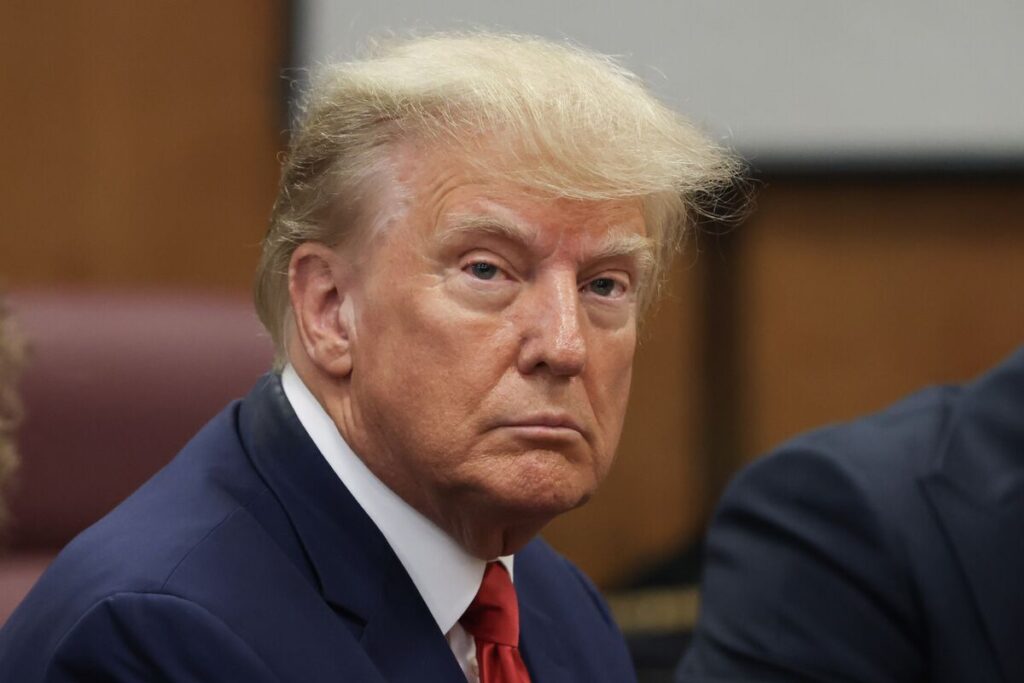
Former United States President Donald Trump has shifted his stance on Bitcoin. Once critical of the cryptocurrency, branding it a scam during his presidency, Trump now concedes that BTC is gaining traction and acceptance.
In a recent interview on Fox News, Trump was questioned about his perspective on the ascent of the Chinese digital currency and whether countering it necessitates embracing a decentralized currency like Bitcoin.
Trump reiterated his preference for the US dollar but acknowledged Bitcoin’s increasing popularity, stating:
“I like the dollar, but many people are doing it [using Bitcoin], and frankly, it’s taken a life of its own.
You probably have to do some regulation, as you know, but many people are embracing it.
And more and more, I’m seeing people wanting to pay Bitcoin, and you’re seeing something that’s interesting. So I can live with it one way or the other.”
This marked a departure from Trump’s previous disdain for Bitcoin during his presidency, where he had labelled it a scam and reportedly directed the treasury secretary to take action against it.
Amidst his campaign for the 2024 U.S. presidential election, speculation arises within the crypto community regarding the motive behind Trump’s newfound openness to Bitcoin.
Some view it as a strategic move to court votes from the expanding crypto sector, while others perceive it as typical of Trump’s ambivalent approach to issues.
One user, Blairja, suggests that Trump strategically alternated between pro-BTC and pro-US dollar statements to gauge public opinion, likening it to a fishing expedition to ascertain the prevailing sentiment among voters.
Indeed, politicians have increasingly leveraged cryptocurrency to appeal to tech-savvy demographics.
Trump currently leads the race for the Republican Party’s presidential nomination, with fellow Republican Nikki Haley trailing behind him.
Bitcoin witnessed continued weakness on as consolidation coincided with a brief slowdown in institutional investment.
According to data from Cointelegraph Markets Pro and TradingView, BTC struggled to maintain its price around $51,000.
Bulls found themselves confined within a narrow trading range for over a week, with concerns arising over the inflows to spot Bitcoin exchange-traded funds (ETFs).
Recent days saw a significant deceleration in these inflows, with February 21st even experiencing a net outflow of approximately $36 million, as per data shared on X (formerly Twitter) by sources including BitMEX Research.
February 22nd showed heightened activity, with net inflows surpassing a quarter of a million dollars, even after factoring in outflows from the Grayscale Bitcoin Trust (GBTC).
“Normality resumed with a $251M inflow into the Bitcoin ETFs,” responded James Van Straten, research and data analyst at crypto insights firm CryptoSlate.
Addressing the pace of buying from ETF operators, Thomas Fahrer, CEO of crypto-focused reviews portal Apollo, predicted that BlackRock’s iShares Bitcoin ETF (IBIT), the largest among them, would alter BTC supply dynamics in the future.
“98% of all the #Bitcoin in existence already costs >100K if you tried to buy it,” he argued alongside a chart of IBIT holdings.
“Remember that the current price is just the marginal trade. Blackrock is going to test this theory, so we’ll find out soon enough.”
As of February 23rd, IBIT held 124,535 BTC ($6.35 billion), according to data from Apollo’s own ETF tracker.
Turning to low-timeframe BTC price analysis, popular trader Skew encapsulated the sentiment among seasoned market observers.
He concluded that the uptrend remained intact, but significant support levels were now back in focus.
These included the 88-period and 100-period exponential moving averages (EMAs) on the four-hour chart at $50,017 and $49,654 respectively, along with the 18-period EMA on the daily chart at $49,645.
“Currently, price trades around range low & 4H 55EMA which typically is a near term trend inflection point, meaning momentum picks up soon,” part of his latest X analysis read.
United States cryptocurrency exchange Coinbase has strongly supported Grayscale in its bid to transform its Ethereum Trust into an Ether exchange-traded product (ETP), asserting that Ether is not a security.
On February 22, Coinbase’s chief legal officer, Paul Grewal, unveiled the firm’s 27-page letter presenting the legal, technical, and economic arguments for why the U.S. Securities and Exchange Commission (SEC) should endorse an Ether-based ETP.
Coinbase presented five primary arguments, highlighting that Ether is appropriately categorised as a commodity, as evidenced by the U.S. Commodity Futures Trading Commission’s endorsement of ETH futures, statements by SEC officials, and court rulings.
Furthermore, it emphasised that the SEC has not contested the CFTC’s classification of ETH as a commodity.
“Our letter sets out what anyone knows who’s paid even the slightest attention to the matter: ETH is not a security,” stated Grewal, adding, “In fact, both before and after the Merge, the SEC, the CFTC, and the market have treated ETH not as a security but as a commodity.”
The letter also argued that Ethereum’s proof-of-stake consensus displays robust governance, mitigating risks of fraud and manipulation.
Additionally, it contended that the SEC’s endorsement of spot Bitcoin exchange-traded funds (ETFs) should similarly apply to an Ethereum ETP.
READ MORE: Ethena Labs’ High Yield Stablecoin Sparks Investor Concerns in Crypto Community
Coinbase supported its arguments with market data showing widespread ETH ownership and trading activity, along with the similarity between ETH futures ETFs and spot Ethereum-based funds.
The firm also underscored Ethereum blockchain’s inherent technological and operational security mechanisms that limit susceptibility to fraud and manipulation.
Finally, Coinbase highlighted its advanced market surveillance capabilities and partnership with the Chicago Mercantile Exchange.
The letter was a response to NYSE Arca’s proposed rule change to list and trade shares of the Grayscale Ethereum Trust as an Ethereum ETP, as per SEC’s procedural requirement for public feedback.
However, just two days earlier, analysts from S&P Global expressed concerns about spot Ethereum ETFs, warning that they could introduce new concentration risk to the blockchain network, particularly those incorporating staking, which could affect the mix of validators participating in Ethereum’s consensus mechanism.

The recent debut of the Ethereum layer-2 network Starknet’s token has been tumultuous, with its value plummeting by over 60% within two days.
Initially airdropped to certain users on February 20, the Starknet token (STRK) experienced a sharp decline from its peak of $4.41 to less than $1.90, as reported by CoinGecko.
Although listed on Binance and briefly soaring to $7.70, the token’s value swiftly nosedived by 75.4% to below $1.90. Blockchain analysts at Lookonchain observed this downward trend, noting, “The price of $STRK has been falling since its launch.”
They identified significant sell-offs by Nethermind, an Ethereum infrastructure firm, which offloaded 3.41 million STRK, equivalent to over $6.7 million.
Concerningly, Lookonchain warned that further selling might occur, given Nethermind’s remaining stash valued at over $12 million.
In a separate revelation, Lookonchain disclosed a consolidation of STRK holdings by an airdrop participant, consolidating 1.2 million STRK, worth $2.4 million, from approximately 1,800 wallets into a single address.
READ MORE: Crystal Intelligence CEO Forecasts Continued Growth Amidst Shifting Crypto Landscape
This followed a similar occurrence the previous day, involving 1.4 million STRK from around 1,400 wallets.
Allegations surfaced prior to the airdrop by Yearn.finance developer Banteg, suggesting that a significant portion of eligible wallets were associated with GitHub accounts controlled by airdrop hunters.
Furthermore, dissatisfaction arose among Starknet users who claimed ineligibility for the distribution despite substantial transaction activity.
Eligibility criteria demanded a minimum holding of 0.005 Ether (approximately $10) at a snapshot on November 15, 2023.
Criticism extended to STRK’s unlocking schedule, designed to allocate 1.3 billion tokens, equivalent to 13% of the total supply, to Starknet investors and contributors approximately two months post-launch.
Despite the token’s depreciating value, Starknet’s total locked value surged by nearly 30% within 24 hours to $73.5 million, as per DefiLlama.
The airdrop initially garnered significant interest, with 45 million STRK tokens claimed within the first 90 minutes, amounting to 92% of the total distribution value exceeding $790 million, according to Voyager’s data.
Solana-based nonfungible tokens (NFTs) have soared to a remarkable all-time sales volume surpassing £5 billion following a surge in NFT trading activity on the blockchain over the past four months.
As of February 23, data compiled by CryptoSlam revealed that the cumulative sales volume for NFTs operating on the Solana network has reached an impressive £5,013,847,972.
The data also highlights the substantial user base within the blockchain, boasting over 2.2 million buyers and 1.6 million sellers, resulting in nearly 43 million NFT transactions overall.
The performance of Solana NFTs experienced a noticeable turnaround after a relatively lacklustre period preceding November 2023.
From July 2023 onwards, monthly sales struggled to surpass £40 million. However, a significant shift occurred from October 2023 onwards.
READ: Bitcoin Prepares for Pre-Halving Pullback Amidst Uncertain Timing
The sales volume for Solana-based NFTs began to exhibit signs of resurgence, surging to approximately £82 million in November 2023—an impressive 192% increase compared to the preceding month’s £28 million in sales.
This momentum carried forward in subsequent months, with December 2023 witnessing Solana NFTs generating around £365 million in monthly sales, marking its second-highest monthly sales volume after the £373 million record set in October 2021.
Despite a slight slowdown in January, Solana NFTs still achieved sales exceeding £239 million for the month.
As of the latest data, February’s monthly sales volume stands at £161 million, underscoring the consistent growth trajectory in Solana NFT sales, amassing over £1 billion in sales volume over the last nine months.
The surge in Solana NFT sales observed in December 2023 coincided with a bullish price trend for Solana’s native token.
On December 26, 2023, SOL reached a peak of £121.45, with a trading volume reaching £5.7 billion, as reported by the cryptocurrency data tracker CoinGecko.

The European Union’s freshly minted Anti-Money Laundering Authority (AMLA) is set to make its home in Frankfurt, the financial hub of Germany, with operations commencing by mid-2025.
The AMLA will wield the power to oversee “high-risk and cross-border financial entities” – including crypto firms – should they traverse borders or carry a high-risk tag.
It will collaborate on its supervisory endeavours with financial intelligence units and regulators across other EU nations.
According to a press release dated Feb. 22 from the Council of the EU and the European Council, Frankfurt emerged triumphant as the chosen city for the agency’s headquarters.
Notably, the city is also home to the European Central Bank. Brussels, Dublin, Madrid, Paris, Rome, Riga, Vilnius, and Vienna had also vied for the spot.
The AMLA’s general board will feature representatives from regulators and financial intelligence units hailing from all EU member states. Meanwhile, the executive board, its governing body, will consist of the chair and five independent full-time members.
The inaugural comprehensive EU crypto framework, the Markets in Crypto-Assets (MiCA), took effect in June 2023.
READ MORE: Bitcoin Prepares for Pre-Halving Pullback Amidst Uncertain Timing
However, the enforcement of regulations governing “asset-referenced tokens” and “e-money tokens,” primarily encapsulated under stablecoins, is slated to kick in by June 2024.
Regulations pertaining to “crypto-asset service providers,” encompassing trading platforms, wallet providers, and cryptocurrency exchanges and services, are earmarked for implementation by December 2024.
Simultaneously, the EU has been diligently formulating regulations concerning artificial intelligence (AI).
On Feb. 13, the European Parliament’s Internal Market and Civil Liberties Committees gave their nod to the preliminary agreement on the European AI Act, marking the world’s first legislation squarely focused on AI.
The EU AI Act aims to instate safeguards, inclusive of copyright protection for creators, in response to generative AI models.
Furthermore, it prohibits AI applications that jeopardise citizens’ rights, such as biometric categorisation and social scoring. The maiden parliamentary vote on the AI Act is scheduled for April 2024.

The Gyeonggi Provincial Tax Justice Department, situated in the most densely populated province of South Korea, amassed 6.2 billion won (£3.9 million) in undeclared taxes during 2023 by deploying a digital tracking system aimed at cryptocurrency accounts of tax evaders.
As per a report by Yonhap News Agency on February 22, the Gyeonggi tax department utilised resident registration data of “delinquents,” tracing their mobile phone numbers to uncover their accounts on digital asset exchanges.
The key innovation lies in a digital tracking system.
Previously, tax services had to individually request information from crypto exchanges, a process spanning up to six months for communication and document exchange.
According to Yonhap, the province’s digital management system truncated this period to around 15 days.
Leveraging the system, the provincial tax department pinpointed the crypto accounts of 5,910 individuals, each indebted with over 3 million won (£1,800) in local taxes.
From 2,390 offenders, the department recouped 6.2 billion won (£3.9 million).
The province intends to fortify collaboration with virtual asset exchanges and to “review administrative measures” for platforms unwilling to cooperate.
As Noh Seung-ho, head of the Provincial Tax Justice Department, affirmed:
“We will continue to take robust collection action against unscrupulous delinquents, such as those who claim insolvency to evade taxes and engage in virtual asset trading.”
READ MORE: Crystal Intelligence CEO Forecasts Continued Growth Amidst Shifting Crypto Landscape
Meanwhile, South Korea’s Financial Intelligence Unit (FIU) actively urges crypto exchanges to report any transactions raising suspicions of money laundering and illegal “foreign exchange outflow.”
The agency also plans to introduce a “virtual asset analysis system,” scrutinising and analysing virtual asset transaction specifics and “complex movement paths.”
In early February, the South Korean government issued a fresh update to the Virtual Asset Users Protection Act, imposing significant criminal penalties and fines for infractions.
These include fixed-term imprisonment exceeding one year or a fine ranging from three to five times the amount of illicit profits.
Culprits who amass over 5 billion won (£3.1 million) from unlawful crypto trading schemes face life imprisonment.

French football powerhouse Paris Saint-Germain (PSG) is poised to expand its involvement in Web3 and SportFi by assuming the role of a validator for fan token blockchain Chiliz.
Cointelegraph recently journeyed to Paris for an exclusive discussion with Chiliz founder Alexandre Dreyfus and PSG’s head of Web3, Pär Helgosson, regarding the evolving collaboration between the football club and the blockchain platform.
PSG stands as the initial major football club to undertake the role of a blockchain protocol validator and plans to reinvest earnings derived from this position to repurchase PSG tokens.
This strategic manoeuvre is hailed as a means to establish a self-sustaining digital economy for the club and its fanbase.
The Chiliz Chain serves as the underlying framework for Socios, the platform responsible for issuing and managing fan tokens for over 150 professional football clubs and sports teams.
PSG embraced this technology early on and introduced its fan token on Chiliz back in September 2018.
The club aims to explore opportunities within the wider cryptocurrency, Web3, and SportFi realms, with Helgosson leading the initiative.
In November 2023, venture capital firm Animoca Brands joined Chiliz Chain as a validator for its proof-of-stake protocol, subsequent to Chiliz’s overhaul of its tokenomics model.
This revamp included the introduction of a new inflation-staking rewards mechanism for CHZ holders and the integration of the transaction fee protocol burning scheme EIP-1559.
READ MORE: Ethena Labs’ High Yield Stablecoin Sparks Investor Concerns in Crypto Community
Helgosson informed Cointelegraph that PSG intends to employ its accumulated revenue as a node validator to conduct PSG fan token buybacks from public marketplaces.
These buybacks will be automated and executed through smart contracts via its validator and decentralized exchanges on the Chiliz Chain.
The initiative aims to augment revenue from the club’s validator through gas fees and supply inflation, which are then reinvested into PSG tokens.
The club seeks to replenish its token reserves to foster a self-sustaining economy:
“We’re aiming to build a sustainable tokenomics model together where the club, because of our role as a node validator, can use the profits to buy back fan tokens and use them to reinvest back into the fan ecosystem.”
Helgosson anticipates that this move will yield rewards, introduce new utilities, functions, products, and services beneficial to PSG tokenholders, sponsors, and players.