


The realm of artificial intelligence (AI) has experienced notable expansion in recent years, with forecasts indicating that, by 2030, the sector could contribute up to £15.7 trillion to the global economy — a sum surpassing the current economic outputs of key players like China and India combined.
One noteworthy development in this domain, attracting significant attention of late, is the emergence of “deepfakes” — highly realistic video and/or audio recordings crafted using AI, capable of replicating genuine human appearances or voices to a degree often indistinguishable from the real thing.
A recent viral post on X exemplified how some individuals are utilising readily available open-source and commercial software to manipulate a person’s selfie with generative AI tools, fabricating counterfeit ID images that could potentially deceive many contemporary security measures.
As the digital landscape progresses, the proliferation of AI-generated deepfakes poses substantial challenges to the established Know Your Customer (KYC) framework. Toufi Saliba, CEO of HyperCycle, a company developing the requisite components for enabling AI microservices to communicate seamlessly, explained to Cointelegraph that a significant aspect of this challenge lies within the existing security processes themselves. He remarked:
“Perhaps KYC itself is the attack vector on self-sovereignty, and these [deepfake] tools are proving how today’s KYC systems could be rendered obsolete in the near future.
A resilient solution would involve using certain cryptography properly to service the claimed intent of KYC proponents, thereby also protecting future generations.”
Saliba underscored the implications of AI and deepfakes for the cryptocurrency sector, stressing the urgent need for swift adaptation.
“This issue of fake image creation is likely to disrupt entire centralized systems from the inside out, thus presenting one of the best opportunities for well-intentioned regulators and centralized entities to realize that cryptography can come to the rescue when needed,” he asserted.
Regarding the detection of deepfake content, Dimitry Mihaylov, an AI research expert for the United Nations, stated that with criminals increasingly employing sophisticated tools to produce realistic fake identification documents, unforeseen challenges are emerging.
He emphasised the imperative for industries across the spectrum to evolve rapidly, adding:
“The market for AI-generated image detection is evolving with projects like FakeCatcher, a project that has been developed in partnership with Umur Ciftci. The technology showcases the potential of real-time deepfake detection with a 96% accuracy rate.”
Looking ahead, Mihaylov anticipates a significant shift in regulatory approaches to KYC, suggesting a future where dynamic and interactive verification processes become standard.
“We may see the introduction of more dynamic KYC procedures, like video KYC, as regulatory frameworks adapt to these technological advancements,” he suggested.
The impact of deepfakes reverberates across various industries, including cryptocurrency.
For instance, a platform named OnlyFake recently gained attention for purportedly circumventing the KYC protocols of several prominent cryptocurrency trading platforms successfully.
At just £15 each, the platform claims to produce counterfeit driver licenses and passports for 26 nations, including but not limited to the United States, Canada, the United Kingdom, Australia, and several European Union member states.
On Feb. 5, a company called 404 Media revealed that it had leveraged OnlyFake’s services to evade the KYC verification process of the popular crypto exchange OKX.
Likewise, leaked discussions unveiled OnlyFake’s clientele celebrating their success in bypassing verification processes at numerous other cryptocurrency exchanges and financial institutions, including Kraken, Bybit, Bitget, Huobi, and PayPal.
READ MORE: Grayscale’s Bitcoin ETF Sees Slowing Outflows, Potential for Further Bleeding
The process of generating a counterfeit document on the website is reportedly swift, with the platform capable of producing up to 100 fake IDs at once using Excel spreadsheet data alone.
Additionally, users have the option to include their own photo or select one from a curated “personal library of drops,” foregoing reliance on a neural network.
The counterfeit driver’s licenses and passports are depicted on various domestic surfaces like kitchen counters, bedsheets, carpets, and desks, mimicking the typical presentation for online verifications.
One post even showcased a fabricated Australian passport bearing the details of a former U.S. president laid out on a piece of fabric.
In late 2022, blockchain security company CertiK unveiled an underground marketplace where individuals offered their identities for sale for as little as £8.
These individuals consented to serve as the legitimate face for fraudulent cryptocurrency initiatives and to establish banking and exchange accounts for users otherwise barred from certain platforms.
Additionally, the widespread availability of AI deep fake technology has raised concerns among leaders in the cryptocurrency sector, particularly regarding the reliability of video verification processes employed in certain identity validations.
Binance chief security officer Jimmy Su expressed concern in May 2023 about the rise in fraudsters using deep fake technology to bypass exchange KYC procedures, warning that these video forgeries were approaching a level of realism capable of deceiving human evaluators.
Finally, a study by Netherlands-based Sensity AI revealed that liveness tests used for identity verification were significantly vulnerable to deepfake attacks, enabling scammers to substitute their own faces with those of others.
A man from Kerala, India recently fell victim to a ruse where the scammer, posing as his friend, stole £40,000 (approximately $500). Similarly, a deepfake video of Elon Musk sharing misleading crypto investment advice circulated on Twitter last year.
As we advance towards a future shaped by artificial intelligence, there is ample evidence suggesting that the threat of “face swap” deepfake attacks will continue to rise.
A recent study noted that attacks against remote identity verification systems surged by 704% between 2022 and 2023, attributed to the accessibility of free and low-cost face swap tools, virtual cameras, and mobile emulators.
Furthermore, with each passing month, hackers and scammers appear to be growing more sophisticated with their attacks, as evidenced by the emergence of digital injection attack vectors and emulators, enabling miscreants to create and utilise deepfakes in real-time, posing a serious challenge to both mobile and video authentication systems.
Consequently, it will be intriguing to observe how this emerging security paradigm evolves, particularly considering humans’ increasing reliance on these advanced technologies.

Bitcoin holdings on the Coinbase crypto exchange have dwindled to their lowest point in nine years as users relocate a substantial portion of their holdings away from the exchange.
According to a report from CryptoQuant, whales shifted 18,000 Bitcoin, valued at nearly $1 billion, away from Coinbase over the weekend, with transfer amounts ranging from $45 million to $171 million.
The public order book of Coinbase presently contains approximately 394,000 BTC, estimated to be valued at $20.5 billion.
The movement of BTC holdings away from centralised exchanges by whales is viewed as a positive indicator as it reduces the availability of Bitcoin for sale.
Nonetheless, opinions on social media regarding the nature of these transfers are mixed.
Some speculate that the funds are being transferred to custodial wallets in anticipation of a price surge, particularly with the forthcoming Bitcoin halving just two months away, causing a supply shock.
Conversely, some believe that the transferred funds might be utilised for liquidity in over-the-counter (OTC) trades.
Others suggest that the funds might be transferred to a different custodian and that these are not individual withdrawals, remarking that the majority of assets held on these exchanges do not actually belong to them, thus the actual withdrawal figure should be much lower.
READ MORE: Australian Federal Police Officer Accused of Wiping Bitcoin Wallet at Crime Scene
With each Bitcoin halving cycle, the influx of new BTC into the market is halved, leading to a supply squeeze as demand rises.
The next Bitcoin halving is scheduled for April at a block height of 740,000, reducing the block reward from 6.25 BTC to 3.125 BTC per mined block.
This halving coincides with significant institutional demand, evidenced by the approval of 11 spot Bitcoin exchange-traded funds (ETFs) in the United States in January.
Presently, approximately 900 BTC are mined daily, while the daily net inflows of Bitcoin ETFs amount to around half a billion dollars, equivalent to about 9,650 BTC, notwithstanding Grayscale registering nearly $100 million in daily outflows.
Following the April halving, the daily production of BTC will decrease to about 450 BTC, while institutional demand is expected to persist.
This significant disparity between supply and demand historically favours a bullish trajectory for the Bitcoin price, often resulting in new all-time highs within a year of the halving.
Bitcoin is currently trading at around $52,000, marking its highest level since December 2021, albeit a 25% decrease from its peak of approximately $69,000.
Cryptocurrency investors voiced their concerns on X regarding the staking yield of Ethena Labs’ newly launched stablecoin.
On February 19, Ethena Labs unveiled its USDe stablecoin on the public mainnet, boasting a 27.6% annual percentage yield (APY) for the Ethereum-based synthetic dollar, a substantial increase compared to the 20% yield offered by Anchor Protocol on Terra’s UST before Terra’s collapse in May 2022.
The enticing yield opportunity sparked widespread apprehension within the crypto community.
Pseudonymous DefiLlama code contributor, 0xngmi, highlighted the potential risk of yield inversion, stating, “When yields invert you start losing money, and the bigger the stablecoin is the more money it loses.”
0xngmi also noted the cost implications of managing short positions when yields turn negative. In a subsequent reply, 0xngmi distinguished Ethena from Anchor Protocol, labelling the latter as a Ponzi scheme.
Eitan Katz, co-founder and CEO of decentralised money transfer protocol Kima, expressed skepticism about sustaining such high yields during a bear market, foreseeing potential yield reductions by Ethena.
Katz emphasised the necessity for continuous market growth and effective risk management for USDe’s sustainability, acknowledging the unpredictability inherent in the crypto industry.
Ethena reported a total value locked of $297.9 million and over 4,460 users on its homepage.
READ MORE; Coinbase Assures Genesis GBTC Sell-Off Won’t Rattle Crypto Markets
Meanwhile, USDe’s market cap surged by 20.6% in the past 24 hours to $291.93 million, as per DefiLlama data.
Cointelegraph sought comment from Ethena Labs regarding the concerns raised.
Anthony Sassano, angel investor and founder of The Daily Gwei, regarded the investor scrutiny surrounding Ethena’s yield as a positive development for the crypto industry.
Sassano applauded the increased questioning of Ethena’s design and the exploration of underlying risks, contrasting it with the previous cycle where such questioning was dismissed.
Ethena Labs disclosed raising $14 million in funding on February 16, with backing from venture capital firm Dragonfly and others.
The firm had previously secured $6 million in 2023 from various investors to develop decentralised finance solutions on Ethereum.
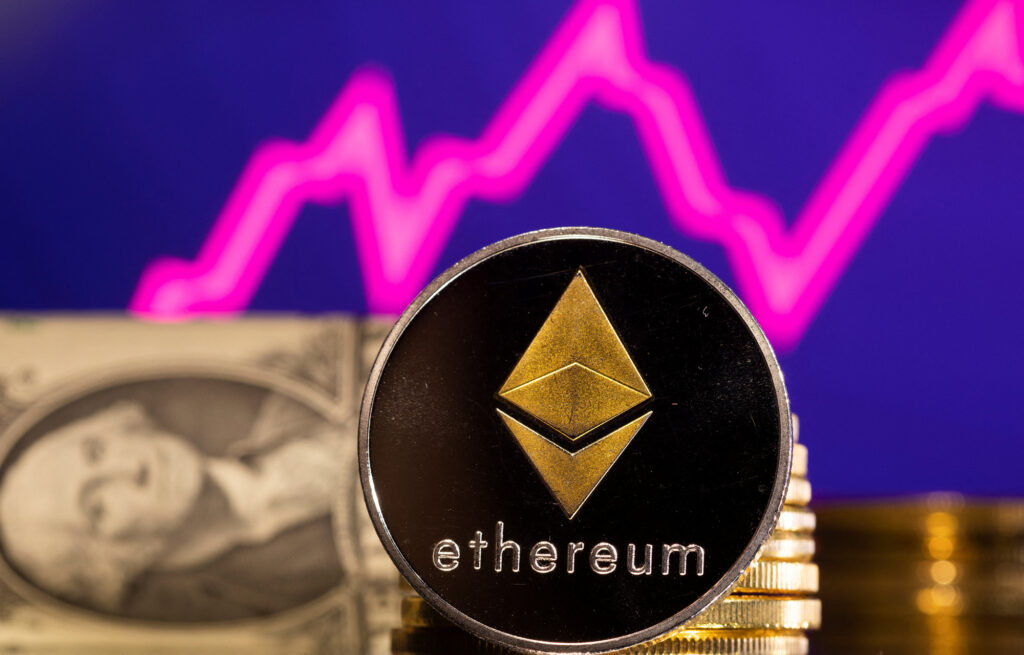
Ether’s price breached the £3,000 mark on February 20th for the first time since April 2022.
From a value of £2,881 on February 19th, Ether surged over 4% in the past 24 hours and 74% over the last year, reaching a year-to-date peak at £3,000.97 on Binance at 13:45 UTC, as per CoinMarketCap data.
The surge in Ether’s price coincides with anticipation surrounding the potential approval of a spot Ether exchange-traded fund (ETF) by the United States Securities and Exchange Commission (SEC) and the upcoming implementation of Ethereum Improvement Proposal (EIP) 4844 through the Dencun upgrade.
According to current odds from Polymarket, there’s a 45% likelihood of the SEC approving a spot Ether ETF by May 31st.
Bernstein, a wealth management firm, recently suggested that ETH might be the only other cryptocurrency to secure an ETF spot in the United States.
“Ethereum with its staking yield dynamics, environmentally friendly design, and institutional utility to build new financial markets, is well positioned for mainstream institutional adoption,” analysts Gautam Chhugani and Mahika Sapra reportedly wrote in a note on Feb. 19.
Meanwhile, Bloomberg’s Eric Balchunas forecasts a 70% chance of approval, suggesting a positive outlook for Ether ETFs amid regulatory delays.
READ MORE: Coinbase Assures Genesis GBTC Sell-Off Won’t Rattle Crypto Markets
The last time Ether exceeded £3,000 was almost 22 months ago, on May 4, 2022, when it hit a high of £2,966 before entering a prolonged bear market that saw its price plummet to £883 in June 2022.
ETH’s recent surge may also be linked to the much-anticipated Dencun upgrade of the network.
The Dencun upgrade, scheduled for March 13, is expected to incorporate several EIPs, including EIP-4844, which introduces proto-danksharding.
This upgrade streamlines the transaction process by storing some data off the blockchain, thereby accelerating transactions and reducing costs.
Data from CoinGlass indicates a growing open interest (OI) in Ether futures markets, reaching a record £10.19 billion, affirming the current volatility in ETH’s price.
Many market participants anticipate the recent bullish momentum to persist amidst any developments regarding the approval of a spot Ether ETF and potential movements in the broader cryptocurrency market.
Zap Protocol stands as a notable endeavor within the blockchain and cryptocurrency landscape, aiming to foster innovation and accessibility in decentralized finance (DeFi) and beyond. Its ambition is to streamline the integration and utilization of smart contracts and decentralized applications (dApps) across various industries by providing an open platform for the creation and deployment of oracle services.
These services are vital for dApps to interact seamlessly with real-world data and external systems, bridging the gap between blockchain technology and practical, real-world applications.
Overview of Zap Protocol
Zap Protocol offers a multifaceted infrastructure designed to enhance the functionality and interoperability of smart contracts by enabling them to securely and efficiently access a wide range of external data sources and APIs. This is achieved through the use of oracles, which are entities that fetch and verify external data for smart contracts. In the context of Zap Protocol, these oracles are decentralized, thus ensuring that the data they provide is reliable, tamper-proof, and transparent.
The protocol leverages the power of blockchain technology to create a decentralized marketplace for data feeds and other services that can be used by smart contracts. This marketplace allows data providers to list their services, which can range from financial data, weather information, to various other types of external data. Smart contract developers can then easily access and integrate these services into their applications, enabling them to create more complex, responsive, and useful dApps.
Key Features and Benefits
- Decentralization: By operating on a decentralized network, Zap Protocol ensures that the data provided by oracles is not controlled by any single entity, which significantly reduces the risk of manipulation and increases trust in the data used by smart contracts.
- Flexibility: The protocol supports a wide range of data types and sources, making it a versatile tool for developers looking to create dApps for various industries and purposes.
- Security: The use of blockchain technology ensures that all transactions and data exchanges on the Zap Protocol are secure and immutable, providing a reliable foundation for the development of dApps.
- Tokenization: Zap Protocol introduces its native token, ZAP, which is used within the ecosystem for transactions, staking, and governance. This tokenization aspect facilitates a self-sustaining economy where users are incentivized to participate and contribute to the network.
Use Cases
The applications of Zap Protocol are vast and diverse, reflecting its potential to revolutionize how dApps interact with the real world. Some notable use cases include:
- Finance: Integration of real-time financial data into DeFi platforms for accurate and decentralized financial services.
- Insurance: Automated, blockchain-based insurance policies that trigger payments based on verifiable, real-world data.
- Supply Chain Management: Transparent tracking of goods as they move through the supply chain, with data integrity ensured by decentralized oracles.
- Gaming: Creation of dynamic, data-driven gaming experiences that can respond to real-world events and data.
The ZAP Token
The ZAP token is central to the functioning of the Zap Protocol ecosystem. It serves multiple purposes, including paying for data feeds, staking to participate in the governance of the protocol, and incentivizing data providers and users to maintain and enhance the network’s value and security.
Where to Buy ZAP Tokens
ZAP tokens can be purchased on several cryptocurrency exchanges, both centralized and decentralized. Availability can vary based on the region and the regulatory environment, so it’s essential to check the most current listings. Some of the platforms where ZAP tokens might be available include:
- Centralized Exchanges (CEXs): ZAP is listed for live trading on numerous CEXs, including Poloniex and Bitrue.
- Decentralized Exchanges (DEXs): For those preferring a more decentralized approach, platforms such as Uniswap, SushiSwap, and 1inch offer the ability to trade ZAP tokens directly from a cryptocurrency wallet without the need for an intermediary.
- Crypto Wallets: Some crypto wallets offer integrated services that allow users to buy tokens like ZAP directly within the wallet interface. This option combines convenience with the security of not having to transfer tokens between a wallet and an exchange.
- P2P Platforms: Peer-to-peer platforms might also offer ZAP tokens for trade, allowing for direct transactions between individuals without the need for a centralized platform.

A Virginia senate committee has proposed an annual combined fund allocation of £39,240 for two newly established commissions on artificial intelligence (AI) and cryptocurrency.
According to a proposal dated February 18 from the Subcommittee on General Government of the Senate Finance and Appropriations Committee, more than £23.6 million has been earmarked for various legislative departments.
Of this amount, the Blockchain and Cryptocurrency Commission, formed in January 2024, is set to receive a suggested general fund of £17,192 for the years 2025 and 2026.
Similarly, the Artificial Intelligence Commission, presently known as the Committee on Communications, Technology and Innovation, has been granted £22,048 for the same timeframe.
The Blockchain and Cryptocurrency Commission’s mandate involves researching and providing recommendations on blockchain technology and cryptocurrencies, as well as promoting growth within the state.
It will consist of 15 members, including seven legislative and eight non-legislative members, who must be appointed “no later than 45 days after the effective date of this act.”
Likewise, the Artificial Intelligence Commission aims to formulate and uphold policies that will eventually restrict the use of AI to prevent unlawful activities.
The bill to modify the Code of Virginia and establish the blockchain and cryptocurrency commission was introduced on January 9 and unanimously passed by the Senate on February 1.
READ MORE: OpenAI’s Valuation Soars to £80 Billion as Company Explores New Ventures and Partnerships
Alongside the creation of new legislative commissions related to the crypto and AI sectors, Virginia has recently introduced legislation concerning crypto mining that favours individuals and businesses.
Senator Saddam Azlan Salim presented Senate Bill No. 339 on January 9, which seeks to exempt miners from acquiring money transmitter licenses.
The bill also prohibits industrial zones from enacting mining-specific ordinances:
“No license under this chapter shall be required of any person engaging in-home digital asset mining, digital asset mining, or digital asset mining business activities, as those terms are defined in § 15.2-2288.9.”
While entities offering mining or staking services cannot be categorised as a “financial investment” under the bill, they must submit a notice to qualify for the exemption.
The legislation proposes that individuals can exclude up to £200 per transaction from their net capital gains for tax purposes.
This exclusion applies to gains derived from using digital assets to purchase goods or services, thus encouraging the use of cryptocurrencies for everyday transactions through tax benefits.
Cryptocurrency exchange Backpack has forged a partnership with global crypto on-ramp provider Banxa, unveiling a digital asset on- and off-ramp solution.
According to Banxa’s announcement on X, Backpack users in over 130 countries will now have access to this new on-ramp solution.
Backpack Exchange, birthed by the minds behind Solana’s Mad Lads executable nonfungible token (NFT) collection, initiated this collaboration.
Anndy Lian, an intergovernmental blockchain expert and author of the book NFT: From Zero to Hero, hailed the partnership as a boon for Backpack users and their overall exchange experience. He conveyed to Cointelegraph:
“[The partnership] enables Backpack users to easily buy and sell crypto with fiat currencies using various payment methods, such as credit cards, bank transfers, and e-wallets.
This will help increase the adoption and liquidity of Backpack and its supported tokens.”
The announcement follows Backpack’s impressive achievement of surpassing $1 billion in 24-hour trading volume on Feb. 18, just four days into the launch of its trading pre-season.
Notably, Backpack had already exceeded $300 million in daily trading volume within 24 hours on Feb. 15.
With the trading volume rapidly escalating, Armani Ferrante, Backpack’s founder and CEO, issued a word of caution on X, advising traders against getting overly excited, which might lead to detrimental trades:
“This is a long-term program for our long-term users, and I’d like to encourage people to trade responsibly. We have a lot to build, and the pre-season just got started.”
READ MORE: Ether Price Surge Continues: Approaching $2,800 Mark Amidst Optimism and Caution
Having obtained a virtual asset service provider license from the Dubai Virtual Assets Regulatory Authority in October 2023, Backpack Exchange also secured numerous operational licenses across various jurisdictions worldwide in the latter half of 2023.
Currently, Backpack’s SOL/USDC trading pair reigns supreme as the most traded Solana spot trading pair globally, boasting over $890 million in 24-hour trading volume.
Binance’s SOL/USDT trails in second place with $362 million in 24-hour volume, followed by Bybit’s $13.7 million SOL/USDC pair in third.
SOL experienced a 1.71% rise in the 24 hours leading up to 10:25 am Central European Time, trading at $112.25, as per CoinMarketCap data. SOL maintains its position as the fifth-largest cryptocurrency by market cap, having briefly surpassed Binance’s BNB token on Feb. 13.

Japan is setting its sights on boosting strategic domestic investments in Web3 startups by permitting limited partnership (LP) firms to acquire and retain crypto assets.
The Ministry of Economy, Trade and Industry (METI) in Japan has greenlit a bill aimed at fostering the establishment of new businesses and industries through increased domestic investments.
This is to be achieved by amending four key acts, notably the Act on Investment Limited Partnership Agreements. An excerpt from the revision states:
“We will take measures such as the addition of crypto assets to the assets that can be acquired and held by investment limited partnerships (LPS).”
This revision enables LPs in Japan to invest in medium-sized companies and startups involved in cryptocurrencies in exchange for a proportional share of the venture’s profits.
Consequently, the Web3 community in the region anticipates a surge in the emergence of crypto and blockchain startups originating in Japan.
READ MORE: Jupiter Asset Management Withdraws Investment in Ripple XRP ETP
The amendments in other acts such as the Industrial Property Information and Training Center Act, the New Energy and Industrial Technology Development Organization Act, and the Industrial Competitiveness Enhancement Act further underscore Japan’s commitment to promoting innovation and stimulating domestic investment.
Prior to the approval of the bill, Japanese venture capital firms were barred from investing in crypto assets. Consequently, Web3 startups in Japan often sought support from overseas investors.
Masaaki Taira, a Japanese politician and member of the House of Representatives, announced the development:
“Cabinet decision has been made! Measures will be taken to add crypto assets to the list of assets that can be acquired and held by investment limited partnerships (LPS).”
Additionally, Japan is actively addressing legal issues pertaining to the issuance of a digital yen, slated for the spring of 2024.
A report released on Jan. 26 indicated that neither the Bank of Japan (BoJ) nor the government had officially confirmed the launch of the digital yen.
Any decision in this regard will be made following a national discussion, scheduled no sooner than 2026.
Bitcoin re-entered the spotlight within an intraday trading span by the close of the week on February 18th, with bullish trends gaining ground during weekend trades.
Data sourced from Cointelegraph Markets Pro and TradingView revealed that at $52,000, Bitcoin’s price consolidation reached a pivotal juncture.
The primary cryptocurrency experienced a downturn to $50,680 on Bitstamp a day earlier, marking its lowest levels in several days.
However, a swift recovery ensued, adding nearly $1,500 within hours. As of the time of writing, there hadn’t been a fresh retesting of these lows.
Analysing the week’s developments, prominent trader Skew observed a shift in trader behaviour during the latter half of the Wall Street trading week.
He noted a decline in spot buying towards the weekend, with “mostly taker driven dips & bounces since.”
“So far seeing some spot buyers return here with binance spot leading,” he remarked on the day.
Simultaneously, burgeoning open interest (OI) on CME Group’s Bitcoin futures markets, reaching a record $6.8 billion, hinted at impending volatility, according to data from monitoring resource CoinGlass.
However, discussing open interest more broadly, popular trader Daan Crypto Trades highlighted a discrepancy when denominated in BTC.
“This +100% rally from October has been healthy in terms of leverage imo,” he argued.
READ MORE: OpenAI’s Valuation Soars to £80 Billion as Company Explores New Ventures and Partnerships
“Funding has mostly kept it’s neutral rate and open interest denominated in $BTC is lower. In USD value of course it has gone up during this time as the underlying asset (BTC) went up in value.”
Skew further emphasised that bulls must maintain upward momentum in Bitcoin’s relative strength index (RSI) on 4-hour timeframes by the weekly close.
The 21-period exponential moving average (EMA), currently positioned at $51,500, also carried significance.
“In terms of spot flows around $52K – $53K area, notable spot selling into bounces which is often the case with profit taking,” he explained about the landscape on Binance.
“Key from here with current uptrend is seeing sufficient spot demand on dips, mostly seen as absorption at the lows where limit buying outweighs taker selling.”
Fellow trader and analyst Matthew Hyland highlighted $49,000 as the critical threshold to defend for the close.

Ethereum solo stakers and network nodes are poised to reap rewards from the incorporation of Verkle trees, as stated by Vitalik Buterin.
The Ethereum co-founder extolled the advantages of this technological enhancement to Ethereum’s protocol in a recent post.
Verkle trees are expected to facilitate “stateless validator clients,” with Buterin highlighting their capability to enable staking nodes to operate with “near-zero hard disk space and sync almost instantly.”
Buterin had previously outlined a five-stage, incremental process aimed at steering the smart contract blockchain towards what he termed as the endgame of Ethereum’s development.
This came subsequent to the eagerly awaited activation of the Beacon Chain, which marked Ethereum’s transition to proof-of-stake consensus in September 2022.
Verkle trees constitute a component of the roadmap, as shared by Buterin in late 2022.
Five keywords encapsulated the successive development phases: The Merge, Surge, Verge, Purge, and Splurge delineate the technical intricacies of various developmental milestones.
Verkle trees fall under the Verge category, representing the third phase of Ethereum’s developmental trajectory.
This phase involves the introduction of Verkle trees, which are set to enhance data storage efficiency and node size. Buterin elucidated the technical specifics of Verkle trees in the Ethereum Improvement Proposal documentation published in 2022.
READ MORE: Jupiter Asset Management Withdraws Investment in Ripple XRP ETP
Verkle trees serve a similar purpose to Merkle trees, which consolidate all transactions within a block and generate proof of the entire dataset for a user seeking to verify its authenticity:
“The key property that Verkle Trees provide, however, is that they are much more efficient in proof size.”
While Verkle trees utilise structures akin to Merkle trees, a crucial distinction lies in nodes employing a specific hash type known as a vector commitment, which is transmitted to sub-nodes.
Vector commitments are poised to yield substantial long-term advantages to the Ethereum network.
The primary benefit of Verkle trees is to facilitate Ethereum’s attainment of statelessness, whereby nodes verifying blocks would no longer necessitate storing Ethereum’s state.
Verkle trees enable smaller proof sizes, which can be accommodated within each block of the Ethereum blockchain. Consequently, nodes can verify any block using the data contained therein.
The implementation of Verkle trees is anticipated to usher in a plethora of new functionalities, including reduced hardware requisites for operating Ethereum nodes, thus enhancing the network’s decentralisation.
Moreover, new nodes can swiftly join the network, with the capability to promptly synchronise with it.
The development of Verkle trees is ongoing, and integrating them into the Ethereum protocol will necessitate several modifications.
These include a novel data structure to preserve the network’s state, a revamped gas accounting model, a strategy for migrating Ethereum’s state from Merkle to Verkle trees, novel cryptography primitives, and new block-level fields.