



Cryptocurrency exchange Coinbase opines that the sanction for bankrupt crypto lending firm Genesis to offload its Grayscale Bitcoin Trust (GBTC) shares will not disrupt the crypto market.
It contends that the majority of the funds will re-enter the crypto ecosystem, resulting in a neutral impact on the market.
Genesis received approval from a bankruptcy judge on Feb. 14 to liquidate approximately £1.3 billion worth of GBTC to reimburse creditors.
Nevertheless, since Grayscale Investments obtained approval to convert GBTC into a spot Bitcoin exchange-traded fund (ETF) on Jan. 10, GBTC has witnessed outflows exceeding £5 billion.
There are concerns within the crypto industry that Genesis’ recent approval to sell-off GBTC shares could further depress the price of Bitcoin.
In its weekly report, Coinbase argued that although it remains uncertain whether the additional GBTC outflows will enter other spot Bitcoin ETFs or go directly into Bitcoin for creditor reimbursement, it believes the funds will likely remain within the crypto ecosystem.
“Our view is that much of these funds will likely remain within the crypto ecosystem, contributing to a neutral overall effect in the market,” Coinbase stated.
The bankruptcy plan permits Genesis to either convert GBTC shares into the underlying Bitcoin asset for creditors or sell the shares outright and distribute the cash.
The confirmation hearing is set for Feb. 26.
READ MORE: Bitcoin Hash Rate Expected to Drop by Up to 20% Post Halving, Analysts Predict
Genesis holds 35.9 billion shares of GBTC, 8.7 million shares of the Grayscale Ethereum Trust (ETHE), and 3 million shares of the Grayscale Ethereum Classic Trust (ETCG).
Furthermore, it emphasised that net inflows for Bitcoin ETFs in the initial 30 days surpassed those of State Street’s SPDR Gold Shares ETF in its debut month.
Sam Callaghan, senior analyst at Swan Bitcoin, mentioned in an X post that there will be some “netting” in the crypto market due to Genesis’ GBTC sales.
However, Callaghan expressed uncertainty regarding the number of creditors who will sell their Bitcoin holdings.
Meanwhile, Bitfinex head of derivatives Jag Kooner indicated to Cointelegraph that the significant discount offered to GBTC investors was a primary driver for the high volume of share selling in recent weeks.

Grayscale, the crypto asset manager, has seen a deceleration in outflows from its spot Bitcoin ETF, although analysts suggest there’s more potential for further depletion.
As per data from Bianco Research and Farside, the total outflow from the Grayscale Bitcoin Trust (GBTC) since its transition to a spot Bitcoin ETF reached $7 billion by Feb. 16.
Despite the significantly reduced rate of outflow, observers like ETF Store President Nate Geraci caution that the bleeding may not have ceased entirely.
January marked the peak of the exodus, witnessing $5.64 billion exiting GBTC by month-end, whereas February has recorded only $1.37 billion in outflows thus far.
In a Feb. 18 post on X, Jim Bianco, the founder of Bianco Research and a former Wall Street analyst, attributes much of the outflow to investors rebalancing portfolios and migrating to spot Bitcoin ETFs with lower fees.
He notes that the recent wave of ETF launches has slashed fees to between 0 and 12 basis points, in contrast to Grayscale’s 150 bps charge.
Bianco also highlights another factor contributing to the ongoing outflow from GBTC: the fund traded at a considerable discount to the BTC market price, approximately 44%, when BlackRock applied for its spot ETF in June 2023.
He explains, “A lot of money flows into ‘cheap’ BTC,” suggesting that Grayscale began closing this arbitrage-type trade upon its ETF conversion in January 2024.
READ MORE: Ether Price Surge Continues: Approaching $2,800 Mark Amidst Optimism and Caution
Nate Geraci remains cautious, indicating that it’s premature to assume the asset bleed has concluded.
He speculates that even with a substantial reduction in assets, Grayscale could still surpass other issuers combined.
Moreover, Geraci anticipates the potential launch of a “mini-GBTC,” a new spot Bitcoin ETF by Grayscale, with considerably lower fees.
Further outflows could materialise following a recent court order permitting bankrupt crypto lender Genesis to liquidate a portion of its investments in Grayscale.
Genesis reportedly held approximately $1.6 billion worth of shares in GBTC, the Grayscale Ethereum Trust, and the Grayscale Ethereum Classic Trust.

European Central Bank (ECB) executive board member Piero Cipollone addressed the European Parliament Committee on Economic and Monetary Affairs regarding the preparations for the issuance of a digital euro.
He outlined four key issues confronting the central bank and outlined how the ECB would ensure the public’s access to a freely available common means of payment.
Cipollone stated that the ECB had initiated the search for infrastructure providers for the European Central Bank digital currency (CBDC).
He stressed the importance of this proactive approach, stating, “Our readiness would be compromised if we started searching for possible suppliers only after that decision [to launch the digital euro] is made.”
Additionally, he highlighted that agreements would remain adaptable to legislative and technological advancements.
Moreover, Cipollone clarified that only legal entities with registered offices in the EU and controlled by EU nationals would be eligible for participation in the procurement process, potentially impacting Amazon’s involvement in the project.
Regarding the digital euro rulebook, Cipollone advocated for a unified framework encompassing rules, standards, and procedures to ensure harmonious implementation.
He emphasised that the digital euro should function similarly to cash, liberating users from reliance on international payment processors and ensuring uniform service across the eurozone.
Cipollone likened the digital euro infrastructure to railway tracks, accessible to various private entities while remaining state-owned.
However, concerns were raised by the European Money and Financial Forum regarding the legal implications of designating the digital euro as legal tender, citing issues surrounding the status of integrated private payment providers.
READ MORE: Solana-Based Exchange Surpasses £300 Million Milestone in 24 Hours on Solana Blockchain
To maintain financial stability, safeguards are being integrated into the digital euro design, ensuring it remains interest-free to avoid competing with savings institutions.
Restrictions will be placed on public digital euro holdings, with businesses and financial institutions barred from holding it directly. Instead, a mechanism will be established to link CBDC wallets with bank accounts, facilitating transactions without pre-funding the wallets.
Finally, addressing privacy concerns, Cipollone assured that the digital euro would offer high standards of privacy for online payments, surpassing current commercial solutions.
Offline transactions would mirror the privacy of cash, with only the payer and payee possessing transaction details.
Online transactions would provide minimal pseudonymised data to the ECB for settlement purposes, with users retaining greater control over their information compared to private payment systems.
Additionally, the digital euro would boast state-of-the-art cybersecurity measures.
The National Anti-Corruption Commission (NACC) of Australia has alleged that a federal police officer erased a Trezor hardware wallet containing 81.62 Bitcoin at a crime scene.
The authorities utilised crypto tracing software to claim that he transferred the Bitcoin into his own possession.
As per a recent report, the Australian police discovered the hardware wallet during a drug raid at a residence but waited approximately three weeks to obtain court permission to access it.
However, upon accessing the wallet, there was no Bitcoin at all, as federal agent William Wheatley allegedly transferred it out shortly after the raid.
The hardware wallet purportedly held 81.62 Bitcoin, valued at $309,000 at the time of the raid in 2019. However, it is currently worth approximately $4.2 million.
Detective Sergeant Deon Achtypis of the cybercrime squad indicated that authorities initially suspected an associate of a crime syndicate for the Bitcoin theft.
“The suspicion arose as the police force also discovered a device containing the seed phrase to the hardware wallet, which is a sequence of 12 to 24 random words that can be used as a recovery method in case the wallet is stolen or lost.”
However, after an extensive investigation into IP addresses used to access the stolen Bitcoin using crypto tracing software, Achtypis allegedly found a link to Wheatley.
“I formed the opinion that a police member may have been involved in the movement of the cryptocurrency.”
Enforcement authorities around the world are adopting crypto-tracing software to tackle illicit activity with digital assets.
In August 2023, Canadian law enforcement announced it had started using Chainalysis Reactor software to help trace illicit crypto transactions.
READ MORE: Coin Metrics Research: Nation-States Unable to Destroy Bitcoin and Ethereum Networks
Moreover, advancements in crypto detective software technology are leading to a higher rate of recovered stolen crypto.
On Jan. 29, Cointelegraph reported that over $674 million was recovered from more than 600 large-scale crypto hacks in 2023.
Meanwhile, Wheatley is pleading innocent against accusations of exploiting his position as a public officer for personal gain, theft, and involvement with proceeds of crime.
He is reportedly prepared to contest the charges regarding the stolen Bitcoin from the Trezor wallet.
This comes amid Trezor’s acknowledgment of a security breach affecting nearly 66,000 users.
On Jan. 20, Cointelegraph reported that Trezor disclosed unauthorised entry into a third-party support portal on Jan. 17.
The company warned that individuals who had engaged with Trezor’s support team since December 2021 might have had their data compromised in the incident.
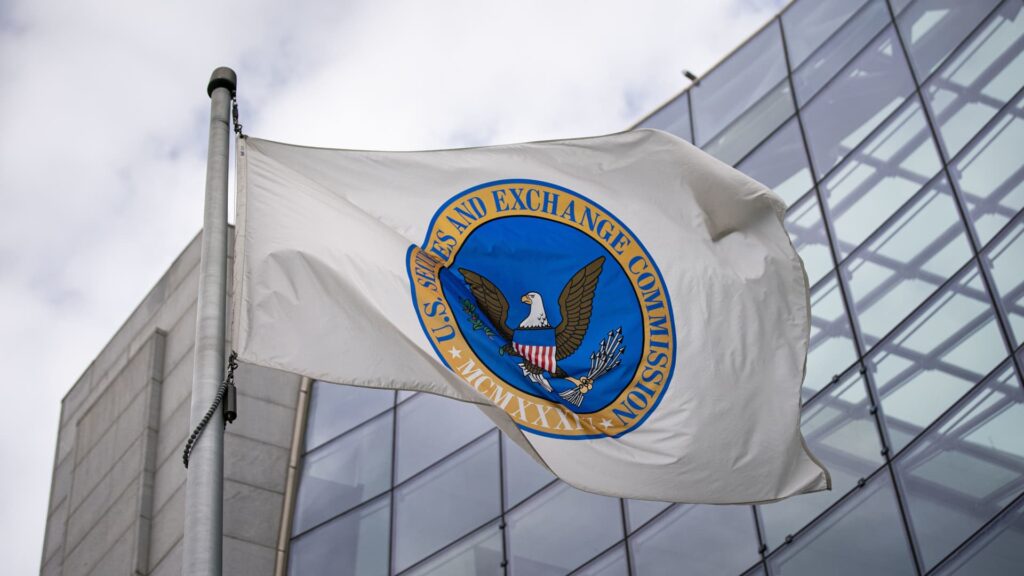
VanEck has agreed to pay a £1.75 million fine to settle charges brought by the United States Securities and Exchange Commission (SEC) regarding its launch of a social media-focused exchange-traded fund (ETF) in 2021.
The SEC imposed a civil penalty on the investment adviser.
On February 16, the SEC disclosed in a statement that during the launch of the VanEck Social Sentiment ETF in March 2021, VanEck did not fully disclose the involvement of a prominent social media personality in marketing the product.
The ETF aimed to track an index using “positive insights” from social media and other data sources.
However, the SEC found that VanEck attempted to enhance the fund’s success through social media and collaborated with an influential and divisive online personality to increase its appeal.
Although the financial watchdog did not explicitly name the influencer, reports from 2021 had previously linked David Portnoy, founder of Barstool Sports, to the promotion of the VanEck ETF.
The regulator observed an undisclosed detail: the influencer’s fee was tied to the fund’s growth, ensuring higher compensation as the fund expanded.
The SEC criticised the undisclosed agreement, focusing on VanEck’s failure to inform the ETF’s board about the influencer’s intended involvement.
This undisclosed arrangement had significant implications for the management contract and fund operations, breaching the board’s duty to oversee financial aspects during advisory contract discussions.
Andrew Dean, co-chief of the SEC Enforcement Division’s Asset Management Unit, emphasised the importance of transparency from advisers.
READ MORE: Coin Metrics Research: Nation-States Unable to Destroy Bitcoin and Ethereum Networks
He noted that the failure to provide accurate disclosures hampers the board’s ability to properly assess the advisory contract and understand the economic impact of licensing agreements.
VanEck accepted the SEC’s order acknowledging its violation of the Investment Company Act and Investment Advisers Act.
The company agreed to a cease and desist order, censure, and the required financial penalty without admitting or denying the findings.
The announcement comes after the company’s decision to terminate one of its ETF products, the Bitcoin Strategy ETF, a month ago following a comprehensive performance evaluation.
In an apparent effort to boost the popularity of its dedicated spot Bitcoin ETF with the ticker HODL, VanEck indicated on February 15 that it would reduce its fees from 0.25% to 0.20% starting February 21.

Bitcoin exchange-traded funds (ETFs) have experienced another robust week, with net inflows surpassing £2.2 billion from Feb. 12–16.
According to Bloomberg analyst Eric Balchunas, the combined volume exceeded the inflows received by any other among the 3,400 ETFs available in the United States.
BlackRock’s iShares Bitcoin Trust (IBIT) attracted the majority of capital, accumulating positive flows of £1.6 billion over the week, as per data from BitMEX Research.
“£IBIT alone has taken in £5.2b YTD, which is 50% of BlackRock’s total net ETF flows, out of 417 ETFs,” noted Balchunas.
Among the spot Bitcoin ETFs holding billions of pounds in assets, Fidelity’s Wise Origin Bitcoin Fund witnessed significant inflows, drawing £648.5 million over the last five trading sessions.
The Ark 21Shares Bitcoin ETF secured £405 million during the same period, while the Bitwise Bitcoin ETF attracted £232.1 million in capital inflows.
However, outflows from the Grayscale Bitcoin Trust are affecting the collective performance of the other recently approved spot Bitcoin ETFs.
READ MORE: Bitcoin Hash Rate Expected to Drop by Up to 20% Post Halving, Analysts Predict
The fund experienced £624 million in withdrawals from Feb. 12–16 as investors continued to divest.
Since its transition from an over-the-counter product to a spot ETF on Jan. 10, Grayscale’s fund has seen over £7 billion in capital outflows.
The new ETFs are believed to be one of the factors propelling Bitcoin’s recent price surges.
The cryptocurrency has surged 91% in the past four months, buoyed by market sentiment surrounding the approval of spot Bitcoin ETFs by the U.S. Securities and Exchange Commission (SEC) on Jan. 10.
During the week, Bitcoin gained nearly 7% and is trading at £51,434 at the time of writing, marking a 24% increase in February.
Major banks and financial institutions are also taking note of the new ETFs.
In a Feb. 14 letter, a trade group coalition representing Wall Street’s largest firms urged the SEC to consider modifications to the Staff Accounting Bulletin 121, which offers guidance on accounting for crypto asset custody obligations.
The proposed revision would permit banks to serve as custodians of the BTC funds.

Cryptocurrency exchange Coinbase has bestowed a generous sum of £3.6 million upon Brink, a non-profit organisation that extends support to developers contributing to the Bitcoin blockchain.
In a post dated February 16th on X, Brink acknowledged Coinbase CEO Brian Armstrong and the exchange’s team for their contribution towards “Bitcoin developing funding efforts.”
The platform emphasised that the donation came with “no strings attached” and would bolster the endeavours of engineers involved in open-source development for the BTC blockchain.
Coinbase’s GiveCrypto initiative, spearheaded by Armstrong in 2018, facilitated the donation to Brink.
However, the exchange disclosed in December 2023 its intention to phase out the platform due to its inability to effect enduring change solely through unconditional cash transfers.
Established in 2020, Brink offers fellowship and grant programmes aimed at bolstering Bitcoin developers and engineers.
READ MORE: Uniswap Foundation Announces Launch Date for Protocol’s v4 Following Ethereum’s Dencun Upgrade
Noteworthy backers of the platform include Block CEO Jack Dorsey, who pledged £5 million in July 2023.
Prior to the approval of its spot BTC exchange-traded product by the United States Securities and Exchange Commission on January 10th, VanEck announced its commitment to allocate 5% of profits from the investment vehicle to Bitcoin core developers.
This asset management firm made a comparable pledge to Ethereum core developers in September 2023.
Coinbase disclosed a net revenue of £905 million in the fourth quarter of 2023, marking a 45% increase over Q3.
On February 15th, JPMorgan analysts revised their rating of the crypto exchange’s stock from underweight to neutral, having initially downgraded the shares in January.

Ether’s price has been steadily climbing over the past ten days, marking a gain of 21.5% and edging close to the £2,800 mark.
This surge in the cryptocurrency’s value is attributed to the robust inflow into the recently introduced spot Bitcoin exchange-traded fund (ETF) in the United States.
However, Ether possesses additional catalysts that could potentially propel its price beyond the £3,000 threshold—a level that left its mark during its last trial in March 2022.
Will Ether’s anticipated ascent to £3,000 unfold differently this time?
From an optimistic standpoint, Ether may solidify its position as the second cryptocurrency with a spot ETF listed on US exchanges.
This would set it apart from rivals like Solana and BNB Chain in terms of accessibility and regulation. US exchanges, including Binance and Coinbase, are still entangled in legal battles with the US Securities and Exchange Commission (SEC) concerning security offerings.
Hence, approval of an Ethereum ETF in the US would notably reduce uncertainty for its investors.
Other factors bolstering Ether’s prospects include the forthcoming Dencun network upgrade slated for March 13.
This hard fork aims to, among other objectives, slash transaction costs on the Ethereum layer 2.
By providing more block space and lowering gas costs for rollups, these modifications could potentially stimulate the usage of its decentralized applications (DApps) and escalate deposits in its smart contracts, thereby driving up demand for ETH.
READ MORE: Bitcoin Holds Ground at $52,000 Amidst US Inflation Concerns
Ether bulls have ample grounds to believe that £3,000 is within grasp, but historical evidence underscores the challenge of sustaining such price levels.
For instance, in the three weeks leading up to April 3, 2022, ETH surged by 42%, soaring from £2,520 to £3,580.
However, the rally proved unsustainable as its price plummeted by 46% in the subsequent 40 days. Traders now question whether Ether could encounter a similar fate this time around.
The first indicator to scrutinise is Ether’s futures premium, which reflects the demand for leverage between longs (buyers) and shorts (sellers).
Professional traders favour monthly futures contracts due to the absence of a variable funding rate, but these instruments typically trade at a 5% to 10% premium to compensate for their extended settlement period.

Jupiter Asset Management’s internal compliance team has reportedly withdrawn its investment in the 21Shares Ripple XRP exchange-traded product (ETP) due to regulatory issues in Ireland.
The firm initially invested over $2 million into the fund, incurring a loss of $834.
According to a recent report from the Financial Times, Jupiter invested $2,571,504 into the 21Shares Ripple XRP ETP (AXRP) during the first half of 2023.
However, the exact date of the initial investment wasn’t specified. Meanwhile, the ETP yielded a one-year return of 31.7%, but it has declined by 13.2% in the past six months.
The AXRP tracks the performance of XRP, having launched in March 2019. According to 21Shares website, the ETP has assets under management (AUM) totalling $50,497,518.
The report explained that asset managers operating under Ireland’s Undertakings for Collective Investment in Transferable Securities Directive (UCITS) are restricted from exposure to crypto.
After the compliance team at Jupiter detected the trade in one of its Irish UCIT funds, the company reportedly sold off the investment.
Jupiter liquidated its Ripple XRP ETP holding for $2,570,670, incurring a loss of $834.
“The trade was made, picked up by our regular oversight process and then cancelled.”
READ MORE: Genesis Granted Approval to Liquidate £1.3 Billion in Grayscale Bitcoin Trust Shares
This comes amid ongoing discussion about the potential approval of an XRP exchange-traded fund (ETF), particularly after the recent approval of 11 spot Bitcoin ETFs by the United States Securities and Exchange Commission (SEC).
However, due to the legal dispute between Ripple and the SEC regarding whether XRP qualifies as a security, some analysts speculate that it may be unlikely.
On Jan. 24, Cointelegraph reported that CoinShares’ head of product, Townsend Lansing, explained that an XRP ETF wouldn’t be feasible unless the SEC is forced to or agreed to concede that XRP is not a security.
Meanwhile, Brad Garlinghouse, CEO of Ripple, believes that the recent approval of several spot Bitcoin exchange-traded funds (ETFs) in the United States will only open the door for more crypto ETFs in 2024.
However, in a recent interview with CNBC, Garlinghouse stopped short of explicitly predicting that an XRP ETF would be approved by the SEC, but he expects an Ethereum ETF to get the green light in the near future.

Bitcoin mining difficulty, which gauges the level of complexity in solving the intricate cryptographic puzzles integral to the mining process, surpassed 80 trillion on Friday, February 16th.
As per BTC.com, the network’s hash rate, indicating the cumulative computational power utilised by miners, achieved 562.81 exahashes per second (EH/s), with the mining difficulty reaching a peak of 81.73 trillion.
The escalation in Bitcoin (BTC) mining difficulty has been consistent since January 2023, with forecasts anticipating a climb to 100 trillion in the imminent months.
In Bitcoin’s proof-of-work consensus mechanism, heightened difficulty necessitates miners to employ greater computational power and energy to uncover the correct hash.
Over the past year, Bitcoin’s difficulty level has more than doubled.
During its automatic readjustment on February 15th, Bitcoin mining difficulty was slated to surge by an estimated 6%.
If this transpires, data from monitoring resource BTC.com suggests it will propel the difficulty to unprecedented heights above 80 trillion for the first time.
On February 16th, Bitcoin maintained a value of $52,000 at the commencement of Wall Street trading, buoyed by the revelation of surpassing expectations in the latest United States macro data.
READ MORE: Bakkt Secures Regulatory Approval to Raise $150 Million Amid Financial Concerns
Figures from Cointelegraph Markets Pro and TradingView depicted a stagnant BTC price performance as the week’s final TradFi trading session unfolded.
In April, Bitcoin’s mining rewards are set to halve in what is termed the Bitcoin Halving.
As a hedge against inflation, Bitcoin’s developers integrated this reduction into the token’s structure approximately every four years, with the previous halving transpiring in May 2020.
The forthcoming halving will diminish Bitcoin’s rewards from 6.25 BTC to 3.125 BTC.
This adjustment may lead to a reduced hash rate, with less efficient miners grappling to cover expenses and potentially shutting down their mining rigs.
Consequently, a diminished hash rate is likely to precipitate a decline in Bitcoin mining difficulty as the network endeavours to sustain a consistent block production rate every 10 minutes.
Analysts from Galaxy Digital speculate that as much as 20% of Bitcoin’s existing hash rate could deactivate post the Bitcoin halving, leaving only the most efficient mining rigs operational.