

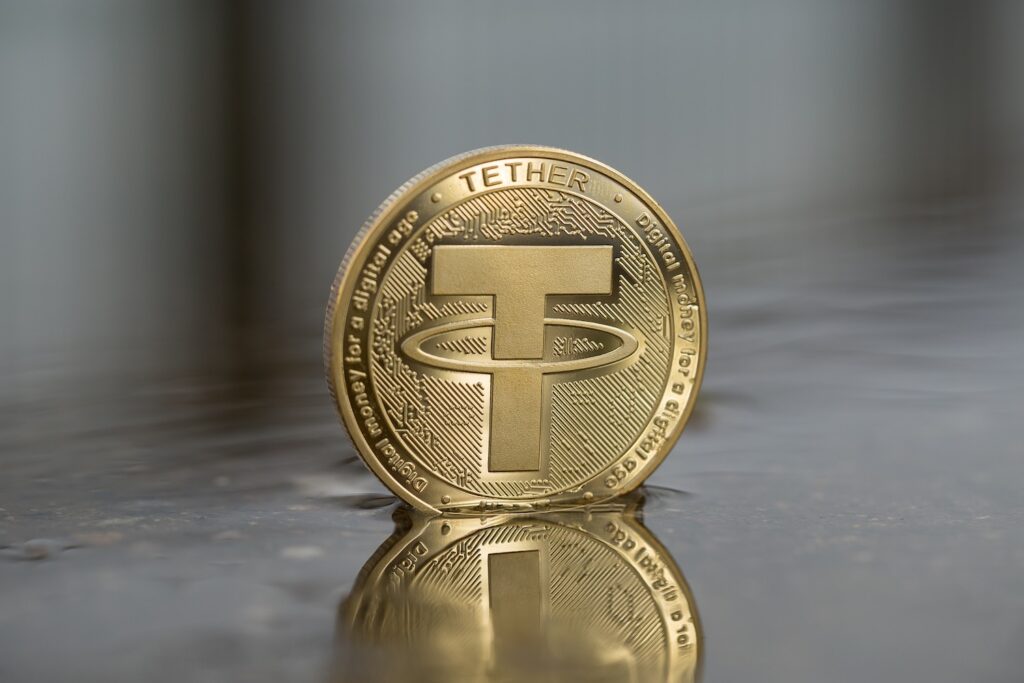
Stablecoin issuer Tether declined to give a definitive response regarding whether it would terminate its support for the Tron network following its competitor Circle’s cessation of stablecoin minting on the blockchain on Tuesday, February 20.
“Tether tokens are issued on several blockchains, which are simply transport layers for such tokens,” Tether stated in a communication with Cointelegraph when questioned about Circle and whether Tether was contemplating a similar action.
“Tether retains the ability to freeze transactions on each directly supported transport layer to accomplish its compliance duties.
Nevertheless, Tether actively monitors the safety of each one of the supported transport layers to ensure the highest standards for our community,” the firm articulated.
Tether holds the position as the largest stablecoin with a market capitalization of $97.7 billion, while Circle’s USD Coin trails at $28 billion, as per CoinGecko data.
The Tron network accommodates over 51.8 billion USDT, representing over half of the nearly 101 billion USDT tokens issued across multiple blockchains, according to Tether’s transparency report dated February 21.
Moreover, an additional $76.2 million is allocated to provide near-term liquidity for the token on the Tron network.
Tether’s remarks were prompted by an announcement from Circle on February 20, disclosing the immediate cessation of USDC minting on Tron and the gradual withdrawal of support for the network, asserting that the decision aligns with “efforts to ensure that USDC remains trusted, transparent, and safe.”
In January, a United Nations report suggested that “USDT on the Tron blockchain has become a preferred choice” for cyber fraud and money laundering in Southeast Asia owing to the “ease, anonymity, and low fees of its transactions.”
Tether refuted the report, stating that the UN overlooked USDT’s traceability and the firm’s history of collaboration with law enforcement.
It highlighted that it froze over $300 million worth of USDT used in illicit activities “within the last few months,” including $225 million frozen in November 2023 as part of a United States investigation into a Southeast Asian human trafficking syndicate.
Ethics watchdog group Campaign for Accountability penned a letter to United States senators in November 2023, alleging Tron “has been named in multiple international law enforcement actions involving billions of dollars in transactions by alleged organised crime groups and sanctioned entities.”
The U.S. Securities and Exchange Commission initiated legal action against the Tron Foundation and founder Justin Sun in March 2023, alleging they offered unregistered securities and engaged in manipulative trading, contentions that Sun denies.

Michael Saylor has affirmed his steadfast commitment to holding onto Bitcoin, despite his company MicroStrategy’s holdings swelling to an unrealised profit of almost $4 billion.
“I’m going to be buying the top forever. Bitcoin is the exit strategy,” Saylor declared in an interview with Bloomberg on Feb. 20, when queried about the possibility of his firm selling its stash of 190,000 BTC — presently valued at approximately $9.88 billion.
Presenting his bullish argument for Bitcoin, Saylor asserted that the cryptocurrency is “technically superior” to gold, the S&P 500, and real estate, notwithstanding the significantly larger market capitalisations of these asset classes compared to Bitcoin’s $1 trillion.
“We believe capital is going to keep flowing from those asset classes into Bitcoin,” he remarked. “Bitcoin is technically superior to those asset classes.
And that being the case, there’s just no reason to sell the winner to buy the losers.”
MicroStrategy, a business intelligence software firm, made headlines as the first publicly traded company to begin accumulating Bitcoin in 2020.
READ MORE: Zap Protocol – How Can You Buy ZAP and is it a Good Investment?
The 190,000 BTC it held as of the fourth quarter of 2023 were acquired at an average price of $31,224 each, resulting in a total investment cost of $5.93 billion.
Data from HODL15Capital indicates that United States-based spot Bitcoin exchange-traded funds (ETFs), excluding the Grayscale Bitcoin Trust (GBTC), collectively hold an estimated 270,000 BTC as of Friday, Feb. 16.
Saylor highlighted the demand for Bitcoin, driven by an increasing appetite for ETF products, which has exceeded the supply from miners, sometimes by “10 times as much.”
Nevertheless, he dismissed concerns that ETFs might impede MicroStrategy’s ability to acquire Bitcoin, stating that the company employs a “levered operating strategy” for investing in the digital asset.
“The spot ETFs have opened up a gateway for institutional capital to flow into the Bitcoin ecosystem,” Saylor explained.
“They’re facilitating the digital transformation of capital, and every day, hundreds of millions of dollars of capital is flowing from the traditional analog ecosystem into the digital economy.”
“This is a rising tide. It’s going to lift all boats,” he concluded.

Bitcoin is poised for a downturn around its upcoming block subsidy halving, though the exact timing remains uncertain.
Renowned trader and analyst Rekt Capital, in his latest YouTube presentation on February 20, forecasted BTC’s price trajectory mirroring the bullish trends of 2016 and 2020.
The deliberation revolves around the timing of the 2024 “pre-halving retrace” for Bitcoin, which has lingered within a narrow band for over a week, encountering resistance around $52,000.
Despite dampened sentiment and subdued performance of alternative cryptocurrencies, seasoned market observers maintain a positive outlook.
Drawing from historical patterns leading to all-time highs, Rekt Capital identified common phases in bull market formations.
He elucidated, “In the past, a macro downtrend break always precedes upside going into the halving. Then we have a pre-halving retrace and then a post-halving reaccumulation period and then parabolic price action toward new all-time highs.”
A chart accompanying the analysis depicted BTC/USD breaking its initial downward trendline, only to encounter resistance from a previously established zone.
The absence of breaking through and subsequently retesting this zone as support — the “pre-halving retrace” phase — characterises the current state of affairs in 2024.
READ MORE: Ethena Labs’ High Yield Stablecoin Sparks Investor Concerns in Crypto Community
Rekt Capital asserted, “We’re going to have the same thing in this cycle as well.” The focal point for the anticipated pre-halving pullback resides around $45,000, as corroborated by data from Cointelegraph Markets Pro and TradingView.
The query persists, “Are we going to retest this resistance this month in the pre-halving period?” as the analyst highlighted the recurrent failure to do so in preceding pre-halving periods.
Earlier assessments by Rekt Capital indicated Bitcoin’s complete immersion in its pre-halving surge, with recent observations suggesting accelerated key price developments compared to previous cycles.
Turning to current market dynamics, others expressed reluctance to adopt a bearish stance amidst the ongoing lateral movements.
Caleb Franzen, founder of research platform Cubic Analytics, remarked on Bitcoin’s steadfast trading range, observing minimal deviation over the past week.
Similarly, analyst Matthew Hyland underscored the significance of the 0.618 Fibonacci retracement level from all-time highs, cautioning that a breach below $49,000 could alter the outlook, while consolidation within an upward trajectory favours its continuity.

The Financial Services Agency (FSA) – Japan’s primary financial regulator – has elucidated its stance on peer-to-peer (P2P) crypto transactions following its latest directives to local banks.
In its missive on 14th February, the FSA urged banks to “further bolster their user protection” by “halting transfers to crypto-asset exchange service providers if the sender’s name differs from the account name.”
As previously reported by Cointelegraph, this could impede P2P transfers in the nation as they typically involve distinct users at the sending and receiving ends.
Responding to a query from Cointelegraph, the FSA clarified that its directive does not encompass “transactions from one individual to another”:
“We issued the request with the aim of asking banks and other financial institutions to strengthen measures against unlawful money transfers in cases where an individual deposits cash from the individual’s bank account to an account of a crypto asset exchange service provider.”
READ MORE: Ethena Labs’ High Yield Stablecoin Sparks Investor Concerns in Crypto Community
According to the FSA, these measures have already been adopted by several financial institutions, although the agency has not received any reports of specific cases that would raise “concerns over crypto asset markets.”
The FSA’s recommendations “are not uniformly obligatory” for all financial institutions. Banks are expected to deliberate and determine specific measures based on their circumstances.
Japan’s neighbour, South Korea, is also taking proactive measures to combat crypto fraud.
Its Financial Intelligence Unit will introduce a pre-emptive trading suspension system for suspicious transactions on platforms already operating in the country.
This will halt transactions even during the pre-investigation phase.

The Hong Kong Securities and Futures Commission (SFC) has been inundated with crypto license applications, totaling 18 from various local and global players over a span of two months.
Among the applicants are prominent names like Huobi HK, Crypto.com, OKX, Bybit, and DFX Labs.
To meet the stringent licensing requirements, applicants must undergo thorough due diligence checks, including comprehensive financial audits, which can be a costly endeavor.
It’s reported that Web3 firms are spending up to $25 million to ensure compliance and build robust applications for these licenses.
The clarity provided by Hong Kong’s regulatory framework regarding exchange licensing has not only attracted crypto exchanges but also traditional brokerages like Tiger Brokers.
READ MORE: Zap Protocol – How Can You Buy ZAP and is it a Good Investment?
Tiger Brokers recently expanded its SFC license to incorporate crypto trading, acknowledging the growing significance of cryptocurrencies as an asset class and leveraging its fintech expertise to integrate Web3 technology.
Additionally, Harvest Hong Kong, a major Chinese fund manager, submitted the first application for a spot Bitcoin exchange-traded fund (ETF) on Jan. 26, marking a significant development in Hong Kong’s crypto landscape.
In terms of security measures, Hong Kong has imposed a minimum insurance requirement of 50% for licensed crypto exchanges to safeguard customers’ assets.
Notably, OSL Exchange has taken steps to exceed this requirement by partnering with Canopius, a Lloyd’s of London underwriter syndicate, to secure an insurance policy covering 95% of its users’ assets over a two-year period.
This underscores the increasing focus on security and risk mitigation within the crypto industry.
On the 15th of February, Coinbase released its earnings report for the final quarter of 2023, indicating a promising outlook for the company in the upcoming year, primarily driven by Bitcoin trading.
Their technology expenses in 2023 decreased by $1 billion compared to 2022, while the company’s net income and earnings (EBITDA) are showing positive trends.
Up until 2021, various crypto assets competed for investor attention on the platform.
However, over the past two years, both retail and institutional trading volumes have dwindled, with Bitcoin and Ethereum emerging as the dominant favourites in the cryptocurrency realm.
Despite this, other cryptocurrencies still generate significant investor interest, contributing to nearly half of the company’s transaction revenues.
Stablecoins have also shown promising growth on the Coinbase platform, accounting for 22% of revenues in a year where subscriptions and services made up almost half of the company’s earnings.
Retail investor transactions, which previously constituted the majority of revenue, now make up less than half of net revenue, with subscriptions and services displaying strong growth trends to offset declines in transactions.
READ MORE: Ethena Labs’ High Yield Stablecoin Sparks Investor Concerns in Crypto Community
Custodial fees, earned through cash balances invested into cryptos, have seen a year-on-year decline, possibly indicating a waning interest in cryptocurrencies among investors due to conversion challenges to fiat currencies.
However, the significant trading volumes witnessed in recently launched Bitcoin ETFs suggest a positive outlook for cryptocurrencies as investments.
Despite not being accounted for in this earnings release, Coinbase’s custodianship of eight out of the 11 Bitcoin ETFs launched positions it for substantial growth as investor interest in these ETFs increases.
One challenge for Coinbase in the Bitcoin ETF market is the potential entry of other exchanges with their custodial platforms.
The company’s response to this challenge remains undisclosed, but significant announcements may be expected in the future.
Speculation around cryptocurrencies besides Bitcoin and Ethereum creates additional opportunities for Coinbase.
The launch of “International Markets” and the introduction of regulated derivatives through Coinbase Financial Markets (CFM) further expand the company’s offerings.
The Base platform, launched in August, operates as a layer-2 blockchain on Ethereum, facilitating efficient conversion between cryptocurrencies and fiat currencies for real-world use.
Coinbase’s vision, as outlined by CEO Brian Armstrong in 2016, includes enabling various financial services through apps, including investing, loans, and global remittances.
With Base ranking as the fourth-largest L2 player by total value locked on Ethereum, there’s significant potential for its utility, particularly in facilitating cheaper remittances through interconnected networks.
With its international market exposure and diverse offerings, Coinbase appears well-positioned to capitalise on various opportunities in the near future.

Bitcoin (BTC) soared to a fresh 2024 peak of £53,019 on February 20, only to sharply decline to £50,000 on select exchanges.
Traders attribute consistent inflows of spot BTC ETFs and the forthcoming supply halving event as pivotal drivers behind this surge, with BTC currently trading above £52,100 at the time of writing.
Let’s delve into the primary factors underpinning today’s volatility in the Bitcoin price.
Bitcoin futures’ open interest (OI) has surged to a new yearly pinnacle, reminiscent of levels last witnessed in November 2021.
This surge suggests heightened trading activity surrounding the foremost cryptocurrency by market capitalisation.
Data from cryptocurrency futures trading and information platform Coinglass reveals that total OI for BTC futures reached £22.69 billion on February 20, the highest since November 11, 2021, closely approaching the peak of £23 billion recorded at that time.
Bitcoin futures OI surged by over 30% in 2023, correlating with Bitcoin’s 23% year-to-date surge to £53,000, reaching levels last observed in December 2021.
Open interest serves as a gauge of the overall value of all unsettled Bitcoin futures contracts across exchanges, with an uptick indicating increased market activity and trader sentiment surrounding the pioneering cryptocurrency.
Investor sentiment remains buoyant, buoyed by rising inflows to spot BTC ETFs despite outflows from gold ETFs on the rise.
Bitcoin has surpassed the £49,000 peak reached subsequent to the January 10 approval of spot Bitcoin ETFs by the U.S. Securities and Exchange Commission.
READ MORE: Ether Surges Past $3,000 Mark for First Time in Nearly Two Years
Data from Farside Investors reveals that £4.91 billion has flooded into Bitcoin ETFs within six weeks since trading commenced on January 11.
The total weekly inflows into the newly issued spot Bitcoin ETFs reached £2.5 billion last week, as per CoinShares Digital Asset Fund Flows Weekly Report.
CoinShares analyst James Butterfill remarked, “These inflows, alongside recent positive price movements, have propelled total assets under management (AuM) to £67 billion, marking the highest level since December 2021.”
On February 17, financial commentator Tedtalks Macro underscored the steady rise in net inflow to spot Bitcoin ETFs, averaging £182 million per day, asserting,
“Post-halving we only need ~£25M of net inflows to spot ETFs per day, to offset the miner production.”
The impending Bitcoin halving, anticipated to slash miners’ rewards by 50%, is also projected to significantly stoke investors’ interest in BTC.
Historically, the halving event has preceded Bitcoin embarking on a parabolic uptrend in the months post-event.

Microsoft has revealed a substantial investment into Europe, earmarking £1.5 billion to expand its artificial intelligence (AI) and cloud infrastructure in Spain.
Following a meeting with Spain’s Prime Minister, Pedro Sánchez, Brad Smith, Microsoft’s vice chair and president, confirmed the company’s commitment to Spain over the next two years.
Smith emphasised that their endeavour extends beyond mere data centre construction, highlighting Microsoft’s dedication to fostering the nation’s “security, development, and digital transformation of its government, businesses, and people.”
The company’s engagement with Spain spans 37 years, with a recent milestone being the establishment of a new research and development centre for AI technologies in Barcelona, announced in September 2021.
Alberto Granados, President of Microsoft Spain, hailed this investment as testament to Spain’s prowess in the digital arena.
This initiative follows Microsoft’s recent £2.2 billion investment into Germany’s AI landscape, announced on February 15.
READ MORE: Grayscale’s Bitcoin ETF Sees Slowing Outflows, Potential for Further Bleeding
Echoing their Spanish strategy, Microsoft aims to utilise the funds over the next two years to fortify German AI infrastructure, erect new data centres, and provide AI skills training.
The surge of Big Tech investments in Europe aligns with the imminent enactment of the EU AI Act legislation.
Concurrently, France’s Ministry of Economy, Finance, and Industrial and Digital Sovereignty, in collaboration with Google, unveiled plans to establish an AI-focused hub in Paris.
This hub, set to accommodate nearly 300 researchers and engineers, will bolster France’s AI aspirations.
Notably, Google unveiled its “AI Opportunity Initiative for Europe” two days prior, vowing a £21.4 million investment in AI skills training for Europeans.
These investments underscore the tech industry’s recognition of Europe’s burgeoning AI landscape and the imperative to nurture local talent.

Navin Gupta, the freshly appointed CEO of Crystal Intelligence, anticipates the continued expansion of the blockchain intelligence firm throughout 2024.
In an interview with Cointelegraph, Gupta expressed his anticipation for the company’s growth to further escalate as the unregulated sector of the crypto industry diminishes.
This shift is attributed to the endorsement of spot Bitcoin exchange-traded funds (ETFs) in the United States. Gupta stated:
“Hundreds of firms were waiting in the license queue, and they are in some form of regulatory discussion with the regulator to ensure that they get licensed.
Every single firm that gets regulated needs compliance software, monitoring, and to prove to the regulator that they are doing Anti-Money Laundering compliance…”
Crystal Intelligence provides blockchain analysis and investigative and compliance solutions to institutions and regulators.
The company’s global clientele doubled during 2023, with Crystal’s product now overseeing over 50,000 organizations, as per a press release shared with Cointelegraph.
The company was established by Bitfury in 2017.
According to Gupta, the escalating adoption of stablecoins is also expected to amplify the demand for Crystal’s compliance services.
“[Stablecoin payments] are cross-border transfers of value.
So, there’s the same Travel Rule that most transaction monitoring rules need to be applied, which brings a new swath of customers who want to accept or pay through stablecoins.”
Stablecoins are the most broadly utilised crypto assets, constituting over 50% of on-chain transaction volume to or from centralised services between July 2022 and June 2023, as per “The Chainalysis 2023 Geography of Cryptocurrency” report.
Gupta believes that the recently introduced spot Bitcoin ETFs will usher in a consistent influx of non-speculative investment for the first time in Bitcoin’s history, thereby legitimising the asset class in the eyes of global regulatory authorities.
Gupta noted that institutional investors have already begun viewing the asset class more favourably.
“[Institutional adoption] is already happening. BlackRock manages trillions of dollars, and Bitcoin is a very small part of it. But they’ve already dipped their toes in the water, and the same is true for regulators.”
Gupta anticipates this to motivate ETF issuers like BlackRock to introduce additional funds:
“BlackRock does that; the peers have to do it. It’s a self-reinforcing cycle moving forward. So, we are very bullish about this space.”
An estimated 75% of new Bitcoin investments come from the 10 spot Bitcoin ETFs, as stated in a report by on-chain data analytics firm CryptoQuant.

Starknet, the Ethereum layer-2 scaling protocol, commenced the distribution of its native network token on 20th February, with millions of tokens claimed upon the launch of the provisions portal.
Real-time data monitoring the claims indicated that eligible users had acquired more than 45 million STRK tokens within the initial 90 minutes of the allocation.
The token began trading on several major exchanges.
STRK was traded at over £5 following its listing on Binance and exceeded £3 on KuCoin as the tokens permeated the broader cryptocurrency ecosystem.
CoinMarketCap data revealed STRK trading between £3 and £4, with its market capitalisation valued at over £2.1 billion.
More than 1.3 million wallets are eligible to claim Starknet’s native token, including those of Ethereum solo and liquid stakers, Starknet developers and users, as well as projects and developers from outside the Web3 ecosystem.
The Starknet Foundation has released an overview of its token provision alongside the launch of a dedicated portal that enables individuals to verify their eligibility and acquire STRK tokens.
Over 700 million STRK tokens are poised to be allocated across nine categories and will be utilised for governance and transaction fees. Starknet intends to introduce staking of STRK tokens in the future.
READ MORE: Australian Federal Police Officer Accused of Wiping Bitcoin Wallet at Crime Scene
Starknet is among Ethereum’s principal L2s that pioneered zero-knowledge (ZK) rollup technology.
The protocol facilitates the processing of transactions and smart contract functions off-chain, with cryptographic proofs submitted to Ethereum to access the security guarantees of its underlying blockchain.
The layer-2 scaling protocol has also addressed concerns raised by Starknet and Ethereum community members regarding the eligibility criteria for the STRK airdrop.
Starknet’s active users surged in recent weeks as prospective STRK recipients and airdrop farmers sought eligibility for the campaign.
A statement from Starknet subsequent to the launch of the provisions portal acknowledged feedback from community members and network users who felt “overlooked due to certain Provisions criteria.”
The Starknet Foundation affirmed that it was working on a resolution for users who were not deemed eligible.
The broader cryptocurrency ecosystem has also been cautioned to remain vigilant against scams and malicious links.