
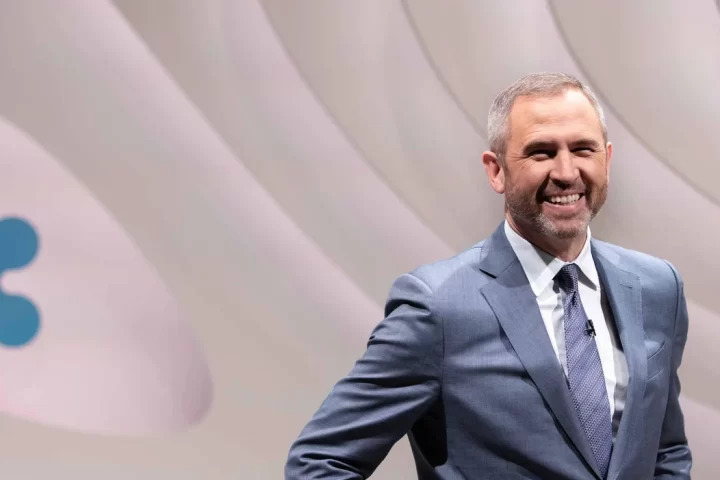


The token representing the layer-1 blockchain Shido plummeted by as much as 94% in a mere 30 minutes subsequent to falling victim to an exploit on its Ethereum-based staking contract.
Blockchain security firm PeckShield alerted its audience to the plunge in a post dated Feb. 29 X.
In a subsequent post, it elucidated that an exploiter had succeeded in transferring the blockchain’s Ethereum staking contract to another address, following which the new owner upgraded the contract with a concealed function to withdraw staked tokens.
According to CoinGecko data, PeckShield disclosed that the attacker had withdrawn over 4.3 billion Shido tokens, equating to nearly half of the circulating token supply, which was approximately 9 billion tokens.
Before the price downturn, the value of these tokens stood at approximately $35 million.
In another post, the pseudonymous on-chain researcher ZachXBT revealed that they had identified the exploiter’s address, which had been funded through cryptocurrency initially bridged from the cross-chain protocol Layerswap and subsequently from the Arbitrum blockchain.
ZachXBT claimed to have uncovered the true identity of the wallet owner who funded the exploiter but suggested that they too had fallen victim to hacking, as “their assets were suddenly transferred before funding the exploiter.”
Several hours after the incident commenced, the Shido team issued an official statement asserting that they had neutralised any further threats against Shido.
READ MORE: ENS Resolves Dispute Over eth.link Domain with $300,000 Settlement
The protocol also stated that they had initiated an investigation and urged the hacker to engage in negotiation regarding a bounty.
Shido also assured users who staked their tokens that their assets would be returned.
Shido, a layer-1 proof-of-stake blockchain that is yet to launch its mainnet, announced its impending mainnet launch in a post dated Feb. 24 X.
SHIDO, an Ethereum-based ERC-20 token, allowed staking on the project’s connected decentralized exchange (DEX) to earn an 8% annual yield, according to its website.
Shido did not provide an immediate response to a request for comment regarding the contract exploit.
According to PeckShield, last year witnessed over 600 crypto-related hacks resulting in $2.1 billion in losses, marking a nearly 30% decrease from 2022.
Up until January of this year, there had been 30 attacks resulting in $182.5 million lost.
February also seemed to conclude as a significant month for exploiters, with $290 million stolen from PlayDapp, alongside several million dollars’ worth of crypto stolen in various wallet breaches and phishing scams.

Hong Kong, as of February 29, has ceased accepting license applications from cryptocurrency exchanges and will imminently mandate that all non-compliant trading platforms shutter their operations within the local jurisdiction.
The Securities and Futures Commission (SFC) of Hong Kong has underscored that cryptocurrency exchanges within the region failing to submit license applications must conclude their business affairs by May 31, 2024.
The SFC of Hong Kong has also advised investors utilising virtual asset trading platforms to “make preparations early” and transition to entities that have either acquired operating licenses or have initiated the application process.
Formal licensure has been granted to two cryptocurrency trading operators in Hong Kong: OSL Digital Securities on December 15, 2020, and HashKey Exchange on November 9, 2022.
The regulatory body received license applications from 22 cryptocurrency trading platforms, encompassing four exchanges that had applied under the SFC’s preceding opt-in regime for such platforms.
Moreover, four other exchanges—Huobi HK, Meex, BitHarbour, and Ammbr—initially pursued licensure but subsequently either withdrew their applications or had them returned.
The SFC will maintain a publicly accessible list of cryptocurrency platforms slated for mandated closure by law, aimed at informing citizens of associated risks.
READ MORE: Hacker Moves Millions in Digital Assets from KyberSwap
Throughout the winding-down phase, Hong Kong will curtail the operational capacities of these exchanges and enforce cessation of all marketing endeavours within the region.
The SFC of Hong Kong will also publish a roster of cryptocurrency exchanges deemed licensed as of June 1, 2024. Nonetheless, it will not assure licensure for all entities mentioned.
Upon securing licensure from the SFC of Hong Kong, cryptocurrency exchanges will be permitted to onboard retail investors for trading Bitcoin and Ether.
Various altcoins and stablecoins are presently under SFC review for trading approval.
Recent developments have seen Hong Kong-based cryptocurrency exchange BitForex become unresponsive subsequent to suspending withdrawals for a minimum of three days.
The exchange’s X account has remained stagnant since May 2023.
Users on its official Telegram channel have reported a spectrum of issues, ranging from inability to access their accounts to asset dashboards failing to display.
Multiple users have encountered a pop-up screen indicating they are blocked from accessing the company’s website. An internal investigation by Cointelegraph replicated this issue.

Kraken, the crypto exchange, has unveiled a new arm dedicated to serving institutions, as it vies for a portion of the spot Bitcoin exchange-traded fund (ETF) market.
The announcement, made on February 27th, merges Kraken’s existing institutional services of spot and over-the-counter trading, alongside crypto staking (for clients outside the United States).
It is primarily geared towards asset managers, hedge funds, and high-net-worth individuals.
Tim Ogilvie, co-founder of Staked and now heading Kraken Institutional following the acquisition of his firm in December 2021, stated, “Institutional adoption of crypto is growing rapidly,” attributing this growth to the recent ETF approval.
“The recent ETF approval has spurred broader institutional demand,” Ogilvie added.
Since their launch in January, the nine new Bitcoin ETFs have collectively attracted $6 billion in inflows, averaging a daily inflow of $196 million, and have recently achieved a new daily volume record of $2.4 billion.
READ MORE: Overdare Partners with Circle to Integrate Web3 Wallets and USDC Payouts for Gaming Creators
Grayscale’s ETF has witnessed significant outflows, but other funds have balanced this with their inflows, with BlackRock’s and Fidelity’s ETFs taking the lead.
Coinbase serves as the custodian for eight out of the ten newly introduced Bitcoin ETFs, prompting some analysts to foresee substantial earnings for the company in the coming year. Kraken appears poised to compete for a share of this lucrative market.
In a blog post on February 27th, Ogilvie outlined that Kraken Institutional will introduce a “qualified custody” service supported by Kraken Financial, a Wyoming-chartered Special Purpose Depository Institution.
Kraken Institutional is set to rival Coinbase Institutional and Coinbase Prime, both established in 2021 to cater to institutional investors.
It will also contend with Binance Institutional, launched in mid-2022, which offers tailored solutions for institutional users, including asset managers, brokers, hedge funds, family offices, liquidity providers, and proprietary trading firms.

The Bitcoin bull market commenced on March 1, according to the pseudonymous quantitative analyst PlanB, renowned for devising the controversial stock-to-flow (S2F) model for Bitcoin’s price.
As per a recent post by PlanB referencing the S2F chart, the Bitcoin accumulation phase has concluded, marking the cessation of straightforward Bitcoin buying opportunities.
“Bull market has started.
If history is any guide, we will see ~10 months of face-melting [fear of missing out] FOMO: extreme price pumps combined with multiple -30% drops.”
This assertion from the pseudonymous analyst followed Bitcoin’s surge past $60,000, the first time in over two years.
Bitcoin’s value experienced a minor decline of 0.75% in the 24-hour period ending at 3:00 pm Central European Time, settling at $62,472.
While the S2F model garnered attention during the 2021 bull run, it’s not an infallible predictor of Bitcoin’s price.
Notably, according to the chart, Bitcoin was projected to surpass $100,000 in early August 2021, when its actual value was around $44,000.
Ethereum co-founder Vitalik Buterin has also criticized the S2F model for fostering a “false sense of certainty.”
READ MORE: OpenAI Accuses The New York Times of Hacking AI Systems in Copyright Lawsuit
PlanB’s predictions align with those of other analysts.
c, a senior analyst at K33 Research, highlighted that Bitcoin typically consolidates post-halving but experiences rallies in subsequent months.
“Each halving has proven to be a solid point to enter the market. 150–400 days after the halving tends to be the sweet spot where the compounding effects of subdued miner selling pressure impact BTC positively directionally,” Lunde explained to Cointelegraph.
Moreover, the recent approval of spot Bitcoin exchange-traded funds (ETFs) has intensified investor interest in Bitcoin, contributing to its price appreciation.
Despite a 3% correction following Grayscale’s Grayscale Bitcoin Trust ETF’s sale of $598.9 million worth of BTC on Feb. 29, Bitcoin’s price surged over 22% in the past week, according to CoinMarketCap.
Excluding Grayscale’s ETF, the nine new spot Bitcoin ETFs witnessed over $2 billion in combined daily volume for the second consecutive day on Feb. 28.
These ETFs accounted for 75% of new Bitcoin investments since their launch on Jan. 11, according to a report by CryptoQuant.
Bitfinex Analysts predict that the ETFs will propel Bitcoin to new all-time highs before 2024-end, with a conservative price objective of $100,000-$120,000 by Q4 2024 and a cycle peak expected in 2025 concerning total crypto market capitalization.

OpenAI has petitioned a federal judge to dismiss certain portions of The New York Times’ copyright lawsuit, contending that the newspaper “paid someone to hack ChatGPT” and other artificial intelligence (AI) systems to fabricate misleading evidence.
In a filing at a Manhattan federal court on Monday, OpenAI asserted that The NYT induced the technology to replicate its content through “deceptive prompts that violate OpenAI’s terms of use.”
OpenAI refrained from naming the individual it alleges The NYT enlisted to manipulate its systems, thus avoiding accusations of the newspaper violating anti-hacking laws.
In the filing, OpenAI stated:
“The allegations in the Times’s complaint do not meet its famously rigorous journalistic standards.
The truth, which will come out in this case, is that the Times paid someone to hack OpenAI’s products.”
OpenAI’s assertion of “hacking” is, according to the newspaper’s attorney Ian Crosby, merely an attempt to exploit OpenAI’s products to uncover evidence of the purported theft and replication of The NYT’s copyrighted work.
In December 2023, The NYT initiated legal action against OpenAI and its primary financial backer, Microsoft.
The lawsuit alleges the unauthorised utilisation of millions of NYT articles to train chatbots disseminating information to users.
Drawing from both the United States Constitution and the Copyright Act, the lawsuit defends The NYT’s original journalism. It also implicates Microsoft’s Bing AI, alleging the creation of verbatim excerpts from its content.
READ MORE: Grayscale’s Bitcoin ETF Records Record Low Outflows Amidst Rising Market Momentum
The New York Times is one of many copyright holders litigating against tech companies for purportedly misappropriating their content in AI training. Other factions, including authors, visual artists, and music publishers, have similarly lodged lawsuits.
OpenAI has previously argued that training advanced AI models without incorporating copyrighted works is “impossible.”
In a submission to the United Kingdom House of Lords, OpenAI contended that, as copyright encompasses a broad array of human expressions, training leading AI models sans copyrighted materials would be unviable.
Tech companies contend that their AI systems ethically use copyrighted material, emphasising that such lawsuits imperil the growth of a potentially multitrillion-dollar industry.
Courts have yet to ascertain whether AI training qualifies as fair use under copyright law.
Nevertheless, some infringement claims concerning outputs from generative AI systems were dismissed due to insufficient evidence demonstrating that the AI-generated content bore resemblance to copyrighted works.
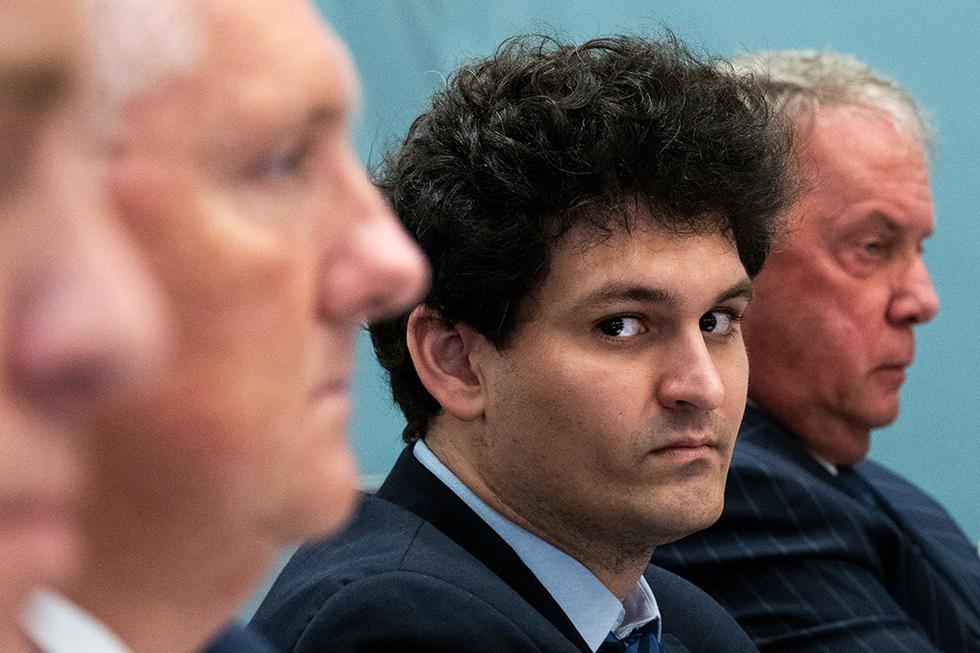
The legal representative for former FTX CEO Sam “SBF” Bankman-Fried has submitted a memorandum to the United States District Court for the Southern District of New York, urging the judge to impose a prison term ranging between five and a quarter and six and a half years.
SBF faces a potential maximum sentence of 110 years subsequent to a jury convicting him of multiple instances of fraud and money laundering in November 2023.
SBF stands accused of two counts of wire fraud, two counts of wire fraud conspiracy, one count of securities fraud, one count of commodities fraud conspiracy, and one count of money laundering conspiracy. Judge Lewis Kaplan, presiding over the SBF trial, is slated to declare the sentence on March 28.
While federal prosecutors are anticipated to present their recommendations for sentencing by March 15, the Pre-sentence Investigation Report (PSR) has advised a 100-year term for the erstwhile FTX CEO.
FTX legal representatives contend that the proposed 100-year sentence in the PSR is excessively harsh.
They argue that SBF, a first-time offender devoid of prior criminal records, engaged in the conduct alongside “at least four other culpable individuals,” in a situation where victims are expected to recover the entirety of their losses.
READ MORE: British Bitcoin ETFs Break Daily Trading Record Amidst BTC Surge
The filing deliberated on the absence of harm to customers, lenders, and investors, as the FTX bankruptcy estate is projected to reimburse customers entirely.
Additionally, the legal counsel highlighted numerous letters from friends and family advocating for a merciful sentence.
SBF has been incarcerated at the Metropolitan Detention Center in Brooklyn, New York, since the summer of 2023. Various accounts of his time in jail have emerged, from bartering mackerel for a haircut to facing extortion for protection.
Now, another anecdote from his imprisonment has surfaced, with The New York Times reporting that SBF is dispensing trading and investment guidance, and encouraging prison guards to invest in Solana’s crypto token, with which he has a lengthy association.
FTX was once among the foremost cryptocurrency exchanges, boasting a valuation of $32 billion in January 2022, before its collapse in November of the same year.
SBF was found guilty of mishandling $8 billion in customer funds and multiple other instances of fraud.

Bitcoin, the inaugural cryptocurrency, experienced a 3.79% surge in the 24-hour period preceding 8:20 am UTC, reaching a trading value of £58,504, marking its highest point in two years and three months.
According to data from CoinMarketCap, Bitcoin has seen an increase of over 13.5% on the weekly chart and more than 38% on the monthly chart.
This surge in Bitcoin’s price follows the recent announcement that Michael Saylor’s MicroStrategy had purchased an additional 3,000 BTC, totalling $155 million at an average price of $51,813 between Feb. 15 and 25.
With a cumulative acquisition of 193,000 BTC for $6.09 billion at an average price of $31,544, MicroStrategy stands as the largest Bitcoin holder among publicly traded companies.
Founder of the digital asset investment fund ARK36, Mikkel Morch, attributes MicroStrategy’s recent acquisition as the driving force behind this rally. Morch stated in a research note shared with Cointelegraph:
“This rally is not merely reflected in numbers on a chart; it signifies the confidence among institutional investors in the transformative potential of cryptocurrencies…
Additionally, the approval for Bitcoin-owning ETFs in the United States has infused a new wave of positivity, increasing trading volumes and bringing crypto-linked firms into focus amidst a broader market overshadowed by uncertainty.”
Over the past 24 hours, the total crypto market capitalization has risen by 2.85% to £2.19 trillion.
READ MORE: Grayscale’s Bitcoin ETF Records Record Low Outflows Amidst Rising Market Momentum
On Feb. 27, the industry reclaimed the £2-trillion market capitalization as Bitcoin surpassed £57,000, boosted by inflows into Bitcoin exchange-traded funds (ETFs) and an uplift in crypto investor sentiment.
Morch predicts the potential for a new all-time high for both Bitcoin and Ether (ETH) in the coming weeks, driven by the anticipation surrounding the upcoming Bitcoin halving and the potential approval of a United States spot Ether ETF. He elaborated:
“The excitement surrounding the approval of spot Ether ETFs further highlights the maturity of the cryptocurrency market, acknowledging Ethereum’s role not only as a digital currency but also as an infrastructure backbone for a future where finance and technology converge more seamlessly.”
The nine spot Bitcoin ETFs recorded a combined trading volume of over $2 billion for the second consecutive day on Feb. 28.
US-based cryptocurrency brokerage firm OANDA is poised to commence cryptocurrency trading services in the United Kingdom through its registered subsidiary, OANDA Crypto.
The crypto subsidiary was established last year following the firm’s acquisition of a majority stake in Financial Conduct Authority (FCA)-registered Coinpass.
The new crypto trading platform will provide trading services for over 63 cryptocurrency pairs, including Bitcoin and Ether, with intentions to incorporate additional tokens and features in the forthcoming years.
OANDA’s recent expansion in the UK follows more than a year after the company initiated crypto trading services in the US in collaboration with Paxos, a renowned crypto trading platform.
The company recently relocated its European operations from Malta to Warsaw in Poland, acquiring the Polish broker Dom Maklerski TMS Brokers SA, subsequently rebranding it to OANDA TMS.
The crypto brokerage firm has consistently targeted regions with stringent regulatory frameworks, initially focusing on the US and now extending to the United Kingdom.
Several prominent crypto companies withdrew their services from the UK since October 2023 due to the FCA’s new regulatory guidelines concerning crypto advertising.
Crypto firms like Bybit and Revolut temporarily suspended their UK operations last year, citing the new FCA promotion regulations.
READ MORE: Reddit and Google Forge AI Partnership to Boost Model Training
The new advertising regulations permit only FCA-registered virtual asset service providers to promote their activities in the country.
Additionally, these regulations mandate crypto firms to significantly modify their online platforms to better caution potential customers about investment risks.
The FCA identified “significant levels of non-compliance” among crypto firms breaching the crypto promotion rules that came into effect on October 8, 2023.
The regulator noted that between October 8 and December 31, 2023, it issued 450 consumer alerts against virtual asset companies unlawfully promoting crypto.
Conversely, OANDA’s head of digital assets, Lucian Lauerman, described the UK market as highly educated and dynamic.
He remarked that the market is aligning more with the traditional markets where the company has operated, indicating a slightly elevated regulatory standard.
Cointelegraph reached out to OANDA for comments but has not yet received a response.

The Ministry of Culture in Saudi Arabia has inaugurated a metaverse dedicated to exhibiting and safeguarding the cultural heritage of the nation, marking its founding day.
The Saudi government’s Cultural Universe metaverse initiative, which traces the extensive history of Saudi Arabia back to 1727, was launched on February 22.
Utilising Oracle’s Hyperledger Fabric 2.5 blockchain technology, the metaverse was crafted by droppGroup’s Generative Media Intelligence artificial intelligence (AI) system, known as droppPhygital.
The virtual realm adopts a first-person shooter approach to aid users in navigating the metaverse.
Users can freely traverse a shared path alongside others, exploring information displayed on either side of the route.
Proximity to virtual depictions of historical events triggers voice audio that elaborates on the event in depth.
However, this audio feature is currently limited to Arabic and does not offer English translations.
The Cultural Universe encompasses various sectors dedicated to music, art, history, cuisine, crafts, and other facets of Saudi heritage, along with mini video games.
This service is freely accessible via websites, mobile devices, virtual reality headsets, and other compatible digital platforms. The official announcement from the Saudi government stated:
READ MORE: Bitcoin Halving Threatens US Miner Profitability and Sparks Global Migration Talks
“This cross-platform compatibility embodies the Ministry of Culture’s commitment to inclusivity, enabling a diverse global audience to explore and engage with the rich history of Saudi culture.”
The Saudi Ministry of Culture, entrusted with conserving and promoting the nation’s cultural legacy while fostering contemporary artistic expression, perceives the metaverse as a “transformative moment” and regards the initiative as a cultural revolution.
According to Samuel Huber, CEO of LandVault, a metaverse company collaborating with various government entities in the Middle East, Saudi Arabia, alongside other Middle Eastern nations, has transcended the metaverse’s “era of hype” and is progressing towards leveraging the technology to bolster their economies.
In an interview with Cointelegraph, Huber elucidated that the metaverse entails constructing 3D experiences embedded within websites. He remarked:
“What we found is the biggest segment are the governments in the Middle East, especially the UAE [United Arab Emirates], Saudi and Qatar, which are trying to digitalise their infrastructure and create really interesting economies for their citizens.”
He further stated that, akin to blockchain and AI, the metaverse stands as “one of those pillars” that the Middle East is eyeing for economic advancement.
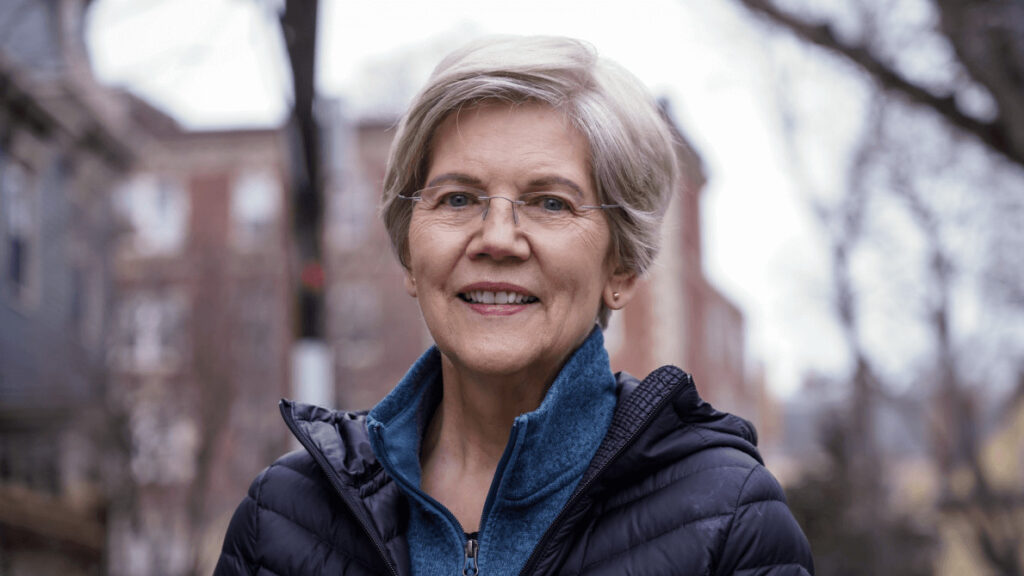
United States Senator Elizabeth Warren has emphasised the need for a fair regulatory framework for cryptocurrency and advocated for restrictions on Big Tech’s development of artificial intelligence (AI) models.
Warren restated her stance on cryptocurrency, expressing her desire “to collaborate with the industry” during a Bloomberg Television interview on February 27.
“In our financial system, pretty much everybody follows the same set of rules,” she remarked, further stating:
“My view is that it’s the same kind of activity, the same kind of risk, and should have the same kind of regulations […] I’m not looking for fancier regulations or anything tougher; I just want a level playing field.”
However, she lamented that collaboration efforts had been hindered, alleging that the industry claims the only way “they can survive” is if there’s “plenty of space” for criminal activity — citing ransomware scammers, drug and human traffickers, and terrorists as among those the crypto industry seeks concessions for.
Warren’s proposed legislation, the Digital Asset Anti-Money Laundering Act, seeks to categorise decentralized technologies like blockchain nodes, validators, noncustodial wallets, and software providers as financial institutions akin to banks and stock brokers.
READ MORE: British Bitcoin ETFs Break Daily Trading Record Amidst BTC Surge
Criticism of the bill from crypto industry figures, organisations, and associations has been vocal, with concerns raised about its suitability for the technology and its potential to drive innovation and investment abroad.
The U.S. Treasury Department has acknowledged that assertions regarding crypto’s use in terrorism were exaggerated.
During a conference in Washington D.C., Warren reiterated her desire to curb the development of AI large language models by major tech players such as Microsoft, Google, and Amazon.
“Each of the major cloud services — Google, Microsoft, and Amazon — should not be allowed to use their enormous size to dominate a whole new field, and that means blocking them from operating large language models,” she asserted.
Warren argued that Big Tech firms possess the resources and infrastructure to monopolise emerging AI sectors like chatbots, potentially stifling smaller competitors.
She portrayed this as a fresh battleground in her crusade against Big Tech’s dominance and concentration within the industry.