


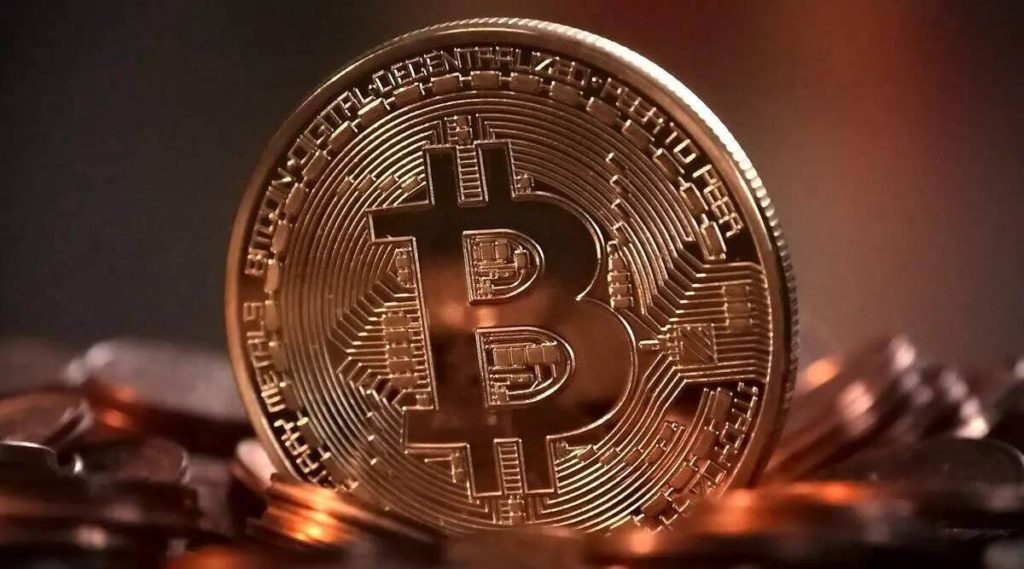
On January 27, Bitcoin remained steady at approximately $42,000, instilling confidence in traders due to recent price gains towards the end of the week.
Market data from Cointelegraph Markets Pro and TradingView revealed the usual calm weekend price movements, with $41,800 as a focal point.
The preceding day had witnessed a 5% increase in Bitcoin’s value, marking an improvement in market conditions compared to previous weeks, as reported by Cointelegraph.
Several recurring factors continued to capture the attention of investors, including the outflows from exchange-traded funds (ETFs), selling pressure stemming from defunct exchanges like FTX and Mt. Gox, and the impending block subsidy halving.
In a recent YouTube update, Michaël van de Poppe, the founder and CEO of MN Trading, expressed his belief that the current correction in Bitcoin’s price had come to an end.
He anticipated that, leading up to the halving in April, Bitcoin would experience a climb to its long-term range highs, with the possibility of encountering liquidity in the mid to low-$30,000 range before this ascent. He speculated that there might be one more rally to reach $48,000 before a final correction.
READ MORE: Crypto Analyst Urges SEC to Rethink Licensing Requirements for Local Exchanges
Van de Poppe also posited that over time, the negative impacts of FTX, Mt. Gox, and GBTC maneuvers would diminish in significance.
He suggested that Bitcoin was likely to consolidate in the range of $37,000 to $48,000 in the coming months, during which Altcoins might gain momentum.
Furthermore, he projected that the ETF’s real impact on Bitcoin’s price would materialize in the next few years, potentially driving it to a range of $300,000 to $500,000.
However, not everyone shared the same optimism, as some analysts believed that Bitcoin could still face a potential return to $30,000 or even lower in the months ahead.
For shorter timeframes, Rekt Capital, a well-known trader and analyst, emphasized the significance of the upcoming weekly close.
He noted that Bitcoin had displayed a favorable response during the week, gradually positioning itself to reclaim the lost range.
He suggested that a weekly close above the critical level of approximately $41,300 could potentially salvage the range.
The Stellar Development Foundation (SDF) has announced a delay in the smart contract upgrade for the Stellar blockchain, with the upgrade now scheduled for the end of January.
The delay is due to the discovery of a bug in Stellar Core v20.1.0 by the SDF’s development team.
In a blog post dated January 27, the SDF explained its decision to delay the Protocol 20 vote, originally set for January 30, in order to address the bug.
While the foundation characterized the bug as posing “little risk,” it acknowledged that it had the potential to impact various applications.
The SDF reassured the community that a fix is already in progress and is expected to be available within two weeks.
However, it emphasized that the decision to proceed with the network upgrade ultimately rests with the SDF.
Non-SDF validators on the Stellar network still have the option to vote in favor of the Protocol 20 upgrade on the original date.
The SDF stated, “If validators opt to postpone the upgrade, we will coordinate to determine a future vote date once a new version of Stellar Core that contains a bug fix is released.”
Regardless of the outcome, the SDF committed to resolving the bug and engaging in discussions with other validators through both public and private channels.
READ MORE: Tesla’s Bitcoin Sales Cost Company Over $300 Million in Potential Profits
For the Protocol 20 upgrade to pass, it requires a quorum of voting validators. As of December 2023, there are 43 validator nodes, according to Stellarbeat.io.
The bug in question relates to Soroban, a smart contract platform that was introduced on a Stellar testnet in October 2022.
When a “Soroban” transaction request is made, it results in a refund and is fee-bumped. However, under the current code, the refund is not sent to the fee-bump’s source account as intended.
Tyler van der Hoeven, one of Stellar’s core developers, mentioned in a January 26 post that Protocol 20 will be rolled out in phases, but did not specify the duration of the implementation process for Soroban smart contracts on Stellar.
Stellar, one of the oldest blockchain projects, primarily focuses on payments and asset tokenization.
The token powering the Stellar blockchain, known as Stellar, currently boasts a market capitalization of $3.2 billion.

The Hong Kong Securities and Futures Commission (SFC) has recently received its inaugural application for a spot Bitcoin (BTC) exchange-traded fund (ETF), marking a significant development in the cryptocurrency investment landscape.
Harvest Hong Kong, one of the largest fund management firms in China, officially submitted its spot Bitcoin ETF application to the Hong Kong SFC on January 26, as reported by Tencent News.
It appears that the regulatory body is actively striving to expedite the approval process for ETFs within the nation, with the aim of launching the first Hong Kong spot Bitcoin ETF shortly after the Chinese New Year, scheduled for February 10.
In a notable parallel to the United States’ Securities and Exchange Commission (SEC), the Hong Kong regulatory authority is contemplating the approval of multiple spot ETFs to ensure a fair and competitive environment.
Although Harvest Fund is the pioneer in filing for a spot BTC ETF, it is anticipated that other financial institutions in the region will follow suit.
Several regional financial entities have already expressed their interest in introducing a spot BTC ETF in the year 2024.
As previously reported by Cointelegraph on January 19, a minimum of ten financial institutions in Hong Kong are actively engaged in the process of launching a spot BTC ETF.
READ MORE: US Regulators Issue Cautionary Crypto Warning: Beware of Overhyped AI Trading Bots
Distinguished players in the financial sector, such as Venture Smart Financial Holdings, have already set their sights on the first quarter of 2024 as their target launch date for the spot ETF.
Furthermore, several crypto-oriented firms that have previously launched futures-based crypto ETFs in Hong Kong are also expected to join the queue for spot Bitcoin ETF applications.
Notably, Samsung Asset Management, which introduced the Samsung Bitcoin Futures ETF in 2023, has expressed its willingness to explore the possibility of launching a spot ETF, demonstrating the growing appetite for cryptocurrency investment products in the region.
Hong Kong has gained prominence as a leading cryptocurrency hub in Asia, owing to its regulator’s crypto-friendly stance in 2023.
The SFC introduced crypto-specific regulations in 2023, granting both institutional and retail investors the opportunity to engage in cryptocurrency-related activities.
Even before the SEC in the United States greenlit the first spot BTC ETF, the Hong Kong SFC had paved the way for cryptocurrency-based ETFs and expressed its readiness to accept applications for the authorization of various funds, including digital asset spot ETFs and existing crypto futures ETFs.
This move has solidified Hong Kong’s position as a key player in the global crypto investment arena.
The Hong Kong Securities and Futures Commission (SFC) has issued a warning to the public regarding the potential risks associated with investment products known as the “Floki Staking Program” and the “TokenFi Staking Program,” both of which are affiliated with the Floki ecosystem.
These products are marketed as offering staking services with promised annualized returns that range from 30% to over 100%.
However, it is crucial to note that neither of these products has received authorization for public sale in Hong Kong, as emphasized by the SFC.
Staking, a process that enables users to earn rewards by contributing to the security of blockchain networks, operates similarly to depositing money into a savings account.
Through the proof-of-stake mechanism, users validate transactions, thereby enhancing the security and decentralization of the blockchain.
The SFC has expressed concerns regarding the ability of the operators of these staking programs to deliver on the promised high annualized returns.
They have not provided a convincing strategy for achieving these ambitious targets.
In response to the SFC’s warning, the Floki team addressed the issue during one of their live spaces on X, formerly known as Twitter.
READ MORE:Adani Power Share Price
They mentioned that the SFC’s primary concern appears to be that their staking programs have been exceptionally successful.
While the team did not disclose specific details of their discussions with the SFC, they did clarify that they had collaborated with a marketing agency to promote the Floki Staking Program and TokenFi Staking Program, believing they had received approval for their initiatives.
However, they could not confirm whether the marketing campaigns would continue in Hong Kong and assured their investors that they would work diligently to meet all requirements with the local authorities.
On January 26, 2024, the SFC took action by including both the Floki Staking Program and the TokenFi Staking Program, along with relevant details, on the SFC’s Suspicious Investment Products Alert List.
The SFC has advised investors to exercise caution when engaging in staking deals involving digital assets, as these may fall under unauthorized collective investment schemes, which carry significant risks and offer limited protection under the Securities and Futures Ordinance, potentially resulting in complete loss of investments.
Furthermore, the SFC has reaffirmed its commitment to enforcing regulatory standards and protecting investors from fraudulent schemes.
It has made it clear that any violations of the law, including the promotion of unlicensed collective investment schemes, will be met with appropriate legal actions to maintain the integrity of Hong Kong’s financial market.
On January 29th, Google is poised to enact a pivotal policy update that will permit certain cryptocurrency products to be promoted across major search engines.
Among these products, Bitcoin exchange-traded funds (ETFs) are emerging as potential contenders that meet the stipulated criteria, igniting considerable excitement within the cryptocurrency industry.
This significant development traces its origins back to December 2023 when Cointelegraph first reported on Google’s impending revision of its cryptocurrency and related ads policy.
Effective January 29, this revision will enable advertisements from “advertisers offering Cryptocurrency Coin Trust targeting the United States.”
Coinciding with this policy shift is the recent approval of 11 spot Bitcoin ETFs by the United States Securities and Exchange Commission (SEC) on January 10.
Investors who choose to acquire shares in these spot Bitcoin ETFs effectively secure a stake in the ETF’s Bitcoin holdings.
Importantly, this aligns perfectly with Google’s updated requirements, which specify a focus on “financial products that allow investors to trade shares in trusts holding large pools of digital currency.”
Crypto analysts are buzzing with optimism regarding the potential influx of investments into Bitcoin ETFs, buoyed by Google’s formidable transaction processing capacity in managing search requests.
Recent data from DemandSage underscores the sheer magnitude of Google’s daily search volume, which stands at an astonishing 8.55 billion searches.
Nevertheless, it’s worth noting that Google’s policy update employs the somewhat nebulous term “cryptocurrency coin trusts” when referring to the permitted products, leaving some room for interpretation.
READ MORE: Crypto Analyst Urges SEC to Rethink Licensing Requirements for Local Exchanges
Meanwhile, a noteworthy development in the cryptocurrency landscape involves the Grayscale Bitcoin Trust (GBTC), one of the largest Bitcoin trusts.
Recently, it transitioned into a spot Bitcoin ETF, following approval from the SEC on January 10.
Previously, GBTC shares were exclusively available to accredited investors and were subject to a mandatory six-month holding period.
Accredited investors, under U.S. regulatory standards, are individuals with a net worth exceeding $1 million or an annual income surpassing $200,000 for the past two years.
These requirements are designed to shield less knowledgeable investors from potentially risky ventures that could lead to financial losses.
In contrast, spot Bitcoin ETFs are accessible to the general public in the United States and are regulated under the Securities Act of 1933.
This regulatory framework adds an extra layer of security, potentially making them a safer avenue for Google to explore in its advertising efforts.
The anticipation surrounding Google’s policy update has been building since August 2021, when prominent cryptocurrency trader Michael van de Poppe expressed optimism about the potential influence of Google ads on Bitcoin-related products.
This optimism has been further fueled by the SEC’s exploration and subsequent approval of Bitcoin Futures ETFs in October 2021, signaling a growing acceptance of cryptocurrency-related investment products in the mainstream financial landscape.
In an announcement this Monday, QuickNode, a highly scalable blockchain platform, welcomed Immutable zkEVM, a Layer 2 blockchain specifically designed for gaming. Immutable zkEVM aims to provide gaming developers on QuickNode with seamless building tools, combining the compatibility of Ethereum Virtual Machine (EVM) with high scalability and Ethereum-grade security for web3 games.
Following the launch of Immutable zkEVM on QuickNode, gaming developers will have access to a high-performance, scalable blockchain, ensuring a better gaming experience for developers and players. Notwithstanding, QuickNode will offer gaming developers a more robust and secure platform to build Web 3 games. The goal is to revolutionize blockchain gaming, bringing seamless development of Web 3 games to the masses.
Dmitry Shklovsky, CEO of QuickNode, welcomed Immutable zkEVM to its platform terming the move as a “significant milestone in advancing blockchain technology in the gaming sector”. Adding to EVM compatibility and scalability, the move to QuickNode will also offer gaming developers and DApps Ethereum-grade security, in a first-of-its-kind technology.
“This is a huge leap forward in our ongoing effort to democratize access to high-quality blockchain infrastructure, and we can’t wait to see the incredible gaming experiences our community will create with this powerful new tool,” Dmitry said speaking on the launch of Immutable zkEVM on QuickNode.
Immutable zkEVM: A blockchain built for gamers
Immutable zkEVM is a blockchain built for Web 3 gaming development, combining optimized security, scalability and speed to help developers build out user-centric gaming experiences. The first-of-its-kind technology aims to offer specific Web 3 gaming development tools, focusing on empowering game studios with vital resources like liquidity, community, and powerful network effects.
The launch of Immutable zkEVM on QuickNode opens up the platform to a wide range of potential EVM capabilities, and Ethereum’s security. It will allow gaming developers to build out Web 3 games for global audiences while reducing transaction costs. Additionally, QuickNode is building a solution to remove gas fees for players, ensuring a seamless and affordable gaming experience for all players.
According to a team representative from Immutable zkEVM, the decision to build their platform on QuickNode is due to the seamless developer tools that the blockchain offers. The platform allows developers to solely focus on building their DApps instead of focusing on other blockchain-related developments such as running nodes. This will save Web 3 game developers time and resources, allowing faster deployment of games and minimising obstacles in creating blockchain games.
Finally, Immutable zkEVM offers developers an opportunity to build futuristic games, unlock new revenue streams and safeguard their communities. The platform offers a testnet development area, allowing developers to innovate and soft-launch their projects before a full mainnet launch.
The United States Commodity Futures Trading Commission (CFTC) is actively seeking insights into how regulated entities can harness artificial intelligence (AI) within their compliance endeavors and other domains.
To facilitate this pursuit, the agency has issued a request for comments, aiming to enhance its comprehension of AI’s present and potential applications and the associated risks in derivatives markets.
The feedback collected from this initiative could wield significant influence over forthcoming CFTC guidelines, interpretations, policy statements, or regulations.
The CFTC’s inquiry encompasses a wide spectrum of AI applications, spanning trading, risk management, compliance, cybersecurity, recordkeeping, data processing, analytics, and customer interactions.
In the realm of compliance, the agency has particularly spotlighted AI’s potential role in enhancing surveillance, Anti-Money Laundering (AML) efforts, and regulatory reporting functions.
Rostin Behnam, Chair of the CFTC, expressed that this request for comments (RFC) will fortify the CFTC’s strategic identification of top priorities and projects with AI applications.
It is intended to optimize their data-driven approach to shaping policies, bolstering surveillance, and enforcing regulations.
The CFTC has aligned this RFC with the directives set forth by the Biden Administration, which emphasize the safe, secure, and trustworthy development of artificial intelligence. Interested parties have until April 24, 2024, to submit their comments.
Commissioner Kristin Johnson underscored the ongoing nature of the conversation within the agency, involving multiple departments such as Market Participant, Clearing and Risk, Market Oversight, and Data divisions.
She emphasized the pivotal importance of the CFTC’s comprehension of how market participants employ AI within the derivatives markets.
READ MORE: Polygon’s Meteoric Rise: Nearly Matches Ethereum’s User Base in 2023
Importantly, the RFC solicits opinions on the appropriate definition of AI, including whether it should be broadly or narrowly defined and where the demarcation should be drawn between AI and other existing automated trading strategies.
In September 2023, CFTC Commissioner Christy Goldsmith Romero advocated for updating protective measures with technological advancements to safeguard American investors.
She underscored the potential adverse consequences if these measures were not adopted.
As part of this commitment to enhancing investor protections, Romero appointed experts in fintech, responsible artificial intelligence, cryptocurrency, blockchain, and cybersecurity to the CFTC’s Technology Advisory Committee.
Simultaneously, the CFTC has issued a warning to investors against placing excessive reliance on artificial intelligence trading bots in the pursuit of substantial cryptocurrency profits.
The agency has identified those who promise extraordinary returns through the use of bots, trade signal algorithms, crypto-asset arbitrage algorithms, and other AI-assisted technologies as potential fraudsters, cautioning investors to exercise caution in this regard.
Finland’s National Bureau of Investigation (NBI) recently made a breakthrough in their investigation into Julius Aleksanteri Kivimäki’s criminal trial. Kivimäki stands accused of hacking a private mental health firm’s database and demanding ransom payments in cryptocurrencies, a case that has garnered significant attention.
Local reports indicate that prosecutors unveiled fresh evidence on January 22nd, revealing a crypto trail leading directly to Kivimäki’s bank account.
The hacker’s alleged extortion scheme unfolded in October 2022 when he demanded 40 Bitcoins in exchange for withholding the release of sensitive records pertaining to over 33,000 patients from the psychotherapy service provider Vastaamo.
When the ransom was not paid, Kivimäki purportedly escalated the situation by targeting individual patients.
Finnish law enforcement authorities assert that the hacker received payments in Bitcoin, subsequently funneling the funds through an exchange that lacked compliance with Know Your Customer (KYC) guidelines.
From there, Kivimäki reportedly converted the Bitcoin into Monero and transferred the proceeds to a dedicated Monero wallet.
Following these initial transactions, reports suggest that the funds were later sent to the cryptocurrency exchange Binance, where they were once again exchanged for Bitcoin and subsequently dispersed across different wallets.
It is crucial to note that the local authorities have maintained a veil of confidentiality regarding further details of their on-chain analysis.
READ MORE: Binance and SEC Legal Battle Intensifies Over Evidence and Witness Disputes
Monero, a cryptocurrency known for its robust privacy features, played a central role in this narrative.
The official Monero webpage touts its untraceability, thanks to technologies such as Ring Confidential Transactions (RingCT), ring signatures, and stealth addresses.
RingCT mingles users’ transactions, obfuscating the true source of funds, while ring signatures obscure the sender’s identity by presenting them as part of a group of potential senders.
Additionally, Monero’s stealth addresses enable the creation of one-time addresses for each transaction, making it exceedingly challenging to link multiple transactions to the same recipient.
This incident is not the first time that privacy-focused cryptocurrencies like Monero have come under scrutiny from regulators.
French authorities, led by Eric Woerth, the head of the Finance Committee in the French National Assembly, once proposed a ban on anonymous cryptocurrencies like Monero, citing concerns about their ability to provide complete anonymity and bypass identification procedures.
In a similar vein, United States authorities took a keen interest in Monero in 2020.
The Internal Revenue Service even offered a substantial bounty of up to $625,000 for anyone who could break the purportedly untraceable privacy coins.
Previous research also suggested that blockchain analysis could potentially trace back transactions involving privacy coins, including those that occurred before 2017.
Decentralized finance (DeFi) aims to recreate traditional financial services without intermediaries using blockchain technology. However, issues like slow transaction speeds and complex user interfaces limit mainstream adoption. This is the problem Hydra Chain strives to solve – an advanced layer 1 network designed for real-world usability, security, and simplicity.
At Hydra’s foundation is its native HYDRA token, enabling network governance and passive income via staking rewards. Now, Hydra propels its DeFi capabilities forward with LYDRA, a liquid derivative allowing HYDRA stakers to tap additional utility.
The newly launched LYDRA/HYDRA pool on Hydra’s decentralized exchange (DEX) signals meaningful progress unlocking dual-token functionality. By facilitating trades between the assets, the pool supports price discovery for embryonic LYDRA while letting HYDRA holders access another yield channel. Apart from incentives for liquidity miners, the pairing paves the way for innovations like leveraged staking and cross-chain arbitrage.
With this expansion to its DeFi ecosystem, LYDRA and HYDRA hold immense opportunity to drive user adoption while furthering real-economy blockchain integration. The joint pool accelerates this vision by broadening the potential of both tokens.
Understanding Hydra Chain and LYDRA
Hydra Chain uniquely combines advantages from Bitcoin, Ethereum, Qtum and BlackCoin. From Bitcoin – secure architecture and UTXO model; Ethereum – Virtual Machine and smart contracts; Qtum – decentralized governance; BlackCoin – Proof of Stake consensus v3.
This robust foundation empowers industry-top speeds, low fees, and extensive functionality to power dApps. HYDRA also enables staking and governance to enrich its network. These capabilities have attracted projects like LockTrip, GoMeat and more.
Now, Hydra elevates its tech stack further with LYDRA – “Liquid HYDRA”. LYDRA is a liquidity derivative allowing HYDRA stakers to access supplemental utility. By locking HYDRA, users can mint LYDRA 1:1 to maintain staking rewards while freely utilizing the LYDRA. LYDRA can then be burned to reclaim the staked HYDRA.
This unlocks two key advantages: First, HYDRA stakers gain flexibility to engage with DeFi without losing staking revenue. Second, by capitalizing on asset price differences, innovative tactics like leveraged staking become possible to boost yields. As the pioneering on-chain pool for the LYDRA derivative, the LYDRA/HYDRA DEX pool sets the stage for users to harness these benefits completely.
Hydra’s leading-edge innovations persist in pushing the frontiers of usability and adoption. LYDRA expands on this legacy by augmenting the potential of its thriving ecosystem.
The LYDRA/HYDRA Pool on Hydra DEX
The pool facilitates swapping between LYDRA and HYDRA similarly to DEX leaders like Uniswap or PancakeSwap. Liquidity providers furnish equivalent values of both tokens into the pool to mint LP tokens. Asset ratios then fluctuate dynamically based on market activity, with prices derived from the pooled reserves.
However unique advantages emerge from the direct link between LYDRA and HYDRA. For example, the pool produces a transparent on-chain benchmark price for LYDRA to progress beyond over-the-counter constraints.
More broadly, the launch unlocks new utility for both tokens and users. With direct LYDRA liquidity, HYDRA stakers can optimize yields through leveraged staking tactics without relying on external counterparties. Advanced traders can conduct multi-chain arbitrage across Ethereum and Hydra based on price discrepancies. The interchange between tokens also cements Hydra’s internal ecosystem.
For DeFi at large, the pool exemplifies a model to generate liquidity derivatives for improving capital efficiency – by fractionally freeing staked assets without decreasing security, new pool models can redistribute unused value. The mechanics introduced by Hydra strike a balance between previously incompatible incentives across decentralized stakeholders.
While the LYDRA/HYDRA pool itself lacks a reward scheme, Hydra incentivizes other pairs via liquidity mining programs including:
Stablecoin Pools:
2,000 HYDRA/month for USDC/USDT (0.05% fee)
2,000 HYDRA/month for USDC/DAI (0.05% fee)
Lydra Pools:
5,000 HYDRA/month for USDC/LYDRA (0.30% fee)
5,000 HYDRA/month for ETH/LYDRA (0.30% fee)
5,000 HYDRA/month for WBTC/LYDRA (0.30% fee)
High Correlation Pool:
3,000 HYDRA/month for WBTC/ETH (0.30% fee)
These incentives deepen liquidity and participation across the pairs. Interested users can refer to Hydra’s Liquidity Mining Guide for further details.
Future Outlook and Challenges
With the success of the LYDRA/HYDRA pool as a case study, Hydra races to integrate with ecosystem partners and layer 2 solutions, allowing its derivative model to enhance capital efficiency broadly. Other exchanges and DeFi platforms could emulate this template.
However, users should remain vigilant of external dangers like smart contract risks and financial hazards from high volatility. While asset correlation limits impermanent loss, it does not remove it entirely. Users must balance yield potential against possible downsides. Regulatory jurisdiction also persists as an open question for tokenized derivatives.
Nonetheless, the introduction cements the integral role LYDRA and Hydra will play advancing decentralized finance. By charting new ways to generate yields while retaining principal soundness, Hydra provides a window into the future framework of asset valuation and distribution in digital economies. If adoption mirrors innovation, the next leaps in DeFi may germinate from Hydra’s ouroboros of collateral and liquidity.
Getting Involved
Interested users should join Hydra’s Telegram and Twitter to interact with the passionate community and team directly. Telegram facilitates technical support, announcements, governance and collaborative thinking. Twitter broadcasts the latest network developments. Don’t miss official news, articles and expert analysis by subscribing to the Hydra News Channel. Also explore the feature-rich Hydra DEX and ecosystem partners by bookmarking the Hydra Website. Refer to the platform’s continuously updated documentation and guides to start staking, providing liquidity and more.

Investors seeking substantial cryptocurrency gains have received a stern warning against placing undue trust in artificial intelligence (AI) trading bots.
Despite the rising popularity of these automated tools, the United States Commodity Futures Trading Commission (CFTC) has emphasized that AI cannot accurately predict the future.
In a recent press release, the CFTC cautioned crypto investors looking for lucrative returns in 2024 to exercise caution and avoid falling prey to exaggerated promises made by AI trading bots.
The agency specifically highlighted the alluring offers made by bots, trade signal algorithms, crypto-asset arbitrage algorithms, and other AI-driven technologies.
Melanie Devoe, director of the CFTC’s office of customer education and outreach, pointed out that the prevalence of social media platforms and influencers has made it easier for fraudsters to disseminate false information.
Devoe stressed the importance of remaining skeptical of hype surrounding AI in crypto trading, as it has become a conduit for malicious actors to exploit inexperienced investors.
Furthermore, the CFTC advised investors to conduct thorough background checks on companies or traders before entrusting their capital to trading bots or signal providers.
READ MORE: Polygon’s Meteoric Rise: Nearly Matches Ethereum’s User Base in 2023
The year 2023 witnessed a significant focus on AI-powered crypto trading bots within the industry.
In April, state regulators from Montana, Texas, and Alabama took legal action against YieldTrust.ai, an AI trading bot, alleging it was running a Ponzi scheme by making unsubstantiated claims of daily returns of up to 2.2%.
Additionally, blockchain analysis firm Arkham Intelligence highlighted a case in June where a crypto trading bot borrowed $200 million through a flash loan, only to secure a paltry profit of $3.24.
However, some major crypto exchanges, including Bitget, have been exploring the use of AI bots on their platforms.
Bitget CEO Gracy Chen explained that their Commodities Trading Advisor AI bot continually receives and analyzes historical strategy data, enabling self-learning and simplifying strategy creation for users.
As 2024 began, the question of whether Bitcoin could reach $100,000 this year arose. AI was mentioned as a potential catalyst, influencing market analysis, trading strategies, and broader technological advancements in blockchain.
While AI holds promise in the crypto world, investors are urged to exercise caution and not rely solely on AI trading bots for their financial decisions.