


According to analysts at Cantor Fitzgerald, eleven of the largest publicly traded Bitcoin miners may face profitability challenges if the price of Bitcoin (BTC) does not experience a significant increase following the upcoming halving event.
CleanSpark’s executive chairman and co-founder, Matthew Shultz, shared this research on January 25th, highlighting concerns for miners like Marathon Digital, Riot Platforms, and Core Scientific, as their mining operations may no longer cover their costs.
While Bitcoin miner revenues are closely tied to BTC’s price, Luxor’s executive emphasized that miners often employ strategies to mitigate potential losses from price volatility.
Nevertheless, Cantor Fitzgerald’s assessment suggests that, at the current BTC price, UK-based Argo Blockchain and Florida-based Hut 8 could be the most vulnerable post-halving, with an “all in” cost-per-coin rate of $62,276 and $60,360, respectively.
Hut 8 reported in its January 5th update that it held 9,195 BTC, worth $377 million at current prices.
Cantor analysts only expected Singapore-based Bitdeer and US mining firm CleanSpark to maintain profitability following the halving, assuming an average BTC price of $40,000 and no drastic changes in hash rate.
The “all in per coin” metric takes into account all costs incurred in producing a single Bitcoin, including electricity and hosting fees.
READ MORE: Surge in Ethereum Execution Client Diversity Raises Decentralization Hopes
The Bitcoin halving, scheduled for April, involves cutting mining rewards in half, potentially impacting miners with high operational costs.
If BTC’s price does not cover these costs, their situation could worsen.
However, many market experts believe that the halving could drive a long-term increase in BTC’s price, which would alleviate this concern.
Dan Rosen, associate director of derivatives at Bitcoin miner Luxor, explained that miners often employ various strategies to hedge against BTC price fluctuations, such as purchasing derivatives products like hash rate futures contracts and BTC-related options.
Cointelegraph attempted to contact several Bitcoin miners mentioned in the report for comment, but no immediate responses were received.
The fate of these miners will depend on BTC’s post-halving price performance and their ability to manage operational costs in an evolving market.

The United States government’s decision to sell approximately $118 million worth of seized Silk Road Bitcoin has sparked discussions within the cryptocurrency market.
The announcement of this planned sale came through a forfeiture notice on January 10, which gained attention on social media on January 24.
This move follows the sentencing of Silk Road Xanax dealer Ryan Farace and his father Joseph Farace for money laundering conspiracy on January 8.
While some members of the crypto community expressed concerns that this auction might result in a significant Bitcoin “dump,” many market experts disagree.
Steven Lubka, the managing director at the Bitcoin exchange Swan Bitcoin, downplayed the impact of the sale, describing it as “peanuts” compared to the recent outflows from the Grayscale Bitcoin Trust (GBTC).
The GBTC has sold a substantial 106,575 BTC worth $4.2 billion since converting to a spot Bitcoin exchange-traded fund on January 11, with an additional 10,871 BTC outflow on January 24.
Furthermore, the planned sale by the U.S. government represents only 1.5% of its total holdings of approximately 194,188 BTC, equivalent to $7.7 billion, acquired from three separate seizures in criminal cases.
READ MORE: The 4 Early Projects to Watch Before Going Mainstream in 2024
This figure still accounts for less than 1% of Bitcoin’s overall circulating supply.
The three sources of Bitcoin held by the U.S. government include 94,643 BTC seized in January 2022 from the 2016 Bitfinex hack, 69,369 BTC seized in November 2020 from the Silk Road, and 51,326 BTC seized from Silk Road hacker James Zhong.
Approximately 41,000 BTC is expected to be gradually offloaded through four sales scheduled throughout 2023.
Notably, the U.S. government has a history of auctioning off seized Bitcoin assets.
In 2014, venture capitalist Tim Draper purchased nearly 30,000 BTC through such an auction.
More recently, the government has opted to sell seized cryptocurrencies on exchanges instead of holding auctions, with the last known sale involving 9,118 BTC in March 2023.
Overall, the upcoming sale of seized Silk Road Bitcoin by the U.S. government is expected to have a limited impact on the cryptocurrency market, given its relatively small scale compared to recent market activities and the government’s total holdings.
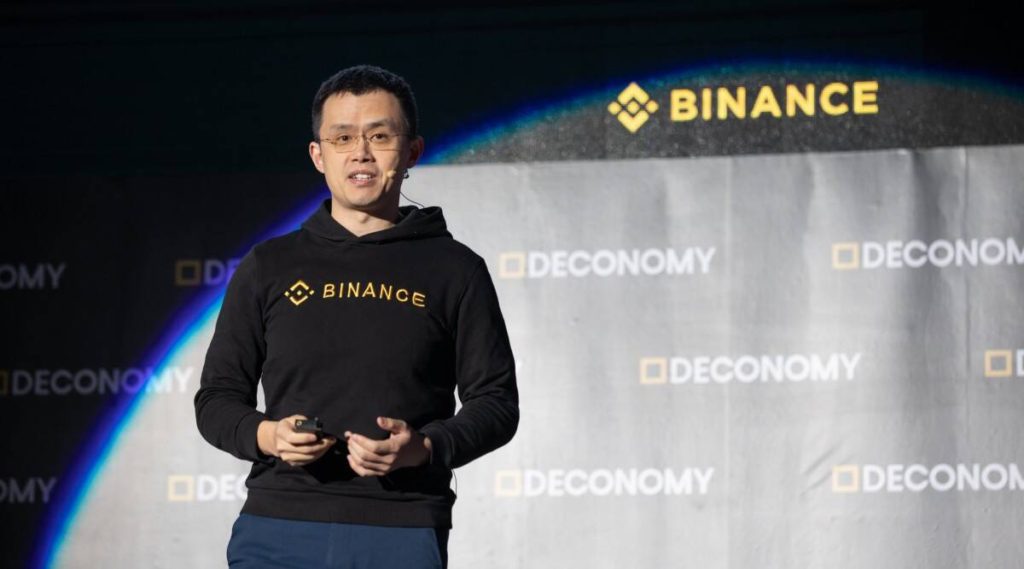
Former Binance CEO Changpeng Zhao, who is facing money laundering charges, attempted to use his multibillion-dollar stake in Binance.US as collateral to secure temporary travel permission back to the United Arab Emirates (UAE).
This information comes from a recently unsealed court filing dated January 24, which revealed a previously sealed letter from Zhao’s lawyers to Judge Richard Jones, dated December 22.
In the letter, it was disclosed that Changpeng Zhao had sought permission to travel to the UAE for up to four weeks in early January to visit a friend or family member undergoing surgery and recuperating in a hospital.
The value of his equity in Binance.US, estimated at $4.5 billion based on a funding round from two years ago, was offered as collateral.
However, federal prosecutors did not approve this request, and Judge Richard Jones subsequently denied it during a closed-door hearing on December 29.
Changpeng Zhao had previously been prohibited from traveling to the UAE as part of his bond conditions. Judge Jones argued that his substantial wealth and overseas assets made him a flight risk if he returned to the UAE.
READ MORE: Grayscale’s GBTC Exodus Sends Bitcoin Below $39,000, Adding to Cryptocurrency Market Uncertainty
As a result, Zhao is required to remain in the United States until his sentencing on February 23.
His current whereabouts within the country are unknown, and his activity on X, a social media platform, has been minimal since December 6, 2023.
Changpeng Zhao’s legal troubles began when he resigned as CEO of Binance in November 2022, as part of a $4.3 billion settlement with U.S. regulators.
In his admission, he acknowledged running an unlicensed money-transmitting business and violating the Bank Secrecy Act.
Now, Zhao faces a potential prison sentence of up to 18 months and has agreed not to appeal any sentence within that range.
Some details in the recently unsealed letter remain redacted, including the identity of the person undergoing surgery, the nature of the surgery, and other sensitive and personal information.

Blackberry, the renowned tech giant once dominating the mobile phone industry, has sounded the alarm regarding a financially motivated attacker with their research and intelligence division.
This malevolent entity is setting its sights on numerous high-net-worth Mexican cryptocurrency exchanges and banks.
In a detailed report, Blackberry unveiled the attack strategy, which revolves around an attempt to pilfer sensitive user information from banks and cryptocurrency trading platforms.
The weapon of choice for the attacker is an open-source remote access tool known as AllaKore RAT.
This threat operates by infiltrating company-owned computers and databases, often camouflaging itself with official naming conventions and links, thereby slipping under the radar of unsuspecting employees.
The report goes on to highlight the insidious nature of the AllaKore RAT payload, which has been substantially modified to enable the perpetrators to transmit stolen banking credentials and unique authentication data to a command-and-control (C2) server.
This stolen information is then exploited for financial fraud.
Notably, the attackers appear to have a predilection for large companies with gross revenues exceeding $100 million, which typically report directly to the Mexican Social Security Institute (IMSS), according to Blackberry’s findings.
READ MORE: JPMorgan CEO Jamie Dimon’s Criticisms of Bitcoin Spark Speculation Within Crypto Community
The majority of these attacks can be traced back to Mexican Starlink IP addresses. Additionally, the use of Spanish-language instructions within the modified RAT payload led Blackberry to conclude that the threat actors are likely based in Latin America.
The latest versions of the AllaKore RAT exhibit a more intricate installation process. They are delivered to their targets within a Microsoft software installer file, with execution contingent on confirming the victim’s location as Mexico.
However, the threat is not confined solely to major banks and crypto trading services.
Large Mexican corporations from various sectors, including retail, agriculture, public administration, manufacturing, transportation, commercial services, and capital goods, are also in the crosshairs of this malicious campaign.
Meanwhile, the cybersecurity landscape continues to witness a surge in basic phishing attacks, with an alarming success rate in stealing funds.
Just recently, on January 20th, the contact details of nearly 66,000 users of the hardware wallet manufacturer Trezor were exposed in a security breach.
Trezor, while reassuring its users that their funds remained secure, cautioned against sharing sensitive information unless properly verified, as attackers had begun sending direct email requests for sensitive recovery seed data to at least 41 users.
With numerous data breaches plaguing the cryptocurrency ecosystem, investors are urged to exercise extreme caution and verify the authenticity of requests for sensitive information.
Trezor, a renowned hardware wallet provider, has confirmed that a recent surge in malicious emails sent to its users over the past 24 hours was a result of unauthorized use of its third-party email provider.
On January 24th, Trezor detected an unauthorized email impersonating the company, originating from a third-party email service they employ.
The fraudulent email, appearing to be from “[email protected],” directed users to upgrade their “network” or risk losing their funds.
It included a malicious link leading to a webpage where users were prompted to enter their seed phrase.
While there is no official confirmation of users losing funds to this phishing attempt, there have been no reports indicating any Trezor users falling victim to the scam.
Trezor took swift action to deactivate the malicious link and assured users that their funds remain secure as long as they refrain from entering their recovery seed.
For those who did enter their recovery seed, Trezor strongly recommends transferring their assets to a new wallet immediately.
Trezor’s investigation has revealed that an unauthorized individual gained access to their database of email addresses for newsletter subscribers and used a third-party email service to distribute the malicious emails.
READ MORE: Avalanche Foundation Sets Criteria for Memecoins Seeking Share of $100 Million Fund
As long as users have not disclosed their 12 or 24-word recovery seed through any online form, their assets remain safe.
Interestingly, a few days before this incident, MailerLite, an email marketing software firm, reported a cybersecurity breach on January 23rd, resulting in a series of phishing emails using branded domains, including those associated with Cointelegraph, WalletConnect, and Token Terminal.
These attacks collectively led to losses exceeding $3.3 million through phishing attacks. It remains unclear whether Trezor utilizes the same email domain provider as those affected.
Some suspect that this attack may be linked to a recent security breach involving Trezor’s support portal, where the contact information of nearly 66,000 users was exposed on January 17th.
Trezor promptly took measures to restrict unauthorized access and began notifying affected users.
Digital asset lawyer Joe Carlasare revealed his personal encounter with the phishing email, describing it as a “sophisticated scam.”
This incident is not the first time Trezor has faced phishing threats, as they previously cautioned users in February 2023 about a similar attack aimed at stealing investor funds by tricking them into entering their recovery phrase on a fake Trezor website.
Additionally, in May, cybersecurity firm Kaspersky reported a fake hardware wallet impersonating Trezor that attempted to steal funds by replacing the microcontroller, allowing the attackers to gain control of users’ private keys.
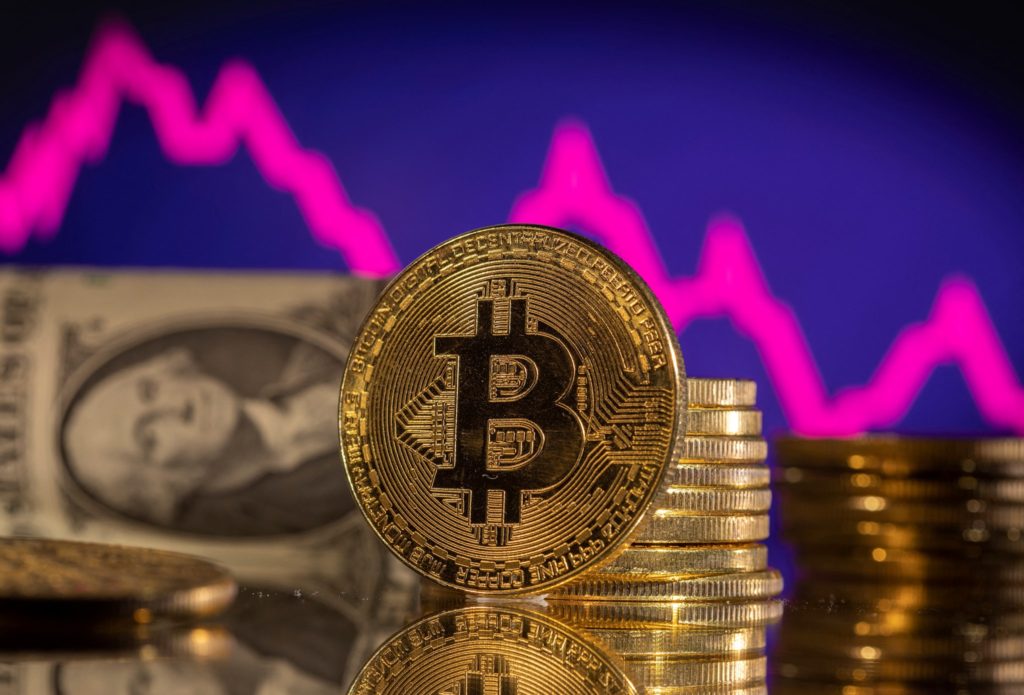
In his latest blog post titled “Yellen or Talkin’?” dated January 24, Arthur Hayes, the former CEO of BitMEX, has delivered a bearish short-term price prediction for Bitcoin (BTC), suggesting it may encounter a significant drop to $35,000 or even lower.
Despite Bitcoin’s remarkable 75% increase over the past year, Hayes identifies a confluence of factors that could contribute to this impending downturn.
One of the primary concerns outlined by Hayes is the ongoing Red Sea conflict between the United States and the Houthis, which is having ramifications on global shipping.
He notes that this conflict could lead to increased inflation as risk assets, including cryptocurrencies, anticipate a potential shift by the Federal Reserve in March, involving reduced interest rates to attract liquidity back into the market.
Hayes highlights that elevated shipping costs, driven by weather and geopolitical issues, may cause a surge in inflation during the third and fourth quarters of the year.
To combat this, he speculates that Fed Chair Jerome Powell will engage in verbal intervention, signaling potential rate cuts without actually implementing them.
Hayes emphasizes that Bitcoin is uniquely positioned to benefit from this scenario, as it thrives in times of economic uncertainty.
Another factor Hayes touches upon is the state of the U.S. regional banking sector.
READ MORE: Hugewin Review 2024: Is It Legit and Safe? A Breakthrough in Crypto Casino Gaming
He mentions that since the financial crisis in March 2023, the U.S. government has provided support through the Bank Term Funding Program (BTFP), which is set to expire soon.
Despite lingering financial problems within the banking sector, Hayes believes that the fate of liquidity and other related issues rests on Treasury Secretary Janet Yellen’s future decisions.
Hayes suggests that a few banks may need to fail if the BTFP is not renewed to pave the way for the cuts, QT taper, and potential resumption of Quantitative Easing (QE) that the market expects in March.
He asserts that the only thing that could surpass fighting inflation in priority is a financial crisis.
Regarding Bitcoin’s price, Hayes predicts that it could experience a substantial correction, potentially reaching $33,600, or a 30% decline from its peak after ETF approval at $48,000.
He believes that Bitcoin might find support within the range of $30,000 to $35,000.
As a result, Hayes has taken a position by purchasing put options with a strike price of $35,000 expiring on March 29, 2024.
This sub-$35,000 level, according to Hayes, presents an opportunity for investors to capitalize on the impending market dip.
On January 23, BTC/USD briefly touched $38,500 on Bitstamp, its lowest point since early December, before rebounding approximately $1,700 higher, as indicated by data from Cointelegraph Markets Pro and TradingView.
Grayscale’s Bitcoin Trust (GBTC) has displayed a ray of optimism as its outflows have recently slowed for the second consecutive day, hinting that the massive Bitcoin selloff might be nearing its conclusion.
Data from BitMEX Research indicates that on January 24th, GBTC outflows amounted to $429 million, marking the smallest daily outflow since the inception of Grayscale’s spot Bitcoin ETF on January 11th.
This also signifies a 33% reduction compared to the outflows observed at the beginning of the week on January 22nd.
Eric Balchunas, an ETF analyst at Bloomberg, observed on January 25th that GBTC outflows appear to be on a downward trend, though he acknowledged that the figure is still considerable.
He pointed out that there remain several uncertainties regarding when the “mass exodus” from GBTC will come to an end.
Over the course of nine trading days, GBTC has seen a significant outflow of 106,092 BTC, equivalent to around $4.4 billion.
However, it is crucial to note that a slowdown in daily outflows does not necessarily indicate that GBTC’s “bleeding” has ceased or significantly slowed down.
Balchunas had previously estimated that GBTC would need to lose approximately 25% of its outstanding shares before the outflows come to a halt.
READ MORE: Avalanche Foundation Sets Criteria for Memecoins Seeking Share of $100 Million Fund
Adding to the complexity, Arkham Intelligence, a blockchain tracking firm, has cautioned against misinterpreting the GBTC transaction data displayed on its platform.
In a January 24th post, Arkham clarified that the outflow data for GBTC exhibited on its platform is divided between Coinbase Prime and new GBTC custody addresses.
Consequently, not all of the BTC being transferred from Grayscale’s Bitcoin Trust is necessarily being redeemed. This is due to the inherent structure of Bitcoin transactions, which often split outputs among multiple addresses.
Arkham further explained that “GBTC custody wallets frequently send to multiple addresses,” meaning that a portion of the BTC sent in a transaction might be directed to an address different from the main recipient indicated in the transaction panel.
In summary, while the recent slowdown in GBTC outflows provides a glimmer of hope for investors, it’s essential to approach the data with caution and consider the complexities of Bitcoin transactions, as highlighted by Arkham Intelligence.
The future trajectory of GBTC and its outflows remains uncertain, and investors will likely continue to monitor the situation closely.
Polygon Labs, a developer of Ethereum-scaling solutions, has unveiled a groundbreaking protocol called AggLayer that seeks to revolutionize the blockchain ecosystem.
In a blog post released on January 24th, the company announced its plan to launch AggLayer in February, with the primary objective of bridging the divide within the blockchain landscape, ultimately creating a seamless network that resembles a single chain.
AggLayer’s core innovation lies in its ability to aggregate zero-knowledge proofs (ZK-proofs) from various blockchains.
This novel approach enables developers to seamlessly connect both layer 1 and layer 2 blockchains, effectively merging them into a unified network.
For everyday users, this promises a transformative experience akin to the simplicity of using the internet.
No longer will users be burdened with the complexities and inconveniences of frequent bridging between different chains.
Polygon Labs illustrated the potential of AggLayer through a practical use case.
They described a scenario where a user on Ethereum’s layer-2 chain X1 holds the cryptocurrency Dai and wishes to purchase a nonfungible token on Polygon’s zero-knowledge Ethereum Virtual Machine.
From the end-user perspective, this process would feel like interacting with a single chain, eliminating the need to comprehend the intricacies of accessing multiple chains.
READ MORE: Avalanche Foundation Sets Criteria for Memecoins Seeking Share of $100 Million Fund
The driving force behind Polygon Labs’ development of AggLayer is their conviction that blockchain networks should evolve into a unified, highly scalable ecosystem akin to the internet.
Currently, these networks are characterized by fragmentation and a lack of interoperability, resulting in subpar user experiences and scalability limitations.
AggLayer, as Polygon Labs contends, will address these issues and bring about substantial improvements over the existing monolithic and modular blockchain architectures.
Monolithic blockchains, typified by Bitcoin, consolidate critical functions like transactions, settlements, and data availability within a single layer.
On the other hand, modular chains, exemplified by post-Merge Ethereum, distribute these functions across multiple layers to enhance efficiency.
AggLayer, through its innovative use of ZK technology, aims to amalgamate the advantages of both integrated (monolithic) and modular architectures.
The initial release of AggLayer is scheduled for February, with a subsequent version slated for later in the year.
Polygon Labs has revealed that the second version will introduce support for asynchronous cross-chain transactions, further expanding the protocol’s capabilities and potential impact on the blockchain landscape.
As the crypto community eagerly anticipates the launch, AggLayer appears poised to bring about a new era of cohesion and scalability within the blockchain world.
Introduction:
In the world of cryptocurrencies, it is not uncommon to hear about a particular token skyrocketing, making investors who bet small amounts rich, or being touted as the “next gem” with its price expected to increase exponentially.
Projects like SatoshiVM or “Pepe the frog” are among those whose meteoric rise has likely caught your attention, even if it was too late to benefit from an interesting return on investment. While investing in small-cap projects is undoubtedly risky, it is also a good way to accumulate substantial income. After all, small market capitalization often means low-priced tokens with the potential for immense growth, provided the project takes off. In this article, we present four crypto projects that could prove lucrative for early investors.
Ape Terminal:
Ape Terminal is a new, fully decentralized launchpad gaining momentum. Equipped with a range of tools, from the most conventional to the most innovative, to maximize returns, it quickly made a name for itself and attracted investors.
This launchpad, a platform for launching new tokens, offers numerous advantages such as automated yield generation, copy trading, sell limits, buy limits, stop/loss DCA, and high-frequency trading.
According to Cryptorank, the average return of all projects launched on Ape Terminal is estimated at 13.66X. Notably, the project SatoshiVM, a layer 2 solution for the Bitcoin network using ZK Rollups technology compatible with the EVM ecosystem, was launched on this platform. Having achieved an impressive x280, the project became famous in a very short time. Moreover, Ape Terminal is soon expected to launch its own token, providing an opportunity to invest directly in projects available on the launchpad.
Ouinex:
Ouinex is a cryptocurrency trading platform targeting active traders. It brings the proven excellence of traditional financial infrastructure to Web3 through its experienced team.
Moreover, Ouinex is committed to providing a transparent, fair, and secure environment with extremely competitive trading fees. Supported by a strong community of investors and traders, in April 2023, during one of the worst periods the industry has faced, Ouinex successfully raised nearly 2 million dollars through its $OUIX token presale. This injection of funds allowed the Ouinex team to develop an innovative solution and acquire regulatory licenses in Europe and internationally. Indeed, it offers users the ability to trade on both crypto and traditional markets through a unified account.
Furthermore, this solution enables the use of cryptocurrencies as collateral to place orders on other markets. At the moment, Ouinex has not specified when or on which platform its $OUIX token will be launched. But one thing is for sure, you will hear about it soon.
Beoble:
Beoble is a communication infrastructure and ecosystem that enables users to use their wallets for decentralized messaging. Their product includes a web-based chat application and a toolkit allowing Dapp developers to integrate their creations into the Beoble ecosystem.
This innovative messaging platform supports most wallets and ensures end-to-end encryption for all messages. Among the prominent venture capital firms that have invested in Beoble are well-known names such as Digital Currency Group, Samsung Next, HashKey Capital, DWF Labs, GBV Capital, Token Bay Capital, and Momentum 6. It seems these investors have a keen eye, as the Beoble product has already been launched and managed to gather over 200,000 users in just a few days. This performance leads us to believe that Beoble’s token, scheduled for March, could see a significant price surge this year.
My Lovely Planet
My Lovely Planet is a Ubisoft Lab project that combines utility with pleasure, environmental impact, and gaming. The revolutionary idea behind this project is as follows: a real tree is planted for every virtual tree you plant in the game. Today, My Lovely Planet has 20,000 regular players and 50,000 subscribers. Its goal is to gather a community of 100 million players by 2030 to help save 50,000 endangered animal species, remove one billion tons of plastic waste from oceans, and plant one billion trees.
The game has won the Unity For Humanity award for its positive effects, and if we’re talking about it in this article, it’s because its creators are now offering a sale of $MLC tokens to increase the game’s visibility and fund its development. Given the project’s potential, it is highly likely that the unit price of its token can do well.
Conclusion
Cryptocurrencies remain a dynamic and evolving sector, offering potentially lucrative investment opportunities for those who can identify promising projects. The four we have presented in this article – Ape Terminal, Beoble, Ouinex, and My Lovely Planet – each stand out for their innovative approach and growth potential.
Ape Terminal, with its decentralized launchpad model, caters to investors looking to get involved in the initial phases of crypto projects. Beoble revolutionizes decentralized communication, providing a secure platform for cryptocurrency users. Ouinex brings an integrated solution for crypto and traditional trading, a significant advancement for active traders. Finally, My Lovely Planet combines environmental impact and entertainment, perfectly illustrating how blockchain can be used for social and ecological purposes.

The Federal Court of Canada has delivered a significant ruling, deeming an emergency law utilized by the Canadian government to halt the flow of funds and cryptocurrency to protesting truckers as unreasonable and unconstitutional.
On January 23rd, Justice Richard Mosley unequivocally asserted, “There was no national emergency justifying the invocation of the Emergencies Act, and the decision to do so was therefore unreasonable.”
In February 2022, Prime Minister Justin Trudeau’s administration deployed the law for the first time to freeze funds, including cryptocurrencies, donated to truckers who were protesting COVID-19 restrictions. The court found this action to be in violation of the constitution.
These protesters, part of the “Freedom Convoy,” had used their trucks to block streets in Ottawa, Canada’s capital, in opposition to a mandate requiring truck drivers crossing the Canada-United States border to be fully vaccinated against COVID-19.
The government had argued that invoking the Emergencies Act was essential due to the protests being deemed an illegal occupation.
Various organizations, including the Canadian Civil Liberties Association (CCLA) and the Canadian Constitution Foundation, challenged the government’s use of this emergency law to freeze funds, contending that it was unnecessary and unconstitutional.
The CCLA hailed the decision as a “clear and critical precedent for every future government.”
Justice Mosley emphasized that the Emergencies Act should only be invoked as a last resort, stating, “The government cannot invoke the Emergencies Act because it is convenient, or because it may work better than other tools at their disposal or available to the provinces.”
Finance Minister Chrystia Freeland announced the government’s intention to appeal the ruling.
Cryptocurrency played a pivotal role in financing the 2022 trucker protests, with protesters believed to have received millions of dollars.
However, the exact amount raised remained unclear due to the challenges associated with tracking decentralized digital assets.
In response to the freezing of funds, organizers moved their efforts to platforms like Tallycoin, a crowdfunding platform built on the Bitcoin blockchain, and the Christian crowdfunding site GiveSendGo.
These platforms collectively raised substantial sums, including unspecified amounts in cryptocurrency. Nevertheless, Canadian authorities also took measures to freeze bank accounts associated with GiveSendGo donations.
At the time, leaders in the cryptocurrency industry, including Jesse Powell, the founder of Kraken, voiced their condemnation of Canada’s freeze on digital assets.