


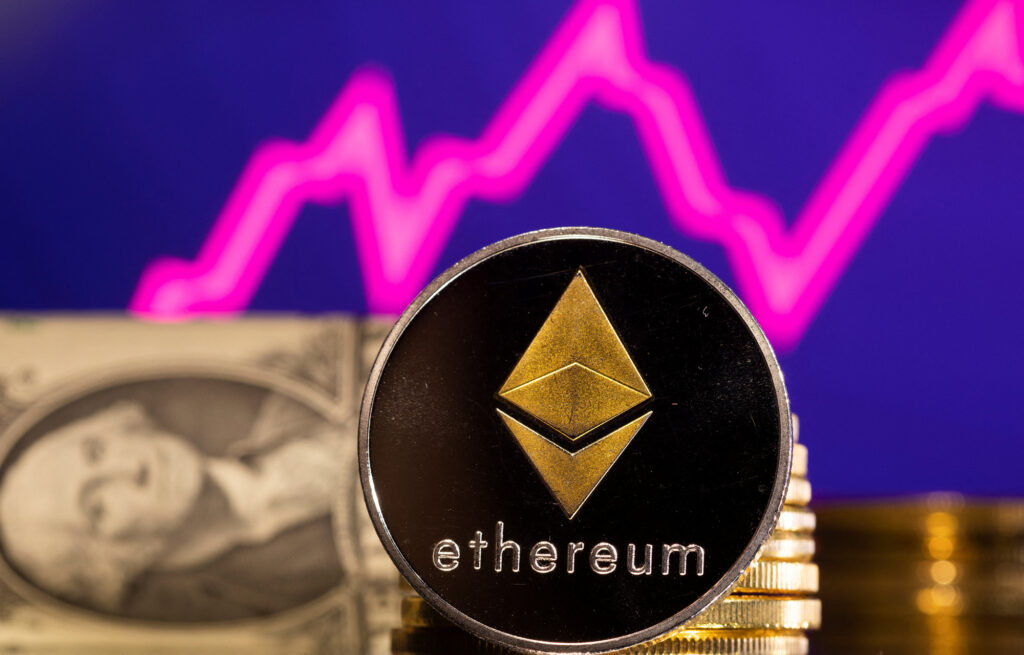
The dominance of the Ethereum execution client Geth has experienced a significant decline recently, raising concerns within the Ethereum community about network diversity and the potential for a “black swan event.”
On January 23rd, Geth’s market share on the Ethereum network execution clients dropped by 5.2%, falling from 84% to 78.8%.
Geth plays a crucial role in processing transactions and executing smart contracts on the Ethereum blockchain.
However, its overwhelming popularity among Ethereum validators has led to a lack of diversity among execution clients, which has sparked concerns about centralization.
Ethereum decentralization advocates, including a prominent member of the ETHStaker community known as “Superphiz,” emphasized the risk of a bug in Geth leading to a catastrophic event that could wipe out more than 80% of the Ether staked on the network.
Superphiz urged the use of less popular but potentially more robust execution clients to mitigate such risks.
Lachlan Feeney, the founder and CEO of Ethereum infrastructure firm Labrys, pointed out that Ethereum validators could face significant losses, as staked ETH is not risk-free.
He questioned whether investors would commit a minimum of $75,000 USD to an instrument with a maximum potential gain of 3.5% per annum but a potential loss of 100%.
READ MORE: Dencun Upgrade Boosts Ethereum’s Scalability and Reduces Gas Fees on Testnets
Feeney also highlighted that if Geth’s market share remains above 66%, a critical bug could halt the chain from finalizing, leading to an “inactivity leak” that burns staked Ether until execution client diversity is restored to 33.3% of the network.
In this scenario, approximately 90% of a validator’s staked Ether could be lost in about 40 days.
Feeney noted that validators would have only a small window to exit and limit their losses, given the rate-limited queue for validator exits.
Meanwhile, the second-largest execution client, Nethermind, saw its market share increase from around 8% to 14% on January 23rd, despite recently addressing a critical bug that affected users’ ability to process Ethereum blocks.
Coinbase, a major Ethereum validator that relies on Geth, announced plans to transition to a multi-client infrastructure in the coming months.
While Geth was the only execution client that met Coinbase’s technical requirements when it started Ethereum staking in 2020, Coinbase acknowledged the changing landscape and the need for greater client diversity in the ecosystem.
As concerns about Geth’s concentration continue to mount, Ethereum’s path toward greater decentralization and reduced risks remains a topic of ongoing discussion within the community.

Avalanche-based memecoins aiming to tap into a $100 million fund now face specific criteria, according to the Avalanche Foundation.
The Foundation, in a recent blog post dated January 23, introduced a set of guidelines for its memecoin selections within its “Culture Catalyst” fund.
Originally designed to support nonfungible token artists, the fund’s expanded scope now includes “community coins.”
To be considered eligible, meme tokens must meet various criteria.
These include having renounced contracts, limited ownership concentration among large holders (whales), and substantial liquidity levels.
While many criteria are flexible, the Foundation has established certain non-negotiable requirements.
These include a minimum of 2,000 unique holders, at least $200,000 in liquidity from 50 different providers, and a project existence of at least one month.
READ MORE: US House Committee Pressures Meta for Transparency on Crypto and Blockchain Plans
Memecoins are known for their lack of intrinsic value, often created as a joke or for entertainment, which appeals to memecoin enthusiasts.
When the Avalanche Foundation initially announced its decision to include memecoins in its fund expansion in late December 2023, it faced skepticism from market observers, with some criticizing the move as “desperate and unbecoming.”
Despite the initial backlash, the Avalanche Foundation has revealed that it has already begun deploying capital into “community coins” through its Culture Catalyst program.
One notable memecoin that has gained prominence within the Avalanche ecosystem is Coq Inu (COQ), a token with a rooster theme.
Coq Inu boasts a market capitalization of $75 million and ranks as the most traded memecoin on the Avalanche network, according to DexScreener data.
In summary, the Avalanche Foundation has established a set of criteria for memecoins seeking a portion of its $100 million Culture Catalyst fund.
While memecoins are often considered whimsical and valueless, the Foundation has laid out specific requirements to ensure eligibility.
Despite initial criticism, the Foundation has already started investing in these “community coins,” with Coq Inu emerging as a notable player within the Avalanche network, commanding a substantial market capitalization.

With the rise of online gaming platforms, ensuring robust security measures is essential, particularly for Hugewin, a shining star in the crypto casino world. For gambling businesses and their clients, acquiring a gaming license is of utmost importance. It’s not merely a formal requirement; it’s a transformative element for the industry. This is crucial in an era where digital security is paramount, especially for platforms dealing with cryptocurrencies. A gaming license guarantees legitimacy and trust, providing peace of mind for users and operators alike. It’s a significant step towards responsible and safe online gambling.
Prioritizing player safety is the main goal of gaming licenses. Platforms holding these licenses are required to establish strong security measures to safeguard players’ personal and financial information. They also dedicate themselves to promoting responsible gambling by providing various tools and resources. This helps players keep a balanced perspective on gaming, ensuring a safer and more responsible gaming environment. These measures demonstrate the platforms’ commitment to player protection and responsible gaming practices.
Obtaining a gaming license demands strict adherence to fairness and integrity. Gaming companies undergo comprehensive evaluations of their operational systems and methodologies. This includes verifying game fairness by employing random number generators to ensure unbiased outcomes. To consistently align with industry norms, routine audits and inspections are mandatory. Such rigorous processes are crucial for gaming operators to showcase their dedication to fair play and establish a reliable gaming atmosphere.
Complying with regulatory standards is essential for legal and reputable operations. Authorities grant gaming licenses, ensuring operators adhere to specific laws and rules. This adherence is vital for maintaining a trustworthy business. Obtaining a license shows a commitment to these norms, boosting the industry’s overall reputation. It’s a critical step for any gaming company to gain trust and operate successfully.
This time, we will find out the security strategies that Hugewin has implemented. Let’s find it out.
Licensed and Regulated for Trust
The digital era demands stringent security measures, especially in sectors involving financial transactions like online casinos. Hugewin, a top-notch casino and betting platform with more than 1000 games accessible there, recognizes this need and implements several strategies to ensure the safety of its users.
First and foremost, Hugewin holds a Curaçao eGaming license (CEG), a mark of legitimacy in the online gaming world. The government gaming authority of Curaçao, a well-known regulator in the industry, issues this license. This certification means that Hugewin undergoes regular regulatory audits to adhere to high standards of fairness and security. The CEG license is a testament to its commitment to operating within a legal and ethical framework, offering players peace of mind.
Transparent and Secure Transactions
In an environment where transactions are non-stop, the transparency of payments becomes crucial. Hugewin ensures that all payments, regardless of the amount, are processed transparently. This openness in financial dealings helps build trust among players, reassuring them that their winnings and deposits are handled with integrity.
Hugewin is committed to promoting responsible gambling and protecting users’ interests. The casino employs a forward-thinking approach by offering daily cashback to players on their losses.
These measures are designed to promote a healthy gaming environment and prevent the potential negative impacts of gambling. It demonstrates its commitment to the well-being of its community, which is a vital aspect of any gaming platform’s security strategy.
24/7 Support: Strengthening Security with Constant Care
At Hugewin, the live support team is available at any moment, providing essential assistance for any queries or concerns, which is crucial for a secure gaming environment. 24/7 availability has become a standard in the competitive online casino industry, essential for addressing urgent customer needs and preventing small issues from escalating.
Furthermore, customer service reflects the overall quality of the platform and, has legal significance, and has a great influence on customer satisfaction and business growth.
Hugewin: Pioneering Secure and Responsible Gaming
As you see, the platform stands out as a prominent player in the dynamic world of crypto casino gaming. By harmonizing innovative security measures with a player-centric approach, it elevates the gaming experience to new heights. Hugewin is not just about playing games; it is about doing so in an environment where every aspect, from data protection to transaction transparency, is meticulously crafted for player satisfaction and safety.
The platform’s commitment to responsible gambling further highlights its dedication to caring for its community. This focus on player welfare goes beyond mere compliance, setting a new standard in the industry. The synergy of cutting-edge technology and round-the-clock support ensures that users are playing games and engaging in a secure, fair, and supportive environment.
Hugewin, thus, redefines what it means to be a leader in the online gaming sector. It is a place where players can indulge in their favorite games with the assurance that they are in safe, reliable hands. So, don’t take a word for it. See for yourself, and enjoy everything it has to offer.

The cryptocurrency community has brushed off the recent remarks made by JPMorgan CEO Jamie Dimon during an interview on CNBC.
Dimon’s repeated criticisms of Bitcoin, which included debunked claims about its creator, Satoshi Nakamoto, returning to “erase” the cryptocurrency, as well as allegations that Bitcoin “does nothing” and has criminal use cases, have raised suspicions within the crypto community.
Some members of the community speculate that Dimon’s constant negative statements about Bitcoin may be an attempt to manipulate its price.
On Reddit, one user suggested that Dimon’s influence over older investors could be leveraged to drive down the price of Bitcoin, allowing him to accumulate more cryptocurrency at a lower cost.
However, opinions within the community vary. Some believe that Dimon is simply uninformed about Bitcoin, while others think he may be strategically acquiring Bitcoin in anticipation of the upcoming halving event, which many believe will drive up the cryptocurrency’s price.
Dimon’s suggestion that Satoshi Nakamoto could return to “erase” Bitcoin is widely regarded as flawed due to the decentralized nature of the cryptocurrency.
READ MORE: Mt. Gox Trustee Advances Towards Bitcoin Repayments with Identity Verification Confirmation
Nonetheless, a community member proposed the alternative theory that Nakamoto might choose to sell their Bitcoin holdings, which some consider to be a more plausible scenario than Dimon’s idea.
Interestingly, while Dimon continues to criticize cryptocurrencies, it’s worth noting that JPMorgan, the company he leads, is actively involved in the cryptocurrency space.
JPMorgan Securities was named as one of the authorized participants for BlackRock’s recently approved spot Bitcoin exchange-traded funds (ETFs) in the United States.
This move drew criticism, as it appeared contradictory for Dimon to make anti-crypto comments while his company was embracing cryptocurrency-related ventures.
In conclusion, Dimon’s negative remarks about Bitcoin have sparked speculation within the crypto community regarding his motivations.
While some believe he is attempting to manipulate the market, others think he may be positioning himself for potential gains from the upcoming halving event.
Regardless of his statements, the involvement of JPMorgan in cryptocurrency-related initiatives adds an intriguing dimension to the situation.

The ongoing saga of an investor exodus from Grayscale’s Bitcoin Trust (GBTC) has sent shockwaves through the cryptocurrency market, dragging Bitcoin’s price down to below $39,000 for the first time in nearly two months.
Since its transformation into a spot Bitcoin exchange-traded fund (ETF) on January 11, GBTC has experienced massive outflows, totaling more than $3.4 billion.
In response to this, Grayscale has been depositing vast amounts of Bitcoin onto the crypto exchange Coinbase Prime, presumably for sale.
The situation has raised concerns about the extent of the GBTC exodus and its potential consequences.
According to Eric Balchunas, an ETF analyst at Bloomberg, GBTC saw outflows of $515 million on January 23, resulting in a loss of 13% of its outstanding shares.
However, there are indications that the pace of outflows may be slowing down.
In an informal poll conducted on social media platform X (formerly Twitter), Balchunas sought the opinion of the community on when the “mass exodus” from GBTC might end.
Nearly half of the respondents believed it could continue until shares outstanding had diminished by 35–50%, while Balchunas and fellow Bloomberg analyst James Seyffart estimated this might occur at around 25% of outstanding shares.
Currently, Grayscale’s website shows 600.5 million shares outstanding, holding a total of 536,694.9 Bitcoins in trust.
READ MORE: US House Committee Pressures Meta for Transparency on Crypto and Blockchain Plans
In contrast, data from CC15Capital indicates that 82,525 Bitcoins have departed from GBTC since January 10.
The recent wave of outflows is primarily attributed to the defunct cryptocurrency exchange FTX, which reportedly sold two-thirds of its 22.3 million GBTC shares in just three days of trading.
FTX still holds approximately eight million shares, valued at around $281 million, awaiting sale.
Additionally, there is growing concern that Bitcoin from Mt. Gox may soon enter the market.
The Mt. Gox trustee has reportedly contacted creditors to complete identity verification for crypto exchange accounts, which are intended to be used for repaying Bitcoin and Bitcoin Cash. This potential influx of assets could add further downward pressure to Bitcoin’s price.
As of now, Bitcoin is trading at $39,949, showing a slight increase of 0.60% for the day, according to data from CoinMarketCap.
The Crypto Fear & Greed Index hit a 100-day low of 48 on January 24, reflecting the uncertainty and apprehension surrounding the cryptocurrency market.

A court in California has handed down a significant ruling in a case that has been ongoing for over two years, involving Crowd Machine and Metavine, the creators of Crowd Machine Compute Tokens (CMCT).
The court has ordered them to pay over $20 million in disgorgement, interest, and penalties, and also found the companies’ founder, Craig Sproule, liable for his role in the case.
The legal troubles for Craig Sproule began in January 2022 when the United States Securities and Exchange Commission (SEC) filed a lawsuit against him, alleging that the 2018 initial coin offering (ICO) for CMCT constituted a “fraudulent and unregistered” securities sale.
Alongside this accusation of unregistered securities sales, it was also claimed that Sproule had misused and lost $5.8 million of the $33 million he had raised during the ICO.
CMCT was initially designed with the aim of reimbursing computer owners for lending their computing power and compensating programmers for their coding efforts. Unfortunately, the tokens never became operational.
As part of the initial legal action, Sproule was fined $195,047 and instructed to cease operations of CMCT, including removing it from the one cryptocurrency exchange where it had been listed. Importantly, the defendants did not admit or deny any wrongdoing.
READ MORE: Mt. Gox Trustee Advances Towards Bitcoin Repayments with Identity Verification Confirmation
On January 17, the District Court of Northern California issued an amended final judgment that ordered the defendants to disgorge a total of $19,676,401.27, along with an additional $3.4 million in prejudgment interest.
Furthermore, Metavine was found liable for disgorgement of $5 million of the total amount, and both defendants were directed to pay civil penalties of $600,000 each.
In its statement dated January 24, the SEC highlighted that the previous consent judgments had already resolved the SEC’s action against Mr. Sproule, leaving the court to determine the monetary relief for the remaining defendants.
It is noteworthy that initial coin offerings (ICOs) were once a common method for launching cryptocurrencies until the SEC classified them as securities sales in July 2017.
Subsequently, the SEC has pursued numerous legal cases against ICO issuers.
Craig Sproule founded Metavine in 2013, which is described as a “no-code software development platform.”
However, Metavine reportedly filed for bankruptcy on January 3. On the other hand, Crowd Machine is described as a “unified cloud platform.”

Former President of the United States and current presidential candidate, Donald Trump, recently revisited the contentious topic of central bank digital currencies (CBDCs), attributing the resurgence of the discussion to Vivek Ramaswamy, a former Republican presidential candidate who withdrew from the race following disappointing results.
At a rally held in Laconia, New Hampshire, on January 22, Trump acknowledged Ramaswamy as the catalyst for rekindling the CBDC debate.
Notably, Ramaswamy was the sole presidential candidate who had included a crypto framework in his campaign platform.
Trump, somewhat humorously, confessed to his initial dislike for Ramaswamy until defeating him in the race. He then reiterated his firm stance against the implementation of a CBDC in the United States.
This was not the first time that Trump had voiced his opposition to CBDCs. During a campaign speech in Portsmouth, New Hampshire, on January 17, he unequivocally stated, “I will never allow the creation of a central bank digital currency.”
Trump underscored his concerns by emphasizing that such a digital currency would grant the federal government “absolute control” over citizens’ financial transactions.
Trump’s stance on cryptocurrency had not been particularly nuanced in the past, apart from a few negative comments about Bitcoin during his presidency.
However, the issue gained prominence in the presidential campaigns of Vivek Ramaswamy and Florida Governor Ron DeSantis, both of whom have since suspended their campaigns.
Ramaswamy withdrew from the race on January 16 and threw his support behind Trump.
Similarly, DeSantis officially ended his presidential bid on January 21, after facing a substantial defeat to Trump in the Iowa caucuses.
READ MORE: Elon Musk’s xAI Disputes $500 Million Investment Claim Amidst Valuation Talks
He also endorsed Trump’s candidacy, despite being the subject of ridicule from the former president in recent months.
On January 19, U.S. Representative Tom Emmer joined the chorus of support for Trump’s commitment to opposing CBDCs.
Emmer emphasized his eagerness to collaborate with Trump in combatting what he referred to as the “expanding government surveillance state.”
Emmer has consistently advocated for digital assets and has a history of pushing back against the regulatory approach pursued by the U.S. Securities and Exchange Commission (SEC) and its Chair, Gary Gensler.
In summary, Trump’s resolute rejection of CBDCs has resurfaced thanks to the encouragement of Vivek Ramaswamy, a former presidential contender, and has garnered support from individuals like Tom Emmer who share concerns about the implications of a government-controlled digital currency.
The debate surrounding CBDCs continues to evolve within the context of American politics and cryptocurrency regulation.

Syscoin, a longstanding advocate for harnessing Bitcoin’s infrastructure to drive blockchain innovation, has joined forces with Polyhedra Network and NodeKit to announce a groundbreaking initiative. This strategic partnership is set to introduce Zero-Knowledge Proof-of-Data Availability (zkDA) into Syscoin’s ecosystem, marking a significant advancement in Bitcoin’s merged mining mechanism and decentralized finance (DeFi) capabilities.
Key highlights of this new partnership include:
- Bitcoin Integration via zkBridge: This enables seamless two-way transactions between Bitcoin and Rollux, Syscoin’s EVM Layer 2, establishing a robust Bitcoin Layer 3.
- Client-Side Receiver Chain on Rollux: This enhancement boosts DeFi capabilities and interoperability, utilizing Syscoin’s Proof-of-Data Availability (PoDA).
- Integration of zkDA in Syscoin: zkDA is deployed across multiple blockchains, adding modularity and enhancing security.
- Sender Chain for Syscoin Assets: This trustless transfer mechanism facilitates the movement of Syscoin assets to other chains.
- Integration with NodeKit: The collaboration incorporates Rollux and zkDA to leverage Bitcoin’s security for other rollups.
Syscoin’s zkDA combines Bitcoin’s security with Syscoin’s PoDA, offering robust security and efficient data processing. This integration represents a significant step towards improved blockchain interoperability and efficiency.
Jagdeep Sidhu, Core developer of Syscoin, highlighted the partnership’s importance, stating, “This collaboration brings scalable solutions without compromising security and decentralization, fundamental to blockchain development.”
Abner Jia, CEO of Polyhedra, emphasized the benefits, stating, “Our partnership leverages Bitcoin’s security with Syscoin’s zkDA, providing a path for Bitcoin to compete with other major smart contract platforms.”
Meanwhile, Noah Pravecek, Founder of NodeKit, added, “Our collaboration with Syscoin enhances our sequencing solutions, addressing decentralized and cross-chain rollup complexities.”
Real-world case studies showcase the impact of this partnership:
- Cartesi utilizes Syscoin’s Layer 3 capabilities with PoDA, extending rollup functionalities across chains using zkDA.
- NodeKit integrates Syscoin’s zkDA to bolster its sequencing network.
- Polyhedra completes zkBridge of BTC to Rollux, enhancing multi-chain friendly secure DA solutions.
This partnership, coupled with the introduction of zkDA, represents a transformative leap in blockchain technology. It underscores Syscoin’s role as a pioneer in leveraging Bitcoin’s infrastructure, paving the way for a new era of modularity, where multiple chains can harness Bitcoin’s robust framework for scalable and innovative blockchain solutions.
Syscoin, with a decade of experience in blockchain innovation, has been at the forefront of harnessing Bitcoin’s security for scalable blockchain solutions. The integration of zkDA is a testament to Syscoin’s modular blockchain design approach, emphasizing performance and cost-efficiency.

For over two years, Pablo Moncada, the co-founder of MoonDAO and his decentralized autonomous organization (DAO), have been diligently working towards a remarkable objective – establishing a self-sustaining colony on the moon.
Their audacious timeline for this endeavor? Just under seven years from now. This formidable goal has been set by Moncada and the 5,000-member-strong MoonDAO, founded in 2021.
Moncada perceives DAOs as a solution to the longstanding issue of space exploration being inaccessible to the general populace.
He believes that his model could revolutionize space travel and interstellar exploration, potentially leading to human habitation on the moon by 2030.
While he acknowledges the inherent challenges and uncertainties, he remains undeterred in his pursuit.
Space exploration has historically been dominated by government space programs and well-funded private companies.
MoonDAO, often referred to as “the internet’s space program,” aims to democratize space research and travel by enabling everyday people to contribute to these endeavors.
While MoonDAO hasn’t yet achieved the monumental feat of sending humans to the moon, it has already achieved a significant milestone.
In November of the previous year, MoonDAO conducted a historic vote, sending Coby Cotton, a member of the YouTube channel Dude Perfect, into space aboard one of Jeff Bezos’ Blue Origin spaceships.
This marked the first time a DAO had sent someone into space, symbolizing a groundbreaking moment for space exploration and decentralized funding.
In Moncada’s perspective, MoonDAO’s greatest contribution lies in its novel approach to capital raising for space research and exploration.
Historically, governments relied on taxes and national budgets to fund space research.
More recently, private companies like SpaceX and Blue Origin have attracted private investors while still receiving substantial government contracts.
READ MORE: Bitcoin Inches Closer to $42,000 Amidst Uncertain Market Sentiment
MoonDAO, however, leverages the power of coordination among people worldwide who share a passion for space exploration.
Moncada draws a historical parallel, citing the 1500s when joint stock corporations were invented to finance voyages to explore new territories.
He believes that, similarly, we will witness the emergence of new tools, such as DAOs, to fund future space missions.
MoonDAO co-founder Moncada is no stranger to ambitious goals, having previously worked on ConstitutionDAO, which aimed to raise $49 million to purchase the only physical copy of the United States Constitution.
Even though many DAOs, including ConstitutionDAO, may fall short of their lofty objectives, Moncada believes that striving for audacious goals is more rewarding than not trying at all.
While DAOs are praised for their innovative potential, they also face challenges stemming from differences in opinions and backgrounds among members.
Moncada humorously refers to DAOs as “dudes arguing online” in acknowledgment of these challenges.
As for the grand vision of establishing a self-sustaining moon colony by 2030, Moncada emphasizes the value of setting ambitious goals, comparing it to the audacity of Kennedy’s call to land on the moon in 1961 when space exploration was in its infancy.
He believes that as the DAO ecosystem continues to grow, access to capital may rival that of governments, paving the way for a new era in space exploration funding.
Bitcoin faced significant pressure as it struggled to hold the $40,000 mark on January 22, coinciding with the Wall Street opening bell.
This downward trend was exacerbated by ongoing BTC sales from Grayscale, a prominent asset manager.
Data from Cointelegraph Markets Pro and TradingView confirmed that Bitstamp witnessed Bitcoin hitting new six-week lows at $40,324.
While BTC’s price had shown relative stability over the weekend, the new week brought continued selling pressure due to the Grayscale Bitcoin Trust (GBTC) reducing its assets under management.
In response to the recent approval of its transition to a spot Bitcoin exchange-traded fund (ETF), GBTC experienced outflows totaling 19,250 BTC, equivalent to $785 million, on January 22, according to live data from Arkham, a crypto intelligence firm.
Some sources even estimated the outflows to be as high as $700 million, as noted by Alex Thorn, head of research at Galaxy, a crypto reconnaissance firm.
Eric Balchunas, an ETF analyst at Bloomberg Intelligence, expressed concerns that these massive sales, conducted as transactions with Coinbase, might be too substantial for other ETF players to absorb.
Despite these challenges, the new spot ETF cohort continued to receive net positive inflows.
GBTC still held over $20 billion in assets, with its share price trading at just a 0.27% discount relative to BTC spot prices as of January 19, according to data from Bitcoin Treasuries.
Bitcoin’s price remained resilient, maintaining support at the $40,000 level despite increasing speculation of further declines.
Many traders started eyeing the mid-$30,000 range as a potential entry point for long positions.
READ MORE: Terraform Labs, Behind Defunct TerraUSD, Files for Bankruptcy Amid Ongoing Legal Battle
The BTC/USDT order book on Binance, a major global exchange, showed growing interest from buyers at $38,500.
Material Indicators, a trading resource, observed that Bitcoin often experienced significant price fluctuations within the first few hours after the US market opened, often linked to ETF flows occurring at the start and end of trading days.
Arthur Hayes, former CEO of BitMEX, shared the sentiment, describing the BTC/USD market as “heavy” and joined others in predicting further price declines.
Despite these challenges, the cryptocurrency market continued to draw attention and interest from investors, with its future trajectory remaining uncertain.