


HONG KONG, HONG KONG, July 26th, 2023, Chainwire
OKX, a leading crypto exchange by trading volume and Web3 technology company, has published its industry-best ninth consecutive monthly Proof of Reserves (PoR), showing a balance of USD$11.3 billion in BTC, ETH and USDT.
OKX’s PoR covers 22 commonly used digital assets and demonstrates that OKX has maintained a reserve ratio exceeding 100% for nine consecutive months across all those assets. In addition to BTC, ETH and USDT, the assets included in OKX’s PoR are: USDC, XRP, DOGE, SOL, OKB, APT, DASH, DOT, ELF, EOS, ETC, FIL, LINK, LTC, OKT, PEOPLE, TON, TRX and UNI.
OKX stores the majority of its reserves in highly secure off-chain cold storage. It has seen hundreds of thousands of users engage with its PoR, visit its PoR page and view their self-audits since first launching its PoR page in late 2022.
OKX’s current reserve ratios are as follows:
- BTC: 103%
- ETH: 103%
- USDT: 103%
OKX Global Chief Commercial Officer Lennix Lai said: “Public-facing disclosures of both reserves and liabilities are essential to ensure long-term accountability in our industry. However, point-in-time attestations of reserve holdings mean little—instead, sustained and consistent disclosures are needed. As the industry leader when it comes to monthly PoR reporting, with more consecutive monthly snapshots than any other top exchange, our commitment to transparency is unwavering.”
OKX will continue to publish its monthly PoR while providing a self-audit tool to all users. The open-source verification tool enables users to independently verify OKX’s solvency and confirm their assets are backed by OKX reserves while maintaining their privacy.
OKX has published over 210,000 addresses for its PoR program, and will continue to allow the public to view its asset flows.
Users can view the latest PoR report, reserve ratios, and verify OKX’s solvency here.
For further information, please contact:
About OKX
OKX is a leading global crypto exchange and Web3 ecosystem. Trusted by more than 50 million global users, OKX is known for being the fastest and most reliable crypto trading app for traders everywhere.
As a top partner of English Premier League champions Manchester City FC, McLaren Formula 1, Olympian Scotty James, and F1 driver Daniel Ricciardo, OKX aims to supercharge the fan experience with new engagement opportunities. OKX is also the top partner of the Tribeca Festival as part of an initiative to bring more creators into web3.
Beyond OKX’s exchange, the OKX Wallet is the platform’s latest offering for people looking to explore the world of NFTs and the metaverse while trading GameFi and DeFi tokens.
OKX is committed to transparency and security and publishes its Proof of Reserves on a monthly basis.
To learn more about OKX, download our app or visit: okx.com
Disclaimer
THIS ANNOUNCEMENT IS PROVIDED FOR INFORMATIONAL PURPOSES ONLY. IT IS NOT INTENDED TO PROVIDE ANY INVESTMENT, TAX, OR LEGAL ADVICE, NOR SHOULD IT BE CONSIDERED AN OFFER TO PURCHASE, SELL, OR HOLD DIGITAL ASSETS. DIGITAL ASSETS, INCLUDING STABLECOINS, INVOLVE A HIGH DEGREE OF RISK, CAN FLUCTUATE GREATLY, AND CAN EVEN BECOME WORTHLESS. OKX IS NOT REGULATED BY THE FCA, THUS, PROTECTIONS SUCH AS THE FINANCIAL OMBUDSMAN SERVICE OR FINANCIAL SERVICES COMPENSATION SCHEME WILL NOT BE AVAILABLE. YOU SHOULD CONSIDER WHETHER YOU UNDERSTAND HOW CRYPTO WORKS AND WHETHER TRADING OR HOLDING DIGITAL ASSETS IS SUITABLE FOR YOU IN LIGHT OF YOUR FINANCIAL CONDITION. THE VALUE OF YOUR DIGITAL ASSETS, INCLUDING STABLECOINS, CAN INCREASE OR DECREASE AND PROFITS MAY BE SUBJECT TO CAPITAL GAINS TAX. PAST PERFORMANCE DOES NOT INDICATE FUTURE RESULTS. PLEASE CONSULT YOUR LEGAL/TAX/INVESTMENT PROFESSIONAL FOR QUESTIONS ABOUT YOUR SPECIFIC CIRCUMSTANCES.
Contact
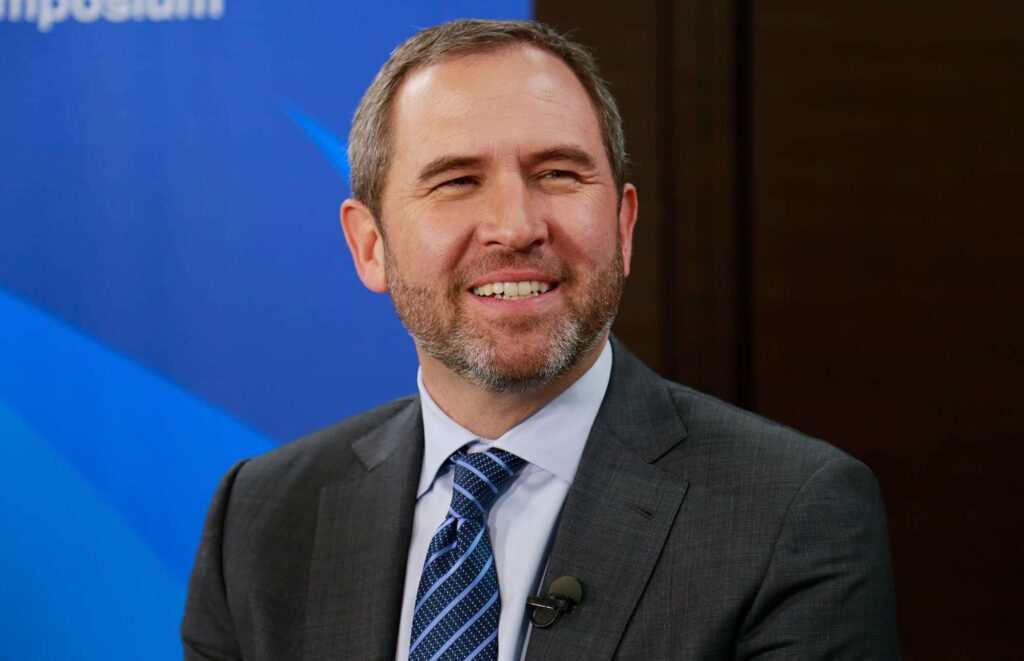
Ripple CEO, Brad Garlinghouse, has openly criticized the US Securities and Exchange Commission (SEC) following recent comments from the regulator, which suggest a possible appeal in their ongoing case against Ripple Labs.
Garlinghouse reproached the SEC for their “regulation by enforcement” policy on July 23, claiming it serves only to harm retail investors.
Garlinghouse accused the SEC of creating unnecessary chaos, dubbing it the “crypto cop” without any legal authority.
He stressed that this approach had resulted in retail investors being left in bankruptcy court, while the SEC conducted press briefings.
This backlash was in response to the SEC’s recent comments on Ripple, where it indicated a possible appeal against the mixed-decision ruling that went against Ripple Labs.
The regulator, through its ongoing case against Terraform Labs founder Do Kwon, voiced concerns about the decision that retail sales of Ripple’s XRP tokens on exchanges didn’t meet the legal definition of a security.
SEC lawyers argued that this ruling was erroneous and that sales of XRP should have been classified as securities.
READ MORE: 2023 Ranking: 4 Best Crypto Projects To Buy
They confirmed that SEC staff is contemplating various methods for further review and plans to recommend that the SEC seek such a review.
Garlinghouse found these claims “absurd,” stating that blaming a judge for simply applying the law was unjust.
He highlighted the need for legislation, rather than more regulation by enforcement, to establish clear rules and protect retail investors.
Ripple Labs’ Chief Legal Officer, Stuart Alderoty, also voiced his opinion, stating that explaining XRP isn’t a security is akin to convincing a flat-earther the world is round.
On July 17, SEC Chair Gary Gensler expressed disappointment over the court’s decision regarding the securities status of XRP, indicating that the regulator would continue to examine this judgement.
Despite these ongoing issues, Ripple Labs’ XRP token is currently trading at $0.73, reflecting a nearly 50% increase in value over the past month, according to data from TradingView.
Other Stories:
Report Reveals Alarming Surge in Cryptocurrency Use by ISIS Terrorists
Controversial Proposal Sparks Fierce Debate Among Members of Solana-Based Liquidity Network
Terraform Labs Faces Uphill Battle Amidst Allegations, New CEO Discusses Road Ahead
Worldcoin, an ambitious project co-founded by Sam Altman, the CEO of OpenAI, made headlines on July 24 with the launch of its ecosystem token.
Since its inception on March 14, the project has sparked both admiration and skepticism across the cryptocurrency community and Silicon Valley.
At the heart of Worldcoin’s vision lies the goal of addressing income inequality and revolutionizing online identity authentication.
To achieve this, the project introduced the World ID, a global digital passport designed to be stored on users’ smartphones.
By utilizing the World ID, individuals can prove their humanity to websites without divulging personal information like phone numbers, thus reducing the reliance on traditional identification methods.
On May 8, Worldcoin furthered its mission by releasing a gas-free crypto wallet, accessible to verified human users.
Registering for a World ID, users can take advantage of gas-free transfers, requiring only a phone number or an iris scan for authentication.
To alleviate privacy concerns, the developers asserted that the project doesn’t store the provided user data but rather generates a zero-knowledge proof to verify their humanity without exposing sensitive information.
In response to its launch, several prominent crypto exchanges, including Binance, Bybit, OKX, Gate, and Huobi, announced plans to list Worldcoin’s token on their platforms, signifying the project’s growing acceptance within the industry.
However, not all is smooth sailing for Worldcoin, as the project encountered a setback when blockchain security firm PeckShield discovered a fake Worldcoin token that performed a rug pull, highlighting the challenges of the crypto landscape.
READ MORE: Terraform Labs Faces Uphill Battle Amidst Allegations, New CEO Discusses Road Ahead
Despite the support received from many quarters, Worldcoin has faced opposition from some community members, notably former Twitter CEO and Bitcoin advocate Jack Dorsey.
Dorsey expressed concerns about the idea of corporations or states having ownership over the global financial system.
Nevertheless, the project has seen impressive interest, as evidenced by over 2 million sign-ups to its World ID initiative on July 14.
Sam Altman himself expressed optimism, tweeting about his aspirations to expand the sign-up numbers to a staggering 2 billion.
To bolster its decentralized identification system and the World App crypto wallet, Worldcoin successfully secured $115 million in funding on May 25.
Leveraging advancements in artificial intelligence, the project pitches a decentralized and privacy-preserving solution to empower individuals with control over their online identities and enhance cybersecurity.
As Worldcoin continues to forge ahead, it remains a polarizing force in the crypto space, with both supporters and critics keeping a keen eye on its progress toward tackling income inequality and shaping the future of digital identity authentication.
Other Stories:
Report Reveals Alarming Surge in Cryptocurrency Use by ISIS Terrorists
2023 Ranking: 4 Best Crypto Projects To Buy
Controversial Proposal Sparks Fierce Debate Among Members of Solana-Based Liquidity Network
South Korean cryptocurrency lending firm Delio is facing uncertainty in its ability to provide regular services to clients due to its assets being seized by a local financial regulator.
In a blog post on July 22, Delio revealed that an ongoing legal battle with depositors and a search and seizure operation on July 18 by the South Korean Financial Services Commission resulted in the confiscation of all assets belonging to customers and the company, including cold wallets and ledgers.
As a consequence of these actions, Delio has found it challenging to maintain normal operations and expressed the need to safeguard the interests of depositors and prevent the scattering of its property.
Consequently, the company has suspended interest payments for deposit and vault users since July 24.
Moreover, services that incur additional expenses, such as interest payments and operational costs, have also been suspended.
The troubles for Delio began when it suddenly suspended withdrawals and deposits on June 14. The decision was taken to safeguard customers’ assets amidst market volatility caused by the halting of transactions at Haru Invest, its sister lending company.
Haru Invest itself had suspended withdrawals on June 13 after discovering false information provided by its consignment operator B&S Holdings. Subsequently, it initiated legal proceedings against B&S Holdings.
READ MORE: Controversial Proposal Sparks Fierce Debate Among Members of Solana-Based Liquidity Network
Although Delio CEO Jung Sang-ho announced that withdrawals would resume, a specific timeline for restoring full functionality to the platform was not provided.
While withdrawals for some staking services were reopened on June 27, the South Korean Financial Services Commission continued its investigation and filed a lawsuit against Delio on June 30.
The lawsuit alleges fraud, embezzlement, and breach of trust in relation to the unilateral decision to suspend user deposits and withdrawals on June 14.
Additionally, Delio’s CEO Jeong Sang-ho and others were banned from leaving the country as part of the legal actions.
Delio, established in 2018, is a prominent crypto lending platform in South Korea, offering a wide range of custody, lending, and staking services.
According to the company’s website, it holds approximately $1 billion in Bitcoin, $200 million in Ether, and roughly $8.1 billion in altcoins.
When contacted for comment, Delio did not provide an immediate response.
The situation remains uncertain for the firm as it faces legal challenges and asset seizures, raising concerns over its ability to continue offering regular services to its clients.
Other Stories:
2023 Ranking: 4 Best Crypto Projects To Buy
Report Reveals Alarming Surge in Cryptocurrency Use by ISIS Terrorists
Terraform Labs Faces Uphill Battle Amidst Allegations, New CEO Discusses Road Ahead
A contentious proposal put forward by the team behind Parrot Protocol, a prominent Solana-based liquidity network, has ignited a heated debate among its community members.
Scheduled for voting until July 27, the proposal calls for the redemption of PRT tokens at a fixed rate to determine their liquid treasury value and proposes a transition towards a no-token protocol.
The PRT redemption price has been set at $0.0045 per token. According to data from CryptoRank, the protocol managed to raise over $89 million since its inception in 2021.
However, investors who participated in the initial DEX offering (IDO) and initial exchange offering (IEO) have suffered a current return on investment (ROI) of -89%, indicating significant losses on their investments.
The proposal’s lack of detailed explanations behind the move has raised concerns among community members. While the team claims that “many PRT holders” expressed interest in redeeming their tokens, the rationale for shifting towards a no-token protocol remains ambiguous.
READ MORE: OpenAI Unveils Android Version of ChatGPT
This proposal follows a previous tokenomics update in November 2022, in which the token locking period was significantly reduced from 12 months to just seven days, supposedly to offer stakeholders greater flexibility in managing their positions.
A tweet from @spreekaway on July 21, 2023, criticized the governance decision, stating that the Parrot team intends to allocate $12 million to token holders and retain $60 million for themselves from the remaining $72 million in ICO funds.
Furthermore, there have been allegations that the team unlocked their tokens ahead of schedule, undermining the voting process.
Claims that the team controls 81% of tokens have been contested by Parrot’s team on Twitter. They assert that treasury tokens are not utilized for governance purposes.
According to data provided by CryptoRank, 35% of tokens were allocated as protocol incentives, 20% to the team and angels, 10% through public sales, 20% during seed rounds, and 15% for other purposes.
The proposal’s lack of clarity regarding the fate of unclaimed funds after the eight-week redemption period has added to community concerns.
Some members fear that insiders might cash out the unclaimed funds, which could further exacerbate the situation.
Community members have expressed strong opposition to the proposal, stating that the pro-rata value set for the redemption is unreasonably low and fails to account for alleged misuse of the treasury without community consent.
The premature unlocking of team and VCs vesting tokens has also been cited as a reason to question the legitimacy of the vote, with some members dismissing it as a meaningless exercise and a farce.
As the voting deadline approaches, tensions within the Parrot Protocol community continue to escalate, and the outcome of the proposal remains uncertain.
Other Stories:
Nigerian Social Payments App Bundle Ceases Crypto Exchange Services
SEC Contemplates Appeal Over Controversial XRP Ruling
Bitcoin Laundering Couple Reach Plea Agreement with U.S. Authorities

TRM Labs, a blockchain intelligence platform, recently released a report drawing attention to the increasing use of cryptocurrency by affiliates of the Islamic State of Iraq and Syria (ISIS) in various Asian countries.
The report, published on July 21, revealed mounting on-chain evidence indicating that pro-ISIS networks in Tajikistan, Indonesia, and Afghanistan have been leveraging cryptocurrency to facilitate their operations.
The majority of transactions involved in these cases were found to be linked to the use of Tether (USDT) on the Tron network.
This finding aligns with a presentation by Tara Annison, former head of technical crypto advisory at Elliptic, who emphasized that Tron and Tether were popular assets for illicit activities, with criminals moving away from Bitcoin in favor of stablecoins due to their deep liquidity and ease of use for laundering funds.
The report shed light on individuals using Indonesian-based exchanges to transfer funds to addresses associated with pro-ISIS fundraising campaigns in Syria.
An astonishing amount of over $517,000 was sent in 2022 from Indonesia to addresses linked to pro-ISIS campaigns in Syria.
These campaigns purportedly claimed that the funds were meant to support and help release ISIS families held in Syrian camps. Interestingly, all transfers were made using USDT on the Tron network in increments of $10,000.
TRM Labs also uncovered an instance in Tajikistan where cryptocurrency was utilized to recruit fighters for ISIS’s affiliate in Afghanistan.
One of the fundraising campaigns, active for more than a year, received approximately $2 million in USDT on the Tron network in 2022.
Through blockchain tracing, TRM Labs identified the flow of funds and alerted the exchange used by the group to cash out their funds, leading to the arrest of a senior ISIS fundraiser, Shamil Hukumatov, by Turkish authorities on June 22.
READ MORE: Nigerian Social Payments App Bundle Ceases Crypto Exchange Services
Additionally, a media unit connected to ISIS’s affiliate in Pakistan began promoting its ability to accept donations in cryptocurrency in the second half of 2022.
TRM Labs identified addresses controlled by the group with a total volume of around $40,000 over the past twelve months.
This report comes after a previous TRM Labs’ report on June 28, which revealed a significant decline in illicit finance volume involving Bitcoin over the last seven years.
While Bitcoin was once the exclusive currency for terrorist financing, by 2022, Tron had taken the lead, being used for 92% of terrorist financing cases.
These findings underscore the need for continued vigilance and regulatory efforts to monitor and address the misuse of cryptocurrencies by criminal and terrorist organizations.
By understanding and tracking these on-chain connections, authorities can take appropriate actions to disrupt illicit activities and safeguard the integrity of the cryptocurrency space.
Other Stories:
OpenAI Unveils Android Version of ChatGPT
Bitcoin Laundering Couple Reach Plea Agreement with U.S. Authorities

A group of investors is set to gain control of CoinDesk, a prominent media company focused on cryptocurrency.
Led by Matthew Roszak from Tally Capital and Peter Vessenes from Capital6, the investor syndicate aims to finalize the transaction in the upcoming weeks, as reported by The Wall Street Journal (WSJ) on July 20.
Digital Currency Group (DCG), the parent company of CoinDesk, will retain a stake in the media business, events, data, and indexes, valuing the pending deal at approximately $125 million.
DCG had acquired CoinDesk in 2016 for $500,000 but recently faced financial challenges due to the bankruptcy of its lending arm, Genesis Global Capital, along with the closures of its institutional-trading platform Tradeblock and wealth-management unit HQ.
These issues occurred amidst a broader downturn in the crypto industry, marked by successive bankruptcies and a significant drop in token prices last year.
READ MORE: Nigerian Social Payments App Bundle Ceases Crypto Exchange Services
CoinDesk generated $50 million in revenue the previous year, primarily from online advertising, events, and indexes.
Despite its financial success, the company had been exploring the possibility of selling itself earlier in the year.
CoinDesk CEO Kevin Worth revealed that the company had engaged investment bankers from Lazard Ltd. to explore options for a full or partial sale, responding to numerous expressions of interest from potential buyers.
DCG had received unsolicited offers of over $200 million for CoinDesk in the preceding months, according to reports from January.
However, as several high-profile banks in the crypto and tech industries collapsed, DCG faced challenges in securing new bankers for its portfolio companies.
Upon the completion of the deal, CoinDesk’s existing management team is expected to continue leading the company.
This development signifies a significant shift in ownership for the media company and underscores the ongoing volatility and consolidation in the cryptocurrency sector.
Other Stories:
SEC Contemplates Appeal Over Controversial XRP Ruling
Bitcoin Laundering Couple Reach Plea Agreement with U.S. Authorities
Ripple, a payments network and technology company, has taken significant steps towards regulatory compliance by applying for registration as a crypto asset firm with the UK’s Financial Conduct Authority (FCA).
Additionally, the company is seeking a payments license in Ireland, indicating its commitment to investing in the region.
The decision to pursue registration and licensing comes in the wake of a partial victory for Ripple against the United States Securities and Exchange Commission (SEC).
The SEC’s classification of Ripple’s XRP token as a security has been a subject of contention.
The recent ruling determined that while the XRP token could be considered a security when sold to institutional investors, it did not apply to retail investors. Nevertheless, the case remains open to potential appeal by the SEC.
Amid a series of enforcement actions by the SEC in the United States, more crypto firms are turning their attention to the UK for regulatory clarity and a supportive business environment.
READ MORE: SEC Contemplates Appeal Over Controversial XRP Ruling
Andreessen Horowitz (A16z), a prominent venture capital firm, has even established its first overseas office in London, citing the region’s predictable business environment as a key factor in the decision.
The UK has been actively working on creating a crypto-regulated environment, passing laws that bring cryptocurrencies under the same rules applied to traditional assets.
This legislation received royal assent in June, granting authorities like the UK Treasury, the FCA, the Bank of England, and the Payments Systems Regulator the power to introduce and enforce regulations for crypto businesses.
Furthermore, lawmakers in the UK have been exploring ways to enhance their ability to target cryptocurrencies used for illicit purposes.
Drafts of new legislation propose provisions that allow authorities to have greater flexibility in confiscating and recovering crypto assets associated with illegal activities.
In summary, Ripple’s move to register as a crypto asset firm with the FCA and pursue a payments license in Ireland reflects its commitment to complying with regulations and expanding its presence in the UK and the broader European market.
The region’s efforts towards regulatory clarity and a favorable business environment are attracting more crypto firms seeking stability and growth opportunities amid evolving global regulatory landscapes.
Other Stories:
OpenAI Unveils Android Version of ChatGPT
Nigerian Social Payments App Bundle Ceases Crypto Exchange Services
Bitcoin Laundering Couple Reach Plea Agreement with U.S. Authorities
London, England, July 24th, 2023, Chainwire
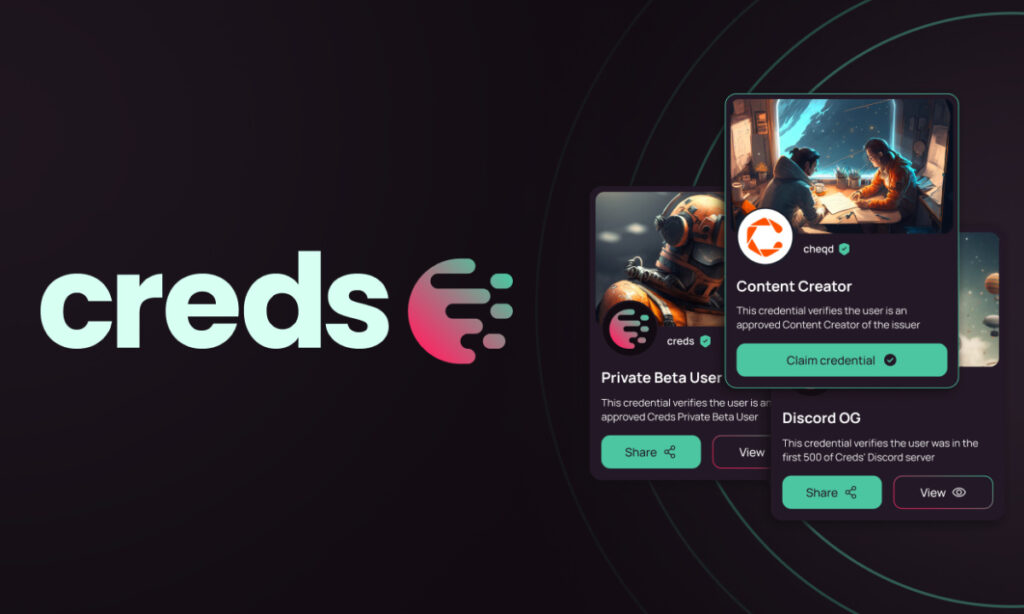
cheqd, a start-up creating the trusted data economy, where users and organizations have full control and portability of their data, is launching Creds – a platform for issuing, holding and sharing digital credentials to build portable reputation.
Announced at the Nebular Summit today in Paris, Creds, is a platform to issue digital credentials, or “creds”, which are a portable, reusable, privacy-preserving, and a secure way to prove identity, build decentralized reputation, and establish trust.
Creds addresses a number of Web3 challenges, in particular, community security, engagement, trust, the wave of distrust created by generative AI, and privacy concerns.
Community security, portable trust and decentralized reputation
One of the biggest challenges in Web3 is security. One report shows that crypto scams wiped out nearly $150M in a single week and mass scale distrust in communities. With Creds, projects can confirm personhood and ownership of handles, wallets, and reputation, proving admin and moderator role/status across platforms, including Discord and Telegram, and preventing impersonation, Sybil attacks, and scams. Fake content, news and even people are being supercharged with the advent of generative AI, compounding the issues.
The way to combat this issue is through trust and reputation. Meaning that individuals should be able to build their verifiable reputation and port it across different communities and platforms. Creds allows exactly that with the added feature of privacy, whereas individuals can choose to share one or a collection of credentials for others to verify as real.
Community engagement and gamification
Gamification enhances user engagement and drives customer acquisition and retention. Companies that use gamification are more profitable than those that don’t. Creds adds a reputation layer to community strategy enabling projects and individuals to explore gamification mechanics, such as incentivized quests and learn-to-earn, create unique reputation and trust systems, and increase real engagement.
“More and more organizations are looking to become community-focused to take advantage of the rising community economy. As an example, it’s preferable to have a smaller number of real active community members, or superfans, than to have a group with thousands of bots.”, expands Eduardo Hotta, Head of Marketing & Community at cheqd.
Privacy-preserving
Trust and reputation systems have been tried with the use of Non-Fungible Tokens (NFTs) and SoulBound Tokens (SBTs) with varying levels of success. Creds are different to NFTs and SBTs, as they are private, revocable, and can be taken to different platforms and ecosystems, since all personal data is off-ledger, where it remains private and secure. Data is cryptographically signed and verified by decentralized identifiers (DIDs) on-chain, making it a trusted data.
Fraser Edwards, CEO and Co-founder of cheqd explains: “Creds offers a privacy-preserving alternative to the surveillance enabling tech of SBTs and NFTs where you have little control over your privacy, as activities and other information are written on the ledger making it public and immutable. Creds are collectable, portable, secure and verifiable; it has all the best things that the NFT and SBT have with the addition of everything else they are missing.”
Launch
cheqd kicked off the launch of Creds and its verifiable credentials by issuing creds to attendees at the Nebular Summit. Attendees, with their creds, have a verifiable way to prove they were at the event, without giving up any personally identifiable information about themselves. And, just like an NFT, their creds are collectable and can be kept as a memoir of the event they attended.
Sebastien Couture, Founder of Nebular Summit and Interop Ventures says: “Our goal for Nebular Summit is to showcase the innovative technology emerging from the interchain ecosystem, and offering credentials to all attendees is a really unique and personalized experience to showcase these innovations. We’re excited to build from this first edition and use them to offer future benefits, like early registration to our events throughout the year.”
For further questions or interview requests, please contact Avishay Litani at [email protected].
creds.xyz
About cheqd
cheqd (cheqd.io) is a privacy-preserving payment and credential network that allows users and organisations to gain control and portability of their data. cheqd builds upon Decentralised Identity, Self-Sovereign Identity (SSI), and Digital or Verifiable Credentials (VCs) with payment infrastructure to create Trusted Data markets as an entirely new industry category. Put simply, you can now issue credentials and get paid to do so.
With its technology, cheqd is creating a new paradigm around Trusted Data economies such as lending markets in Web3, preference data markets, and others where the user is at the centre. It empowers consumers and businesses with full ownership, portability, and control over their data and identities. In addition, this data can be transacted within a cutting-edge payment network that prioritises individual privacy and market-first principles. The scale of distribution is unmatched as cheqd engages with organisations across Lending, Supply Chain, eCommerce, Education, Manufacturing, Gaming and other sectors.
cheqd also features a decentralised reputation platform (creds.xyz) to incentivise and engage Web3 communities though learning credentials, as well as protect users from fraud and scamming across Discord, Telegram and beyond.
cheqd.io
Contact
Avishay Litani
MarketAcross
[email protected]
Pro-XRP lawyer John Deaton has reassured XRP holders that any potential appeal by the United States Securities and Exchange Commission (SEC) would not significantly impact the XRP market.
Following the judge’s ruling that the sale of XRP tokens through exchanges does not classify them as securities, concerns arose about the legal implications if the SEC were to challenge the decision.
Representing over 75,000 XRP tokenholders, Deaton explained the possible scenarios and complexities surrounding the enforcement of the summary judgment.
The SEC’s recent filing regarding the case against Terraform Labs CEO Do Kwon indicated their intention to request a review of the Ripple lawsuit decision, as Kwon aimed to use it as a precedent to argue against digital assets’ classification as securities.
Deaton suggested that the appeal process could extend over two years, during which the summary judgment would continue to be the governing law.
However, the timing of the SEC’s initiation of the appeal process remains uncertain.
READ MORE: OpenAI Unveils Android Version of ChatGPT
Stuart Alderoty, chief legal officer at Ripple, weighed in on the ongoing discussion about the SEC’s authority over tokens, asserting that the agency’s jurisdiction should be limited to securities.
He argued that if a token is not classified as a security, the SEC should not have a regulatory role over it. Attempting to claim jurisdiction where none exists would be a political power move with no real benefits and potentially harm everyone involved.
Judge Analisa Torres’ ruling on July 13 clarified that XRP tokens are not securities when sold on retail digital asset exchanges.
Nevertheless, the decision was not entirely in Ripple’s favor, as they were found to have violated securities laws when offering XRP to hedge funds and other institutional buyers.
In conclusion, despite the SEC’s potential appeal, Deaton believes that the summary judgment will continue to hold during the appeal process, providing a favorable outcome for XRP and its holders.
Meanwhile, the debate over the SEC’s authority over tokens and digital assets remains ongoing, with stakeholders emphasizing the importance of clear regulatory boundaries to foster a healthy crypto market.
Other Stories:
Bitcoin Laundering Couple Reach Plea Agreement with U.S. Authorities
Nigerian Social Payments App Bundle Ceases Crypto Exchange Services