



On July 20, the Bank of Japan (BOJ) began a series of discussions with 60 companies as part of a pilot program aimed at developing a digital yen.
This move reflects a growing trend among central banks worldwide to explore the issuance of digital versions of their currencies for retail purposes.
According to a statement by the central bank, the discussions will encompass a range of topics, including the business and technological aspects of conducting retail settlements using a central bank digital currency (CBDC).
It is important to note that the BOJ has not yet made a final decision on whether Japan will proceed with the issuance of a digital yen.
This determination lies with the government and parliament, which will need to evaluate the implications and potential benefits of such a digital currency.
However, the fact that numerous major Japanese companies have been included in the list of 60 firms selected for these discussions is a clear indication that Japan is making significant strides towards potentially launching a digital yen.
Among the participants are well-known entities such as Sony, a leading electronics giant, Lawson, a prominent convenience store operator, the financial division of auto giant Toyota, and East Japan Railway.
READ MORE: Bitcoin Laundering Couple Reach Plea Agreement with U.S. Authorities
The global interest in CBDCs stems from central banks’ desire to remain relevant in the rapidly evolving financial landscape, where digital payments are becoming increasingly popular, and cash usage is declining.
By developing their digital currencies, central banks aim to ensure that digital payment systems are not solely controlled by private sector entities.
According to a recent survey conducted by the Bank for International Settlements (BIS), approximately two dozen central banks from both emerging and advanced economies are expected to have their digital currencies in circulation by the end of this decade.
As the BOJ engages in these discussions and other central banks accelerate their efforts towards digital currencies, the financial world is witnessing a paradigm shift in how money is conceptualized and used.
The successful implementation of a digital yen or any other CBDC will undoubtedly have far-reaching implications for the global economy and the future of financial transactions.
However, until a final decision is made, Japan and other countries will continue to closely monitor the developments and possibilities of digital currencies in the years to come.
Other Stories:
Nigerian Social Payments App Bundle Ceases Crypto Exchange Services

Bitcoin (BTC) faced downward pressure over the weekend, and its ticker dipped to $29,906 as traders anticipated the July 23 candle close.
With BTC/USD acting below $30,000, this level became intraday resistance, and concerns grew among traders that further losses might be in store.
Prominent trader Crypto Tony analyzed the 3-day chart and observed a double top rejection, signaling potential further declines. He highlighted two critical psychological levels to watch, $25,000 and $20,000, in case of a drop.
Another trader, Nebraskan Gooner, shared the sentiment that downward price action was likely, as BTC/USD had fallen below the narrow range that had been in play for the past month.
However, traders were divided on whether Bitcoin would break out or break down to revisit previous price levels from earlier in the year.
Toni Ghinea, a popular trader and analyst, foresaw a decisive move for Bitcoin in the coming week. He identified $31,000-$32,000 as resistance and $29,000 as support, urging caution not to get carried away if there’s a break above the range high.
In the event of a significant drop, he pointed out the key area to watch at $27,000-$28,000, and if it holds, buyers should be prepared for a potential pullback. However, a further breakdown to the $19,000-$23,000 range remained a possibility.
READ MORE: SEC Contemplates Appeal Over Controversial XRP Ruling
Market analysis earlier noted the importance of various trend lines that acted as support and resistance for Bitcoin.
The following week was expected to be crucial for Bitcoin’s price action as markets reacted to macroeconomic policy cues.
The US Federal Reserve’s Federal Open Market Committee (FOMC) was scheduled to meet to decide on interest rates before the Bitcoin monthly close.
It was widely predicted that interest rates would return to a hike after a previous pause, with odds standing at 99.2% as of July 23, according to CME Group’s FedWatch Tool.
Overall, uncertainty loomed over the Bitcoin market, and traders were closely monitoring key levels and macroeconomic developments to gauge the cryptocurrency’s future direction.
Other Stories:
Nigerian Social Payments App Bundle Ceases Crypto Exchange Services
Bitcoin Laundering Couple Reach Plea Agreement with U.S. Authorities

AI21 Labs has recently introduced a novel question-answering engine called “Contextual Answers,” designed to enhance the performance of large language models (LLMs).
This new engine enables users to upload their own data libraries, which effectively constrains the LLM’s responses to specific information, thereby increasing trustworthiness and usability.
The introduction of AI products like ChatGPT has transformed the AI industry. However, many businesses remain hesitant to adopt such technologies due to concerns about their reliability.
Research indicates that employees spend a significant portion of their workdays searching for information, making chatbots with search capabilities a valuable proposition.
Unfortunately, most chatbots lack the sophistication required for enterprise-level applications.
AI21 has addressed this issue by creating Contextual Answers, which bridges the gap between general-use chatbots and enterprise-level question-answering services.
Users can now incorporate their own data and document libraries, enabling more specialized and accurate responses without the need for model retraining.
READ MORE: 2023 Ranking: 4 Best Crypto Projects To Invest In
This approach significantly reduces the obstacles to AI adoption that many businesses face, including high costs, complexity, and mismatches with organizational data.
One of the major challenges in developing effective LLMs, like OpenAI’s ChatGPT and Google’s Bard, is training them to express uncertainty when they lack sufficient information to provide factual answers.
Instead of admitting they don’t know, LLMs may “hallucinate,” generating fabricated information that doesn’t exist in their datasets, much like humans seeing things that aren’t there.
AI21 claims that Contextual Answers eliminates the hallucination problem by either providing relevant information based on user-provided documentation or refraining from giving any response at all.
This ensures that the AI output remains accurate and avoids misleading users with erroneous information.
Sectors like finance and law, where accuracy is paramount, have had mixed results with generative pretrained transformer (GPT) systems.
In finance, experts remain cautious due to the potential for hallucinations and information conflation, even when GPT systems can access the internet and external sources.
In the legal sector, a lawyer was recently sanctioned for relying on outputs from ChatGPT during a case.
AI21’s data-frontloading approach and intervention to prevent hallucinations offer promising solutions for these sectors.
The financial industry, especially fintech, may see increased adoption of GPT technology, which traditional institutions have been hesitant to embrace.
Similarly, the cryptocurrency and blockchain communities, which have had limited success with chatbots, could benefit from AI21’s novel approach.
Overall, AI21’s Contextual Answers represents a significant step towards improving the reliability and usability of LLMs, opening up new possibilities for their adoption in various industries where accuracy and precision are crucial.
Other Stories:
Vermont Department of Financial Regulation Issues Stark Crypto Warning
China’s Digital Yuan Soars: Business Travelers Can Now Pay for Flights with CBDC

Dubai, UAE, July 23rd, 2023, Chainwire
The world’s first loyalty token tailored for telecom carrier businesses, Zeebu (ZBU), has been successfully listed on global cryptocurrency exchange LBank. From today, users of the LBank Exchange can officially trade the ZBU/USDT trading pair.
The milestone marks a significant step in the journey of Zeebu, whose goal is to empower telecom carriers with loyalty rewards and streamline invoice settlements within its ecosystem.
Listing Details:
- Trading Pair: ZBU/USDT
- Start Deposit: 07:00 on July 21, 2023 (UTC)
- Start Trading: 12:00 on July 21, 2023 (UTC)
- Start Withdrawal: 07:00 on July 22, 2023 (UTC)
The Zeebu loyalty token is specifically designed to revolutionize the telecom carrier industry by incentivizing and rewarding telecom carriers within its eponymous ecosystem. With a robust and redeemable loyalty token, Zeebu empowers carriers by simplifying and accelerating invoice settlements, among other advantages.
The ZBU token represents a reward for both customers and merchants, with every successful invoice settlement triggering token rewards, which can in turn be used to settle invoices or alternatively, swiftly converted on token exchanges.
The Zeebu platform’s commitment to creating a user-friendly loyalty and rewards system ensures a seamless fit with the unique demands of the telecom carrier market. By facilitating fast, frictionless transactions, Zeebu brings meaningful benefits to carriers and paves the way for a more interconnected telecom ecosystem.
By eliminating the need for traditional banking channels and intermediaries in cross-border settlements, the unified settlement platform unlocks significant cost savings for high-volume carrier businesses, potentially boosting their bottom line by up to 120%. Moreover, the removal of complexities ensures a streamlined settlement process to maximize efficiency.
All telecom carriers and enthusiasts are invited to join the Zeebu ecosystem and be a part of the telecom revolution. For more information, please visit www.zeebu.com.
About Zeebu
Zeebu is the world’s first loyalty token rewards system tailored for telecom carrier businesses. By transforming the settlement experience for users, Zeebu aims to empower telecom carriers with loyalty rewards, streamline invoice settlements, and unlock innovation.
Contact
Sneha Biradar
[email protected]
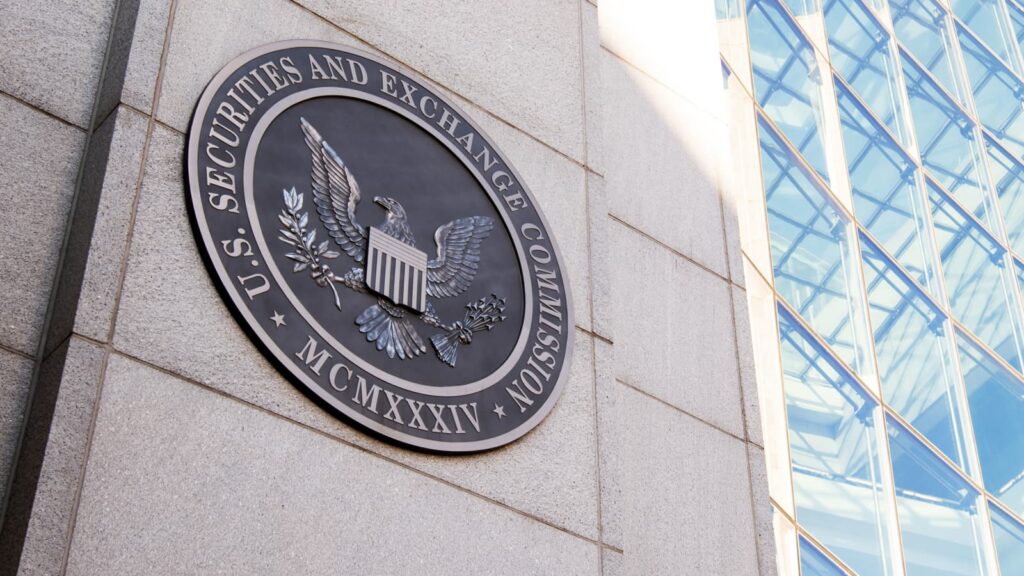
The United States Securities and Exchange Commission (SEC) is considering the possibility of appealing a recent ruling in the case against Ripple Labs, which determined that XRP (XRP) is not classified as a security when sold to retail investors.
The SEC is arguing that this ruling contradicts “fundamental securities laws principles,” including the Howey test, which is used to ascertain if something falls under the category of an investment contract.
The recent comments from the SEC on the Ripple Labs lawsuit were made during a separate lawsuit involving Terraform Labs and its founder, Do Kwon, who are accused of orchestrating a multi-billion dollar crypto asset securities fraud.
In response to a motion to dismiss from Terraform Labs, where the Ripple Labs ruling was referenced by the defendants, the SEC pointed out various issues it has with the court’s decision on XRP.
The SEC acknowledged that parts of the Ripple ruling support its claims in the Terraform Labs case but disagreed with the aspects related to the Programmatic and other sales.
READ MORE: China’s Digital Yuan Soars: Business Travelers Can Now Pay for Flights with CBDC
The SEC stated that these portions of the Ripple ruling were wrongly decided, and it does not want the court to follow them.
The SEC staff is considering available options for further review and intends to recommend that the SEC seek such review.
The SEC Chair, Gary Gensler, expressed disappointment over the court’s classification of XRP as not being a security when sold to retail investors.
He mentioned that while the court recognized XRP as a security for institutional investors, he was unhappy with the ruling regarding retail investors. The SEC is still evaluating the matter.
In a talk on artificial intelligence, Gensler was questioned about the need for clear regulations in the industry, to which he did not provide a specific answer.
It’s worth noting that the SEC’s stance on the Howey test has been questioned, as the agency’s own website has acknowledged that federal courts require commonality, but the SEC itself does not view commonality as a distinct part of Howey in its analysis.
In conclusion, the SEC is considering the possibility of appealing the ruling that XRP is not a security when sold to retail investors, arguing that it conflicts with established securities laws principles.
The agency’s statements come in the wake of its disappointment with the court’s decision and raise questions about the need for clearer regulations in the industry.
Other Stories:
Vermont Department of Financial Regulation Issues Stark Crypto Warning

In 2023, Bitcoin miners have been facing an uphill battle as the cryptocurrency market experiences volatility and uncertainty.
The past year has seen a surge in BTC being sent to centralized exchanges by miners to cover their operational costs.
The Bitcoin mining industry had a momentous year, earning a staggering $184 million from transaction fees in the second quarter of 2023.
This increase was attributed to the rebound in BTC’s price and the growing excitement surrounding BRC-20 tokens.
However, despite this revenue boost, prominent mining firms’ stocks outperformed Bitcoin’s market value by a significant margin, with their market capitalization rising by 257% since the start of the year.
To cope with the prolonged bear market, miners have been forced to sell mined BTC to cover expenses. June 2023 witnessed a record $128 million worth of Bitcoin sent to exchanges, leading experts to highlight miners’ tendency to cash out, cover costs, and secure profits.
Reports from Bitfinex indicate that mining companies are engaging in derisking strategies by offloading BTC to exchanges.
These strategies involve hedging activities in the derivatives market, conducting over-the-counter orders, or transferring funds through exchanges for various purposes.
READ MORE: Vermont Department of Financial Regulation Issues Stark Crypto Warning
Cointelegraph reached out to prominent mining companies for insights into the current mining climate. Hut8’s CEO, Jaime Leverton, revealed that the company had been pursuing a merger with USBTC, which hindered its capital-raising efforts through at-the-market offerings.
To meet its operating costs, Hut8 sold a portion of its Bitcoin holdings and newly produced BTC.
Nevertheless, Leverton assured that the company still held more than 9,100 BTC (equivalent to $271 million) and remained bullish on Bitcoin, maintaining one of the largest self-mined Bitcoin reserves among publicly traded companies.
Foundry’s senior manager, Charles Chong, pointed out that current market conditions differed from previous bull markets, where miners could hold onto their BTC due to abundant external capital and higher production margins.
Now, with scarce external funding and reduced margins of 15-30%, miners are compelled to liquidate their Bitcoin to sustain operations.
Chong also noted that comparing the current market to the bear markets following the 2017 and 2021 peaks was challenging.
Bitcoin mining operates in cycles, with miners overinvesting in ASIC mining equipment during favorable times.
The recent all-time high in Bitcoin mining difficulty indicated a robust network, with new, more efficient mining equipment entering the market, requiring miners to update their fleets to remain profitable.
Despite market challenges, industry participants’ continuous deployment of machines and increasing hashrates signals their optimism regarding Bitcoin’s future price appreciation.
Difficulty increases, driven by rising hashrates, reflect miners’ confidence in potential upside for BTC’s price.
Unfortunately, the tough market conditions led to the closure of some major mining firms, including Core Scientific, which filed for chapter 11 bankruptcy in June 2023.
However, the company managed to raise substantial capital to initiate a reorganization plan slated for September 2023.
Other Stories:
China’s Digital Yuan Soars: Business Travelers Can Now Pay for Flights with CBDC

On July 21, the White House made a significant announcement regarding the development of artificial intelligence (AI) technology.
Some of the most prominent AI companies, including OpenAI, Google, and Microsoft, have committed to prioritizing safety, security, and transparency in their AI endeavors.
Additionally, The White House commended other companies like Amazon, Anthropic, Meta, and Inflection for their dedication to AI safety.
The Biden Administration stressed the responsibility of these companies in ensuring the safety of AI products while promoting high standards in its development.
Kent Walker, the President of Global Affairs at Google, emphasized the importance of collaboration in achieving success in AI.
He expressed satisfaction in joining forces with other leading AI companies to support these commitments and assured that Google would continue to share information and best practices with others.
The commitments made by these companies include pre-release security testing for AI systems, sharing best practices in AI safety, investing in cybersecurity and insider threat safeguards, and enabling third-party reporting of vulnerabilities in AI systems.
OpenAI’s Vice President of Global Affairs, Anna Makanju, highlighted that policymakers around the world are actively considering new regulations for advanced AI systems.
To address concerns in the rapidly growing AI industry, bipartisan United States lawmakers introduced a bill in June to create an AI commission.
The Biden Administration is also collaborating with global partners, including Australia, Canada, France, Germany, India, Israel, Italy, Japan, Nigeria, the Philippines, and the United Kingdom, to establish an international framework for AI.
Microsoft, represented by President Brad Smith, endorses The White House’s voluntary commitments and commits independently to additional practices that align with the objectives.
This move demonstrates Microsoft’s dedication to expanding its safe and responsible AI practices and collaborating with other industry leaders.
The misuse of generative AI and deepfake technology in conflict zones has raised concerns among global leaders, including the United Nations Secretary-General.
To address these ethical challenges, U.S. Vice President Kamala Harris met with AI leaders in May to lay the groundwork for responsible AI development.
As part of this effort, the National Science Foundation announced a $140 million investment in AI research and development.
The commitments made by these leading AI companies and the support from the Biden Administration signal a collective effort to ensure the safe and ethical development of AI technology.
By working together and collaborating with global partners, they aim to set a robust framework that upholds AI’s potential while mitigating potential risks.
Other Stories:
Vermont Department of Financial Regulation Issues Stark Crypto Warning
2023 Ranking: 4 Best Crypto Projects To Invest In
China’s Digital Yuan Soars: Business Travelers Can Now Pay for Flights with CBDC

The Vermont Department of Financial Regulation (DFR) recently issued a stern warning to its citizens about the growing menace of cryptocurrency investment scams flourishing on popular social media platforms.
The DFR’s advisory comes in the wake of a distressing incident where a 74-year-old man, Naum Lantsman, lost his entire life savings of $340,000 to a crypto scam orchestrated on Instagram and Telegram.
This tragic case underscores the urgency for Vermonters to exercise extreme caution and vigilance when engaging in cryptocurrency transactions.
Instagram has been identified by the Federal Trade Commission (FTC) as the leading platform associated with crypto fraud, and Lantsman’s unfortunate encounter with a scammer took place on this very platform.
He was lured by a post from a fraudulent entity called SpireBit, which purported to be an “international financial broker” specializing in cryptocurrencies.
Without conducting any due diligence, Lantsman created an account on SpireBit, only to be contacted by a representative through Telegram.
Over the course of several days, the scammer coerced him into making substantial investments.
What started as a seemingly harmless $500 investment quickly snowballed into a staggering loss of over $340,000.
Fake platforms like SpireBit deceive users by displaying fabricated profits on every trade, enticing victims to invest even more of their hard-earned savings.
Discover the best crypto projects of 2023
Lantsman, like many others, had heard about crypto scams but never imagined he would fall prey to one.
The DFR points to the increasing complexity and personalization of these scams, with con artists employing layers of deception, forging bank documents, and engaging in friendly conversations to dupe unsuspecting individuals.
The DFR emphasizes the importance of remaining vigilant and conducting thorough background checks when dealing with cryptocurrency investments.
Promptly reporting any fraudulent activities can help mitigate financial damage and assist in apprehending the criminals responsible for these scams.
The issue of decentralized finance hacks is gaining prominence, with Eun Young Choi, director of the U.S. Justice Department’s National Cryptocurrency Enforcement Team, highlighting the significant threat posed by North Korean state-sponsored hackers.
The Justice Department is actively pursuing crypto firms that either engage in criminal activities or turn a blind eye to suspicious transactions designed to obscure the trail of illicit funds.
In conclusion, Vermont’s financial regulatory agency is taking proactive steps to safeguard its citizens against the rising tide of crypto investment frauds on social media platforms.
By raising awareness and urging caution, they aim to empower Vermonters to protect themselves from falling victim to deceptive schemes.
Furthermore, the broader issue of decentralized finance hacks remains a concern, and the Justice Department is actively working to bring those responsible to justice.
Other Stories:
Why You Should Be Bullish Despite Bitcoin Price Falling Below $30,000
Bitcoin Mining Companies Employ Derisking Strategies, Offload BTC to Exchanges

Bitcoin (BTC) is showing signs of an impending burst of volatility, comparable to the significant 40% gains it experienced in January.
On-chain data, as reported in analytics firm Glassnode’s weekly newsletter, The Week On-Chain, points to the tightest Bollinger Bands for BTC since the beginning of 2023.
BTC’s price has remained in a narrow range for a whole month, with $30,000 acting as a pivotal point for sideways movement.
This situation is testing both bullish and bearish traders, leaving them uncertain about the future direction of the market.
Analyst Aksel Kibar observed on July 21 that the prolonged sideways action is often a precursor to strong price movements, although he remains unsure of the direction.
To prepare for the upcoming surge in volatility, he sticks to his well-defined boundaries and awaits the directional move.
Bollinger Bands, a classic volatility indicator, are currently signaling that the days of rangebound BTC price action are limited. These bands use standard deviation around a simple moving average to determine when a shift in trend is likely.
READ MORE: Bitcoin Mining Companies Employ Derisking Strategies, Offload BTC to Exchanges
At present, the upper and lower bands are closer together than at any point during BTC’s upside in 2023, indicating a potentially significant move soon.
The market is experiencing a period of extremely low volatility, with the 20-day Bollinger Bands indicating an extreme squeeze, marking the “quietest BTC market since the lull in early January.”
Such a scenario previously led to a breakout in January, resulting in substantial gains throughout the month.
Glassnode also observed that, despite BTC’s price gains since January, there is little active selling for profit or loss at current levels.
This lack of “realized” activity is a common occurrence after price cycle lows.
Investors seem reluctant to spend their coins on-chain, as evidenced by the relatively small sum of profits and losses locked in by the market, amounting to approximately $290 million per day.
This figure, although significant on a nominal basis, is comparable to the situation in 2019 and October 2020, even though the Bitcoin market cap has approximately doubled since then.
In summary, Bitcoin’s tight Bollinger Bands and the lack of active selling indicate an imminent surge in volatility.
Traders and investors are eagerly anticipating the directional move, as it has the potential to rival the significant gains witnessed in January.
Other Stories:
Bitcoin Mining Companies Employ Derisking Strategies, Offload BTC to Exchanges
Robert F. Kennedy Jr. Pledges to Back US Dollar with Bitcoin if Elected President

Cerebras Systems, a Silicon Valley-based company, has secured a substantial deal worth approximately $100 million with G42, a technology group headquartered in the United Arab Emirates (UAE).
The agreement encompasses the provision of an initial installment of an artificial intelligence (AI) supercomputer, with the potential of delivering up to nine more units, as stated in a press release on July 20.
G42 has committed to obtaining three Condor Galaxy systems from Cerebras, which form an innovative network comprising nine interconnected supercomputers.
The first supercomputer in this network, known as Condor Galaxy 1 (CG-1), boasts an impressive performance of 4 exaflops and is built on a framework of 54 million cores.
To expedite deployment, the manufacturing of these systems will take place in the United States. The first supercomputer, CG-1, is slated to be operational by the end of this year, while CG-2 and CG-3 are expected to go online in early 2024.
The timing of this agreement is significant, as cloud computing providers worldwide are actively seeking alternatives to Nvidia chips, which currently dominate the AI computing market.
With Nvidia’s products facing shortages due to high demand from AI services like ChatGPT and others, Cerebras and other startups are striving to challenge Nvidia’s market dominance in the AI computing sector.
Cerebras CEO Andrew Feldman revealed that discussions are already underway for the potential acquisition of up to six additional supercomputers by late 2024.
The company, in collaboration with G42, aims to expand the supercomputer network, with plans to establish an impressive 36 exaflops of AI computing power in the coming year.
To support the advancement of its computing services using the supercomputers, Feldman expressed his intention to relocate to the UAE for three months, working closely with G42.
He views this endeavor as a “rare opportunity to revolutionize a massive market.”
G42, based in Abu Dhabi, intends to leverage the Cerebras systems to offer AI computing services to healthcare and energy companies.
In response to inquiries, Cerebras has not yet provided further details on the terms of the deal or its future plans.
Overall, this partnership between Cerebras and G42 represents a significant move in the AI computing industry, as it not only addresses the current challenges posed by chip shortages but also seeks to expand and revolutionize the potential of AI computing services.
Other Stories:
Bitcoin Mining Companies Employ Derisking Strategies, Offload BTC to Exchanges
Robert F. Kennedy Jr. Pledges to Back US Dollar with Bitcoin if Elected President
Why You Should Be Bullish Despite Bitcoin Price Falling Below $30,000