



Conic Finance, a liquidity pool balancing platform associated with the decentralized finance (DeFi) protocol Curve, has recently fallen victim to an exploit on the Ethereum omnipool, resulting in a loss of $3.26 million in Ether (ETH).
As of July 21, the value of ETH has dipped to $1,892, following the incident, according to Beosin Alert, a Web3 risk-alert source.
Beosin Alert’s data revealed that the majority of the stolen cryptocurrency was consolidated and transferred to a new Ethereum address in a single transaction, hinting at the sophistication of the attack.
Etherscan’s analysis of the address highlighted the involvement of a flashloan exploit on Coin ETH Pool.
Promptly responding to the breach, Conic Finance took to Twitter to confirm the news and assured users that they are actively investigating the exploit. They promised to share updates as soon as they become available.
Peckshield, a blockchain security firm, conducted an initial analysis of the incident, which revealed that the root cause of the exploit originated from the new CurveLPOracleV2 contract.
READ MORE; Bitcoin Mining Companies Employ Derisking Strategies, Offload BTC to Exchanges
Interestingly, their audit had already identified a similar read-only reentrancy issue, but it was noted that the newly introduced CurveLPOracleV2 contract, which was not part of the audit scope, was the source of the vulnerability.
Within an hour of the initial report, Conic Finance took further precautionary measures and disabled ETH Omnipool deposits on their platform’s front end.
Curve Finance, associated with Conic Finance, confirmed the situation and informed users that only the ETH omnipool was affected.
Unfortunately, DeFi hacks have become increasingly common within the industry.
A recent report by De.Fi, a Web3 portfolio app, highlighted that in the second quarter of 2023 alone, hackers managed to steal more than $204 million through various DeFi hacks and scams.
Despite this alarming figure, the losses from DeFi exploits and scams in Q2 were comparatively lower than those recorded in Q1, with CertiK reporting a staggering $320 million lost from January to March.
In conclusion, the exploit on Conic Finance’s liquidity pool has resulted in substantial losses, raising concerns about the security and vulnerability of DeFi protocols.
With the industry continuously evolving, it is crucial for platform developers and security firms to work together to address and prevent such incidents to safeguard users’ funds and maintain trust in the DeFi ecosystem.
Other Stories:
Bitcoin Mining Companies Employ Derisking Strategies, Offload BTC to Exchanges
Robert F. Kennedy Jr. Pledges to Back US Dollar with Bitcoin if Elected President

According to a market report from Bitfinex, Bitcoin (BTC) mining companies are adopting derisking strategies by selling BTC to exchanges.
The report highlights a recent surge in miners offloading large volumes of BTC to exchanges, resulting in an increase in the value of shares in Bitcoin mining companies. Institutional interest in BTC is also growing in 2023.
The report points out that Poolin has been responsible for the highest amount of BTC sold in recent weeks. Bitfinex analysts note that the Bitcoin mining difficulty recently reached an all-time high, which they consider an indicator of strong miner confidence.
The report states that miners are bullish on Bitcoin and are committing more resources to mining, leading to increased mining difficulty. However, they are also hedging their position by dispatching more Bitcoin to exchanges.
The report suggests that miners are hedging their positions on derivatives exchanges, with 70,000 BTC transferred in the first week of July 2023.
This volume of transfers to exchanges is considered rare and potentially showcases new miner behavior.
Bitfinex also mentions data from Glassnode, indicating that Poolin has been responsible for a significant portion of this activity, offloading BTC to Binance.
The report discusses various plausible reasons behind this mining behavior, including hedging activities in the derivatives market, carrying out over-the-counter orders, or transferring funds through exchanges for other purposes.
READ MORE: Celo Blockchain Plans Transition to Ethereum Layer-2 Solution
The increase in mining difficulty suggests the addition of new mining power to the Bitcoin network.
Analysts interpret this as a sign of improved network health and increased confidence in mining profitability, driven by higher BTC prices or improved hardware.
Additionally, the report suggests that on-chain Bitcoin movements reflect a transfer of supply from long-term holders to short-term holders.
This behavior is commonly observed during bull market conditions, with new market traders seeking quick profits while long-term holders capitalize on increased prices.
To shed light on the increase in Bitcoin outflows from miners in the past month, Cointelegraph has reached out to several mining companies and pools for clarification.
In June 2023, miners sent over $128 million in revenue to exchanges, as reported previously.
Other Stories:
SEC Chair Gary Gensler Advocates Greater Use of Artificial Intelligence for Market Surveillance
PEPE Coin in Trouble? Financial Regulator Clamps Down On Crypto Memes
FSB Proposes Global Regulatory Framework for Cryptocurrencies
The dYdX Foundation, a non-profit organization dedicated to supporting the dYdX protocol in decentralized finance (DeFi), has announced the launch of a public testnet for its latest version, v4.
This achievement has put dYdX ahead of schedule for the anticipated release of the v4 mainnet, marking a significant milestone towards complete decentralization for the platform.
As outlined in its roadmap towards decentralization, the recent testnet launch represents the fourth out of five milestones set by dYdX.
Currently, the live version of dYdX is considered partially centralized, utilizing a centralized order book and matching system while not holding custody of user assets.
The forthcoming v4 version is expected to resolve this issue and achieve full decentralization.
dYdX is currently the world’s largest decentralized exchange for perpetuals, which are bonds without a maturity date, facilitating over $1 billion in daily fund transfers.
Charles d’Haussy, CEO of the dYdX Foundation, discussed the move towards complete decentralization and its impact on centralized providers of perpetuals.
READ MORE: PEPE Coin in Trouble? Financial Regulator Clamps Down On Crypto Memes
According to d’Haussy, centralized providers are not direct competitors to the dYdX protocol, as they have played a crucial role in supporting the market, with BitMex being credited as the originator of perpetuals.
He views the industry as transitioning towards a state of “decentralized disruption,” but emphasizes that centralized organizations can coexist and collaborate with DeFi platforms, benefiting the broader crypto community.
D’Haussy envisions a future where centralized exchanges serve as gateways to decentralized exchanges, offering customers an enhanced experience and seamless integration.
Drawing a parallel with traditional financial institutions, he suggests that banks often provide additional services alongside their core business.
He believes this model can be applied to crypto, as long as it empowers users to adopt crypto services in ways that suit their preferences.
The CEO views this as a positive development for the ecosystem, emphasizing that people have diverse consumption preferences.
If a centralized entity can provide a more accessible and comfortable means of managing crypto assets, while also facilitating access to DeFi, it would be beneficial for users.
In conclusion, the dYdX Foundation’s launch of the v4 testnet has propelled the platform closer to achieving complete decentralization.
The CEO’s perspective highlights the potential for collaboration between centralized and decentralized providers, with centralized exchanges serving as gateways to DeFi, offering users a seamless and personalized crypto experience.
Other Stories:
FSB Proposes Global Regulatory Framework for Cryptocurrencies
Celo Blockchain Plans Transition to Ethereum Layer-2 Solution
SEC Chair Gary Gensler Advocates Greater Use of Artificial Intelligence for Market Surveillance

During his speech at the Ethereum Community Conference (EthCC), Mudit Gupta, the chief information security officer of Polygon, shed light on the practical challenges associated with private or mnemonic keys despite their security advantages.
Gupta emphasized the disparity between theoretical and practical security within the blockchain and crypto space.
While the industry is rapidly progressing in terms of theoretical security, Gupta believes it lags significantly behind in practical security.
He specifically highlighted the difficulties of safeguarding private keys compared to passwords. Private keys, once leaked, cannot be changed, unlike passwords.
Gupta explained that the responsibility of keeping a mnemonic or private key safe poses a far more challenging problem.
The consequences of failing to secure mnemonic keys are significant, with billions of dollars already lost due to individuals misplacing or losing their keys.
Gupta stressed the urgency of addressing this issue, as countless users’ wallets contain billions of dollars that are improperly secured.
Gupta acknowledged that private keys are theoretically 100% secure, as long as they remain unknown to others.
READ MORE: Aave Launches GHO Stablecoin on Ethereum Mainnet
However, he recognized practical challenges that can arise, such as ensuring access to funds for loved ones in the event of the owner’s death or dealing with compromised keys.
Furthermore, Gupta discussed the inherent difficulties faced by defenders in the security realm. He pointed out that attackers have an easier time than defenders since they only need to exploit a single vulnerability.
Defenders, on the other hand, must cover every possible entry point, leaving no room for any oversight.
Despite these challenges, Gupta emphasized the importance of defending against cyber threats.
He acknowledged that security professionals have a tougher role compared to hackers and exploiters, as defenders must diligently cover all bases to ensure the integrity of systems.
In conclusion, Mudit Gupta highlighted the practical challenges surrounding private or mnemonic keys, even though they offer enhanced security.
He called for greater attention to securing mnemonic keys, considering the billions of dollars at risk due to improper security measures.
Additionally, Gupta emphasized the arduous task faced by defenders, who must safeguard every aspect of a system against attackers seeking vulnerabilities.
Other Stories:
Former SEC Official Criticizes Ripple Ruling as ‘Troublesome on Multiple Fronts’
Primed For Major BTC Rally? SEC Begins Review of BlackRock’s Bitcoin ETF Application
Binance Integrates Bitcoin Lightning Network for Lightning-Fast BTC Transactions

United States-based cryptocurrency mining company Marathon Digital is facing legal action as its shareholders accuse CEO Fred Thiel and other top executives of breaching fiduciary duties, enriching themselves unfairly, and misusing corporate assets.
On July 8, a shareholder complaint was filed against Fred Thiel and nine other Marathon executives in the United States District Court for the District of Nevada.
The lawsuit includes five claims, including violations of the U.S. Securities Exchange Act, breach of fiduciary duties, unjust enrichment, and misappropriation of corporate assets.
The plaintiffs are also seeking potential compensation from Thiel, Merrick Okamoto, Simeon Salzman, and Hugh Gallagher for their alleged wrongful acts leading to a complaint filed by the U.S. Securities and Exchange Commission (SEC) against the company.
The shareholders’ legal team did not specify a specific amount of compensation, leaving it to the court to decide.
Furthermore, the shareholders aim to rectify the company’s governance by enhancing the board’s oversight of operations, nominating at least four candidates from shareholders to the board, and eliminating the previous procedure for directors’ elections.
According to the legal team, the company’s management has downplayed its issues, artificially inflated Marathon’s valuation, received excessive compensation, engaged in lucrative insider sales, and obtained undeservedly high bonuses based on false and misleading statements.
READ: 3 Best Crypto PR Agencies – Fees, Results and Full Review
In May, Marathon received a subpoena from the SEC, which was related to transactions with related parties that took place during the construction of its facility in Montana.
In 2021, the regulator had previously requested the firm to provide documents and communications regarding the same mining facility.
Despite facing these challenges, Thiel expressed optimism in May when outlining the company’s strategy to reduce its net loss from $12.9 million ($0.12 per share) in Q1 2022 to $7.2 million ($0.05 per share) in 2023.
While the decline in the price of Bitcoin also impacted Marathon’s quarterly results, the mining firm managed to reduce its debt in March.
It paid off a term loan with Silvergate Bank, allowing the release of the 3,132 BTC held as collateral for the loan.
Marathon stated that this move would eliminate $50 million of debt and reduce its annual borrowing costs by $5 million.

Cryptocurrency lending firm Celsius, currently facing bankruptcy, has submitted a request to the court seeking relief regarding the distribution of funds obtained from the sale of its self-custody platform, GK8.
According to the filing made by Celsius Network’s debtors on July 17, an agreement has been reached among the Series B holders to allocate $25 million from the proceeds of GK8’s sale.
This settlement was agreed upon by the debtors, the creditors’ committee, and the initial consenting Series B preferred holders.
The document outlines that $24 million will be designated for legal expenses, while the remaining $1 million will be distributed among the holders.
The debtors have shown support for this proposed allocation, emphasizing that the primary objective of the settlement is to reduce administrative costs.
The filing states that the proposed allocation provides reciprocal benefits to the initial consenting Series B holders.
The settlement agreement was primarily based on the mutual desire to avoid expensive litigation and a lengthy confirmation process, which would entail additional professional fees.
READ MORE: Web3 Needs Asset Protection, and This Startup Wants to Make it Widely Available
The document highlights the benefits of the settlement, stating that it not only unlocks substantial value for the creditors but also provides clarity and certainty for all parties involved.
Consequently, the filing requests the court to overrule any objections and grant the relief sought in the motion.
Celsius had acquired the Israeli self-custody startup GK8 in late 2021 for $115 million but was compelled to sell it as part of the restructuring plan following the company’s collapse in 2022.
The investment firm Galaxy Digital, led by Mike Novogratz, emerged as the winner of the bidding process to purchase GK8 in late 2022.
As part of the acquisition, Galaxy obtained GK8’s team of 40 experts and their Tel Aviv office. In July 2023, GK8 held a meeting with financial executives at its New York offices.
These recent developments come at a time when Celsius is grappling with various legal challenges.
On July 13, the United States Securities and Exchange Commission filed a lawsuit against Celsius, coinciding with reports of the former CEO Alex Mashinsky’s arrest.
Additionally, the U.S. Federal Trade Commission imposed a $4.7 billion fine on Celsius on the same day.
Mashinsky, after pleading not guilty to charges of misleading customers and inflating the Celsius CEL token, was released on bail of $40 million.
Other Stories:
Bitcoin On-Chain Data Reveals $30,000 as Most Popular ‘Buy’ Level
3 Best Crypto PR Agencies – Fees, Results and Full Review
Ex-Federal Prosecutor Surprised by Potential SEC Appeal in Ripple Case

Data suggests that the price of Bitcoin is likely to drop below $29,000 in the near future.
The inability to break above $31,800 on July 13 led to a 6.3% correction, bringing the price down to $29,700 on July 17.
Investors are concerned that ongoing regulatory developments and macroeconomic challenges could push Bitcoin below the $29,000 level, last seen on June 21.
Bitcoin futures indicate increased demand, but Asian markets are slowing down. Typically, Bitcoin futures trade at a slight premium compared to spot markets, indicating sellers’ willingness to delay settlement for more money.
Healthy markets usually exhibit BTC futures contracts trading at a 5% to 10% annualized premium.
Between July 14 and July 17, BTC futures maintained a 7% premium, surpassing the 5% threshold, suggesting moderate conviction among bulls after the unsuccessful attempt to break above $31,800.
However, the premium of Tether (USDT) in Asia has been decreasing. The stablecoin premium serves as an indicator of demand from China-based retail crypto traders, measuring the difference between peer-to-peer trades and the U.S. dollar.
The recent Tether premium in Asia reached a discount of 1.8%, its lowest point in over six months.
This widening discount trend, starting on July 12, indicates moderate sell pressure.
Regulatory concerns continue to affect the crypto sector.
READ MORE: Ex-Federal Prosecutor Surprised by Potential SEC Appeal in Ripple Case
While the July 13 ruling that the sale of XRP via exchanges and over-the-counter desks did not violate securities regulations boosted markets, it did not definitively determine whether XRP’s initial coin offering was classified as a security offering.
This lack of clarity unsettles some investors, raising the possibility of other cryptocurrencies facing similar designations.
Additionally, Binance’s layoff of 1,000 employees and the departure of key executives, along with ongoing court actions from the Securities and Exchange Commission, have raised concerns about the future of the exchange.
Macroeconomic trends also pose challenges for Bitcoin and risk-on assets. China’s second-quarter gross domestic product growth fell short of expectations due to factors like the trade war with the United States and the government’s efforts to address debt.
These external factors, along with impending court decisions that could negatively impact major exchanges, increase the likelihood of Bitcoin dropping below $29,000.
In terms of trading, BTC futures indicate higher confidence among professional traders using leverage. However, sell pressure from retail investors in Asia limits the overall upside potential for cryptocurrencies.
Without a specific catalyst to drive it higher, Bitcoin’s price is susceptible to worsening macroeconomic conditions and indications of interest rate increases by the Federal Reserve in 2023.
Other Stories:
Best crypto marketing agencies to promote your project in 2023
3 Best Crypto PR Agencies – Fees, Results and Full Review
Web3 Needs Asset Protection, and This Startup Wants to Make it Widely Available

Meta and Microsoft have joined forces to introduce Llama 2, an open-source large language model developed by Meta that will be integrated into Microsoft’s Windows operating system and Azure cloud computing platform.
The collaboration between the two tech giants was officially announced on July 18. Llama 2, designed specifically for business and research purposes on Meta’s AI technology stack, is now available for free use in both academic and commercial settings.
Additionally, the model has been optimized to run seamlessly on Windows.
Meta claims that Llama 2 has been trained using a significantly larger dataset, incorporating 40% more publicly available online sources compared to its predecessor, Llama 1.
This enhancement allows Llama 2 to process twice as much context, boosting its performance in coding, proficiency, reasoning, and knowledge tests.
However, the company acknowledges that Llama 2 falls slightly behind closed-source competitors like OpenAI’s GPT-4 in terms of efficiency, as highlighted in one of Meta’s research papers.
READ MORE: FSB Proposes Global Regulatory Framework for Cryptocurrencies
Expressing his enthusiasm, Meta CEO Mark Zuckerberg took to Instagram on July 18 to emphasize the benefits of Llama 2, stating that it provides researchers and businesses with a cutting-edge language model as the foundation for their work.
Meta has been pleasantly surprised by the overwhelming demand for Llama 1 since its limited release in February.
Despite only offering limited access, the company received over 100,000 requests. Unfortunately, Llama 1 was later leaked online by a user on the imageboard website 4chan.
In contrast, ChatGPT, another popular language model, enjoyed tremendous success, attracting an estimated 100 million or more users within the first three months, as reported by Reuters in February.
With this partnership, Microsoft has now established itself as a supporter of two major players in the AI domain. In 2023 alone, the company invested a total of $13 million in OpenAI, according to a Fortune report published in January.
Meta’s decision to open source Llama received criticism from two US senators in June.
The senators raised concerns about the potential vulnerabilities in the initial version of Llama, suggesting that it could be exploited by malicious actors for criminal purposes.
Overall, the collaboration between Meta and Microsoft aims to advance the capabilities of large language models, providing researchers and businesses with powerful tools while addressing any potential risks associated with their deployment.
Other Stories:
PEPE Coin in Trouble? Financial Regulator Clamps Down On Crypto Memes
SEC Chair Gary Gensler Advocates Greater Use of Artificial Intelligence for Market Surveillance
Celo Blockchain Plans Transition to Ethereum Layer-2 Solution
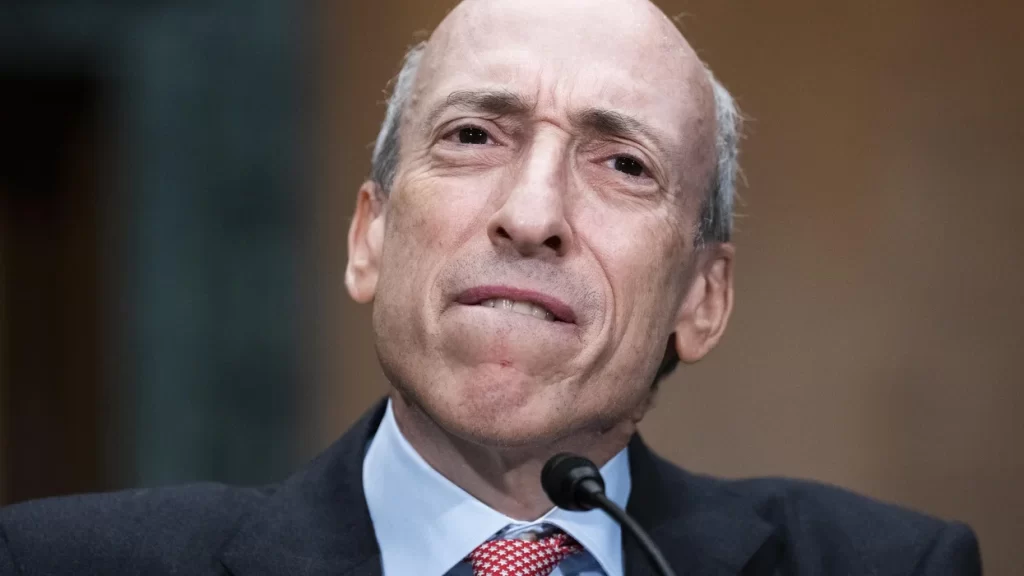
New York Representative Ritchie Torres has urged Gary Gensler, Chair of the United States Securities and Exchange Commission (SEC), to reconsider the regulator’s stance on cryptocurrencies following a recent court ruling.
In a letter dated July 18, Torres requested that the SEC focus its enforcement efforts on “bonafide bad actors” instead of treating the majority of crypto assets as securities without discrimination.
The lawmaker’s appeal comes in light of a court ruling in the SEC’s case against Ripple, which indicated that the XRP token is largely not a security.
Torres criticized the lack of clarity and guidance provided by the SEC under Chair Gensler’s leadership.
He pointed out that the commission has not issued any rules on crypto assets and has been inconsistent in its messages, often contradicting both the Commodities Futures Trading Commission (CFTC) and itself.
Torres echoed the sentiments of other experts who believe that a swift appeal against the court decision is unlikely.
This ruling could also jeopardize the SEC’s case against Coinbase, which the commission filed in June for allegedly offering unregistered securities.
The lawmaker emphasized the need for the SEC to reconsider its regulatory approach to the crypto industry, describing it as a “reckless regulatory assault.”
He called for a reassessment of the commission’s actions, highlighting the urgency of establishing clear regulations for the sector.
READ MORE: SEC Chair Gary Gensler Advocates Greater Use of Artificial Intelligence for Market Surveillance
It is worth noting that Representative Torres coincidentally shares a surname with the judge presiding over the SEC v. Ripple case, Judge Analisa Torres.
He referred to the court ruling as the “Torres Doctrine,” likely in reference to the judge rather than himself, as he expressed confidence in the judge’s decision-making. Representative Torres is a member of the Congressional Blockchain Caucus.
The response from the SEC to the court ruling remains uncertain. Chair Gensler expressed disappointment on July 17 regarding the potential impact on retail investors, and the commission is still deliberating on the actions it may take in response.
The development raises questions about the future regulatory landscape for cryptocurrencies in the United States and the SEC’s approach under Chair Gensler’s leadership.
Other Stories:
Celo Blockchain Plans Transition to Ethereum Layer-2 Solution
PEPE Coin in Trouble? Financial Regulator Clamps Down On Crypto Memes
FSB Proposes Global Regulatory Framework for Cryptocurrencies

The cryptocurrency industry has experienced significant growth in terms of employment despite notable instances of cryptocurrency failures.
Research conducted by K33, a crypto research startup, reveals a substantial surge of nearly 160% in the number of individuals working in crypto-related positions since 2019.
In their report titled “The Emerging Crypto Industry,” K33 estimates that the total headcount of crypto professionals reached nearly 190,000 individuals in 2023, compared to approximately 73,000 in 2019.
The industry experienced its peak in terms of staff numbers in 2021, surpassing 211,000 professionals. This growth coincided with Bitcoin’s impressive performance, reaching an all-time high price of $68,000 in November 2021.
While the number of crypto employees has seen a reduction of approximately 11% since 2021, it remains significantly higher than four years ago.
This increase appears to align with the fluctuation of Bitcoin’s price, which surged over 300% from its average annual price of around $7,200 in 2019.
The findings of K33 are supported by data from various major industry players.
READ MORE: 3 Best Crypto PR Agencies – Fees, Results and Full Review
For instance, Kraken, a prominent cryptocurrency exchange, has witnessed a 150% rise in staff numbers since 2019, according to Pranesh Anthapur, the firm’s chief people officer.
Similarly, Trezor, a major hardware wallet company, has increased its headcount by 120% since 2019, as reported by CEO Matej Zak.
These companies prioritize long-term talent retention and development, even during bear markets.
Kraken’s Anthapur highlights the significance of securing the right talent to navigate the challenges of disrupting traditional finance.
Trezor’s Zak emphasizes their focus on building and retaining talent over cyclical hiring and firing based on short-term market trends.
Despite the overall growth in employment, the cryptocurrency industry has also witnessed layoffs at various firms, including Coinbase, Binance, Crypto.com, Dapper Labs, and Kraken.
Binance, in particular, reportedly laid off more than 1,000 employees recently, following a 20% reduction in staff announced in May.
Interestingly, while some major firms have engaged in significant layoffs, other crypto giants have maintained relatively small workforces.
Tether, the issuer of the world’s largest stablecoin, employs only around 60 individuals, according to a company spokesperson.
They emphasize a cautious approach to hiring, prioritizing employee well-being and future prospects, and demonstrating a track record of not downsizing staff even during previous downturns in the crypto market.
Overall, despite the challenges and setbacks faced by the cryptocurrency industry, the number of people employed in crypto-related roles has experienced substantial growth, indicating the continued interest and potential of the industry.
Other Stories:
Web3 Needs Asset Protection, and This Startup Wants to Make it Widely Available
Bitcoin On-Chain Data Reveals $30,000 as Most Popular ‘Buy’ Level
Ex-Federal Prosecutor Surprised by Potential SEC Appeal in Ripple Case