


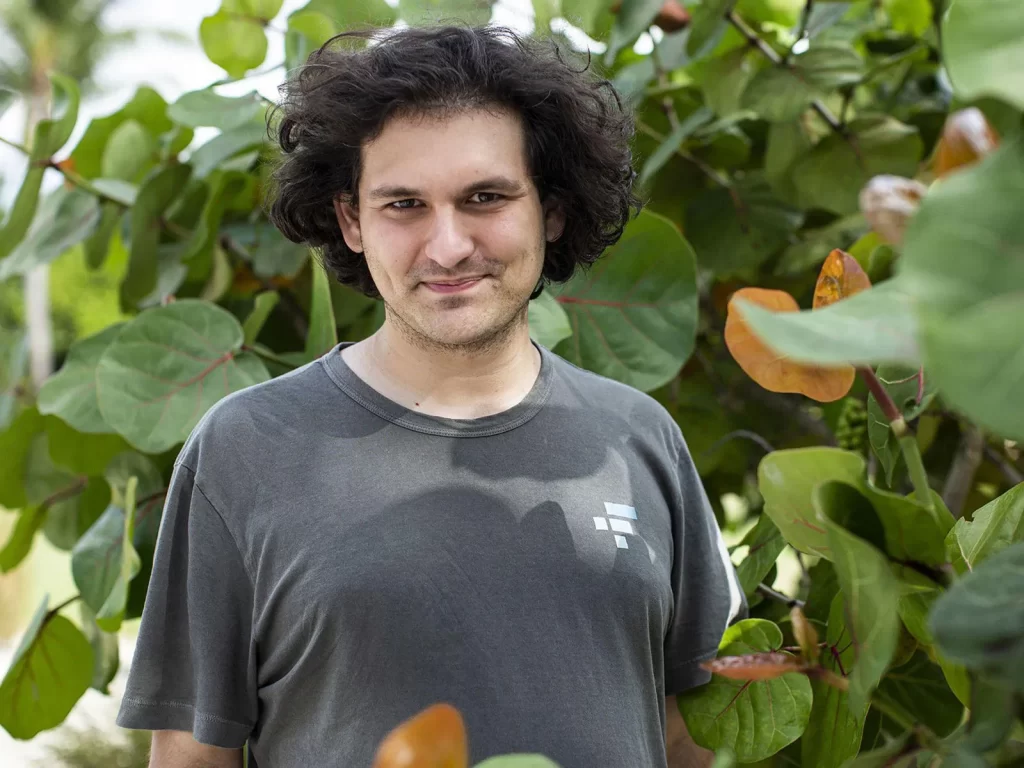
Former FTX CEO Sam Bankman-Fried has made a request to the New York District Court Judge Lewis Kaplan, seeking permission for his “close friends” to visit him at his parent’s home without undergoing the security checks mandated by his bail conditions.
Bankman-Fried’s lawyers submitted a letter on July 13, urging the judge to extend the exemption from security measures to individuals on a pre-approved list.
At present, only Bankman-Fried’s legal representatives and employees from his contracted law firm are exempt from these checks.
The lawyers have requested that this privilege be extended to the visitors authorized by the court.
The list submitted by Bankman-Fried’s lawyers, which has been reviewed by the prosecutors without objection, includes “close friends and colleagues of Bankman-Fried’s parents and household help who regularly visit the house.”
To ensure the privacy and safety of the individuals mentioned in the list, the document was filed under seal, with the lawyers arguing that the importance of protecting the mentioned individuals far outweighs any presumption of public access to the list.
As part of the bail conditions set by Judge Kaplan, Bankman-Fried is currently limited to using a laptop solely for accessing court-approved websites, including specific news sites and YouTube. He is also in possession of a phone that has no internet access, allowing him only to make and receive calls and texts.
The lawyers representing Bankman-Fried assured that those on the approved visitor list are fully aware of his bail conditions and are committed to complying with them, which includes refraining from sharing any electronic devices with him.
Since being granted bail in December 2022, Bankman-Fried has been residing at his parent’s residence in Palo Alto, California.
It is important to note that the same property has been put up as collateral for his substantial $250 million bail bond.
While Bankman-Fried was originally scheduled to stand trial on October 2, a subsequent decision split five of the charges into a separate trial set to commence on March 11, 2024.
Other Stories:
United States DoJ Moves $299 Million Worth of Bitcoin in Recent Transactions
Bitcoin ETF Approval Could Act as Government’s ‘Seal of Approval’
Elon Musk Launches xAI: A New Venture to Unravel the Mysteries of the Universe
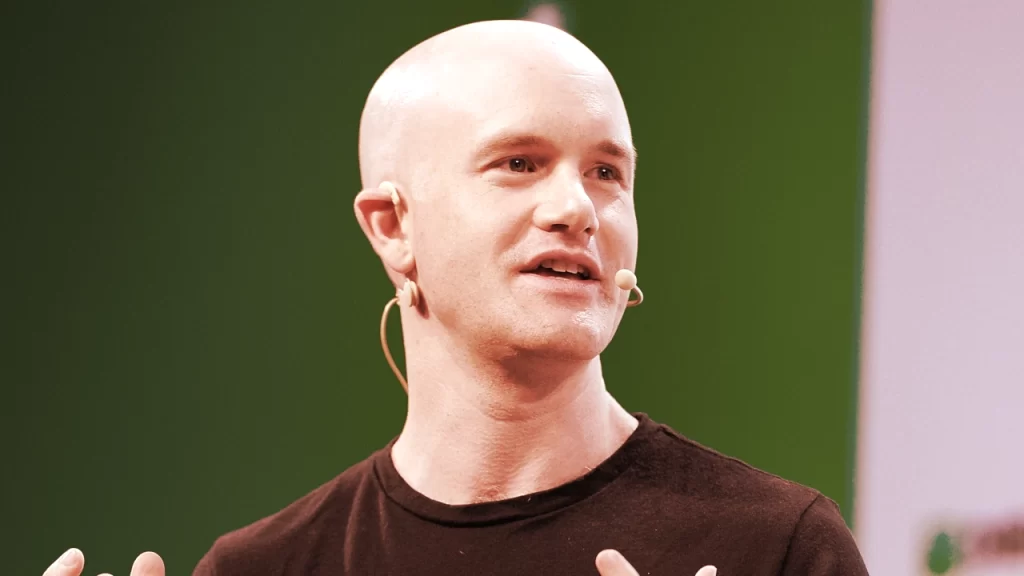
Coinbase’s Base mainnet is now accessible to builders, as stated in a blog post by the network’s development team on July 13.
This early opening of the network is aimed at allowing more time for user onboarding before its official public launch, which is scheduled for August.
Coinbase initially unveiled the Base network on February 23, presenting it as an Ethereum layer-2 solution that would leverage the OP Stack software developed by Optimism.
The Ethereum community welcomed this announcement, perceiving it as a significant vote of confidence for Ethereum’s future.
In the recent announcement on July 13, the team revealed that the Base mainnet currently features two operational block explorers and an official RPC node, enabling users to access data and transmit transactions.
READ MORE: Bitcoin ETF Approval Could Act as Government’s ‘Seal of Approval’
Data from the block explorers indicates that the network has been operational since July 2, having successfully processed over 1 million transactions.
Blockchain data confirms the deployment of an official “OptimismPortal” or Base bridge contract on Ethereum.
This contract enables developers to transfer Ether (ETH) to the new network for gas fee payments.
Notably, the bridge does not have a web-based user interface (UI), necessitating the use of a command-line interface or script-based interactions.
During the initial “builder” phase, the team has decided to withhold a publicly accessible bridge with a UI.
They have specifically requested developers to refrain from launching UIs for their applications until the upcoming public launch, where this feature will be available.
To celebrate this milestone, builders are given the opportunity to mint a commemorative non-fungible token (NFT) called “Base is for builders.”
Furthermore, developers deploying a contract to the network and completing a form on the project’s website will receive a “Genesis Builder NFT” as a reward.
Optimism Labs, the creator of the OP Stack, envisions a future where Base and Optimism form a “Superchain,” comprising multiple networks sharing the same security features.
However, this Superchain is expected to face competition from zkSync’s “Hyperchains,” which aim to offer similar functionalities.
In conclusion, Coinbase’s Base mainnet is now accessible to builders, enabling them to explore and contribute to the network ahead of its public launch.
This marks an important step in the development of the Base network and its integration with Ethereum’s ecosystem.
Other Stories:
United States DoJ Moves $299 Million Worth of Bitcoin in Recent Transactions
Elon Musk Launches xAI: A New Venture to Unravel the Mysteries of the Universe
In a recent blog post by Joseph Mills, the group product manager of Google Play, it was announced that the platform now permits video game publishers to sell nonfungible token (NFT) games on its store.
This update, shared on July 12, highlights Google Play’s commitment to exploring innovative ways for users to transact blockchain-based digital content within apps and games, while also enhancing user loyalty through unique NFT rewards.
The move by Google Play marks a significant shift from its previous stance on cryptocurrency-related applications.
Back in 2018, the platform banned crypto mining apps, and in 2020, it removed the Bitcoin Blast video game due to “deceptive practices.”
In contrast, Apple’s App Store announced in October that NFTs acquired outside of its ecosystem cannot confer special benefits to users within a game, under the risk of being banned.
Furthermore, NFTs sold within the App Store must adhere to a 30% fee to Apple.

READ MORE: President Xi Jinping Highlights CBDCs and Expansion of SCO
These decisions and statements led many industry experts to speculate that mobile NFT games were under attack. However, Google Play’s recent policy revision clearly signals a welcoming approach to these games on Android devices, albeit with a few regulations in place.
According to Mills’ blog post, game developers must transparently indicate if their games enable users to earn or purchase NFTs or cryptocurrencies.
Moreover, developers are prohibited from glamorizing potential earnings from playing or trading activities, as well as selling loot boxes or incorporating gambling features.
By complying with these guidelines, game developers can leverage tokenized assets to enhance the gaming experience.
They are encouraged to reimagine traditional games by integrating user-owned content. Google Play emphasized that it collaborated with leaders in Web3 gaming to establish these rules and expressed its commitment to engaging with developers to understand their challenges and explore further opportunities.
The decision by Google Play to allow NFT games on its platform represents a significant development for the gaming industry.
With these updated policies in place, developers can harness the power of NFTs to create unique and engaging experiences for players, while adhering to responsible practices outlined by Google Play.
As the ecosystem evolves, it is likely that we will witness further collaboration between game developers and platforms, leading to exciting advancements in the intersection of gaming and blockchain technology.
Prosecutors and the Internal Revenue Service (IRS) in the United States are reportedly conducting investigations into wealthy individuals involved in cryptocurrency trading and fund management, suspecting them of illegally benefiting from Puerto Rico’s tax incentives.
Bloomberg’s report on June 12 revealed that civil and criminal cases are being built against hedge fund managers, crypto traders, and other affluent Americans who may have misrepresented their residency and income to exploit the tax breaks.
The investigations extend to attorneys and accountants who promoted Puerto Rico’s tax program, and it is anticipated that at least two criminal investigations will lead to charges in the near future. Charges under scrutiny include conspiracy and wire fraud.
READ MORE: United States Government Accountability Office Publishes Blockchain Report
Attorney Carlos Ortiz shared insights from a conversation with a U.S. federal prosecutor, stating that they are collaborating with IRS agents and Puerto Rico officials. Ortiz summarized the situation by saying, “The message is the noose is tightening.”
Since the implementation of Puerto Rico’s new tax policy in 2012, over 5,000 U.S. individuals have relocated to the territory, attracted by the potential savings in federal income tax.
The tax policy provides a 100% exemption on dividends, a 60% exemption on municipal taxes, and zero federal taxes on income earned within Puerto Rico.
Furthermore, more than 3,600 businesses have enjoyed exemption from taxes on dividends, only paying a 4% tax on exports.
While these tax benefits are among the most lenient globally, the requirements to qualify for them are stringent.
Applicants must prove residency on the island for a minimum of 183 days annually and establish Puerto Rico as their “tax home.”
According to lawyers familiar with the tax regime, the strict eligibility criteria have tempted many individuals to manipulate numbers and engage in fraudulent activities on their tax returns.
Renowned figures such as gold enthusiast Peter Schiff and crypto investor Michael Terpin have relocated to Puerto Rico for tax purposes.
However, Schiff’s bank was recently shut down by Puerto Rican regulators for failing to meet minimum capital requirements.
Speaking at Miami’s annual Bitcoin Conference, Terpin praised Puerto Rico as the only place where one can avoid paying global taxes without relinquishing U.S. citizenship.
Despite the potential scrutiny, Terpin expressed confidence in his meticulous record-keeping and willingness to face an audit.
While wealthy residents laud the tax breaks for attracting top fund managers and entrepreneurs to the island, protests have arisen, claiming that the influx of low-tax “colonizers” has raised living costs.
The tax program remains a subject of contention in Puerto Rico.
Binance’s BNB Beacon Chain mainnet is gearing up for a critical hard fork, which introduces a novel feature that enables the blockchain to stop new block production under specific conditions.
The impending upgrade, called “ZhangHeng,” is slated to take place at block height 328,088,888, expected to happen on July 19, as revealed in a statement from BNB Chain on July 12.
This significant hard fork will implement the Binance Evolution Proposal BEP-255, aimed at introducing on-chain asset reconciliation.
The addition comes in light of cross-chain bridge exploits such as the BNB Smart Chain breach in October 2022, which Binance believes can be mitigated by this strategy.
READ MORE: President Xi Jinping Highlights CBDCs and Expansion of SCO
Despite security enhancements like BEP171, Binance affirms the need for asset security on the BNB Beacon Chain, especially following bridge exploitation.
The BEP-255 implementation allows tracking of user balance changes per block, and reconciliation to spot potential anomalies.
Binance points out that if any reconciliation errors are detected, block production will cease. This move may affect bridges, deposits, and withdrawals on exchanges but is deemed crucial for the chain and user protection.
Restarting the blockchain will necessitate a hard fork and resolution of the detected reconciliation error. In case of an exploit, the related accounts will need to be corrected or blacklisted.
The blockchain’s resumption will also restore downstream services.
The upcoming hard fork also involves other upgrades, such as fixing a bug that curbs rogue key attacks. Existing vote addresses will be cleared when the hard fork reaches its height, and validators will have to re-add vote addresses.
The update is also designed to enable the chain to handle complex business rules and logic more effectively.
Binance highlights the need for two-thirds of validators to upgrade to software version v0.10.16 prior to the hard fork to avoid complications. Failing to upgrade would prevent full nodes from executing further blocks post-hard fork.
BNB Chain has provided comprehensive instructions for node operators to conform to the hard fork upgrade. BNB token holders using Binance.com, other centralized exchanges, or cold wallets, however, need not take any action presently.
On June 19, BNB Chain introduced opBNB, a new Ethereum Virtual Machine-compatible layer-2 scaling solution based on Optimism’s OP Stack.
Singapore, Singapore, July 13th, 2023, Chainwire
Recently, ungrounded allegations are spreading on social media regarding a supposed “decline in assets” at global major exchange Huobi. To prevent panic among users, Huobi has released a necessary response based on data and facts.
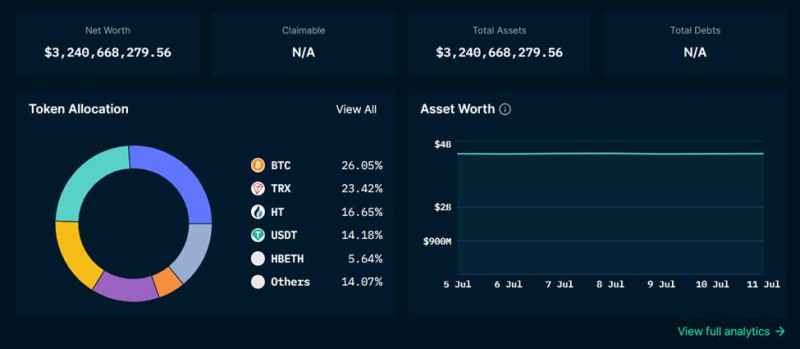
On July 1, the crypto giant published its Merkle Tree-based proof of reserves for July, confirming that the total assets the platform holds in custody for users exceed $3 billion.
Misleading claims stem from outdated data on third-party platform
Since July 6, some social media influencers have posted unsubstantiated claims about “asset decline” at Huobi. In response, the exchange made the following statements:
Those influencers’ claims are based on asset data provided by Glassnode. However, according to professional analysis, the data obtained by Glassnode is inaccurate, with evident gaps and omissions in addresses. This is due to the following reasons:
1. Huobi’s major cold and hot wallet addresses used for asset storage have been changed since the completion of a share transfer on October 8, 2022.
2. Huobi’s assets are distributed across multiple chains, including 400 million USDT on TRON, 6,500 TRC20 BTC, and a portion of ETH used as collateral for ETH validators. However, Glassnode failed to promptly update relevant data based on this information and changes.
Huobi has established contact with Glassnode and requested the necessary data updates.
Huobi has voluntarily disclosed its major addresses since the end of November 2022. Following the collaboration with Nansen, a blockchain analytics platform, Huobi has provided Nansen with the relevant addresses. Furthermore, all address changes whether resulting from the replacement of major shareholders or due to system upgrades have been synchronized with Nansen.
The Huobi assets details displayed on Nansen can be found publicly at: https://portfolio.nansen.ai/dashboard/huobi
In reality, this steep decline is not caused by any changes in the platform security or user trust. Instead, it can be attributed to Huobi’s withdrawal from certain markets. Therefore, it is important to understand that both the fluctuations in user base and assets are within the realm of normalcy.
Since the beginning of 2023, Huobi has maintained a stable and upward momentum, without experiencing any significant changes.
Pursuit of asset transparency by upholding highest industry standards in safeguarding user assets
As a prominent digital asset exchange, Huobi prioritizes its users and considers the protection of user funds as its primary responsibility. Huobi’s on-chain wallet assets are publicly transparent, and users can verify at any time that their funds have a 1:1 backing of real assets.
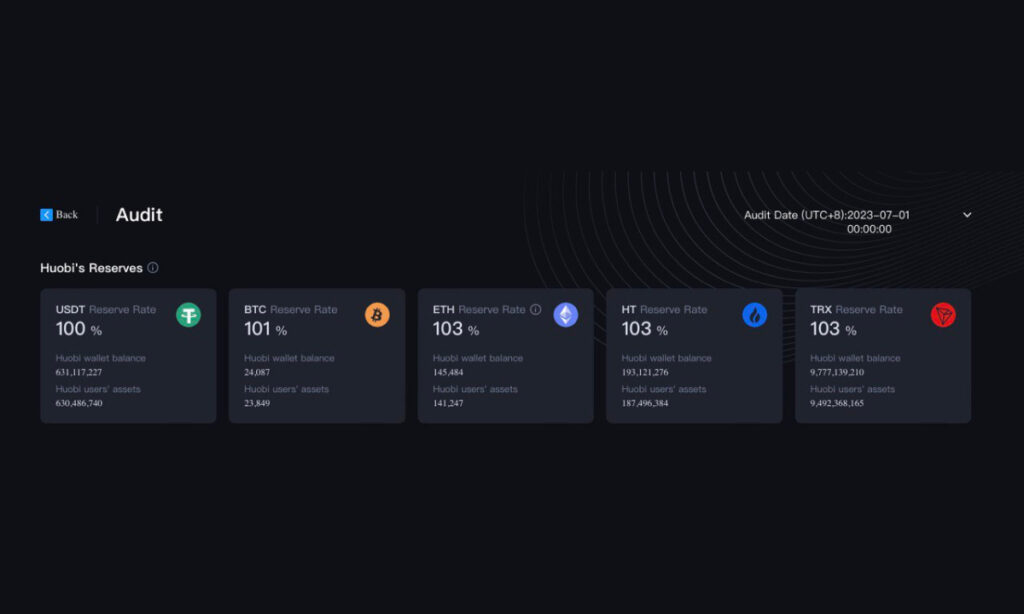
Starting in 2023, Huobi updates the Merkle Tree-based proof of reserves every month and publishes it to the public. Currently, Huobi’s on-chain assets ensure permanent 100% redeemability for user assets. Users can view Huobi reserves of BTC, ETH, BETH, TRX, USDT, and HT in detail on the asset audit page of Huobi’s official website, including reserve ratio, Huobi wallet’s assets, and Huobi’s user assets.
The specific asset proof of reserves can be viewed at: https://www.huobi.com/en-us/finance/merkle/.
The assets applicable for Proof of Reserves are BTC, ETH, BETH, USDT, TRX, and HT.
Huobi’s current reserve ratios are as follows:
USDT: 100%
BTC: 101%
ETH+BETH: 103%
HT: 103%
TRX: 103%
In the future, Huobi will continue to publish Merkle Tree PoR to the public and put users first with professional and reliable digital asset trading services in line with high industry standards.
About Huobi
Founded in 2013, Huobi has evolved from a crypto exchange into a comprehensive ecosystem of blockchain businesses that span digital asset trading, financial derivatives, wallets, research, investment, incubation and other areas. Huobi serves millions of users worldwide, with a business presence covering over 160 countries and regions across five continents. Its three development strategies – “global development, technology drives development, and technology for good” underpin its commitment to providing comprehensive services and values to global cryptocurrency enthusiasts.
Contact
Michael Wang
[email protected]
London, England, July 13th, 2023, Chainwire
Decentralized wireless network operator World Mobile has announced it has secured licensed spectrum in the United States of America. This strategic move marks a significant milestone in the company’s mission to bring reliable and affordable internet access to under-connected areas of the United States.
World Mobile has secured up to 20MHz of spectrum across the states of California, New Mexico, Nevada and Utah, providing a solid foundation for World Mobile’s US expansion plans. The spectrum will play a pivotal role in enabling the company’s decentralized hybrid-connectivity solution, which combines blockchain technology with aerial and terrestrial infrastructure to provide connectivity at a cost multiples lower than traditional mobile network operators.
World Mobile CEO Micky Watkins said: “By securing licensed spectrum, we are signaling our intent to revolutionize the connectivity landscape in the United States. Securing spectrum strengthens our position to deploy our network and support a profitable sharing economy. We believe in harnessing the collective power of individuals and communities to create a more inclusive and connected world.”
World Mobile securing licensed spectrum aligns with the US government’s plan to support connectivity across the country. President Biden recently announced a $42 billion high-speed internet initiative, which aims to expand broadband access to rural and low-income areas, as well as to promote competition and affordability in the market.
The Commerce Department has officially distributed the funding, awarding grants at State level, ranging from roughly $27 million to more than $3.3 billion, based largely on local needs.
World Mobile plans to deploy its service in the US later this year, following a successful commercial launch in Tanzania, and field tests in Kenya, Nigeria and Mozambique. The company has recently been bolstered by the appointment of ex-Softbank India country head and Bharti Airtel CEO, Manoj Kohli, who brings over 40 years’ of telecoms experience to the leadership team.
About World Mobile
World Mobile was founded with a far-reaching goal: to connect everyone, everywhere while advocating for economic freedom and dignity. Unlike traditional mobile networks, World Mobile is based on blockchain and incentivizes people to be part of a sharing economy that taps into the trillion dollar global telecom market. Individuals and business owners around the world can operate nodes on its network and bring their community online while earning revenue.
Learn more: https://worldmobile.io/
Contact
Dan Edelstein
[email protected]
Ripple, the blockchain company currently facing a lawsuit from the United States Securities and Exchange Commission (SEC), may have to wait a little longer for a decisive ruling.
A district court judge in the U.S., Paul Barbadoro, declined to determine whether the secondary sale of LBRY Credits (LBC) qualifies as a security.
On July 11, Judge Barbadoro made his decision in a case brought by the SEC against LBRY, a decentralized content platform.
This ruling could establish legal precedent for Judge Analisa Torres, who will preside over the SEC’s case against Ripple in the coming months.
READ MORE: Bitcoin Attempts Fresh Breakout as Battle for Yearly Highs Intensifies
In his ruling, Barbadoro abstained from taking a position on whether the registration requirement applies to secondary market offerings of LBC.
The secondary market involves trading securities between traders, while the primary market entails direct trading from the issuing company.
John Deaton, a U.S. lawyer representing numerous XRP tokenholders, sought clarification from Barbadoro regarding LBC’s classification as a security.
However, the judge upheld his “judicial restraint” and refrained from providing a definitive answer.
This recent opinion from Barbadoro represents a reversal from his stance during a January appeal hearing, where Deaton successfully argued that the secondary sale of LBC should not be considered a securities offering.
During the appeal hearing, the New Hampshire judge clarified that LBC only qualifies as a security when sold directly.
The SEC also acknowledged that secondary market sales of LBC do not fall under the definition of a security.
Although the SEC obtained a summary judgment in November 2022, it opted to settle for $22 million during the appeal hearing in January.
In May, the SEC revised the amount and requested a reduced fine of $111,000 due to LBRY’s financial struggles.
In the meantime, Jeremy Hogan, a U.S.-based attorney and advocate for Ripple, shared with Cointelegraph that Judge Analisa Torres is expected to deliver her ruling within the next few months.
Hogan anticipates that the broader outcome will be known before the year’s end, unless Ripple achieves a complete victory.
If the details of the ruling are unfavorable, appeals are likely to prolong the legal process.
However, Hogan reassured typical XRP holders that the final outcome would not significantly affect them.
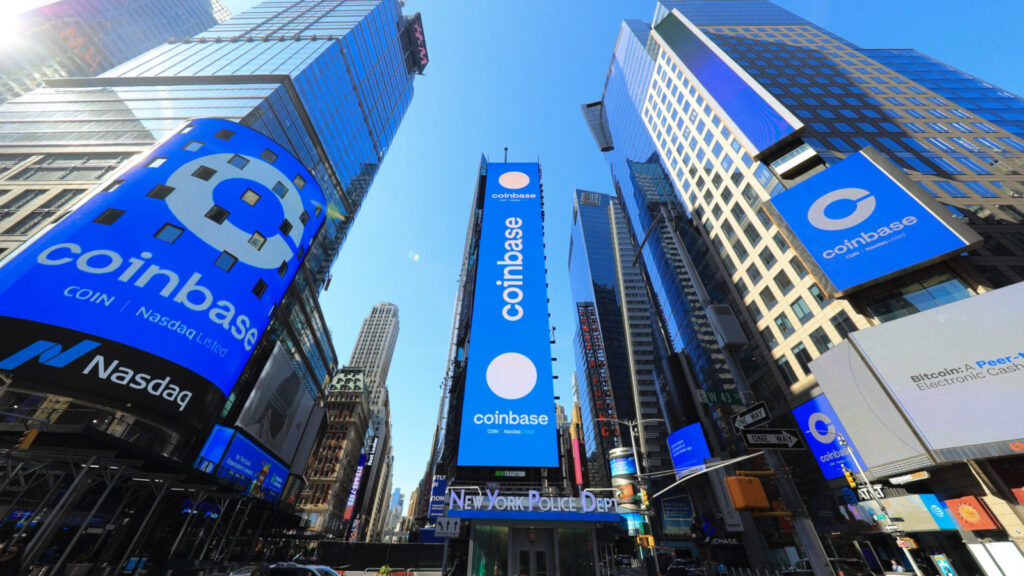
Investment veteran Cathie Wood, known for her pro-Bitcoin stance, has decided to take some profits from ARK Invest’s significant Coinbase holdings.
ARK sold 135,152 Coinbase shares, amounting to $12 million, from its ARK Innovation ETF.
This sale represented 0.14% of the fund’s total holdings.
The move comes as the price of Coinbase stock experienced a sharp increase, briefly surpassing $90 on July 11 before closing at $89.
This is the second time this year that Wood has taken profits from Coinbase shares. In March, ARK sold 160,887 shares for $13.5 million.
However, prior to these profit-taking moves, Wood’s firm had been actively accumulating Coinbase stock in various ARK funds. In June alone, ARK purchased about $40 million worth of shares.
In previous months, they had bought around $33 million in April and May, as well as $117 million in March.
Coinbase executives have also been selling their shares amid the price rally. CEO Brian Armstrong and other senior executives sold a combined total of 88,058 shares worth $6.9 million on July 6. In June, Coinbase’s chief accounting officer, Jennifer Jones, sold 74,375 shares, netting $5.2 million.
Despite facing a securities violation lawsuit from the U.S. Securities and Exchange Commission, Coinbase’s stock has been performing well.
The growth can be attributed to the anticipation surrounding the BlackRock spot Bitcoin ETF filing, where Coinbase was named a “surveillance-sharing” partner.
Overall, Wood’s decision to take profits from Coinbase shares reflects a calculated move to lock in gains.
While the cryptocurrency exchange continues to face legal challenges, its stock price has surged over the past month, increasing by more than 60%.
Wood’s active participation in accumulating Coinbase shares earlier this year indicates her belief in the long-term potential of the company.
As the cryptocurrency market and related investments evolve, market participants will continue to closely monitor the developments surrounding Coinbase and its role in the growing crypto ecosystem.
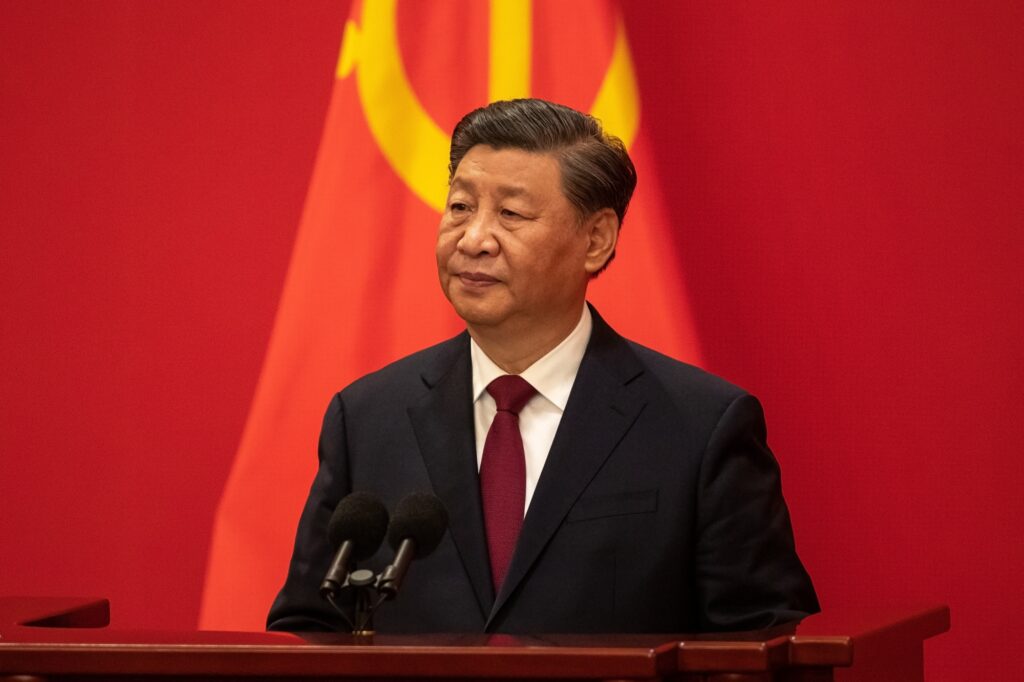
China’s President Xi Jinping addressed the 2023 Shanghai Cooperation Organization (SCO) Summit, and Xinhua News Agency published the transcript of his speech. President Xi welcomed Iran as a full member of the organization and praised Belarus for joining.
He also emphasized the significance of central bank digital currencies (CBDCs) and proposed expanding the use of local currency settlements among SCO countries, promoting sovereign digital currency cooperation, and establishing SCO development banks.
The People’s Bank of China reported in January that there were 13.61 billion digital yuan CBDCs in circulation, although it represented only a small fraction of the monetary supply.
Despite continuous promotion, the digital yuan has faced challenges in gaining widespread adoption.
READ MORE: President Xi Jinping Advocates for CBDC Expansion
In other news, a SIM card linked to the digital yuan CBDC will soon be available to Chinese consumers, according to a report by East Money.
The embedded digital wallet will allow individuals to make payments for phone bills even when their phones have no power.
Hong Kong’s crypto licensing costs have surged to HK$100 million ($12.77 million) since the license’s inception on June 1, as reported by Tencent News.
Obtaining a regulatory license is necessary for crypto exchanges to continue operations in Hong Kong.
Some teams have relocated to Malaysia, citing cost advantages and favorable conditions for crypto projects in Southeast Asia.
Multichain, a Chinese cross-chain bridge protocol, experienced a security breach resulting in the loss of over $126 million in funds.
The protocol’s private keys were compromised, and the stolen assets were transferred to another wallet address.
This incident follows a previous hack in July 2021, and the CEO of Multichain, Zhao Jun, has been missing for nearly two months, with rumors suggesting his arrest by Chinese authorities.
Singapore’s Monetary Authority will require Digital Payment Token (DPT) providers to place clients’ assets in a statutory trust by the end of the year.
Retail investors will be prohibited from accessing crypto lending and staking services, although these services will still be available to institutional and accredited investors.
The MAS aims to enhance investor protection and market integrity in DPT services.
Thai cryptocurrency exchange Bitkub has sold a 9.22% equity stake worth $17.1 million to Asphere Innovations PLC.
Bitkub holds significant assets and customer deposits, along with liabilities, and reported a gross profit in the first quarter of 2023.
It is the largest crypto exchange in Thailand, but its total assets decreased by 64% between December 2021 and December 2022.
South Korean NFT firm Line Next signed an agreement with Japanese video game giant Sega to remake one of Sega’s classic games on its Web3 gaming platform, Game Dosi.
The platform currently offers six titles, allowing players to buy and sell NFT heroes and compete against others.
Sega, known for its iconic franchise Sonic the Hedgehog, is a prominent player in the Japanese video game industry.