



In a recent blog post, blockchain security and analytics firm Chainalysis suggested that the multimillion-dollar exploit of the cross-chain bridge protocol Multichain may have been an internal rug pull.
The unauthorized withdrawals, which occurred on July 6, 2023, have led to a loss of over $125 million.
According to Chainalysis, the exploit could have been carried out by insiders who had compromised administrator keys.
READ MORE: Hacker Exploits Code Vulnerability, Drains $455,000 from Arcadia Finance
This possibility has also been previously suggested by blockchain security firm SlowMist. In response to queries from Cointelegraph, Chainalysis confirmed that they consider the incident a potential rug pull.
Multichain employs a multiparty computation (MPC) system in its smart contracts, similar to a multisignature wallet.
Chainalysis explained that it is possible the attacker gained control of Multichain’s MPC keys to execute the exploit.
While it is conceivable that external hackers obtained these keys, some security experts and analysts believe the exploit could be an inside job due to recent issues experienced by Multichain.
One prominent internal issue highlighted by Chainalysis was the disappearance of Multichain’s CEO, known as “Zhaojun,” in late May.
Additionally, the platform encountered delayed transactions and other technical problems that led Binance to withdraw support for several bridged tokens on July 7.
Attempts to reach out to Multichain for comment on these claims have been unsuccessful at the time of publication.
In the midst of these developments, blockchain investigators have noticed further suspicious movements of Multichain tokens in the past few hours.
These abnormal outflows included the draining of token addresses across multiple chains by the Multichain executor address.
Furthermore, stablecoin issuers Circle and Tether took action on July 8 by freezing over $65 million in assets associated with the Multichain exploit.
Chainalysis found it intriguing that the exploiter did not convert these assets into centrally controlled ones like USDC, which can be frozen by the issuing company.
As the investigation into the Multichain exploit continues, it is becoming increasingly likely that the incident was an inside job or rug pull.
The repercussions of this exploit have resulted in substantial financial losses and raised concerns about the security and integrity of the protocol.
Georgetown, Cayman Islands, July 12th, 2023, Chainwire
Kava, a Layer-1 blockchain that combines the developer power of Ethereum with the speed and interoperability of Cosmos has launched the Kava 14 upgrade. This upgrade deploys ‘internal bridge’ technology to seamlessly convert native Cosmos assets to and from Ethereum’s ERC20 token standard.
Kava 14 is one of a cluster of milestones in the making. In early July, Tether announced its decision to make Kava the gateway for issuing native USDt on Cosmos. With the launch of Kava 14, USDt can now be minted and easily converted on Cosmos, to — and from — USDt on every other L1 with native USDt including the: Bitcoin (Omni & Liquid protocol), Ethereum, TRON networks, and more.
“Within the first few days of Kava launching the official Tether integration, more USDt has been issued on Cosmos than on Polkadot and Near combined,” said Scott Stuart, Kava Co-Founder. “It’s clear that people want USDt on the interchain. I’m optimistic that having a native stablecoin and a safe, reliable way to convert it across chains via the Kava 14 upgrade will finally unlock the incredible tech the Cosmos ecosystem has built.”
Kava Gains Momentum
Following Tether’s July announcement, Kucoin now supports Kava’s Cosmos and EVM networks, providing a reliable CEX for user transactions within the Cosmos ecosystem. Meanwhile, Curve Finance’s launch of a USDt liquidity pool offers a decentralized alternative for experienced users. In parallel, Stargate, a top omnichain liquidity layer, is set to launch on Kava, anticipating increased usage and liquidity. This expansion comes after a governance proposal that plans to widen the scope of the Kava Rise incentive fund.
The Kava 14 upgrade is a leap forward for Cosmos DeFi builders and users providing a safer, more secure, and more reliable method for converting assets to and from the Cosmos ecosystem.
Follow @KAVA_CHAIN on Twitter for more information and updates on Kava 14’s mainnet launch.
About Kava
Kava is a secure, lightning-fast Layer-1 blockchain that combines the developer power of Ethereum with the speed and interoperability of Cosmos in a single, scalable network. Committed to fostering innovation and growth, Kava is a trusted choice for developers and users worldwide.
For more updates, follow Kava on Twitter.
Disclaimer
This press release is not an offer to sell or the solicitation of an offer to buy USDt or KAVA tokens.
Contact
Media Manager
Guillermo Carandini
Kava
[email protected]
London, England, July 12th, 2023, Chainwire
cheqd, a startup that allows users and organizations to gain control and portability of their data, introduces Credential Service, empowering organizations with an easy-to-use, plug-and-play solution for issuing and managing digital credentials.
cheqd’s Credential Service is a ready-made, software-as-a-service offering or “Credential-as-a-Service” that can easily be integrated into any organization. With its Credential Service, cheqd provides a simple solution for organizations to issue and verify decentralized credentials with ease. It removes all of the complexity and technical knowledge required to build or integrate Decentralized Identity within existing applications, allowing organizations to issue and verify trusted credentials in a few simple steps. Application developers can effortlessly issue and manage credentials by using simple API services. It supports features such as Credential Payment, Verifiable Credentials and Presentations, Decentralized Identifiers and Identity Keys, and Revocation Registries. This provides cheqd partners with the option to use a simple set of API services rather than needing to integrate more complex and nuanced Software Development Kits (SDKs).
As part of cheqd’s ultimate vision, Credential Service will be a route for anyone to access upcoming payments functionality – cheqd first-of-its-kind feature enabling on-chain payments for off-chain trusted data. Payment functionality offers opportunities for anyone to create entirely new business models – Trusted Data Markets.
With Credential Service organizations can access cheqd’s Decentralized Identity (DID) framework in the simplest and most efficient way, with no technical skills required. DIDs are a foundational technology for enabling self-sovereign identity (SSI) that gives users control over the information they use to prove who they are to websites, applications and services on the Web. Users can store all of their data in digital wallets that protect their privacy and keep their personal data more secure while limiting risk and simplifying the process of verification.
The Credential Service is built atop cheqd’s blockchain technology, a robust, public and permissionless network that’s fully compliant with Europe’s GDPR. As it’s based on self-sovereign identity technology, it is closely designed with the upcoming EU eIDAS regulation in mind that governs electronic identification and trust services for electronic transactions. As with all cheqd products, no personally identifiable information is stored on its network. Instead, the user’s personal data resides off-ledger, where it remains private and secure. The information is signed and verified by trusted identifiers on-chain, and any credential can be checked and verified in seconds.
cheqd’s Credential Service is sector-agnostic and applicable for a wide range of use cases, including Know Your Customer (KYC) checks, verification of educational qualifications and online reputations. It also supports payments for digital credentials with full regulatory compliance.
“We are removing the barriers for those wanting to leverage the decentralized or self-sovereign identity and digital credentials through introducing the Credential Service,” said cheqd’s Co-founder and Chief Executive Officer, Fraser Edwards. “It is especially relevant for those who have never interacted with decentralized identity and want to access payment rails without needing to use anything technically complex. Its built-in payment infrastructure, combined with a simple set of APIs, will allow developers to fully leverage credential payments in the easiest possible way.”
For further questions or interview requests, please contact Avishay Litani at [email protected].
About cheqd
cheqd (cheqd.io) is a privacy-preserving payment and credential network that allows users and organisations to gain control and portability of their data. cheqd builds upon Decentralised Identity, Self-Sovereign Identity (SSI), and Digital or Verifiable Credentials (VCs) with payment infrastructure to create Trusted Data markets as an entirely new industry category. Put simply, you can now issue credentials and get paid to do so.
With its technology, cheqd is creating a new paradigm around Trusted Data economies such as lending markets in Web3, preference data markets, and others where the user is at the centre. It empowers consumers and businesses with full ownership, portability, and control over their data and identities. In addition, this data can be transacted within a cutting-edge payment network that prioritises individual privacy and market-first principles. The scale of distribution is unmatched as cheqd engages with organisations across Lending, Supply Chain, eCommerce, Education, Manufacturing, Gaming and other sectors.
cheqd.io
Contact
Avishay Litani
MarketAcross
[email protected]
Tortola, British Virgin Islands, July 12th, 2023, Chainwire
In its ongoing journey to reshape the crypto investing landscape, Struct Finance, a DeFi platform that enables investors to engage with tailored interest rate products linked to digital assets, is thrilled to announce the launch of the BTC.B-USDC Vaults.
The tranche-based BTC.B-USDC Interest Rate Product was made possible by effectively leveraging Avalanche’s BTC.B (Bridged Bitcoin) for DeFi applications. The new vault beautifully complements Struct Finance’s Genesis USDC Vaults, heralding an exciting era in DeFi yield opportunities. Struct Finance built the new vault on top of GMX’s Liquidity Provider Token (GLP) to generate predictable yields for BTC in the form of fixed returns, and USDC in the form of variable returns, while still leveraging a secure asset and minimizing volatility and exposure to other risks.
“Our BTC.B-USDC Vaults represent an innovative application of Bitcoin in DeFi. We’re taking full advantage of Avalanche’s Bridged Bitcoin (BTC.B) to bring about a fresh wave of opportunities in the digital asset space,” said Ersin Dalkali, the Co-founder of Struct Finance.
While Bitcoin continues to dominate the market, its inherent lack of a DeFi layer has traditionally made native yield generation quite challenging. Avalanche has unlocked new possibilities for Bitcoin in DeFi with BTC.B (Bridged Bitcoin). Unlike WBTC that relied on centralized bridges, BTC.B is minted via Avalanche Core — a decentralized bridge — and can be trustlessly bridged across networks using the Layer Zero bridge.
At present, Bitcoin investments in prominent lending pools yield between 0.2–0.5%. Even the stable swap pools offering wBTC-BTC.B products only manage to deliver returns of about 2%. Struct’s BTC.B-USDC product shatters these limitations, offering significantly higher yields.
The purpose of BTC.B is to empower BTC holders to explore DeFi opportunities on the Avalanche blockchain, without the need to acquire secondary tokens or rely on centralized bridges. BTC.B represents BTC coins transferred to the Avalanche blockchain in the form of ERC-20 tokens. With over 6000 BTC bridged and a fully diluted value of $180 million, BTC.B is carving a niche for itself in the crypto arena.
The Bitcoin ETF applications by BlackRock, WisdomTree, and Invesco – three of the world’s leading asset managers – are not just a mere submission. It is a signal that the traditional financial realm is ready to embrace Bitcoin on a new level. Recently, the US Securities and Exchange Commission (SEC) gave the green light to a 2X leveraged Bitcoin ETF, sparking an enthusiastic wave of speculation and anticipation for approval of a spot Bitcoin ETF.
Delta hedging
Amid the highly volatile crypto industry, Struct Finance’s Interest Rate Products allow anyone to split and repackage the risk of any yield-bearing DeFi assets in different parts to fit their risk profile through an innovative process called “tranching.” Every Interest Rate Product is a single vault split into two portions, or tranches that have different return configurations:
- A Fixed-return Tranche for conservative investors looking for consistent returns
- A Variable-return Tranche for investors with a higher risk appetite seeking superior returns
The yield from the underlying asset flows into the fixed tranche first to ensure predictable returns. The remainder is then allocated to the variable tranche, which gets enhanced exposure to the underlying yield-bearing asset. Compared to the fixed tranche, the variable tranche might accrue more yield, less yield, or no yield.
As part of its BTC.B-USDC Vaults, Struct Finance has implemented a unique approach to managing investment risk: delta hedging. While the fixed tranche takes center stage with its high yield, the variable side of the product offers an additional layer of intriguing complexity and potential.
Upon deployment of funds into the vault, the BTC.B in the fixed tranche gets converted into GMX’s GLP token, setting up a position that’s short Bitcoin against GLP and contributing a negative delta. In contrast, the USDC on the variable side is converted into GLP, which inherently carries a positive delta.
This innovative delta-hedged product design achieves a fine balance between the positive and negative delta forces. It results in a robust strategy that allows investors to confidently navigate the crypto market’s inherent volatility.
This artful interplay of the fixed and variable sides within the vaults opens the doors for investors to tap into the potential of Bitcoin investments like never before. By catering to a diverse range of risk appetites, Struct Finance ensures that both retail and institutional investors can tailor their strategies to maximize their returns, regardless of market conditions.
About Struct Finance
Struct Finance is at the forefront of the DeFi revolution, with a vision to transform the design and utility of financial products. It empowers users to design their own financial instruments, harnessing the power of tokenized, yield-bearing positions to unlock a world of diverse investment opportunities. Moreover, its cutting-edge financial products adopt a tranche-based system, smartly distributing yield between different investor classes. This balanced approach guarantees a steady yield for risk-averse investors while also offering the prospect of heightened returns to the more adventurous. Initially available on Avalanche, Struct Finance plans to go multichain in the near future.
For more information, visit: Website | Twitter | Discord | Telegram
Disclaimer: This release is for informational purposes only and should not be construed as financial promotion.
Contact
Miguel Depaz
[email protected]

The Financial Conduct Authority (FCA), the financial regulator of the United Kingdom, has taken action against cryptocurrency ATMs, disrupting 26 out of the 34 machines it visited and inspected since the beginning of 2023.
On February 14th, the FCA issued an ultimatum to all crypto ATM operators in the country, stating that they must comply with regulations or cease their illegal operations.
In response to this warning, the FCA, along with other law enforcement agencies, conducted investigations into 36 crypto ATM locations using their authority under money laundering regulations.
Steve Smart, the joint executive director of enforcement and market oversight at the FCA, spoke out against the use of all crypto ATMs, highlighting the risks involved.
READ MORE: Crypto Firms Struggle to Attract Local Talent in Hong Kong Despite Regulatory Changes
He emphasized that using a crypto ATM in the UK means utilizing a machine that is operating illegally, and users may unknowingly be handing their money over to criminals.
Smart further clarified that victims of scams involving these ATMs, specifically those related to cryptocurrencies like Bitcoin (BTC), will not receive government protection or assistance from the ATM operators.
Between May and June, the FCA inspected 18 of these locations, coinciding with their public announcement about the initiation of their inspection campaign.
It is worth noting that all crypto exchanges and ATMs in the UK are required to register with the FCA and comply with the country’s money laundering regulations.
On July 8th, the Clive Police Department released a report detailing a crypto scam in which a fraudster posed as a law enforcement representative and managed to steal $6,000 from an unsuspecting victim while threatening them with an arrest warrant.
Scammers often employ fear tactics and impersonate law enforcement officials to deceive individuals into transferring funds through crypto ATMs.
However, it is important to remember that legitimate law enforcement agencies never demand payments over the phone or through cryptocurrency.
The FCA’s efforts to disrupt illegal crypto ATM operations and raise awareness about the risks associated with them are aimed at safeguarding the public and preventing financial crimes.
Individuals are urged to exercise caution and verify the legitimacy of any communication or transaction involving cryptocurrency to protect themselves from falling victim to scams.

Imperium Comms, a Dubai-based crypto marketing and PR agency, has announced the launch of its crypto newswire.
The newswire will provide coverage in leading crypto and mainstream news publications, including Cointelegraph, Bloomberg, Yahoo Finance, and AP.
This will allow clients to publish press releases that will reach hundreds of relevant journalists and thousands of readers, including active crypto investors and executives.
This latest offering strengthens Imperium Comms’ existing suite of services that are available to crypto and blockchain projects.
Some of their other services include earned/organic media coverage, search engine optimization (SEO), and crypto ads management/media buying.
About Imperium Comms
Imperium Comms was founded in 2019 and has helped hundreds of blockchain and Web3.0 projects achieve their strategic marketing objectives.
Additionally, they have worked with several PR agencies which outsource to them to deliver targeted, organic placements for their clients.
Other Stories:
Luxury Watch Owner Borrows $35,000 By Using NFT To Collateralize Watch
Central Authority Control Functions Discovered in Brazil’s Digital CBDC Source Code
Vara Network Set to Launch with Efficient ‘Actor-based’ Computing

Bitcoin (BTC) made a fresh breakout attempt on July 11, as the battle for yearly highs intensified.
The cryptocurrency briefly surpassed $31,000 before the daily close on July 10, signaling a potential leverage crunch.
BTC/USD approached resistance but lost momentum and retraced over $800. However, some continuation was observed, and at the time of writing, Bitcoin was trading around $30,500.
READ MORE: Hacker Exploits Code Vulnerability, Drains $455,000 from Arcadia Finance
According to Michaël van de Poppe, the founder and CEO of trading firm Eight, the recent overnight move resembled a leverage crunch.
He cautioned traders about the choppy market and highlighted that while Bitcoin revisited previous highs, it did not make new lows, with $30,200 acting as a strong support level.
Crypto Daan, a popular trader, compared the recent price behavior with the Bart Simpson pattern, where Bitcoin’s price would spike and then retrace. However, the current market structure resembled the Burj Khalifa, indicating a different pattern.
Meanwhile, Rekt Capital, a trader and analyst, identified $30,600 as a crucial level for Bitcoin. He stated that BTC needed to turn this level into support in the coming days to confirm its breakout.
The market’s ability to hold above this level would be a significant indicator of Bitcoin’s upward momentum.
Glassnode, an analytics firm, noted that Bitcoin’s price cycles often exhibit repetitive patterns.
The $30,000 price level in the current cycle resembled a mid-point, similar to levels observed in previous cycles.
Glassnode referred to the current price action as “re-accumulation,” indicating a consolidation phase before potential further upward movement.
In conclusion, Bitcoin made a fresh breakout attempt, reaching above $31,000 before retracing. The market exhibited characteristics of a leverage crunch, with BTC finding support at $30,200.
Traders analyzed various price patterns and identified crucial levels, such as $30,600, to determine Bitcoin’s future direction. Glassnode suggested that the current price action resembled a phase of re-accumulation, similar to previous Bitcoin price cycles.
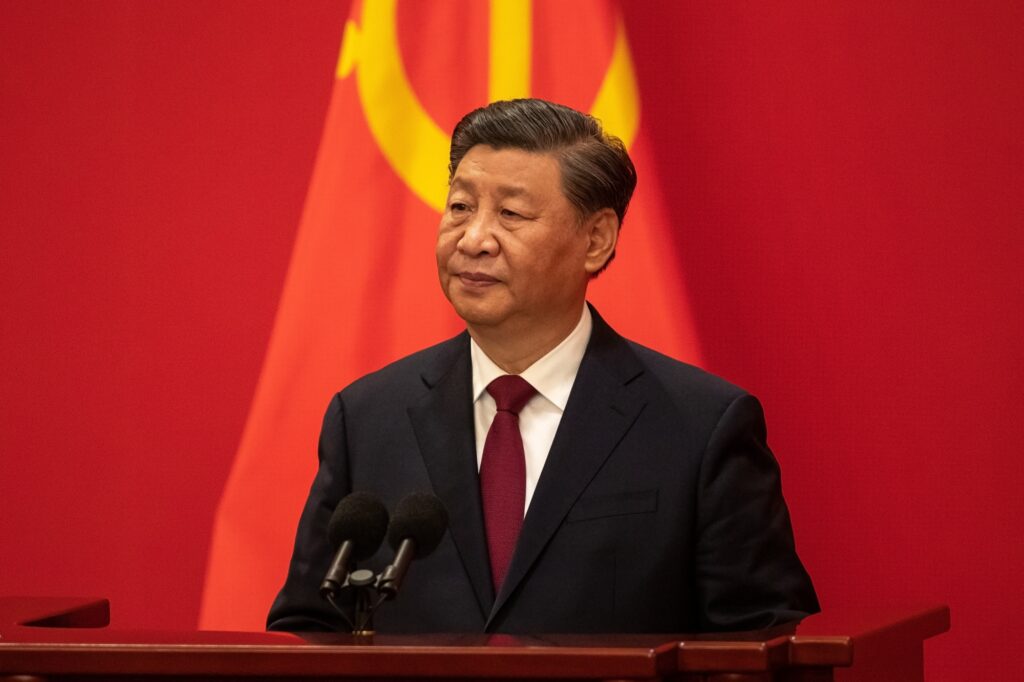
Xinhua News Agency, the state broadcaster of China, recently released a transcript of President Xi Jinping’s address at the 2023 Shanghai Cooperation Organisation (SCO) Summit.
The SCO, established by China and Russia in 2001, is a significant regional organization focused on political, economic, and security cooperation.
During his speech, President Xi expressed his appreciation for Iran becoming a full member of the organization and praised the inclusion of Belarus.
READ MORE: Crypto Firms Struggle to Attract Local Talent in Hong Kong Despite Regulatory Changes
He also emphasized the importance of central bank digital currencies (CBDCs) and proposed expanding the use of local currency settlements among SCO countries, fostering cooperation in sovereign digital currencies, and establishing SCO development banks.
The People’s Bank of China reported in January that there were 13.61 billion digital yuan CBDCs in circulation, accounting for approximately 0.13% of the monetary supply.
Since then, the use of the digital yuan has expanded to include China’s Belt and Road Initiative, consumer airdrops, and everyday transportation payments.
However, experts caution that despite promotional efforts, the currency has struggled to gain widespread adoption.
In another development, it was reported on July 10 that Chinese consumers would soon have access to a SIM card linked to the digital yuan CBDC.
With the digital wallet embedded in the SIM card, individuals can make payments for their phone bills using point-of-sale machines, even when their phones have no power.
Moving to Hong Kong, the cost of obtaining a crypto exchange license has skyrocketed to HK$100 million ($12.77 million), according to a report by Tencent News on July 5.
While some teams have relocated to Malaysia due to lower costs and favorable conditions for crypto projects in Southeast Asia, several exchanges, including Huobi, OKX, BitgetX, Hashkey Pro, and Gate.io, have applied for licensing in Hong Kong to comply with the requirement that all crypto exchanges obtain a regulatory license or cease operations by mid-2024.
Meanwhile, a concerning incident occurred on July 7 when the developers of Multichain, a Chinese cross-chain bridge protocol, announced a halt in their services.
This was followed by a security firm’s warning that over $126 million had been drained from Multichain. Circle and Tether froze significant amounts of USDC and USDT, respectively, in response.
The hack affected Multichain’s token price, which dropped by 20% and now trades at $2.62 per token. It is worth noting that Multichain had experienced a previous hack in July 2021.
The Monetary Authority of Singapore (MAS) announced new regulations requiring Digital Payment Token (DPT) providers to place clients’ assets in a statutory trust by the end of the year.
Retail investors will be prohibited from accessing crypto lending and staking services, while institutional and accredited investors will still have access to these services.
The MAS highlighted the importance of enhancing investor protection and market integrity in DPT services and is seeking public feedback on the proposed rule changes.
In Thailand, Bitkub, the country’s largest cryptocurrency exchange, raised $17.1 million by selling 9.22% of its equity to Asphere Innovations PLC.
Bitkub reported holding substantial assets and customer deposits, as well as liabilities. The exchange’s total assets experienced a significant decline from 2021 to 2022.
Finally, Line Next, a South Korean non-fungible tokens firm, signed a memorandum of understanding with Sega, a renowned Japanese video game company, to remake one of Sega’s classic games on its Web3 gaming platform, Game Dosi.
Sega, known for franchises such as Sonic the Hedgehog, is venturing into the blockchain gaming space through this partnership with Line Next, which already has several titles on its platform.
These recent developments reflect the ongoing advancements and challenges in the digital currency, crypto regulation, and blockchain gaming sectors in the Asian region.
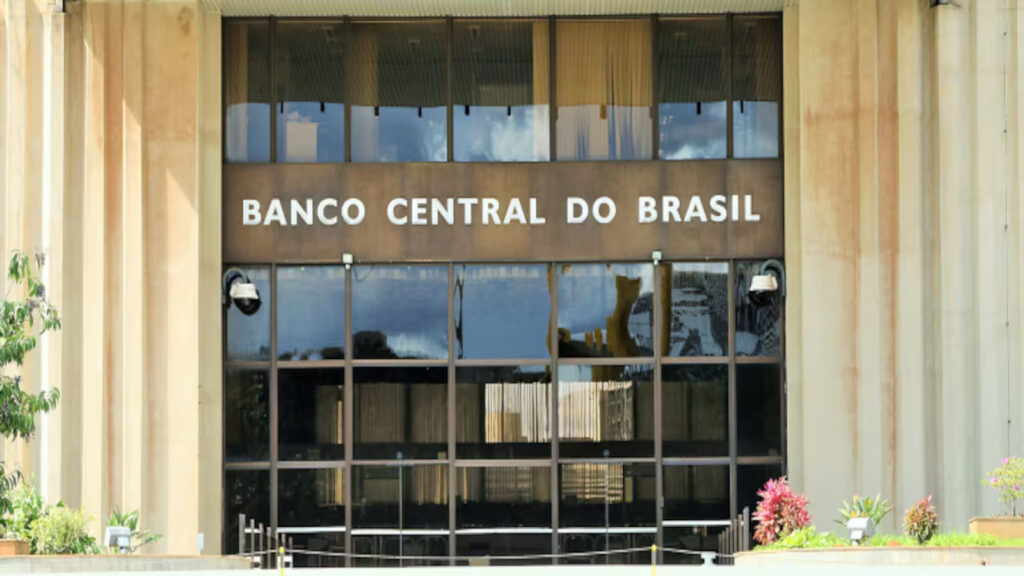
A blockchain developer claims to have reverse-engineered the source code of Brazil’s pilot central bank digital currency (CBDC) and discovered certain functions that could allow a central authority to freeze funds or reduce balances.
However, the developer argues that there might be situations in which these functions could be beneficial.
On July 6, the source code of Brazil’s digital real pilot project was made available on the GitHub portal by the country’s central bank.
READ MORE: Presidential Candidate Robert F. Kennedy Jr. Admits Owning Up to $250,000 in Bitcoin
It was clarified that the pilot project was solely intended for testing purposes and that the presented architecture could undergo further changes.
Pedro Magalhães, a blockchain developer and the founder of tech consulting firm Iora Labs, claimed to have successfully reverse-engineered the open-source code of Brazil’s digital real.
He revealed several functions in the code, including freezing and unfreezing accounts, adjusting balances, transferring currency between addresses, and minting or burning digital real from a specific address.
Magalhães suggested that Brazil’s central bank would likely retain these functions for secured loans and other financial operations based on decentralized finance (DeFi) protocols.
However, he pointed out that the code lacks clarity regarding the circumstances under which tokens can be frozen and who holds the authority to execute such actions.
These aspects should be publicly disclosed in the smart contracts and discussed with the population, which has not been done yet, according to Magalhães.
The cryptocurrency community has expressed concerns that a CBDC could infringe upon financial freedom and privacy.
However, Magalhães noted that while these concerns are understandable, a CBDC could also offer certain benefits.
For example, it would make taxes more traceable, allowing the public to inspect the allocation of tax funds and purchases made by the state on-chain. This could enhance transparency in parliamentary amendments as well.
In July 2022, Fabio Araujo, an economist at the Brazilian central bank, stated that the digital real has the potential to prevent bank runs and provide a safer and more reliable environment for entrepreneurial innovation.
The digital real pilot is reportedly running on Hyperledger Besu, a privately operated Ethereum Virtual Machine (EVM)-compatible blockchain.
Since it is not permissionless like the Bitcoin or Ethereum mainnets, users would require the central bank’s approval to become a node, as explained by Magalhães on July 7.

Paradigm, a crypto investment firm, has criticized the United States Securities and Exchange Commission (SEC) for its pursuit of crypto exchange Bittrex, arguing that the regulator is unjustly trying to regulate secondary crypto markets.
Rodrigo Seira, special counsel for Paradigm, expressed his views on Twitter, following Paradigm’s amicus brief filing that called for the dismissal of the SEC’s case against Bittrex. Seira stated that the SEC’s claims rely on an unreasonable application of the Howey test.
READ MORE:Crypto Firms Struggle to Attract Local Talent in Hong Kong Despite Regulatory Changes
Paradigm filed the amicus brief on July 7, asserting that the financial regulator exceeded its jurisdiction.
Seira further highlighted that SEC Chair Gary Gensler had previously acknowledged the absence of a sufficient regulatory framework for crypto exchanges.
Seira argued that this acknowledgment indicates a lack of authority for the regulator to oversee these secondary markets.
Seira also emphasized these points in a blog post on July 7, where he pointed out that crypto assets do not involve investment contracts, and therefore, they fall outside the SEC’s purview.
He criticized the SEC for instructing the digital-assets industry to register without providing effective means for doing so.
Seira urged the SEC to engage in the rulemaking process requested by Coinbase, another crypto organization facing legal action from the SEC, in order to provide clarity and resolve the industry’s regulatory uncertainties.
The SEC initially filed a complaint against Bittrex on April 17. Subsequently, Bittrex surrendered its Florida money transmitter license on April 30 and eventually filed for bankruptcy on May 8.
This is not the first time Paradigm has supported a crypto organization facing SEC legal action.
On May 11, Paradigm sought to file an amicus brief in support of Coinbase, arguing that the SEC had failed to provide clear rules or guidance for digital asset firms operating in the United States.
Paradigm’s criticism of the SEC’s approach reflects a growing concern within the crypto industry about regulatory ambiguity and the need for a comprehensive regulatory framework that considers the unique characteristics of digital assets.
The outcome of the Bittrex case and the SEC’s response to industry demands for clarity will significantly impact the future of crypto exchanges and secondary markets in the United States.