



The Financial Stability Board (FSB), an international organization responsible for overseeing the global financial system, has developed a comprehensive global regulatory framework for cryptocurrencies.
The guidelines have been presented to the G20, which represents the 20 leading economies worldwide. The framework is built on the principle of “same activity, same risk, same regulation.”
On July 17, the FSB released a public note and two separate guideline documents.
These documents comprise high-level recommendations for regulating cryptocurrencies in general, as well as revised recommendations specifically focused on “global stablecoins.”
The latter refers to stablecoins that have the potential for cross-jurisdictional usage.
The FSB emphasizes the importance of segregating clients’ digital assets from the funds of crypto platforms and maintaining clear functional separation to avoid conflicts of interest.
Cross-border cooperation and oversight by regulators are essential in ensuring the effectiveness of these measures.
While acknowledging the value of privacy, the FSB urges local regulators to ensure that activities related to decentralized finance (DeFi) protocols do not hinder the identification of responsible entities or affiliated entities.
READ MORE: Former SEC Official Criticizes Ripple Ruling as ‘Troublesome on Multiple Fronts’
The recommendations state that authorities should have access to necessary data to fulfill their regulatory and supervisory mandates.
Regarding global stablecoins, the FSB highlights the need for stablecoin issuers to establish a “governance body” consisting of identifiable and responsible legal entities or individuals.
Issuers are expected to hold reserve assets in a minimum proportion of 1:1 unless they are subject to prudential requirements equivalent to those imposed on commercial banks.
One notable addition to the guidelines is the potential requirement for global stablecoin issuers to obtain permits to operate in each jurisdiction.
The FSB states that GSC arrangements should not be permitted within a jurisdiction unless they meet all regulatory, supervisory, and oversight requirements, including obtaining affirmative approval.
The FSB plans to assess the worldwide implementation of its recommendations by the end of 2025.
In September 2023, in collaboration with the International Monetary Fund, it will submit a joint report on existing policies and regulatory issues to the G20.
In alignment with the FSB’s stance, the Association for Financial Markets in Europe recently urged European Union lawmakers to incorporate decentralized finance (DeFi) into the first EU-wide crypto framework, referencing the FSB’s position on the matter.
Other Stories:
Aave Launches GHO Stablecoin on Ethereum Mainnet
Primed For Major BTC Rally? SEC Begins Review of BlackRock’s Bitcoin ETF Application
Binance Integrates Bitcoin Lightning Network for Lightning-Fast BTC Transactions

MOOKY, the groundbreaking memecoin poised to redefine the crypto landscape, is gearing up to make its grand debut in July 2023. With an array of exciting features such as CEX listings, NFT integration, and an extensive marketing campaign, MOOKY is set to establish itself as the leading memecoin of the year.
As the final stage of the presale approaches, anticipation is reaching new heights. Investors and crypto enthusiasts eagerly await the opportunity to get their hands on MOOKY tokens and be part of this groundbreaking journey.
One of the key milestones for MOOKY is its upcoming listing on prominent exchanges, BitMart and LBank. This strategic partnership will provide MOOKY with increased accessibility and liquidity, attracting a broader audience of investors. Additionally, the team is planning an exciting Uniswap launch to enhance further MOOKY’s presence in the decentralized finance (DeFi) ecosystem.
In line with its innovative approach, MOOKY recognizes the significance of non-fungible tokens (NFTs) in the crypto space. Integrating NFT functionality, MOOKY opens up new avenues for token utility and engagement. The team envisions a vibrant NFT marketplace where MOOKY holders can explore unique digital assets and unlock exclusive experiences.
To ensure widespread awareness and adoption, MOOKY is rolling out an extensive marketing campaign. By leveraging various channels and influencers, MOOKY aims to capture the attention of the crypto community and beyond. The team is dedicated to fostering a strong and supportive community where members can connect, share insights, and contribute to MOOKY’s success.
With the final presale stage underway and the launch just around the corner, now is the perfect time to get involved with MOOKY. Stay tuned for more updates and announcements as MOOKY revolutionizes the memecoin space in 2023.
To learn more about MOOKY and participate in the presale, visit www.mooky.io.
About MOOKY
MOOKY is a forward-thinking memecoin that aims to redefine the crypto landscape in 2023. With its CEX listings, NFT integration, and extensive marketing campaign, MOOKY is set to lead the way as the top memecoin of the year. Join the MOOKY community and be part of the future of memecoins.
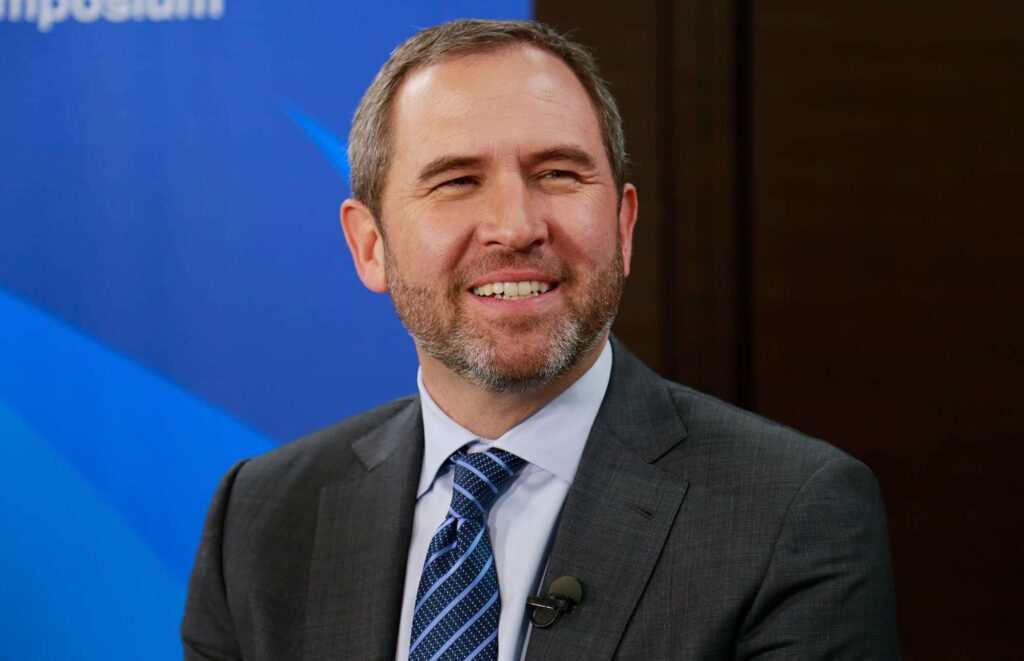
In a LinkedIn analysis, former Securities and Exchange Commission (SEC) official John Reed Stark criticized the recent ruling on Ripple Lab’s case, describing it as “troublesome on multiple fronts.”
Stark dissected Judge Analisa Torres’ decision from July 13, which favored Ripple in a lawsuit brought by the SEC in 2020. The SEC alleged that Ripple’s XRP token, valued at $0.74, was a security.
Judge Torres concluded that the XRP token was a security when sold to institutional investors but not in “programmatic sales” and other types of sales, such as token distribution to employees.
Ripple also faces penalties and potential rescission for institutional investors, involving sales of approximately $720 million.
According to the ruling, institutional investors had a reasonable expectation that Ripple would utilize the capital from sales to enhance the XRP ecosystem and increase the token’s price.
READ MORE: Eeon Intervenes in SEC Lawsuit Against Binance, Seeks Representation for Customers
In contrast, investors purchasing XRP tokens through exchanges could not reasonably expect the same outcome.
Stark raised concerns about the decision, claiming it established a discriminatory “class of quasi-securities” based on the investor’s sophistication.
He expressed disbelief that the same token could be considered a security in some instances but not in others, and that retail investors with less knowledge would receive less protection.
Stark highlighted the contradiction between the decision and investor protection principles, arguing that investors’ level of protection should not depend on their familiarity with the materials related to the asset purchase.
He noted that securities laws were designed to safeguard individual investors who may not have the ability to fend for themselves, but the Ripple decision appeared to contradict this principle.
Given his extensive experience as an attorney in the SEC’s Enforcement Division, Stark believed the decision was on shaky ground and likely to be appealed and overturned.
He predicted that the SEC would appeal to the 2nd Circuit, and the District Court’s rulings on “programmatic” and “other sales” would be overturned.
While Judge Torres’ ruling was viewed as a victory by the crypto community and Ripple, CEO Brad Garlinghouse anticipated a prolonged process before the SEC could appeal.
Garlinghouse also regarded the institutional sale decision as the least significant aspect of the lawsuit, suggesting that an appeal against the retail sale ruling would only strengthen Torres’ decision.
Overall, the Ripple case has sparked controversy and raised important questions about the classification of cryptocurrencies and the extent of investor protection under securities laws.
The final outcome remains uncertain as the legal battle continues.
Other Stories:
Synthetix Expands DeFi Offering with Introduction of Infinex Derivatives Exchange
ARK Invest Sells More Coinbase Shares, Expands Investments in Meta Platforms and Robinhood
Investor Spends $1.04 Million on PEPE Coin as Ripple CEO Criticizes SEC in Landmark Case
San Francisco, US, July 17th, 2023, Chainwire
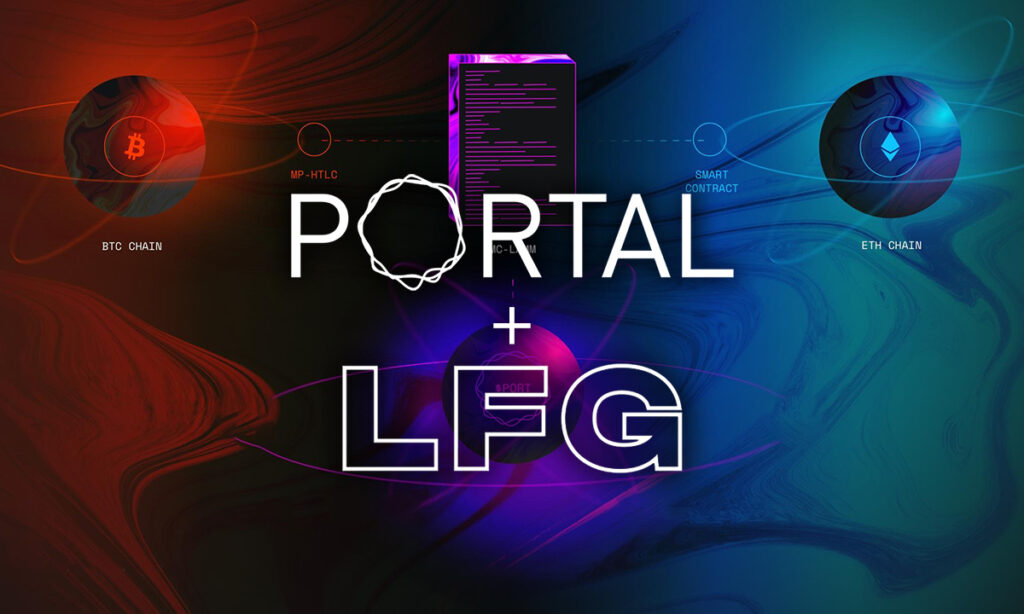
Portal, a self-hosted wallet and true cross-chain Layer-2 DEX built on Bitcoin, is thrilled to announce that LFG Market, a marketplace for Ordinal NFTs and Bitcoin-based BRC-20 tokens, has chosen to integrate the Portal DEX protocol to offer users cross-chain trading of Ordinals and BRC-20 tokens. The integration of Portal DEX will make cross-chain transactions between Bitcoin and other digital assets fast, secure, and private.
With this, LFG users will be able to purchase the Ordinal NFTs and BRC-20 tokens using assets from other chains such as Ethereum without bridges or custodians. Utilizing Portal’s “cross-chain Atomic Swaps” technology for payments in any NFT marketplace is a monumental “first” in the NFT ecosystem.
“LFG is looking for solutions that allow ETH and other NFT collectors seamless access to Ordinal trading, and we found Portal to be the best solution available. So it makes total sense to integrate Portal’s DEX protocol,” said LFG Market Co-founder Jason Rosenstein.
The creation of Ordinal inscriptions on the Bitcoin blockchain has led to over $210 million in Ordinals trading volume, according to the latest quarterly report by DappRadar. With DEXes gaining a stronger foothold in the crypto industry, the interest in NFTs on Bitcoin is only expected to shoot up in the future. According to Nansen, 4% of the US population owns an NFT; but it was almost non-existent on Bitcoin until the Ordinals revolution in 2023.
For Ordinals to truly take off as the value layer for data and information, cross-chain solutions are needed to bring the much bigger non-Bitcoin NFT audiences from across the blockchain space to access Bitcoin Ordinals with security and trust-minimization. Whether it’s Eth NFT fans or Solana NFT fans, there still is no ability to exchange their treasured NFTs in a trust-minimized way across chains. “Bridge” solutions and wrappers are cumbersome, often custodial, and highly vulnerable to security threats.
Portal’s “cross-chain Atomic Swaps” functionality being built into LFG Market and other DEXes allows for stablecoin payments – that today only exist on EVM-compatible chains – seamless access to Bitcoin BRC-20 and Ordinal purchases.
While the LFG Market currently accepts payments only in BTC, other tokens such as ETH, USDC, USDT, and even tokens on Layer 2 EVMs like Arbitrum and others will be accepted after integrating the Portal DEX protocol. Since Portal’s Atomic Swaps operate at Layer 2 without bridging, it is both the safest and least-expensive way to trade cross-chain. Portal is working on supporting as many compatible blockchains, wallets, and DeFi apps as possible.
Portal CEO Chandra Duggirala said, “Based on our research, we know that marketplace and DEX operators value UX and liquidity. We’ve worked tirelessly to ensure that our infrastructure integrates smoothly with their existing setups, minimizing engineering overhead, while cross-chain liquidity aggregation helps them increase volumes and offer more assets and features to their users.”
Portal believes that blockchains are “specialized” and that each chain is optimized to do one thing, at the expense of other tradeoffs. Bitcoin is purpose-designed to be sound, peer-to-peer money with superior censorship resistance. Ethereum, on the other hand, was designed for composable utility. By enabling seamless swapping of assets between incompatible chains, Portal helps aggregate liquidity across many chains, ending the fragmentation problem, and helping marketplaces like LFG and others grow their user bases and value propositions.
About LFG Market
LFG’s mission is to create a platform that simplifies and enhances the trading process of Ordinals and BRC-20 tokens. LFG is a seamless and efficient trading environment that enriches the digital asset ecosystem and facilitates novel financial interactions on top of Bitcoin.
For further information, visit: Website | Twitter | Discord
About Portal
Portal is building the cross-chain DEX protocol and ecosystem tools to help DEXes and users seamlessly own, exchange and contract across blockchains while minimizing custodial risk. With Portal, DeFi becomes a service that anyone can provide, maintaining anonymity within open, transparent markets with a security model as robust as Bitcoin mining.
For media inquiries, please contact: [email protected]
For further information, visit: Website | Twitter | Telegram
Contact
CEO
Chandra Duggirala
Portal
[email protected]

Significant investment activity has been observed in the PEPE coin market, as reported by data analytics firm Lookonchain.
Between June 14 and July 11, a total of 536 Ethereum, equivalent to approximately $1.04 million, was spent on purchasing a staggering 613 billion PEPE coins.
The investor, known as “osf_rekt,” made the latest purchase of 173 billion PEPE coins just 16 hours ago, spending 141 Ethereum, which amounts to roughly $265,000.
PEPE coin, a meme-themed cryptocurrency that debuted in April, has been creating significant waves in the crypto market since its launch.
Within just a month, it reached a market capitalization of billions of dollars, showcasing its rapid growth and popularity.
Currently ranked 72nd in the global cryptocurrency market according to CoinGecko, PEPE coin is trading at $0.00000154 with a market capitalization of $646 million.
READ MORE: Coinbase Temporarily Suspends Staking Services
The 24-hour trading volume stands at a robust $73,568,386, indicating a high level of investor interest in this meme coin.
Despite the inherent volatility and unpredictability associated with meme coins and the crypto market in general, the PEPE coin continues to attract substantial investments.
Its impressive rise in value and significant market capitalization demonstrate the confidence investors have in its potential for returns.
The CEO of Ripple, Brad Garlinghouse, recently referred to the SEC as a “bully” following a landmark court decision in favor of XRP.
Garlinghouse expressed joy over the outcome, highlighting that it marked the first time the SEC lost a crypto case.
The SEC has been actively involved in crypto-related enforcement cases, leading to concerns within the crypto sector about the agency’s authority and its impact on the industry.
The Ripple case is particularly significant, as it challenges the SEC’s classification of XRP as a security.
The recent court ruling has been seen as a blow to the SEC, and it has prompted discussions about the agency’s reach and the need for clarity in regulations surrounding digital assets.
In conclusion, the PEPE coin market has witnessed substantial investment activity, with billions of coins being purchased over a month.
The cryptocurrency’s market capitalization and trading volume demonstrate its popularity among investors.
Meanwhile, the Ripple CEO’s criticism of the SEC highlights the ongoing debates surrounding regulatory oversight in the crypto industry.
Other Stories:
Bitcoin Long-Term Holders Return as BTC Price Surges
SEC Stresses Crucial Clarification Amid Coinbase Battle
Cardano Surges 23.9% Following Favorable XRP Ruling, Investors Eye Further Gains
Eeon, a third-party entity, has entered the legal battle between the United States Securities and Exchange Commission (SEC) and Binance, a cryptocurrency exchange.
According to court filings submitted to the United States District Court for the District of Columbia, Eeon argues that the SEC and Binance’s attorneys have failed to adequately represent the interests of Binance’s customers, prompting Eeon to step in and seek representation on their behalf.
Eeon asserts that they are the appropriate party to be involved in this case, citing a court order from June 17, 2023, which identified them as “Customers.”
They claim that they are not ordinary customers, but rather stakeholders, investors, and owners of cryptocurrency held by Binance and its subsidiaries.
Eeon firmly believes that their interests were not adequately taken into consideration during the legal proceedings.
The crux of Eeon’s argument is that cryptocurrencies should be classified as commodities rather than securities.
READ MORE: SEC Stresses Crucial Clarification Amid Coinbase Battle
They argue that cryptocurrencies are primarily used for personal and household purposes rather than commercial transactions.
Eeon also highlights the lack of specific regulations for cryptocurrencies, which limits the SEC’s jurisdiction over these assets.
Furthermore, Eeon alleges that Binance has exerted control over customers’ crypto assets by blocking access and withdrawals without proper notice.
They contend that the SEC’s actions have worsened the situation for investors instead of protecting their interests.
Eeon accuses the SEC of wrongly accusing customers of money laundering.
Consequently, Eeon is seeking a court order to grant customers access to their frozen assets on Binance’s platforms.
Eeon also argues that offshore fund transfers are a common and accepted practice, separate from money laundering activities.
They provide examples of various entities, such as e-commerce platforms, freelance services, consulting firms, small export companies, and travel agencies, that routinely engage in international money transfers without being associated with money laundering.
In their counterclaim, Eeon demands compensation from both Binance and the SEC.
They propose that the compensation should amount to 20% of the daily value of withheld funds per customer, totaling $1000 per day.
Additionally, Eeon asserts that both Binance and the SEC should equally share the responsibility of paying penalties, with $500 assigned to each party.
Cointelegraph has reached out to Binance for further information on the matter but has not yet received a response.
Other Stories:
Coinbase Temporarily Suspends Staking Services
Bitcoin Long-Term Holders Return as BTC Price Surges
Cardano Surges 23.9% Following Favorable XRP Ruling, Investors Eye Further Gains

Florida Governor Ron DeSantis, a United States presidential candidate, has once again expressed his opposition to central bank digital currencies (CBDCs) and stated his intention to ban a digital dollar in the country if elected as president.
Speaking at the Family Leadership Summit on July 14, DeSantis firmly declared, “If I am the president, on day one, we will nix central bank digital currency. Done. Dead. Not happening in this country.”
His remarks were made in Iowa alongside six other Republican Party candidates.
DeSantis has consistently voiced his concerns about a digital dollar in the United States. In May, he signed a bill in Florida that prohibits the use of federal CBDCs as legal tender.
Furthermore, he also banned the utilization of foreign CBDCs, arguing that it would result in a substantial shift of power from consumers to a central authority.
A central bank digital currency closely resembles traditional currency issued by central banks. It represents a digital version of fiat currency, offering the advantages of digital assets.
Nevertheless, CBDCs have been a subject of controversy within the cryptocurrency community.
Critics argue that they pose a threat to citizens’ privacy and could enable excessive government control.
On the other hand, proponents view CBDCs as a means to promote adoption and as a global use case for blockchain technology.
READ MORE: Coinbase Temporarily Suspends Staking Services
According to Cointelegraph’s CBDC database, the number of CBDC projects has significantly increased in recent years, with over 100 countries exploring the technology and at least 39 nations either conducting CBDC pilots, implementing proof-of-concept initiatives, or pursuing other related efforts.
While the U.S. Federal Reserve currently has no immediate plans to introduce a digital dollar, this stance could change following next year’s election, as more candidates are engaging in discussions about crypto-related topics during their early campaign stages.
For example, Robert F. Kennedy Jr., vying for the Democratic Party nomination for president, has been actively promoting Bitcoin since May and has disclosed investments worth up to $250,000 in the cryptocurrency.
As the political landscape continues to evolve, the debate surrounding CBDCs and their potential impact on financial systems, privacy, and government control will likely remain at the forefront of discussions among policymakers and candidates.
Other Stories:
SEC Stresses Crucial Clarification Amid Coinbase Battle
Bitcoin Long-Term Holders Return as BTC Price Surges
Cardano Surges 23.9% Following Favorable XRP Ruling, Investors Eye Further Gains
Binance, the popular cryptocurrency exchange, is marking its sixth anniversary amidst reports of significant layoffs.
The Wall Street Journal revealed that more than 1,000 employees have been laid off in recent weeks, resulting in a global downsizing of the workforce.
Customer service workers, particularly in India, have been heavily impacted by these cuts. With these recent layoffs, the total number of job losses at Binance now exceeds 1,000.
Prior to these cuts, Binance’s global headcount was estimated to be around 8,000, implying a potential reduction of more than one-third of its staff due to ongoing restructuring efforts.
On May 31, Binance had already announced a 20% reduction in staff, although they insisted it was not a downsizing measure but rather a reallocation of resources.
According to a spokesperson for Binance who spoke to Cointelegraph, the aim of these changes was to enhance the company’s agility and adaptability in preparation for the next major bullish phase in the cryptocurrency market.
Recent data from Glassdoor revealed that Binance had some of the least satisfied employees in the crypto industry.
READ MORE: Ripple’s XRP Victory Against SEC: A Blow to Regulator’s ‘War on Crypto’
In response, a Binance spokesperson stated that the company seeks to hire individuals who can excel in a high-performance environment and are entirely dedicated to delivering exceptional service to users.
Since early June, Binance has faced a series of regulatory challenges globally, triggered by a lawsuit filed by the United States Securities and Exchange Commission.
In just 30 days, Binance was ordered to cease operations in Belgium, failed to secure a license in the Netherlands, was denied a crypto custody license in Germany, and lost its euro banking partner.
Furthermore, the exchange is under scrutiny in France and has been summoned to appear before Brazil’s Congress in relation to a Ponzi scheme investigation.
According to The Wall Street Journal, Binance’s most significant ongoing challenge is the investigation by the U.S. Justice Department into its activities and executives.
Binance CEO Changpeng “CZ” Zhao has steadfastly refused to relinquish control or step aside, which has raised concerns about the exchange’s long-term survival.
This stance reportedly led to the departure of several top executives, including former Chief Strategy Officer Patrick Hillmann.
On Binance’s sixth anniversary, celebrated on July 14, Zhao acknowledged that the company’s journey had been far from smooth sailing.
Other Stories:
Worldcoin’s World ID Project Surpasses 2 Million Users
OpenAI Faces FTC Investigation Over Privacy and Data Practices
The United States Securities and Exchange Commission (SEC) has clarified its stance on approving firms’ S-1 applications to go public.
According to court documents from the SEC vs. Coinbase case on July 13, the SEC argued that granting approval for a company to go public does not imply that the agency endorses or verifies the business’s compliance with regulations.
During the pre-motion hearing, SEC trial counsel Peter Mancuso emphasized that the approval of an S-1 filing does not constitute a blessing of the company’s entire business or its underlying structure.
Mancuso further stated that there was no evidence to suggest that the SEC examined specific assets or made determinations regarding their classification as securities, thereby providing Coinbase with assurances against future regulatory issues.
READ MORE: Worldcoin’s World ID Project Surpasses 2 Million Users
This statement by the SEC raised questions among individuals on Crypto Twitter, including Gemini co-founder Cameron Winklevoss.
It challenged the SEC’s role in allowing a potentially noncompliant business to proceed with a public listing, considering its responsibility to safeguard American consumers.
In the United States, companies must submit an S-1 filing to the SEC before listing shares on a national stock exchange.
This filing requires a comprehensive disclosure of the business structure and the planned utilization of funds from the initial public offering.
U.S. District Judge Katherine Polk Failia expressed skepticism and raised concerns about the SEC’s position during the hearing.
She expected the SEC to conduct due diligence on Coinbase’s activities and potentially warn against any securities law violations or uncharted territories regarding the assets on Coinbase’s platform.
Mancuso clarified that the SEC’s focus in approving S-1 filings is primarily on reviewing company disclosures rather than providing endorsement or approval of the business structure itself.
Judge Failia then questioned whether the SEC had the power to instruct Coinbase to register as a securities exchange. Mancuso responded that he couldn’t comment on that matter.
The SEC had initially charged Coinbase for allegedly conducting unregistered securities offerings dating back to 2019.
Coinbase is seeking an early dismissal of the case based on various arguments, one of which asserts that the SEC is charging the company despite having received detailed descriptions of its business structure and planned activities prior to the public offering.
In summary, the recent court documents shed light on the SEC’s position that approving an S-1 filing does not indicate endorsement of a company’s business structure or regulatory compliance.
The case involving Coinbase highlights the complexities surrounding regulatory oversight of cryptocurrency-related businesses.
Other Stories:
OpenAI Faces FTC Investigation Over Privacy and Data Practices
Monochrome Asset Management Proposes Bitcoin ETF on ASX
Ripple’s XRP Victory Against SEC: A Blow to Regulator’s ‘War on Crypto’

Zac Prince, the CEO of cryptocurrency lending firm BlockFi, is facing allegations of ignoring warnings from the company’s risk management team regarding lending assets to Alameda Research.
The unsecured creditors’ committee filed a document on July 14 with the United States Bankruptcy Court for the District of New Jersey, stating that BlockFi’s risk management team had raised concerns about the high risks associated with lending assets to Alameda.
Despite these concerns, Prince allegedly dismissed the team’s recommendations and proceeded to lend Alameda $217 million by August 2021.
The risk management team had warned about potential risks if the loans secured by the FTX Token (FTT) needed to be liquidated.
The filing revealed that as early as August 2021, BlockFi’s risk management team was informed that a significant portion of Alameda’s balance sheet consisted of unlocked FTT tokens.
This information alarmed the team, but Prince disregarded their concerns and encouraged them to become comfortable with Alameda’s borrowing size.
READ MORE: Ripple’s XRP Victory Against SEC: A Blow to Regulator’s ‘War on Crypto’
Discussions between Prince and the risk management team regarding the risks associated with lending to Alameda shifted to offline meetings and Slack after January 2022.
BlockFi had approximately $1.2 billion tied to FTX and Alameda when it filed for bankruptcy.
In November 2022, when BlockFi filed for Chapter 11 bankruptcy, it acknowledged its significant exposure to FTX and its associated entities.
In July 2022, FTX US received a $400 million credit line from BlockFi, further deepening the financial ties between the two firms during a period referred to as the crypto winter.
The report stated that BlockFi recalled its loans from Alameda in June 2022, and Alameda repaid most of its outstanding balance.
However, instead of severing ties with Alameda, BlockFi decided to lend them nearly $900 million between July and September 2022, with the loans primarily collateralized by FTT tokens.
While it is acknowledged that Alameda/FTX’s downfall might have contributed to BlockFi’s demise, the filing emphasized that BlockFi’s problems were rooted in its own business practices and decisions that predated Alameda/FTX’s bankruptcy filing.
BlockFi issued a statement to Cointelegraph, stating its disagreement with the report.
The firm also filed a separate court document claiming that the committee behind the report cherry-picked statements out of context and failed to provide the promised objective analysis.
BlockFi directly cited its exposure to FTX as one of the reasons for its bankruptcy filing.
The practice of collateralized loans based on FTT tokens by FTX resulted in losses for numerous firms when the token’s price plummeted from over $25 to under $2 during the Chapter 11 filing and reported liquidity issues.
Other Stories:
OpenAI Faces FTC Investigation Over Privacy and Data Practices