


New York, United States of America, April 23rd, 2026, Chainwire
Threshold Network today announced Verifiable Bitcoin Accounts (VBA), a new framework for institutional Bitcoin deployment built on the same signer infrastructure that has operated with Bitcoin for six years, processed over $5 billion in cumulative volume, and sustained zero losses.
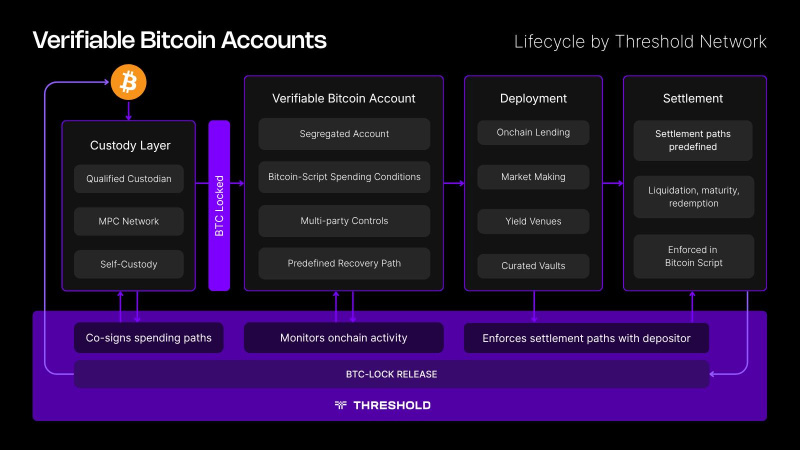
Verifiable Bitcoin Accounts are a Bitcoin Script and PSBT-based account framework for institutional Bitcoin deployment. They define preauthorized spending paths, signer combinations, timelocks, and recovery routes at account setup, allowing allocators to use Bitcoin-backed onchain strategies while preserving segregated custody workflows and verifiable settlement paths.
Your Bitcoin, Your Custody
BTC remains with the holder’s existing custody arrangement. VBA is compatible with Qualified Custodians such as Anchorage and Fireblocks Trust, MPC-based custody networks, and self-custody setups. No title transfer outside of their existing custody. Capital is held in a segregated account, not pooled, and is identifiable at all times. The custody relationship that the allocator already maintains governs every deployed position.
Built for Bitcoin Finance
Institutional Bitcoin lending is accelerating toward a projected $90B by end-of-2026¹, driven by stablecoin growth that reached $308B in early 2026 and is on track to exceed $1T². While major platforms are building proprietary lending stacks to capture the demand, Verifiable Bitcoin Accounts turn any existing custody – Qualified Custodian, MPC network, or self-custody – into institutional-grade lending infrastructure.
Onchain Bitcoin lending and yield markets depend on collateral that resolves reliably across liquidation, maturity, and redemption. Verifiable Bitcoin Accounts are built for that operational reality, with every settlement route agreed at setup and enforced in Bitcoin Script.
For allocators deploying Bitcoin into onchain lending at scale, this is the guarantee that makes the product usable.
 Bitcoin-Level Integration Path
The foundation of every Verifiable Bitcoin Account is the Partially Signed Bitcoin Transaction (PSBT), supported by the following features:
- Consensus-enforced spending. Spending conditions, recovery paths, and timelocks are written in Bitcoin Script and enforced by the same consensus mechanism that secures the Bitcoin network. Every permissible outcome is pre-defined. Every state is verifiable onchain by any full node.
- Multi-party controls. No single entity holds unilateral authority over deployed capital during the term of the agreement. Not the custodian, not Threshold, not the depositor. Every movement requires the predefined combination of parties specified for that position.
- Predefined recovery. If the signer network is unavailable, the depositor recovers the BTC themselves after a defined timelock. No counterparty cooperation is required. The Bitcoin UTXO is the system of record.
- Whitelisted deployment. Capital deploys only into risk-assessed, pre-approved onchain lending and yield markets such as Aave, Morpho, Curve, and Yield Basis. Every movement is constrained, auditable, and aligned with institutional compliance requirements.
The signer infrastructure, Threshold Network, the protocol behind Verifiable Bitcoin Accounts, has operated with Bitcoin for six years, with over $5 billion in cumulative volume and zero losses. Verifiable Bitcoin Accounts is the extension of this proven, existing infrastructure.
Verified, Not Just Trusted
Institutional adoption of Bitcoin in onchain markets does not scale on assurance alone. It scales on independent verification.
“Institutions don’t need additional layers of trust; they need systems where outcomes are defined, enforceable, and verifiable from the outset. By removing reliance on counterparties, we align Bitcoin onchain with the standards institutional capital actually requires.” — MacLane Wilkison, Co-Founder of Threshold Network
Verifiable Bitcoin Accounts (VBA) establish a new standard for institutional Bitcoin deployment: every component of the architecture can be verified before a single satoshi is committed.
Verifiable Bitcoin Accounts are available to qualified institutional participants. To discuss integration and explore deployment into approved onchain venues, users can contact the team via: https://threshold.network/contact
About Threshold Network
Threshold Network is the protocol behind tBTC, the trust-minimized Bitcoin bridge that has processed over $5 billion in cumulative volume across six years of mainnet operation with zero losses. Verifiable Bitcoin Accounts extend this infrastructure into institutional Bitcoin deployment, combining segregated custody, Bitcoin-enforced spending controls, and access to onchain lending markets. For more information, users can visit www.threshold.network.
Contact
PR
Threshold Labs
Threshold Labs
[email protected]

Port Vila, Vanuatu, April 21st, 2026, Chainwire
Vantage, a multi-asset CFD platform, has introduced an enhanced version of the Vantage App, with upgrades focused on asset visibility, capital movement, and a more integrated all-in-one trading experience.
As multi-asset investing becomes more complex, users expect more from trading platforms than execution alone. Beyond spreads, liquidity, and order speed, they increasingly look for clearer asset visibility, smoother capital movement, and a more connected experience across different financial use cases. This is the backdrop for the rise of all-in-one trading apps.
It is unfolding at a time when the boundary between traditional market access and digital trading infrastructure is becoming increasingly fluid. In the U.S., discussion around tokenized equities, more continuous market access, and modernized trading rails has accelerated, with Nasdaq recently announcing an equity token design initiative. Growing attention to tokenized gold and other digitally accessible commodity-related products also points to changing investor expectations around how capital, market access, and asset visibility connect across trading scenarios.
For Vantage, the relevance of this all-in-one model is not about placing more modules inside one interface. It is about reorganising the platform around the user’s full asset journey. That means moving beyond isolated workflows and toward a more connected, integrated structure built on asset clarity, capital mobility, and financial utility.
The first shift is visibility
In fragmented platform models, users often need to switch across contract accounts, copy trading accounts, funding wallets, and yield modules just to understand where their money sits. An integrated app experience begins with a unified view — one that helps users understand balances, positions, and allocation across different account types from a single starting point.
The second shift is capital movement
Traditional platforms may require users to understand internal account structures before they can deposit, transfer, withdraw, subscribe, or redeem. That may make sense from a backend perspective, but it creates unnecessary friction for users. The enhanced Vantage App simplifies the front-end journey, allowing capital movement to feel more direct and intuitive, while underlying processes remain in place.
The third shift is capital efficiency
In disconnected environments, funds may sit idle between product switches, transfers, or trading decisions. In a more integrated platform, users are able to see how capital is allocated, what remains unused, and how quickly funds can be repositioned. This is not just a convenience upgrade — it may improve how users manage available funds over time.
A fourth area of evolution is broader financial utility
Increasingly, users may expect platforms to connect trading with adjacent functions such as payments, card-linked services, and yield-related features, where available. Product availability varies by market, account status, and regulatory requirements, but the broader direction is evolving: the platform is becoming a more connected financial environment rather than a standalone execution tool.
This may also influence how trust is built. Execution quality and system stability remain essential, but in an all-in-one environment, trust also depends on transparency of assets, clarity of funding paths, and consistency across services. As platforms play a larger role in how users organise and move capital, they also place greater emphasis on how that experience is designed.
For Vantage, this evolution is about building an all-in-one platform experience that supports the full lifecycle of user activity — from overview and funding to trading, yield, and broader financial utility. More broadly, it reflects an industry shift: the key question is no longer only what users can trade, but how well a platform helps them manage their activity.
That is why the all-in-one model is relevant. It signals a move away from fragmented product design and toward a platform structure built around how users manage capital in a multi-asset world.
For Vantage, that all-in-one direction is currently taking shape.
About Vantage Markets
Vantage Markets is a multi-asset CFD broker offering access to trading opportunities across global financial markets. Through its range of trading platforms and tools, Vantage aims to provide users with a more accessible and efficient trading experience, subject to regulatory approval and availability in each jurisdiction.
Risk Warning: CFDs are complex instruments and carry a high risk of losing money rapidly due to leverage. Ensure you understand the risks before trading.
Disclaimer: This content is for informational purposes only and does not constitute financial or investment advice or a recommendation to trade. It is not intended for distribution or use in any jurisdiction where such distribution would be contrary to local laws or regulations.
Contact
Vantage
[email protected]
Kingstown, St. Vincent and the Grenadines, April 15th, 2026, Chainwire
Bitunix, a cryptocurrency derivatives exchange, announced that it has obtained ISO/IEC 27001:2022 certification, a widely recognized international standard for information security management given by the International Organization for Standardization (ISO).
The certification confirms that Bitunix exchange has established formal systems to manage and protect sensitive data, including user information and their assets. It follows an external audit process that evaluates how organizations identify risks, control access, and respond to potential security incidents.
With ISO 27001:2022 now achieved, for Bitunix users, the impact is practical. It means stronger protection of personal information and funds, better alignment with international data protection rules, and more transparency around how the platform operates. This also builds greater trust for users on the platform and, at the same time, the certification pushes the company to keep improving how it operates, from internal processes to overall platform stability. For users, that translates into a more reliable experience and a platform that is consistently working to perform better.
ISO 27001:2022 sets out clear requirements for how companies should organize their security practices, from internal procedures to technical safeguards. For exchanges, where large volumes of funds and personal data are handled, such standards are increasingly seen as essential rather than optional; hence, Bitunix achieved this certification.
A Continued Push Toward Stronger Security and Transparency
Known for high standards when it comes to security and transparency, alongside the certification, Bitunix exchange continues to build on its existing security setup through several practical measures reflecting ongoing efforts to improve how the company safeguards its platform and users.
The platform maintains proof of reserves showing more than 100% backing for BTC, ETH, and USDT, supported by real-time Merkle tree verification. It also applies a strict 1:1 asset backing model, ensuring that all user funds are fully matched. In addition, users are given access to open-source tools and a verification portal to independently check their balances.
To cover unexpected situations, Bitunix has also set aside a dedicated $30 million USDC care fund. Therefore, the ISO 27001:2022 certification adds to these efforts and reflects a broader push to keep improving how the exchange protects users.
The company said it will keep updating its systems as it grows, with a focus on keeping things safe and transparent for users.
“Achieving ISO/IEC 27001:2022 certification reflects our deep commitment to security and transparency,” said Steven Gu, Bitunix’s Chief Strategy Officer. “At Bitunix, we believe trust is earned through action. This certification, alongside our Proof of Reserve system, ensures our users can trade with confidence.”
Bitunix said it plans to continue updating its security practices as the platform expands and as threats evolve.
About Bitunix
Bitunix is a global cryptocurrency derivatives exchange trusted by over 5 million users across more than 150 countries. Guided by its core principle of better liquidity, better trading, the platform is built for traders who expect more, committed to providing Ultra Trust, Ultra Products, and Ultra Experience. Bitunix offers a fast registration process and a user-friendly verification system supported by mandatory KYC to ensure safety and compliance. With global standards of protection through Proof of Reserves (POR) and the Bitunix Care Fund, the exchange prioritizes user trust and fund security. Industry-first innovations like Fixed Risk, TradingView-powered chart suite, along with indicator alerts, cloud-synced templates, provide both beginners and advanced traders with a seamless experience. Making Bitunix one of the most dynamic platforms on the market.
Bitunix Global Accounts
X | Telegram Announcements | Telegram Global | CoinMarketCap | Instagram | Facebook | LinkedIn | Reddit | Medium
Contact
COO
Kx Wu
[email protected]

Selling pressure remained intense in US-listed spot Bitcoin exchange-traded funds on Thursday, extending a difficult stretch that analysts increasingly describe as historically poor performance for the beginning of a calendar year.
Data showed $165.8 million left the products during the session, pushing total weekly outflows to $403.9 million as investors continued withdrawing capital despite earlier enthusiasm surrounding regulated cryptocurrency investment vehicles.
Year-to-date losses now approach $2.7 billion, placing the sector close to a fifth consecutive weekly outflow streak and highlighting declining confidence among market participants during early 2026 trading conditions.
Trading volumes also weakened notably, falling roughly 21% compared with the previous week and reaching their lowest levels since late December, reinforcing the view that investor engagement is currently fading.
BlackRock Fund Leads Withdrawals
BlackRock’s iShares Bitcoin Trust carried the largest share of redemptions this week, accounting for approximately $368 million in withdrawals as institutions appeared to trim exposure during ongoing market uncertainty.
Elsewhere, activity remained muted across competing funds, with the Fidelity Wise Origin Bitcoin Fund registering about $50 million in outflows on Wednesday while most other issuers experienced minimal investor movement.
Institutional positioning has also shifted, with Brevan Howard reported to have reduced its stake in the BlackRock vehicle by roughly 85% during the final quarter of 2025.
Despite total cumulative inflows exceeding $53.9 billion since launch, analysts say the broader trend suggests caution rather than expansion among large holders during the opening months of the year.
Unusual Post-Halving Performance Raises Concerns
Market observers highlight that Bitcoin’s current pricing pattern contrasts sharply with previous cycles typically associated with strong rallies following block-reward halving events.
“Almost two years later, BTC trades around $66,000 — nearly the same level as during the April 2024 halving,” analysts noted, emphasizing the absence of historical post-halving appreciation.
“This has never happened before. In previous cycles, BTC was already three to 10 times above halving levels by now,” they added while pointing to an unprecedented stagnation period.
Bitcoin has declined about 22% year-to-date, and datasets tracking the first fifty days of the year indicate the asset is experiencing its worst annual opening on record, surpassing declines seen during 2018’s downturn.
Ile Du Port, Seychelles, February 11th, 2026, Chainwire
Over 100 million users can now fund their TON Wallet using crypto from the most popular blockchains – no additional bridges, swaps or manual conversions required.
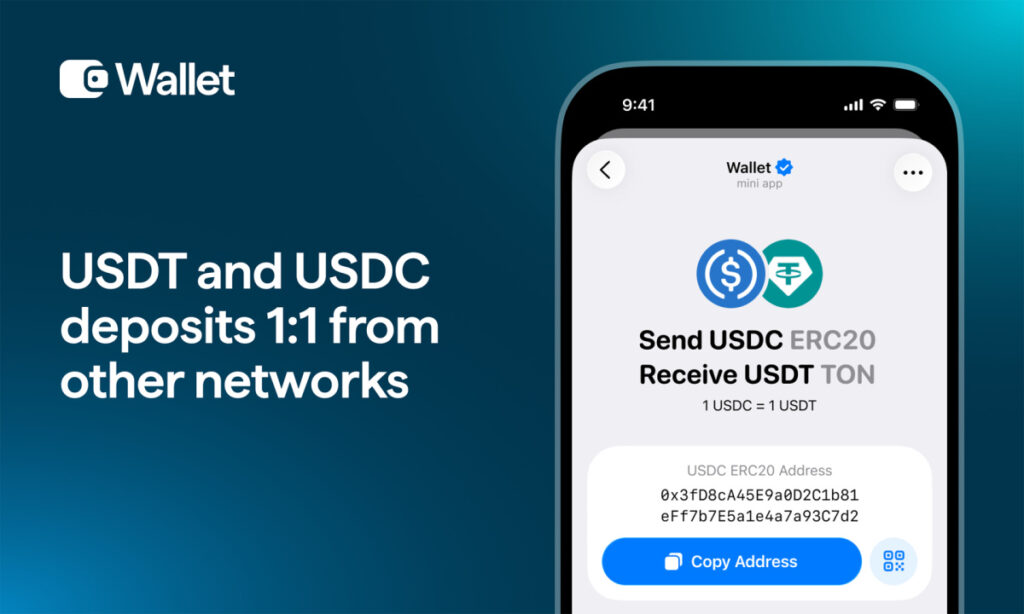
Wallet in Telegram today announced the launch of cross-chain deposits in its self-custodial TON Wallet, enabling users to fund their wallets with crypto from the most popular blockchains. Powered by MoonPay, the integration manages cross-chain transfers behind the scenes, ensuring a smooth deposit experience in TON Wallet.
With this launch, more than 100 million users can transfer their stablecoins from other chains to TON without friction or losing value. TON Wallet users can now deposit USDC or USDT from Ethereum, Solana, TRON, BSC, Polygon, Arbitrum, and Base – converted at a 1:1 rate to USDT (TON) – directly in Wallet in Telegram. This removes the need to already hold TON-native assets, opening the ecosystem to users across the broader crypto landscape. As part of the integration, users will soon be able to withdraw USDT on TON to USDT or USDC on popular blockchains with a fee and deposit BTC, ETH, and SOL, which are automatically converted into Toncoin.
This Launch Introduces the Following Functionality
- Stablecoin deposits from leading blockchains, allowing users to deposit USDC or USDT with automatic 1:1 conversion into USDT (TON)
- Stablecoin withdrawals from USDT (TON) to USDT or USDC on other major blockchains, processed at a 1:1 rate, subject to applicable network and service fees. Will be available soon.
- Crypto deposits from BTC, ETH, and SOL, which are automatically converted into Toncoin upon arrival in TON Wallet
Removing Barriers to Web3 Adoption on Telegram
Funding a self-custodial wallet has traditionally been a complex, multi-step process. Through its collaboration with MoonPay, Wallet in Telegram removes this friction by introducing a single, seamless deposit flow that works across blockchains and assets. As a result, cross-chain transfers are now as simple as custodial ones, significantly streamlining onboarding into TON Ecosystem – while preserving value by minimizing unnecessary conversion losses and fees.
“One of the biggest challenges in crypto adoption is the first step – getting users funded and ready to participate. Until now, using TON Wallet meant already having assets on TON, which created unnecessary friction and limited access to the broader ecosystem. Now, we’re removing that barrier entirely. Users can bring their funds directly into TON Wallet from other networks, without unnecessary conversions, exchanges or lock-ins,” said Andrew Rogozov, Founder and CEO of The Open Platform and Wallet in Telegram. “Our goal is simple: make entering, and exiting, TON ecosystem as seamless as using a custodial wallet, while preserving the freedom and control of self-custody.”
Powered by MoonPay Deposits and built on MoonPay’s infrastructure, the solution supports the end-to-end flow, from deposit detection to final asset delivery, and is integrated natively into partner environments
“Users shouldn’t have to buy new assets or navigate complex steps just to fund an account,” said Ivan Soto-Wright, CEO of MoonPay. “We simplify the process by letting people use the crypto they already have while we handle the technicalities behind the scenes, making it easier to move value across the ecosystem and access a broader range of applications.”
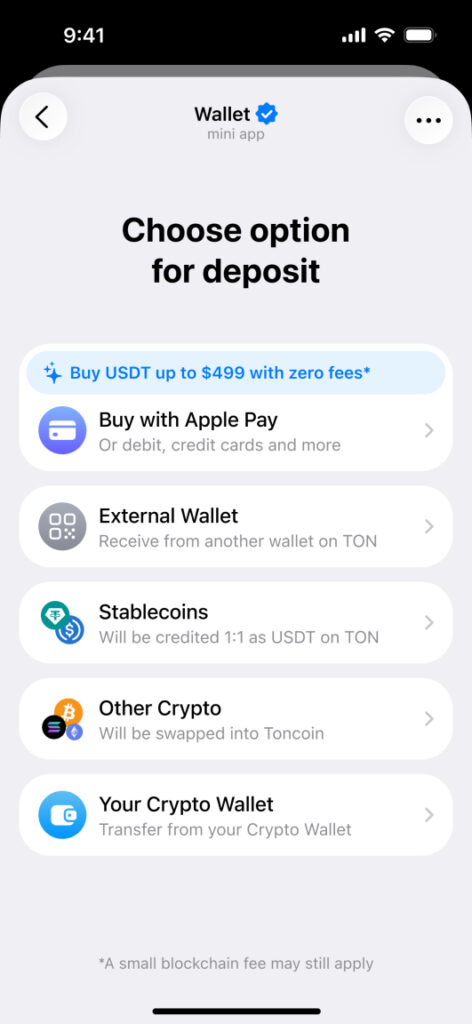
Funding a TON Wallet now takes just a few steps
- The Deposit section includes two options: Stablecoins (for 1:1 stablecoin deposits) and Other Crypto (for converting BTC, ETH, or SOL to TON).
- After selecting the token and the originating network, a deposit address is generated automatically.
- The deposit address can be copied or accessed via QR code.
- This address is entered on the withdrawal page of the external wallet or exchange.
- The transfer amount must meet the minimum deposit requirement.
- Once the details are verified, the transfer is confirmed on the sending platform.
Funds arrive in the user’s selected asset, fully compatible with TON ecosystem and Telegram’s growing network of decentralized applications.
Built for Scale, Native to Telegram
The new deposit experience is available exclusively in the self-custodial TON Wallet, part of Wallet in Telegram’s dual-wallet setup, and is fully integrated into the Telegram interface. By abstracting away cross-chain complexity, Wallet in Telegram makes it easier for users to participate in DeFi, gaming, payments, and on-chain apps – without needing deep crypto expertise.
This launch marks a major step toward making Telegram the most accessible Web3 gateway in the world, combining mass-market distribution with self-custody and open blockchain infrastructure.
About Wallet in Telegram
Wallet in Telegram is a digital asset solution natively embedded into Telegram’s interface. Backed by The Open Platform, Wallet in Telegram has gained 150M+ registered users to date and continues to grow. The company offers a dual-wallet experience with Crypto Wallet (a multi-chain wallet for trading and sending crypto to contacts) and TON Wallet (a self-custodial wallet with access to TON ecosystem of apps and TON-based digital assets).
About MoonPay
Founded in 2019, MoonPay is a global financial technology company that helps businesses and consumers move value across fiat and digital assets. MoonPay has more than 30 million customers across 180 countries and supports more than 500 enterprise customers spanning crypto and fintech.
Through a single integration, MoonPay powers on- and off-ramps, trading, crypto payments, and stablecoin infrastructure, connecting traditional payment rails with blockchains. MoonPay maintains a broad regulatory footprint, including a New York BitLicense, a New York Limited Purpose Trust Charter, and money transmitter licenses across the United States, as well as MiCA authorization in the EU.
MoonPay is how the world moves value.
Contact
Masha Balanovich
Wallet in Telegram
[email protected]
Ibiza, Spain, February 8th, 2026, Chainwire
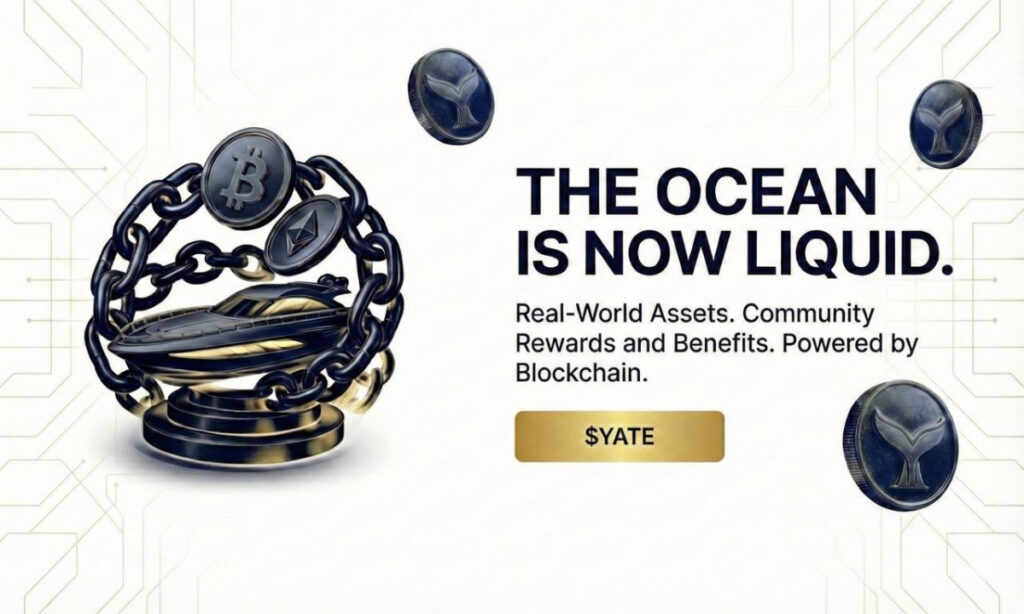
Investing Yachts today introduced its real-world asset (RWA) yacht charter model, a blockchain-based approach designed to tokenize exposure to potential double-digit revenue generated by luxury yacht charter operations via their upcoming $YATE token. Being their ultimate goal to democratize access to all private equity sectors.
Positioning itself at the intersection of yachting and on-chain finance, Investing Yachts is built to remove traditional barriers associated with yacht investing—such as high minimum capital requirements, illiquidity, and operational complexity—by offering a token-based structure intended to be tradable on markets and supported by a managed charter fleet.
How the model is designed to work
At the core of the Investing Yachts model, the $YATE ecosystem connects charter activity to tokenholder incentives through a rules-based framework:
- Charter profit distribution: Up to 65% of annual net charter profits is intended to be distributed to tokenholders who lock $YATE into protocol “vaults,” with different lock periods associated with different maximum shares of the profit pool.
- Buyback & burn: A defined portion of net profits, 10%, is earmarked for buying back tokens and burning them, aiming to reduce circulating supply over time.
- Asset-tied issuance: New tokens are being minted in connection with acquiring additional yachts or other real-world assets, using a NAV-based issuance framework designed to align token supply with the underlying asset base and charter activity.
$YATE Token Pre-Sale
Investing Yachts states that the $YATE pre-sale is scheduled to open on February 25, 2026, with the goal of expanding community participation ahead of broader exchange availability.
As described on the website and in the whitepaper documentation, the pre-sale pricing is structured as follows:
- Initial price: 0.10 USDT per $YATE
- Dynamic increase: +0.75% price increase every 24 hours
- Duration: 9 months
- Target post–pre-sale listing price: 1.00 USDT
The documentation also outlines vesting terms for pre-sale tokens, as well as other mechanisms aligned to provide sustainable growth stability for the project, rewarding long-term holders and early adopters.
Broker Network and Market Positioning
The global yacht charter and yachting services market represents a multi-billion-dollar industry, traditionally limited to a small group of high-capital participants. Investing Yachts aims to use its RWA structure to broaden access by enabling community participation through $YATE, bringing a token-based framework to a segment that has historically remained offline and illiquid.
Investing Yachts has established relationships with experienced yacht brokers and industry intermediaries to support fleet sourcing and charter deployment. These connections are intended to strengthen the project’s ability to identify acquisition opportunities, negotiate terms, and access vessels aligned with demand in key charter regions.
Community and updates
Investing Yachts is publishing updates via social channels and encourages supporters to follow the project for pre-sale announcements, documentation updates, and roadmap progress:
- X: https://x.com/Investingyachts
- Instagram: https://www.instagram.com/investing.yachts/
- Telegram: https://t.me/+kLdobl6TM2kzYzJk
About Investing Yachts
Investing Yachts is a blockchain platform described as an RWA project focused on tokenizing exposure to luxury yacht charter economics through the $YATE token (Ethereum ERC-20).
Investing Yachts lists a management team and advisory group spanning technology, yacht operations, finance, media, and international legal expertise. It counts on leadership with backgrounds in algorithmic trading, yacht charter operations, and institutional markets, including experience at major international banks.
Disclaimer: This press release is for informational purposes only and does not constitute investment advice.
Contact
Media Manager
Alvaro Reyes
Investing Yachts
[email protected]
Vaduz, Liechtenstein, February 3rd, 2026, Chainwire
A globally respected investor and founder of Real Vision brings decades of financial market insight to xMoney’s leadership team
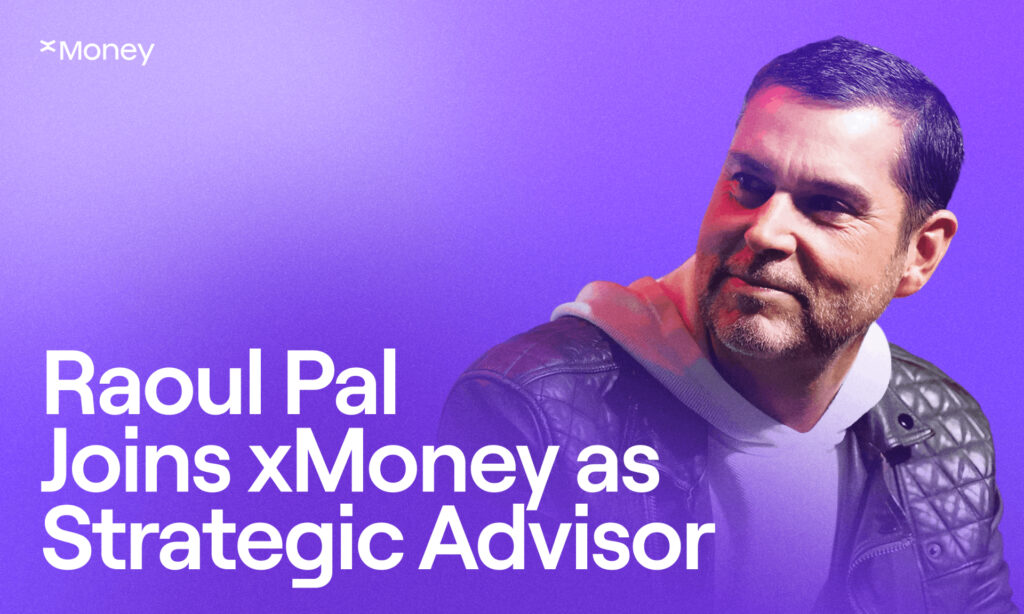
xMoney, a leading provider of compliant payment infrastructure bridging traditional finance and digital assets, today announced that Raoul Pal has joined the company as a Strategic Advisor.
Raoul Pal is one of the most widely respected macro thinkers of his generation. An investor, entrepreneur, and financial commentator, he has spent decades analyzing how money moves, how markets evolve, and how technological shifts reshape global financial systems. His appointment comes at a pivotal moment, as global payments transition toward regulated digital rails, stablecoins, and on-chain settlement.
With Raoul’s strategic guidance, xMoney aims to further strengthen its position at the intersection of payments, regulation, and digital assets – building infrastructure that enables seamless value transfer across traditional currencies, cryptocurrencies, and stablecoins.
A Career Spanning Global Finance and Digital Assets
Raoul began his career in traditional finance, holding senior roles at Goldman Sachs, where he led hedge fund sales for equities and derivatives in Europe, and later at GLG Partners, where he co-managed a global macro fund alongside some of the world’s most respected hedge fund managers.
In 2005, he founded Global Macro Investor (GMI), which has since become a trusted research platform for hedge funds, family offices, pension funds, sovereign wealth funds, registered investment advisors, and high-net-worth investors worldwide. GMI is widely recognized for its independent macro research and strong long-term performance track record.
Raoul co-founded Real Vision in 2014, transforming financial media by making institutional-grade market intelligence accessible to a global audience. What began as a video-first platform evolved into a global financial knowledge network with millions of users across nearly every country.
The new xMoney advisor is also the co-founder of Exponential Age Asset Management (EXPAAM), an investment firm built specifically for the digital asset economy. Its flagship fund, the Exponential Age Digital Asset Fund, provides curated exposure to top crypto hedge funds by combining macroeconomic frameworks with deep digital asset research.
Supporting the Future of Payments
Raoul’s long-standing belief is that the world is experiencing a structural shift in money, technology, and market infrastructure – not a temporary trend. Payments, in particular, are undergoing one of the most significant transformations in decades.
Unlike many payment platforms that expand globally first and retrofit compliance later, xMoney has taken a regional-first approach, building its infrastructure within Europe, one of the most highly regulated financial environments in the world. This strategy enables xMoney to meet stringent regulatory standards from day one, while creating a scalable foundation for global expansion aligned with frameworks such as MiCA.
“Crypto only fulfills its promise when it disappears into the background,” said Raoul Pal. “The real winners will be the platforms that make global payments simple, compliant, and invisible. That’s what excites me the most about xMoney.”
As Strategic Advisor, Raoul will work closely with xMoney’s leadership team, focusing on long-term strategy, market structure, and anticipating how global money movement will evolve as regulated stablecoins, compliant on-chain settlement, and hybrid payment models become foundational financial infrastructure.
“We’re building payment rails for the future, starting in the most regulated markets first,” said Gregorious Siourounis, Co-Founder & CEO of xMoney. “That discipline gives us a structural advantage as digital assets move into mainstream finance. Raoul’s depth of experience, macro insight, and clarity of thought reinforce our belief that long-term winners in payments will be compliant, scalable, and globally interoperable.”
The appointment underscores xMoney’s commitment to building a compliant, scalable payment infrastructure that bridges traditional finance and Web3, enabling businesses and consumers to transact seamlessly across borders, currencies, and technologies.
About xMoney
xMoney is a pioneering payments company with strategic European licenses, focused on building a seamless, secure, and future-ready payments ecosystem. By combining cutting-edge technology, strong regulatory compliance, and a broad product suite spanning traditional and digital assets, xMoney bridges traditional finance and next-generation payment rails.
Website: www.xmoney.com
Contact
Marketing Lead
Rus Alex
xMoney
[email protected]

4 Questions This Article Answers
- Why is wallet activity on public blockchains easier to track than most investors think?
- How can a proxy server help reduce links between your wallet and your real-world identity?
- What proxy features matter most for investors, like sticky vs rotating IPs and IP source?
- What off-chain behaviors create the biggest privacy leaks, even before a transaction happens?
If you invest on public blockchains, you are operating in a market where transparency cuts both ways. The same open ledger that makes settlement fast also makes patterns easy to spot. A single address can become a long-running “identity,” even if your real name never appears on-chain. Over time, routine habits like reusing addresses, moving funds after a paycheck hits, or swapping into the same assets can create a profile that is surprisingly easy to follow.
This matters now because crypto is no longer a niche corner of finance. Privacy, in this context, is not about hiding something. It is about reducing your surface area so your portfolio does not double as a beacon for scams, doxxing, or targeted attacks. The goal is simple: keep your wallet activity from being trivially connected to your everyday online footprint.
The privacy layer many investors skip
Most investors understand that public blockchains are, by design, easy to observe. What is less obvious is how much “side data” gets created around your on-chain activity. Your wallet address may be pseudonymous, but the path you take to interact with crypto often is not.
Now, we will talk about proxy server solutions that some of you may think are just for tech savvies, whereas the reality is different, and it brings value to almost anyone involved in digital activities. In simple terms, when you use a Proxy, your traffic goes to the Proxy server first, and then from there to the website or service. The site doesn’t see your real home or office IP address. Instead, it sees the IP address of the Proxy server.
In practice, there are a few moving parts investors should care about:
- the protocol layer: some services are built for basic web traffic, while others handle a wider set of connections
- how the IP behaves over time: a “sticky” setup keeps the same exit IP for a period, which helps if you want consistency for logins and sessions, while a rotating setup changes IPs on a schedule or per request, which helps reduce long-running patterns
- the source of the IP itself: some proxies are clearly data-center based, while others look more like consumer traffic, and each option has trade-offs in stability, speed, and how often you get blocked by anti-bot systems
The investing use case is not only about execution. Even read-only behavior can be revealing. If the same network identity repeatedly checks a small cluster of addresses, queries the same contracts, and visits the same research pages, that behavior can be correlated over time. Thoughtful investors use proxies to segment activities: research from one network identity, monitoring from another, and execution from a third. The point is compartmentalization.
Good proxy solutions also support clean separation at the device and browser level, which is important because an IP address is only one signal. Cookies, browser fingerprints, and wallet connection patterns can still tie activity together if you are careless. Used well, a proxy server is one layer in a broader routine: reduce linkability, limit repeated patterns, and make it harder for outsiders to connect your wallet behavior to your day-to-day identity.
Wallet identity leaks usually start off-chain
Investors often picture “wallet tracking” as something that happens only on a block explorer. In reality, the most damaging links are frequently built off-chain, then used to interpret what is happening on-chain. Social engineering, credential theft, and simple pattern matching do a lot of the work.
Recent data shows how intense that off-chain pressure is. The Anti-Phishing Working Group said there were over 1 million phishing attacks in just the first three months of 2025.
The FBI’s internet crime center also reported 859,532 complaints in 2024, with people losing more than $16 billion. Of that, over $6.5 billion in losses came from cryptocurrency investment scams.
| Off-chain leak path | What gets tied together | Recent data point | Why investors care |
| Phishing pages and fake sign-ins | Device, credentials, session tokens | 1,003,924 phishing attacks in Q1 2025 | A single stolen session can expose holdings and transaction intent |
| Impersonation and “support” scams | Personal details plus wallet actions | Crypto-related investment fraud losses over $6.5B (IC3 2024) | Attackers tailor messages using your real activity and timing |
| Routine browsing and repeated queries | Network identity and wallet interests | 859,532 complaints reported to IC3 (2024) | Patterns can be used to target you when you are most active |
| Public posts and shared screenshots | Social identity and wallet history | Losses exceeding $16B reported to IC3 (2024) | Once linked, your on-chain history becomes a permanent dossier |
The takeaway from these numbers is not that everyone is doomed. It is that the threat model for investors is broader than “keep your seed phrase safe.” The more your wallet behavior can be connected to your everyday online identity, the easier it is for attackers to craft believable lures or time outreach when you are likely to respond.
Treat transparency as a feature, then manage the side effects
Public blockchains make verification easy, but that same openness changes what “personal privacy” means for investors. As a Federal Reserve research note puts it, “One important differentiating characteristic of public permissionless blockchains is their transparency.” If you assume your activity can be observed, the sensible move is to reduce how easily observers can connect it back to you.
Habits that lower your exposure
That starts with habits that limit linkability. Reusing the same address for everything is convenient, but it creates a single thread that never breaks. Separating addresses by purpose, keeping long-term holdings away from day-to-day activity, and avoiding predictable “I always move funds right after I log in” routines can reduce how much signal you give away. None of this requires paranoia. It is the same mindset investors already use elsewhere: diversify risk, avoid single points of failure, and do not make yourself an easy target.
It also helps to think of “wallet security” as a stack. Key custody matters, but so does where you connect from, what device you use, and what you click when you are in a hurry. The FBI’s 2024 IC3 report recorded $16.6 billion in losses, up 33% from 2023, which is a reminder that scams scale when targets are easy to reach. When your crypto activity is neatly tied to your normal browsing identity, you become easier to reach with highly specific, high-pressure messages.
The most effective approach is layered and boring: separate identities, keep routines consistent, and avoid mixing “public you” with “portfolio you.” In crypto, boredom is a feature. It means fewer surprises.
TL;DR
- Public blockchains make patterns easy to track, so a wallet can become a long-term identity.
- Most privacy leaks start off-chain through browsing, logins, and repeated research behavior.
- Proxy server solutions mask your real IP and help separate research, monitoring, and execution.
- Sticky vs rotating IPs and the IP source matter for stability, access, and avoiding blocks.
- Proxies work best as one layer alongside habits like separating addresses and avoiding predictable routines.

As a medium, video games have long stopped being just mere entertainment and pastime. As a legitimate hobby that can be educational, stimulating, and engaging, modern titles serve multiple purposes. While having fun and unwinding after a tough day at work or school will always be their primary function, games have become increasingly more intriguing, advanced, and peculiar in how they utilize both graphics and gameplay elements.
Nowadays, you can play just about anything, especially when they are genre bending and unique in the way they approach the user and what they offer. From history and geography to politics, science, and art, there is nothing that a modern game cannot teach you. And even if it does not focus on a particular skill or area applicable in the real world, problem solving, logical thinking, and attention to detail always benefit from them.
In the vast industry that is gaming, oftentimes it is the indie (independent) games by smaller studios that cause the most talk when innovation and breakthroughs are considered. While the AAA studios and industry leaders try to stick to what works to appeal to the shareholders and not stain their reputation with something new and different, indie games are not afraid of experimentation and novel ideas. The prime example of this is the popular game called Turmoil, a title all about the 19th century oil rush in the United States. If you think something like this cannot be a fun game that glues you to the screen and offers countless hours of fun, think again. Read on to learn why the game is so addictive and why this era of history is so popular these days.
What is the Turmoil Game?
Turmoil is an indie simulation and management game developed and published by Gamious that puts you in the shoes of an aspiring oil entrepreneur during a stylized version of the 19th century North American oil rush. It started life in Steam Early Access in 2015 and was fully released on June 2, 2016, for Windows, macOS, and Linux.
Later, it expanded to platforms like Nintendo Switch, PlayStation 4, Xbox One, Xbox Series X/S, as well as mobile versions for both iOS and Android. The setting is playful rather than serious, as you lease land at auctions, dig for oil with various tools like dowsers and scanners, build rigs and pipe networks, store your crude oil in silos, and sell it at opportune moments to outcompete rival tycoons and grow your town. There is a campaign mode with AI competitors, a procedural single game mode with millions of level variations, and even local and online multiplayer options on some versions. The latter is the most popular if you enjoy competition and want to prove your skills among the best Turmoil players out there.
The core gameplay in Turmoil is deliberately simple but very diverse and strategic. Each round typically lasts about one in game year, during which you must manage drilling operations, transport logistics, and fluctuating oil prices. Every aspect of the endeavor is yours to control, and how well you perform impacts everything. You dig vertically and then horizontally to find rich oil pockets, decide how many wagons and storage silos to invest in, and choose when to sell. Just like in the real world, waiting for high prices can pay off, but holding too long can backfire and cause you to lose considerable leverage. Upgrades are crucial for progress and include things like better tools and wider pipes. Gas utilization helps optimize production, and the rival tycoons add a light competitive pressure. The art style is charming with a lighthearted tone, akin to most indie titles, and the interface is approachable, which makes it easy for newcomers to pick up while still offering some satisfying decision making for experience tycoon genre fans.
In terms of popularity and reception, Turmoil has been a modest success in the indie scene. On Steam, it enjoys a “Very Positive” user rating, with over 5,000 positive reviews and around 92% favorable feedback in recent reviews. This is a good result as it indicates a strong community appreciation for its quirky, addictive gameplay loop. Critics, as aggregated on Metacritic, gave it a Mixed or Average score of around 73/100, praising its accessibility and strategic elements but noting that the simplicity can become repetitive over time. Users agree with this sentiment, with many enjoying the relaxing, “just one more run” feel, while others find the core loop too limited for long term play. But alas, that is usually the case with independent, “smaller” games like this one. Some console storefronts report high average user star ratings as well (~4.38/5 on PlayStation platforms). Overall, Turmoil is seen as a fun, casual business simulator that is easy to get into and perfect for short sessions, though perhaps light on depth for those seeking a deeper tycoon experience. It has also served as inspiration for other titles across genres and industries, for example…
Drill Casino Game by Stake
Stake Original’s Drill is a fast paced, burst style casino game built around simplicity and big win potential that keeps fans coming back for more. So what is it about, and how to play the Drill game? At its core, allows the players to set a wager, choose a target multiplier, and then pick one of three drills before each round begins. Once the round starts, all three drills begin “digging” downward, revealing increasing multipliers as they go. If the drill you backed reaches or exceeds your chosen multiplier, you win that round and collect your payout. If it stops short, you lose your bet. This clear and direct risk reward mechanic makes the game easy to learn and quick to play, even for newcomers. Similar to the rest of the Stake Originals library of games that keeps growing, it is a straightforward, simple, yet very engaging and fun time.
What sets Drill apart from many casino titles is its simple yet strategic choice of drill and target. Although only your selected drill matters for your bet outcome, watching the other two drills progress adds a psychological thrill and decision making layer: do you trust your pick and keep at it, or switch for the next round? With a provably fair random number generator and transparency tools, every round’s outcome can be independently verified for fairness, which adds trust and confidence for players who enjoy that level of transparency. The game also boasts a high return to player (RTP) percentage of about 98% and a low house edge, making it appealing for those chasing value while still enjoying the risk inherent in gambling. Perhaps the biggest source of excitement is the massive maximum payout of up to 2,000,000× your bet.
The Obsession and Fascination With the Oil Rush
Whether it is Turmoil, playing Drill online, watching a popular show about this setting like Blood & Oil or Landman, or a big Hollywood blockbustersuch as There Will be Blood or Killers of the Flower Moon, the popularity of and fascination with this period in history cannot be overstated. Both the creatives behind these projects and the fans that consume them are equally obsessed with it and keep being inspired to learn more through various depictions. A simple question arises: why? Why is this period so relevant and prevalent, and enjoys so much attention from the modern man?
The oil rush has remained a compelling subject in movies, television series, video games, and documentaries because it represents a volatile combination of ambition, wealth, technology, and human cost. Like the gold rush that came before it, these oil boom stories are built around transformation. The barren land becomes suddenly valuable, ordinary people turn into tycoons or casualties, and societies are reshaped almost overnight. Visual media thrives on these extremes. Films and shows often depict oil fields as modern frontiers, places where law, morality, and identity are tested under immense pressure.
The iconic imagery of towering derricks, roaring flames, and desolate landscapes is more than enough to showcase powerful symbolism for the onset of progress and destruction alike. Games and documentaries further extend this fascination by allowing audiences to participate in or closely observe the systems behind extraction, speculation, and power, as well as shady background deals that the common folk are never privy to. These portrayals tap into universal themes of risk and reward, greed and ingenuity, making the oil rush feel both historically specific and timeless in its emotional stakes.
Simply put, people remain drawn to the oil rush because its consequences are still unfolding in the present day. Oil wealth shaped modern geopolitics, corporate power, environmental debates, and patterns of inequality that continue to define global society. Revisiting this era allows storytellers to explore the origins of today’s energy dependence and the myths that grew around industrial success. The oil rush is often framed as a cautionary tale as much as a celebration, since it portrays how unchecked ambition can create fortunes while eroding entire communities and ecosystems.
At the same time, it appeals to a deep cultural fascination with self made power, where individuals challenge nature itself in pursuit of dominance and legacy. The persistence of oil rush narratives in popular media reflects a collective attempt to understand how progress is achieved and at what cost. As long as oil remains central to economies and environmental conflict, the stories of its discovery and exploitation will continue to resonate. As they did before, these accounts will serve as mirrors through which audiences examine both past dreams and present anxieties.
FAQs About the Oil Rush
Why is 1859 called the beginning of the modern oil industry?
In 1859, Edwin L. Drake successfully drilled the first commercial oil well in Titusville, Pennsylvania. Unlike earlier oil collection methods that skimmed surface seepage only, drilling made large scale extraction possible and transformed oil into a major industrial commodity.
What did people use oil for before gasoline cars existed?
The primary product was kerosene, used for lighting homes and streets. Oil also replaced whale oil, helping to reduce pressure on declining whale populations and reshaping global energy consumption decades before automobiles.
Why did Pennsylvania become the center of the early oil rush instead of the West?
Oil naturally seeped to the surface in western Pennsylvania, making its presence obvious. The region also had navigable and familiar rivers, railroads, and nearby refineries. All of this allowed oil to be transported and processed efficiently compared to more remote western territories.
How chaotic were early oil boomtowns?
Extremely chaotic. Towns like Pithole, Pennsylvania, sprang up almost overnight with thousands of residents, saloons, hotels, and speculators, but often collapsed just as quickly once nearby wells dried up. This earned them the nickname “instant cities.”
What dangerous working conditions did oil drillers face?
Workers dealt with frequent explosions, toxic gases, collapsing derricks, and fires caused by highly flammable crude oil. There were few safety regulations, and accidents were common and often deadly.
How did the oil rush change transportation and infrastructure?
The need to move oil led to innovations such as pipelines, tank cars, and specialized refineries. These developments laid the groundwork for modern energy infrastructure and helped standardize industrial transportation systems.
What role did speculation play in the oil boom?
Speculation fueled rapid investment and equally rapid financial ruin. Many people bought land leases or shares in oil companies hoping to strike it rich, but price volatility and overproduction caused frequent market crashes.
How did John D. Rockefeller reshape the oil industry?
Rockefeller used vertical integration and aggressive business tactics to consolidate refining, transportation, and sales under Standard Oil. By the 1880s, his company controlled most U.S. oil refining, setting precedents for both corporate power and antitrust laws.
Did Indigenous peoples interact with oil before the 19th century rush?
Yes. Indigenous communities had long used surface oil for medicine, waterproofing, and ceremonial purposes. Early settlers learned about oil’s usefulness from Indigenous knowledge but rarely credited or compensated those communities.
Why is the 19th century oil rush still relevant today?
It established the foundations of the global petroleum economy, influenced modern corporate practices, and set patterns of boom and bust resource extraction that continue to affect energy policy and economies worldwide. Geopolitics is shaped by it with disputes, sanctions, trade wars, and real wars all over oil.

Exploring the lives and careers of celebrities is hardly a novelty interest among us common folk. When someone is popular, successful, rich, and famous, we cannot help but wonder what it is like to be in their shoes. How do they live? What do they do? Are they really just people like everyone else? Depending on the person in question, there can be more or less the same. Some are down to earth, while others are completely immersed and cut off from the real world. One of the major areas of showbiz that fans enjoy knowing is the net worth the stars possess.
With that being said, right here and now, we focus on the popular Afrobeats singer, producer, and songwriter who has transformed the genre and put Nigeria and Africa on the map, the one and only, Davido. Through his unique background, he had the perfect platform to explore an intriguing area in music and bring about a revolution that the fans would resonate with. Over the course of the last decade or so, he has managed to do exactly that. Now, as an established artist with several awards and numerous nominations to his name, Davido is still going strong and creating new music. But how successful has he been in terms of wealth? Did his career transfer success transfer into his bank account and possessions?
Davido’s Net Worth in 2026
As of January 2026, Davido has a reported net worth of between $100 million and $120 million, which makes him one of the richest musicians in Africa. His wealth comes from music sales and streaming, sold out world tours, lucrative brand endorsements, his own record label, and various business investments. A major part of Davido’s lifestyle and estimated net worth is tied to luxury real estate. He owns high end properties, including a mansion in Banana Island, Lagos, valued in the millions, and other residences in Atlanta, Georgia, along with additional holdings both in Nigeria and abroad that contribute to his long term asset base.
Davido also maintains an impressive car collection worth millions of dollars, featuring exotic and high end vehicles by luxury brands like Rolls Royce models Spectre and Cullinan, Mercedes Maybachs, a Lamborghini Aventador, a Bentley Bentayga, several Ferrari models, and more. These cars serve as lifestyle symbols, investments, and brand elements in his public image. While Davido is frequently seen flying on a Bombardier private jet, public records indicate that the aircraft is owned through his father and family’s business rather than in his personal name, though he uses it for international tours and travel.
He Was Born Into Wealth
Most fans know about the singer’s back story and family wealth. In all honesty, he had a privileged upbringing due to his parents’ position and influence, but all that he achieved is his own accomplishment. Still, it cannot be overlooked, so let us see exactly where he comes from and what his parents’ occupation meant for his childhood and early adolescence. Born David Adedeji Adeleke on November 21, 1992, Davido had a childhood shaped by privilege, global exposure, and strong family influence. Without a doubt, it played a major role in his later confidence and ambition as an artist. He was born in Atlanta, Georgia, in the United States, but grew up primarily in Lagos, Nigeria, in an affluent household that placed a high value on education, discipline, and achievement.
His father, Dr. Adedeji Adeleke, is a highly successful Nigerian businessman and philanthropist, widely regarded as one of the country’s wealthiest private sector figures. He has major interests in real estate, energy, finance, and education, so his financial success and everything that comes with it meant that Davido never experienced material hardship or worry of any sort and was raised in a secure, elite environment. Therefore, he had every chance to chase his dreams and pick whatever career he wanted. Davido’s mother, Veronica Imade Adeleke, was a university lecturer and intellectual who strongly supported education and cultural development. Sadly, she passed away in 2003 when Davido was still a child, an event that deeply affected him emotionally and has been referenced as a turning point in his life. As of 2026, Davido’s father has a net worth of anywhere between $1.7 and $2.5 billion.
Davido attended prestigious schools, including the British International School in Lagos, and was exposed early to Western and African cultures, music, and lifestyles, which later influenced his sound. Despite his father’s initial preference for a traditional academic or business career, Davido gravitated toward music from a young age, experimenting with instruments and production while growing up in a home that could afford top tier resources and equipment. His upbringing combined wealth, loss, discipline, and freedom, creating a foundation that helped him pursue music boldly while benefiting from family support, networks, and financial stability that eased his entry into the industry.
Music Career and Discography
Regarding his own career and the life he has made for himself, his music career is by far the biggest contributor to his net worth, as he is one of the most influential artists to emerge from Africa’s contemporary music scene. He burst onto the mainstream in 2011 with the explosive single “Dami Duro,” which announced a confident new voice in Afrobeats and quickly made him a household name. Trained partly in music production, Davido blended Nigerian rhythms with pop, dancehall, and R&B influences, which created a sound that travelled easily across borders. Over the years, he released a string of hit singles, including “Gobe,” “Aye,” “If,” “Fall,” “FEM,” and “Unavailable,” all songs that dominated radio, clubs, and streaming platforms. His ability to deliver catchy hooks, emotive melodies, and streetwise energy helped him build a loyal global fan base and position Afrobeats firmly on the world stage.
His studio albums have marked important phases of his growth, beginning with Omo Baba Olowo, followed by A Good Time, A Better Time, and Timeless, each showcasing maturity, ambition, and international reach. These projects produced chart topping records and featured collaborations with artists from Africa, Europe, and the United States alike. Davido’s impact has been recognized with numerous awards, including multiple Headies, MTV Africa Music Awards, BET Awards, and international nominations that reflect his crossover success. Beyond trophies, he is credited with opening doors for a new generation of African artists by proving that music from the continent can compete globally.
Davido’s Sponsorship Deal with Stake
The sponsorship deal between Stake and Davido marks one of the most high profile collaborations in the iGaming and entertainment world. In this partnership, the globally renowned Afrobeats superstar has been appointed as a global brand ambassador for Stake, a leading cryptocurrency based online casino and sports betting platform, where he, too, enjoys playing casino titles by Pragmatic games on Stake.com. The collaboration brings together two brands driven by ambition, cultural influence, and global reach. The singer’s role goes far beyond a standard endorsement, as he represents Stake across major campaigns, digital platforms, and international markets, particularly strengthening the brand’s presence in Africa and among younger, music driven audiences worldwide.
Considering Nigeria’s love of football and basketball, among other sports, it is a fruitful market for sports betting, while Africa as a whole is big on entertainment, especially music. Through his influence, Davido helps position Stake as a lifestyle brand that helps entertainment, sports, and technology meet organically and influence each other. Fans can expect immersive campaigns, exclusive promotions, creative content, and experiences that merge his music, personality, and global appeal with Stake’s ever evolving interactive gaming ecosystem.
Non Music Sources of Income and Wealth
Over the years, the Nigerian-American Afrobeats superstar has built an extensive portfolio of brand partnerships and sponsorships that span multiple industries. Apart from his success in music, this showcases his commercial appeal both within Africa and globally, which his entrepreneurial mind (he got from his dad, no doubt) has utilized in the best way possible. Early in his career, he secured endorsement deals with MTN Nigeria, becoming the face of its MTN Pulse campaign. He also struck a deal with Guinness Nigeria that aligned his image with major consumer brands early on. He later became a brand ambassador for global beverage giant Pepsi as part of its African marketing efforts.
In the tech and mobile space, Davido signed with Infinix Mobile, a deal that included collaborative products like limited edition devices tied to his brand. In 2021, he expanded into sportswear and fashion via a long term global ambassadorship with Puma that sees him promoting Sportstyle collections across Africa and beyond. It is a big name brand that puts him in the same company with footballer Jack Grealish, NBA player Tyrese Haliburton, and BLACKPINK singer Rose. That same year, he also teamed up with Martell Cognac. Davido’s endorsement reach extends into banking and fintech, too, as he has represented Wema Bank’s digital arm ALAT and has been reported to partner with fintech firms like MoneyGram and Flutterwave. Consumer goods partnerships include becoming an ambassador for snack brand Munch It and household detergent Viva, while travel brand Travelbeta enlisted him to promote its services.
More recently, in 2024, he signed with Chinese automobile manufacturer GAC Motors through its Nigerian representative, using his appeal in the automotive sector. In 2025, Davido also became global ambassador for the crypto linked betting platform Stake.com in what has been described as one of the largest endorsement deals by an African artist. As a popular singer with tens of millions of fans and a strong social media presence, it goes without saying that deals, promotions, ad campaigns, and marketing are all big parts of his portfolio. Across these collaborations, Davido’s sponsorships and partnerships help amplify both his music career and the visibility of the brands he represents. He also has his own business ventures, like the record label Davido Music Worldwide (DMW), which he founded in 2016.
Davido FAQs
- Where is Davido originally from?
Davido is of Yoruba descent and hails from Osun State, Nigeria, though he was born in Atlanta, Georgia, USA, and raised largely in Lagos. His colorful background contributes to and influences his music to a great degree. - Is Davido Nigerian or American?
He is Nigerian-American. He was born in the United States but strongly identifies with his Nigerian heritage and upbringing, and has tens of millions of fans in the country and in Africa. - Who are Davido’s parents?
His father is Adedeji Adeleke, a well known Nigerian billionaire businessman and philanthropist. His mother, Veronica Adeleke, was a university lecturer who passed away in 2003. His father is very supportive of his career and encouraged him to achieve his dreams. - Did Davido grow up wealthy?
Yes. Davido grew up in a very wealthy and influential household, but he has often spoken about still being disciplined and independent despite his privileged background. He is still his own man and has only himself to thank for his career. - How many siblings does Davido have?
Davido has several siblings, including sisters Sharon Adeleke and Nike Adeleke, and a brother, Adewale Adeleke, among others from his extended family. - Is Davido married?
Yes. Davido is married to Chioma Avril Rowland, his long time partner. Their relationship has been highly public but also deeply personal. - Does Davido have children?
He has six children with four different partners: daughters Imade (with Sophia Momodu) and Hailey (with Amanda), son Dawson (with Larissa Lorenco), son Ifeanyi (who passed away, with Chioma Rowland), and twins (a boy and a girl, with Chioma Rowland). - What is Davido like in his private life?
Privately, Davido is known to be a family oriented, emotional, and generous person. He values close relationships and loyalty with friends and relatives with whom he is very close. - What hobbies does Davido enjoy outside the spotlight?
Davido enjoys fashion, luxury cars, traveling, video games, and spending time at home with family. He is also a passionate football fan, especially of European clubs. - Is Davido involved in philanthropy?
Yes. Beyond personal interests, the singer and producer is known for his charitable giving, especially in Africa, as he frequently supports orphanages, communities, and individuals in need, often without public attention.