



George Town, Grand Cayman, February 24th, 2024, Chainwire
Staking program amassed over $129M TVL in less than 24 hours
Zircuit, a security-focused zero-knowledge rollup backed by pioneering L2 research, launched Zircuit Staking, an innovative program that allows users to stake ETH, liquid staking tokens (LSTs), and liquid restaking tokens (LRTs) to earn Zircuit Points. Shortly after launch, Zircuit Staking has already accumulated over $129M on the Ethereum mainnet and continues to rise.
Zircuit’s community has gained an impressive following of over 112K Twitter followers and 125K Discord members within a short four-month time span. The exponential growth of this community has also led to the early success of Zircuit’s staking program. In comparison, Starkware started in 2018 and only has 229K Twitter followers and $134M in TVL according to DefiLlama. Zircuit is on track to surpass these numbers in terms of both community engagement and TVL.
With the rapid ascent of EigenLayer, Zircuit is leveraging a growing surge in interest around restaking protocols. Less than 24 hours since launch, the program has already accumulated over $129 million TVL, signaling significant interest and confidence in the project.
Through the staking program, users can Zircuit points on top of any staking yield or other existing points. Users that opt-in to migrate their assets to the Zircuit Mainnet when it goes live are rewarded the most. Users can withdraw at any time and keep the points and yield earned, so ETH isn’t hard-locked like in Blast or Mantle. Currently, Lido Finance, Renzo Protocol, Swell Network, Kelp DAO, and Liquid Collective are supported with more integrations to come over the coming weeks.
To participate in the Zircuit Staking program, users can visit https://stake.zircuit.com/
For more information on Zircuit, Users can visit: https://www.zircuit.com/
About Zircuit
Zircuit is a fully EVM-compatible, zero-knowledge rollup powered by the latest research in L2 technology. Built by a team with multiple research grants from the Ethereum Foundation and backed by Pantera Capital and Dragonfly Capital, Zircuit is leading the future of secure chains with sequencer-level security. Users can learn more by visiting zircuit.com or follow us on Twitter/X @ZircuitL2
Contact
Jessica Graber
Zircuit
[email protected]

French football powerhouse Paris Saint-Germain (PSG) is poised to expand its involvement in Web3 and SportFi by assuming the role of a validator for fan token blockchain Chiliz.
Cointelegraph recently journeyed to Paris for an exclusive discussion with Chiliz founder Alexandre Dreyfus and PSG’s head of Web3, Pär Helgosson, regarding the evolving collaboration between the football club and the blockchain platform.
PSG stands as the initial major football club to undertake the role of a blockchain protocol validator and plans to reinvest earnings derived from this position to repurchase PSG tokens.
This strategic manoeuvre is hailed as a means to establish a self-sustaining digital economy for the club and its fanbase.
The Chiliz Chain serves as the underlying framework for Socios, the platform responsible for issuing and managing fan tokens for over 150 professional football clubs and sports teams.
PSG embraced this technology early on and introduced its fan token on Chiliz back in September 2018.
The club aims to explore opportunities within the wider cryptocurrency, Web3, and SportFi realms, with Helgosson leading the initiative.
In November 2023, venture capital firm Animoca Brands joined Chiliz Chain as a validator for its proof-of-stake protocol, subsequent to Chiliz’s overhaul of its tokenomics model.
This revamp included the introduction of a new inflation-staking rewards mechanism for CHZ holders and the integration of the transaction fee protocol burning scheme EIP-1559.
READ MORE: Ethena Labs’ High Yield Stablecoin Sparks Investor Concerns in Crypto Community
Helgosson informed Cointelegraph that PSG intends to employ its accumulated revenue as a node validator to conduct PSG fan token buybacks from public marketplaces.
These buybacks will be automated and executed through smart contracts via its validator and decentralized exchanges on the Chiliz Chain.
The initiative aims to augment revenue from the club’s validator through gas fees and supply inflation, which are then reinvested into PSG tokens.
The club seeks to replenish its token reserves to foster a self-sustaining economy:
“We’re aiming to build a sustainable tokenomics model together where the club, because of our role as a node validator, can use the profits to buy back fan tokens and use them to reinvest back into the fan ecosystem.”
Helgosson anticipates that this move will yield rewards, introduce new utilities, functions, products, and services beneficial to PSG tokenholders, sponsors, and players.

The Financial Services Agency (FSA) – Japan’s primary financial regulator – has elucidated its stance on peer-to-peer (P2P) crypto transactions following its latest directives to local banks.
In its missive on 14th February, the FSA urged banks to “further bolster their user protection” by “halting transfers to crypto-asset exchange service providers if the sender’s name differs from the account name.”
As previously reported by Cointelegraph, this could impede P2P transfers in the nation as they typically involve distinct users at the sending and receiving ends.
Responding to a query from Cointelegraph, the FSA clarified that its directive does not encompass “transactions from one individual to another”:
“We issued the request with the aim of asking banks and other financial institutions to strengthen measures against unlawful money transfers in cases where an individual deposits cash from the individual’s bank account to an account of a crypto asset exchange service provider.”
READ MORE: Ethena Labs’ High Yield Stablecoin Sparks Investor Concerns in Crypto Community
According to the FSA, these measures have already been adopted by several financial institutions, although the agency has not received any reports of specific cases that would raise “concerns over crypto asset markets.”
The FSA’s recommendations “are not uniformly obligatory” for all financial institutions. Banks are expected to deliberate and determine specific measures based on their circumstances.
Japan’s neighbour, South Korea, is also taking proactive measures to combat crypto fraud.
Its Financial Intelligence Unit will introduce a pre-emptive trading suspension system for suspicious transactions on platforms already operating in the country.
This will halt transactions even during the pre-investigation phase.
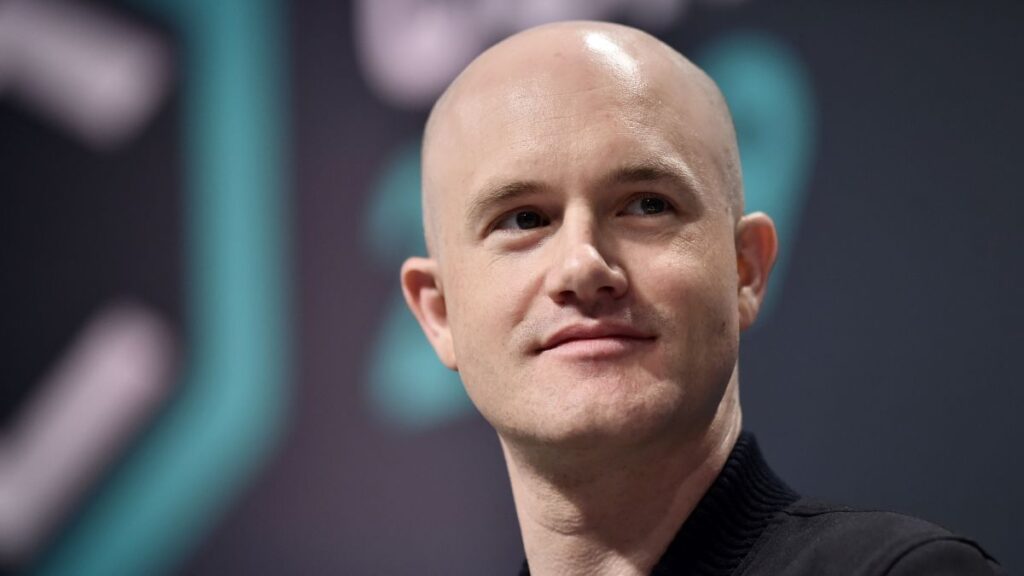
On the 15th of February, Coinbase released its earnings report for the final quarter of 2023, indicating a promising outlook for the company in the upcoming year, primarily driven by Bitcoin trading.
Their technology expenses in 2023 decreased by $1 billion compared to 2022, while the company’s net income and earnings (EBITDA) are showing positive trends.
Up until 2021, various crypto assets competed for investor attention on the platform.
However, over the past two years, both retail and institutional trading volumes have dwindled, with Bitcoin and Ethereum emerging as the dominant favourites in the cryptocurrency realm.
Despite this, other cryptocurrencies still generate significant investor interest, contributing to nearly half of the company’s transaction revenues.
Stablecoins have also shown promising growth on the Coinbase platform, accounting for 22% of revenues in a year where subscriptions and services made up almost half of the company’s earnings.
Retail investor transactions, which previously constituted the majority of revenue, now make up less than half of net revenue, with subscriptions and services displaying strong growth trends to offset declines in transactions.
READ MORE: Ethena Labs’ High Yield Stablecoin Sparks Investor Concerns in Crypto Community
Custodial fees, earned through cash balances invested into cryptos, have seen a year-on-year decline, possibly indicating a waning interest in cryptocurrencies among investors due to conversion challenges to fiat currencies.
However, the significant trading volumes witnessed in recently launched Bitcoin ETFs suggest a positive outlook for cryptocurrencies as investments.
Despite not being accounted for in this earnings release, Coinbase’s custodianship of eight out of the 11 Bitcoin ETFs launched positions it for substantial growth as investor interest in these ETFs increases.
One challenge for Coinbase in the Bitcoin ETF market is the potential entry of other exchanges with their custodial platforms.
The company’s response to this challenge remains undisclosed, but significant announcements may be expected in the future.
Speculation around cryptocurrencies besides Bitcoin and Ethereum creates additional opportunities for Coinbase.
The launch of “International Markets” and the introduction of regulated derivatives through Coinbase Financial Markets (CFM) further expand the company’s offerings.
The Base platform, launched in August, operates as a layer-2 blockchain on Ethereum, facilitating efficient conversion between cryptocurrencies and fiat currencies for real-world use.
Coinbase’s vision, as outlined by CEO Brian Armstrong in 2016, includes enabling various financial services through apps, including investing, loans, and global remittances.
With Base ranking as the fourth-largest L2 player by total value locked on Ethereum, there’s significant potential for its utility, particularly in facilitating cheaper remittances through interconnected networks.
With its international market exposure and diverse offerings, Coinbase appears well-positioned to capitalise on various opportunities in the near future.

Microsoft has revealed a substantial investment into Europe, earmarking £1.5 billion to expand its artificial intelligence (AI) and cloud infrastructure in Spain.
Following a meeting with Spain’s Prime Minister, Pedro Sánchez, Brad Smith, Microsoft’s vice chair and president, confirmed the company’s commitment to Spain over the next two years.
Smith emphasised that their endeavour extends beyond mere data centre construction, highlighting Microsoft’s dedication to fostering the nation’s “security, development, and digital transformation of its government, businesses, and people.”
The company’s engagement with Spain spans 37 years, with a recent milestone being the establishment of a new research and development centre for AI technologies in Barcelona, announced in September 2021.
Alberto Granados, President of Microsoft Spain, hailed this investment as testament to Spain’s prowess in the digital arena.
This initiative follows Microsoft’s recent £2.2 billion investment into Germany’s AI landscape, announced on February 15.
READ MORE: Grayscale’s Bitcoin ETF Sees Slowing Outflows, Potential for Further Bleeding
Echoing their Spanish strategy, Microsoft aims to utilise the funds over the next two years to fortify German AI infrastructure, erect new data centres, and provide AI skills training.
The surge of Big Tech investments in Europe aligns with the imminent enactment of the EU AI Act legislation.
Concurrently, France’s Ministry of Economy, Finance, and Industrial and Digital Sovereignty, in collaboration with Google, unveiled plans to establish an AI-focused hub in Paris.
This hub, set to accommodate nearly 300 researchers and engineers, will bolster France’s AI aspirations.
Notably, Google unveiled its “AI Opportunity Initiative for Europe” two days prior, vowing a £21.4 million investment in AI skills training for Europeans.
These investments underscore the tech industry’s recognition of Europe’s burgeoning AI landscape and the imperative to nurture local talent.

Navin Gupta, the freshly appointed CEO of Crystal Intelligence, anticipates the continued expansion of the blockchain intelligence firm throughout 2024.
In an interview with Cointelegraph, Gupta expressed his anticipation for the company’s growth to further escalate as the unregulated sector of the crypto industry diminishes.
This shift is attributed to the endorsement of spot Bitcoin exchange-traded funds (ETFs) in the United States. Gupta stated:
“Hundreds of firms were waiting in the license queue, and they are in some form of regulatory discussion with the regulator to ensure that they get licensed.
Every single firm that gets regulated needs compliance software, monitoring, and to prove to the regulator that they are doing Anti-Money Laundering compliance…”
Crystal Intelligence provides blockchain analysis and investigative and compliance solutions to institutions and regulators.
The company’s global clientele doubled during 2023, with Crystal’s product now overseeing over 50,000 organizations, as per a press release shared with Cointelegraph.
The company was established by Bitfury in 2017.
According to Gupta, the escalating adoption of stablecoins is also expected to amplify the demand for Crystal’s compliance services.
“[Stablecoin payments] are cross-border transfers of value.
So, there’s the same Travel Rule that most transaction monitoring rules need to be applied, which brings a new swath of customers who want to accept or pay through stablecoins.”
Stablecoins are the most broadly utilised crypto assets, constituting over 50% of on-chain transaction volume to or from centralised services between July 2022 and June 2023, as per “The Chainalysis 2023 Geography of Cryptocurrency” report.
Gupta believes that the recently introduced spot Bitcoin ETFs will usher in a consistent influx of non-speculative investment for the first time in Bitcoin’s history, thereby legitimising the asset class in the eyes of global regulatory authorities.
Gupta noted that institutional investors have already begun viewing the asset class more favourably.
“[Institutional adoption] is already happening. BlackRock manages trillions of dollars, and Bitcoin is a very small part of it. But they’ve already dipped their toes in the water, and the same is true for regulators.”
Gupta anticipates this to motivate ETF issuers like BlackRock to introduce additional funds:
“BlackRock does that; the peers have to do it. It’s a self-reinforcing cycle moving forward. So, we are very bullish about this space.”
An estimated 75% of new Bitcoin investments come from the 10 spot Bitcoin ETFs, as stated in a report by on-chain data analytics firm CryptoQuant.

The realm of artificial intelligence (AI) has experienced notable expansion in recent years, with forecasts indicating that, by 2030, the sector could contribute up to £15.7 trillion to the global economy — a sum surpassing the current economic outputs of key players like China and India combined.
One noteworthy development in this domain, attracting significant attention of late, is the emergence of “deepfakes” — highly realistic video and/or audio recordings crafted using AI, capable of replicating genuine human appearances or voices to a degree often indistinguishable from the real thing.
A recent viral post on X exemplified how some individuals are utilising readily available open-source and commercial software to manipulate a person’s selfie with generative AI tools, fabricating counterfeit ID images that could potentially deceive many contemporary security measures.
As the digital landscape progresses, the proliferation of AI-generated deepfakes poses substantial challenges to the established Know Your Customer (KYC) framework. Toufi Saliba, CEO of HyperCycle, a company developing the requisite components for enabling AI microservices to communicate seamlessly, explained to Cointelegraph that a significant aspect of this challenge lies within the existing security processes themselves. He remarked:
“Perhaps KYC itself is the attack vector on self-sovereignty, and these [deepfake] tools are proving how today’s KYC systems could be rendered obsolete in the near future.
A resilient solution would involve using certain cryptography properly to service the claimed intent of KYC proponents, thereby also protecting future generations.”
Saliba underscored the implications of AI and deepfakes for the cryptocurrency sector, stressing the urgent need for swift adaptation.
“This issue of fake image creation is likely to disrupt entire centralized systems from the inside out, thus presenting one of the best opportunities for well-intentioned regulators and centralized entities to realize that cryptography can come to the rescue when needed,” he asserted.
Regarding the detection of deepfake content, Dimitry Mihaylov, an AI research expert for the United Nations, stated that with criminals increasingly employing sophisticated tools to produce realistic fake identification documents, unforeseen challenges are emerging.
He emphasised the imperative for industries across the spectrum to evolve rapidly, adding:
“The market for AI-generated image detection is evolving with projects like FakeCatcher, a project that has been developed in partnership with Umur Ciftci. The technology showcases the potential of real-time deepfake detection with a 96% accuracy rate.”
Looking ahead, Mihaylov anticipates a significant shift in regulatory approaches to KYC, suggesting a future where dynamic and interactive verification processes become standard.
“We may see the introduction of more dynamic KYC procedures, like video KYC, as regulatory frameworks adapt to these technological advancements,” he suggested.
The impact of deepfakes reverberates across various industries, including cryptocurrency.
For instance, a platform named OnlyFake recently gained attention for purportedly circumventing the KYC protocols of several prominent cryptocurrency trading platforms successfully.
At just £15 each, the platform claims to produce counterfeit driver licenses and passports for 26 nations, including but not limited to the United States, Canada, the United Kingdom, Australia, and several European Union member states.
On Feb. 5, a company called 404 Media revealed that it had leveraged OnlyFake’s services to evade the KYC verification process of the popular crypto exchange OKX.
Likewise, leaked discussions unveiled OnlyFake’s clientele celebrating their success in bypassing verification processes at numerous other cryptocurrency exchanges and financial institutions, including Kraken, Bybit, Bitget, Huobi, and PayPal.
READ MORE: Grayscale’s Bitcoin ETF Sees Slowing Outflows, Potential for Further Bleeding
The process of generating a counterfeit document on the website is reportedly swift, with the platform capable of producing up to 100 fake IDs at once using Excel spreadsheet data alone.
Additionally, users have the option to include their own photo or select one from a curated “personal library of drops,” foregoing reliance on a neural network.
The counterfeit driver’s licenses and passports are depicted on various domestic surfaces like kitchen counters, bedsheets, carpets, and desks, mimicking the typical presentation for online verifications.
One post even showcased a fabricated Australian passport bearing the details of a former U.S. president laid out on a piece of fabric.
In late 2022, blockchain security company CertiK unveiled an underground marketplace where individuals offered their identities for sale for as little as £8.
These individuals consented to serve as the legitimate face for fraudulent cryptocurrency initiatives and to establish banking and exchange accounts for users otherwise barred from certain platforms.
Additionally, the widespread availability of AI deep fake technology has raised concerns among leaders in the cryptocurrency sector, particularly regarding the reliability of video verification processes employed in certain identity validations.
Binance chief security officer Jimmy Su expressed concern in May 2023 about the rise in fraudsters using deep fake technology to bypass exchange KYC procedures, warning that these video forgeries were approaching a level of realism capable of deceiving human evaluators.
Finally, a study by Netherlands-based Sensity AI revealed that liveness tests used for identity verification were significantly vulnerable to deepfake attacks, enabling scammers to substitute their own faces with those of others.
A man from Kerala, India recently fell victim to a ruse where the scammer, posing as his friend, stole £40,000 (approximately $500). Similarly, a deepfake video of Elon Musk sharing misleading crypto investment advice circulated on Twitter last year.
As we advance towards a future shaped by artificial intelligence, there is ample evidence suggesting that the threat of “face swap” deepfake attacks will continue to rise.
A recent study noted that attacks against remote identity verification systems surged by 704% between 2022 and 2023, attributed to the accessibility of free and low-cost face swap tools, virtual cameras, and mobile emulators.
Furthermore, with each passing month, hackers and scammers appear to be growing more sophisticated with their attacks, as evidenced by the emergence of digital injection attack vectors and emulators, enabling miscreants to create and utilise deepfakes in real-time, posing a serious challenge to both mobile and video authentication systems.
Consequently, it will be intriguing to observe how this emerging security paradigm evolves, particularly considering humans’ increasing reliance on these advanced technologies.
Cryptocurrency investors voiced their concerns on X regarding the staking yield of Ethena Labs’ newly launched stablecoin.
On February 19, Ethena Labs unveiled its USDe stablecoin on the public mainnet, boasting a 27.6% annual percentage yield (APY) for the Ethereum-based synthetic dollar, a substantial increase compared to the 20% yield offered by Anchor Protocol on Terra’s UST before Terra’s collapse in May 2022.
The enticing yield opportunity sparked widespread apprehension within the crypto community.
Pseudonymous DefiLlama code contributor, 0xngmi, highlighted the potential risk of yield inversion, stating, “When yields invert you start losing money, and the bigger the stablecoin is the more money it loses.”
0xngmi also noted the cost implications of managing short positions when yields turn negative. In a subsequent reply, 0xngmi distinguished Ethena from Anchor Protocol, labelling the latter as a Ponzi scheme.
Eitan Katz, co-founder and CEO of decentralised money transfer protocol Kima, expressed skepticism about sustaining such high yields during a bear market, foreseeing potential yield reductions by Ethena.
Katz emphasised the necessity for continuous market growth and effective risk management for USDe’s sustainability, acknowledging the unpredictability inherent in the crypto industry.
Ethena reported a total value locked of $297.9 million and over 4,460 users on its homepage.
READ MORE; Coinbase Assures Genesis GBTC Sell-Off Won’t Rattle Crypto Markets
Meanwhile, USDe’s market cap surged by 20.6% in the past 24 hours to $291.93 million, as per DefiLlama data.
Cointelegraph sought comment from Ethena Labs regarding the concerns raised.
Anthony Sassano, angel investor and founder of The Daily Gwei, regarded the investor scrutiny surrounding Ethena’s yield as a positive development for the crypto industry.
Sassano applauded the increased questioning of Ethena’s design and the exploration of underlying risks, contrasting it with the previous cycle where such questioning was dismissed.
Ethena Labs disclosed raising $14 million in funding on February 16, with backing from venture capital firm Dragonfly and others.
The firm had previously secured $6 million in 2023 from various investors to develop decentralised finance solutions on Ethereum.

Stockholm, Sweden, February 21st, 2024, Chainwire
The roadmap outlines the transition to the game’s Beta phase, introducing player-to-player trading and expanded user-generated content capabilities while advancing towards full decentralization.
My Neighbor Alice has revealed its 2024 roadmap, which includes the announcement of the upcoming Beta Season 1. The Beta phase aims to build upon the popularity of Alpha Season 4, which generated over 1.5 million transactions on Chromia’s Appnet while attracting thousands of players.
My Neighbor Alice is a decentralized multiplayer game that allows players to explore, gather resources, and craft unique NFTs while shaping the virtual world of the Lummelunda Archipelago. The game is built on Chromia, a Layer-1 relational blockchain platform that uses a modular framework to enable the creation of complex, fully on-chain dapps.
The latest roadmap emphasizes a significant dedication to decentralization and community interaction. Users will actively contribute to the game’s development by creating personalized content, including unique avatars, clothing, accessories, and experiences. The recent announcement of a joint partnership between MNA, Chromia, and the game-ready interoperable asset platform RSTLSS reinforces this focus on user-generated content (UGC).
“We are excited to embark on this journey with our players as we enter Beta Season 1,” commented My Neighbor Alice CPO Riccardo Sibani. “This roadmap represents our dedication to building a game that not only entertains but also empowers users to shape the virtual world they inhabit.”
The introduction of new game mechanics, including player-to-player trading and collaborative features, highlights the team’s goal of building upon the core gameplay to emerge as a social platform for creativity, collaboration, and community building.
As the underlying platform powering My Neighbor Alice, Chromia plays a critical role in supporting the game’s ambitious roadmap. Leveraging Chromia’s relational blockchain infrastructure, My Neighbor Alice is able to deliver secure, transparent, and scalable gameplay experiences while ensuring the integrity of in-game transactions and interactions.
“As the flagship game built on our platform, My Neighbor Alice is demonstrating that it is possible to deliver a feature-packed product that is 100% on-chain and does not rely on centralized servers to store game or user data,” said Chromia co-founder Alex Mizrahi.
Following the release of the new roadmap, the project will co-host the NFTVerse event in Paris on February 23rd alongside several leaders in Web3 gaming, including The Sandbox and Animoca Brands. Additionally, a special Twitter/X Spaces event is scheduled for Wednesday, February 22nd at 11:30 AM CEST, offering insights from Riccardo Sibani and Game Director Steve Haßenpflug. Beta Season 1 is slated for launch in Q2, with continuous updates and new features anticipated throughout the year.
Users can stay connected with My Neighbor Alice to get the latest updates from the following official channels: Discord | Telegram | Telegram Announcement | Twitter | Linkedin
About Chromia
Chromia is a Layer-1 relational blockchain platform that uses a modular framework to empower users and developers with dedicated dApps chains, customizable fee structures, and enhanced digital assets. By fundamentally changing how information is structured on the blockchain, Chromia provides natively queryable data indexed in real-time, challenging the status quo to deliver innovations that will streamline the end-user experience and facilitate new Web3 business models.
About My Neighbor Alice
My Neighbor Alice is a multiplayer builder game built on Chromia’s Blockchain that offers a fully on-chain gaming experience on a charming virtual island. Integrating Blockchain technology allows players to own and trade virtual assets (NFTs). The game’s marketplace enables players to buy, sell, and trade these NFTs, creating a dynamic and player-driven virtual economy. Players can earn rewards, monetize their creations, and engage in community events, fostering a sense of ownership and collaboration.
Contact
Fati Hakim
[email protected]

A Virginia senate committee has proposed an annual combined fund allocation of £39,240 for two newly established commissions on artificial intelligence (AI) and cryptocurrency.
According to a proposal dated February 18 from the Subcommittee on General Government of the Senate Finance and Appropriations Committee, more than £23.6 million has been earmarked for various legislative departments.
Of this amount, the Blockchain and Cryptocurrency Commission, formed in January 2024, is set to receive a suggested general fund of £17,192 for the years 2025 and 2026.
Similarly, the Artificial Intelligence Commission, presently known as the Committee on Communications, Technology and Innovation, has been granted £22,048 for the same timeframe.
The Blockchain and Cryptocurrency Commission’s mandate involves researching and providing recommendations on blockchain technology and cryptocurrencies, as well as promoting growth within the state.
It will consist of 15 members, including seven legislative and eight non-legislative members, who must be appointed “no later than 45 days after the effective date of this act.”
Likewise, the Artificial Intelligence Commission aims to formulate and uphold policies that will eventually restrict the use of AI to prevent unlawful activities.
The bill to modify the Code of Virginia and establish the blockchain and cryptocurrency commission was introduced on January 9 and unanimously passed by the Senate on February 1.
READ MORE: OpenAI’s Valuation Soars to £80 Billion as Company Explores New Ventures and Partnerships
Alongside the creation of new legislative commissions related to the crypto and AI sectors, Virginia has recently introduced legislation concerning crypto mining that favours individuals and businesses.
Senator Saddam Azlan Salim presented Senate Bill No. 339 on January 9, which seeks to exempt miners from acquiring money transmitter licenses.
The bill also prohibits industrial zones from enacting mining-specific ordinances:
“No license under this chapter shall be required of any person engaging in-home digital asset mining, digital asset mining, or digital asset mining business activities, as those terms are defined in § 15.2-2288.9.”
While entities offering mining or staking services cannot be categorised as a “financial investment” under the bill, they must submit a notice to qualify for the exemption.
The legislation proposes that individuals can exclude up to £200 per transaction from their net capital gains for tax purposes.
This exclusion applies to gains derived from using digital assets to purchase goods or services, thus encouraging the use of cryptocurrencies for everyday transactions through tax benefits.