



Quantstamp, a decentralized finance (DeFi) security startup, has unveiled a list of the top five smart contract protocols that suffered significant losses due to exploits and malicious activities in the month of January.
These incidents collectively resulted in losses amounting to $38.9 million.
Radiant Capital was among the first victims, experiencing a loss of $4.5 million in early January due to a flash loan attack.
The attack was attributed to a “known rounding issue” in the current Compound/Aave codebase, as identified by blockchain security firm PeckShield.
Radiant promptly took action by suspending its USD Coin pool on Arbitrum to address the issue and ensure the security of user funds. Operations resumed after a thorough investigation.
Gamma Strategies faced a similar flash loan attack just hours after Radiant’s incident, resulting in the siphoning of $6.1 million from its public-facing vaults due to a code bug. To mitigate the vulnerability, Gamma temporarily halted deposits and swiftly fixed the issue.
Wise Lending experienced a loss of at least $460,000 on January 12th in a flash loan attack, involving manipulation of the price oracle used by the platform.
Remarkably, this marked the second attack on the protocol within six months, causing the depletion of 170 Ether (ETH).
READ MORE: Solana-Based Jupiter Exchange Dominates Trading Charts with $480 Million Volume in 24 Hours
On January 16th, Socket, a multichain protocol, suffered a security breach due to a vulnerability in user verification input, allowing hackers to steal nearly 2,000 ETH, valued at over $4 million.
However, Socket managed to recover 1,032 ETH (approximately $2.3 million) and reimbursed all affected users as part of its efforts to restore user funds.
Goledo Finance faced a security breach similar to Gamma’s exploit, resulting in the theft of $1.7 million on January 28th.
Negotiations with the perpetrator are ongoing, and Goledo has offered a reward for the return of the stolen funds.
The hacker’s accounts on centralized exchanges have been frozen, and Goledo is evaluating the extent of the loss to formalize a recovery strategy, with local law enforcement briefed on the situation.
Goledo has also outlined its compensation process for user asset recovery, providing a Google form for affected users to submit their claims.
The DeFi space continues to grapple with security challenges, highlighting the importance of ongoing vigilance and improvements to protect user funds.
SEC Commissioner Hester Peirce has voiced her strong opposition to the United States Securities and Exchange Commission’s (SEC) long-standing “gag rule,” which prevents defendants from criticizing the agency’s claims in the aftermath of settling enforcement actions.
In her statement issued on January 30, Peirce argued that this policy not only hinders free speech but also erodes regulatory integrity.
The 1972 “gag rule” compels defendants to refrain from making public statements that deny any allegations in the SEC’s complaint or insinuate that the complaint lacks a factual basis.
Peirce asserted that this rule is overly broad and effectively shields the SEC’s allegations from any form of criticism.
She also expressed concern about the clause that requires defendants to prevent others from denying the allegations, as it implies a broader censorship of opinions that challenge the SEC’s judgment.
Furthermore, Peirce emphasized that the “no-deny policy” is an obligatory and non-negotiable component of SEC settlements, which are the most common resolution for enforcement actions. Violating this policy can result in defendants being brought back to court by the SEC.
In 2023, the SEC witnessed a surge in crypto-related enforcement actions, with 46 cases against crypto firms and $281 million collected in penalties from settlements.
READ MORE: Robert F. Kennedy Jr. and Donald Trump Unite Against Central Bank Digital Currency
Peirce argued that the SEC’s justifications for the “gag rule” are unfounded, as prior to its adoption in 1972, the SEC had successfully settled cases for decades without imposing such restrictions.
Other federal agencies, like the Federal Trade Commission, allow settling defendants to deny allegations of wrongdoing.
Peirce contended that settling a lawsuit with the SEC is often the most economical option, given the substantial financial resources required for SEC investigations and the legal complexities of challenging the agency in court.
However, she raised concerns that the policy allows the SEC to avoid proving its claims in court and secures a “permanent silence” from defendants, which it could never achieve through litigation.
Peirce’s stance is grounded in the belief that if the SEC is confident in its investigative work and analysis, it should not require defendants to remain silent and should instead permit them the freedom to express their views after settling enforcement actions.
This, she argues, would ensure a fair and transparent regulatory environment while upholding the principles of free speech and accountability.

The Bank of Japan (BoJ) recently held its inaugural official meeting with the Japanese government to deliberate the potential development of a central bank digital currency (CBDC).
Reports from local TV channel NHK reveal that on January 26, both the government and the BoJ reached a consensus to address the legal intricacies associated with the issuance of a digital yen, with the goal of resolving these issues in the spring of 2024.
It is important to note that neither the BoJ nor the government has formally confirmed the launch of a digital yen at this point.
A definitive decision will only be made following a “national discussion,” and not before 2026.
In December 2023, the BoJ received a recommendation from an expert panel within the Ministry of Finance to expedite the issuance of a digital yen.
The panel emphasized the importance of the CBDC coexisting alongside physical cash and underscored the need for the BoJ to minimize the storage of personal data.
The BoJ successfully concluded the second phase of CBDC testing in May 2023.
READ MORE: Hong Kong’s Regulator Expedites Approval Process for Spot Bitcoin ETFs Following US SEC’s Approval
This year-long experiment involved 100,000 users and included the participation of five intermediaries, with transaction loads ranging from 500 to 3,000 transactions per second.
Following this achievement, the BoJ initiated its scheduled CBDC pilot project, focusing on evaluating the “end-to-end process flow” and establishing connections with external systems.
Despite Japan’s reputation as a predominantly cash-based society, the country maintains a favorable stance toward CBDCs.
This contrasts with the United States, where lawmakers and presidential candidates have actively opposed CBDC initiatives.
Furthermore, starting in April 2024, Japanese businesses may no longer be subject to taxes on “unrealized gains” from cryptocurrency holdings.
In Asia, there is a growing openness to CBDCs, with China already implementing its digital yuan, while countries such as Hong Kong, Singapore, Malaysia, India, and South Korea are actively researching CBDCs.
Additionally, in early January, the National Bank of Cambodia announced its intentions to introduce a CBDC in the country by the end of 2024.
The bank revealed its ongoing efforts to introduce “Lanka Pay” and “Central Bank Digital Currencies.”

In the picturesque Swiss city of Lugano, a harmonious coexistence of various digital currencies seems increasingly plausible, as local official Paolo Bortolin, the deputy chief financial officer for the city, envisions a future where Bitcoin, central bank digital currencies (CBDCs), and stablecoins can seamlessly operate in tandem.
Bortolin’s optimism stems from the belief that each of these digital assets serves distinct purposes within the evolving financial landscape.
Bitcoin, celebrated for its decentralized nature, stands as a steadfast presence that operates independently. In Bortolin’s view, this flagship cryptocurrency plays a unique role in the digital currency spectrum.
In stark contrast, CBDCs inherently embody centralization both in name and function.
Wholesale CBDCs primarily facilitate transactions among financial institutions, while retail CBDCs aspire to be the standard digital currency for everyday transactions, mirroring the Swiss franc’s traditional usage.
Though Bitcoin and CBDCs appear to coexist without direct conflict, potential friction arises when considering certain state-issued currencies.
Retail CBDCs, intended for widespread use, face uncertain prospects, largely due to concerns about privacy and their competitive impact on traditional banks.
READ MORE: SEC Files Lawsuit Exposing $1.7 Billion Cryptocurrency Fraud Scheme
Stablecoins, exemplified by Tether, also play a pivotal role in Lugano’s digital financial landscape, especially before the widespread adoption of retail CBDCs.
Bortolin posits that if individuals can seamlessly manage their Swiss francs through a central bank-controlled digital wallet and navigate decentralized finance investments via CBDCs, the necessity for conventional banking institutions could dwindle.
Bortolin anticipates stablecoins issued by private entities could vie for dominance, with a leading stablecoin emerging for each currency, similar to Tether’s current dominance with the U.S. dollar.
Switzerland is not oblivious to these developments.
The wholesale CBDC project Helvetia III has been progressing, with Bortolin acknowledging ongoing discussions regarding its implementation. If the Swiss National Bank issues a CBDC, Lugano is prepared to embrace it as part of its financial ecosystem.
In a significant move towards cryptocurrency acceptance, in December 2023, Lugano expanded its support for digital payments, including Bitcoin and USDT, for taxes and community fees.
Additionally, the city welcomes payments in LVGA, a local blockchain-based stablecoin designed for use within Lugano.
Building on the success of the “Plan B” initiative in collaboration with Tether, Lugano has attracted 400 merchants accepting BTC and USDT, along with a user base of 14,000 individuals.
These developments signal Lugano’s commitment to embracing the multifaceted future of digital currencies and establishing itself as a hub for innovation in the evolving financial landscape.

The New York City Bar Association has introduced a proposal aimed at fostering the growth of emerging technologies, particularly digital assets, within the state.
The objective is to attract cryptocurrency companies to establish their headquarters in New York and thereby safeguard the city’s prominent status as a leading commercial jurisdiction.
This initiative, known as the New York Emerging Technologies Amendments, is designed to support technological and commercial advancements that reduce transaction costs while enhancing the efficiency and security of financial transactions governed by the New York Uniform Commercial Code (UCC).
The association’s New York State Legislative Agenda, released on January 29, elaborates on this proposal.
The New York City Bar Association emphasizes the importance of these advantages, as they play a pivotal role in the decision-making process for market participants when selecting New York as their business location or jurisdiction for resolving legal disputes.
To achieve this, the proposed amendments seek to modernize New York’s UCC to accommodate recent and potential future developments in technology.
The UCC has remained unchanged since 2014, and significant technological progress has occurred since then, as outlined in the report.
READ MORE: Immutable zkEVM Brings Web 3 Game Development To QuickNode Blockchain
The report underscores the risk of New York losing digital asset market participants to other states. Currently, 11 states have already enacted model UCC amendments proposed by the Uniform Law Commission (ULC), while an additional 15 states, along with the District of Columbia, have introduced bills based on these amendments. More states are expected to follow suit.
The report raises concern that market participants may prefer these alternative states or even countries like England, which are swiftly adapting their commercial laws to accommodate emerging technologies and electronic transactions.
Although New York boasts the highest number of cryptocurrency companies globally, with 843 firms at the end of 2023, it ranked third on Recap’s 2023 list of top crypto hub cities.
To prevent cryptocurrency firms from relocating to more crypto-friendly jurisdictions, the NYC Bar Association stresses the importance of embracing these new amendments, emphasizing that they will sustain New York’s leadership in commercial and financial progress while discouraging the migration of digital commerce to other, more technology-friendly regions.
It is noteworthy that New York has been identified as the worst state for crypto taxes, according to a January 22 study by CoinLedger, while Florida has been recognized as the “best state” in this regard.

On January 29th, the Central Bank of the United Arab Emirates (UAE) marked a historic milestone by conducting its inaugural cross-border digital dirham transfer through the mBridge central bank digital currency (CBDC) platform.
This momentous event saw the transmission of 50 million dirhams, equivalent to $13.6 million, to China via the cutting-edge multi-CBDC mBridge platform.
Notably, this transfer was personally initiated by Sheikh Mansour, the Chairman of the Board of the Central Bank of the UAE, who seized this occasion to commemorate the golden jubilee celebration of the central bank’s establishment.
The mBridge project, introduced in 2021, represents a pioneering collaboration among the central monetary authorities of China, Hong Kong, Thailand, and the UAE, in partnership with the Bank for International Settlements (BIS).
Remarkably, this initiative stands as the sole international collaborative endeavor involving China. The project achieved a significant milestone in September 2022 when it successfully completed its maiden pilot phase.
The mBridge platform has garnered active participation from multiple commercial banks from each member nation, collectively devoted to enhancing the platform’s infrastructure and technology. Employing a single-platform, direct-access infrastructure coupled with the HotStuff+ consensus mechanism, the mBridge ledger platform facilitates real-time, peer-to-peer transactions.
This breakthrough CBDC platform expedites the transfer of each participant country’s national digital currency.
Even beyond its borders, the mBridge project has attracted attention and scrutiny.
READ MORE: Google to Allow Cryptocurrency Ads, Boosting Bitcoin ETF Speculation
Representative Maxine Waters, a member of the House Financial Services Committee in the United States, voiced concerns regarding the potential misuse of the project to evade economic penalties.
The rise of blockchain technology and the adoption of digital currencies on distributed ledgers have spurred governments worldwide to explore the creation of national digital currencies issued by their central banks.
An illuminating report from the BIS indicates that nearly 90% of central banks across the globe are actively considering the adoption of CBDCs.
Among these, 11 countries have already launched CBDCs, while 15 are in the pilot phase, and 26 are currently in the development stage, according to data from the CBDC tracker maintained by the Atlantic Council.
In conclusion, the UAE’s central bank has achieved a momentous milestone in cross-border digital currency transfers through the mBridge platform, exemplifying the ongoing global trend toward the adoption of CBDCs.
With the burgeoning interest and investment in this transformative technology, the landscape of international finance is undergoing a profound and irreversible evolution.

Fidelity’s Bitcoin exchange-traded fund (ETF), known as FBTC, experienced a significant surge in daily inflows on January 29, attracting a total of $208 million.
This impressive figure marked a milestone as FBTC surpassed the daily outflows from Grayscale Bitcoin Trust (GBTC) for the first time since its launch.
According to data from Farside Investors, GBTC recorded outflows of $192 million on the same day, marking its lowest daily outflows since its re-launch.
This marked a notable shift in investor sentiment towards these two prominent Bitcoin investment vehicles.
The decline in GBTC outflows has been closely watched by crypto traders, who are eager to assess whether investors are cashing out of positions that had been in the red.
On January 25, JPMorgan analysts observed that GBTC outflows had previously exerted downward pressure on Bitcoin’s price but anticipated that this trend was likely to diminish in the near future.
On the same day, January 29, data revealed that nine newly launched U.S. spot Bitcoin ETFs collectively accumulated an impressive $994.1 million in trading volume.
This nearly doubled the trading volume of GBTC, which reached $570 million. Among these ETFs, BlackRock’s iShares Bitcoin Trust (IBIT) and Fidelity’s FBTC emerged as significant players, with daily volumes of $460.9 million and $315.4 million, respectively.
Together, they accounted for 78% of the total trading volume generated by the nine newly introduced ETFs.
READ MORE: SFC Issues Warning on Floki and TokenFi Staking Programs in Hong Kong
The competitive landscape in the spot Bitcoin ETF market has prompted issuers to reduce fees in order to attract investors both in the United States and globally.
Invesco and Galaxy Asset Management recently announced a fee reduction for their joint ETF, Invesco Galaxy Bitcoin ETF (BTCO), lowering the eventual expense ratio from 0.39% to 0.25%.
Notably, BTCO will have zero fees for the initial six months or until its assets reach $5 billion, at which point the reduced fee structure will take effect.
This fee war in the U.S. may have also influenced the European ETF market, where traders have reportedly been shifting their investments to American products.
Several European-based ETF providers, including Invesco and WisdomTree, have reduced their fees in response to this competitive environment.
CoinShares followed suit, further slashing fees on its flagship Bitcoin ETF, making the market more appealing to cost-conscious investors.
Overall, the surging interest in spot Bitcoin ETFs and the accompanying fee reductions demonstrate the dynamic nature of the cryptocurrency investment landscape, with investors seeking cost-effective and accessible avenues to gain exposure to Bitcoin.

Hanoi, Vietnam, January 31st, 2024, Chainwire
Heroes of Mavia, a groundbreaking Web3 AAA mobile base builder strategy game, is now available on iOS and Android app stores. This launch marks a new era in gaming, merging the thrill of strategy gameplay with the innovative aspects of Web3 technology.
After a successful private beta period of three months, which attracted over 350,000 waitlisted enthusiasts and showcased impressive engagement statistics such as 12k daily and 45k monthly active users, Heroes of Mavia is set to captivate the global gaming community. The game boasts a daily average playtime of 24 minutes and a remarkable 42% day 7 retention rate, indicating its compelling gameplay and engaging content.
Coinciding with this eagerly awaited launch, Heroes of Mavia introduces the “Mavia Pioneer Airdrop Program – Turbocharged.” This unique program offers early adopters, who download the game before the $MAVIA token launch on February 6th, an opportunity to participate in the $MAVIA airdrop, thereby immersing them in the world of Web3 gaming rewards.
The Heroes of Mavia community has experienced rapid growth, with its Twitter and Discord channels gaining 45,000 new followers and members in just two weeks, highlighting the game’s burgeoning popularity.
Heroes of Mavia is committed to bridging the gap between traditional gaming (Web2) and the new era of Web3 gaming. Each player is equipped with an in-built on-chain non-custodial wallet, facilitating the minting, purchasing, and trading of unique in-game items (NFTs). This feature not only enhances the gaming experience but also opens doors to the dynamic world of Web3.
The game’s recent partnership with Kick.com solidifies Heroes of Mavia’s position in the Web2 streaming world, broadening its appeal and influence within the gaming community.
Distinctively, Heroes of Mavia’s innovative Web3 model is built for sustainable growth, steering clear of the hyperinflation issues common in many play-to-earn projects. This approach promises a balanced and enriching experience for all players, whether they are long-time Web3 enthusiasts or new entrants to this exciting domain.
About Heroes of Mavia
Heroes of Mavia is a AAA mobile Web3 strategy game available on iOS and Android app stores globally. The game is backed by prominent investors such as Binance Labs, Genblock Capital, Delphi Digital, Mechanism Capital, Bitkraft, Animoca Brands among others. The native Heroes of Mavia tokens $MAVIA is set to launch on February 6th 2024.
To download Heroes of Mavia please visit: https://www.mavia.com/
Follow Heroes of Mavia
Contact
Nania Tran
[email protected]
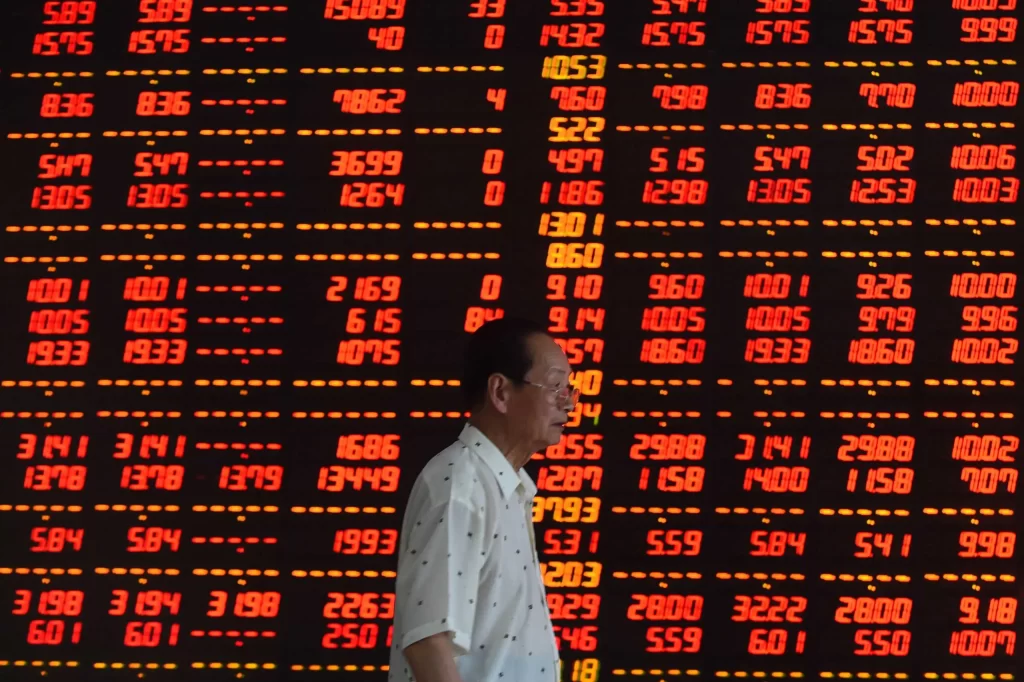
In a bid to curtail short-selling activities amidst recent stock market turmoil, the Chinese securities regulator, the China Securities Regulatory Commission (CSRC), has announced new measures set to come into effect from January 29.
According to reports, the CSRC disclosed its decision on WeChat, stating that it would suspend the lending of restricted shares.
Restricted shares are typically subject to specific sale and transfer restrictions, often imposed due to corporate governance policies or as part of employee compensation plans, thereby limiting their sale.
However, they can be lent for trading purposes, including short-selling.
The CSRC has cited several reasons for implementing these rules, with a focus on promoting fairness and reasonableness in the market.
They aim to reduce the efficiency of securities lending, limit the advantages of institutions utilizing information and tools, and provide all types of investors with more time to digest market information, ultimately striving for a fairer market order.
This move follows a broader trend of China’s efforts to control capital outflows. Earlier in January, the country’s largest brokerage ceased lending stocks to retail investors and increased margin requirements for institutional investors, responding to regulatory guidance.
READ MORE: Coinbase Faces Stock Price Volatility Amid Ongoing SEC Lawsuit and Bitcoin’s Price Decline
Notably, back in October, the local regulatory body had already introduced new regulations for hedge funds, restricted shares lending by strategic investors, and intensified supervision of arbitrage activities.
Short-selling, a financial strategy where investors borrow shares and sell them in anticipation of a stock’s price decline, is at the center of this regulatory action.
China’s stock market has grappled with considerable challenges over the past year, with the CSI 300 Index benchmark declining by 11% in 2023, and the MSCI China Index falling by almost 10% during the same year, following declines of 23.6% in 2022 and 22.8% in 2021.
Furthermore, foreign investors have exhibited diminished confidence in the Chinese market, with over 170 billion yuan (US$23.4 billion) in onshore stocks sold by non-Chinese investors between July and November of the previous year, as reported by the South China Morning Post.
Despite these market challenges, China continues to invest heavily in pilot projects for its central bank digital currency (CBDC), the digital yuan.
This includes integrating the technology with foreign banks and using the digital yuan to settle commodities transactions on Shanghai exchanges, showcasing the nation’s commitment to technological advancement in the financial sector.
A $1.7 billion cryptocurrency fraud scheme involving false promises of listing on the Hong Kong stock exchange and fabricated personas has been exposed in a lawsuit filed by the U.S. Securities and Exchange Commission (SEC) on January 29.
The lawsuit names Xue Lee, also known as Sam Lee, and Brenda Chunga, who went by the moniker “Bitcoin Beautee,” as the alleged perpetrators behind the fraudulent operation.
They operated under various aliases, including HyperFund, HyperVerse, and HyperTech.
The SEC accuses Lee and Chunga of enticing investors with deceptive membership packages that guaranteed high returns from cryptocurrency mining activities.
The ill-gotten gains from these investments were allegedly used to acquire luxury cars, condos, and fund cryptocurrency wallets.
While Chunga has agreed to settle charges and pay civil penalties, she, along with Lee, faces charges from the U.S. Attorney’s Office for conspiracy to commit securities fraud and wire fraud.
Chunga has also pleaded guilty to these criminal charges, and a third individual, promoter Rodney Burton, has also been charged by prosecutors.
According to the SEC, Lee misled recruiters by claiming that HyperTech would be listed on the Hong Kong Stock Exchange by 2022.
The regulator also asserted that the duo shared fake screenshots of appearances on CNN and a fictitious Amazon Prime documentary, “Next: Blockchain,” to bolster their company’s reputation.
The fraudulent marketing efforts even included hiring a Thai actor to impersonate the CEO of HyperVerse, further exposing the extent of their deceit.
READ MORE: Immutable zkEVM Brings Web 3 Game Development To QuickNode Blockchain
The SEC alleges that Lee employed a pyramid scheme-like referral system to recruit new investors, enticing them with the promise of initial coin offerings at 20-30% below market value.
Chunga is accused of personally pocketing $3.7 million, which she used to buy a $1.2 million house in Maryland, a $1.1 million condo in Dubai, a BMW, and designer clothing.
Meanwhile, Lee allegedly transferred around $140,000 in cryptocurrencies to a wallet under his control.
This fraudulent operation, active from June 2020 to May 2022, highlights the persistence of fraud and noncompliance with U.S. securities laws in the cryptocurrency industry.
Gurbir Grewal, the director of the SEC’s Division of Enforcement, emphasized the scheme’s impact, stating, “As alleged in our complaint, Lee and Chunga attracted investors with the allure of profits from crypto asset mining, but the only thing that HyperFund mined was its investors’ pockets.”
The SEC is seeking permanent injunctive relief, conduct-based injunctions preventing the defendants from participating in multilevel marketing or cryptocurrency offerings, disgorgement of ill-gotten gains, prejudgment interest, and civil penalties.
Chunga resides in Maryland, while Lee, an Australian national, is believed to be currently residing in the United Arab Emirates.
Lee is also facing scrutiny from the Australian securities regulator due to the collapse of his previous cryptocurrency venture, Blockchain Global, in 2021, leaving creditors owed $58 million.
The Australian Securities Investment Commission is considering potential charges against Lee and his business partners, Allan Guo and Ryan Xu, for potential breaches of the Corporations Act.