



Investors might have a tough time during a bear market, but these downward cycles are often seen as a great opportunity for innovators to double down and refine their ideas. This is especially apparent in the Web3 industry, where the long and drawn out crypto winter that began at the tail end of 2021 has weeded out many of its flawed projects. Those that are left standing are now primed to usher in some exciting new use cases as the crypto industry looks set for a strong rebound heading into 2024.
As optimism builds over the prospect of a new bull market for crypto, now seems like a great time to take stock of some of Web3’s most exciting new developments.
Distributed Validator Technology
DVT is gaining momentum as a superior approach to blockchain validator security due to the way key management and signing responsibilities are split across multiple parties, increasing the resilience of the network.
With DVT, the private keys used to secure a validator are shared across multiple clusters of computers. This means it becomes exponentially more difficult for hackers to gain access to that private key, as they would have to attack numerous machines separately. Another benefit is that some nodes can go offline, without the validator being affected, as the key signing can be performed by a subset of machines within the larger cluster.
DVT therefore delivers three main benefits to Proof-of-Stake blockchains – it increases security, it means there’s no single point of failure for a validator, and it accelerates decentralization by making it simple to establish numerous independently operated validators.
One of the leading lights in the DVT space is SSV.Network, which provides the significant advantage of allowing validators to remain anonymous, helping to reduce hacking and coercion attempts. SSV makes it much more difficult for cyberattackers to target a specific validator, and simultaneously makes validation much more accessible as users can participate in a node with minimal financial resources.
SSV is tipped to gain substantial momentum in 2024 following the launch of its permissionless mainnet in December. With its launch, anyone can participate in Ethereum’s network by staking a minimal amount of ETH, validating transactions to earn a share of the rewards on offer. The project has gotten off to a great start, with more than $160 million worth of ETH being staked by over 2,200 validators across 74 SSV nodes.
Zero-Knowledge Proofs
Although ZK-Proofs is a relatively old technology within the Web3 sphere, it’s set to make a big splash in 2024 as it reaches a new level of maturity.
The basic idea of ZK-proofs is that they allow one party in a transaction to prove to a second party that it has specific knowledge regarding the details of that transaction, without revealing any specifics. The technology has profound implications for blockchain as it addresses headaches around the opposing needs for transparency and privacy. With ZK-proofs, it becomes possible for crypto transactions to be verified without anyone knowing the transaction details. This ensures full transaction privacy, while preventing anyone from cheating the system.
ZK-proofs were first popularized by the privacy-focused cryptocurrency ZCash, but the technology is now being used for additional use cases, such as verifiable off-chain computing.
With ZK-proofs we can build a verifiable web that enables users to make informed decisions, because they can verify exactly what the systems they interact with are doing, promoting greater trust. In a blog post, ChainLink cites three main benefits to the verifiable web. First, users will know what they’re getting into because they can proactively verify everything about a system and confirm it won’t change. Second, they’ll be able to understand what is happening within any system by using ZK-proofs to verify any events or data. Third, users can proactively decide if and when they want to leave a system, as the verifiable web clearly defines how to do so.
Several projects are working hard to make the verifiable web a reality. They include Space and Time, a decentralized data warehouse startup that uses ZK-proofs to verify queries against both on- and off-chain data. Space and Time has developed a technology called Proof-of-SQL, which makes it possible to cryptographically secure database queries. In turn, this means smart contracts now have a way to verify off-chain data, opening the door to more sophisticated decentralized applications that can respond to real-world events. Space and Time has notably integrated its technology with Google Cloud’s BigQuery to private queries to off-chain data stored in the cloud.
A second major player driving greater adoption of ZK-proofs is Cronos. In December, Cronos announced the launch of its third major network in testnet – a Layer-2 known as the Cronos zkEVM chain – which is built using Matter Labs’ tools for spinning up so-called “hyperchains” that sit above existing networks.
The Cronos zkEVM chain is expected to launch its mainnet in the second quarter of 2024, and brings benefits such as its low hardware requirements and lower transaction fees. By using ZK-proofs, it also facilitates native account abstraction, where transaction fees can be paid using alternative cryptocurrencies.
Fully Homomorphic Encryption
Even as ZK-proofs gain momentum, others in the blockchain industry are working on what they believe is a superior alternative to facilitate private transactions. Fully Homomorphic Encryption, known as FHE, makes it possible to perform computations on data that remains encrypted in ciphertext format, ensuring it remains protected at all times. This is important, because in traditional computing it is necessary to unencrypt data before it can be used by any application.
FHE provides significant benefits, for example by allowing untrusted networks to access data that remains fully encrypted, preventing any misuse.
One of the biggest proponents of FHE is Google, which offers an extensive toolkit for developers looking to build applications that leverage the technology. In the crypto realm, Fhenix is one of the leading players in FHE, building an EVM-compatible blockchain that’s said to be the first network of its kind to implement the technology.
Fhenix argues that FHE can provide big benefits to a blockchain industry that’s known for its transparency due to the public nature of decentralized networks. The startup, which raised $7 million in funding in September, announced the launch of its testnet earlier in the year, followed by a private devnet that launched in June.
Because Fhenix’s FHE blockchain is EVM-compatible, the startup says it can improve the utility of Ethereum-based dApps, supporting capabilities such as private voting for DAOs, private real-world asset tokenization, blind auctions, on-chain identification and more.
Super Apps
The concept of the Super App has its roots in the world of Web2. Super Apps are basically just one application that offers users multiple, diversified services for everyday life. They’re usually built atop of a single function, such as a chat or financial payments platform, which integrates with various other services and makes them easier for their users to access.
Super Apps first emerged in China, with the likes of WeChat and Alibaba amassing millions of users on their respective chat and e-commerce platforms, before expanding to include other offerings. These days, WeChat is far more than just a chat app, as it also offers social media, hotel bookings, transportation services such as taxi bookings, e-commerce marketplaces, video games, financial services, online dating and everything else you can imagine.
Kresus is now looking to bring the concept of the Super App into Web3 with the launch of a crypto wallet that doubles as a portal to the world of decentralized applications. Besides just being a wallet, Kresus offers functionality such as minting and transferring NFTs, numerous on- and off-ramps to fiat, access to DeFi protocols and more.
One of the best things about Kresus that’s likely to help with its growth is its simplicity, which overcomes one of the major hassles in crypto. Whereas other non-custodial wallets require users to carefully store their seed phrase to ensure they can access their digital assets if they lose their wallet, Kresus is completely idiot-proof. It’s simple to set up a wallet, and no seed phrase is created. Instead, it employs traditional account recovery techniques such as email or SMS to ensure users can always access their wallets, even if they forget their password.
Kresus also gives each user a free Web3 identity that’s powered by Unstoppable Domains, which can be used to easily and securely login to any dApp, metaverse or blockchain game in a single click.
Kresus was recently named by FinBold as one of the easiest apps to buy and store crypto with, noted for its ability to provide the same level of security as a hardware wallet, without needing to buy any actual hardware.
Ethereum Virtual Machine
Progress continues to accelerate in the world of EVMs, which are virtual machines that power the smart contracts so critical to the Ethereum network. The EVM is what makes it possible for developers to write smart contracts in the Solidity programming language, and is the key enabler for every autonomous dApp deployed on the network today.
The overwhelming dominance of Ethereum in DeFi and Web3 today means that many other networks are now looking to create their own EVMs to tap into its ecosystem. One of the most prominent examples is the EOS EVM, which was launched in 2022 and has been the focus of much innovation ever since. Although Ethereum has the biggest ecosystem of dApps by far, many developers believe that EOS is a superior network, with faster transaction processing times and lower fees just some of the major benefits.
The EOS EVM effectively bridges the gap between the two ecosystems, providing a way for developers to deploy Solidity-based smart contacts on the EOS network, where they can benefit from its superior performance. It allows developers to use Ethereum’s battle-tested code, libraries, SDKs and other tooling to build dApps that can run on EOS.
With the latest update to the EOS EVM in December, it gained support for WebSocket, which is a key tool for building more sophisticated dApps that rely on real-time, bidirectional communication. With WebSocket, dApp developers can establish two-way and real-time communication between their apps and a remote server, with minimal latency. It improves on the older HTTP communication standard, which is unidirectional, meaning that the client can only send requests, and the server can only respond.
By using WebSocket instead, dApps can maintain a two-way connection that facilitates a continuous exchange of data. This paves the way for instantaneous updates for Web3 chat dApps, messaging tools, trading platforms, blockchain games, NFT tracking tools, DeFi notifications and more.
Web3 Streaming
The concept of livestreaming is taking on a new life in Web3 thanks to the power of Azarus, a streaming platform that changes the very nature of how content creators and their fans interact.
Azarus sits at the forefront of Web3 streaming, with its innovative wallet feature that layers over the video player to enable direct interactions between streamers and viewers. With Azarus, esports players and other content creators have a simple, seamless way to stream and engage with their viewers, using blockchain tokens to provide incentives that enhance the viewing experience.
The beauty of Azarus’s technology is that it provides gamers and other creators with a new source of revenue together with the ability to reward their most loyal audiences, motivating them to spread the word about their gaming exploits. Its platform also provides a way for creators to encourage viewers to visit off-stream destinations such as e-commerce portals, brand properties and more.
Web3 streaming is looking set to become all the rage following the acquisition of Azarus by Animoca Brands, one of the biggest Web3 game developers. Animoca intends to integrate Azarus’s streaming technology into its own games to provide richer experiences for gamers and fans alike.
Ultimately, Animoca believes that Web3 streaming will lay the groundwork for the creation of a player-owned economy that will give gamers, content creators and streamers full control over their digital property and the ability to monetize their expertise.

Hackers have managed to exploit Orbit Bridge, the cross-chain bridging service of the Orbit Chain protocol, just hours before the new year, making off with a staggering $82 million.
This shocking breach was brought to light on December 31st by a pseudonymous Twitter user known as Kgjr, who raised the alarm regarding significant outflows from the Orbit Chain Bridge protocol.
Subsequently, blockchain investigators Officer CIA and cybersecurity firm Cyvers corroborated these findings.
Based on data from the blockchain analytics platform Arkham Intelligence, the hackers successfully siphoned off a grand total of $81.68 million.

This sum was divided among five separate transactions, involving $30 million in Tether, $10 million in USD Coin, $21.7 million in Ether, $9.8 million in Wrapped Bitcoin (WBTC), and $10 million worth of the algorithmic stablecoin DAI, all of which were swiftly moved to new wallets.
The Orbit Chain protocol is closely intertwined with the Klaytn network (KLAY), a modular layer-1 blockchain.
READ MORE: Bitcoin ETF Race Heats Up as Top Contenders Submit Final Applications
Notably, Klaytn’s block explorer indicates that eight of the highest-valued assets on the Klaytn network are actually wrapped assets that rely on the Orbit Bridge for cross-chain transfers.
Despite the gravity of the situation, the exact nature of the exploit remains shrouded in mystery. Attempts to solicit comments from Orbit Chain and Klaytn regarding this incident yielded no immediate response, leaving the crypto community in suspense.
Orbit Chain, which was launched in South Korea in 2018, is a versatile multi-asset blockchain primarily designed for facilitating cross-chain transfers across various decentralized networks.
Its typical use case involves the seamless transfer of assets between EVM-compatible networks and the Klaytn network.
It is crucial to distinguish Orbit Chain from another cross-chain bridging protocol called Orbiter Finance, which shares a somewhat similar name but operates independently.
As the crypto space grapples with the fallout from this high-profile breach, security measures and risk assessments across the ecosystem are expected to be scrutinized and enhanced.

The United States Department of Justice’s recent decision to forgo a second trial against Sam Bankman-Fried has ignited controversy within the crypto community.
In a letter filed on December 29th, prosecutors argued that the case’s significant public interest necessitated a “swift resolution.”
This choice implies that Bankman-Fried will not be subjected to further charges related to his alleged involvement in unlawful campaign contributions.
The document states, “Much of the evidence that would have been presented in a second trial was already presented in the first trial and can be considered by the Court at the defendant’s March 2024 sentencing.”
This decision has been met with widespread criticism among crypto enthusiasts. Paul Grewal, Coinbase’s chief legal officer, branded it a “miscarriage of justice,” emphasizing the importance of a public airing of charges, especially those involving campaign finance.
He stressed that questions about what politicians knew and when they knew it are crucial and must be answered.
Simon Dixon, co-founder of BnkToTheFuture.com, an online investment platform, pointed out that the decision also shields U.S. politicians from further scrutiny concerning campaign contributions and clawbacks during the upcoming 2024 election season.
READ MORE: US Prosecutors Hint at No Second Trial for Ex-FTX CEO Sam Bankman-Fried
Bankman-Fried himself admitted to being a “significant donor” to both sides of the political spectrum leading up to the 2022 midterm elections. Court documents revealed that he contributed over $100 million to politicians.
During his trial in October, he explained that these donations made in his name were funded by loans from Alameda Research, FTX’s sister company.
The aim was to influence U.S. government policies on cryptocurrency regulation. Before FTX’s collapse in November 2022, Bankman-Fried had plans to donate $1 billion for political causes by 2024.
In addition to the campaign contribution allegations, Bankman-Fried has also been cleared of charges related to a conspiracy to bribe Chinese officials.
Prosecutors argue that a second trial would not impact the U.S. Sentencing Guidelines range for him.
It’s worth noting that Bankman-Fried had previously been found guilty of all seven fraud charges by a jury during his criminal trial.
These charges included wire fraud, wire fraud conspiracy, securities fraud, commodities fraud conspiracy, and money laundering conspiracy.
His sentencing is scheduled for March 28, 2024, and he could potentially face a maximum sentence of 115 years in prison.

Former Donald Trump attorney, Michael Cohen, has publicly acknowledged a significant error in his legal research process, attributing it to the use of Google Bard, an artificial intelligence (AI) chatbot.
Cohen, who is preparing to testify against Trump in upcoming trials, admitted to unintentionally forwarding inaccurate legal citations generated by Google Bard to his lawyer, David Schwartz, in support of his case.
Cohen’s confession came to light in a recent court filing, where he clarified his misunderstanding of Google Bard’s capabilities.
He had mistakenly assumed it to be a highly advanced search engine rather than a generative AI service similar to Chat-GPT.
The problematic citations, as well as several others that were not included in the motion, were attributed to this misunderstanding.
Critics argue that Cohen, not being an active legal practitioner, bore no ethical obligation to verify the accuracy of the information he provided.
They contend that Schwartz, as a legal professional, should have reviewed the citations before incorporating them into official court documents.
Cohen’s legal team emphasized this point, stating, “Mr. Cohen is not a practicing attorney and has no concept of the risks of using AI services for legal research.”
READ MORE: Federal Judge Rules in Favor of SEC in Terraform Labs Securities Case
To further highlight the issue, Cohen’s statement outlined the sequence of events: He had sourced citations and case summaries online, believing them to be authentic, which were then added to the motion by Schwartz without proper validation.
This incident is not the first involving attorneys relying on AI tools only to discover inaccuracies.
Earlier this year, a similar case emerged when Steven Schwartz, an attorney at the New York law firm Levidow, Levidow & Oberman, faced criticism for incorporating AI-generated court citations that turned out to be false.
The judge presiding over the case expressed strong dissatisfaction with Schwartz’s reliance on AI for legal research, pointing out that six of the submitted cases contained fabricated judicial decisions, false quotes, and fictitious internal citations.
In both instances, the misuse of AI tools for legal research underscores the importance of thorough verification and the ethical responsibility of attorneys to ensure the accuracy of the information they present in court.
These cases serve as cautionary tales for legal professionals exploring the integration of AI technology in their practice.

In the midst of the mounting excitement surrounding the potential approval of a spot Bitcoin exchange-traded fund (ETF) in January 2024, certain industry analysts have raised concerns, particularly regarding the issue of backing.
Josef Tětek, a Bitcoin analyst at the hardware crypto wallet firm Trezor, voiced his apprehensions in December 2023, suggesting that spot Bitcoin ETFs might steer individuals away from self-custody, possibly leading to the creation of “millions of unbacked Bitcoin.”
He warned of a scenario where these ETFs could result in what is often termed “paper Bitcoin.”
Tětek’s remarks stirred a significant response within the crypto community, with some dismissing his claims as FUD (fear, uncertainty, doubt), while others pondered the means to ensure that ETF issuers truly hold Bitcoin on behalf of their clients.
Some observers even advocated for the publication of “actual on-chain addresses” in addition to reports on the issuers’ BTC holdings.
David Gerard, the author of “Attack of the 50 Foot Blockchain,” countered Tětek’s concerns, asserting that it was “unlikely” for ETF administrators to create unbacked BTC equivalents or misrepresent their assets.
He emphasized the regulatory oversight and credibility of well-established financial entities, dispelling the notion that unbacked ETF shares were a realistic threat.
However, he didn’t delve into whether clients could independently verify BTC holdings by issuers.
Drawing a comparison to gold ETFs, Bloomberg ETF analyst Eric Balchunas contended that spot Bitcoin ETFs would closely resemble them.
READ MORE: US Prosecutors Hint at No Second Trial for Ex-FTX CEO Sam Bankman-Fried
He pointed out that gold ETFs, having been in existence for two decades, diligently disclose the quantity of gold held by the custodian.
Balchunas emphasized the meticulousness of asset managers, stating they neither desired legal trouble nor wanted the negative publicity that would accompany any failure to hold Bitcoin or any shorting of it.
He also noted that companies like BlackRock and Grayscale were exposed to Bitcoin’s volatility.
The key distinction with spot Bitcoin ETFs, as currently conceived, is that investors would receive cash instead of Bitcoin upon redemption.
Balchunas advised individuals seeking direct ownership of Bitcoin to do so through self-custody, which aligns with the original vision of Bitcoin’s anonymous creator, Satoshi Nakamoto.
He underscored that the vast collective assets in mutual funds and ETFs, amounting to approximately $30 trillion, meant that most investors preferred to avoid direct interaction with the underlying assets.
While many industry observers expressed confidence in the integrity of ETF providers in the cash-create model, others remained convinced that there was a fundamental issue.
According to Tětek, the only way to eliminate concerns of “paper Bitcoin” would be if ETF shares were redeemable for actual Bitcoin.
However, given that the proposed ETFs only allowed for cash in and cash out, investors would have to place trust without the ability to independently verify holdings.

Revolut is a popular fintech company in the UK, but it has a number of cons and bad attributes.
Revolut, founded in 2015, has rapidly risen to prominence as a disruptor in the banking and finance industry. Offering a range of innovative financial services, from currency exchange to cryptocurrency trading, Revolut has garnered millions of users worldwide. In this comprehensive review, we’ll delve into the features, advantages, and drawbacks of the Revolut platform, and explore why it has both captivated and disappointed customers.
The Advantages of Revolut
Revolut’s popularity can be attributed to several compelling advantages:
1.1. Cost-Effective Currency Exchange
One of Revolut’s standout features is its competitive currency exchange rates, making it an attractive choice for international travelers and those conducting cross-border transactions. The platform allows users to exchange currencies at the interbank exchange rate, saving them from hefty fees imposed by traditional banks.
1.2. Multi-Currency Wallet
Revolut offers a multi-currency wallet, which allows users to hold, convert, and spend money in various currencies without the need for multiple bank accounts. This feature simplifies international financial management and reduces the risk of exchange rate fluctuations.
1.3. Cryptocurrency Trading
Revolut’s foray into the world of cryptocurrencies is a notable advantage. Users can buy, sell, and hold popular cryptocurrencies like Bitcoin, Ethereum, and Litecoin directly within the app. This accessibility has made cryptocurrencies more approachable to the average consumer.
1.4. High-Quality Mobile App
The intuitive and user-friendly mobile app is a testament to Revolut’s commitment to a seamless customer experience. Users can easily manage their accounts, set up budgeting tools, and make transactions with just a few taps.
1.5. Premium Features
Revolut offers premium subscription tiers with added benefits such as enhanced travel insurance, priority customer support, and access to exclusive card designs. These premium features cater to users seeking more comprehensive financial services.
Why is Revolut Bad?
While Revolut has undoubtedly gained a strong following, it is not without its fair share of criticisms and drawbacks:
2.1. Limited Customer Support
One of the most significant grievances users have with Revolut is its customer support. Many have reported difficulty in reaching a real person for assistance when encountering problems with their accounts. This lack of responsive customer support can be frustrating, especially in urgent situations.
2.2. Account Locking and Frozen Funds
Some users have reported their accounts being temporarily locked or their funds frozen for various reasons, such as security checks or suspected fraudulent activities. While these measures are intended to protect users, the lack of transparency and lengthy resolution times can be distressing.
2.3. Limited Financial Products
Revolut primarily focuses on banking and currency exchange, but it lacks a comprehensive range of financial products compared to traditional banks. This may limit the options available to users looking for services like mortgages, loans, or investment products.
2.4. Currency Conversion Fees for Free Users
While Revolut offers competitive currency exchange rates to its premium users, free users may still incur currency conversion fees on weekends or for certain currencies. This can lead to unexpected costs for those who opt for the basic, non-premium account.
2.5. Cryptocurrency Limitations
Although Revolut allows cryptocurrency trading, users do not have the option to withdraw their crypto holdings to external wallets. This limitation contradicts the ethos of cryptocurrency, which emphasizes ownership and control of digital assets.
The Future of Revolut
Despite its shortcomings, Revolut remains a prominent player in the fintech industry. Its rapid growth and innovative approach have forced traditional banks to reevaluate their services and fees. Revolut’s potential for future improvement lies in addressing its existing issues, such as enhancing customer support and expanding its financial product offerings.
Revolut has already taken steps in the right direction by obtaining a banking license in some regions, which will allow it to provide a broader range of services and better regulatory protection to its users. Additionally, the company is continually updating its app with new features and improvements, indicating its commitment to growth and evolution.
As the financial technology sector continues to evolve, Revolut’s ability to adapt and provide solutions to the evolving needs of its user base will determine its long-term success. If the company can strike a balance between innovation and customer support, it may very well become a significant force in the future of banking.
Summary
Revolut has made substantial waves in the financial industry by offering innovative and cost-effective solutions to a global audience. Its advantages, such as competitive currency exchange rates and cryptocurrency trading, have endeared it to millions of users worldwide. However, it is essential to acknowledge the platform’s shortcomings, including limited customer support, account locking issues, and certain fees for free users.
The future of Revolut holds promise, with the company actively addressing its flaws and expanding its services. As it continues to evolve and adapt to the ever-changing landscape of fintech, Revolut has the potential to redefine the way people manage their finances.
Ultimately, whether Revolut is a suitable choice for you depends on your specific financial needs and priorities. While it offers many advantages, it is crucial to consider its drawbacks and limitations carefully. As with any financial institution, conducting thorough research and due diligence before committing to Revolut is advisable to ensure it aligns with your individual financial goals and preferences.
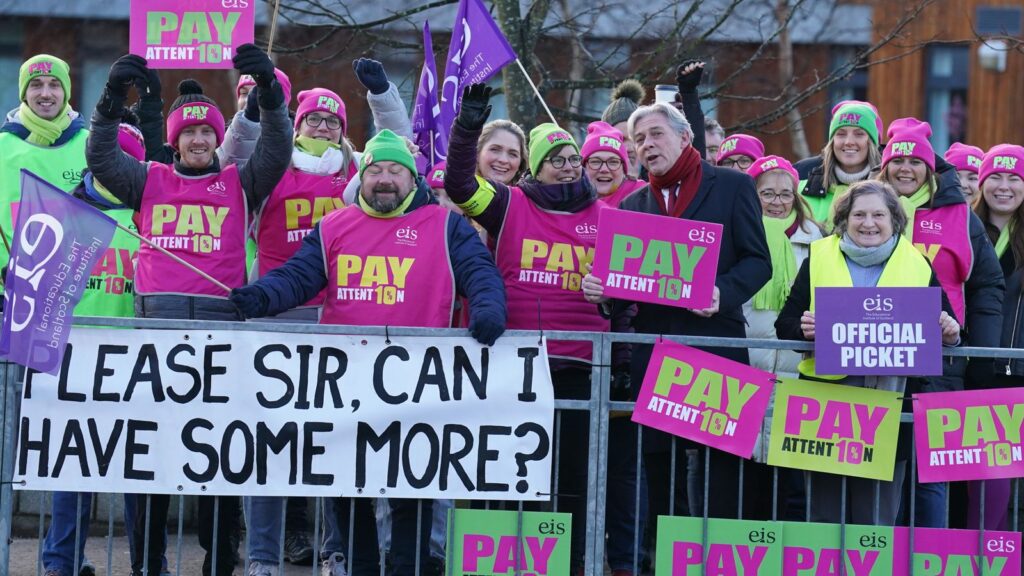
In this article, we outline the teachers strike dates in the UK and reveal when are the next strikes scheduled to be held.
Members of the National Association of Schoolmasters Union of Women Teachers (NASUWT) have embarked on a work-to-rule action in schools across England, as part of an ongoing dispute with the government regarding pay, excessive workloads, and working hours.
This move comes after the four major teaching unions, including the National Education Union (NEU), the Association of School and College Leaders (ASCL), the National Association of Head Teachers (NAHT), and NASUWT, had initially accepted a government offer of a 6.5% pay increase back in July. Although the other unions agreed to the deal, NASUWT decided to persist in its efforts for improved pay and working conditions.
The NASUWT, a significant player in the educational landscape, had already garnered support for strike action and other work-related protests before the acceptance of the government’s pay offer. In their latest move, the union has called on its members to follow strict working hours and adhere to a work-to-rule approach, effectively limiting their work time and avoiding any additional tasks beyond their contractual obligations. This directive, set to begin on September 18th, could potentially affect staff at approximately 10,000 schools across England.
It’s worth noting that members of NASUWT working in sixth-form colleges have reached an agreement on pay, while teachers in Northern Ireland have also been involved in a work-to-rule action since October 2022. However, the pay dispute has been resolved in Scotland, and the NAHT members in Wales have also settled their grievances.
Parents may wonder about the implications for their children’s education in the event of such actions. The government has stated that schools should remain open whenever possible during teacher strikes. However, teachers are not obligated to declare their intention to strike in advance, and there are no specific regulations regarding when parents should be notified of potential school closures. The decision to close schools ultimately rests with individual headteachers, and some parents may only learn about a closure on the morning of the industrial action once staff availability is determined. Currently, there are no minimum staffing requirements for schools, and headteachers can employ agency staff or volunteers who may not follow the regular curriculum.
Education Secretary Gillian Keegan has initiated discussions with unions about introducing voluntary minimum staffing levels on strike days. Additionally, parents in England have the option to request leave for caring for family members or dependents, including emergency childcare. While employers are expected not to unreasonably refuse such requests, employees may not receive compensation during this time. Alternatively, individuals may consider using holiday or unpaid parental leave. Schools have been urged to prioritize vulnerable students and children of key workers and to minimize disruptions to exams and formal assessments. The NEU has provided guidance to help headteachers ensure a minimum level of teaching staff for students with upcoming exams.
The primary concern of teachers in England has been securing an above-inflation pay increase while preventing budget cuts from impacting education. Although most state school teachers received a 5% pay raise for the 2022-23 academic year, the Institute for Fiscal Studies (IFS) reported that teacher salaries in England had fallen by an average of 11% between 2010 and 2022 when accounting for inflation. Unions argue that pay has decreased even more, by up to 23%, during that period. The government initially offered a one-off payment of £1,000 and a 4.3% pay increase for most teachers in 2023-24, with starting salaries reaching £30,000. However, all four major unions rejected this proposal, prompting the government to remove the £1,000 payment.
Subsequently, an independent pay review body recommended a 6.5% pay increase for the following year, leading to a joint statement in July indicating that this offer could avert strike action. The government has also committed to providing a hardship fund of up to £40 million to support schools facing severe financial challenges.
In Northern Ireland, teachers have not reached a pay deal since 2021. Following the rejection of an offer of approximately 3.2% over two years, unions demanded a 6% pay increase for 2021-22 and inflation plus 2% for 2022-23. Several unions, including the NAHT, NASUWT, Irish National Teachers’ Organisation, Ulster Teachers’ Union, and NEU, have engaged in strike action, including a half-day strike and additional industrial action days following Christmas. For the first time in its 125-year history, NAHT members took strike action over pay. Furthermore, teachers in Northern Ireland have also participated in work-to-rule actions, such as refusing to provide lunchtime supervision and declining meetings held outside working hours. Some non-teaching school staff in Northern Ireland have staged a 24-hour strike as well.
In Wales, NEU teachers accepted an increased pay offer of 8% for 2022-23, including a 6.5% annual pay increase and a 1.5% one-off payment, along with a 5% annual pay increase for 2023-24. However, the NAHT in Wales initially rejected this offer, citing concerns about funding arrangements. They subsequently initiated work-to-rule actions, which concluded after NAHT members accepted a new workload agreement, an improved pay offer, and additional funding in November.
The pay dispute in Scotland was resolved with unions accepting a 7% pay increase for 2022-23, retroactive to April, and agreeing to a 5% pay increase in April 2023, followed by a 2% increase in January 2024.
In terms of salaries, classroom teachers in England earned an average of £38,982 during the 2021-22 school year, while their counterparts in Wales and Scotland earned £39,009 and £40,026, respectively. However, no specific figure was provided for Northern Ireland. The average salary for head teachers in England was £74,095 during the same period, while other senior leaders earned an average of £57,117.

On the final day of consideration by the United States Securities and Exchange Commission (SEC) in January 2024, prominent asset management firms BlackRock, Valkyrie, and Van Eck submitted amended S-1 forms.
These revised documents represent the next step in their quest to establish Bitcoin exchange-traded funds (ETFs) and align with the SEC’s preferences.
Van Eck’s updated application emphasizes that “Authorized Participants” (APs), the financial entities permitted to buy or redeem shares with the Trust, will exclusively transact in cash for both share creation and redemption. This approach mirrors the SEC’s preferred method.
In its updated filing, BlackRock identified Jane Street and JPMorgan Securities as its “authorized participants” for the proposed spot Bitcoin ETF.
BlackRock has consistently advocated for a cash-only model.
Furthermore, the asset manager made history by executing the first trade on JPMorgan’s Tokenized Collateral Network service on October 11.
BlackRock originally submitted its application for a spot Bitcoin ETF in June, followed by Valkyrie’s application a week later.
READ MORE: ARK Invest Liquidates $200 Million in GBTC Holdings, Shifts Focus to Bitcoin Futures ETF
Both firms have actively engaged with the SEC throughout December, attending meetings to discuss their proposals.
Commenting on BlackRock’s amendment, Bloomberg ETF analyst Eric Balchunas noted, “Looks [like] we have our first horse at the starting gate,” alluding to the asset manager’s potential for SEC approval.
Balchunas previously anticipated the SEC’s decision on the outstanding spot Bitcoin ETF filings to occur by January 10, 2024.
If approved, trading could commence shortly thereafter.
Valkyrie, in its updated S-1, also designated authorized participants, namely Jane Street Capital and Cantor Fitzgerald. Additionally, StoneX Financial will assume the role of its lead market maker.
It’s worth noting that a slew of financial heavyweights, including BlackRock, Van Eck, Grayscale, Bitwise, WisdomTree, Invesco, Galaxy, Fidelity, ARK Invest, Valkyrie, Franklin, Hashdex, Global X ETFs, and Pando Asset, have all submitted S-1 applications for spot Bitcoin ETFs.
The outcome of these applications will have significant implications for the cryptocurrency market and its integration into traditional financial systems.

Singapore’s Prime Minister, Lee Hsien Loong, has issued a stark warning to his social media followers about the rising threat of deepfake videos leveraging his voice and image to promote fraudulent cryptocurrency schemes.
On December 28, Loong took to his social media platforms, including X (formerly Twitter), LinkedIn, and Facebook, to caution his supporters against falling victim to scammers who employ artificial intelligence (AI) technology to generate deepfakes that falsely attribute promises of “investment returns” and cryptocurrency giveaways to him.
He even shared an example of a deceptive video featuring himself being interviewed, which was manipulated by fraudsters to promote a bogus form of “hands-free crypto trading.”
Loong emphasized the growing danger posed by deepfake technology in spreading misinformation. He stressed the importance of remaining vigilant and educating oneself and loved ones on how to defend against such scams.
Notably, Prime Minister Loong has long been a target for scammers, predating the proliferation of AI-based tools in this arena.
READ MORE: Argentina’s New Government Takes Steps to Legalize Cryptocurrency Holdings
In 2021, he issued a cautionary message to Singaporeans, urging them to exercise caution when dealing with cryptocurrency platforms.
At that time, individuals had created fraudulent profiles on platforms like BitClout, using fake social media accounts to sell tokens, raising concerns about identity theft and fraud.
Furthermore, both Loong and Deputy Prime Minister Lawrence Wong faced inquiries from lawmakers in the wake of the FTX exchange’s collapse in 2022, underscoring the government’s commitment to safeguarding its citizens from cryptocurrency-related risks.
The cryptocurrency landscape has been rife with scams since its inception. Scammers have employed a variety of tactics to dupe users into parting with their fiat currency or digital tokens.
In 2020, high-profile Twitter accounts, including former United States President Barack Obama and President-elect Joe Biden, were compromised by hackers who used them to promote a fraudulent Bitcoin scheme.
These incidents illustrate the ongoing challenge of combating cryptocurrency scams and the importance of public figures like Prime Minister Lee Hsien Loong raising awareness to protect the community from financial fraud in the digital age.

Indonesian authorities have recently taken action against ten Bitcoin mining operations, accusing them of electricity theft amounting to nearly $1 million USD.
The North Sumatra Police Force initiated the crackdown, targeting a multi-site Bitcoin mining operation across various locations in Indonesia.
During the operation, they confiscated 1,134 Bitcoin mining machines, 11 meters of electrical cable, and assorted computer equipment.
The Chief of North Sumatra Police, Irjen Agung Setya Imam Effendi, asserted that the organizers of these mining operations had manipulated electrical circuits to power the extensive number of Bitcoin mining machines.
Effendi demonstrated the tampering, explaining that the electricity was being diverted from the upper part of the PLN box, bypassing the meter, which was improper and illegal.
READ MORE: ARK Invest Liquidates $200 Million in GBTC Holdings, Shifts Focus to Bitcoin Futures ETF
The total loss resulting from these ten cases of electricity theft was estimated to be 14.4 billion Indonesian Rupiahs (IDR), equivalent to approximately $935,666 USD.
This incident follows a high-profile case in China where a government official received a life sentence for facilitating access to electricity for Bitcoin miners.
Yi Xiao, a former vice chairman of the Jiangxi Provincial Political Consultative Conference Party Group, was convicted of abusing power in a Bitcoin mining enterprise.
Xiao had reportedly operated a massive $329 million Bitcoin mining venture under the corporate name Jiumu Group Genesis Technology from 2017 to 2021.
During this period, Xiao, along with other corporate executives, amassed a staggering 160,000 Bitcoin mining machines, which at one point accounted for 10% of the entire electricity consumption of the city of Fuzhou.
His sentence underscores the seriousness with which authorities are addressing illegal Bitcoin mining activities, particularly those involving electricity theft, as these operations can impose significant financial burdens on both governments and utility providers.