



Leading crypto exchange Crypto.com almost sponsored the Rome Open 2023, sources have revealed to Crypto Intelligence News.
In the world of tennis, the Rome Open has long been revered as one of the most prestigious tournaments on the calendar. Taking place in the historic city of Rome, this event not only showcases top-tier tennis but also brings together the beauty of sport and culture. The 2023 Rome Open promised to be no exception, offering tennis enthusiasts and sports fans worldwide a glimpse of exceptional athleticism and thrilling competition.
The Venue: Foro Italico – A Tennis Oasis
The Rome Open is hosted at the Foro Italico, an iconic sports complex that dates back to the Mussolini era. This venue is steeped in history, providing a stunning backdrop for the tournament. The elegant statues and classical architecture that surround the tennis courts create an atmosphere that is both reverent and electric.
The picturesque setting, with its meticulously maintained clay courts, offers players and fans a unique experience. The Foro Italico stands as a testament to Rome’s rich sporting heritage, and it was the perfect stage for the 2023 Rome Open.
Elite Competitors and Thrilling Matches
The 2023 Rome Open featured a star-studded lineup of tennis talent from around the world. Top-ranked players, including Novak Djokovic, Rafael Nadal, Ashleigh Barty, and Naomi Osaka, were among those competing for glory. The tournament had no shortage of drama, with many matches going down to the wire.
One of the standout matches of the tournament was the intense semifinal clash between Novak Djokovic and Rafael Nadal. The two titans of the sport battled fiercely, showcasing incredible shot-making and stamina. Djokovic eventually emerged victorious, earning a hard-fought victory that added another chapter to their storied rivalry.
In the women’s draw, Ashleigh Barty and Naomi Osaka delivered a captivating final that had fans on the edge of their seats. Barty’s crafty all-court game clashed with Osaka’s raw power, resulting in breathtaking rallies and jaw-dropping winners. Barty ultimately triumphed in a thrilling three-setter, further solidifying her status as one of the top players in the women’s game.
Emerging Stars and Surprising Upsets
While the established stars of tennis always draw attention, the Rome Open is also a platform for emerging talents to make their mark. The 2023 edition saw several young players break through and announce themselves as future contenders.
In the men’s draw, the rise of Italian sensation Lorenzo Musetti was a major storyline. The 20-year-old wowed the home crowd with his audacious shot-making and fearlessness on the court. Musetti’s electrifying run to the quarterfinals captured the hearts of fans and marked him as a player to watch in the years to come.
On the women’s side, American teenager Coco Gauff continued to make waves in the tennis world. Gauff’s explosive athleticism and competitive spirit propelled her to the semifinals, where she faced off against Ashleigh Barty. Although she fell short, Gauff’s performance showcased her potential and solidified her as one of the sport’s rising stars.
The Rome Open also witnessed a few surprising upsets, highlighting the unpredictable nature of tennis. Established players like Roger Federer and Serena Williams faced early exits, reminding everyone that in this sport, anything can happen on any given day.
Incredible Sportsmanship and Fan Engagement
One of the enduring qualities of the Rome Open is the sportsmanship displayed by the players. Even in the heat of competition, tennis stars exhibited respect and camaraderie, exchanging handshakes and kind words at the net. This spirit of fair play adds to the tournament’s charm and sets a positive example for the next generation of athletes.
The passionate Italian fans, known for their fervor and love of tennis, created a vibrant and electric atmosphere at the Foro Italico. Their unwavering support for both homegrown talent and international stars added an extra layer of excitement to the matches. The chants, cheers, and flags waving in the stands were a testament to the global appeal of tennis.
Impact on the Tennis World
The 2023 Rome Open had significant implications for the world of tennis. For many players, this tournament served as a crucial warm-up for the upcoming Grand Slam events, including the French Open and Wimbledon. It allowed them to fine-tune their games and gain confidence on the clay courts, which have their unique challenges and nuances.
Novak Djokovic’s victory in Rome solidified his status as the world’s number one player and added to his impressive list of accomplishments. Djokovic’s dominance in recent years has raised questions about his place in tennis history alongside legends like Roger Federer and Rafael Nadal.
On the women’s side, Ashleigh Barty’s win reaffirmed her position as the player to beat in women’s tennis. Her versatile game and ability to excel on different surfaces make her a formidable force as she pursues additional Grand Slam titles.
Conclusion
The 2023 Rome Open was a captivating and memorable tournament that once again showcased the beauty of tennis and the power of sport to unite people from all walks of life. With its historic venue, elite competitors, emerging stars, and passionate fans, the Rome Open remains a must-watch event on the tennis calendar. As the sport continues to evolve, the Rome Open continues to shine as a beacon of excellence, reminding us why tennis holds a special place in the hearts of millions around the world.
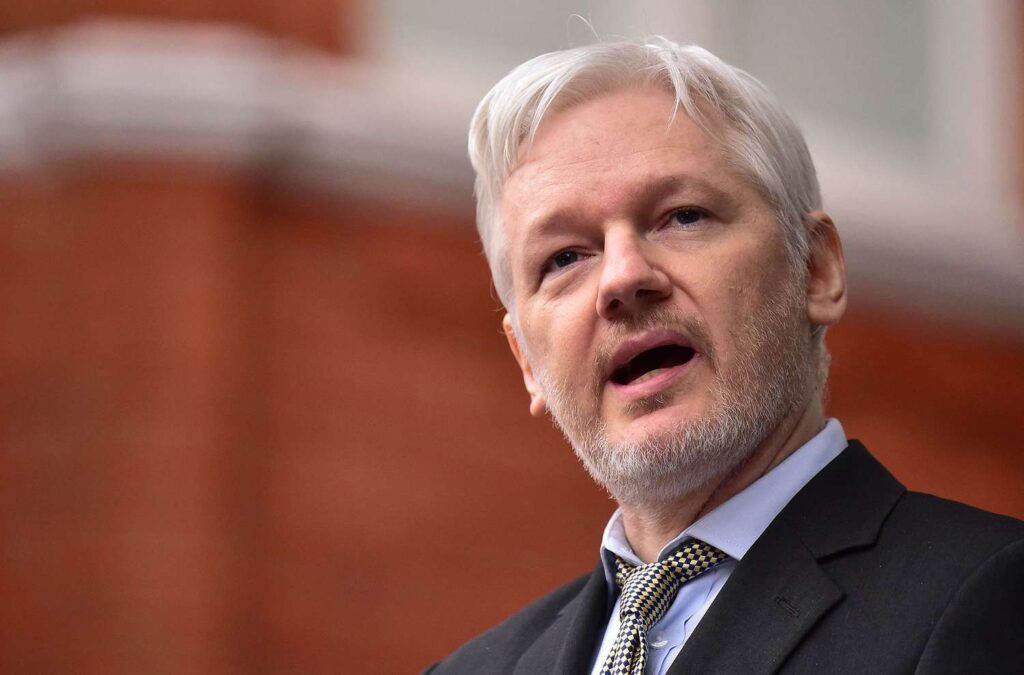
Julian Assange and King Charles are two very influential figures in the UK, but do they own crypto?
Julian Assange is a name synonymous with the modern era of information and transparency. Born in Townsville, Australia, in 1971, Assange is best known for founding WikiLeaks, a platform dedicated to publishing classified and confidential information, often revealing government and corporate misconduct. Assange’s mission was rooted in the belief that a more transparent world would lead to a more just and accountable one.
WikiLeaks gained international prominence in 2010 when it released a trove of classified U.S. government documents, provided by whistleblower Chelsea Manning. These documents, which included diplomatic cables and military reports, shed light on covert operations, human rights abuses, and political maneuvering. While some hailed Assange as a champion of transparency and free speech, others condemned him as a threat to national security.
Assange’s legal troubles escalated when he sought asylum in the Embassy of Ecuador in London in 2012 to avoid extradition to Sweden, where he faced sexual assault allegations. Over the years, his situation became increasingly complicated, as he remained confined to the embassy for seven years, before finally being arrested in April 2019.
The legal battle surrounding Assange’s extradition to the United States intensified concerns over press freedom and the treatment of whistleblowers. Supporters argued that Assange should be protected as a journalist, while critics contended that he should face charges related to hacking and endangering national security. His case also raised questions about the reach of U.S. jurisdiction and its implications for freedom of the press.
King Charles I: The Stuart Monarch in Turbulent Times
In stark contrast to Julian Assange’s contemporary impact, King Charles I lived in the 17th century, during a period of profound political upheaval in England. Born in 1600, Charles ascended to the English throne in 1625, becoming the second Stuart monarch. His reign was marked by a series of contentious issues, including conflicts with Parliament over taxation and religious matters.
One of the most defining moments of Charles’s reign was his decision to dissolve Parliament in 1629, ruling without it for the next eleven years—a period known as the Personal Rule. This action exacerbated tensions between the monarchy and Parliament, leading to widespread discontent among his subjects.
The situation escalated into the English Civil War, a conflict that lasted from 1642 to 1651. Charles I faced off against the forces of Parliament, led by figures like Oliver Cromwell. The war was a brutal and divisive struggle that ultimately culminated in the execution of King Charles I in 1649, marking the first time a reigning English monarch was put to death by a legally constituted court.
Charles’s execution was a watershed moment in English history, symbolizing the shift from absolute monarchy to parliamentary sovereignty. His trial and execution laid the groundwork for the establishment of the Commonwealth of England under Cromwell and, later, the restoration of the monarchy in 1660 under Charles II.
Legacy and Controversy
The lives of Julian Assange and King Charles I are separated by centuries and encompass vastly different historical contexts, but they share some common themes. Both individuals challenged established systems of power and authority, leading to controversy and enduring debate.
Julian Assange’s legacy is still unfolding, with many viewing him as a champion of transparency and free speech. His actions have sparked critical discussions about the role of whistleblowers in modern society, the limits of government secrecy, and the protection of press freedom. Regardless of one’s opinion on Assange, his case serves as a testament to the complexities of balancing national security concerns with the public’s right to know.
King Charles I, on the other hand, left a lasting imprint on English history. His reign and the subsequent English Civil War reshaped the political landscape of England and contributed to the evolution of constitutional monarchy. Charles’s stubbornness and resistance to the will of Parliament played a pivotal role in this transformation, and his execution marked a momentous shift in the balance of power.
Conclusion
Julian Assange and King Charles I are two figures who have shaped the course of history in their respective eras, sparking intense debates and controversies that continue to reverberate. While Assange’s commitment to transparency and free speech in the digital age has redefined the boundaries of journalism, King Charles I’s tumultuous reign and ultimate execution laid the groundwork for modern constitutional monarchy in England.
These two individuals, separated by centuries, remind us of the enduring power of individuals to challenge established norms and institutions, sometimes at great personal cost. Their stories serve as a testament to the ever-evolving nature of politics, power, and the pursuit of justice in our world.
ARK Invest, led by Cathie Wood, a prominent institutional asset management firm, has made a significant move in its investment portfolio by liquidating its entire remaining holdings of the Grayscale Bitcoin Trust (GBTC), valued at $200 million.
Bloomberg ETF analyst Eric Balchunas brought this development to light.
From the proceeds of the GBTC sale, ARK Invest allocated approximately $100 million towards an investment in the Bitcoin Futures ETF called Bito.
Nonetheless, industry experts view this move as a temporary measure, with ARK Invest likely seeking a more liquid and diversified investment portfolio.
Consequently, ARK Invest has now become the second-largest holder of Bito, according to Eric Balchunas.
The process of divesting from GBTC began in October, coinciding with Bitcoin’s price reaching $34,000.
At that time, ARK Invest initiated the sale of 100,739 GBTC shares, valued at $2.5 million, from its ARK Next Generation Internet ETF (ARKW). Later, on December 19, the firm sold an additional 809,441 GBTC shares worth $27.9 million.
READ MORE: Bitcoin Price Faces Seasonal Headwinds: BTC Drops to $42,200
In addition to shedding GBTC, ARK Invest also offloaded 148,885 shares of Coinbase, a popular cryptocurrency exchange, amounting to $27.5 million, from its ARK Next Generation Internet ETF.
These actions by ARK Invest are significant, given the ongoing anticipation surrounding the approval of a spot Bitcoin ETF.
Notably, ETF analysts, including Eric Balchunas, have expressed a 99% probability of a spot Bitcoin ETF receiving approval before the deadline of January 10, 2024.
Cathie Wood, the CEO of ARK Invest and a notable advocate for Bitcoin, has been vocal about the likelihood of a spot Bitcoin ETF gaining approval.
During a recent interview, Wood acknowledged that the heightened expectations regarding the approval of spot Bitcoin ETFs could have a short-term impact on Bitcoin’s price.
However, she emphasized the promising long-term outlook for the cryptocurrency market.
Wood’s comments reflect the dynamic nature of the crypto industry and the significant role institutional players like ARK Invest play in shaping its future.

In the lead-up to the anticipated approval of a spot Bitcoin exchange-traded fund (ETF) in early January, the trading volumes of Bitcoin mining company Marathon Digital have surged, propelling it to the top of the charts among U.S. mid and large-cap stocks.
Over the past 24 hours, the publicly traded firm has witnessed an astonishing trading volume of over 105 million shares, surpassing giants like Tesla, Apple, and Amazon, as reported by Yahoo Finance market data.
Additionally, fellow Bitcoin miner Riot Platforms has emerged as the sixth most-traded stock on the charts, with more than 40 million shares exchanged in the last day.
This increase in trading activity on Bitcoin mining stocks coincides with a renewed push by mining companies to expand their operations, with an eye on the expected approval of the spot Bitcoin ETF in January and the Bitcoin halving scheduled for April.
Marathon Digital made headlines on December 19th when it unveiled plans to acquire two mining centers for a staggering $179 million.
This strategic move will augment its current mining capacity by 390 megawatts, supplementing its existing output of 584 megawatts.
Meanwhile, Riot Platforms had made an equally significant investment two weeks prior, acquiring an additional $291 million worth of Bitcoin mining rigs, resulting in its largest-ever increase in hash rate.
READ MORE: FTX Debtors Propose Settlement in Bankruptcy Case over Embed Acquisition
Despite Bitcoin’s impressive growth of more than 163% since the beginning of the year, the shares of Bitcoin mining companies have significantly outperformed the leading cryptocurrency.
Marathon Digital and Riot Platforms have witnessed astounding year-to-date gains of 767% and 452%, respectively, according to data from TradingView.
Notably, the largest publicly traded cryptocurrency exchange, Coinbase, has also experienced substantial gains, soaring by over 450% since the year began.
The year started with crypto-related stocks being popular targets for short trading, likely influenced by the memories of the FTX collapse and other high-profile meltdowns in 2022.
However, those who bet against the crypto sector may have underestimated its resilience, as more than $6 billion worth of crypto-related shorts have been liquidated so far this year.
The surging interest in Bitcoin mining stocks and the broader crypto market indicates a shifting sentiment, with investors increasingly bullish on the future of digital assets and the potential approval of a Bitcoin ETF in the near future.

Longtime market participant Matthew Hyland is confident that Bitcoin is poised for a bullish rally, and he outlined his predictions in a recent post on X (formerly Twitter).
Despite Bitcoin’s dip to $41,650 over the Christmas period, Hyland believes that the cryptocurrency is gearing up for significant price gains.
Hyland points to two key indicators, the Bollinger Bands and the Relative Strength Index (RSI), as signals for a short-term reversal in Bitcoin’s price.
He notes that the Daily Bollinger Bands are tightening, similar to the conditions that triggered previous price surges above $30,000 and $40,000.
Additionally, the Daily RSI is currently at a two-month low, and the 3-Day Moving Average Convergence Divergence (MACD) is on the verge of a crossover.
Bollinger Bands are a widely used volatility indicator that track Bitcoin’s price action and signal potential breakouts in volatility.
The narrowing of the daily-timeframe bands indicates that a new round of volatility may be on the horizon. This pattern has previously been observed in the lead-up to Bitcoin’s recovery above $30,000.
READ MORE: Grayscale’s Strategic Shift and CEO Resignation Spark Speculation Over Bitcoin ETF Approval
The RSI, a momentum oscillator, provides insight into whether BTC/USD is overbought or oversold at a given price.
With an RSI reading of 53, Bitcoin is well below the overbought threshold of 70 and even further from its recent peak of 76 in December. This suggests room for further upside potential.
Longer timeframes also support the bullish outlook, as veteran trader Peter Brandt noted last week.
Hyland adds that the Daily RSI is currently at its lowest levels in over two months, a period when Bitcoin was trading below $27,000.
However, one potential obstacle to Bitcoin’s bullish trend is the Moving Average Convergence Divergence (MACD) on three-day timeframes, which is showing signs of a bearish trend flip.
Hyland acknowledges this, but he highlights that there are several days left for the MACD signal to potentially negate itself based on price action.
He also points out that the MACD has been accurate in predicting both lower and higher prices throughout the year.
In conclusion, Matthew Hyland’s analysis suggests that Bitcoin is on the verge of a significant bullish move, with multiple indicators aligning in favor of a price surge.
While the MACD presents a potential bearish concern, it remains to be seen how Bitcoin’s price action will unfold in the coming days.
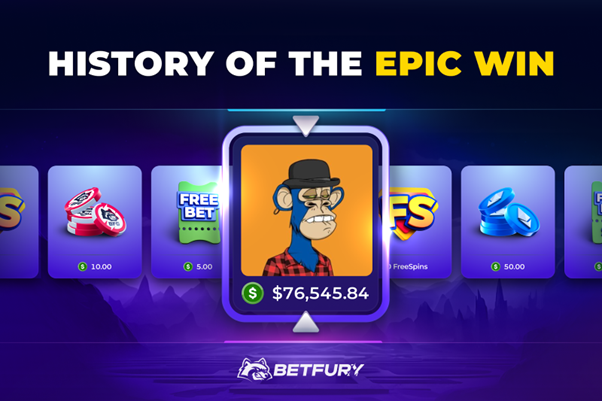
The BetFury user won NFT with a 0.77% drop chance. This is art #5663 from the legendary Bored Ape Yacht Club collection. The price of this NFT on a marketplace is about $76,545! Let’s check out the phenomenon of BetFury NFT Lootboxes with thoughts from the lucky guy who happily interviewed after his epic win.
What are BetFury NFT Lootboxes?
NFT Lootboxes are a quite new feature on BetFury that allows you to win blue-chip arts for a few dollars. They are good for those who believe in NFT and want to make money on it. In addition to NFTs, Lootboxes have various additional rewards:
- BTC, ETH, USDT, BNB, TRX, or BFG (BetFury native token);
- Free Spins for Slots, Original, Table, and Live games;
- Free Bets for Sports Betting.
Many Lootboxes guarantee winning, but the most exclusive ones have a no-reward sector. Anyway, even this sector appears with minimal probability. After winning, everyone can choose to get the NFT or exchange this reward for USDT or BFG. This feature just appeared and has already gained huge success. Therefore, BetFury is one of those platforms that can influence the development of the crypto art industry in the future.
What Collections Are Presented in NFT Lootboxes?
BetFury Lootboxes consist of a wide variety of collections. The top ones are Wrapped Cryptopunks, BoredApeYachtClub, Azuki Originals, MutantApeYachtClub, and many more. For example, the first major NFT won was Bean #4792, worth $695; the second was Otherdeed for Otherside #86696, worth $1,400. However, the record is still Bored Ape Yacht Club #5663. Are you interested in learning more about the person who achieved such success? Let’s move on to a fun and informative interview.
Interview with the Winner
1. How did you start your way on BetFury?
I came to BetFury with twenty grand and won the NFT. After that, I rallied in Hi-Lo to some massive millions of BFG multipliers, with maximum bets propelling me to eleven million BFG tokens.
2. What do you recommend to people who do not believe in luck?
Luck is something you need to believe in to have a positive attitude. Today you are unlucky, but tomorrow you will be lucky. So, if you move on, don’t give up, and set great goals, you can achieve a lot. My luck was only the result of believing in the best.
3. Are you passionate about NFT? How long ago?
I became interested in NFTs when some of them were sold for millions of dollars. I always considered them a revolution in art, but I didn’t think they would gain such momentum. After the Bord Ape hype, I started trying to obtain some of them.
4. What things have brought you the most fun and money on BetFury?
In addition to NFTs, of course, the Hi-Lo game. But I also liked Staking, which allows you to receive passive income and multiply crypto. The appearance of Crypto Staking on BetFury has made earning money on the platform more beneficial.
5. Are there any other NFTs you want to win in Lootboxes?
I already have an NFT with Bored Ape. My next passion will be Mutant Apes or Cryptopunks. Maybe someday I’ll collect one NFT from each exclusive collection.
6. Do you like to spin slots or play Оriginal games? Would you recommend something to play?
I prefer Original games. They have high RTPs and excellent graphics. I played Hi-Lo the most, but I am sure other games are no worse.
7. Would you recommend BetFury to your friends?
BetFury is constantly improving and introducing new features that bring real income. That’s why I’d recommend it to all my friends and other guys involved in cryptocurrencies or NFTs.
Do you want to repeat such a success story? Try your luck on BetFury and become the next blue-chip NFT owner!

The artificial intelligence (AI) industry faces yet another copyright infringement lawsuit, as the New York Times (NYT), a renowned legacy media outlet, has taken legal action against OpenAI, the creator of ChatGPT.
On December 27th, the NYT initiated the lawsuit, asserting that OpenAI unlawfully utilized its content to train its AI chatbots, thereby impeding the NYT’s ability to carry out its journalistic work.
The lawsuit draws from both the United States Constitution and the Copyright Act to protect the NYT’s original journalism. It also highlights Microsoft’s Bing AI, alleging that it generates verbatim excerpts from NYT content.
The lawsuit contends that OpenAI’s tools have undermined the NYT’s relationship with its readers, causing financial losses in subscription, licensing, advertising, and affiliate revenue.
The NYT’s case mirrors concerns raised by other media companies.
In November, the News Media Alliance made similar claims, asserting that AI chatbots were illegally reproducing copyrighted news content and diverting revenue, data, and users from news publications.
Cecilia Ziniti, an intellectual property (IP) and AI lawyer, considers this lawsuit to be one of the most compelling cases of generative AI committing copyright infringement.
A central argument in the case is that the NYT’s website, “www.nytimes.com,” is among the most frequently used proprietary sources by AI, following only Wikipedia and a U.S. patent database.
The lawsuit exemplifies minor distinctions, consisting of just a few words, between original NYT content and the output from GPT-4.
READ MORE: Bitcoin Hash Rate Hits All-Time High on Christmas Day
The lawsuit reveals that the NYT attempted to address its intellectual property concerns with Microsoft and OpenAI in April 2023 in pursuit of an amicable resolution, but these efforts proved unsuccessful.
Ziniti, a longtime subscriber to NYT and NYT Food archives, noted that if ChatGPT provided her with articles and full recipes for free, she might not continue to pay for NYT subscriptions.
She suggests that this case could be a pivotal moment for both AI and copyright law.
Within the OpenAI developer forum, a thread discussing the lawsuit elicited mixed reactions.
Some users hope that the NYT’s claims do not succeed, while others find the situation intriguing and believe it is worth pursuing for the Times.
This lawsuit follows the Author’s Guild’s class-action lawsuit against OpenAI in September, alleging the misuse of copyrighted material in training AI models.
OpenAI has committed to covering legal costs for business-tier ChatGPT users embroiled in copyright infringement disputes.
In the broader landscape, lawsuits related to copyright infringement in AI extend beyond OpenAI, with Universal Music Group suing Anthropic AI over the misuse of copyrighted musical compositions and artists pursuing legal action against Midjourney, DeviantArt, and Stability AI for the use of art in training image-generating AI models.
These cases underscore the complex legal challenges posed by AI’s interaction with copyrighted content.

Chinese authorities have recently cracked down on a substantial underground banking operation valued at $2.2 billion.
This illicit operation had been utilizing foreign “virtual currency trading platforms” to enable its clients to circumvent China’s stringent capital controls.
The revelation of this unlawful scheme emerged on December 24 through Chinese social media channels, shedding light on the actions of Chinese foreign exchange police.
According to Xu Xiao, an inspector from the Qingdao Branch of the State Administration of Foreign Exchange, the modus operandi of these underground banks involved the acquisition of virtual currencies, which were subsequently sold through overseas trading platforms to acquire the necessary foreign currency.
This process effectively facilitated the conversion between yuan and foreign currencies, constituting illegal foreign exchange trading.
During the on-site investigation, authorities seized cryptocurrencies with a total value of $28,000 (equivalent to 200,000 Chinese yuan). Among the confiscated assets were Tether and Litecoin.
Astonishingly, this covert operation had managed to funnel over $2.2 billion (approximately 15.8 billion Chinese yuan) through a network spanning a thousand bank accounts across 17 provinces and municipalities.
China’s legal framework imposes strict limits on the exchange of foreign currencies by Chinese nationals, capping it at $50,000 annually unless a permit is obtained.
Attempting to evade these restrictions is classified as money laundering under the purview of the state.
Some observers argue that these capital controls are the underlying motive behind China’s adversarial stance toward cryptocurrencies.
READ MORE: FTX Debtors Propose Settlement in Bankruptcy Case over Embed Acquisition
While the Chinese government has cited concerns about crypto’s use in money laundering and criminal activities to justify its ban, many suspect that the primary goal is to enforce capital controls more rigorously.
In 2016, China initiated stringent foreign exchange regulations, mandating that banks, companies, and individuals adhere to a “closed” capital account policy.
This policy effectively restricts the free movement of money into or out of the country, subject to tightly regulated state rules, in a bid to thwart capital flight.
Subsequently, in 2017, China banned domestic cryptocurrency exchanges, and in 2021, it enacted an outright ban on cryptocurrencies that remains in force today.
Additionally, reports have emerged suggesting that Binance employees and volunteers may have assisted Chinese customers in evading the exchange’s Know Your Customer (KYC) procedures.
On December 23, the South China Morning Post (SCMP) reported instances of Chinese users accessing Binance by falsely indicating their location as Taiwan, further highlighting the challenges faced by Chinese authorities in controlling cryptocurrency-related activities within their borders.

Blockchain security experts predict that in 2024, crypto projects and investors will face a range of significant threats, including AI-powered phishing scams, BRC-20 exploits, and new vulnerabilities in smart contracts.
Despite a decrease in scam and hack-related losses from $4 billion in 2022 to $1.7 billion in 2023, Jesse Leclere, a blockchain analyst at CertiK, warns that scams are becoming more sophisticated.
Users are urged to stay vigilant against well-executed exploits.
Leclere emphasizes that phishing attacks, evolving in sophistication, will target not only individual users but also corporate systems, using tailored social engineering tactics for the crypto context.
The December 14 Ledger Connect exploit serves as a prime example of an advanced attack.
Generative AI is expected to play a crucial role in making phishing scams more nefarious, allowing hackers to automate operations and create convincing fake calls, videos, and messages to deceive potential victims.
Jenny Peng, a research analyst from 0xScope, also warns that AI could contribute to generating realistic “deep fakes” to trick crypto users.
Peng predicts that hackers will pay extra attention to the burgeoning BRC-20 ecosystem in 2024 due to a relative lack of security developments.
She points out the double-spend exploit that hit the BRC-20 UniSat wallet in early 2023 as evidence that the ecosystem needs to quickly improve its security infrastructure.
READ MORE: Spot Bitcoin ETF Approval Expected to Transform Crypto ETF Market
Cross-chain bridges, a persistent concern for the industry, will continue to be problematic in 2024.
As the industry adopts cross-chain solutions for greater interoperability, these protocols become attractive targets for attackers.
Complex interactions between different protocols and chains can lead to vulnerabilities.
Notably, some of the largest crypto hacks have resulted from bridge exploits, including the infamous $650 million Ronin bridge hack.
Phil Larratt, director of investigations at Chainalysis, warns that bad actors will become more adept at avoiding detection in 2024. Illicit actors are expected to adopt more sophisticated tactics and techniques, especially as traditional organized criminals and financial crime actors increasingly embrace crypto.
To combat this trend, Larratt suggests the need for more intensive law enforcement investigations, increased training and knowledge sharing among law enforcement organizations, advanced fraud protection programs, and continued public-private sector partnerships.
As crypto evolves, so too must the strategies to counter emerging threats.

On December 26th, Bitcoin experienced a fresh decline in its price, with analysts attributing this weakness to seasonal trends.
Data from Cointelegraph Markets Pro and TradingView revealed that BTC/USD dropped to $42,200, marking a 2% decrease for the day and its lowest point in nearly a week.
Despite the holiday season, Bitcoin bulls did not witness a “Santa rally” or any positive surprises.
Trading resource Material Indicators commented on the recent Bitcoin price movements, stating that the final days of 2023 were expected to pose challenges for the cryptocurrency.
They noted that year-end profit-taking and tax loss harvesting would create headwinds for BTC bulls.
Material Indicators also highlighted the importance of Bitcoin’s 21-day simple moving average (MA), which stood at $43,115 at the time, slightly higher than the spot price. Co-founder Keith Alan emphasized the 21-day MA as a crucial support level in recent months.
Looking at the BTC/USDT order book liquidity on Binance, the largest global exchange, the mood remained pessimistic.
The order book showed bids as low as $37,000, and these lower bids had been increasing throughout the second half of December.
READ MORE: Mt. Gox Creditors Finally Receive Repayments for Long-Trapped Bitcoin Holdings
Popular trader Skew suggested that market participants were gearing up for further downside, with short positions positioning themselves for a potential break lower.
These short positions would be eager to see continued spot selling, or they might be forced to cover around the $43,000 mark.
While Bitcoin and Ethereum struggled, other major cryptocurrencies fared better as the year drew to a close.
Binance’s BNB and Solana’s SOL continued to demonstrate impressive weekly performances, with gains of 19.5% and 56.8%, respectively, over the past seven days. In contrast, ETH/USD only showed a 1.6% increase.
Solana, in particular, benefited from increased gas fees and airdrops, reaching nearly $126 on Christmas Day, its highest level since April 2022.
Some traders had been anticipating a shift in momentum from Bitcoin to altcoins, and Michaël van de Poppe, founder and CEO of trading firm MN Trading, noted a significant trend change in the overall altcoin market cap.
He suggested that the altcoin market capitalization was breaking out of a range that had persisted for over 500 days and predicted a potential 2x increase in Q1.