


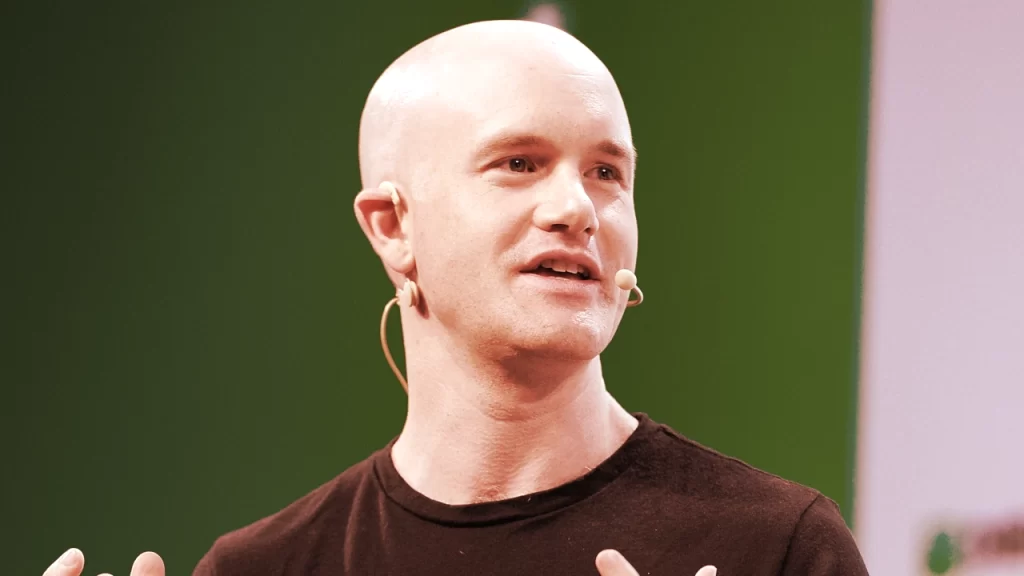
Coinbase, the prominent cryptocurrency exchange, has firmly refuted allegations made by Massachusetts Senator Elizabeth Warren concerning its purported use of former government officials to obstruct the development of digital asset regulations.
In a letter penned on December 22, Coinbase’s Chief Policy Officer, Faryar Shirzad, categorically dismissed Senator Warren’s claims while emphasizing the exchange’s unwavering commitment to promoting responsible regulatory measures within the crypto sector.
Shirzad unequivocally stated, “Your claim that Coinbase is attempting to undermine bipartisan legislation related to cryptocurrency is simply wrong.
“Your accusations are not only unfounded but a willful misrepresentation of our intentions and efforts.”
Furthermore, Coinbase defended its practice of recruiting individuals with government backgrounds, asserting that this initiative is part of a broader mission to safeguard the interests and security of cryptocurrency users in the United States.
The letter underscored the company’s pride in its team of national security experts who work diligently to protect Americans.
READ MORE: Asset Management Firm Ikigai Sells $65 Million Claim in FTX Bankruptcy
Senator Warren’s letter had implied that government officials might be strategically positioning themselves while in public service to secure lucrative lobbying positions within the digital asset industry, citing Coinbase’s Global Advisory Council as an example.
She contended that this “revolving door” practice was concerning and indicative of the crypto industry’s attempts to legitimize itself while obstructing essential regulations aimed at curbing illicit activities and terrorism financing through cryptocurrencies.
Coinbase’s recent expansion of its Global Advisory Council with four distinguished national security experts further fueled the controversy.
These experts include Mark Esper, the former U.S. secretary of defense; Stephanie Murphy, a former congressperson with national security expertise; Frances Townsend, who served as homeland security adviser to former U.S. President George W. Bush; and David Urban, a former managing director of BRG Group.
The addition of these individuals has led to speculation that Coinbase intends to take a more strategic approach in addressing regulatory matters and security concerns within the crypto industry.
Coinbase remains steadfast in its commitment to responsible advocacy and denies any wrongdoing in its interactions with former government officials, emphasizing its dedication to fostering a safe and compliant cryptocurrency ecosystem in the United States.
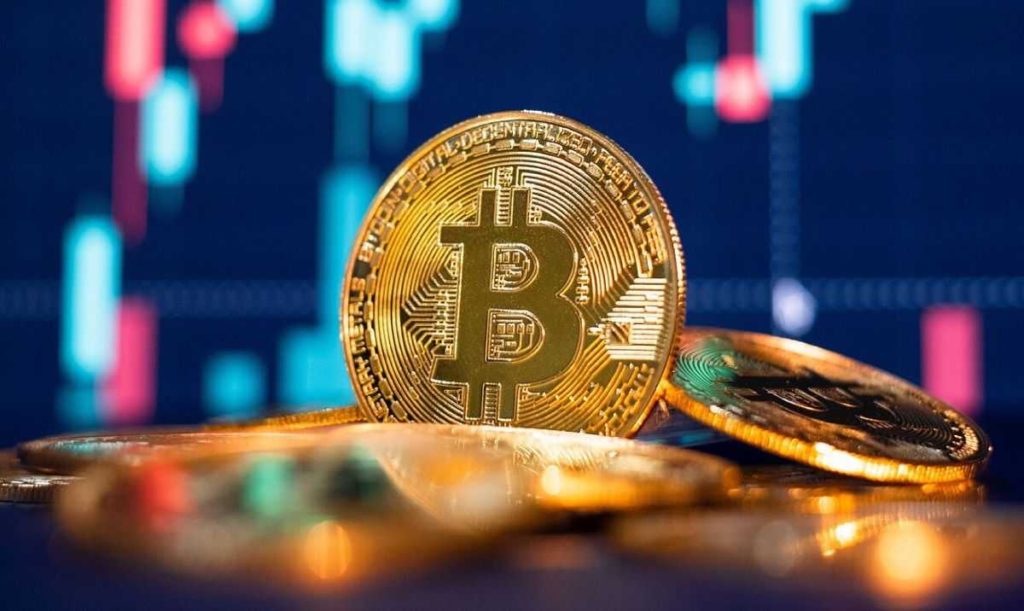
The ongoing legal dispute concerning the identity of Satoshi Nakamoto, the alleged creator of Bitcoin, and the associated rights to the cryptocurrency has recently witnessed a significant development.
A British judge has rescheduled the trial pitting Craig Wright against Bitcoin Core developers for February 5th.
In 2016, Craig Wright made headlines by claiming to be Satoshi Nakamoto and subsequently initiated legal action against 13 Bitcoin Core developers and several companies, including Blockstream, Coinbase, and Block.
His lawsuit alleged copyright violations regarding Bitcoin’s white paper, file format, and blockchain database.
Represented by the non-profit Cryptocurrency Open Patent Alliance (COPA), the defendants have vehemently denied these claims.
During a pre-trial review on December 15th, Justice Edward James Mellor granted Craig Wright permission to submit an additional 97 documents supporting his assertion.
These documents had purportedly been discovered on two USB drives found in a drawer at his residence in September.
Notably, these files included LaTex documents, the open-source system used for drafting the Bitcoin white paper.
However, Bitcoin developers raised concerns of fabricated evidence, metadata manipulation, and procedural delays orchestrated by Wright.
They argued that the newly revealed documents were only disclosed after they had submitted 50 pieces of evidence, which they believed demonstrated the falsification of Wright’s previous materials.
Justice Mellor, in response to these concerns, ordered Wright to make an additional payment of 800,000 pounds (approximately $1 million) by January 5th, covering the legal costs of the developers in the event of Wright’s defeat.
READ MORE: Coinbase Shares Gain Traction as Key ‘Index Play’ for Traditional Finance
Wright had already deposited 100,000 pounds ($127,000) as a security payment.
Moreover, the judge mandated that Wright pay 65,000 pounds ($82,000) to cover COPA’s expenses associated with expert evidence regarding his Autism Spectrum Disorder (ASD).
Wright had claimed disability due to ASD and provided a report detailing adjustments required during the trial, including a list of cross-examination questions.
Cross-examination is a process where the opposing party poses questions to scrutinize or challenge a witness’s testimony.
Wright’s request for special accommodations due to his ASD was met with opposition from the developers, who enlisted an expert to support their objections.
Consequently, Wright will only be permitted to access the LiveNote Screen and write down questions on paper during the trial.
The heart of this dispute lies in the nature of Bitcoin’s open-source code, which is freely available under the Massachusetts Institute of Technology license, allowing for its use in various applications, including proprietary ones.
Wright’s argument contends that Bitcoin Core developers form a “Bitcoin Partnership” allegedly controlling Bitcoin, a contention hotly contested by those on the opposing side of the legal battle.

OpenAI, the prominent artificial intelligence (AI) developer, is reportedly in talks with potential investors who are considering injecting over $100 billion into the company, according to sources with insider knowledge of the situation.
This development comes amidst a significant surge in funding across the AI industry, as reported by Bloomberg.
Although the OpenAI funding round has generated substantial interest, it is important to note that it has not been finalized yet.
Crucial details such as the terms, valuation, and the timing of the funding round have not yet been decided upon.
If this funding materializes, OpenAI would likely become the second-most valuable startup in the United States, trailing only SpaceX, the aerospace technology firm.
OpenAI’s CEO, Sam Altman, has not made any public comments on social media regarding this funding round.
However, he did recently share his reflections on 2023 as the year when people started showing a growing interest in AI.
This news follows recent reports indicating OpenAI’s commitment to investing in other AI startups.
READ MORE: New Survey Reveals Shift in Crypto Industry as Equity Gains Favor Over Tokens Among Hires
On December 15, it was reported that OpenAI had initiated the application process for the second cohort of its six-week program, Converge 2, designed for AI startups.
The program boasts a total funding pool of $15 million, providing 15 qualifying firms with the opportunity to secure $1 million each in funding.
This initiative follows OpenAI’s inaugural funding program for AI startups in November 2022, where 12 applicants received $1 million each to support their AI ventures.
In a related development, French AI startup Mistral AI recently concluded a funding round worth approximately $415 million.
This significant capital injection will enable Mistral AI to further its efforts in developing generative AI tools, chatbot development, and customizable features.
The AI industry’s growing allure among investors underscores the immense potential and opportunities within the field.
OpenAI’s discussions with investors for a substantial funding round reflect the company’s ambition to continue driving innovation and advancing the frontiers of artificial intelligence.
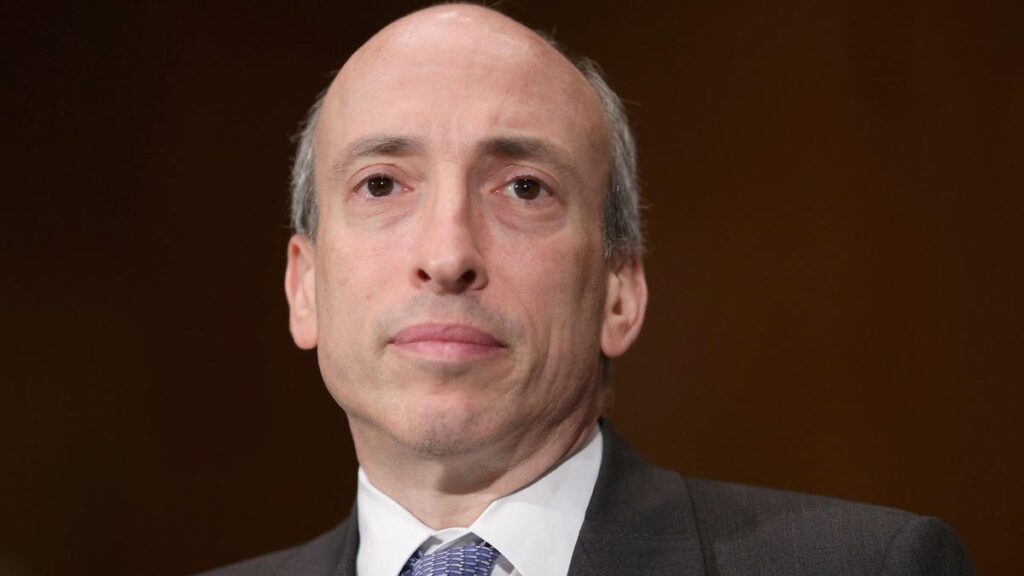
The cryptocurrency community swiftly pushed back against Gary Gensler, the Chair of the United States Securities and Exchange Commission (SEC), following his recent criticism of the industry’s compliance efforts.
On December 22, Gensler took to Twitter to assert that there is a pervasive lack of compliance within the crypto space, emphasizing that this situation erodes confidence in the sector and leaves victims without recourse.
He even suggested that those affected by recent crypto-related bankruptcies can only hope to “stand in line” within the legal system.
In response, the crypto community wasted no time pointing out that the SEC has repeatedly been called upon to provide clarity on what constitutes compliance within the industry.
Leveraging Twitter’s Community Notes feature, which enables users to fact-check posts, they highlighted the absence of a clear regulatory stance from the SEC.
They also highlighted efforts by companies like Coinbase to seek regulatory guidance from the SEC over the past few years.
Even Dogecoin’s creator, Billy Markus, chimed in, asserting that Gensler has yet to establish concrete rules for the cryptocurrency space.
READ MORE: Brazil Overtakes Nigeria in Bitcoin Interest Rankings as Stablecoins Gain Favor
Markus went further, labeling Gensler as “useless in every single way.”
Ripple CEO Brad Garlinghouse did not mince words either, characterizing Gensler’s statements as “stunning hypocrisy” and branding him a “political liability” whose actions have undermined the integrity of the SEC.
Interestingly, on the very same day, the SEC released a new filing expressing “deep regret” for certain errors made during an enforcement proceeding.
Paul Grewal, Chief Legal Officer of Coinbase, seized upon this admission, questioning why the SEC, while claiming remorse for its mistakes, continues to criticize and admonish an entire American industry.
Grewal’s pointed inquiry raised doubts about whether taxpayers and judges should place any faith in the SEC’s professed regrets.
In summary, Gensler’s recent criticisms of crypto compliance ignited a swift and spirited response from the cryptocurrency community, including prominent figures like Billy Markus and Brad Garlinghouse.
These industry stakeholders highlighted the lack of regulatory clarity from the SEC and raised doubts about the sincerity of the SEC’s expressed regrets for past errors.

The Curve Finance decentralized finance (DeFi) community has made a significant decision to provide compensation to liquidity providers (LPs) who suffered losses during a $61 million hack that occurred in July.
On December 21, a resounding 94% of tokenholders voted in favor of disbursing tokens valued at more than $49.2 million.
These tokens will be used to cover the losses incurred across various pools, including Curve (CRV), JPEG’d (JPEG), Alchemix (ALCX), and Metronome (MET).
The calculation of these losses takes into account the value of Ether and CRV tokens in the affected pools before the hack, as well as the missed CRV emissions that would have been distributed to LPs over the preceding months.
The plan is for the Curve DAO (CRV) tokens to be provided from the community fund to cover these losses, with adjustments made for any tokens that have been recovered since the incident.
The proposal outlines the specific figures: “The overall ETH to recover was calculated as 5919.2226 ETH, the CRV to recover was calculated as 34,733,171.51 CRV, and the total to distribute was calculated as 55,544,782.73 CRV.”
READ MORE: FDIC Implements Stricter Rules on Crypto Firm Advertising and Signage
The security breach took place on July 30, causing concerns within the DeFi ecosystem due to its impact on various protocols.
At the time, Curve had a total value locked (TVL) of nearly $4 billion. The affected pools included alETH/ETH, pETH/ETH, msETH/ETH, and CRV/ETH.
Curve emphasized in its proposal that although some stolen funds had been partially or completely recovered, the use of MEV (Miner Extractable Value) bots had left the impacted pools with a shortfall.
The proposed remedy aims to make the affected LPs whole again.
The attacker had exploited a vulnerability in stable pools by targeting specific versions of the Vyper programming language.
Vyper is a popular choice among DeFi protocols because it is designed for the Ethereum Virtual Machine. The bug in versions 0.2.15, 0.2.16, and 0.3.0 of Vyper made them susceptible to reentrancy attacks.
In summary, the Curve Finance community has taken a significant step towards compensating LPs affected by the July hack, with tokenholders voting overwhelmingly in favor of the disbursement.
This move aims to rectify the losses incurred and bring relief to the impacted DeFi pools.
On December 21, amidst Bitcoin’s struggle to breach the $45,000 resistance level, large-cap altcoins like Solana and Avalanche emerged as frontrunners in the crypto market.
Bitcoin had faced resistance at $45,000 since its initial surge on December 5, resulting in a slight pullback in its market dominance from 53.95% to 53.17%.
Meanwhile, altcoins witnessed a surge in market dominance (TOTAL2).
Technical analysts often interpret a drop in Bitcoin dominance combined with BTC’s sideways trading as a potential indicator for an altcoin breakout.
Furthermore, market sentiment is influenced by the interplay between the U.S. Dollar Index (DXY) and Bitcoin’s price.
Presently, the DXY has declined by 1.56% in the month, while Bitcoin has gained 16.18% in the same period.
Many traders attribute the DXY’s reversal to comments from Federal Reserve Chair Jerome Powell and FOMC minutes hinting at possible interest rate cuts in 2024.
With the expectation of a spot Bitcoin ETF approval in Q1 2024 and the belief that the Fed’s interest rate hikes have ended, the crypto market sentiment leans toward euphoria.
READ MORE; Singapore Court Freezes Over $1 Billion in Assets of Crypto Hedge Fund Founders
Solana and Avalanche have notably surged in price during this period, with SOL becoming the fourth-largest cryptocurrency by market capitalization, surpassing XRP. SOL’s rise can be attributed to several factors, including improvements in the Solana network’s user experience, particularly for token and NFT launches.
Solana’s focus on mobile accessibility and low transaction costs has attracted users prioritizing ease of use over decentralization, making it a strong competitor against Ethereum.
SOL’s recent rally is further fueled by the excitement surrounding airdrops, the listing of the SPL token JITO on major exchanges, and the subsequent success it achieved, with a market capitalization exceeding $300 million shortly after launch.
Additionally, SOL’s growth is supported by the increasing adoption of decentralized applications (DApps) on the Solana network.
Over three weeks, the total value locked (TVL) in Solana surged from $654 million to $1.28 billion, marking a remarkable 96% increase.
Similar trends can be observed in the Avalanche ecosystem, where an influx of DApp users, various DeFi protocol incentives, and persistent rumors of airdrops have led to increased inflows, daily active users, and an upward trajectory in the price of AVAX.
These developments highlight the growing prominence of Solana and Avalanche as they make strides in the competitive cryptocurrency market.
Coinbase shares are emerging as a potential strategic tool for traditional financial institutions seeking comprehensive exposure to the cryptocurrency sector, according to Will Clemente, co-founder of Reflexivity Research.
Clemente highlighted this perspective during an interview with Bitcoin advocate Anthony Pompliano on December 21.
He suggested that traditional finance firms might consider Coinbase (COIN) as an “index play” for the crypto industry due to its diverse range of offerings.
In Clemente’s view, investors entering the cryptocurrency space who are unsure about which digital assets to choose may find Coinbase an attractive option.
The exchange’s multitude of services and extensive asset selection can provide a relatively secure avenue for broad crypto exposure.
Matt Hougan, the Chief Investment Officer of Bitwise, a cryptocurrency asset management firm, also expressed optimism about Coinbase’s future during the same discussion.
Bitwise recently predicted that Coinbase’s revenue would double by 2024, but Hougan hinted that this estimate might be conservative, emphasizing the company’s impressive execution in the financial services sector.
READ MORE: OKX Urgently Addresses Critical iOS App Security Vulnerability in Response to CertiK’s Warning
Bitwise operates the Bitwise Crypto Industry Innovators exchange-traded fund (ETF), which holds Coinbase shares as part of its portfolio.
While Wall Street tends to view Coinbase primarily as an exchange, Clemente pointed out that the company has diversified its revenue streams by venturing into staking, serving as a Bitcoin ETF custodian, and acquiring a stake in Circle.
Additionally, Coinbase introduced its Ethereum layer-2 solution named “Base” in August.
Despite these positive developments, Coinbase faces challenges on multiple fronts. It is currently embroiled in a contentious lawsuit with the United States Securities and Exchange Commission (SEC).
Moreover, several U.S. senators are actively working on legislation that could impose restrictions on cryptocurrency activities within the country, potentially impacting Coinbase’s operations.
Coinbase’s “Base” platform has also experienced security issues, with incidents like the $6.5 million Magnate Finance rug-pull and an $865,000 exploit on RockSwap.
Additionally, ARK Invest, managed by Cathie Wood, recently sold 237,000 Coinbase shares worth $331 million across three different funds on December 5.
Data from ARK CEO Cathie Wood’s official website reveals that the ARK Innovation ETF has sold over 900,000 Coinbase shares since December, signaling a shift in the investment landscape surrounding the exchange.
Ikigai, an asset management firm that suffered significant losses when its hedge fund was tied to the collapsed FTX exchange, recently disclosed that it has opted to sell its claim in the exchange’s bankruptcy proceedings.
This decision was shared by Ikigai’s Chief Investment Officer, Travis Kling, in a post on X (formerly Twitter) on December 22.
Kling revealed that Ikigai successfully sold its $65 million claim related to FTX because the offered price exceeded their expectations.
Although he did not specify the exact sale price, reports indicate that creditors might receive up to 73 cents on the dollar – a remarkable figure since FTX’s downfall in November 2022.
Kling shed light on the rationale behind their decision, emphasizing the concept of opportunity cost.
He explained that they weighed the potential future increase in the claim’s value against the immediate cash gain and the opportunity to reinvest it elsewhere for returns.
With the cash proceeds from the claim sale now in hand, Ikigai’s investors have the option to redeem from the fund, but Kling noted that the majority of the capital will remain invested.
READ MORE: Brazil Overtakes Nigeria in Bitcoin Interest Rankings as Stablecoins Gain Favor
Regarding the much-anticipated FTX 2.0, Kling expressed initial interest but expressed disappointment in the slow and problematic progress of the project, leading them to move away from their claim.
Over a year after FTX and its subsidiaries filed for bankruptcy, lawyers and brokers are urging affected users to consider selling their claims.
This option offers a quicker way for retail investors to recover some of their lost funds, compared to waiting potentially months or years for compensation from FTX debtors.
Some creditors have expressed a preference for receiving funds early so they can invest in cryptocurrencies, potentially capitalizing on a bull market.
However, this choice may come at the cost of missing out on a higher payout if FTX’s bankruptcy case ultimately concludes with more favorable terms.
Various firms, including Cherokee Acquisition and Open Exchange, are facilitating cash transactions for FTX claims.
Additionally, the bankruptcy claims platform Found reported that an FTX creditor used their claim as collateral for a loan within the decentralized finance (DeFi) protocol Arcade, highlighting the innovative solutions emerging within the cryptocurrency ecosystem.
In the midst of a burgeoning crypto marketing showdown, the spotlight has recently fallen on Bitcoin exchange-traded fund (ETF) issuers who have unleashed a flurry of crypto advertisements, marking a total of three within a mere two days.
The first salvo was fired by Bitwise on December 18th when they unveiled their Bitcoin ETF advertisement.
Featuring none other than the renowned actor Jonathan Goldsmith, famous for his portrayal of the “Most Interesting Man in the World” in a Dos Equis beer campaign, this ad sought to capture the audience’s attention.
Not to be outdone, Hashdex joined the fray on December 20th with their own crypto advertisement.
Their offering featured a dumper truck emblazoned with the bold captions, “Stocks aren’t crypto, fixed income isn’t crypto, precious metals? nope, not crypto either,” before highlighting their own firm.
Bitwise, determined to maintain the momentum, swiftly responded on the same day with another short ad featuring Goldsmith.
In character, he humorously remarked, “Thought you would like to know, Satoshi sends his regards,” while continuing to promote Bitcoin.
Despite the spirited competition, the prevailing sentiment on social media was that Bitwise’s advertising campaign had emerged victorious.
READ MORE: Improbable’s Sale of The Multiplayer Group to Keywords Studios Marks Metaverse Industry Milestone
This marketing blitz by asset managers is particularly noteworthy as it reflects a high level of confidence in a financial product still awaiting regulatory approval.
Currently, there are 13 pending spot Bitcoin ETFs, with analysts estimating a 90% likelihood of approval by the SEC by January 10th.
Samson Mow, CEO of JAN3 and a Bitcoin pioneer, weighed in on the significance of these marketing campaigns for Bitcoin ETFs.
Mow emphasized that companies vying for a spot in the Bitcoin ETF space are engaged in fierce competition for investors, inflows, and assets under management, with branding as their primary weapon.
He predicted, “This battle for the Bitcoin orange glow is going to heat up like you can’t imagine.”
Mow hinted at future campaigns from industry giants like BlackRock and Fidelity, envisioning endorsements from figures like Novak Djokovic and Michael Saylor, which would further intensify the marketing frenzy surrounding Bitcoin ETFs.
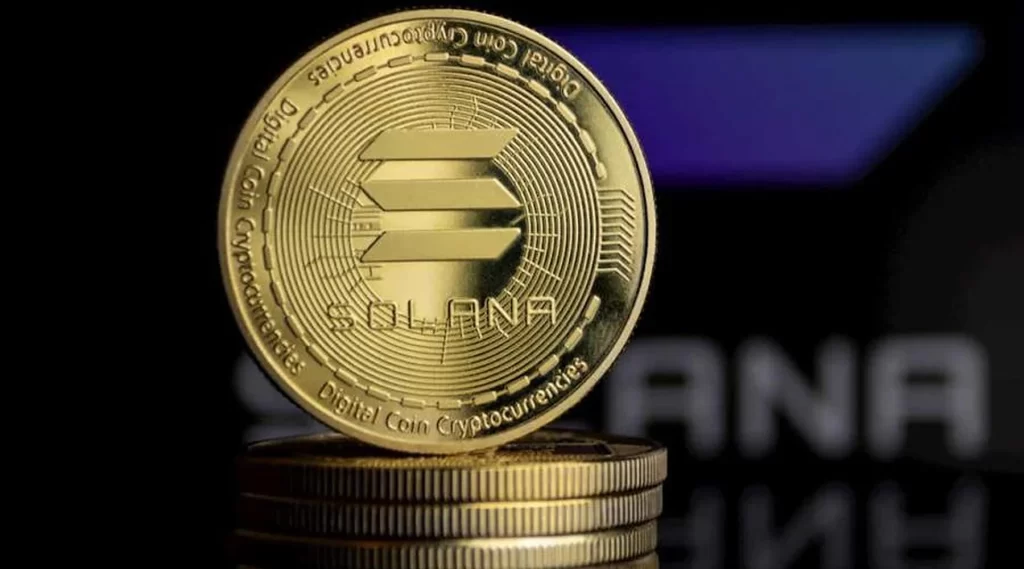
Solana, the cryptocurrency that has been making waves in the digital asset space, has experienced a remarkable 18% surge in its price over the past 24 hours.
This surge has propelled Solana to a significant milestone – reclaiming the fourth position in market capitalization. This achievement marks the first time Solana has reached this rank in over two years.
As a result of this impressive rally, Solana’s market capitalization now stands at a substantial $41.9 billion, surpassing Binance Chain’s BNB market capitalization of $41.8 billion.
The current price of SOL, Solana’s native token, sits comfortably at $98.40, reflecting an impressive 18% increase within the span of a single day.
Just a day before this development, on December 21st, Solana had already overtaken XRP in terms of market capitalization.
This surge is part of an ongoing trend for SOL, as it has surged by over 30% in the past week, outperforming other major cryptocurrencies in the same timeframe.
Despite often being referred to as the “ETH killer” by its supporters, Solana still has a substantial gap to close to catch up to Ethereum, which boasts a market capitalization of $269 billion.
READ MORE: OKX Urgently Addresses Critical iOS App Security Vulnerability in Response to CertiK’s Warning
Solana’s last stint in the fourth position was in November 2021, during the peak of the previous bull market cycle, with a market capitalization of $75 billion, still trailing behind BNB’s $108 billion.
Remarkably, Solana’s price closed out 2022 at just under $10, primarily due to its association with the now-defunct FTX exchange and former crypto billionaire Sam Bankman-Fried.
Fast forward a year, and SOL has surged to almost $100, establishing itself as one of the standout performers among crypto assets for the year.
The surge in Solana’s popularity is further evidenced by the significant increase in Google searches related to the cryptocurrency, nearly rivaling those of Ethereum in the United States.
However, amidst this euphoria, technical analysts have issued a word of caution, warning of the potential for a major market correction before the year concludes.
On December 21st, the Solana team celebrated their accomplishments and looked back on the year in their “Solana Solstice” event.
The event highlighted various milestones, including the Bonk (BONK) hype, the launch of the Saga mobile device, integration with artificial intelligence, and valuable institutional partnerships.
Solana’s recent surge marks a remarkable chapter in its ongoing journey in the world of cryptocurrencies.