



On December 29, the contenders in the race for a Bitcoin exchange-traded fund (ETF) spot waited until the eleventh hour to submit their final S-1 form applications.
Throughout the day, these applications trickled into the United States Securities and Exchange Commission (SEC), following earlier submissions by BlackRock, Van Eck, and Valkyrie.
Notable names in the crypto industry, including Invesco Galaxy, Bitwise, WisdomTree, and Fidelity, joined the fray.
In the latest filings, Fidelity, WisdomTree, and Invesco Galaxy revealed their authorized participants. Invesco Galaxy chose Virtu and JPMorgan, while WisdomTree and Fidelity opted for Jane Street Capital.
Interestingly, WisdomTree decided to stick with in-kind share creation and redemption, despite the SEC’s encouragement to switch to cash-based mechanisms.
Furthermore, it seems a price war has ignited among competitors. Invesco Galaxy, for instance, announced a waiver of fees for the first six months and the first $5 billion in assets.
Fidelity, on the other hand, set its fee at 0.39%.
Bitwise, though yet to disclose its authorized participants, mentioned in its S-1 filing that an undisclosed entity expressed interest in purchasing up to $200 million worth of the ETF shares.
READ MORE: Bitcoin Miners Surge: Marathon Digital Tops Trading Charts Ahead of Anticipated ETF Approval
It’s worth noting that several major players in the industry have thrown their hats into the ring.
BlackRock, Van Eck, Grayscale, Bitwise, WisdomTree, Invesco Galaxy, Fidelity, ARK Invest, Valkyrie, Franklin, Hashdex, Global X ETFs, and Pando Asset have all submitted S-1 applications for spot Bitcoin ETFs.
The SEC had set December 29 as the deadline for amendments to spot BTC ETF S-1 filings.
Grayscale made a last-minute submission on December 27 with a new S-3 filing, following the resignation of Barry Silbert from the board of directors.
In this filing, Grayscale announced its intention to convert its Grayscale Bitcoin Trust into a cash-only spot ETF, mirroring similar moves by Van Eck and BlackRock in earlier revisions.
Barry Silbert and his company, the Digital Currency Group, are currently under investigation by the SEC, adding another layer of complexity to the evolving landscape of Bitcoin ETF applications.
The Nigerian Securities Exchange Commission (SEC) has introduced crypto license requirements that are poised to reshape the landscape of the local cryptocurrency exchange market.
Despite the Central Bank of Nigeria (CBN) recently lifting restrictions on Nigerian banks facilitating cryptocurrency transactions, Rume Ophi, a Nigerian crypto analyst, believes that the SEC’s new regulations will have a significant impact.
In an interview with Cointelegraph, Rume pointed out a crucial issue: the minimum paid-up capital requirement of $556,620 (N500 million naira).
This substantial financial burden is a barrier that many local cryptocurrency exchanges may find insurmountable.
Consequently, Rume predicts that these stringent requirements will likely result in a reduced number of operational local exchanges, tilting the balance towards foreign exchanges dominating the Nigerian market.
The Nigerian SEC’s move to reshape the crypto landscape began in May 2022 when it published a comprehensive 54-page document titled “New Rules on Issuance, Offering Platforms, and Custody of Digital Assets.”
READ MORE: JPMorgan CEO Jamie Dimon Under Scrutiny Over Bitcoin ETF
This document aimed to provide guidelines for cryptocurrency service providers in Nigeria and outline how banking and financial institutions in the country could engage with digital assets.
To comply with the SEC’s regulations, cryptocurrency exchanges must obtain a virtual asset service provider (VASP) license, which involves meeting various requirements, including application processing, registration fees, and other associated costs.
Remarkably, a global survey spanning 15 countries revealed that Nigeria, Africa’s largest economy, boasts the highest level of cryptocurrency awareness in the world.
Despite this, Nigeria’s cryptocurrency adoption and usage rate ranked only eighth among 154 countries surveyed in Chainalysis’ 2020 Cryptocurrency Geography Report.
Rume suggests that the ban on financial institutions servicing crypto exchanges played a pivotal role in constraining investment in the country.
However, with the recent lifting of the CBN ban, Rume believes that Nigeria is poised for a positive shift in crypto investment.
This policy change is expected to encourage more foreign crypto investment, potentially revitalizing the Nigerian cryptocurrency industry.
Additionally, it could pave the way for the employment of locals in Web3 and the broader crypto sector, contributing to the growth and development of Nigeria’s digital economy.
Following an astounding 120% monthly surge in December, Solana’s token faced a cooling period in the days after Christmas. Despite this retracement, its market capitalization surpassed that of Binance’s BNB.
Solana’s price dipped below the $100 mark before stabilizing just above $101 in the pre-holiday hours, Investing Insider reported on Sunday.
Currently, Solana is trading at $105, representing a 14% decline from its annual peak of $123 on December 26, as reported by TradingView data.
Unexpectedly, Binance’s native token, BNB, experienced a 9% uptick in its price, reclaiming its position as the fourth-largest cryptocurrency by market capitalization.
Solana’s rally also had a ripple effect on SOL-based meme coins like Bonk (BONK) and Dogwifhat (WIF).
These meme coins witnessed remarkable price actions in the past few weeks, with Bonk posting gains of 650% and Dogwifhat skyrocketing by a staggering 123,000% between November 22 and December 22.
However, both meme coins retraced by over 50% from their all-time highs, coinciding with Solana’s dip just three days after it reached its yearly high on December 26.
READ MORE: Chinese Authorities Bust $2.2 Billion Crypto Underground Banking Operation
In tandem with Solana’s price surge, there was a surge in trading activity on the Solana network.
This surge briefly caused trading volumes on SOL-based decentralized exchanges (DEXs) to surpass those on Ethereum, marking a significant milestone.
However, Solana DEX volume has since decreased, currently standing at $1.1 billion over the last 24 hours, roughly half of Ethereum’s $2 billion, according to DefiLlama data.
In addition to Solana’s performance, Ethereum has also gained traction, with a 5% weekly increase.
Many traders and analysts are speculating that Ethereum could soon outperform its competitors in the crypto market.
In conclusion, despite a cooling period in Solana’s token price after its impressive December rally, the cryptocurrency market remains dynamic and subject to unexpected fluctuations.
The competition among top cryptocurrencies, such as BNB, Ethereum, and Solana, continues to shape the landscape of the digital asset market.

Ethereum founder Vitalik Buterin recently unveiled the Ethereum roadmap for 2024, revealing that the upcoming year would bring only minor alterations compared to the previous one.
In a series of informative posts shared on X (formerly Twitter), Buterin outlined the primary focal points for Ethereum in 2024, with the roadmap centered around six key components.
Furthermore, Buterin provided in-depth insights into these six elements—namely, the merge, the surge, the scourge, the verge, the purge, and the splurge—accompanied by a detailed chart featuring annotations and diagrams.
Despite the passage of time, Buterin pointed out that there were only minimal adjustments compared to the 2023 roadmap, emphasizing Ethereum’s evolving and crystallizing technical direction: “As Ethereum’s technical path forward continues to solidify, there are relatively few changes.”
Of paramount importance in this roadmap is “The Merge,” which seeks to maintain a straightforward and robust proof-of-stake (PoS) consensus.
The Merge event took place in September 2022, marking the integration of the Ethereum mainnet with the proof-of-stake blockchain known as the Beacon Chain.
READ MORE: Chinese Authorities Escalate Crackdown on Cryptocurrency
This momentous transition led to a substantial reduction in Ethereum’s overall energy consumption as it shifted away from the energy-intensive proof-of-work (PoW) consensus mechanism.
In a press release, Buterin also highlighted the progress made in Ethereum’s single slot finality (SSF), an integral aspect of the post-Merge PoS improvement.
SSF plays a pivotal role in ensuring that alterations to a blockchain block become irreversible without the burning of at least 33% of the total staked ETH.
He stated, “The role of single slot finality (SSF) in post-Merge PoS improvement is solidifying.
It’s becoming clear that SSF is the easiest path to resolving a lot of the Ethereum PoS design’s current weaknesses.”
In addition to the technical aspects, Buterin’s recent endeavors have included a desire to revive the original ideals of the “cypherpunk” revolution within the blockchain space.
The term “cypherpunk” refers to individuals who employ encryption to safeguard their privacy when accessing computer networks, particularly in the face of government surveillance.
Buterin elucidated in a blog post that Ethereum’s initial vision revolved around being a “public decentralized shared hard drive,” capable of harnessing peer-to-peer messaging and decentralized file storage.
However, this vision waned in 2017 with the shift towards financialization on the Ethereum platform.
Nevertheless, Buterin acknowledged that concepts like rollups, zero-knowledge proofs, account abstraction, and second-generation privacy solutions have gained prominence and have the potential to align with the values associated with cypherpunk principles.

JPMorgan CEO Jamie Dimon has found himself under scrutiny from the crypto community following his appointment as an authorized participant (AP) by BlackRock, a move revealed in BlackRock’s updated Form S-1 filing released on December 29.
In the world of exchange-traded funds (ETFs), an authorized participant is an organization granted the privilege to create and redeem shares of the ETF.
BlackRock, in its filing, formally designated Jane Street and JPMorgan Securities as “authorized participants” in its proposed spot Bitcoin ETF application.
Interestingly, this development comes despite Dimon’s public stance against Bitcoin.
Dimon had made his stance clear during a December 6 hearing of the United States Senate Banking Committee.
At that time, he asserted that if he held governmental authority, he would make efforts to shut down cryptocurrencies.
Dimon argued that Bitcoin and other cryptocurrencies primarily serve as tools to facilitate criminal activities. This statement drew sharp criticism from the crypto community.
Critics were quick to point out the apparent hypocrisy of JPMorgan’s involvement as an authorized participant in BlackRock’s Bitcoin ETF.
Silver Zimmermann, a crypto enthusiast, sarcastically suggested, “Perhaps money laundering, tax evasion, criminal participation, and drug trafficking are their business as well.”
Others, like user Sunny Po, questioned JPMorgan’s contradictory positions, asking, “How can JP Morgan do all that after telling Congress and Elizabeth Warren that this is what it’s used for?”
READ MORE: Argentina’s New Government Takes Steps to Legalize Cryptocurrency Holdings
Notably, John Deaton, a pro-XRP lawyer, expressed skepticism regarding Senator Elizabeth Warren’s stance on Bitcoin and raised concerns about JPMorgan’s willingness to associate with Bitcoin despite its negative characterization as a tool for criminals.
Deaton questioned whether this was an attempt to mislead the public or engage in gaslighting.
Despite Dimon’s publicly stated opposition to the digital asset sector, JPMorgan made surprising moves in the crypto space.
The bank recently introduced JPM Coin, its own cryptocurrency token, operating on a private version of the Ethereum blockchain, catering to its institutional clients.
Furthermore, JPMorgan launched a blockchain-based tokenization platform in October, with BlackRock counted among its clients.
The bank also participated in a $65 million funding round for Ethereum infrastructure firm Consensys in April 2021.
In summary, JPMorgan’s involvement as an authorized participant in BlackRock’s Bitcoin ETF has ignited controversy within the crypto community, given Jamie Dimon’s previous negative statements about cryptocurrency.
This development has raised questions about the bank’s stance on Bitcoin and its motivations for engaging in the crypto space.

It appears that former CEO of the now-defunct cryptocurrency exchange FTX, Sam Bankman-Fried, may not face a second trial, according to United States prosecutors.
A recent Reuters report, dated December 29, suggests that many stakeholders are keen to see a swift resolution to the ongoing legal proceedings.
In a court filing, prosecutors emphasized the significant public interest surrounding the case, given the eager anticipation of victims seeking details about compensation for their FTX accounts, which collapsed in November 2022.
This pressing public interest, they argued, should weigh heavily in the decision-making process.
Moreover, the prosecutors noted that there is a dearth of new evidence that would warrant a second trial, as the bulk of the evidence had already been presented during the initial trial.
On November 3, a jury in the criminal trial found Bankman-Fried guilty on all seven fraud charges after just four hours of deliberation.
READ MORE: Bitcoin Poised for Imminent Bullish Rally, Signals Suggest
The charges against him included two counts of wire fraud, two counts of wire fraud conspiracy, one count of securities fraud, one count of commodities fraud conspiracy, and one count of money laundering conspiracy.
In a parallel development, Bankman-Fried’s request for a postponement of his sentencing hearing by four to six weeks was denied.
Judge Lewis Kaplan declined to make any changes to the established schedule, pointing out that the defense had not initially objected to the sentencing date when it was initially set.
Additionally, it was highlighted that Bankman-Fried had already received one extension for filing sentencing submissions.
As it stands, Bankman-Fried’s sentencing date remains set for March 28, 2024.
The anticipation surrounding the resolution of this high-profile case continues to captivate the cryptocurrency community and stakeholders eager for clarity and closure following the FTX exchange’s collapse.

Chinese authorities are intensifying their efforts to curb the use of cryptocurrencies, specifically targeting Tether, in foreign exchange trading, more than two years after imposing a comprehensive ban on cryptocurrencies.
The Supreme People’s Procuratorate (SPP), the highest legal prosecution agency in mainland China, along with the State Administration of Foreign Exchange (SAFE), jointly issued a warning on December 27th, cautioning the public against employing USDT as an intermediary for trading the Chinese yuan against other fiat currencies.
In their joint statement, the SPP and SAFE unequivocally stated that utilizing Tether as an intermediary for exchanging local and foreign currencies is illegal.
They called upon local authorities to enforce stricter measures against the use of the Tether stablecoin in cross-border foreign exchange transactions.
Furthermore, the authorities emphasized that all activities related to cryptocurrency exchange involving the yuan are illegal, including indirect involvement such as providing technical support or exchange services.
This crackdown follows a recent case involving Chinese citizen Zhao Dong, the founder of RenrenBit, an over-the-counter crypto trading desk.
READ MORE: 2024 Crypto Outlook: Rising Threats from AI-Powered Scams and BRC-20 Exploits
Zhao Dong was sentenced to seven years in prison and fined 2.3 million yuan ($322,000) for using United Arab Emirates dirhams to purchase USDT and subsequently reselling it in mainland China for yuan.
This latest development comes more than two years after the Chinese authorities initially imposed a sweeping ban on cryptocurrency activities within the country, encompassing trading and mining.
Since then, local agencies have been rigorously pursuing cases related to Tether transactions, with one individual sentenced to nine months in prison for purchasing 94,988 Chinese yuan ($13,067) worth of Tether in August 2023.
Despite the 2021 cryptocurrency ban, it appears that cryptocurrencies like Tether remained popular in China for some time.
In 2022, Beijing’s Chaoyang District People’s Court ruled against the use of stablecoins like USDT for salary payments, penalizing a firm that had illegally compensated an employee using USDT.
Remarkably, as of October 2022, China’s crypto market continued to rank among the world’s most robust, with mainland China reemerging as the second-largest Bitcoin mining hub.
This demonstrates the ongoing tension between regulatory authorities and the cryptocurrency industry within China.
In a recent development, a United States federal judge has handed down a ruling in favor of the Securities and Exchange Commission (SEC) in a case involving Terraform Labs and its former CEO, Do Kwon.
The court granted summary judgment in favor of the SEC, which had accused Terraform Labs and Kwon of offering and selling two unregistered securities, namely, LUNA, UST, and MIR.
District Court Judge Jed Rakoff issued his decision on December 28, stating that Terraform Labs and Kwon indeed offered and sold unregistered securities in the form of LUNA, UST, and MIR.
However, Judge Rakoff did grant summary judgment in favor of the defendants regarding the alleged unregistered offer and sale of security-based swaps.
The SEC had argued that Kwon and Terraform Labs offered and executed transactions in security-based swaps by creating and maintaining the Mirror Protocol, which allowed users to mint “mAssets.”
Nevertheless, the court rejected this claim, asserting that mAssets did not meet the statutory definition of a security-based swap.
M-Assets are blockchain assets that mirror real-world assets by reflecting on-chain exchange prices.
READ MORE: New York Times Files Copyright Infringement Lawsuit Against OpenAI Over AI Content Usage
The court referenced a prior statement made by Kwon, in which he encouraged LUNA holders to invest and expect profits solely from Terraform and himself.
This led the court to conclude that LUNA satisfied the Howey test, thus constituting a security.
Regarding the MIR token, the court similarly ruled in favor of the SEC, stating that the defendants could not dispute that MIR holders expected profits from a common enterprise based on Terraform’s efforts to develop and maintain the Mirror Protocol.
Despite these rulings, the court did not grant either side’s motion for summary judgment on the SEC’s fraud claims against Kwon, which alleged that he orchestrated a fraudulent cryptocurrency scheme resulting in a substantial market value loss of at least $40 billion in 2022.
The fraud claims will be the subject of a jury trial scheduled to commence in January, with jury selection set for January 24, 2024.
In response to the court’s decision, a spokesperson for Terraform Labs expressed disagreement and a commitment to vigorously defend against the SEC’s fraud claims in the upcoming trial.
They asserted that they do not believe the UST stablecoin or the other tokens in question should be classified as securities and that the SEC’s fraud allegations lack supporting evidence.
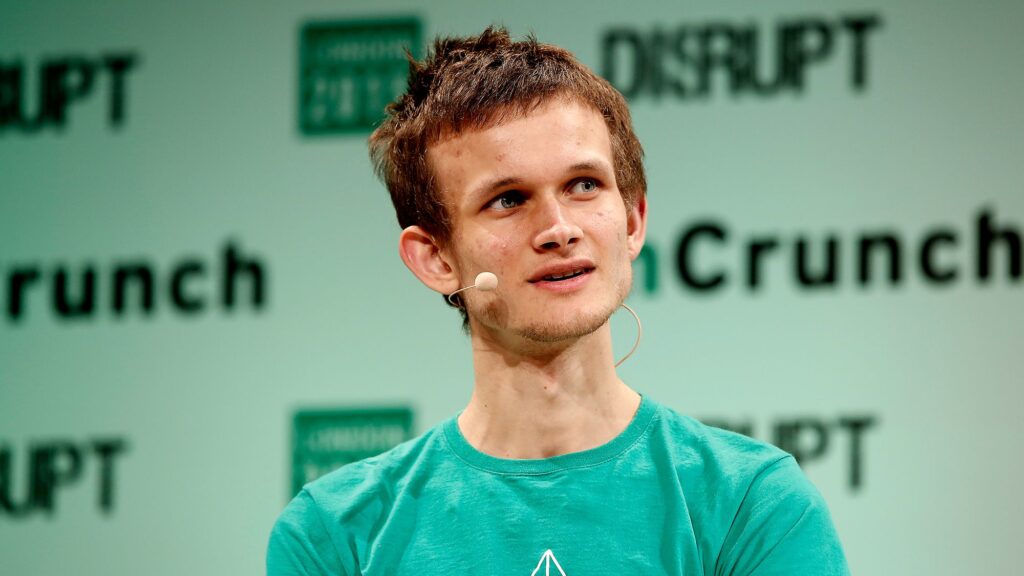
Vitalik Buterin, one of Ethereum’s founders, has called for a resurgence of the “cypherpunk” ideals that were originally envisioned for the blockchain when it was in its infancy.
In a blog post on December 28th, Buterin lamented the shift towards financialization that Ethereum underwent in 2017, and expressed a desire to see the return of core cypherpunk values to the platform.
Ethereum was initially conceived as a “public decentralized shared hard drive” that could harness the power of peer-to-peer messaging and decentralized file storage.
However, as the platform evolved, it veered away from its original vision.
Buterin now seeks to reinvigorate Ethereum with principles such as decentralization, open participation, censorship resistance, and credible neutrality.
He remains optimistic that non-financial applications can thrive on the blockchain.
Buterin pointed out that technologies like rollups, zero-knowledge proofs, account abstraction, and second-generation privacy solutions have gained wider acceptance.
These innovations could serve to reinforce the cypherpunk values he champions.
The term “cypherpunk” refers to individuals who use encryption to safeguard their privacy when accessing computer networks, particularly in the face of government scrutiny.
Buterin also encouraged the adoption of activities aligned with cypherpunk ideals, such as participating in polls without revealing one’s identity and implementing mechanisms like quadratic voting and cross-tribal consensus to facilitate self-governance within organizations.
READ MORE: Bitcoin Price Faces Seasonal Headwinds: BTC Drops to $42,200
He acknowledged that there are instances within the crypto ecosystem where these values are not upheld, citing highly centralized layers with no plans for change and nonfungible token ecosystems stored on centralized websites instead of decentralized platforms like IPFS as examples.
Resisting these pressures is challenging, according to Buterin, but he warned that failing to do so could lead to the crypto ecosystem losing its unique value and becoming a replica of the existing web2 ecosystem, albeit with additional inefficiencies and complexities.
Despite these challenges, Buterin praised the industry for finding solutions to some of its most significant issues.
He highlighted how decentralized exchanges have addressed security concerns associated with centralized exchanges, and he noted the contributions of projects like Cowswap, Flashbots Protect, and MEV Blocker in mitigating the impact of sandwich attacks on Ethereum users.
To further enhance Ethereum’s efficiency, Buterin proposed reducing the number of signatures required from validators to maintain the network’s operation, aiming to make the Ethereum proof-of-stake chain lighter and simpler.
This proposal reflects his ongoing commitment to improving the Ethereum ecosystem in line with its original cypherpunk ethos.

ARK Invest has taken the lead by filing its final Form S-1 amendment for its proposed Bitcoin exchange-traded fund (ETF), putting itself in contention for early approval.
The United States Securities and Exchange Commission (SEC) recently set a crucial deadline for ETF applicants to submit their final S-1 amendments by December 29, 2023, with the expectation of making initial decisions in January 2024.
During a meeting held on December 21, SEC officials met with representatives from seven firms, emphasizing the significance of meeting the deadline.
It was made clear that failure to do so would exclude applicants from the initial round of potential spot Bitcoin ETF approvals early next year.
On December 28, ARK Invest made a pivotal move by filing an amendment to the S-1 registration statement for its Ark 21Shares Bitcoin ETF.
Bloomberg ETF analyst Eric Balchunas highlighted that the amendment focused on authorized participants.
This came after ARK had already revised its application on December 19 to adjust cash creations and redemptions for shares in its fund, aligning with industry trends.
READ MORE: Chinese Authorities Bust $2.2 Billion Crypto Underground Banking Operation
Interestingly, other ETF issuers have been relatively quiet in terms of amended Bitcoin ETF filings, which has raised speculation.
Balchunas suggested that some firms might be waiting until the last minute to avoid revealing their amendments to competitors.
With more than a dozen companies vying for approval of a spot Bitcoin ETF, it is anticipated that additional amended S-1 filings will be submitted within the next 24 hours.
Nate Geraci, president of ETF Store, commented on the growing activity in anticipation of spot Bitcoin ETFs launching in January.
He noted the positive aspect of this saga, which is that it is compelling traditional finance (TradFi) investors to delve into the world of cryptocurrency and prompting crypto investors to familiarize themselves with ETFs.
This convergence, he dubbed “The Bridge,” underlines that crypto is here to stay, with the potential to reshape the financial landscape.