


Ripple, the blockchain-based digital payments company, has reaffirmed its strong endorsement of central bank digital currencies (CBDCs) through the release of a comprehensive 23-page white paper on December 14th.
This document serves as a primer, elucidating the fundamental concepts of CBDCs, their appeal, associated risks, and the hurdles obstructing their widespread adoption.
In the white paper, Ripple asserts that CBDCs hold the potential to broaden financial inclusivity, simplify cross-border transactions, and bolster the control of monetary policies.
Moreover, it highlights their pivotal role in facilitating asset tokenization—an increasingly favored method for converting tangible assets into digital tokens stored securely on the blockchain.
Nonetheless, Ripple acknowledges several impediments to the widespread acceptance of CBDCs.
A conspicuous challenge is the absence of a consistent global regulatory framework governing these digital currencies.
Additional roadblocks include the limited adoption of CBDCs among end-users, insufficient consumer education, apprehensions regarding privacy and security, the necessity for digital identity verification, interoperability issues among different CBDCs, and the requirement for offline access to transactions.
Importantly, Ripple remains optimistic, asserting that these challenges can be overcome through concerted efforts.
READ MORE: Binance and Former CEO Challenge SEC’s Attempt to Include Guilty Plea in Ongoing Legal Battle
Ripple’s involvement in CBDC development initiatives worldwide lends credibility to its advocacy.
The company is actively collaborating with over 20 global central banks in countries such as Bhutan, Palau, Montenegro, Colombia, and Hong Kong, contributing to the advancement of CBDC projects.
The white paper culminates by underscoring the tremendous potential of CBDCs, predicting that as much as $5 trillion could circulate within major economies over the next decade.
This outlook resonates with statements made by Ripple’s Vice President, James Wallis, in November.
Wallis emphasized the cost-effectiveness of CBDCs, highlighting their ability to provide financial services at significantly lower costs compared to traditional methods.
Furthermore, he stressed that CBDCs offer streamlined payment options and the opportunity to establish credit, even for individuals without prior connections to financial institutions.
In summary, Ripple’s latest white paper stands as a testament to its unwavering support for CBDCs.
It outlines the transformative possibilities these digital currencies offer for the global financial landscape, while also acknowledging the challenges that must be surmounted to realize their full potential.
Ripple’s active involvement in CBDC projects worldwide positions it as a key player in the evolution of digital currencies and the broader financial ecosystem.
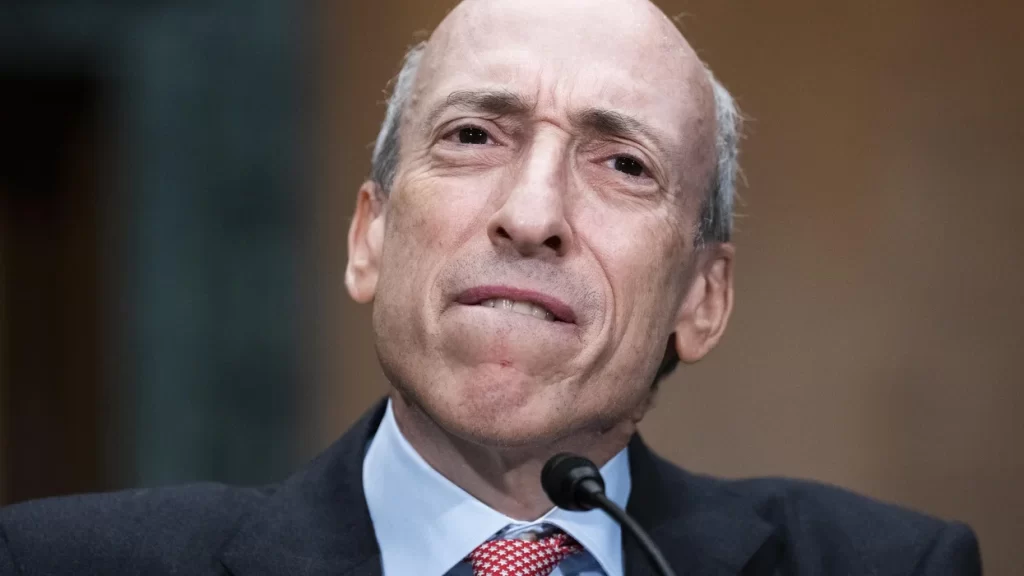
United States Securities and Exchange Commission (SEC) Chair Gary Gensler has suggested a potential shift in the regulator’s approach to Bitcoin exchange-traded products (ETPs) following a recent legal decision involving Grayscale.
During an interview with CNBC on December 14, Gensler addressed the numerous pending applications for spot Bitcoin exchange-traded funds (ETFs, revealing that the SEC is currently processing “between eight and a dozen filings.”
Gensler acknowledged that the SEC had previously rejected several of these applications but indicated a potential change in their stance, stating, “So we’re taking a new look at this based upon those court rulings.”
When asked directly if he was referring to Grayscale, Gensler avoided providing a specific answer, emphasizing that the SEC operates within the framework of laws enacted by Congress and how the courts interpret them.
The SEC’s decision to deny an ETF offering from Grayscale Investments, involving its Bitcoin trust, was overturned by a federal judge in August.
Subsequently, major asset management firms like BlackRock, Fidelity, Grayscale, Invesco, Galaxy, VanEck, and Valkyrie have entered the race to launch spot Bitcoin ETFs.
READ MORE: Elon Musk Unveils Tesla’s Optimus Gen 2
Although these applications have faced delays, some analysts anticipate a potential batch approval in early January 2024.
In another interview with Bloomberg’s Kailey Leinz on the same day, Gensler avoided disclosing the number of spot Bitcoin product filings.
Instead, he highlighted recent developments in the U.S. treasury market as the agency’s current priority.
U.S. Representative Bryan Steil commented on Twitter, criticizing Gensler’s handling of the crypto-related questions:
“Chair Gary Gensler obfuscates on crypto with the press like he does at committee hearings. He does not want to explain his agency’s aggressive regulatory approach which is pushing crypto offshore.”
Bloomberg ETF analyst James Seyffart also remarked, “Gensler very rarely gives clear answers! He’s a master at hedging his words.”
In summary, SEC Chair Gary Gensler’s recent comments have raised speculation about a potential shift in the SEC’s approach to Bitcoin exchange-traded products, following recent court decisions.
This comes as several major asset managers seek approval for spot Bitcoin ETFs, though the regulatory landscape remains uncertain.
As Bitcoin exchange-traded fund (ETF) issuers work on their filings with the United States Securities and Exchange Commission (SEC), the regulator is standing firm in its demand for a “cash” redemption model instead of alternatives proposed by issuers like BlackRock.
On December 14, finance lawyer Scott Johnsson revealed that ETF applicants Invesco and Galaxy have now adopted a cash creation and redemption model for their ETFs.
Their updated S-1 filing with the SEC stated, “The trust expects that creation and redemption transactions will take place initially in cash.”
The SEC has been advocating for a cash redemption model for spot Bitcoin ETFs, while some applicants, including BlackRock, have suggested an “in-kind” model.
So, what’s the difference? A cash creation model involves authorized participants depositing cash equivalent to the net asset value of the creation units.
READ MORE: Blockchain Technology Emerges as a Key Player in the Battle Against Climate Change
The fund uses this cash to purchase the underlying asset, such as Bitcoin. In contrast, the in-kind creation model involves participants depositing a basket of securities that match the ETF’s portfolio, allowing the fund to issue creation units without immediately selling the securities for cash.
The cash model may result in slightly wider spreads and potential tax inefficiencies but offers greater flexibility for fund participants.
Bloomberg senior ETF analyst Eric Balchunas believes the latest filing indicates the SEC’s determination to allow only cash-created ETFs initially.
He mentioned that many were waiting to see if BlackRock could persuade the regulator to consider in-kind creation, but analyst Seyffart suggests that most issuers may eventually adopt the cash creation and redemption model.
In late November, BlackRock met with the SEC to discuss ETF share creation and redemption mechanisms, presenting a revised hybrid in-kind model that favored this method over cash creations.
Bitwise has also shifted towards cash-only creation and redemption since December 4, despite initially having both in-kind and cash options in their documents.
The SEC recently delayed its decision on approving a spot Ether ETF for Invesco and Galaxy Digital.
Representatives from asset managers like BlackRock, Grayscale, and Fidelity have been meeting with the SEC to finalize details for their spot BTC products, with analysts anticipating batch approvals in early January.

Solana’s crypto phone has witnessed a surge in demand from Memecoin enthusiasts following a remarkable price surge of over 1,100% in the past month for the Solana-based Memecoin, Bonk (BONK).
Since the release of the Solana phone on May 8th, new owners have been eligible for a generous 30 million BONK airdrop.
However, the recent surge in the token’s value has created an intriguing arbitrage opportunity for potential buyers.
In a December 15th post on X (formerly Twitter), Raj Gokal, co-founder of Solana, revealed that Solana phone sales had surged by more than 10 times in the last 48 hours, hinting at the likelihood of them selling out before the new year.
This astonishing demand can be attributed to the increased value of the 30 million BONK airdrop, which now amounts to an impressive $877 – $278 more than the phone’s current price of $599.
This situation has created an unusual arbitrage opportunity for crypto enthusiasts.
Bonk’s extraordinary 1,100% gain in the past 30 days, as reported by CoinGecko, led to Bonk surpassing the market cap of its rival Memecoin, Pepe. Memecoins are generally characterized by their volatility and instability.
The remarkable surge in sales even prompted Anatoly Yakavenko, another Solana co-founder, to suggest increasing the price of the Saga phone.
The Saga’s price had been reduced from $999 to $599 in August due to declining sales.
READ MORE: Wikipedia Co-Founder’s Controversial Bitcoin Comments Spark Debate in Cryptocurrency Community
A Solana spokesperson confirmed that Saga sales had exceeded “millions of dollars” in the past 48 hours, showcasing the impact of community projects on the device’s success.
In response to the overwhelming demand, Solana Mobile announced restrictions, limiting future orders to one mobile device per household.
This frenzy of sales signifies a significant turnaround for the Saga phone, which had been struggling for an extended period.
In a December 5th appearance on Laura Shin’s Unchained Podcast, Yakovenko had expressed doubts about the device’s ability to sell 50,000 units and admitted to using his Solana Saga primarily as an “NFT phone.”
Ultimately, the potential profit from this trade opportunity hinges on the assumption that BONK’s price will either remain stable or rise by the time the Solana device is in the hands of its users.
The volatile nature of Memecoins, with rapid price fluctuations, adds an element of uncertainty to this opportunity.


Bitcoin Sprint is a relatively new cryptocurrency project that has garnered attention in the world of digital assets. Promising quick returns and rapid growth, Bitcoin Sprint has raised questions about its legitimacy and whether it is a scam. In this article, we will delve into the details of Bitcoin Sprint, its features, claims, and examine the concerns surrounding its credibility.
Understanding Bitcoin Sprint
Bitcoin Sprint, like many other cryptocurrencies, presents itself as a decentralized digital currency aiming to provide financial independence and an alternative to traditional banking systems. It claims to offer faster transaction times, lower fees, and greater accessibility compared to established cryptocurrencies like Bitcoin and Ethereum.
Key Features and Claims:
- Speedy Transactions: Bitcoin Sprint emphasizes its ability to facilitate rapid transactions, claiming to outperform Bitcoin in terms of speed. The project’s developers highlight that its blockchain technology can confirm transactions in a matter of seconds.
- Low Transaction Fees: Bitcoin Sprint boasts minimal transaction fees, positioning itself as a more cost-effective alternative to Bitcoin, which has been criticized for high fees during peak usage times.
- Accessibility: The project aims to be user-friendly and accessible to a wider audience, even those who are new to cryptocurrencies. It promotes the use of mobile apps and easy-to-use wallets.
- High Return on Investment (ROI): One of Bitcoin Sprint’s primary claims is its potential for substantial returns on investment. It advertises itself as an opportunity for investors to profit quickly.
The Concerns and Red Flags
While Bitcoin Sprint may sound promising on the surface, several concerns and red flags have emerged, leading many in the cryptocurrency community to question its legitimacy. Here are some of the key issues raised by critics and experts:
- Anonymity of Developers: Bitcoin Sprint’s development team remains largely anonymous. In the world of cryptocurrencies, transparency and accountability are crucial. The lack of identifiable team members raises suspicions about the project’s legitimacy and intentions.
- Lack of Whitepaper: Most legitimate cryptocurrency projects release a whitepaper detailing their technology, vision, and goals. Bitcoin Sprint, however, lacks a whitepaper, making it challenging for potential investors to assess the project’s technical foundations and legitimacy.
- Unrealistic Promises: Bitcoin Sprint’s claims of providing high returns on investment in a short period have raised skepticism. Promising quick riches is a common tactic employed by scams in the cryptocurrency space.
- Cloned Codebase: Observers have noted that Bitcoin Sprint’s codebase appears to be a clone of other cryptocurrencies. This lack of originality raises questions about the project’s technical innovation and capabilities.
- Ponzi Scheme Characteristics: Some critics have labeled Bitcoin Sprint as resembling a Ponzi scheme, as it relies on attracting new investors to pay returns to earlier investors. This unsustainable model often leads to financial losses for those who enter late.
- Lack of Regulatory Compliance: Bitcoin Sprint’s operations may not comply with financial regulations in various countries. This lack of regulatory oversight can expose investors to potential legal risks.
- Limited Exchange Listings: Bitcoin Sprint is not listed on well-established cryptocurrency exchanges, which are known for their rigorous due diligence processes. This absence from reputable exchanges can hinder liquidity and raise doubts about the project’s credibility.
- Social Media Promotion: Bitcoin Sprint heavily relies on social media for promotion, with paid advertisements and influencer endorsements. Such marketing tactics have been associated with scam projects seeking to lure unsuspecting investors.
Legal and Regulatory Implications
The cryptocurrency industry operates in a regulatory gray area in many countries, making it important for investors to exercise caution and due diligence when considering investments in new projects like Bitcoin Sprint. Regulatory authorities in some jurisdictions have issued warnings about potential scams and fraudulent schemes in the crypto space.
READ: Gemini Earn Creditors Face Drastic Payout Reduction in Proposed Reorganization Plan
Investors should be aware that investing in cryptocurrency projects with questionable legitimacy may not only result in financial losses but could also expose them to legal risks if the project is found to be operating unlawfully or engaging in fraudulent activities.
Protecting Yourself Against Potential Scams
Given the proliferation of cryptocurrency scams and fraudulent projects, it’s essential for individuals to take proactive steps to protect themselves:
- Research Thoroughly: Before investing in any cryptocurrency project, conduct extensive research. Look for a whitepaper, review the project’s team, and seek independent opinions from experts.
- Exercise Caution with Promises of High Returns: Be skeptical of projects that promise quick and substantial returns. If an investment opportunity sounds too good to be true, it likely is.
- Use Reputable Exchanges: Trade and invest in cryptocurrencies on well-established and regulated exchanges that conduct due diligence on the projects they list.
- Avoid Anonymity: Projects with anonymous teams should be approached with caution. Transparency and accountability are vital in the cryptocurrency space.
- Stay Informed: Keep up to date with cryptocurrency news and stay informed about potential scams and fraudulent projects.
In Summary
Bitcoin Sprint has gained attention for its claims of rapid returns and enhanced features, but it has also raised concerns about its legitimacy and potential to be a scam.
While the cryptocurrency space is filled with both promising innovations and fraudulent schemes, it is crucial for investors to exercise caution, conduct thorough research, and remain vigilant when evaluating projects like Bitcoin Sprint. Protecting oneself against potential scams is essential to ensure a safe and secure investment experience in the world of cryptocurrencies.
At a Glance
- Bitcoin Sprint is a relatively new cryptocurrency project with claims of rapid transactions, low fees, and high returns on investment.
- While it presents itself as an alternative to established cryptocurrencies, concerns and red flags have emerged regarding its legitimacy.
- Some key concerns include the anonymity of its developers, the absence of a whitepaper, and unrealistic promises of quick riches.
- Critics have noted that Bitcoin Sprint’s codebase appears to be a clone of other cryptocurrencies, raising questions about its technical innovation.
- The project’s heavy reliance on social media marketing and lack of listing on reputable exchanges have also fueled skepticism.
- Bitcoin Sprint’s resemblance to a Ponzi scheme has been pointed out, as it relies on attracting new investors to pay returns to earlier ones.
- The lack of regulatory compliance and potential legal risks associated with the project should be considered by investors.
- To protect against potential scams, individuals should conduct thorough research, exercise caution with high-return promises, and use reputable exchanges for cryptocurrency investments.
- Staying informed about cryptocurrency news and developments is essential for making safe and informed investment decisions.

Gemini Earn creditors are up in arms over a proposed reorganization scheme that could significantly diminish the value of their expected Bitcoin payouts, potentially reducing them to only 30% of their current market value.
In a recent communication on X (formerly known as Twitter), Gemini Trust announced that it had dispatched an email to creditors on December 13, outlining a reorganization plan that is now open for voting.
According to this proposed plan, creditors will be entitled to receive a payout equivalent to the balances in their Earn crypto accounts as of January 19, 2023.
This date coincides with the bankruptcy filing by Genesis Global Capital, Gemini’s cryptocurrency lending partner.
Critics, including Bloomberg’s exchange-traded fund analyst, James Seyffart, have characterized this plan as “harsh” considering that Bitcoin and Ether were valued at just $20,940 and $1,545 at the time of the bankruptcy filing. At present, these assets have surged to $42,750 and $2,250, respectively.
In a worst-case scenario where creditors receive a 61% recovery, each Bitcoin held in an Earn account would be redeemed for only $12,773, amounting to a mere 30% of its current market value.
READ MORE: Senator Elizabeth Warren Gains Additional Senate Support for Crypto Anti-Money Laundering Bill
The proposal has elicited a strong negative response from Gemini’s community on X, with many urging creditors to vote against it.
One user, Andrew Aleid, expressed his disapproval, labeling it a “disgrace” and accusing Gemini of theft.
Another commenter, Leslie, castigated the platform for its deception and demanded full reimbursement, questioning Gemini’s credibility in light of past reassurances that customers wouldn’t be exposed to counterparty risk from Genesis.
BC, another X user, advocated for full repayment, asserting that anything less would be “unacceptable.”
Gemini Earn was a program that allowed users to earn interest in cryptocurrencies, and the platform had transferred substantial funds from Genesis to support it before Genesis declared bankruptcy. Now, Gemini is pursuing a $1.6 billion recovery from Genesis on behalf of Earn users.
Creditors have until January 10, 2024, at 4 pm Eastern Time to accept or reject Gemini’s proposed plan. Should it be approved, the bankruptcy court overseeing the case will make its final decision on February 14, 2024.

Open-source generative artificial intelligence (AI) models are gaining ground, challenging the dominance of centralized cloud-backed models like ChatGPT. Leading players in the generative AI field, such as Google and OpenAI, have traditionally followed a centralized approach, restricting public access to their data sources and training models.
However, research conducted by Cathy Wood’s ARK Invest suggests a potential shift towards open-source AI models outperforming their centralized counterparts by 2024.
The graph above illustrates the progress made by open-source AI models since 2022, with some surpassing the performance of private models.
Centralized AI giants like OpenAI and Google, along with Alphabet (Google’s parent company), continue to dominate the industry with models like ChatGPT-4 and Gemini Ultra.
In contrast, Meta (formerly Facebook), Mistral, and certain Chinese AI models have embraced open-source methodologies.
In 2023, open-source AI models like Yi 34B, Falcon 180B, and Mixtral 8x7B emerged as top contenders, demonstrating comparable performance to market leaders.
Jozef Soja, a researcher at ARK Invest, highlighted that Mixtral even outperformed GPT 3.5 on a massive multitask language understanding benchmark, emphasizing the current superiority of GPT-4.
READ MORE: Senator Elizabeth Warren Gains Additional Senate Support for Crypto Anti-Money Laundering Bill
Meta’s foundational open-source model, LLaMA, also witnessed significant improvements in its 2023 iterations.
The push for enhanced performance in open-source AI models aligns with the goal of democratizing access to generative AI, as emphasized by AI engineer Brian Roemmele.
Recent tests comparing the free versions of Gemini (via Bard) and ChatGPT-4 were conducted to assess the performance of current AI market leaders.
These tests involved asking both AI models questions about cryptocurrencies and evaluating their responses.
In both cases, the AI models adopted a similar approach, cautioning users when asked about investment advice and recommending consulting professional financial advisers for personalized guidance.
Additionally, both models provided answers that highlighted similar considerations, despite presenting some differing details in certain cases.
As open-source AI models continue to evolve and narrow the performance gap with centralized counterparts, the landscape of generative AI is poised for significant changes, potentially ushering in a new era of accessibility and democratization in AI technology.
The head of the Philippines Securities and Exchange Commission (SEC), Kelvin Lee, provided clarification during a panel discussion on December 13th regarding the timeline for the ban on Binance, a popular cryptocurrency exchange.
The ban, which was initiated following an advisory issued by regulators on November 28th, is set to take effect three months after the advisory’s issuance.
There had been widespread confusion on the internet about the ban’s implementation, prompting Lee to address the matter.
He specified that the ban was originally intended to begin three months from the date of the advisory, which was issued on November 29th. Lee also indicated that, depending on feedback and circumstances, the timeline could potentially be extended.
He noted that the initial recommendation had suggested a much shorter one-month or even one-week transition period, but he decided to grant more time due to the upcoming Christmas holiday season, to avoid inconveniencing Filipino investors.
In addition to Binance, Lee disclosed that two other exchanges, OctaFX and MiTrade, had also received advisories for operating without the necessary licenses and would face bans after a three-month grace period.
READ MORE: Giddy Makes it Even Easier to Buy Crypto with Stripe Integration
The local SEC stated that it possesses a substantial list of unregistered exchanges operating within the country and would be monitoring their response to the actions taken against Binance.
Lee faced criticism for the Binance ban, with some individuals suggesting that the exchange’s services were more affordable compared to registered exchanges.
In response, he emphasized that Binance was cheaper precisely because it had not gone through the registration and compliance process required in the Philippines, unlike registered entities that incurred compliance costs.
Lee cautioned local investors to opt for registered entities, highlighting that there were 17 virtual asset service providers in the country that offered fiat-to-crypto services while adhering to regulatory standards.
He stressed the importance of registration and consumer protection, urging investors to collaborate with registered entities.
Cointelegraph sought comment from Binance regarding the situation and any potential actions or plans in response to the ban in the Philippines.
The regulatory landscape in the cryptocurrency space continues to evolve, with governments and agencies working to establish clear guidelines and ensure compliance within the industry.
Bitcoin and cryptocurrencies are poised for another surge in adoption by United States-based companies, thanks to a recent accounting rule change that enables businesses to more accurately represent the value of their crypto holdings.
Cory Klippsten, the CEO of the Bitcoin-exclusive exchange Swan Bitcoin, has emphasized the significance of this development.
He points out that companies like MicroStrategy and Tesla, both of which had to report impairment on their crypto holdings, can now provide a more precise reflection of the true value of their Bitcoin investments.
Klippsten believes that this change will have far-reaching implications, not only for companies primarily focused on Bitcoin but also for mainstream corporate adoption.
The Financial Accounting Standards Board (FASB) introduced the new rules on December 13, with an effective date of December 2024.
These rules enable companies to accurately represent the estimated market value of crypto assets on their accounting books by allowing them to record gains on these assets.
READ MORE: Blockchain Technology Emerges as a Key Player in the Battle Against Climate Change
Previously, crypto held by companies could only be impaired when its value decreased on the books, and any gains couldn’t be recognized until the crypto was sold, even if its value increased while held.
Klippsten envisions companies now being able to utilize Bitcoin as a “strategic financial asset” because they can report on both gains and losses.
This reporting feature is expected to foster greater adoption of cryptocurrencies within the corporate world.
Markus Thielen, head of research at Matrixport and author of Crypto Titans, emphasizes that this rule change highlights the growing corporate demand for incorporating cryptocurrencies into a firm’s accounting practices.
Digital assets are increasingly becoming integral to financial statements, and companies will have greater confidence in valuing their crypto holdings.
David Marcus, co-creator of Facebook’s Diem project, also expressed excitement about the rule change.
He noted that these new rules remove a significant obstacle that had been hindering corporations from holding Bitcoin on their balance sheets.
Back in September, following the FASB’s approval of these rules, Mark Palmer, senior equity research analyst at Berenberg Capital, highlighted that crypto-holding companies can now eliminate the negative optics associated with impairment losses under the previous rules.
This change is expected to encourage more companies to embrace cryptocurrencies as part of their financial strategies, marking a significant milestone in the integration of digital assets into the financial landscape.

Bitcoin is on the verge of reaching an unprecedented milestone, as Bitwise, a senior research analyst, predicts that the cryptocurrency will achieve a new all-time high of $80,000 in 2024.
This bullish projection is part of a larger set of predictions for the crypto industry in 2024, as outlined by Bitwise’s Ryan Rasmussen in a post on X (formerly Twitter) on December 13.
One of the standout trends in these predictions is the remarkable growth of the stablecoin industry. Bitwise anticipates that stablecoins will soon surpass Visa’s payment volume, recognizing these dollar and asset-pegged tokens as one of crypto’s most significant innovations.
By the third quarter of 2023, Visa had processed over $9 trillion in payments, while stablecoin trading volume had already exceeded $5 trillion.
Rasmussen highlighted the remarkable rise of stablecoins, with their market capitalization growing from nearly nothing to a staggering $137 billion within just four years.
Given this trajectory, he expects stablecoins in 2024 to continue expanding in both trading volume and utility.
Bitwise’s optimism regarding stablecoins is not unique, as Circle CEO Jeremy Allaire also expressed confidence in their growing demand.
Allaire noted the increasing appetite for internet-enabled digital dollars, emphasizing the need for such a secure and accessible digital currency.
Furthermore, asset manager Van Eck predicts that the total stablecoin market capitalization will reach $200 billion by the end of 2024.
READ MORE: Giddy Makes it Even Easier to Buy Crypto with Stripe Integration
Rasmussen also foresees a prosperous year ahead for Bitcoin, projecting a price exceeding $80,000 in 2024.
He attributes this optimism to the anticipated launch of the first spot Bitcoin exchange-traded fund (ETF) and the upcoming halving event in April, both of which are expected to drive significant price growth.
However, Bitcoin price predictions for 2024 vary widely among analysts and experts.
Some anticipate an average price of at least $100,000, while others set targets as high as $250,000 or even $1 million.
Bitwise speculates that not only will the spot Bitcoin ETF be approved, but its launch will be the most successful ETF launch in history, amassing $72 billion in assets under management within the next five years.
Bitwise is among 13 financial institutions seeking approval for a spot Bitcoin ETF from the United States Securities and Exchange Commission.
In addition to Bitcoin, Ethereum is poised for substantial improvements in 2024, with Bitwise expecting a 100% increase in revenue to $5 billion.
This prediction hinges on the EIP-4484 upgrade, which could reduce gas costs on the Ethereum network to below $0.01.
Beyond crypto assets, Coinbase is predicted to thrive during the anticipated bull market of 2024, with Bitwise forecasting a remarkable 100% growth in revenue for the exchange platform, surpassing Wall Street’s expectations tenfold.