



Bitcoin is showing promising signs of a new bull run, with daily gains of 7% driving its price higher. This surge in price follows a brief sell-off, and on-chain metrics suggest that the upward momentum may continue.
After reaching $44,000 earlier in the month, Bitcoin experienced a cooling-off period, dropping to nearly $40,000. However, conditions have since improved.
Philip Swift, the creator of Look Into Bitcoin, pointed out on December 13 that profit-taking has increased as BTC/USD reached its highest levels in 19 months.
He highlighted the “Value Days Destroyed” (VDD) metric, which measures Bitcoin selling activity based on the age of the coins being sold and the current BTC price.
On December 11, VDD reached its highest level since May 2021, indicating that some long-term holders (HODL’ers) are taking profits.
Recent selling activity has been driven by short-term holders (STHs), who are typically more speculative in their trading approach.
READ MORE: Bitcoin’s Resilience Shines Amidst Price Correction – Bulls Eye $44,000 Breakout
Meanwhile, analysts see potential for Bitcoin’s price to continue rising towards the key resistance level around $50,000.
Matthew Hyland, an analyst, pointed to the relative strength index (RSI) on daily timeframes, which has displayed a bullish divergence with price, indicating potential upward movement.
Additionally, there is a notable influx of capital into both Bitcoin and Ethereum, reminiscent of late 2020 when Bitcoin first broke the $20,000 mark and entered a phase of price discovery.
This renewed interest from investors suggests confidence in the cryptocurrency market.
Social media commentator Ali expressed optimism about the current market conditions, echoing the sentiment that significant capital inflows are returning to both Bitcoin and Ethereum.
Others share this bullish outlook, with BitQuant emphasizing that Bitcoin could break through the $42,000 to $45,000 channel by the end of the coming week, with no strong resistances in sight until the $63,000 mark.
In summary, Bitcoin is showing signs of a robust bull run, with on-chain metrics, profit-taking, and increased capital inflows contributing to its recent price surge.
Analysts and commentators are optimistic about the cryptocurrency’s potential to continue its upward trajectory, with key resistance levels in focus as Bitcoin aims for new all-time highs.
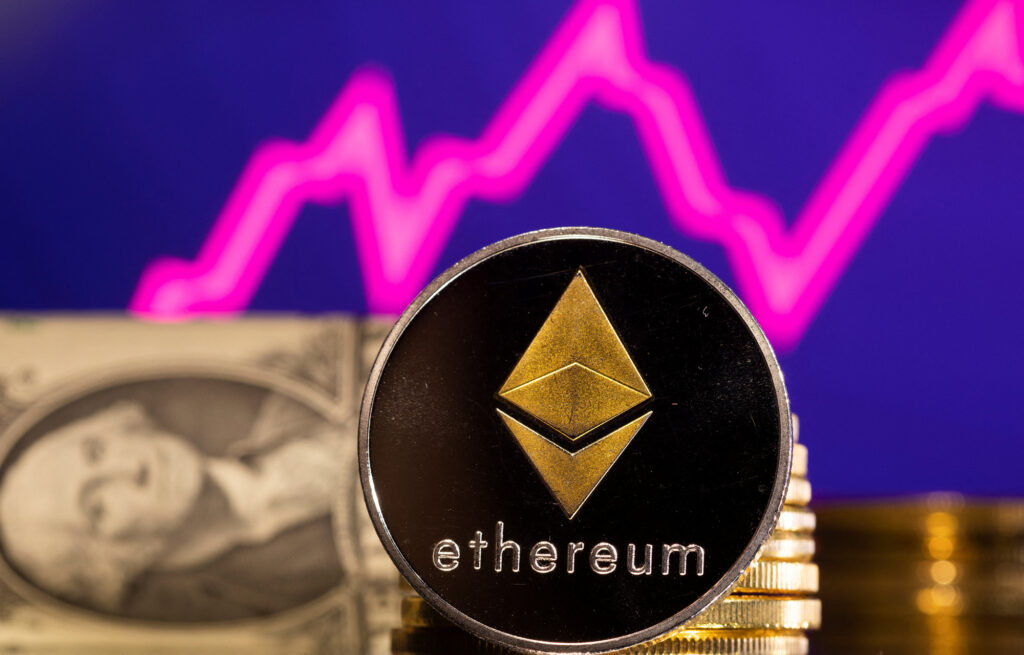
The United States Securities and Exchange Commission (SEC) has announced a delay in its decision-making process regarding the approval or disapproval of a spot Ether exchange-traded fund (ETF) proposed by Invesco and Galaxy Digital.
In a notice dated December 13, the SEC revealed its intention to extend the evaluation period for a proposed rule change that would permit the Cboe BZX Exchange to list and trade shares of the Invesco Galaxy Ethereum ETF.
This proposed ETF represents just one of several cryptocurrency investment vehicles currently under the SEC’s consideration. Up to this point, the SEC has never granted approval for an ETF with direct exposure to Bitcoin or other cryptocurrencies.
The initial deadline for the decision on this proposed rule change was set for December 23, 2023, but the SEC has now designated February 6, 2024, as the new deadline for either approval, disapproval, or the initiation of proceedings to determine whether to disapprove the proposed rule change.
Invesco and Galaxy Digital submitted their application for a spot ETH ETF in September, following the reactivation of their application for a spot Bitcoin ETF in June.
READ MORE: Giddy Makes it Even Easier to Buy Crypto with Stripe Integration
Some experts have speculated that if the SEC eventually approves a spot crypto ETF, whether it involves Bitcoin or Ether, it may lead to simultaneous approvals of similar funds from various other financial firms.
As of the latest available information, multiple firms have submitted applications for spot crypto ETFs, including BlackRock, Hashdex, ARK 21Shares, VanEck, and Fidelity.
The SEC has been actively engaged with these asset managers, as evidenced by recent memos released over the past 30 days, which indicate that representatives from these firms have met with SEC officials to discuss their ETF offerings.
In summary, the SEC’s decision to delay the approval or disapproval of the Invesco Galaxy Ethereum ETF highlights the ongoing regulatory scrutiny and careful evaluation of cryptocurrency-based financial products in the United States.
The outcome of this decision could potentially set a significant precedent for the future of cryptocurrency ETFs in the country.

Elon Musk, the CEO of Tesla and executive chair of X (formerly Twitter), has unveiled the latest iteration of Tesla’s humanoid robot, Optimus Gen 2.
This cutting-edge robot, showcased in a video presentation on Musk’s X account on December 13, boasts impressive improvements over its predecessor.
One of the standout features of Optimus Gen 2 is its reduced weight, coming in at 22 pounds lighter than the original Optimus Gen 1 model.
In addition to shedding the excess weight, the new robot has undergone significant advancements in its design.
Its foot construction now closely mimics human anatomy, enhancing its overall balance and full-body control.
This improvement is showcased in the video as Optimus Gen 2 confidently performs a series of squats.
Another remarkable upgrade in this new robot is its tactile sensing capabilities on all fingers.
Optimus Gen 2 can delicately manipulate objects, as evidenced in the video when it effortlessly picks up and then places down an egg, highlighting its dexterity.
READ MORE: El Salvador’s “Volcano Bonds” Approved for 2024 Launch
Tesla’s foray into humanoid robots began in 2022 with the unveiling of the first Optimus prototype.
This early version struggled to move forward and had its inner workings exposed.
Subsequent iterations required assistance from human operators to maintain their balance.
However, in the spring of 2023, Musk released a video showcasing the next generation of Tesla-built robots, demonstrating their significantly improved mobility and object manipulation skills.
Elon Musk has been a vocal advocate for increased regulatory oversight of artificial intelligence (AI), expressing concerns that AI could surpass human capabilities in the future.
He even went so far as to suggest that a “digital god” would render copyright lawsuits related to AI irrelevant.
Musk has previously predicted that artificial general intelligence would emerge before 2030, although this estimate has been met with skepticism by many industry experts who view it as overly optimistic.
In conclusion, Elon Musk’s unveiling of the Optimus Gen 2 humanoid robot marks a significant step forward in the development of AI-driven robotics.
With its lighter weight, improved balance, and enhanced dexterity, this robot showcases Tesla’s commitment to pushing the boundaries of technology and AI, while Musk continues to advocate for responsible AI development and regulation.

Binance Holdings and its former CEO, Changpeng Zhao, have responded to a recent development in their legal battle with the United States Securities and Exchange Commission (SEC).
The SEC sought to include Binance’s admission of guilt to the Department of Justice (DOJ) in its ongoing legal proceedings.
In a filing submitted on December 12th to the U.S. District Court for the District of Columbia, Binance firmly contested the SEC’s move, arguing that it was procedurally incorrect and should be disallowed.
The legal dispute between Binance and the SEC commenced on June 5, 2023, when the SEC levied accusations against the company, alleging 13 violations of securities laws.
Among these allegations were claims that Zhao and Binance had mishandled customer assets on Binance.US and engaged in the improper mixing or redirection of these assets.
In November, the DOJ reached a separate settlement with Binance and its former CEO, effectively resolving its investigation into the company.
The terms of the agreement required Binance to pay a substantial $4.3 billion in penalties while permitting the company to continue its operations while complying with U.S. regulatory standards.
READ MORE: Solana’s Bonk (BONK) Emerges as Third-Largest Memecoin, Surpassing Pepe in Market Cap Surge
Although the SEC was not formally included in this settlement, the agency contended that the federal court overseeing its case against Binance should take into account the statements and acknowledgments made by Binance and Zhao during the November settlement.
The SEC’s argument was that these settlements demonstrated Binance’s awareness of its U.S. operations, its service to U.S. customers, and its reliance on U.S. infrastructure for transactions.
Binance, in response, contended that the SEC had failed to establish how the resolutions with the DOJ were relevant to the SEC’s allegations against Binance Holdings and Zhao.
In their court papers submitted on December 12, 2023, Binance argued that the SEC’s notice did not provide substantiation for the claims made in the original lawsuit from June 2023.
They stated that the SEC’s notice was essentially an impermissible attempt to introduce new factual information and arguments rather than citing new legal authority, which was reason enough to disregard it.
Furthermore, Binance asserted that presenting a judicial notice should not be seen as a substitute for amending a complaint.
According to the company, the SEC’s attempt to leverage settlements with other agencies indicated a lack of clarity regarding the appropriate regulatory jurisdiction within the SEC’s purview.

OKX, the decentralized exchange (DEX), fell victim to a $2.7 million hack on December 13, when it was discovered that the private key of the proxy admin owner had been compromised.
The incident was first brought to light by SlowMist Zone, a blockchain security firm, in a post on X (formerly Twitter).
According to their report, the issue began on December 12, 2023, around 10:23 pm when the proxy admin owner upgraded the DEX proxy contract to a new implementation contract.
This upgrade triggered a series of events in which a user started stealing tokens from the platform.
Around 11:53 pm, the proxy admin owner made another contract upgrade, but the user continued to exploit tokens.
SlowMist Zone suggested that the attack might be linked to the alleged leakage of the proxy admin owner’s private key. Subsequently, OKX DEX removed the DEX proxy from its trusted list.
Scopescan, an on-chain analysis firm, also reported the attack and mentioned that users had reported the event.
READ MORE: SBI Holdings and Saudi Aramco Explore Digital Asset and Semiconductor Collaboration
After contacting OKX DEX, they were informed that an old abandoned contract had been attacked but was subsequently located and stopped.
The DEX assured users that any losses resulting from the hack would be fully covered.
The hack resulted in a total loss of approximately $2.7 million in various cryptocurrencies, according to PeckShield, another blockchain security company.
They advised users to “revoke allowances” if necessary.
In response to the incident, some users highlighted the misconception that decentralized platforms are immune to security breaches.
They emphasized the importance of caution in the decentralized space, as demonstrated by the OKX DEX hack.
The cryptocurrency industry has suffered significant losses throughout the year, with approximately $1.5 billion attributed to hacks, exploits, and scams up until September 2023.
In the fourth quarter, other platforms like Poloniex and the HECO Chain bridge also experienced substantial losses due to exploits and hacks.
Coinelegraph reached out to OKX for further details regarding the exploit, seeking clarification and additional information on the incident.
BlackRock has made a significant alteration to its Bitcoin exchange-traded fund (ETF) application, aiming to facilitate participation by major Wall Street banks.
This change involves the creation of new fund shares using cash, rather than relying solely on cryptocurrency assets.
The innovative “in-kind redemption prepay” model is designed to enable banking giants like JPMorgan and Goldman Sachs to become authorized participants in the fund.
This would allow them to bypass restrictions that currently prohibit them from directly holding Bitcoin or other cryptocurrencies on their balance sheets.
This transformative model was presented jointly by six members of BlackRock and three from Nasdaq during a meeting held on November 28th with the United States Securities and Exchange Commission (SEC).
If granted approval, this development could prove to be a game-changer for Wall Street institutions with trillion-dollar balance sheets, as it opens up a new avenue for their involvement.
Many highly regulated banks are presently barred from directly holding cryptocurrencies.
Under the revised model, authorized participants (APs) would transfer cash to a broker-dealer, which would then convert it into Bitcoin before entrusting it to the ETF’s custody provider, Coinbase Custody in BlackRock’s case.
This arrangement also effectively shifts risk away from APs and places it more in the hands of market makers.
READ MORE: El Salvador’s “Volcano Bonds” Approved for 2024 Launch
Furthermore, BlackRock asserts that this new model enhances resistance to market manipulation, which has previously been a key factor in the SEC’s rejection of spot Bitcoin ETF applications.
Additionally, BlackRock contends that the new ETF structure will bolster investor protections, reduce transaction costs, and promote simplicity and consistency within the broader Bitcoin ETF ecosystem.
According to a filing with the SEC, BlackRock had its third meeting with the SEC, led by Gary Gensler, on December 11.
Notably, this meeting on November 28 with the SEC was a follow-up to an initial meeting held on November 20, where BlackRock introduced its original in-kind redemption model.
The SEC is obligated to make a decision on BlackRock’s application by January 15, with the final deadline set for March 15.
In the meantime, ETF analysts anticipate that the SEC will issue decisions on several pending spot Bitcoin ETF applications sometime between January 5 and 10.
Grayscale, Bitwise, VanEck, WisdomTree, Invesco Galaxy, Fidelity, and Hashdex are among the other financial firms eagerly awaiting the SEC’s decisions during this period.

Bitcoin’s price has remained below its 2023 high, indicating that the $44,000 resistance level has proven stronger than initially anticipated by investors.
Despite trading below $42,000, there is still potential for Bitcoin to reach $50,000 and beyond. In fact, signs suggest that this may be more likely than not.
A closer look at Bitcoin derivatives metrics reveals that traders have remained optimistic, even after a 6.9% drop.
However, the question remains: is this optimism justified for further gains?
On December 11, a significant $127 million liquidation of leveraged long Bitcoin futures occurred.
While this may seem substantial, it accounts for less than 1% of the total open interest, which encompasses the value of all outstanding contracts. Nevertheless, this liquidation triggered a 7% correction in less than 20 minutes.
Some argue that derivatives markets played a key role in this negative price movement, but it’s important to note that Bitcoin’s price rebounded by 4.2% in the following six trading hours after hitting a low of $40,200 on December 11.
This suggests that the impact of forceful liquidation orders had dissipated, disproving the idea of a crash solely driven by futures markets.
To assess whether Bitcoin whales and market makers remain bullish, traders can analyze the Bitcoin futures premium, also known as the basis rate.
In stable markets, these contracts typically trade at a premium of 5% to 10% due to their extended settlement period.
READ MORE: Solana’s Bonk (BONK) Emerges as Third-Largest Memecoin, Surpassing Pepe in Market Cap Surge
Data shows that despite the 9% intraday price drop on December 11, the BTC futures premium remained above the 10% neutral-to-bullish threshold throughout.
This indicates that there was no significant excess demand for shorts, as the metric did not drop into the neutral 5% to 10% range.
Examining options markets is another way to gauge investor sentiment. The 25% delta skew is a useful indicator that reflects whether arbitrage desks and market makers are charging excessively for upside or downside protection.
The BTC options skew has remained neutral since December 5, signaling balanced costs for both call and put options, showing resilience even after the 6.1% correction since December 10.
Furthermore, data on perpetual contracts, which include an embedded rate recalculated every eight hours, reveals a modest increase in the positive funding rate between December 8 and December 10.
This suggests increased demand for leverage among long positions, but the increase is not significant enough to burden most traders.
Overall, the recent rally to $44,700 and subsequent correction to $41,300 appear to have been primarily driven by the spot market.
This development reduces the likelihood of cascading liquidations due to excessive optimism related to the expectation of a spot exchange-traded fund (ETF) approval.
In summary, Bitcoin bulls can take comfort in the fact that derivatives metrics indicate that positive momentum has not waned despite the price correction.

Bitcoin speculators rushed to sell their holdings as the BTC price experienced a correction towards the $40,000 mark, according to the latest on-chain data.
On December 12th, figures from on-chain analytics firm Glassnode revealed that short-term holders (STHs), defined as entities holding BTC for 155 days or less, collectively offloaded over $2 billion worth of BTC.
This came as Bitcoin witnessed its most significant single-day drop of 2023, reaching a peak decline of 8.1%. The data was confirmed by Cointelegraph Markets Pro and TradingView.
Responding to the price drop, the more speculative segment of Bitcoin investors began reducing their exposure to the market, displaying signs of uncertainty about its future.
Glassnode’s data disclosed that on December 11th, STHs sent $1.93 billion worth of Bitcoin to exchanges, followed by another $2.08 billion on the subsequent day.
Both of these days marked record highs in terms of selling pressure from STHs, with entities in both profit and loss positions contributing to the trend.
The last time single-day selling exceeded the $2 billion threshold was in June 2022, triggered by concerns over the impending collapse of blockchain firm Celsius.
James Van Straten, a research and data analyst at crypto insights firm CryptoSlate, highlighted the significance of the week’s STH movements, noting that $2 billion was sold in total, with $1.1 billion resulting in losses.
READ MORE: Get Blue-Chip NFTs in BetFury NFT Lootboxes
This mainly impacted retail investors who had bought Bitcoin between December 6th and December 13th, likely due to the allure of Bitcoin’s 150% year-to-date gain.
While the trading volumes in BTC terms were less substantial, the December 12th figures marked the largest since the beginning of July when BTC/USD had just rebounded above the $30,000 level after dipping to $25,000.
Glassnode also pointed to various on-chain indicators suggesting that STHs might be growing wary of the bullish trend.
Profit-taking was noted around the month’s 19-month high near $45,000, and the researchers suggested that there might be a potential saturation of demand or exhaustion in play.
One of the key indicators highlighted was the Mayer Multiple, which gauges the relationship between the current spot price and the 200-week moving average.
The Mayer Multiple was approaching 1.5, a level that has historically acted as resistance during Bitcoin’s bull markets.
Glassnode stated that the current Mayer Multiple of 1.47 is close to the ~1.5 level, which has historically acted as resistance in previous cycles, including the November 2021 all-time high.
This level has not been breached for 33.5 months, the longest period since the 2013-2016 bear market.

Dominic Williams, the founder and chief scientist at Dfinity, has emphasized the unique potential of blockchain technology in combating climate change due to its decentralized and trustless nature.
He outlined three key ways in which blockchain can contribute to addressing climate challenges, including incentivizing climate action, improving efficiency, and providing an eco-friendly alternative to traditional information technology.
Blockchain networks have the capacity to establish trustless infrastructure that offers incentives for climate-related initiatives.
Additionally, they enhance efficiency while reducing the carbon footprint associated with conventional information technology systems.
One notable example illustrating the positive impact of blockchain on the environment is the Voluntary Recycling Credits (VRC) initiative.
The VRC initiative, designed to counteract the solid waste footprint, was recently introduced at the COP28 summit and operates on the Internet Computer (ICP) network.
Williams emphasized that the VRC is entirely on-chain, devoid of traditional tech dependencies like cloud services, which ensures transparency and eliminates potential gatekeepers.
READ MORE: Get Blue-Chip NFTs in BetFury NFT Lootboxes
International participants involved in minting and purchasing recycling credits can trust the accuracy and integrity of the system.
Williams further elaborated on how blockchain networks like ICP provide trustless infrastructure, eliminating the need for third-party intermediaries and enabling secure and transparent data verification.
This capability is instrumental in monitoring the proper recycling and management of waste materials, effectively tracing them from their origin to their final destination.
The Voluntary Recycling Credits exchange, facilitated by the ICP, enables auditable and secure transactions between waste offsetters and recycling companies.
This functionality empowers waste producers and recyclers to have complete confidence in the authenticity of the credits they purchase, sell, or trade.
Williams stressed that the ICP ensures the VRC operates transparently and in a tamper-proof manner, solidifying the trustworthiness of minted and sold recycling credits and transactions.
In summary, Dominic Williams advocates for the pivotal role of blockchain technology in the fight against climate change.
Blockchain networks, such as the Internet Computer, provide trustless infrastructure, enhance transparency, and promote secure and eco-friendly solutions like the Voluntary Recycling Credits initiative.
These innovations hold great promise in incentivizing climate action and reducing the environmental impact of information technology systems.

Bitcoin’s price experienced a 5% dip within the last 24 hours, settling at $41,645 on December 11.
However, despite this sudden correction, technical indicators and on-chain data suggest that Bitcoin remains robust, as bulls actively work to push the price back above the $44,000 mark.
On-chain data indicates that Bitcoin’s price had become “over-extended.” It plummeted by as much as 7.2%, reaching $40,300 on Coinbase, which led to discussions among analysts.
Julio Moreno, head of research at CryptoQuant, an on-chain analytics firm, pointed out that Bitcoin’s price had become “overheated” following its recent surge above the psychologically significant $40,000 level.
Further data from the on-chain data analysis firm Lookintobitcoin revealed signs of exhaustion among bullish investors.
According to their December 2023 report, Bitcoin’s price had reached its near-term target as per the golden ratio multiplier, a metric based on the Crosby Ratio.
This highlighted that Bitcoin’s near-term price had become “over-extended,” necessitating a correction or at least a slowdown.
In essence, Bitcoin had entered overbought conditions above $40,000, with its relative strength index (RSI) indicating overbought status since December 5.
This early warning signaled a potential reduction in buying pressure as traders began to perceive the rally’s loss of momentum and took profits.
The primary challenge for Bitcoin’s price remains the formidable resistance at the $44,000 supply zone.
The Lookintobitcoin golden ratio multiplier indicator indicated that the 1.6 multiplier target had been reached around this area. Bitcoin has struggled to convincingly breach this level over the past week, facing significant rejection.
The intensity of the resistance at $44,000 is underscored by on-chain data from IntoTheBlock’s “in/out of the money around price” (IOMAP) model.
This data indicates that the $43,346–$44,627 price range is where approximately 585.77 BTC was previously acquired by approximately 1.43 million addresses.
READ MORE: VanEck Files Fifth Amended Application for ‘HODL’ Bitcoin ETF with SEC
Any attempts to surpass this level would likely encounter aggressive selling from this group of sellers.
Nonetheless, this ongoing correction may be viewed as a bear trap within an overall bullish trend that has developed over recent months.
Data from crypto market intelligence firm Santiment indicates that Bitcoin’s exchange outflows are on the rise, with the BTC exchange flow balance now at -347.
This negative reading implies that outflows are surpassing inflows, a sign that investors are more inclined to hold than sell, which is generally considered bullish.
From a technical perspective, Bitcoin has remained above all major moving averages, and these indicators have continued their upward trajectories, providing strong support levels.
The moving average convergence divergence (MACD) indicator also remains in positive territory, with the MACD line positioned above the signal line, favoring further upward movement in Bitcoin’s price.
Therefore, it is likely that Bitcoin’s price will continue to rise from its current levels, with buyers targeting a breakout above $44,000.
A successful break beyond this level could propel Bitcoin toward the psychological milestone of $50,000, either in early 2024 when the United States Securities and Exchange Commission is expected to decide on spot Bitcoin exchange-traded fund applications or during the next Bitcoin halving event.