



Your cryptocurrency wallet is your fortress, but it needs protection, too. This article discusses AML checks for cryptocurrency wallets, explaining how they safeguard your digital assets from potential threats.
In the rapidly evolving world of cryptocurrencies, safeguarding digital assets is paramount. Cryptocurrency wallets are the gateway to your holdings, making them a prime target for malicious actors. To fortify your digital fortress, AML wallet check have become crucial to wallet security and compliance.
The Need for AML Wallet Checks
Cryptocurrencies offer unparalleled freedom and privacy, but these advantages attract nefarious activities such as money laundering, fraud, and illicit transactions. AML compliance in crypto wallets ensures that individuals and businesses adhere to regulatory guidelines and prevent these illicit activities from occurring within the blockchain ecosystem.
Addressing Wallet Security Measures
Wallet AML checks encompass a range of security measures to protect your digital assets. These measures include identity verification, transaction monitoring, and risk assessment. By implementing AML solutions, wallet providers can ensure that users’ funds are safe and comply with regulations.
Secure Digital Asset Storage
One of the primary objectives of AML wallet solutions is to safeguard your digital assets from theft and unauthorized access. These solutions employ encryption and multifactor authentication to fortify the security of your wallet. This ensures that your assets remain out of reach even if your wallet falls into the wrong hands.
Wallet Compliance and Monitoring Services
Wallet providers are increasingly investing in AML compliance and wallet monitoring services. These services regularly assess wallet activities, flagging suspicious or potentially illicit transactions for further investigation. By doing so, they protect their users and contribute to the overall integrity of the cryptocurrency ecosystem.
Cryptocurrency Wallet Protection
AML wallet solutions also play a crucial role in preventing the use of wallets for illegal activities. They maintain watch lists of known fraudulent addresses, blocking transactions to and from them. This proactive approach helps to curb the potential for money laundering and other illicit financial activities within the cryptocurrency space.
Safeguarding Digital Assets
In the age of digital assets, safeguarding your cryptocurrency holdings is of utmost importance. AML for crypto wallets checks provides a shield against the rising tide of crypto-related crimes. By adopting wallet solutions that prioritize AML compliance and security, you can enjoy the benefits of digital assets while minimizing the associated risks.
Conclusion
In conclusion, AML checks have become essential to the cryptocurrency landscape. They are a robust defense mechanism against the growing threats of money laundering, fraud, and illicit transactions. Cryptocurrency users can prioritize digital wallet security, compliance, and monitoring services to protect their digital assets in an increasingly interconnected and digital world.
Giddy, a self-custody smart wallet, is revolutionizing the way crypto enthusiasts interact with DeFi by incorporating Stripe, a leading payment provider, into its mobile app. This integration marks a significant advancement in making cryptocurrency purchases more user-friendly and accessible.
By collaborating with Stripe, Giddy is expanding the options for converting fiat currency to crypto. This partnership allows users to conveniently fund their self-custody wallets through various payment methods supported by Stripe, such as bank transfers, credit cards, and Apple Pay®. This initiative reflects Giddy’s commitment to simplifying the crypto acquisition process, catering to both new and seasoned crypto users.
Eric Parker, Giddy’s CEO, emphasized the challenges of buying self-custody crypto and expressed enthusiasm for the Stripe integration. He highlighted Stripe’s efficiency and ease of use, making it an ideal platform for rapid crypto transactions.
In a groundbreaking move, Giddy is also introducing native Bitcoin network support. This feature extends the capabilities of Giddy’s innovative multi-factor private key solution, which was previously limited to Ethereum, Arbitrum, and Polygon networks. Giddy’s wallet is distinguished by its unique security approach, wherein a user’s private key is divided into several encrypted parts, enhancing safety and recovery options.
The Giddy app is designed to be user-friendly, integrating various functionalities like purchasing, sending, trading, earning, and shopping with cryptocurrencies. Available on both the App Store and Google Play, the app aims to simplify the crypto experience for everyday users.
Founded in 2021 by Eric and Ethan Parker, Giddy is on a mission to democratize decentralized finance. The platform’s unique feature is its self-custody yet recoverable smart wallet, which ensures users maintain full control over their funds. Giddy’s integration with Stripe is a significant step towards making crypto transactions more seamless and accessible to a broader audience.

Wylie Aronow, the NFT entrepreneur known as Gordon Goner, has reaffirmed his decision to stay away from Yuga Labs, the NFT company he co-founded, despite making progress with his health.
Addressing rumors of his potential return, Aronow stated on December 11 that he is not prepared to resume even part-time work, emphasizing the importance of ensuring his long-term well-being for those who depend on him.
He explained that his health journey is still marked by unpredictable fluctuations, making it a marathon-like endeavor.
Some days, Aronow feels ready to fully immerse himself in work, while on other days, he finds himself in need of emergency medical attention.
Aronow took a leave of absence in late January due to a congestive heart failure diagnosis. At the time, he also dismissed allegations of Yuga Labs using neo-Nazi and racist imagery as “lies” and pledged to continue serving as a board member and strategic advisor to the company.
Despite stepping back from day-to-day operations, Aronow has remained involved in overseeing Yuga Labs, which is responsible for NFT projects like Bored Ape Yacht Club (BAYC) and CryptoPunks.
He has identified key issues hindering the company’s progress and recently addressed them during a board meeting.
READ MORE: Lifinity DEX Suffers $699,090 Loss as Arbitrage Bot Exploits Unexpected Trade Response
While Aronow has confidence in the current leadership of Yuga Labs, he acknowledges the pressure the company faces in 2024 and believes they will rise to the occasion.
He expressed his support for the team, signaling his commitment to their success.
Reflecting on his past approach to work, Aronow admitted that he had pushed himself beyond his limits, working long hours nearly every day. He regrets not seeking a better work-life balance earlier, heeding the advice of those around him.
Yuga Labs underwent leadership changes during Aronow’s absence, appointing Daniel Alegre, former president and chief operating officer of Activision Blizzard, as CEO.
Aronow, along with Greg Solano, Zeshan Ali, and Kerem Atalay, co-founded Yuga Labs in February 2021.
The company is renowned for its NFT creations, including CryptoPunks, Bored Ape Yacht Club (BAYC), MeeBits, and Othersidemeta. As they head into 2024, Yuga Labs is gearing up for a critical year with a renewed focus on innovation and progress.

Avalanche (AVAX) has defied the recent downtrend in the cryptocurrency market, standing out with an impressive 79% weekly gain while other digital assets have struggled.
Analysts attribute this resilience to various factors, including notable partnership announcements, increased trading volumes, and a shift in how altcoins are perceived.
On December 11, while Bitcoin and Ethereum experienced a 6% decline, AVAX recorded a remarkable 13.6% gain within a 24-hour period, according to CoinGecko data.
One contributing factor to the excitement surrounding AVAX is its recent partnerships with financial giants JPMorgan and Citigroup through collaborations with the Avalanche Foundation.
These partnerships focus on real-world asset tokenization initiatives, sparking interest among investors.
Ryan Mcmillin, the Chief Investment Officer at Merkle Tree Capital, highlighted the surge in daily transactions for AVAX, which has grown from around $200,000 to $4.5 million in just a few days.
Additionally, daily active addresses have been on an upward trajectory, further bolstering AVAX’s appeal.
The Avalanche network’s Total Value Locked (TVL) has experienced an impressive 82% growth, soaring from $490 million to $894 million over the past three months since September 12.
READ MORE: VanEck Files Fifth Amended Application for ‘HODL’ Bitcoin ETF with SEC
Simultaneously, AVAX token trading volume has skyrocketed by an astonishing 2,436% during the same period, as indicated by DefiLlama data.
Henrik Andersson, Chief Investment Officer at Apollo Crypto, pointed out that AVAX had been undervalued by broader market standards until recently.
He highlighted AVAX’s TVL surpassing that of Solana, despite having only a quarter of Solana’s market capitalization.
However, while TVL remains higher, AVAX’s market capitalization is now only half that of Solana.
Andersson believes that in 2024, some altcoins may outperform Bitcoin, mentioning Immutable (IMX) and Synthetix as tokens that have already demonstrated such potential since 2022.
In a December 11 crypto fund flows report, CoinShares’ Head of Research, James Butterfill, noted that despite significant price declines in Bitcoin and Ethereum, Solana and Avalanche attracted substantial inflows of $3 million and $2 million, respectively.
This observation reaffirmed their status as “firm favorites” within the altcoin sector.
The United States Internal Revenue Service (IRS) is pursuing a $24 billion tax claim against the bankrupt crypto exchange, FTX, potentially derailing any hopes of a “meaningful recovery” for the exchange’s victims.
The IRS has been seeking to collect outstanding taxes from FTX and its sister company, Alameda Research, since May, initially claiming a staggering $44 billion across 45 separate claims.
However, in a recent filing with the U.S. Bankruptcy Court for the District of Delaware on December 10th, FTX vehemently contested the IRS’s claims, deeming them without merit and detrimental to the compensation meant for affected FTX users.
FTX argued that the IRS’s demands could effectively prevent most of its creditors, who are themselves victims of fraud, from receiving any substantial reimbursement.
FTX’s lawyers asserted that there was no factual basis for the IRS’s claims, as they far exceeded any income ever earned by the exchange.
The exchange contended that the $24 billion claim was not based on any reasonable estimate and had no legal validity.
Despite FTX’s protests, the IRS is still in the process of conducting its audit, which is expected to take another eight months, as indicated in the filing.
The impending legal battle over the legitimacy of the IRS’s claim is set to take place in court on December 12th.
In the meantime, FTX’s administrators have managed to recover approximately $7 billion in assets, including $3.4 billion in cryptocurrencies.
However, the former CEO of FTX, Sam Bankman-Fried, faced a significant setback in November when he was convicted on all seven fraud-related charges.
He is currently being held at the Brooklyn Metropolitan Detention Center, awaiting sentencing, which is scheduled for March 28, 2024.
As FTX grapples with the IRS’s substantial tax claim and its former CEO’s legal troubles, the fate of the exchange and its creditors hangs in the balance, with the upcoming court battle holding the key to determining the legitimacy of the IRS’s demands and the potential for meaningful recovery for FTX’s victims.
Bitcoin Core developer Luke Dashjr has refuted any involvement in the inclusion of Bitcoin inscriptions as a cybersecurity concern on the United States National Vulnerability Database’s (NVD) Common Vulnerabilities and Exposures (CVE) list.
This controversy arose when Dashjr, in a December 6th post on X (formerly Twitter), alleged that inscriptions, utilized by the Ordinals protocol and BRC-20 creators for embedding data in satoshis, were exploiting a Bitcoin Core vulnerability, thus “spamming the blockchain.”
Several days later, Bitcoin inscriptions surfaced on the U.S. vulnerability database as part of the CVE list on December 9th, describing it as a security flaw linked to the development of the Ordinals protocol in 2022.
Nonetheless, Dashjr, despite his vocal criticism of Bitcoin Ordinals, asserted that he played no role in adding inscriptions to the vulnerability database’s CVE list.
The CVE list is structured to allow any developer to report a vulnerability, subject to approval by the CVE Assignment Team for public awareness purposes.
As of December 11th, the NVD updated the listing, assigning inscriptions a base severity score of “5.3 Medium.”
This rating indicates that the exploitation of this vulnerability offers “very limited” access to a network or presents challenging hurdles for executing denial-of-service attacks, according to Atlassian, a software firm.
READ MORE: Defunct Crypto Firms FTX and Alameda Move $23.59 Million in Digital Assets to Top Exchanges
Dashjr explained that the CVE list’s 5.3 score primarily resulted from the vulnerability’s minimal impact on the availability of the Bitcoin network.
Nevertheless, he contended that the score might underestimate its long-term consequences, suggesting that if the availability impact were classified as “High,” the CVSS base score would reach 7.5.
The debate surrounding Bitcoin inscriptions continues to unfold on social media platforms.
While some Bitcoin enthusiasts argue that inscriptions are overloading the network, Ordinals proponents, including Udi Wertheimer, co-founder of Taproot Wizards, maintain that Ordinals are essential for the future adoption and revenue growth of the Bitcoin network.
The Bitcoin network has experienced increased congestion in recent months due to heightened interest in Ordinals’ nonfungible token inscriptions and BRC-20 token minting.
Data from mempool.space indicates over 275,000 unconfirmed transactions, with average medium-priority transaction costs surging from approximately $1.50 to around $14.
Patching the so-called inscriptions bug could potentially limit future Ordinals inscriptions on the network.

El Salvador’s eagerly awaited Bitcoin bonds, colloquially known as “Volcano Bonds,” have received regulatory approval and are slated for launch in early 2024.
The official announcement came via a statement from The National Bitcoin Office (ONBTC) on December 11.
The Digital Assets Commission of El Salvador has granted its endorsement for the Volcano Bond, marking a significant milestone in the country’s crypto journey.
Nayib Bukele, the pro-Bitcoin leader of El Salvador, also lent credibility to the news by sharing a post captioned, “Wen volcano bond,” along with multiple reposts confirming the bond’s issuance in the first quarter of 2024.
The concept of Volcano Bonds first emerged in November 2021 when El Salvador signaled its intent to explore this innovative financial instrument.
Subsequently, on January 11, the country passed groundbreaking legislation that established the legal framework for Bitcoin-backed bonds.
The primary objectives of the Volcano Bond are to address sovereign debt obligations and finance the development of “Bitcoin City,” an ambitious project aimed at embracing cryptocurrency technology.
READ MORE: VanEck Files Fifth Amended Application for ‘HODL’ Bitcoin ETF with SEC
The ONBTC disclosed that the bond issuance will take place on the Bitfinex Securities Platform, a trading platform dedicated to blockchain-based equities and bonds, registered within El Salvador.
This marks the inception of Bitcoin-based capital markets within the country.
Investors can anticipate a ten-year tenure for the bonds, offering an annual yield of 6.5%.
El Salvador has recently embarked on a substantial Bitcoin mining initiative valued at $1 billion, which harnesses the nation’s volcanic resources. Luxor Technology is a key partner in this venture, and the mining operations will be powered by the Conchagua volcano.
It is worth noting that the approval of the Volcano Bond comes nearly 21 months after the initial announcement by Alejandro Zelaya, the former finance minister of El Salvador, who had previously projected a mid-March 2022 launch date.
The regulatory green light signifies the government’s continued commitment to integrating cryptocurrencies into its financial infrastructure, showcasing the nation’s determination to be at the forefront of the crypto revolution.

Japanese financial services firm SBI Holdings and Saudi Arabian state-owned oil giant, Saudi Aramco, are contemplating a strategic collaboration in the realms of digital asset investment and semiconductor production projects.
Their intentions were formalized through the signing of a memorandum of understanding (MoU) on December 7th, with plans to establish SBI Middle East in Riyadh as the central hub for regional operations.
As per the MoU, SBI Holdings and Saudi Aramco will explore opportunities to join forces in the digital asset space, including potential co-investments in digital asset portfolios.
Additionally, the two entities may jointly identify Japanese digital asset startups that have the potential to expand their presence into Saudi Arabia.
Furthermore, they are considering launching semiconductor production ventures in both countries.
It’s worth noting that the scope of this partnership could expand further with mutual agreement between the two organizations.
Saudi Aramco, currently the world’s second-largest corporation by revenue, is looking to leverage these investments to enhance its supply chain capabilities.
While it’s worth noting that Saudi Arabia does not legally recognize cryptocurrencies, the government has exhibited a keen interest in Web3 technologies.
Notably, the MoU also highlighted SBI Holdings’ existing partnership with Taiwan-based Powerchip Semiconductor Manufacturing.
READ MORE: Defunct Crypto Firms FTX and Alameda Move $23.59 Million in Digital Assets to Top Exchanges
This move by SBI Holdings marks its latest effort to establish a significant presence in the Middle East.
In November, the company entered into a joint venture with the fintech investment arm of British bank Standard Chartered, SC Ventures, to create an investment company in the United Arab Emirates (UAE).
This initiative aims to invest in various aspects of market infrastructure, risk management, compliance tools, DeFi, tokenization, consumer payments, and the metaverse.
Prior to this, in September, SBI Holdings partnered with UAE-based TradeFinex to establish a joint venture in Japan, focused on localizing TradeFinex’s XDC Network enterprise blockchain.
Notably, SBI Holdings holds the distinction of being Ripple’s largest external shareholder and has been in partnership with the blockchain company since 2018.
Furthermore, in late November, SBI Holdings announced another MoU, this time with Circle, aimed at boosting the circulation of USD Coin and the proliferation of Web3 services in Japan, contingent on regulatory approvals.
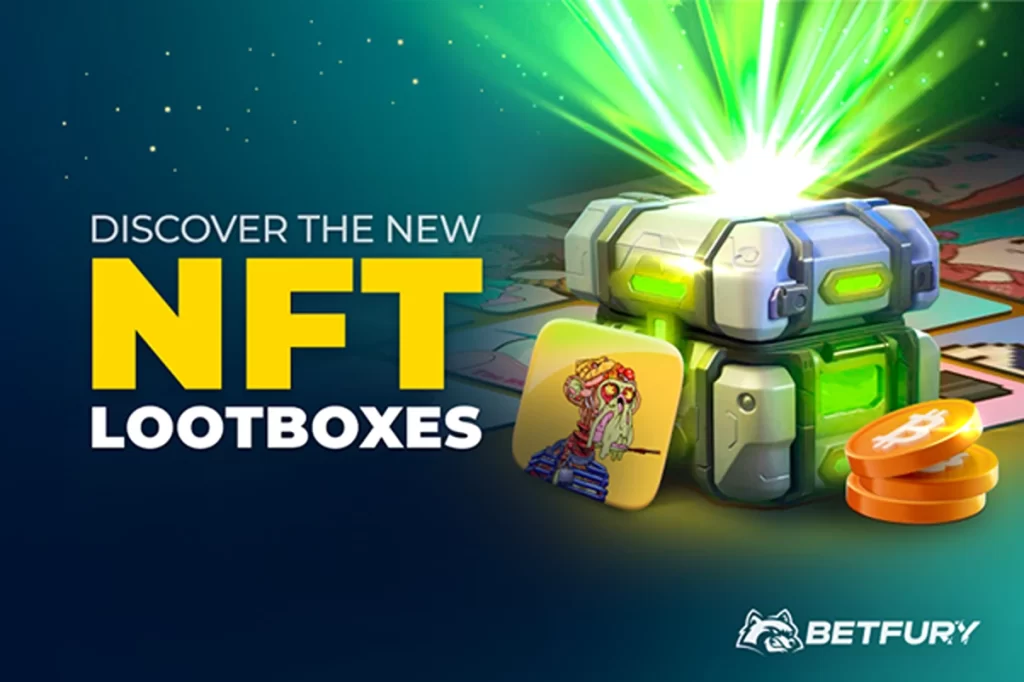
BetFury has presented a new release – NFT Lootboxes. This is the first product in the NFT ecosystem of the platform. Lootboxes contain rare NFTs and many other profitable rewards. Become the first lucky gambler and win art masterpieces for a few dollars!
Win Rare NFT on BetFury
What are NFT Lootboxes?
Lootboxes are a well-known feature for receiving random rewards specified in the list. They gained popularity thanks to video games but gradually penetrated the crypto industry. NFT Lootboxes differ from their predecessors only in the main reward. In-game cosmetics or weapons have been replaced with crypto art that can cost a fortune!
BetFury picked up this idea and created a high-quality product. Platform NFT Lootboxes look simple and beneficial because they have over 90% chance of winning any profitable prize. Let’s note that this is just the beginning of BetFury’s journey in the NFT ecosystem. Thus, all crypto enthusiasts and art lovers should prepare for other revolutionary ideas and attractive novelties from the BetFury team.
BetFury NFT Lootboxes Rewards
There are different Lootboxes with different chances of dropping NFTs. Each of them has other rewards that are quite profitable:
- BTC, ETH, USDT, BNB, TRX;
- Free Spins for Slots, Original, Table, and Live games;
- Free Bets for Sports Betting;
- BFG (BetFury native token).
Standard NFT Lootboxes consist of guaranteed prizes, while cooler ones have a sector without a reward. Anyway, even this sector appears only with a 1% probability. Therefore, the chances of being left without a prize are minimal. Besides, If you want to check out Lootboxes before the real money spins – try a demo spin!
Epic Win: NFT Worth $76,545
BetFury user has recently won Bored Ape Yacht Club #5663. The chance of success was 0.77%, but it didn’t stop this lucky guy. The $1,657 spin brought him the NFT worth $76,545.This case proves that NFT Lootboxes convey real profit and help users achieve success.

Why Can NFT Lootboxes Provide Success?
The best Lootboxes rewards are some of the rarest NFTs on the market. It creates an exclusive opportunity to get such an expensive and valuable item while spending a few dollars. It’s a headline of every popular success story from the crypto world, isn’t it? Moreover, all NFT fans should know the blue-chip collections offered in Lootboxes by BetFury. Here is a list of some of them:
- Wrapped Cryptopunks;
- BoredApeYachtClub;
- Azuki Originals;
- MutantApeYachtClub;
- PudgyPenguins;
- DeGods and many more!
BetFury offers various NFT Loot Boxes with rewards for any status and wallet. So, users interested in the rarest NFTs and other luxury rewards can choose special Lootboxes for thousands of dollars.
About BetFury
BetFury is an ecosystem of crypto products for entertainment and additional income. The platform has a native BFG token with many utilities. BFG is listed on many crypto exchanges: PancakeSwap, Biswap, etc. The token has over 55,000 holders, and more than 3 billion BFG are in circulation. The most profitable utility for using tokens is BetFury Staking, with the ability to daily withdraw Staking payouts.
BetFury offers over 8,000 Slots and Original games with one of the highest RTP in the industry (up to 99.02% RTP). BetFury also has 80+ kinds of Sports with odds better than the market average. Along with huge events, the platform provides profitable bonuses: Rakeback, Cashback up to 25%, etc.
Bonk (BONK), a quirky Solana-based memecoin with a canine twist, has vaulted to prominence, securing its spot as the third-largest memecoin by market capitalization.
This remarkable ascent occurred on December 8th, as Bonk’s meteoric rise outstripped the market cap of its fellow memecoin, Pepe.

Over the past month, Bonk has undergone a staggering price surge, accumulating an astonishing 370% growth rate.
This surge propelled its market capitalization to an impressive $762 million, in stark contrast to Pepe’s current market cap of $675 million, as per data from CoinGecko.
During this whirlwind 30-day period, BONK catapulted from a minuscule $0.0000028 to $0.000012. Traders fervently seized the opportunity to capitalize on the newfound enthusiasm surrounding the Solana ecosystem.
What’s particularly noteworthy is that Bonk’s rapid price surge outpaced even more established dog-themed memecoins like Shiba Inu and Dogecoin, which posted comparatively modest gains of 20% and 35%, respectively, in the same timeframe.
READ MORE: EU Reaches Landmark Agreement on Comprehensive AI Regulation
At the time of this report, Bonk has firmly entrenched itself as the third-largest memecoin, trailing only DOGE and SHIB, the leaders of the pack, with market caps of $6 billion and $14.4 billion, respectively.
Several factors underpin Bonk’s remarkable gains. Its listing on prominent centralized exchanges, including Binance and KuCoin, played a pivotal role in expanding its reach.
Moreover, futures data has shown a substantial increase in open interest over the past month, indicating significant trading activity in Bonk derivatives.
This heightened trading activity has contributed to the token’s price volatility.
Bonk initially debuted on December 29, 2022, and astoundingly witnessed a 3,766% surge within its first week of trading, despite the bearish conditions prevailing in the market.
Following this remarkable ascent, Bonk’s value gradually dwindled, with its price remaining near its all-time lows for nearly a year.
However, the tides began to turn on October 21, 2023, when Bonk exhibited signs of resurgence, experiencing a dramatic surge in value.
Since that pivotal date, Bonk has skyrocketed by a staggering 6,215%, solidifying its position as the most high-performing mid-cap memecoin in the past three months.