



The United States Federal Trade Commission (FTC) has taken a significant step to address the growing concerns surrounding the unlawful use of artificial intelligence (AI).
In a unanimous decision, the FTC approved a streamlined process for investigating cases related to AI, signaling a heightened focus on potential legal violations within the realm of AI applications.

The approved measure empowers the FTC staff to issue civil investigative demands (CIDs), a legal instrument akin to a subpoena, in AI-related investigations.
This streamlining aims to expedite the acquisition of crucial documents, information, and testimonies necessary for consumer protection and competition investigations.
It’s worth noting that the FTC retains its authority to judiciously decide when to issue CIDs.
This omnibus resolution will remain effective for the next ten years, reinforcing the agency’s commitment to scrutinizing AI-related cases.
This move by the FTC, in conjunction with other initiatives, underscores its dedication to addressing the challenges posed by AI technology.
Critics of AI have voiced concerns about its potential to facilitate fraudulent activities, particularly in areas like phishing emails and robocalls.
During a Senate confirmation hearing in September, FTC Commissioner Rebecca Slaughter, who was being considered for re-nomination, echoed the sentiment that the focus should be on tackling issues like the use of AI to enhance the persuasiveness of phishing emails and robocalls.
READ MORE: Bitcoin Overtakes Ethereum in Daily Transaction Fees Amidst Ordinals Frenzy
While AI has unlocked new avenues for human expression and creativity, it has also introduced novel challenges.
Notably, the emergence of deep fakes, digitally generated AI identities used for fraudulent purposes, has been on the rise.
According to Sumsub data, the proportion of fraud attributed to deep fakes more than doubled between 2022 and the first quarter of 2023, with a significant increase in the United States, from 0.2% to 2.6%.
Recognizing the potential risks associated with voice cloning technology, the FTC unveiled a competition on November 16 to identify the most effective methods for safeguarding consumers from fraud and other risks linked to voice cloning.
As text-to-speech AI technology has advanced, voice cloning has become increasingly sophisticated.
While it holds promise for beneficial applications like providing medical assistance to individuals who have lost their voices due to accidents or illnesses, it also poses security concerns that the FTC is determined to address.
In summary, the FTC’s approval of a streamlined process for investigating AI-related cases reflects its commitment to addressing the challenges and risks associated with the expanding use of artificial intelligence in various domains, while also emphasizing the importance of protecting consumers from potential harm.
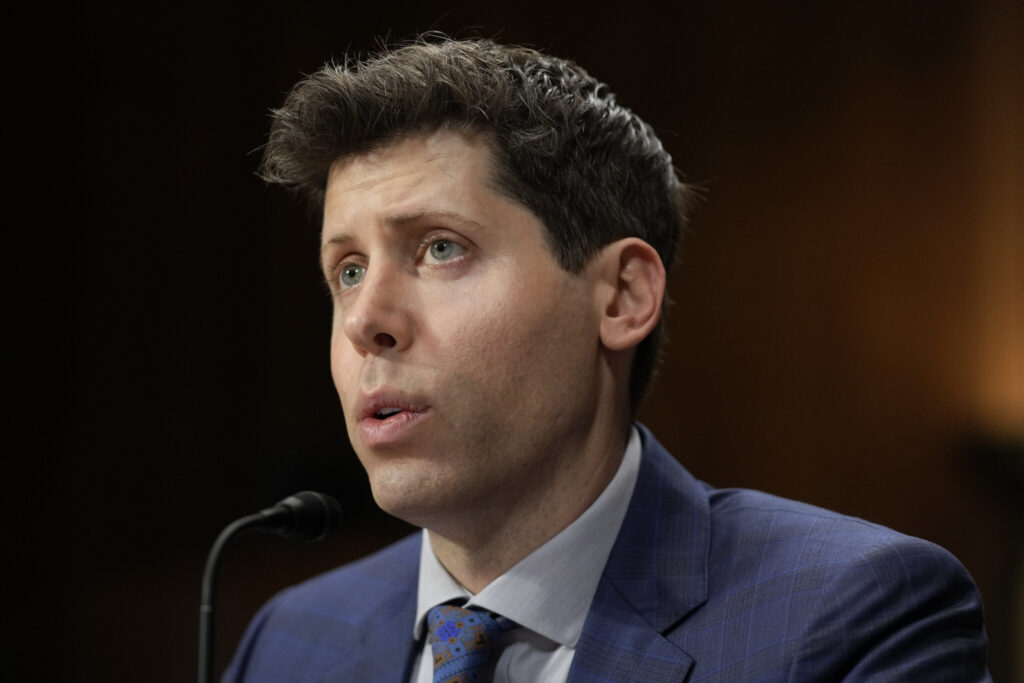
Just two days after Microsoft’s CEO, Satya Nadella, made headlines by hiring former OpenAI CEO Sam Altman to lead a groundbreaking advanced artificial intelligence (AI) research team, a surprising twist in the tale unfolded.
OpenAI, the organization Altman co-founded, announced a remarkable decision: Sam Altman was returning as its CEO.
This surprising development was confirmed via a post on OpenAI’s official X (formerly Twitter) account on November 22, effectively retracting Altman’s previous dismissal.
In their announcement, OpenAI revealed that they and Altman were actively working together to finalize the details of this unexpected reunion.
Altman, expressing his profound commitment, shared the announcement with a heart emoji, signifying his affection for OpenAI and his eagerness to return to the organization.
Altman’s decision to step away from his newly acquired role at Microsoft was driven by his affection and dedication to OpenAI.
READ MORE: Blockchain Association Stands Firm in Support of Tornado Cash Users in Legal Battle
He conveyed his excitement about returning to OpenAI and building upon the strong partnership between the organization and Microsoft. Satya Nadella, Microsoft’s CEO, wholeheartedly supported Altman and OpenAI’s co-founder and president, Greg Brockman, in their choice to rejoin OpenAI.
Nadella emphasized the critical importance of ensuring that OpenAI continues to thrive and remains committed to its mission.
The brief departure of Sam Altman from OpenAI brought to light his pivotal role in uniting the team.
On November 20, a stunning revelation occurred when 505 out of 700 OpenAI employees signed a letter expressing their discontent with the board’s decision to dismiss Altman.
They asserted that the process through which Altman and Greg Brockman were removed from the board had jeopardized the organization’s work and undermined its mission and overall purpose.
This significant backlash from OpenAI employees, combined with the well-timed job offer from Microsoft, underscored Altman’s influential position within the AI ecosystem.
His return to OpenAI marked a pivotal moment in the organization’s history, promising renewed focus and collaboration as they continued their mission to advance artificial intelligence research.
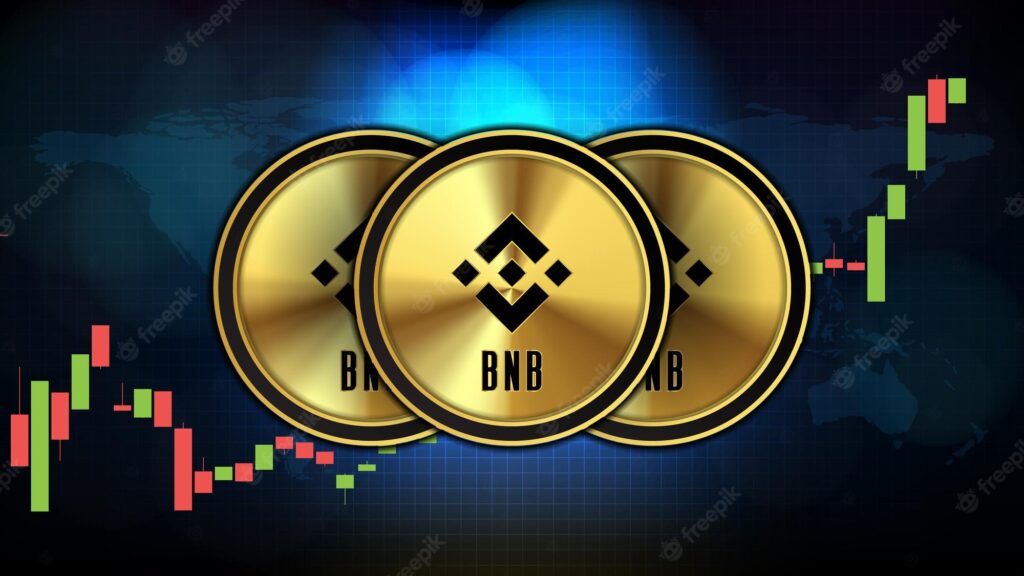
Binance Coin (BNB) experienced a remarkable surge, surging by more than 7% within the past 24 hours, following breaking news from Bloomberg.
The report from Bloomberg unveiled that the United States Department of Justice (DOJ) is currently in discussions with Binance regarding a potential $4 billion settlement.
This significant settlement would aim to bring closure to the ongoing investigation into various alleged wrongdoings by the company, including violations of sanctions, money laundering, and fraudulent activities.
The Cointelegraph Markets Pro data indicated that BNB swiftly responded to the breaking news, spiking by 6% to reach a price of $262 just half an hour after Bloomberg’s revelation on November 20.
However, the cryptocurrency experienced a brief dip, falling to $252 approximately four hours later.
Nonetheless, BNB made a notable recovery and reached $266, marking its highest value since June 7.
This surge occurred shortly after the Securities and Exchange Commission (SEC) initiated legal action against Binance and its CEO, Changpeng “CZ” Zhao, accusing them of violating securities laws.
READ MORE: Bitcoin Nears Crucial Fibonacci Level Amidst Pre-Halving Rally
BNB’s price movement in the last 24 hours stands out among the top 75 cryptocurrencies by market capitalization, boasting the most substantial increase.
Currently, BNB occupies the fourth position among tokens, commanding a market capitalization exceeding $40 billion.
Despite this recent surge, it’s worth noting that BNB still lags considerably behind its all-time high of $686 achieved on May 10, 2021, with a decline of 61.4%.
Nevertheless, it has managed to achieve a modest 6.5% gain year-to-date.
One potential outcome of the settlement discussions envisions Binance agreeing to pay the substantial $4 billion fine while agreeing to operate within the United States under specific conditions mandated by regulatory authorities.
Bloomberg has reported that an official announcement regarding this potential agreement could be made by the end of the month.
If indeed Binance consents to this settlement, it will mark one of the largest fines ever levied in a criminal cryptocurrency case, underscoring the increasing scrutiny and regulation within the cryptocurrency industry.

The National Bank of Cambodia (NBC) has inked a memorandum of understanding (MoU) with Alipay, enabling users of the NBC’s digital currency, known as the bakong, to access the Alipay merchant network and conduct cross-border transactions through Alipay+.
This exciting development was announced at the FinTech Expo in Singapore, garnering significant attention.
The bakong, while operating on a blockchain, differs from a central bank digital currency (CBDC) in that it is a liability of the commercial banks that employ it.
Notably, the bakong accommodates both United States dollar and Cambodian riel accounts, catering to Cambodia’s heavily dollarized economy.
Under this MoU, Cambodian users can utilize the riel stored in their bakong wallets to shop at a staggering 83 million merchants worldwide linked to the Alipay network.
Additionally, Chinese tourists who possess accounts with Alipay’s extensive electronic payment system can now make purchases in Cambodia using the QR codes facilitated by the bakong KHQR system.
NBC governor Chea Serey expressed optimism about this collaboration, highlighting the convenience of these payment options and their potential to boost merchants’ revenues, thereby stimulating economic activity.
READ MORE: Atomic Wallet Requests Dismissal of $100-Million Hack Lawsuit, Citing Jurisdictional Grounds
She stated, “I’m confident this collaboration with Alipay+ will be beneficial for all parties.”
The bakong service, which launched in 2020, initially aimed to streamline remittances and facilitate purchases.
Its mobile application was developed in partnership with Japan’s Soramitsu blockchain.
Furthermore, Soramitsu has revealed plans to harness the bakong for the creation of a cross-border payment system spanning India, China, and Japan.
Impressively, the bakong is already in use in countries such as Malaysia, Thailand, and Vietnam.
In a previous development, the NBC had also signed an MoU with China’s UnionPay International in July, focusing on the utilization of QR codes for cross-border payments.
As of November 17, 2023, statistics from the Phnom Penh Post reported an impressive 35.4 million transactions totaling $12 billion using the bakong in the first half of the year, underscoring its growing significance in the digital currency landscape.
This strategic collaboration between the NBC and Alipay promises to further enhance the accessibility and utility of the bakong digital currency for users in Cambodia and beyond.

The Blockchain Association has reaffirmed its support for six plaintiffs who are suing the United States Treasury’s Office of Foreign Assets Control (OFAC) over its sanctions on the cryptocurrency mixer Tornado Cash.
In a recent amicus curiae brief submitted to a U.S. appellate court on November 20, the Blockchain Association argued that OFAC’s decision to impose sanctions on the privacy protocol was not only unlawful but also went beyond its statutory authority.
They contended that it was “arbitrary and capricious,” in violation of the U.S. Constitution.
This marks the second amicus brief filed by the Blockchain Association in support of Tornado Cash users who are appealing a previous ruling that upheld OFAC’s decision to include the cryptocurrency mixer in its list of sanctioned entities.
Marisa Coppel, senior counsel for the Blockchain Association, stressed that OFAC should focus on sanctioning individuals who misuse tools like Tornado Cash rather than banning such tools outright, which they believe falls outside OFAC’s authority.
Coppel stated, “OFAC must see Tornado Cash for what it is: a tool that can be used by anyone.
“Rather than sanctioning a tool with a lawful purpose, OFAC should remain focused on the bad actors that misuse such tools.”
READ MORE: Atomic Wallet Requests Dismissal of $100-Million Hack Lawsuit, Citing Jurisdictional Grounds
She added that OFAC’s actions set a concerning precedent and could jeopardize the privacy rights of law-abiding Americans.
In their brief, the Blockchain Association suggested that OFAC should seek approval from Congress to ban crypto mixers like Tornado Cash, thereby acting within the bounds of the law.
They argued that the appropriate course of action is to “seek legislation from Congress that would provide supplemental authority in the uniquely decentralized digital asset context—not to improperly stretch its existing authorities.”
They cautioned against a power grab that could threaten various internet-based tools that have historically been freely available.
The Blockchain Association has consistently maintained that Tornado Cash operates without an owner or operator and can function autonomously without human intervention.
OFAC initially sanctioned Tornado Cash in August 2022, alleging that individuals and groups had used the mixer to launder over $7 billion in cryptocurrencies since 2019, including funds associated with the North Korea-affiliated Lazarus Group, which stole $455 million.
Microsoft CEO Satya Nadella took to social media on November 20th to announce significant developments within the company’s artificial intelligence (AI) research division.
In his post, Nadella expressed his enthusiasm about the hiring of former OpenAI CEO Sam Altman and OpenAI’s president, Greg Brockman, to lead a new advanced AI research team at Microsoft.
Nadella’s message underscored Microsoft’s ongoing commitment to its partnership with OpenAI, despite recent changes in leadership.
Emmett Shear, who assumed the role of OpenAI’s CEO on the same day as Altman’s departure, was mentioned with anticipation as Microsoft looked forward to collaborating with him in the future.
Shortly after Nadella’s announcement, Sam Altman retweeted the post, affirming that “the mission continues.”
This move came after Altman’s sudden ousting from OpenAI on November 17th, as the board of directors cited his alleged lack of transparency in communications as the reason for his removal.
READ MORE: Hacker Swipes $25 Million from Kronos Research in Stunning API Key Breach
Following Altman’s departure, Greg Brockman also stepped down from his position on the OpenAI board.
In response to his exit from OpenAI, Brockman expressed his shock and sadness on social media. While the official announcement characterized his departure as a voluntary resignation, Brockman clarified in his post that he had been informed of his removal.
Meanwhile, at OpenAI, Mira Murati, the former chief technology officer, assumed the role of interim CEO for the three days following Altman’s departure.
Murati had joined OpenAI in 2018 when it still operated as a nonprofit research center.
On November 20th, the company named Emmett Shear as its CEO, bringing his expertise as the former CEO and co-founder of the video streaming platform Twitch into the organization.
Microsoft’s strategic move to bring Altman and Brockman on board highlights the company’s commitment to advancing AI research, fostering innovation, and solidifying its position in the rapidly evolving AI landscape.
The partnership with OpenAI, despite recent leadership changes, remains integral to Microsoft’s vision for the future of artificial intelligence.

Blockchain security firm dWallet Labs has unveiled a critical vulnerability that has the potential to impact around $1 billion worth of cryptocurrencies, including assets like Ether, Aptos, BNB, and Sui (SUI).
The vulnerability centers around validators hosted by the infrastructure provider InfStones. In a research paper sent to Cointelegraph, dWallet Labs outlined their findings, which exposed a series of vulnerabilities within InfStones validators.
The security firm explained, “A chain of vulnerabilities we discovered and exploited during our research allowed us to gain full control, run code, and extract private keys of hundreds of validators on multiple major networks, potentially leading to direct losses equivalent to over one billion dollars in cryptocurrencies such as ETH, BNB, SUI, APT, and many others.”
This means that an attacker exploiting this vulnerability could obtain the private keys of validators across various blockchain networks, potentially gaining control over more than a billion dollars’ worth of staked assets.
InfStones responded to the disclosure, disputing the claim that the bug could affect such a significant amount of assets.
Darko Radunovic, a representative from InfStones, stated that the potential vulnerability was only identified in a small fraction of the live nodes they had launched.
READ MORE: Worldcoin (WLD) Faces Turbulence Amid Sam Altman’s Departure and CEO Replacement
Specifically, it was found in 237 instances, including 212 designated for testing and 25 newly launched nodes in the production environment.
Radunovic clarified, “The instances identified in production constitute a fraction below 0.1% of the live nodes we have launched to date.”
In response to the vulnerability report, InfStones took proactive measures.
They conducted internal reviews and had a security firm with accreditation audit their systems and company policies.
Additionally, the company initiated a bug bounty program to encourage third parties to collaborate on identifying and resolving any bugs they may discover.
The revelation of this vulnerability highlights the ongoing challenges in ensuring the security of blockchain networks and the importance of prompt and effective responses by both infrastructure providers and security firms to protect the assets of crypto holders and investors.

A hacker has managed to pilfer a staggering $25 million from Kronos Research, a quantitative trading firm, by gaining unauthorized access to its API keys.
The breach was unveiled by Kronos Research on November 19th when they discovered that an unauthorized entity had infiltrated their API keys.
As a precautionary measure, the firm swiftly halted its trading services on the platform. Fortunately, no financial losses were reported at that juncture.
Upon the disclosure of the breach, blockchain investigator ZachXBT delved into the matter and unearthed the shocking revelation that approximately $25 million had been funneled into six distinct cryptocurrency wallet addresses.
The investigation unveiled that the funds were moved in six separate transactions, totaling 2,780 Ether, 2,540 ETH, 2,540 ETH, 2,636 ETH, 4.93 ETH, and 2,507.52 ETH, respectively.
These transactions originated from a Kronos Research account and were sent to various addresses controlled by the hacker.
READ MORE:The Best Ways to Earn Passive Income with Cryptocurrency in 2023
Kronos Research has opted to indefinitely suspend its trading services while conducting an internal investigation to apprehend the individual responsible for the theft of over 12,800 ETH.
Despite this setback, the company remains optimistic about its future, stating, “Potential losses are not a significant portion of our equity, and we aim to resume trading as soon as possible.”
Kronos Research has yet to respond to Cointelegraph’s request for comment.
The escalating frequency of crypto-related hacks underscores the importance of thorough due diligence for potential investors in cryptocurrency projects.
CertiK, a blockchain security firm, recently disclosed that the third quarter of 2023 was the most “damaging” quarter for the crypto industry.
During this period, malicious actors employed a variety of techniques, including private key exploits, exit scams, and oracle manipulation, to compromise the security of crypto ecosystems.
Shockingly, the cumulative losses from security incidents during Q3 2023 exceeded $700 million, surpassing the losses incurred in the first and second quarters, which stood at $320 million and $313 million, respectively.
This alarming trend underscores the need for robust security measures and greater awareness within the cryptocurrency space as it continues to attract both investors and cybercriminals.

The company responsible for Atomic Wallet has submitted a request to a United States court, urging the dismissal of a class action lawsuit that seeks damages in the aftermath of a $100-million hack.
Their argument centers on the assertion that the claims should have been lodged in Estonia, where the company is headquartered.
In a motion for dismissal filed on November 16th in a Colorado District Court, the Estonian firm emphasized that it maintains “no U.S. ties.”
They cited their end-user license agreement, which explicitly mandates that all legal disputes against the company must be initiated in their home country of Estonia.
Furthermore, Atomic Wallet highlighted the fact that only one user in Colorado was reportedly impacted by the hack.
The company also underscored that the approximately 5,500 affected Atomic Wallet users had willingly agreed to its terms of service.
These terms of service clearly disclaim liability for losses due to theft and impose limits on damages, capping them at $50 per user.
Atomic Wallet argued that the plaintiff’s allegations of negligence lacked legal merit, as no legal duty existed that required them to maintain the security of Atomic Wallet or protect against hacking.
READ MORE:Yearn.finance’s YFI Token Plummets 43% in Five Hours, Raising Exit Scam Concerns
They pointed out that the Colorado legal system does not recognize such a duty, citing previous court decisions as precedent.
Additionally, the Estonian-based wallet provider refuted claims of fraudulent misrepresentation brought forward by the plaintiffs.
The class action lawsuit was initiated in August, a couple of months following a $100-million exploit that affected up to 5,500 users of Atomic Wallet.
This hack had been attributed to both North Korean and Ukrainian groups.
In sum, Atomic Wallet’s request for dismissal centers on its contention that the lawsuit should be filed in Estonia in accordance with their terms of service.
They also argue that the claims of negligence and fraudulent misrepresentation are legally baseless, pointing to the limited liability and lack of a recognized legal duty in the state of Colorado as supporting arguments for the dismissal.

Bitcoin is currently approaching a crucial Fibonacci retracement level, which could signify the peak of its pre-halving surge. Titan of Crypto, a prominent social media trader, has reiterated his BTC price target of up to $50,000 on November 19.
Bitcoin is encountering significant resistance as it struggles to surpass the $40,000 threshold, with several unsuccessful attempts in the past week.
This price region also holds significance for overall market profitability, as $39,000 serves as a break-even point for those who entered the market during the 2021 bull run.
Titan of Crypto has identified $39,000 as an essential boundary, but this time, it pertains to where BTC/USD should ideally stabilize before the April 2024 block subsidy halving event.
He mentioned, “The pre-halving rally I mentioned a year ago is on the verge of reaching its target range between $39k-$50k,” emphasizing the importance of patience.
READ MORE:Former Bithumb Chairman Faces 8-Year Prison Sentence in Cryptocurrency Governance Scandal
This update refers to a previous post from December 2022 when Bitcoin was recovering from a low of $15,600.
Titan of Crypto had then used Fibonacci retracement levels to predict a pre-halving peak of up to $50,000, representing a 220% increase.
Filbfilb, co-founder of the trading platform DecenTrader, still considers around $46,000 as a probable level, while not ruling out the possibility of a temporary BTC price dip.
Looking beyond the halving, there’s growing curiosity about Bitcoin’s future prospects, with forecasts ranging from $130,000 or more by the end of 2025.
On the downside, $30,900 has emerged as a potential support level for Bitcoin’s next correction. Some argue that a lower move to test liquidity would be beneficial and a typical element of Bitcoin market uptrends.
Currently, BTC/USD is trading at $36,500, as per data from Cointelegraph Markets Pro and TradingView. It has maintained a sideways trend over the weekend.