



WisdomTree, a global exchange-traded fund (ETF) provider, has taken another step towards launching a spot Bitcoin ETF by filing an amended Form S-1 prospectus with the United States Securities and Exchange Commission (SEC) on November 16, 2023.
This move follows WisdomTree’s initial refiling of its spot Bitcoin ETF application in June 2023, where it proposed a rule change to list and trade shares of the WisdomTree Bitcoin Trust on the BZX Exchange, facilitated by the Chicago Board Options Exchange (CBOE).

The newly updated prospectus reveals that the WisdomTree Bitcoin Trust ETF plans to trade under the ticker symbol BTCW, with Coinbase Custody Trust acting as the custodian responsible for holding all the trust’s Bitcoin assets.
Bloomberg ETF analyst James Seyffart noted that this amended filing signals WisdomTree’s continued commitment to launching a Bitcoin ETF and suggests ongoing discussions with the SEC.
Seyffart emphasized that this step is part of the process and not a critical development.
Eric Balchunas, another Bloomberg ETF expert, expressed concerns about the time it took for WisdomTree to amend its Form S-1 Bitcoin ETF filing.
READ MORE:Yearn.finance’s YFI Token Plummets 43% in Five Hours, Raising Exit Scam Concerns
He questioned whether the SEC was waiting for all S-1 filings to be updated before issuing a second round of comments.
Seyffart’s data revealed that among the 12 firms in the U.S. that have submitted spot Bitcoin ETF filings, only two have yet to amend their S-1 filings with the SEC: Franklin Templeton and Global X.
Franklin Templeton’s initial spot Bitcoin ETF deadline was set for November 17, but the SEC postponed it to January 1, 2024. Hashdex, which faced a similar deadline, also had its deadline moved to January 1, 2024, on November 15.
Global X, another firm that has not updated its S-1 filing, is awaiting its second spot Bitcoin ETF deadline on November 21.
While some expect the SEC to announce further delays in its decisions regarding upcoming deadlines, Seyffart maintains his belief that these delays will not significantly impact the high probability—90%—of the SEC approving a spot Bitcoin ETF before the end of January 2024.
The ETF industry continues to closely monitor these developments as the quest for a spot Bitcoin ETF in the U.S. unfolds.

Argentina’s presidential run-off election on November 19th witnessed a victory for Bitcoin-friendly candidate Javier Milei, who triumphed over his opponent Sergio Massa.
Milei secured over 55% of the votes, amassing a nearly 3-million-vote lead with almost 99% of the ballots counted, as per Bloomberg data.
In a show of sportsmanship, Massa, the incumbent minister of the economy, graciously congratulated Milei on his victory when more than 90% of the votes had been tallied, even before the official results were announced. Milei is set to assume office on December 10.
The central issue gripping Argentina throughout the election was its persistent inflation crisis, with the Argentine peso witnessing a staggering 140% annual inflation increase in the past year.
Milei has been a vocal critic of the country’s central bank, labeling it a “scam” and accusing politicians of using it to impose an “inflationary tax” on the populace.
READ MORE: OpenAI Founder Sam Altman Ousted as Turmoil Escalates, Triggering Wave of Resignations
He has also endorsed Bitcoin as a move toward “returning money to its original creator, the private sector.”
Nevertheless, Milei has not indicated any immediate plans to make Bitcoin legal tender in the country.
In stark contrast, Massa holds opposing views on money, banking, and cryptocurrencies.
In October, he pledged to introduce a central bank digital currency (CBDC) if elected, with the aim of addressing Argentina’s persistent inflation crisis.
While Massa emerged victorious in the initial round of the presidential election in October, his success was insufficient to secure the presidency outright, leading to the final run-off vote.
Javier Milei’s triumph signifies a significant shift in Argentina’s political landscape, with a leader who is outspokenly supportive of Bitcoin and skeptical of traditional banking institutions set to take the reins.
As the country grapples with its inflation woes and economic challenges, the world will be watching to see how Milei’s presidency unfolds and whether any changes in financial policy will accompany his tenure.

As the cryptocurrency market continues to develop and receive attention from all sides, more and more players are entering this market. Additionally, Bitcoin continues to solidify its position as the top cryptocurrency and attracts interest from users around the world.
Do you want to increase your passive income from Bitcoin and cryptocurrencies? Do you want to know the fastest way to activate the Bitcoin income you are receiving now?
Traditional cryptocurrency mining methods often require expensive computers, which consume large amounts of electricity. This also leads to difficulties in maintaining and profitability.
Beginners may prefer cloud-based software that does not require mining equipment and programs designed for more basic CPU and GPU mining.
They may also prefer software with low withdrawal requirements, as it may take a long time to mine enough Bitcoins to make it worthwhile to use mining software with high limits.
SunMiner is one of the leading cloud mining companies and a trusted partner for users.
Compared with other platforms, SunMiner is more suitable for beginners because it eliminates many technical terms and presents it to customers in the simplest form. Let novices also participate in cloud mining and obtain high profits.
As one of the best providers in the world, SunMiner is committed to making users’ cloud mining experience safe and comfortable.

SunMiner key advantages include:
·Sign up and get an instant $10 bonus.
·High profitability levels and daily payouts.
·There are no other service or administrative fees.
·You can generate more than six other currencies using the platform.
·The company’s affiliate referral program allows you to refer friends and earn up to $20,000 in referral bonuses.
·McAfee® security. Cloudflare® Security.
·Backed by a 100% uptime guarantee and outstanding 24/7 technical support, any questions or concerns are promptly resolved.

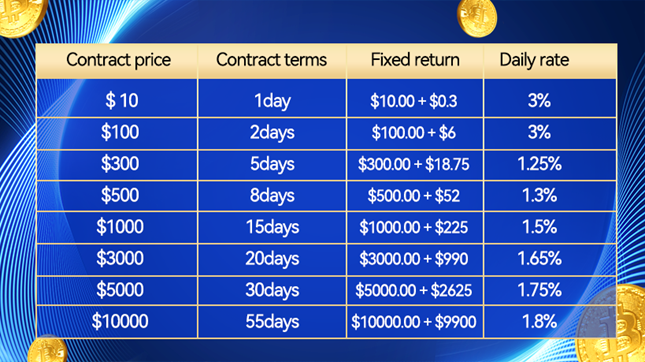
This is a great opportunity for those looking for passive income from cryptocurrencies, as SunMiner offers excellent mining contracts. The platform is suitable for anyone with no technical experience or financial resources,The registration process is simple and takes less than 3 minutes. Users can start mining immediately after registration. There are no calculation fees or investment requirements when registering. Currently, the SunMiner platform has more than 9.55 million members operating in more than 200 countries around the world and earning cryptocurrency. Additional features, such as the option to withdraw your own profits on a daily basis and monitor or predict potential gains, are popular among investors and traders.
In addition to mining services, SunMiner also offers an attractive partner program. This move allows you to easily make money by attracting new partners. The process is simple and does not require any initial investment. Just invite friends and acquaintances and you’ll receive up to $20,000 in bonuses.
Summarize
If you are looking for ways to increase your passive income, cloud mining is a great way to do it. If used correctly, these opportunities can help you grow your cryptocurrency wealth on “autopilot” mode with minimal time investment. At the very least, they should take less time than any kind of active transaction. Passive income is the goal of every investor and trader, and with SunMiner you can maximize your passive income potential easier than ever.
If you want to know more about SunMiner, please visit its official website: https://sunminer.com
SunMiner can be searched and downloaded by entering “SunMiner” in the Apple Store.

On November 17, decentralized exchange (DEX) dYdX found itself compelled to tap into its insurance fund, allocating $9 million to cover user liquidations.
Antonio Juliano, the founder of dYdX, has characterized these losses as a result of a “targeted attack” on the exchange.
According to information shared by the dYdX team on X (formerly known as Twitter), the v3 insurance fund was employed “to address deficiencies in liquidation processes within the YFI market.”
This move came in response to a significant drop in the Yearn.finance token, which plummeted by 43% on the same day, following a remarkable 170% surge in the preceding weeks.
This sudden and drastic price decline gave rise to concerns within the crypto community, with some speculating about a potential exit scam.
The purported attack specifically singled out long positions in YFI tokens on the dYdX platform, leading to the liquidation of positions valued at nearly $38 million.
Antonio Juliano suspects that both the trading losses experienced by dYdX and the sharp YFI decline were the consequences of market manipulation.
He stated, “This was pretty clearly a targeted attack against dYdX, including market manipulation of the entire $YFI market.
“We are investigating alongside several partners and will be transparent with what we discover.”
READ MORE:CoinShares Gains Exclusive Option to Acquire Valkyrie Funds, Eyes U.S. ETF Market Expansion
Juliano reassured users that their funds remained unaffected by the incident, emphasizing that the v3 insurance fund still retained $13.5 million.
He also pledged to conduct a comprehensive review of their risk parameters, potentially implementing changes to both v3 and the dYdX Chain software as needed.
In the aftermath of this profitable trade, the YFI token’s market capitalization suffered a staggering loss of over $300 million.
This development led to speculations within the community, with some raising concerns about the possibility of insider involvement in the YFI market.
Some users alleged that 50% of the YFI token supply was concentrated in 10 wallets controlled by developers.
However, data from Etherscan suggests that some of these wallets belong to crypto exchanges.
Despite efforts by Cointelegraph to seek comments from dYdX and Yearn.finance, neither party has responded as of yet.
The incident has brought to the forefront the challenges and vulnerabilities faced by decentralized exchanges in the cryptocurrency ecosystem.
James Wallis, the Vice President for Central Bank Engagements and Central Bank Digital Currencies (CBDCs) at Ripple, has emphasized the pivotal role that CBDCs play in promoting global financial inclusion.
In a concise video, Wallis elucidated that financial inclusion seeks to extend financial services to individuals worldwide, especially those with meager incomes and no affiliations with financial institutions.
Wallis identified the primary factors contributing to financial exclusion, which include low incomes and the absence of existing connections with financial institutions, resulting in the lack of a credit history.
In regions grappling with financial exclusion, banks often operate as profit-driven commercial entities, making it challenging to cater to individuals with limited resources, as turning a profit from such a demographic is a formidable task.
Wallis argued that CBDCs offer an economical solution by facilitating financial services at significantly lower costs compared to traditional methods.
CBDCs provide streamlined payment alternatives and opportunities to establish credit, even for individuals without prior affiliations with financial institutions.
This empowerment allows individuals to construct credit histories, gain access to borrowing facilities, and invigorate the expansion of their businesses.
READ MORE:CoinShares Gains Exclusive Option to Acquire Valkyrie Funds, Eyes U.S. ETF Market Expansion
Wallis concluded that CBDCs represent a transformative innovation addressing global challenges associated with financial inclusion.
Ripple is actively collaborating with more than 20 central banks globally on CBDC initiatives and has assumed the role of technology partner for the second phase of Georgia’s digital lari project.
Furthermore, Ripple is deeply involved in CBDC partnerships in Bhutan, Palau, Montenegro, Colombia, and Hong Kong.
It is worth noting that Ripple is currently embroiled in an ongoing legal dispute with the United States Securities and Exchange Commission.
Despite these legal challenges, in July, Ripple garnered recognition from Currency Research for its contributions to the advancement of digital currencies and its outstanding sustainability initiatives, particularly for fostering innovation in the realm of CBDCs.
Ripple’s commitment to reshaping the financial landscape remains unwavering, even in the face of legal hurdles.

The OpenAI board of directors is facing criticism from investors regarding their recent decision to remove CEO Sam Altman from his position.
According to a Bloomberg report on November 19, several investors, including Microsoft, the largest shareholder of OpenAI, are seeking to reinstate Altman as CEO.
On November 17, OpenAI made the announcement that Altman would no longer serve as CEO, with Mira Murati, the company’s chief technology officer, stepping into the role.
The board justified this decision in a blog post, citing concerns about Altman’s communication style, which they believed lacked clarity and honesty, hindering a comprehensive understanding of the company’s operations.
Thrive Capital, a key player expected to lead a tender offer for employee shares, has reportedly not yet provided the funds, and Altman’s removal could have an impact on its plans.
Thrive is pushing for the board to reconsider its decision and reinstate both Altman and Greg Brockman, the company’s president, who also departed shortly after Altman’s removal.
Brockman publicly announced his departure on X (formerly Twitter), stating, “Based on today’s news, I quit.”
This news led to the departure of three senior researchers from OpenAI: Jakub Pachocki, director of research; Aleksander Madry, head of preparedness; and Szymon Sidor, senior researcher.
READ MORE:Sushi Partners with ZetaChain for Native Bitcoin Swaps Across 30 Blockchains
Meanwhile, reports suggest that Altman is willing to return to the company, but under the condition that the current board resigns by the end of the weekend.
Microsoft CEO Satya Nadella has reportedly expressed his support for Altman’s decision, as the board’s move also came as a surprise to him.
Since Altman’s dismissal on Friday, recent reports have indicated that he is working on a new AI venture, according to sources familiar with the matter.
Additionally, it has been reported that Brockman will be joining Altman in this new venture.
The situation at OpenAI remains fluid, with investors, board members, and former executives engaged in discussions about the company’s leadership and future direction.
The outcome of these discussions will likely have a significant impact on the trajectory of OpenAI and its role in the AI industry.

Fidelity, a prominent asset management firm overseeing an impressive $4.5 trillion in assets, has joined the growing list of entities seeking approval for a spot Ether exchange-traded fund (ETF).
Their request was formally submitted to the United States Securities and Exchange Commission (SEC) on November 17.
Fidelity’s proposal centers around listing and trading shares of the Fidelity Ethereum Fund on the Cboe BZX Exchange.
The filing outlines the structure of the proposed ETF, where each share will represent a fractional undivided beneficial interest in the Trust’s net assets.
These assets will primarily consist of Ethereum (ETH), securely held by a Custodian on behalf of the Trust.
One of the primary motivations behind Fidelity’s request is to provide U.S. citizens with a secure and regulated vehicle for gaining exposure to ETH.
The filing argues that up until now, American retail investors have been deprived of a low-risk option for investing in Ethereum.
It emphasizes that the existing methods for accessing digital assets in the United States involve significant counter-party risk, legal uncertainties, and technical complexities.
In contrast, the filing points out that European investors have access to products that are traded on regulated exchanges and offer exposure to a wide range of spot cryptocurrency assets.
As an example, it mentions the approval of the Jacobi Bitcoin ETF for listing on the Euronext Amsterdam stock exchange, demonstrating the more favorable environment for cryptocurrency investment in Europe.
READ MORE:CoinShares Gains Exclusive Option to Acquire Valkyrie Funds, Eyes U.S. ETF Market Expansion
Fidelity also highlights the potential benefits of an Ether ETF for American investors, suggesting that it could have mitigated losses suffered by investors involved with now-defunct firms like FTX, Celsius Network, and BlockFi.
The filing suggests that if a Spot ETH ETP (Exchange-Traded Product) had been available, a substantial portion of the funds tied up in these defunct companies might still be held in the brokerage accounts of U.S. investors.
Fidelity’s move to seek approval for a spot Ether ETF follows BlackRock’s recent filing for a similar product, the iShares Ethereum Trust, with the SEC on November 16.
This development comes after BlackRock previously registered the iShares Ethereum Trust with Delaware’s Division of Corporations, about six months after filing its spot Bitcoin ETF application.
Notably, Fidelity is the seventh firm to apply for an Ether ETF, joining a list that includes VanEck, 21Shares, ARK Invest, Hashdex, Grayscale, and Invesco Galaxy, as the financial industry continues to explore opportunities in the rapidly evolving cryptocurrency market.

Sushi, the decentralized finance (DeFi) platform, has joined forces with interoperability platform ZetaChain to explore the potential for native Bitcoin swaps across 30 different blockchain networks.
This collaboration aims to allow users to trade BTC in a “native, decentralized, and permissionless manner” without the need for wrapping on various blockchains.
Sushi’s decentralized exchange (DEX) will be deployed on ZetaChain, integrating both its v2 and v3 automated market makers, as well as Sushi’s cross-chain swap, SushiXSwap.
ZetaChain’s core contributor, Ankur Nandwani, emphasized that this partnership could introduce Bitcoin’s extensive user base to the DeFi sector in a native manner.
He refuted arguments claiming that bridging BTC without wrapping on another chain is impossible, citing examples like THORChain that already trade Bitcoin natively with other chain assets.
Nandwani explained that ZetaChain’s approach allows anyone to build Bitcoin-interoperable decentralized applications (DApps) for settling contracts and transactions natively.
However, he acknowledged the necessity of trust assumptions, particularly regarding the decentralization of the network facilitating cross-chain transactions.
ZetaChain has successfully tested the technology on its testnet and plans to demonstrate its utility upon the launch of its mainnet through partnerships with SushiSwap and other DeFi protocols.
READ MORE: Solana (SOL) Achieves New Yearly Highs with 17% Surge after Cathie Wood’s Praise
Jared Grey, Sushi’s head chef, hailed the integration as a significant advancement for DeFi, describing the ability to swap Bitcoin natively as a “game-changer” for the industry.
He emphasized that this development opens up new possibilities for interoperability and enhanced connectivity within the DeFi ecosystem.
The integration between Sushi and ZetaChain will occur in two phases.
The first phase will see the introduction of a DEX on ZetaChain’s testnet to support basic asset swaps and liquidity provision, including beta testing and incentives for application testing.
Sushi will become one of ZetaChain’s launch partners when it deploys its mainnet, enabling full functionality for Bitcoin interoperability.
Nandwani detailed the technical process behind native BTC cross-chain swaps, explaining that a cross-chain swap contract is deployed on ZetaChain’s Ethereum Virtual Machine, allowing value to be passed to it from any connected chain, including Bitcoin.
Users initiate a cross-chain swap contract by sending a regular native token transfer transaction on Bitcoin with a special memo to a TSS address, containing the omnichain contract address on ZetaChain and the destination token and recipient address on the destination chain.
The TSS address is owned by ZetaChain’s signer validators, and once enough votes are cast, an inbound cross-chain transaction (CCTX) is created from Bitcoin to ZetaChain.
This leads to the minting of ZRC-20 BTC, which can then be swapped for other tokens on ZetaChain.
Finally, the destination token is withdrawn to the destination chain, concluding the decentralized and native BTC-to-ETH swap facilitated by ZetaChain’s network validators across connected chains.

Amy Peck, the CEO of tech-focused consulting firm EndeavourXR, emphasized the need for the crypto industry to shift its focus towards building blockchain-based solutions that benefit a broader audience, rather than pursuing quick cash grabs for brands.
Speaking at the Web Summit in Lisbon, Portugal, Peck urged Web3 companies to adopt a “build-first” mentality and create appealing products to attract newcomers.
She expressed concerns about the current trend of using Web3 and nonfungible tokens (NFTs) solely as a means for brands to generate wealth, stating that it tarnishes the reputation of an otherwise elegant technology.
Peck believes that the crypto industry has vast potential and should leverage blockchain to reinvent economic structures, inviting more individuals to participate rather than perpetuating the creation of a privileged 1%.
Peck outlined key areas that builders in the crypto space should prioritize to maximize the value of Web3.
These include establishing on-chain proof of identity, empowering individuals to control and own their data, connecting blockchain-based assets to real-world applications, and fostering participation in the creator economy.
READ MORE:Binance and Gulf Energy Join Forces to Launch Thailand-Based Crypto Exchange by Early 2024
Addressing recent industry setbacks, such as the collapse of FTX, Peck acknowledged that some clients were apprehensive about cryptocurrency and viewed Web3 with skepticism.
However, she also pointed out the existence of a “Web2.5 center lane” that larger brands could leverage while transitioning into Web3.
Peck emphasized the importance of blockchain technology in providing consumers with greater control and ownership over their data, highlighting the need for a more transparent data exchange, especially in light of emerging technologies collecting biometric data like fingerprints and facial recognition.
She expressed caution regarding cryptocurrency exchange-traded funds (ETFs), acknowledging the interest of Wall Street firms in the crypto industry but warning against attempts to reshape it to fit existing financial paradigms.
Peck emphasized the importance of preserving the core principles of decentralization and innovation that underpin the crypto sector, rather than allowing it to be manipulated by traditional financial institutions.
In conclusion, Amy Peck urged the crypto industry to prioritize building inclusive blockchain solutions and remain vigilant in preserving the integrity of Web3, resisting attempts to co-opt it for short-term financial gain.

The Texas State Securities Board has taken action against a network of companies operating under the “GS” brand based in Germany, accusing them of engaging in fraudulent activities related to digital assets and investments in a staking pool within their proprietary metaverse.
The network is reportedly controlled by Josip Dortmund Heit.
According to regulatory authorities, on November 16th, GS Partners, GS Smart Finance, and GS Wealth, under the leadership of Josip Dortmund Heit, conducted three rounds of metaverse property sales starting in September 2021.
During this period, investors were offered the opportunity to purchase XLT Vouchers or BNB Chain tokens, which represented ownership of one square inch of a unit within the company’s G999 Tower metaverse.
These tokens were initially priced at 9.63 USDT per voucher. However, their value plummeted rapidly to less than 0.0000049 USDT each on the decentralized exchange PancakeSwap after the respondents failed to meet their $175 million fundraising target.
The Texas State Securities Board also noted that the respondents had never been registered with the Securities Commissioner as dealers or agents, which is a legal requirement for conducting such financial activities.
READ MORE: Paxos Secures Initial Approval from MAS for U.S. Dollar-Backed Stablecoin Launch in Singapore
Furthermore, regulators allege that various other investment products offered by the GSB network, including Lydian World metaverse tokens, gold tokens, G999 coin, and Elemental Certificates, also constituted unregistered security offerings.
In response to these allegations, the Texas State Securities Board has filed an emergency enforcement action, demanding that the GSB group of companies immediately cease and desist from engaging in these activities within the state of Texas.
This is not the first time the GSB network has faced regulatory scrutiny.
On August 15th, the Ontario Securities Commission issued a warning, stating that GS Partners was not authorized to conduct business in the Canadian province of Ontario.
Prior to this, securities regulators in other Canadian provinces, including Saskatchewan, British Columbia, Alberta, and Quebec, had also issued warnings about the activities of GS Partners.
In conclusion, the Texas State Securities Board’s actions against the GS network of companies highlight the growing concerns surrounding unregistered security offerings and fraudulent activities in the digital asset and metaverse space.
It serves as a reminder of the importance of regulatory oversight in protecting investors and maintaining the integrity of financial markets.