


Lisbon, Portugal, November 14th, 2023, Chainwire
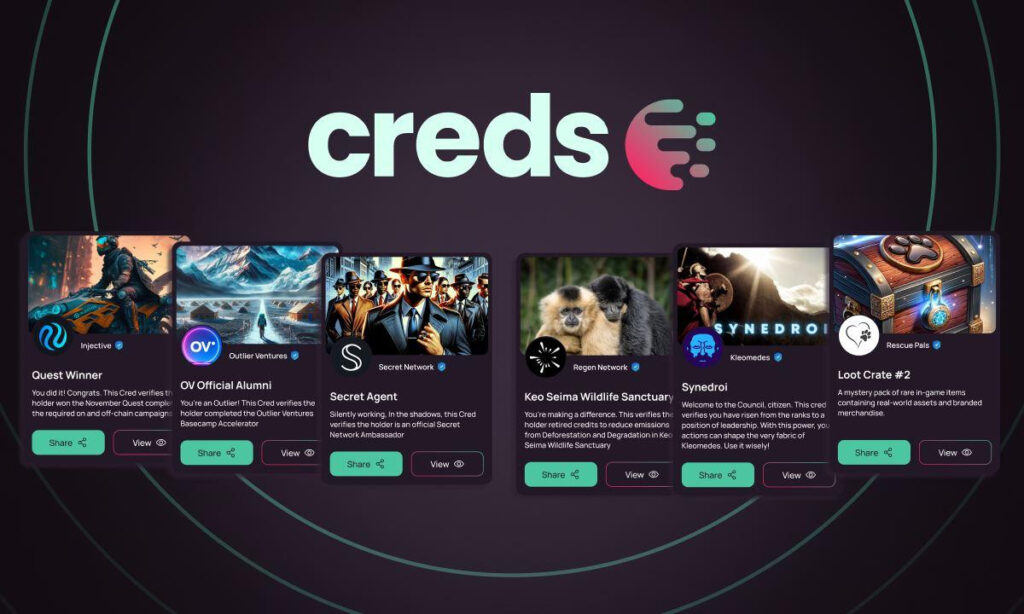
cheqd, the startup that enables users and organizations to gain control and portability of their data, has announced the availability of its Creds Creator Studio at the 2023 Web Summit in Lisbon. Kicking off with an initial six launch partners, Creds Creator Studio enables companies to create Verifiable Credentials that build community trust and security, and supercharge their marketing activities. They can do so in an easy and affordable way using Creds’ no-code platform before monetizing those Credentials via cheqd’s payments infrastructure.
In the digital age, impersonation and fraud have reached unprecedented levels of harm. Worse still, the proliferation of generative AI technology has given bad actors powerful tools to deceive and manipulate on a mass scale, further eroding trust in digital interactions. Compounding this is a lack of financial incentive to issue Trusted Data or Credentials, leaving a critical gap in the ecosystem. Creds emerges as a solution — it offers a comprehensive vertical suite that not only facilitates the creation of trust but also provides opportunities to monetize it.
Building and issuing Credentials through Creds’ user-friendly interface is incredibly straightforward and easy. Organizations simply need to tailor the credential’s information and it will be available almost instantly. From logging in to completion typically takes less than two minutes.
Creds is integrated with cheqd’s Credential Payments feature, which enables organizations and users to exchange and transact creds. It paves the way for organizations to create new business models within their communities and give users a way to monetize their reputation.
Verifiable Credentials: Building Communities, Reputations & Trust
Reputation in Web3 platforms is often confined and cannot be transferred to nor recognized by other platforms. Creds, however, breaks this siloed approach, offering the first opportunity for reputation data to be seamlessly ported, combined and shared across various communities and platforms, fostering more interconnected, versatile and trusted ecosystems.
Organizations can issue Verifiable Credentials with Creds to create a unique reputation and trust system as well as loyalty programs for their communities that’s completely secure, portable and private. For individuals, Creds can act as verifiers of status or serve as their public profile, providing a way for users (individuals and organizations) to verify they are who they say they are and prove ownership of handles, wallets, roles, skills, and reputations within and beyond their communities.
Creds Creator Studio launches with an initial six partners in order to showcase the multitude of Web3 use cases that are uniquely enabled by Creds:
- Outlier Ventures, the leading Web3 accelerator with a portfolio of Web3 companies from across the globe including cheqd, will make Creds available to its alumni and founders, enabling them and their projects to be quickly verified as part of its ecosystem. In this way, Creds will help Outlier Ventures to create more trust in its portfolio companies and enable them to build stronger relationships with their partners and suppliers.
- Injective, the Layer-1 blockchain shaping the future of decentralized finance, plans to utilize Creds to enable its community to aggregate their reputations across the numerous quest platforms it’s actively engaged with. Creds will help Injective identify its most active ambassadors and superfans by providing them with greater incentives and rewards, growing its community more rapidly and strengthening the reputation of its biggest fans.
- Secret Network is integrating Creds into its ambassador program, allowing for the monitoring and rewarding of community members as they progress through their learning journeys. To become a “Secret Agent” or ambassador for Secret Network, users are incentivised to complete a series of activities and assignments to familiarize themselves with the platform’s products and services. The introduction of Creds is intended to expedite this program by providing Secret Agents with a “gamified” tool to monitor their progress, grow reputation, and unlock even greater rewards.
- Regen Network is building a platform to originate and invest in high-integrity carbon and biodiversity credits from ecological regeneration projects. It’s planning to leverage Creds so developers can certify that the ecological credits they offer are verifiably nature-positive and sequester carbon. Creds will help to ensure greater trust in Regen Network’s marketplace, reassuring organizations that they’re able to meet their climate commitments by acquiring carbon credits which are guaranteed to restore biodiversity and reverse the effects of climate change.
- RescuePals, the NFT-based 2D RPG game that aims to incentivize and tokenize animal welfare, will start issuing Creds to players to certify their gaming achievements and verify their participation in community events. With RescuePals, in-game characters and items are digital twin copies of real-world animal rescues, represented by unique NFTs. Each NFT will be verified by Creds in order to certify they represent a tangible donation towards animal welfare. Furthermore, RescuePals plans on using certain Creds to create governance permissions where users can shape future real-world impact campaigns and game expansions.
- Kleomedes DAO is looking at ways to facilitate gamification within its community and gate governance using Creds. As the first decentralized, proof-of-stake and community-governed validator in the Cosmos ecosystem, it aims to support multiple blockchains that create value and build innovative products for the community. Creds will provide the backbone of an innovative reward system funded by validator profits that seeks to incentivize the Cosmos community to act as delegators and participate in its ongoing governance, promotion and development.
By providing organizations with a simple way to quickly create Credentials, cheqd is fostering the creation of the Trusted Data Markets needed to facilitate widespread adoption of SSI. With Trusted Data Markets, cheqd provides a strong incentive for users to issue verifiable Credentials while motivating organizations to return the control of data to individuals.
Research by cheqd shows that the global value of the SSI market may reach as much as $0.55 trillion by 2026. By offering its industry-first Credential Payments that allow owners of verifiable data to retain full privacy, cheqd sets itself apart from other identity networks. The next step for Creds is to enter more traditional markets such as gaming, loyalty, and entertainment, where the demand for Verifiable Credentials already exists.
Creds emphasizes the importance of trust as a key asset for organizations, advocating for its development and sustainability. The focus of Creds is on enhancing community relations and promoting a culture of trust and integrity.
About cheqd
cheqd (cheqd.io) is a privacy-preserving payment and credential network that allows users and organisations to gain control and portability of their data. cheqd builds upon Decentralised Identity (DID), Self-Sovereign Identity (SSI), and Digital or Verifiable Credentials (VCs) with payment infrastructure to create Trusted Data markets as an entirely new industry category.
With its technology, cheqd is creating a new paradigm around Trusted Data economies such as re-usable KYC in Web3, preference data markets, and others where the user is at the centre. It empowers consumers and businesses with full ownership, portability, and control over their data and identities. In addition, this data can be transacted within a payment network that prioritises individual privacy and market-first principles. The scale of distribution is unmatched as cheqd engages with organisations across Lending, Supply Chain, eCommerce, Education, Manufacturing, Gaming, and other sectors.
cheqd also features a decentralised reputation platform (creds.xyz) to incentivise and engage Web3 communities through quest or learning credentials, as well as protect users from fraud and scamming across Discord, Telegram and beyond.
Contact
Avishay Litani
[email protected]
München, Germany, November 14th, 2023, Chainwire
- Alterscope (formerly Solity Network), a leading technology company, has unveiled its web3 Risk Infrastructure for protocol teams and investment firms
- Due to the crypto space’s highly interconnected nature, decentralized financial ecosystems are highly prone to systemic risks. This will change in the future with the launch of Alterscope.
- Altersope is on a mission to make the crypto industry smarter and more transparent
Alterscope (formerly known as Solity Network) unveiled at the Risk Summit in Istanbul on the 14th of November 2023 its risk infrastructure that supports protocol teams and investment firms to master the contingencies of web3.
Benedikt Eikmanns, Co-founder & CEO of Alterscope, mentioned: “Technical fundamentals in decentralized ecosystems are uncharted territory for risk assessment – until now. Alterscope equips its users with the right tools.”
It’s impossible to assess every potential risk in web3 and lacks standards for assessing protocol-specific risks. Alterscope provides transparency on critical interdependencies between protocols, digital assets, and underlying blockchains. Thereby, Alterscope gives insights into decentralized protocols and enables real-time risk processing for protocol teams and investment firms. In addition, Alterscope enables users to perform in-depth due diligence on protocols, create customizable risk scores, and monitor critical protocol events in real-time. The vision of Alterscope is to enable collective intelligence to prevent systemic risk in tomorrow’s financial systems.
In a statement by Marijo Radman, the CTO and Co-Founder of Alterscope, mentioned: “Alterscope creates transparency around decentralized protocols, enabling diversification at the technical-fundamental level and amplifying internal risk control processes.”
Altersope is on a mission to make the crypto industry smarter and more transparent. In specific, Alterscope provides insights into decentralized protocols, enables assessments of their interdependencies, and lays the foundation for novel risk-primitives.
Marijo Radman also mentioned: “Due to the composable tech stack of the decentralized ecosystems and interconnectedness of its base components like chains, protocols, and middlewares, disruptions in the technical fundamentals have induced disastrous events over the last 18 months. This may change with the launch of Alterscope and its advanced real-time analytics capabilities.”
Protocol teams are enabled to automatize their risk management, assess technical fundamental risks when deciding on protocol integrations, and obtain real-time monitoring of integrated protocols. Furthermore, Alterscope provides transparency for protocol stakeholders and unlocks new types of ecosystem dashboards that enable end users to do their own research on decentralized protocols. Thereby, Alterscope helps decentralized networks to attract and retain liquidity as well as to grow their communities.
Investment firms benefit from the capability to conduct thorough Know Your Protocol (KYP) due diligence across various protocols and liquidity pools, facilitating both pre- and post-capital allocation. Additionally, Alterscope provides an unparalleled risk toolkit offering: advanced risk research analysis, and robust support for asset allocation and portfolio construction. In addition, Alerscope empowers risk optimization, continuous risk monitoring, and seamless portfolio rebalancing.
Benefits for protocol teams and investment firms:
- Automatize web3 risk management
- Get actionable insights on protocol-related risks
- Make protocol integration decisions faster and more reliable
- Create transparency for protocol stakeholders
- Enable risk-adjusted vault and portfolio rebalancing
- Access clean and trustworthy crypto data
- Improve trading algorithms
- Build novel risk primitives in DeFi
Alterscope aims to establish itself as the leader in real-time risk intelligence for the digital assets space, setting high standards to ensure accurate risk assessment, all consolidated in one place and delivered in real-time, giving decentralized and centralized entities alike the confidence to steer and interact with decentralized economies.
About Alterscope (formerly Solity Network)
Alterscope (formerly Solity Network) provides the infrastructure for web3 to enable the real-time processing of fundamental risks across chains, protocols, and liquidity pools. By aggregating multi-chain risk parameters, Alterscope creates transparency, sets the stage for machine learning, and enables novel risk primitives in web3.
Contact
CMO
Marta Rozsa
Alterscope
[email protected]
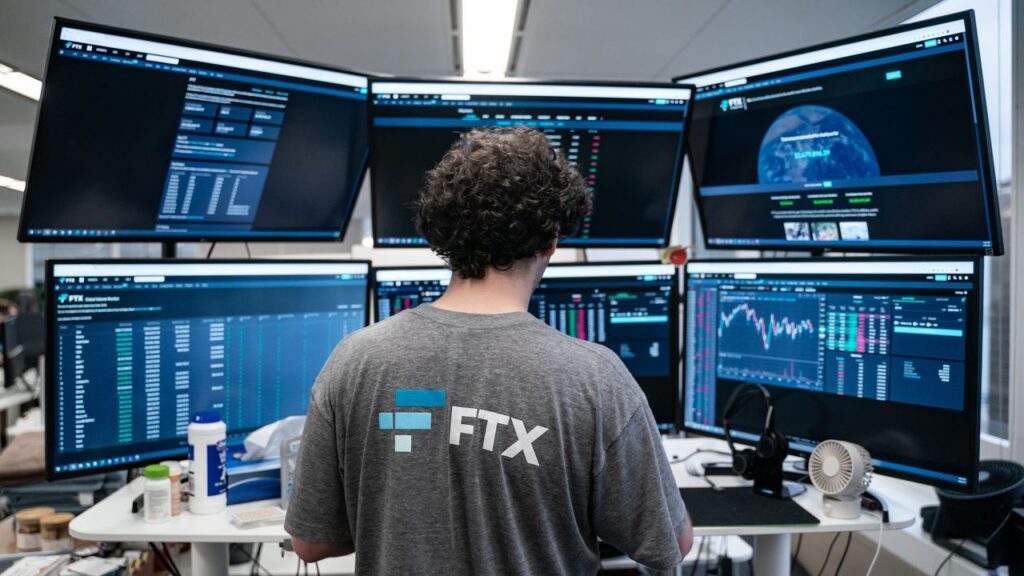
An employee of FTX’s charity division, Ross Rheingans-Yoo, is currently embroiled in a legal battle to receive the remaining $275,000 of his 2022 salary bonus.
Rheingans-Yoo’s lawyers argue that only $375,000 out of his $650,000 bonus has been paid by FTX, claiming that the remaining funds were owed when the crypto exchange filed for bankruptcy in November 2022.
This latest development comes as a response to FTX’s objection, which was filed on October 30th.
In his response, Rheingans-Yoo shared a portion of a Google Doc created by FTX co-founder Sam Bankman-Fried, outlining his employment terms at the FTX Foundation, including a $100,000 base salary.
He stated that Bankman-Fried had informed him about this in a memo.
Rheingans-Yoo emphasized that he was not part of Bankman-Fried’s “inner circle” and had no knowledge of FTX’s alleged misappropriation of customer funds.
According to his lawyers, he was merely a loyal employee caught in a situation not of his making.
Rheingans-Yoo asserts that he is entitled to an additional $650,000 designated for charitable donations, a prepetition salary payment of approximately $5,700, and a post-petition salary of at least $62,800.
READ MORE: Spanish Regulator Takes Action Against Fraudulent Crypto Promoters
FTX’s advisers contend that Rheingans-Yoo has already received his full bonus because he had chosen to have a portion of it repaid via options in the company’s corporate affiliates before the bankruptcy filing. However, Rheingans-Yoo disputes this claim.
The ultimate decision regarding Rheingans-Yoo’s bonus will rest with a Delaware bankruptcy judge overseeing FTX’s Chapter 11 bankruptcy proceedings.
Notably, FTX had previously sued Rheingans-Yoo’s Latona Biosciences Group, Sam Bankman-Fried, and several other defendants in July.
The lawsuit sought the return of $71.6 million in investments and donations allegedly directed to various life science companies. FTX alleges that Rheingans-Yoo and Bankman-Fried personally benefited from these transactions, while FTX and Alameda Research did not.
The crypto exchange claims that these transfers were made with the intent to hinder, delay, or defraud present or future creditors, a fact known by the FTX Foundation, Latona, and Bankman-Fried.
Rheingans-Yoo maintains that his work at Latona involved analyzing potential recipients, engaging with their founders and executives, and conducting due diligence, all with the aim of producing positive societal outcomes.
The outcome of this legal dispute will undoubtedly have significant implications for both parties involved.

Taiwanese cryptocurrency exchange Bitgin finds itself under intense scrutiny as it faces allegations of money laundering, prompting an investigation by the country’s law enforcement agencies.
The unfolding saga centers around the arrest of Yuting Zhang, the firm’s Chief Operating Officer, who has been detained by Taiwanese authorities due to his purported involvement in the “Eighty-Eight Guild Hall” money laundering incident.
Earlier, Zhemin Guo and Chengwen Tu, both local businessmen, were accused by the police of orchestrating a colossal money laundering operation worth billions of dollars.
Their scheme allegedly involved the utilization of foreign exchange offices and cryptocurrency exchange accounts to launder illicit proceeds obtained through wire fraud activities conducted overseas.
Furthermore, Tu stands accused of deceiving the country’s tax authorities by falsely claiming 300 million New Taiwan dollars (equivalent to $9.28 million) in fraudulent export tax refunds through the illicit overseas sale of video game credits.
A notable aspect of this incident is Taiwan’s lack of an official licensing framework for cryptocurrency exchanges.
In a bid for self-regulation and to engage with political officials, Bitgin and its industry peers established the Virtual Asset Service Provider Preparatory Office back in September.
READ MORE: China’s New Phishing Scam Targets Crypto Users Through Fake Skype App
Commenting on the situation, Yuling Tsai, the General Counsel of the Taiwan VASP Association, remarked, “This time, a member of the preparatory group was involved in the investigation case.
The preparatory group immediately held a meeting and issued a public response.
The members involved in the case also took the initiative to suspend participation in the work of the preparatory group.”
Bitgin has sought to reassure its users, stating that its operations remain unaffected, and user rights are safeguarded.
According to the exchange, Chief Operating Officer Zhang’s involvement in the Eighty-Eight Guild Hall money laundering incident transpired from late 2021 to March 2022.
The exchange claims that Zhang ceased all communications with the implicated parties after discovering allegations of money laundering.
The exchange has also pledged full cooperation with the investigative authorities, offering all necessary assistance to ensure a smooth and expeditious investigation.
Bitgin expresses a hope that the facts surrounding the case can be clarified promptly, indicating its commitment to resolving the matter transparently.

On November 12, the Bitcoin mining community reached an annual all-time high (ATH), generating more than $44 million in combined block rewards and transaction fees.
Bitcoin mining relies on specialized computer equipment, known as mining rigs, to confirm transactions and create new blocks. Miners currently earn 6.25 BTC for successfully creating a block, along with transaction fees.
This milestone marked the first time in 2023 that daily Bitcoin mining rewards surpassed the $44 million mark, a level previously observed in April 2022, as reported by data from blockchain.com.
Between April 2022 and November 2023, Bitcoin miners faced several challenges that contributed to a decline in their revenue.
These included a prolonged bear market, negative investor sentiment stemming from scams and ecosystem collapses, and regulatory restrictions hindering Bitcoin transactions.
However, 2023 marked a turnaround for the industry, driven by crypto entrepreneurs who worked to restore investor confidence. Increasing market prices and growing public interest led to a year-long uptrend in mining revenue.
READ MORE: Former FTX Executives Launch Backpack Exchange in Dubai
Marathon Digital Holdings, a prominent Bitcoin mining firm, reported a staggering 670% year-on-year revenue surge in the third quarter of 2023, alongside a nearly five-fold increase in Bitcoin production.
Beyond individual miners and companies, many countries actively participate in securing the Bitcoin network through mining operations.
For instance, Bhutan, a landlocked Asian nation, has been engaged in Bitcoin mining powered by hydropower since the cryptocurrency’s price was at $5,000 in April 2019.
Bhutan is now exploring partnerships to expand its mining endeavors further, including negotiations with the Nasdaq-listed mining company Bitdeer to secure 100 megawatts of power for a Bitcoin mining data center within its borders.
This collaboration could boost Bitdeer’s mining capacity by approximately 12%.
In summary, the Bitcoin mining community achieved a significant milestone in November 2023, reaching an annual all-time high in revenue.
While the industry faced challenges in previous months, it experienced a resurgence in 2023, fueled by market dynamics, increased interest, and strategic efforts by key players in the crypto space.

In the ever-evolving landscape of cryptocurrencies, a debate rages on between proponents of a singular blockchain and those who envision a future comprising multiple blockchains working in harmony.
Ripple CEO Brad Garlinghouse recently weighed in on this discourse during a keynote fireside chat at the Ripple Swell 2023 event in Dubai.
Garlinghouse, while acknowledging the diversity within the crypto sphere, actively discouraged the concept of maximalism.
Garlinghouse’s vision for the future is one of a “multichain world.” He stressed the importance of avoiding maximalism and instead embracing the idea that various cryptocurrencies and blockchains will coexist and collaborate to form a dynamic ecosystem.
During his address, the Ripple CEO also identified two critical factors that could fuel greater institutional adoption of digital assets worldwide.
Firstly, he emphasized the need for clear regulatory frameworks, highlighting that while the United States contributes significantly to the global economy, it lags behind in establishing comprehensive crypto regulations.
Garlinghouse contrasted this with regions like Dubai, where regulators engage constructively with the crypto sector.
READ MORE: Bitcoin Argentina Proposes Progressive Cryptocurrency Regulation Framework
In Garlinghouse’s view, regulatory clarity is essential for large institutions to feel confident about entering the crypto space.
Without a well-defined framework, institutional participation remains hampered by uncertainty.
Additionally, Garlinghouse stressed the significance of “demonstrated utility” in the crypto space.
He argued that the primary goal should not be speculative trading but rather showcasing practical uses for cryptocurrencies.
Speculation alone, in his judgment, does not lead to the promised land of crypto’s full potential.
In essence, Brad Garlinghouse’s perspective at Ripple Swell 2023 presented a vision of the crypto future characterized by diversity and cooperation among various blockchains.
He advocated for regulatory clarity as a catalyst for institutional adoption and underscored the importance of cryptocurrencies demonstrating their practical utility.
As the crypto landscape continues to evolve, it remains to be seen how these insights will shape the industry’s trajectory in the years to come.

A new phishing scheme has emerged in China, specifically targeting cryptocurrency users. This fraudulent operation utilizes a counterfeit Skype video app to carry out its malicious activities.
According to a report by SlowMist, a crypto security analytics firm, the scammers behind this scheme have capitalized on China’s ban on international applications as the foundation of their fraud.
Many mainland users often resort to third-party platforms to search for these banned applications, making them susceptible targets.
Mainland users frequently seek social media applications like Telegram, WhatsApp, and Skype, which are among the most commonly searched for applications.
Scammers exploit this vulnerability by distributing fake, cloned applications embedded with malware designed to attack cryptocurrency wallets.
SlowMist’s analysis unveiled that the fraudulent Skype application, which was recently created, displayed a version number of 8.87.0.403. In contrast, the latest official Skype version is 8.107.0.215.
The security team also identified that the phishing back-end domain initially impersonated the Binance exchange on November 23, 2022, but later transformed to mimic a Skype back-end domain on May 23, 2023.
The existence of this fake Skype app was first brought to light by a user who fell victim to the scam and lost a substantial amount of money.
Further investigation of the fake app’s signature revealed that it had been tampered with to insert malware.
READ MORE: FTX Bankruptcy Estate Files $1 Billion Lawsuit Against ByBit and Executives
Upon decompiling the app, the security team discovered a modified Android network framework called “okhttp3,” which was adapted to target cryptocurrency users.
The modified okhttp3 framework, unlike the default version that handles regular Android traffic requests, obtains images from various directories on the user’s device and monitors for new images in real time.
The malicious okhttp3 requests users to grant access to internal files and images, a request that often goes unnoticed as many social media applications require similar permissions.
Subsequently, the fake Skype app commences uploading images, device information, user IDs, phone numbers, and other data to its back end.
Once the fake app gains access, it continuously scans for images and messages containing strings resembling cryptocurrency addresses, such as those for TroN and Ether.
If such addresses are detected, the fake app automatically replaces them with pre-set malicious addresses chosen by the phishing gang.
However, as of November 8, SlowMist’s testing revealed that the wallet address replacement had ceased, and the phishing interface’s back end was no longer returning malicious addresses.
The SlowMist team promptly flagged and blacklisted all wallet addresses associated with this scam to protect potential victims from falling prey to the scheme.
Cryptocurrency trading platform Bitget has made a significant decision to forgo its plans of obtaining a Virtual Asset Trading Platform (VATP) license in Hong Kong, citing various business and market-related factors as the driving force behind this move.
Bitget’s Hong Kong division, known as BitgetX and accessible through the domain BitgetX.hk, will officially cease its operations by December 13, 2023, according to an official announcement made on November 13.
By opting not to pursue the VATP license, Bitget will have no choice but to permanently withdraw from the Hong Kong market, as detailed in the announcement.
The company has taken the initiative to strongly urge its users to withdraw their cryptocurrency assets from BitgetX before the December 13 deadline.
After this date, the BitgetX website will become inaccessible, rendering users unable to manage or access their assets on the platform.
Bitget has clarified that, during this transition period, only withdrawal services will remain available, with the exchange also ceasing to accept new users as of November 13.
READ MORE: Bitcoin Argentina Proposes Progressive Cryptocurrency Regulation Framework
Bitget, a significant player in the global cryptocurrency exchange landscape, established in 2018, facilitates the trading of nearly one million in cryptocurrency on a daily basis, according to data from CoinGecko.
The exchange’s Hong Kong division had previously expressed its dedication to securing the VATP license, ensuring compliance with the new crypto framework established by Hong Kong’s Securities and Futures Commission in June 2023.
Coinciding with Bitget’s decision, OSL, one of the pioneers in acquiring a Hong Kong crypto license, made an announcement of its own on November 13.
OSL suspended its stock market trading activities at the request of its operator, BC Technology, on the Stock Exchange of Hong Kong.
Rumors have circulated in the industry suggesting a possible connection between Bitget and OSL. Speculation emerged that Bitget may have acquired or invested in OSL’s business.
In October, BC Technology, the operator of OSL, was reported to be exploring the possibility of selling the OSL exchange for HKD 1 billion, equivalent to approximately $128 million.

Tether, a prominent stablecoin issuer, has been steadily increasing its supply of USDT tokens, with a remarkable surge in minting activities over the past month.
According to blockchain data provider Whale Alert, Tether minted an additional 1 billion USDT on the Tron blockchain on November 10.
This significant creation of USDT followed closely on the heels of another 1 billion USDT minted on the Ethereum blockchain on November 9.
Furthermore, Tether had previously issued 2 billion USDT in two separate transactions on the Tron blockchain on November 3 and October 19.
Paolo Ardoino, Tether’s Chief Technology Officer and new CEO, commented on this surge in USDT issuance, stating that the latest 1 billion USDT minted on the Tron network was intended to replenish their USDT inventory.
He emphasized that this was an authorized but not yet issued transaction, indicating it would be used for future issuance requests and chain swaps.
These recent USDT issuances constitute a significant portion of the total USDT supply for the year 2023.
Based on Whale Alert data, Tether’s total USDT minting for the year should reach 22.75 billion, with 57% (13 billion) issued on the Tron blockchain and the remaining 9.75 billion on the Ethereum blockchain.
Tether has been actively involved in minting new USDT stablecoins throughout the year.
In March 2023, they minted an astonishing 9 billion USDT, in addition to the 3 billion minted in the previous month. They also minted 3.75 billion USDT between June 12 and July 12.
READ MORE: FTX Bankruptcy Estate Files $1 Billion Lawsuit Against ByBit and Executives
Simultaneously, Tether has engaged in burning USDT coins, reducing its supply.
Notably, on August 22, they burned 1.2 billion USDT on the Tron blockchain, following previous burns of 3.1 billion Tron-based USDT in June and 2 billion Ethereum-based USDT in February.
The cryptocurrency community has reacted swiftly to Tether’s recent minting activities, recalling the impact of previous aggressive USDT minting on the market.
Some users pointed out the correlation between substantial Tether issuance and significant market events, such as the disruptions in the banking sector in March 2023.
Tether has previously denied allegations of exposure to these events.
Additionally, Tether has been working on integrating new components into its ecosystem.
CEO Paolo Ardoino announced on Twitter that the company is preparing to unveil five new projects in 2024, some of which have the potential to disrupt popular Web2 centralized services.
As of now, Tether has not responded to requests for comment from Cointelegraph.

An anonymous hacker group has claimed responsibility for a major data breach involving approximately 300,000 customers of Coin Cloud, a Bitcoin ATM company.
The cybersecurity account known as Vx-underground, which previously operated on Twitter, disclosed this information.
According to the hackers, they successfully infiltrated Coin Cloud’s systems, compromising sensitive customer data.
The breach reportedly resulted in the theft of personal information from the affected customers.
This data includes Social Security Numbers, Date of Birth, First and Last Names, email addresses, and telephone numbers.
Additionally, the hackers claim to have accessed 70,000 customer selfies, which were apparently captured by the ATM cameras for verification purposes.
Furthermore, the compromised data pertains not only to US residents but also extends to users from Brazil.
In a startling revelation, the hacker group declared that they had also managed to obtain the source code for Coin Cloud’s backend systems.
As of now, Coin Cloud has not issued an official statement addressing the security breach.
READ MORE: Bitcoin Argentina Proposes Progressive Cryptocurrency Regulation Framework
In the wake of these alarming developments, Cointelegraph attempted to contact both Coin Cloud and Vx-underground for further comments.
Regrettably, there has been no immediate response from either party.
Adding to the complexity of this situation is the fact that Coin Cloud had previously filed for bankruptcy earlier in the year.
On February 8th, the company publicly announced its decision to file for Chapter 11 reorganization in a United States bankruptcy court.
According to Chris McAlary, the CEO and president of Coin Cloud, this step was taken to restructure the company’s debt and safeguard the interests of its creditors.
Financial documents from February 7th revealed that Coin Cloud had liabilities ranging from $100 million to $500 million, while its assets were valued between $50 million and $100 million.
The breach and subsequent data theft pose serious concerns for Coin Cloud customers, as their personal information has been exposed to potential misuse.
The company’s response to this incident, as well as any further developments in the investigation, will undoubtedly be closely monitored in the coming days.