

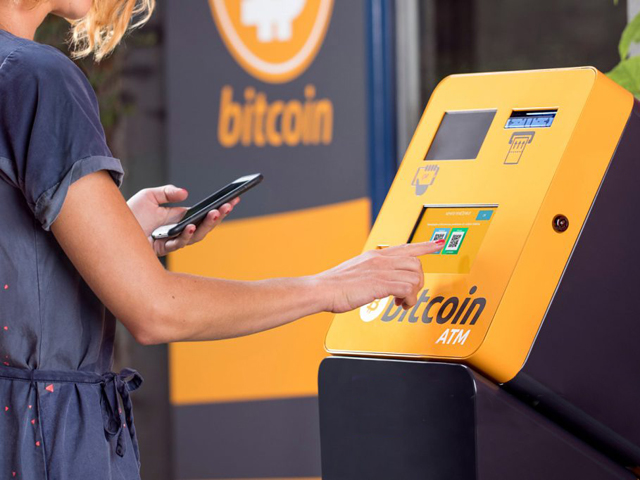
Mercari, one of Japan’s largest e-commerce platforms, is set to introduce Bitcoin as a payment option for its flea market app-listed products starting in June.
This exciting development comes as the platform seeks to tap into the growing popularity of cryptocurrencies in the country.
According to a report from Nikkei, Mercari will facilitate Bitcoin transactions through its Tokyo-based crypto exchange subsidiary, Melcoin.
While the prices of products listed on the flea market app will be displayed in Japanese yen, users will have the option to pay with Bitcoin.
Interestingly, the vendors and sellers on the platform will still receive their payment in the local fiat currency, as Mercari plans to convert the Bitcoin to yen in real-time through its exchange partner.
Mercari has established itself as one of Japan’s premier consumer-to-consumer e-commerce marketplaces, boasting an impressive user base of 22 million monthly users.
Launched in 2013, it quickly became the country’s leading community-based e-commerce platform, with a staggering 94% usage rate.
In the third quarter of 2023, the platform reported a profit of 2.8 billion yen (approximately $19.4 million).
READ MORE: Bitcoin ETFs Emerge as a Solution to Unit Bias Psychology in Cryptocurrency Investment
The decision to incorporate Bitcoin as a payment option is expected to further encourage the adoption of cryptocurrencies among the tech-savvy population of Japan.
This move is not the first foray into the world of cryptocurrencies for Mercari.
The company recently introduced the Mercari Bitcoin crypto trading service, enabling users to buy and sell Bitcoin using the proceeds from their sales on the platform.
Furthermore, Mercari’s loyalty program is cryptocurrency-centric, allowing users to exchange their loyalty points for cryptocurrencies, further integrating digital assets into their ecosystem.
Japan has been known for its supportive regulatory environment for cryptocurrencies, which has paved the way for businesses to embrace digital currencies and offer cryptocurrency-related services to their customers.
Mercari is not alone in this endeavor, as other prominent e-commerce platforms like Rakuten have also been actively engaged in the crypto space.
Rakuten allows users to convert their loyalty points into cryptocurrencies and has even developed its native nonfungible token platform, demonstrating the country’s growing interest in digital assets.
As Mercari ventures into the world of Bitcoin payments, it marks another significant step towards the mainstream adoption of cryptocurrencies in Japan’s thriving tech landscape.

Bitcoin closed its first week of 2024 with a focus on the $44,000 mark, displaying signs of narrowing volatility, which left the market in anticipation of upcoming catalysts.
Data from Cointelegraph Markets Pro and TradingView indicated a decrease in Bitcoin’s price fluctuations over the weekend.
One of the major factors contributing to market uncertainty was the impending decision on the approval or denial of the United States’ first spot Bitcoin exchange-traded fund (ETF), expected by January 10th.
This seminal event is widely anticipated to cause a temporary setback for bullish sentiment, possibly triggering a “sell the news” event.
On the flip side, some investors see the possibility of a knee-jerk upside move, challenging significant psychological price levels.
Regardless of the direction Bitcoin’s price may take, several indicators hinted at an impending breakout from the narrow intraday range.
Notably, the Bollinger Bands volatility indicator was tightening on daily timeframes, a classic precursor to range expansion.
Trader and commentator Matthew Hyland pointed out this development, emphasizing the tightening of Bollinger Bands as the ETF decision week approached.
READ MORE: Bitcoin Trading Expert Arthur Hayes Predicts Up to 40% Price Crash in March
Another notable observation in the market was the resurgence of the “spot premium” on Bitcoin markets, indicating that derivatives traders were cautious about taking long or short positions following last week’s abrupt liquidations.
This caution could potentially lead to a buildup of positions with stop losses and liquidations clustered around the current price levels.
While all eyes were on the ETF decision, macroeconomic challenges were lurking on the horizon.
These challenges took the form of U.S. inflation data, with December’s Consumer Price Index and Producer Price Index readings expected in the coming days.
Historically, such data releases have caused short-term volatility in the cryptocurrency market and other risk assets.
However, for crypto investors, it was essential that the data continued to show a decrease in inflation, as this could delay any potential “pivot” in Federal Reserve interest rate policy.
Currently, such a pivot is not expected to occur at the Federal Reserve’s next dedicated meeting at the end of the month.
In conclusion, Bitcoin’s price remained relatively stable as it closed its first week of 2024, with market participants eagerly awaiting the decision on the first U.S. spot Bitcoin ETF and closely monitoring macroeconomic indicators for potential volatility in the days ahead.

The price of a single Bitcoin often acts as a deterrent for potential investors who lean towards owning complete units due to a psychological phenomenon known as unit bias, as highlighted by VanEck advisor Gabor Gurbacs.
In a series of posts on X (formerly Twitter), Gurbacs pointed out that many people remain unaware that they can purchase fractions of a Bitcoin, and there is a significant preference for owning whole assets.
Gurbacs expressed his surprise, stating, “I was surprised that a good number of people didn’t know that one can own a fraction of a Bitcoin and even more frequently people didn’t want to own a fraction of a coin.”
Currently, Bitcoin is trading at approximately $44,000.
One potential solution to address this unit bias psychology, according to Gurbacs, is the introduction of Bitcoin exchange-traded funds (ETFs).
These ETFs typically debut with a double-digit Net Asset Value (NAV), often around $25.
Hypothetically, if Bitcoin ETFs were to launch at around $44 per share, eliminating three zeros, it would significantly reduce the unit bias, making Bitcoin exposure appear more affordable.
READ MORE: Bitcoin Trading Expert Arthur Hayes Predicts Up to 40% Price Crash in March
Gurbacs emphasized that owning a complete share seems more appealing to investors than holding a fraction, stating, “Owning a full share feels better than owning 0.001 Bitcoin.
Se”ems like a small thing but it’s a big thing.” He also acknowledged that while this debate isn’t new, biases play a crucial role in understanding market behavior.
Meanwhile, there is ongoing anticipation within the cryptocurrency industry regarding the United States Securities and Exchange Commission (SEC) potentially approving a spot Bitcoin ETF in the near future.
However, the broader financial services sector remains more skeptical about the likelihood of this happening.
A recent survey conducted by Bitwise, involving responses from 437 financial advisers, revealed that only 39% of U.S. financial advisers anticipate the approval of a Bitcoin ETF in 2024.
As for the progress on a spot Bitcoin ETF debut on Wall Street, final revisions from asset managers are expected by the morning of January 8, with these revisions to be submitted through S-1 filings.
Applicants are also anticipated to disclose remaining fees and tickers, although BlackRock has not yet revealed the associated fees for its ETF.
Asset management firm Grayscale has recently adjusted the weightings of its cryptocurrency portfolios, resulting in changes to three of its funds.
These adjustments, which were announced on January 5th, are part of Grayscale’s routine quarterly review process.
The impacted funds include the Digital Large Cap Fund (GDLC), the DeFi Fund, and the Smart Contract Platform Ex-Ethereum Fund (GSCPxE Fund).
In the Digital Large Cap Fund, the new allocation breakdown now includes Bitcoin at 69.15%, Ether at 21.90%, Solana at 3.65%, XRP at 2.54%, Cardano at 1.62%, and AVAX at 1.14%.
As a result of this rebalancing, Polygon’s MATIC token has been removed from the GDLC portfolio.
READ MORE: Traders Gamble on Bitcoin ETF Approval with $1.5 Million in Bets on Polymarket
In the DeFi Fund, changes include the removal of the Curve DAO (CRV) token from the portfolio.
The updated basket of assets now consists of Uniswap at 41.11%, Lido DAO at 23.90%, MakerDAO at 13.39%, Aave at 12.63%, and Synthetix.
Interestingly, while MATIC was dropped from one of the portfolios, it still remains in the GSCPxE Fund. This fund’s composition now includes SOL at 44.54%, ADA at 19.77%, AVAX at 13.89%, Polkadot at 9.75%, MATIC at 8.25%, and Cosmos at 3.80%.
Grayscale’s fund managers regularly review and adjust the fund’s weightings to optimize performance in line with current market conditions, risk assessments, and investment objectives. This process is typically carried out on a quarterly basis.
Grayscale utilizes the CoinDesk DeFi Select Index methodology to determine the benchmarks for its funds.
It’s worth noting that funds like the DeFi Fund, designed to provide exposure to decentralized financial markets, have faced challenges due to the recent crypto market downturn.
As of the time of writing, the fund’s shares were trading at $22, reflecting a 9.28% decrease in the past 24 hours.
Furthermore, Grayscale is actively seeking regulatory approval for a spot Bitcoin exchange-traded fund (ETF) in the United States by converting its existing Grayscale Bitcoin Trust (GBTC) into a publicly listed BTC ETF.
The U.S. Securities and Exchange Commission (SEC) is expected to announce its decision on this matter on January 10th.
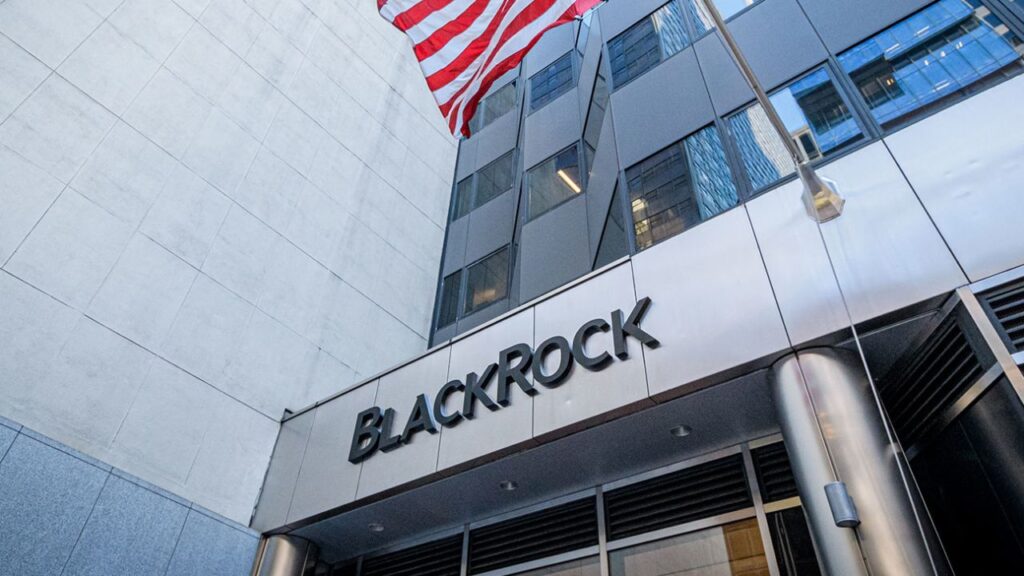
BlackRock, the world’s largest asset manager, is set to reduce its global workforce by approximately 3% in the coming days, according to reports.
This decision coincides with BlackRock’s optimism regarding its spot Bitcoin exchange-traded fund (ETF) application pending approval from the United States Securities and Exchange Commission (SEC).
Sources familiar with the matter have informed Fox Business, as of January 6th, that BlackRock intends to lay off roughly 600 employees as part of its routine internal adjustments, with decisions based on employee performance evaluations from the past 12 months.
BlackRock anticipates that the SEC will approve its Bitcoin ETF application on January 10th, which also marks the SEC’s deadline for deciding on the ARK 21 Shares spot Bitcoin ETF.
However, it’s important to note that the SEC’s official deadline for BlackRock’s application isn’t until January 15th.
This development follows a flurry of amendment forms recently filed with the SEC by spot Bitcoin ETF applicants.
BlackRock’s submission coincided with those of other asset managers, including Valkyrie, Grayscale, Bitwise, Hashdex, ARK 21Shares, Invesco Galaxy, Fidelity, Franklin Templeton, VanEck, and WisdomTree.
READ MORE: Grayscale in Talks with JPMorgan and Goldman Sachs for Proposed Spot Bitcoin ETF Partnership
These filings represent one of the final steps in the SEC approval process, allowing U.S. exchanges to list shares of investment securities directly tied to cryptocurrency.
Notably, in December 2023, Cointelegraph reported that BlackRock had made adjustments to its Bitcoin ETF application with the goal of increasing Wall Street banks’ participation.
They achieved this by introducing new shares within the fund that can be purchased with cash, rather than just cryptocurrency.
This in-kind redemption model allows major banks to act as authorized participants for the fund, thereby bypassing restrictions that previously prevented them from holding Bitcoin or crypto directly on their balance sheets.
In summary, BlackRock is streamlining its workforce as it awaits a potential SEC approval for its Bitcoin ETF application.
This move aligns with broader efforts to make cryptocurrency investments more accessible to traditional financial institutions, potentially opening up new avenues for institutional participation in the crypto market.

An anonymous Bitcoin user has made waves in the cryptocurrency world by transferring 26.9 Bitcoin, valued at approximately $1.17 million, to the legendary genesis wallet.
This wallet holds a special place in Bitcoin history as it was the first-ever wallet created on the Bitcoin network by the enigmatic Satoshi Nakamoto, the pseudonymous inventor of Bitcoin.
The intriguing Bitcoin transaction took place on January 5th at 1:52 am Eastern Time.
What makes this transaction stand out is the substantial transaction fee of $100, considerably higher than the typical fees associated with Bitcoin transfers.
READ MORE: Traders Gamble on Bitcoin ETF Approval with $1.5 Million in Bets on Polymarket
This unusual fee has raised eyebrows and sparked speculation within the cryptocurrency community.
The genesis wallet’s funding history is equally fascinating. Initially, it received funds from the consolidation of assets from three separate wallets, which were subsequently distributed to a total of 12 other wallets.
Most of the funds involved in this process were traced back to a wallet associated with Binance, a well-known cryptocurrency exchange, as identified by Arkham Intelligence, a blockchain analytics platform.
Conor Grogan, a director at Coinbase, couldn’t help but voice his thoughts on this mysterious transaction.

Italy, a pioneering European nation in the prohibition of OpenAI’s renowned chatbot, ChatGPT, has placed artificial intelligence (AI) at the forefront of its Group of Seven (G7) presidency agenda.
This year-long presidency, commencing in January and concluding in December, was officially unveiled by Italian Prime Minister Giorgia Meloni on December 4, 2023.
Meloni outlined several critical priorities, including supporting African development, offering support to Ukraine, and addressing the complexities associated with AI.
Expressing her apprehensions about AI’s impact on the labor market, she commented, “I am hugely concerned about the impact (of AI) on the labor market […] Today we are faced with a revolution where [human] intellect is in danger of being replaced.”
While specifics regarding Italy’s concerns about AI were not divulged by the Prime Minister, she indicated the intention to convene a dedicated AI-focused session involving G7 member nations before the inaugural leaders’ summit scheduled for June.
READ MORE: Michael Saylor Initiates $216 Million Share Sell-Off to Boost Bitcoin Holdings
Italy’s interest in AI’s influence on employment has been long-standing. In May 2023, the country allocated 30 million euros ($33 million) to the Fondo per la Repubblica Digitale (FRD) to bolster the skills of the unemployed and those whose livelihoods are susceptible to automation and AI encroachment.
Earlier in March 2023, the Italian Data Protection Authority initiated an immediate restriction on data processing by OpenAI, a U.S.-based company behind ChatGPT, for local users.
The agency cited the absence of a legal foundation justifying the extensive collection and retention of personal data for AI training as a primary concern. Subsequently, the ban was rescinded a month later after ChatGPT fulfilled all stipulated requirements.
However, in November, the Italian Data Protection Authority announced the commencement of a “fact-finding” inquiry to scrutinize data gathering practices for training artificial intelligence algorithms.
This investigation underscores Italy’s steadfast commitment to safeguarding privacy and ensuring responsible AI development within its borders.
As anticipation builds within the cryptocurrency community for the United States Securities and Exchange Commission’s (SEC) forthcoming decision regarding spot Bitcoin exchange-traded fund (ETF) applications, a unique form of speculation has emerged.
Traders are seizing this moment of suspense to wager on the approval outcome by January 15.
On the decentralized gambling platform Polymarket, which operates on the Polygon blockchain, traders are placing their bets with a simple “Yes” or “No” on whether the Bitcoin ETF applications will receive approval.
Presently, approximately $1.5 million worth of bets have been staked, and the majority of traders are favoring the “Yes” outcome.
The value of each share on Polymarket represents the odds of the respective approval or rejection, mirroring the volatility of the crypto market.
At the time of writing, a “Yes” share costs $0.79, while a “No” share is priced at $0.21.
An anonymous top holder known as “kiwi” has invested around $421,000 in “Yes” shares, while the leading holder for “No” holds only about $15,000 in “No” shares.
Polymarket has set the resolution date for January 15, 2024, at 11:59:59 pm Eastern Time, stating that the market will resolve as “Yes” if any spot Bitcoin ETF gains SEC approval by that deadline; otherwise, it will resolve as “No.”
READ MORE: South Korea Proposes Ban on Credit Card Purchases of Cryptocurrency to Combat Money Laundering
This implies that holders of either bet will experience either gains or losses based on the outcome by the stipulated deadline.
The platform asserts that the primary source for market resolution will be information directly from the SEC.
However, it also mentions the possibility of using a consensus of credible reporting sources to determine the market outcome.
While some members of the cryptocurrency community have criticized this betting activity, others have adopted a more humorous approach.
In a Cryptocurrency subreddit, one user referred to the bets as “putting up dollars to win dimes,” characterizing them as somewhat irrational.
Conversely, another community member humorously claimed they were about to lose their child’s college fund, while yet another apologized to their “crypto grandkids” for their impending actions.
As the crypto world watches and waits for the SEC’s decision, Polymarket’s speculative market serves as a unique reflection of the crypto community’s sentiment and willingness to take risks on significant developments in the space.

Arthur Hayes, a prominent figure in Bitcoin trading, has issued a warning, predicting a potential 30% to 40% crash in BTC prices in March.
In a blog post on January 4th, the former CEO of BitMEX highlighted the likelihood of a turbulent week in financial markets.
While Bitcoin enthusiasts have been optimistic due to the expected regulatory approval of the United States’ first spot Bitcoin exchange-traded funds (ETFs) and the upcoming block subsidy halving in April, Hayes believes that challenges lie ahead.
Hayes attributes his caution to the actions of the U.S. Federal Reserve, which is trying to stabilize an economy grappling with inflation and instability.
In March, the Fed’s Bank Term Funding Program (BTFP), established in response to the 2023 regional banking crisis, is set to expire. Shortly thereafter, the Federal Open Market Committee (FOMC) will decide on interest rates.
Hayes commented, “If my forecast is correct, the market will bankrupt a few banks within that period, forcing the Fed into cutting rates and announcing the resumption of the BTFP.”
Bitcoin and the broader crypto market are highly responsive to changes in macro liquidity, and a Fed bailout could aid them after an initial shock akin to the 2023 volatility.
READ MORE: Bitcoin ETF Approval Odds Remain High Despite SEC’s Need for More Time
However, Hayes believes that Bitcoin will rebound before the Fed meeting, asserting that it is the only neutral reserve hard currency not tied to the banking system, and it is traded globally.
He emphasized that Bitcoin knows the Fed always responds with liquidity injections in times of crisis.
Hayes anticipates a potential drop in BTC/USD prices ranging from 20% to 30% as March begins but believes that the upcoming halving will ultimately act as a catalyst for further price increases.
He cautiously stated that he won’t buy Bitcoin until after the critical March decision dates have passed.
The crypto community remains divided on the impact of ETF approvals. Concerns about potential rejections have already caused a nearly 10% drop in Bitcoin prices.
Some analysts argue that Bitcoin is due for a substantial correction, irrespective of ETF approval.
However, John Bollinger, the creator of the Bollinger Bands volatility indicator, predicts a positive reaction based on his tool’s readings, suggesting that Bitcoin might break higher in the near future.

Cipher Mining, a prominent player in the Bitcoin mining industry, has taken a significant step towards solidifying its position by acquiring 16,700 state-of-the-art Avalon A1466 miners.
These mining machines are set to be delivered in the second quarter, strategically timed to coincide with the highly anticipated Bitcoin halving event, expected in April.
This move underscores Cipher Mining’s ambition to emerge as a key player in the industry during this pivotal moment.
The purchase agreement was brokered with Canaan, the company responsible for manufacturing the Avalon A1466 miners, and involved a joint venture between Bear LLC and Chief Mountain LLC.
Cipher Mining holds a 49% stake in this joint venture, which will see the installation of half of these miners at the Bear facility and the remaining half at the Chief facility.
This expansion will contribute an additional 30 megawatts, equivalent to 1.25 exahashes per second (EH/s), to each of these mining centers.
Upon completion of this expansion, Cipher Mining’s total self-mining capacity will reach an impressive 8.4 EH/s.
The CEO of Cipher Mining, Tyler Page, emphasized the strategic importance of this acquisition, explaining that it positions the company for substantial growth, particularly in light of the Bitcoin halving event.
Historically, this event has been accompanied by a surge in Bitcoin’s price.
READ MORE: Record-Breaking Cryptocurrency Thefts in December 2023 Total Nearly $100 Million
Although the exact financial details of the 16,700 miner purchase were not disclosed, Cipher Mining expressed satisfaction with the favorable terms of the agreement, highlighting that the timing aligned with the market cycle for mining machines.
This isn’t the first time Cipher Mining has collaborated with Canaan. In the past, the company purchased a stack of Canaan machines, which performed admirably even in the scorching Texas summer heat, with temperatures reaching as high as 119 degrees Fahrenheit (48.3 degrees Celsius) in 2023.
In a separate transaction last year, Cipher Mining acquired 37,396 units of the latest Antminer T21 miners from Bitmain, amounting to a total investment of $99.5 million and adding 7.1 EH/s of self-mining capacity. However, delivery of these miners is expected in the first half of 2025.
Cipher Mining’s mining operations demonstrated consistent growth, with 465 BTC mined in December, marking a 7.4% increase from the previous month.
Currently, the company holds 796 BTC on its balance sheet, valued at approximately $34 million.
In terms of market performance, Cipher Mining’s share price (CIFR) experienced a remarkable rebound in 2023, surging by 638% from $0.56 to $4.13.
This impressive resurgence followed a challenging 2022 when CIFR plummeted by 88%.
With a current market capitalization of $1.01 billion, Cipher Mining is now trailing only behind Marathon Digital Holdings, Riot Platforms, CleanSpark, and Hut 8 Mining in the Bitcoin mining sector.