



In 2023, the digital asset landscape saw a significant improvement in security as losses stemming from 751 security incidents amounted to just over $1.8 billion.
Although this figure remains substantial, it represents a remarkable 51% decrease from the previous year when losses due to hacks and various incidents reached a staggering $3.7 billion.
These findings are based on the annual report titled “Hack3d: The Web3 Security Report 2023” by CertiK, a prominent blockchain security firm.
On January 3, CertiK released this comprehensive document, shedding light on the state of Web3 security over the preceding year.
The report highlighted that the third quarter of 2023 was the most turbulent period, witnessing losses surpassing $686 million.
Notably, private key compromises continued to be the most expensive attack vector, causing over $880 million in losses through 47 incidents where private keys were compromised.
Within the blockchain realm, Ethereum emerged as the most impacted network. CertiK’s report disclosed that Ethereum suffered $686 million in losses across 224 incidents, averaging around $3 million per occurrence.
READ MORE: Rising Tide of Crypto Phishing Scams Costs Users $295 Million in 2023
In contrast, BNB Chain experienced 387 security incidents but incurred substantially lower losses, totaling $134 million compared to Ethereum’s figures.
Moreover, the report emphasized that cross-chain interoperability remains a challenge for the cryptocurrency ecosystem, with security breaches affecting multiple blockchains resulting in nearly $800 million in losses.
Ronghui Gu, co-founder of CertiK, expressed optimism about the state of blockchain security in 2023, characterizing it as a “positive development.”
He attributed the 51% reduction in losses to the broader bear market, which witnessed declining token and treasury valuations.
Gu expressed hope that if losses remain low during a bull run, it would signify that the Web3 industry is effectively assimilating essential security lessons.
In summary, the data from CertiK’s report indicates that 2023 marked a notable improvement in digital asset security, with a significant decrease in losses compared to the previous year.
This progress is attributed to proactive security measures and increased awareness within the industry, offering hope for further strengthening blockchain security in 2024 and beyond.

Grayscale Investments, a prominent crypto asset manager, is reportedly engaging in discussions with notable firms such as JPMorgan and Goldman Sachs regarding potential involvement in its proposed spot Bitcoin exchange-traded fund (ETF).
According to sources familiar with the matter, Bloomberg reported this development on January 4.
These discussions have surfaced shortly after Grayscale filed an amended S-3 application with the United States Securities and Exchange Commission (SEC), which notably did not specify any authorized participants.
Simultaneously, an earlier media report has indicated that Goldman Sachs is in talks with BlackRock, aiming to assume the role of an authorized participant for BlackRock’s ETF, citing inside sources.
An authorized participant plays a pivotal role in the management of an ETF, facilitating the creation and redemption of shares within the fund.
ETF issuers can appoint multiple financial institutions as authorized participants.
Notably, ETF applicants are not obliged to disclose their authorized participants in their S-1 or S-3 filings, which implies that other financial entities may still join in the future.
READ MORE: Global Bitcoin ATM Count Falls by 11.1% in 2023, Breaking 10-Year Growth Streak
While JPMorgan has already been designated as an authorized participant for several proposed spot Bitcoin ETFs, Goldman Sachs may soon join the ranks of other Wall Street giants, including Cantor Fitzgerald and Jane Street, which have previously secured authorized participant roles for other ETF issuers.
Goldman Sachs has historically maintained a neutral stance regarding cryptocurrencies and the digital asset sector.
Matthew McDermott, the Head of Digital Assets at Goldman Sachs, emphasized in a December 27 interview with Fox Business that the approval of a Bitcoin ETF would contribute to the maturation of the crypto market and attract increased institutional investment into digital assets on a broader scale.
Notably, a spot Bitcoin ETF has never received approval in the United States.
Nevertheless, experts in the ETF industry anticipate a 90% likelihood of approval before January 10.
Presently, there are 14 asset managers seeking to launch a spot Bitcoin ETF.
This development would offer institutional investors a regulated and direct avenue to gain exposure to Bitcoin within the United States.

Polychain Capital, a prominent crypto venture capital firm, has recently confirmed a security breach affecting the X (formerly Twitter) account of its founder and CEO, Olaf Carlson-Wee.
The hacker behind the breach exploited Carlson-Wee’s account to promote phishing links disguised as a website, offering a fraudulent airdrop.
The breach was first detected on January 4, prompting Polychain to issue a public statement advising X users to refrain from engaging with Carlson-Wee’s account until further notice.
The hacker initiated the attack by posting a deceptive message on X at 8:20 pm UTC, promoting a fictitious “$PCHAIN” token airdrop.
The message encouraged followers to click a link to participate, claiming, “In celebration of the New Year, we have decided to start the $PCHAIN phase 1 distribution early!
What are you waiting for? Get your share before it’s too late!” It included a link purportedly related to Polychain.
Phishing scammers often employ such tactics to deceive users into initiating malicious transactions that can lead to the theft of cryptocurrency from their wallets.
The hacker persisted in their efforts, with approximately 41,000 X users having seen the initial fraudulent post at the time of writing.
READ MORE: Bitcoin ETF Approval in the U.S. Faces Uncertainty Amidst Skepticism and Delay Predictions
This incident adds to the growing list of cryptocurrency-related phishing scams, with a recent report by security platform Scam Sniffer revealing that such scams victimized 324,000 individuals and resulted in losses totaling nearly $300 million in 2023 alone.
Unfortunately, this is not the first time that prominent figures in the crypto space have fallen victim to similar attacks.
Ethereum co-founder Vitalik Buterin had his X account compromised in September, where the hacker managed to siphon $691,000 from victims who clicked on a malicious link that falsely promised a free nonfungible token.
Moreover, other venture capital firms like Blockchain Capital and decentralized finance protocol Compound Finance also experienced similar security breaches in August and December.
These incidents involved luring users with promises of token claims.
Polychain Capital, headquartered in San Francisco, specializes in managing actively managed portfolios of various blockchain assets.
Established in 2016, the firm had amassed $2.6 billion in assets under management as of July 2023.
The breach of Olaf Carlson-Wee’s X account serves as a reminder of the ongoing challenges posed by cyber threats in the cryptocurrency industry, emphasizing the need for robust security measures and vigilant user awareness.

Speculation regarding the approval of a Bitcoin exchange-traded fund (ETF) by the SEC has surged on social media, with anticipation mounting for a potential announcement on Friday.
Fueling these expectations, a tweet from Grayscale’s legal chief mentioning that he was “just filling out some forms,” along with a widely shared tweet from a reporter, has intensified the speculation of an imminent approval.
While some analysts foresee the possibility of approvals as soon as the next day, others suggest that we might have to wait until the following week.
TechCrunch reporter Jacquelyn Melinek, in a January 4th post on X (formerly Twitter), cited sources “extremely close to the matter” and indicated that she was “expecting something tomorrow,” hinting at the potential approval of multiple ETFs.
One tweet that has caught the attention of many is from Grayscale’s chief legal officer, who cryptically mentioned that he was “just filling out some forms.”
This tweet has garnered significant attention with 1.9 million views and 6,700 likes since its posting.
Social media is buzzing with the hashtag #BTCETF and discussions around “Bitcoin ETFs,” while the price of Bitcoin has also experienced an uptick of 3.4% in the last 24 hours, following a sharp drop on January 3rd, according to TradingView data.
READ MORE: South Korea Proposes Ban on Credit Card Purchases of Cryptocurrency to Combat Money Laundering
However, not everyone is convinced of an immediate approval. Trader Scott Melkor acknowledges the vigorous rumor mill but remains cautious.
Bloomberg ETF analyst James Seyffart views much of the January 5th approval speculation as noise and anticipates approval to arrive between January 8th and 10th.
Attorney Joe Carlasare points out that the public comment period for several ETF applications extends until midnight on January 5th, making it “very unlikely” for approval to occur before the start of the next week in his view.
Eric Balchunas, senior Bloomberg ETF analyst, reveals that the SEC is in the process of providing final comments, and issuers are expected to file their final 19b-4 and S-1 forms soon.
Both forms must gain SEC approval before the ETF can commence trading, with the 19b-4 form being particularly crucial for the spot Bitcoin ETF’s effective approval.
Scott Johnsson, general partner at VB Capital, remains skeptical about an ETF approval before the next week, unless all 19b-4 applications are already clear and the SEC is open to simultaneous approvals.
Currently, 14 issuers are competing for the approval of a Bitcoin ETF, including BlackRock, Valkyrie, ARK Invest/21 Shares, Bitwise, and Fidelity.
Investors and enthusiasts alike eagerly await the SEC’s decision, which could have a significant impact on the cryptocurrency market.

Spain’s central bank, Banco de España, has recently announced its selection of collaborators for its central bank digital currency (CBDC) experiments, following an open call for partners issued a year ago.
On January 3rd, Banco de España revealed its partnership with three key players: Cecabank, Abanca, and Adhara Blockchain.
Over the next six months, these partners will engage in a pilot program to test the wholesale CBDC, which will include simulating the processing and settlement of interbank payments using a tokenized wholesale CBDC.
Additionally, they will explore exchanging various wholesale CBDCs issued by different central banks.
Part of this experimental journey will involve utilizing the wholesale CBDC to settle a simulated tokenized bond, a significant step in the development and application of CBDC technology.
From the 24 applications received by Banco de España over the past year, these three companies were selected as collaborators.
READ MORE: South Korea Proposes Ban on Credit Card Purchases of Cryptocurrency to Combat Money Laundering
Notably, while Cecabank and Abanca are Spanish entities, Adhara Blockchain is headquartered in the United Kingdom, showcasing the international interest in CBDC development.
It’s worth highlighting that Spain’s CBDC program is distinct in that it operates independently from the digital euro project, which would encompass all eurozone economies if implemented.
Meanwhile, the Spanish Ministry of Economic Affairs and Digital Transformation has committed to implementing the European Union’s Markets in Crypto-Assets Regulation six months ahead of the deadline, underlining the nation’s proactive stance in regulating the crypto sector.
In a move to educate the public about the digital euro, the Bank of Spain had previously published materials explaining its nature and potential applications.
Despite these efforts, a survey conducted in October revealed that the majority of Spaniards, approximately 65% of respondents, showed little interest in using the digital euro alongside their regular payment methods.
This indicates that while the central bank is advancing in CBDC experimentation, widespread adoption may still face some hurdles in the Spanish market.

Crypto Intelligence and its network of other crypto, blockchain and AI news platforms and blogs is accepting guest posts.
In this article, we explain how you can contribute crypto, blockchain and AI guest posts to our sites, and outline our submission requirements.
Write a Crypto, Blockchain or AI Guest Post
If you’re interested in contributing guest posts about the world of cryptocurrencies, blockchain and artificial intelligence, we want to hear from you. You can get in touch with us by sending an email to [email protected] and someone from our team will revert back to you within 24-48 hours.
In your outreach email, it’s advisable to outline what sort of guest post you would like to contribute, and provide an overview of its contents.
Submission Guidelines
1. Original and High-Quality Content
– All submissions must be original and written exclusively for our platform. Plagiarism and duplicate content will not be accepted.
– We value well-researched and high-quality articles. Ensure your post is accurate, well-structured, and free from grammatical errors. Proofread and edit your work before submission.
2. Relevance and Freshness
– Topics should be relevant to the fields of cryptocurrency, blockchain, or AI. We prioritize articles that discuss current trends, emerging technologies, or provide valuable insights to our readers.
– Stay updated with the latest developments in your chosen niche. Fresh and timely content is more likely to engage our audience.
3. Authoritative Sources
– When including statistics, data, or referencing specific studies, make sure to cite reliable and authoritative sources. Proper attribution enhances the credibility of your article.
4. Length and Depth
– Aim for articles with a minimum of 500 words to provide in-depth information. Longer articles may be more appropriate for complex topics.
– If you have a comprehensive guide or a deep analysis to share, consider breaking it down into a series of articles for better readability.
5. Engaging and Accessible Writing
– Write in a clear and concise manner. Avoid overly technical jargon, but don’t oversimplify complex concepts either. Strive for a balance that makes your content accessible to a broad audience.
– Use subheadings, bullet points, and visuals (when appropriate) to break up text and improve readability.
6. Unique Perspective
– We appreciate articles that offer unique perspectives, case studies, personal experiences, or thought-provoking insights. Stand out by providing a fresh take on familiar topics.
7. Non-Promotional
– Guest posts should not serve as advertisements or promotional content for specific products, services, or companies. Any references to such should be relevant to the topic and kept to a minimum.
– Avoid overly promotional language and ensure that your content adds educational or informational value.
8. Format and Submission
– Submissions should be in a plain text format, preferably in Markdown or Google Docs. Include any relevant images or diagrams as separate files, and provide proper attribution if necessary.
– Send your guest post as an email attachment to the provided submission address, with “Guest Post Submission” in the subject line. Include a brief author bio, contact information, and links to your social profiles.
9. Editing and Approval Process
– Our editorial team will review your submission for quality, relevance, and adherence to our guidelines.
– You may be requested to make revisions if necessary, and your article may go through multiple rounds of editing.
10. Rights and Attribution
– By submitting a guest post, you grant us the non-exclusive right to publish and promote your content on our platform. You will be credited as the author of the post.
– We may share your post on our social media channels and newsletter to maximize its reach.
11. Respect Comments and Engagement
– Engage with our audience by responding to comments on your guest post. Encourage discussion and provide further insights when appropriate.
Following these guidelines will increase the chances of your guest post being accepted and published on our platform. We look forward to receiving your valuable contributions in the fields of cryptocurrency, blockchain, and AI, and helping you share your knowledge with our readers.
Read the Latest Crypto News Today
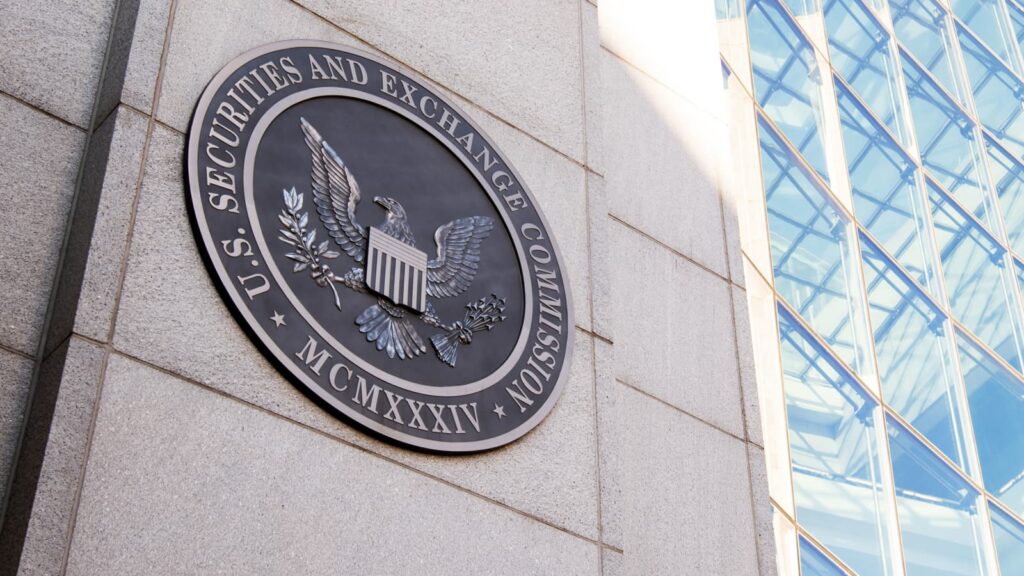
Tuttle Capital Management, an Exchange-traded fund (ETF) issuer, has taken a bold step by filing for six leveraged and inverse Bitcoin ETFs with the United States Securities and Exchange Commission (SEC).
These filings aim to provide investors with the opportunity to benefit from amplified returns in the world of Bitcoin, even before the approval of a traditional spot Bitcoin ETF.
On January 3rd, Tuttle submitted three N1-A forms to the SEC.
These forms are typically used by investment companies to create new open-ended mutual funds.
Bloomberg Intelligence ETF analyst Henry Jim shared the news on X (formerly Twitter) and revealed an effective date of March 18, 2024.
This move showcases Tuttle’s eagerness to capitalize on the growing interest in cryptocurrency investments.
Fellow Bloomberg ETF analyst James Seyffart echoed this sentiment by highlighting Tuttle’s proactive approach, as they have already filed for six leveraged Bitcoin ETFs, despite the absence of an approved spot ETF.
This demonstrates their commitment to innovation in the ETF space.
READ MORE: Spot Bitcoin ETF Transparency Becomes Key Competitive Factor in Race for Approval
The six proposed Bitcoin ETFs include T-REX 1.5X, 1.75X, and 2X Long Spot Bitcoin Daily Target ETFs, along with T-REX 1.5X, 1.75X, and 2X Inverse Spot Bitcoin Daily Target ETFs.
These funds aim to deliver daily results with leveraged or inverse strategies, offering potential returns of up to 150% (for the 1.5X product) and 200% (for the 2X product).
Tuttle plans to initially use BlackRock’s prospective iShares spot Bitcoin ETF as the reference asset for swap agreements, though they may consider changing this reference asset in the future.
It’s important to note that these ETFs come with higher risk compared to non-leveraged alternatives because they magnify the performance of the underlying security, which in this case is Bitcoin, known for its price volatility.
Tuttle has not yet disclosed the proposed ticker symbols or set management fees for these ETFs. Further inquiries have been made to Tuttle for additional information.
Currently, Tuttle manages seven listed ETFs with a total of $96 million in assets, as per data from Stock Analysis. Among their existing products are the T-REX 2X Long Tesla Daily Target ETF (TSLT) and the T-REX 2X Long NVIDIA Daily Target ETF (NVDX).
The addition of leveraged and inverse Bitcoin ETFs to their portfolio reflects their commitment to diversifying investment options and addressing the evolving needs of investors in the cryptocurrency space.

Bitcoin’s sudden drop of $4,000 within hours is not solely due to panic surrounding the United States regulators’ potential rejection of a spot exchange-traded fund (ETF), according to prominent commentators.
This flash crash led to liquidations of over half a billion dollars in cryptocurrency positions.
The decline in Bitcoin’s price, nearly 9% of its value, coincided with the cryptocurrency’s 15th anniversary on January 3, as reported by Cointelegraph Markets Pro and TradingView.
CoinGlass, a statistics resource, reported long liquidations amounting to $514 million on the same day.
Matrixport, a crypto financial services platform, released a report asserting that the U.S. Securities and Exchange Commission (SEC) is likely to reject the spot ETF.
The report claimed that an ETF approval would catalyze crypto adoption, but the SEC chairman, Gensler, expressed the need for stricter compliance in the industry, implying that there is no political incentive to legitimize Bitcoin as an alternative store of value through a spot ETF.
READ MORE: Global Bitcoin ATM Count Falls by 11.1% in 2023, Breaking 10-Year Growth Streak
However, the report lacked concrete evidence to support its claim, and the official window for the SEC’s decision on the ETF is set from January 4 to January 10.
Some market experts, including trader and podcast host Scott Melker, questioned the rationale behind Matrixport’s perspective.
Others argued that the liquidations observed during the price drop were typical of Bitcoin’s behavior in a bull market.
Joe Carlasare, a crypto-focused litigator, dismissed the idea that the ETF report triggered the sell-off, attributing it instead to the market being overbought and in need of a liquidity squeeze.
Matrixport, anticipating a possible rejection by the SEC, predicted only a modest further decline in Bitcoin’s price.
If the SEC denies approval, the report anticipates cascading liquidations, potentially causing a rapid 20% decrease in Bitcoin’s value, bringing it back to the $36,000-$38,000 range.
As previously reported by Cointelegraph, analysts had already identified the mid-to-low $30,000 range as a likely support level for Bitcoin’s price.
The Chicago Board Options Exchange (CBOE), America’s largest options exchange, anticipates that spot Bitcoin exchange-traded funds (ETFs) will usher in a fresh wave of institutional investors.
In a recent interview on Bloomberg TV, CBOE Digital President John Palmer articulated that the approval of such ETFs would not only facilitate greater institutional participation but also stimulate retail interest in Bitcoin derivatives.
Palmer emphasized that this approval could potentially pave the way for pension funds and RIA-based (Registered Investment Advisor) funds to directly invest in spot Bitcoin ETF assets.
Currently, many of these funds face limitations in gaining direct exposure to Bitcoin. He further explained that RIAs are entities registered with federal or state regulatory agencies, specializing in offering investment advice.
As the deadline for the Securities and Exchange Commission (SEC) to decide on the ARK Invest 21 Shares Bitcoin ETF application approaches on January 10, Palmer believes that if approved, Bitcoin derivative products will experience significant expansion.
Institutional players are expected to increasingly utilize these derivatives for risk management purposes.
Palmer acknowledged the difficulty in predicting the exact breakdown of investors but noted that institutions are at the forefront of accessing hedging tools.
READ MORE: Bitcoin Price Prediction: AI Suggests Potential $100,000 Milestone by 2024
Nevertheless, he expects retail investors to also show interest in these instruments.
CBOE Digital, the cryptocurrency division of the exchange, currently offers crypto futures and options trading.
On January 11, it plans to launch margined Bitcoin and Ether derivatives trading, allowing investors to trade these contracts without the requirement of providing the full collateral.
Simultaneously, some mutual funds are already strategizing to increase their exposure to spot Bitcoin ETFs upon approval.
On January 2, Advisors Preferred Trust, a mutual fund manager, modified its prospectus to allow the fund to invest up to 15% of its total assets indirectly in Bitcoin.
This exposure would be achieved through investments in shares of Grayscale Bitcoin Trust, ProShares Bitcoin Strategy ETF, and Bitcoin futures contracts.
In conclusion, the potential approval of spot Bitcoin ETFs is poised to reshape the landscape of institutional and retail investments in cryptocurrencies, providing greater accessibility and hedging opportunities for a broader range of investors.
Etherscan, a renowned explorer for the Ethereum blockchain, is commencing the year with a notable move into the Solana blockchain domain.
On January 3rd, Etherscan officially revealed its acquisition of Solscan, a prominent block explorer for the Solana ecosystem.
This strategic acquisition is being described as a “collaborative merging” and marks another step in Etherscan’s ongoing mission to broaden its blockchain data services across various networks.
Solscan, established in 2021, has reportedly catered to more than three million monthly users and boasts a community of over 23,000 subscribers on the X platform (formerly Twitter).
The Solscan block explorer offers a range of features that will be familiar to Etherscan users, including in-depth information on addresses, tokens, transactions, APIs, dashboards, and metadata related to nonfungible tokens (NFTs).
Etherscan has committed to preserving “credibly neutral and equitable access to blockchain data” following this acquisition, with plans to enhance support and integrate new features across different explorers.
Matthew Tan, CEO and co-founder of Etherscan, expressed confidence in the Solscan team, highlighting their expertise in providing comprehensive insights and user-friendly access to blockchain data, aligning perfectly with Etherscan’s mission.
READ MORE: Bitcoin Surges Above $45,000 Amid Anticipation of Spot ETF Approval
This acquisition coincides with a remarkable surge in the price of Solana, the native cryptocurrency of the Solana blockchain.
On December 22nd, Solana briefly surpassed Binance Chain’s BNB in market capitalization, following its earlier accomplishment of overtaking XRP’s market value.
The token has experienced a 60% rally in the past month, surpassing the $100 mark in late 2023 for the first time since 2022.
As of the latest data from CoinGecko, Solana (SOL) is currently trading at $110, reflecting a 3.5% decrease over the past 24 hours.
It has solidified its position as the fifth-largest cryptocurrency by market capitalization, with a valuation of nearly $47 billion.
Some industry observers have speculated about the potential for SOL to eventually surpass Ethereum. Solana briefly outpaced Ethereum in terms of daily decentralized exchange (DEX) trading volumes in late December.
Furthermore, Solana’s Google search interest outstripped Ethereum’s, scoring 56 compared to Ethereum’s 50 in late December.
These developments underscore the growing prominence of Solana in the blockchain and cryptocurrency landscape.