

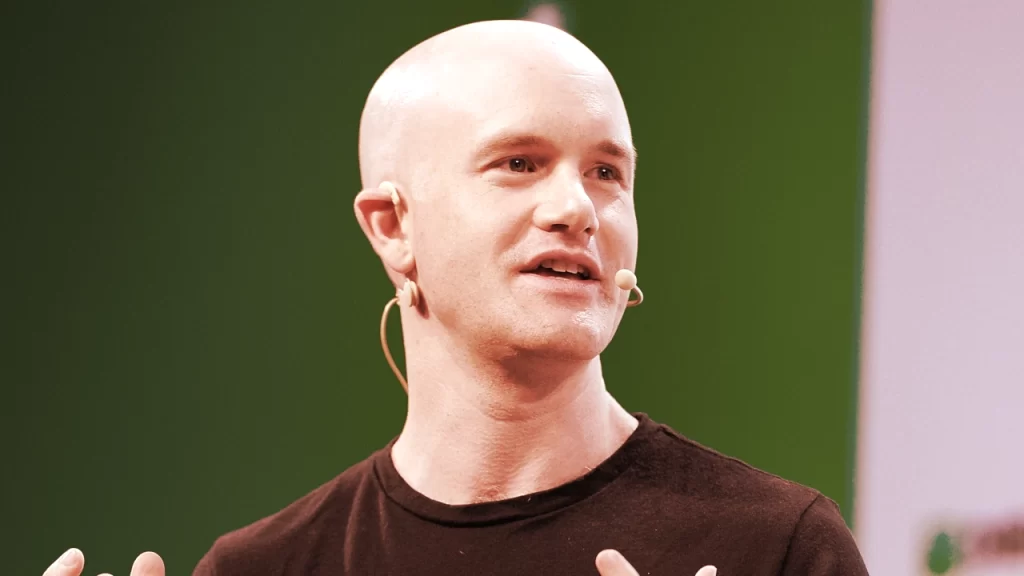
Coinbase, the cryptocurrency exchange, demonstrated a significant improvement in its financial performance during the third quarter, reporting a narrowed net loss of $2 million compared to a substantial $545-million loss in the same period the previous year.
The company’s Q3 results, released on November 2, 2023, revealed a 14.2% year-on-year increase in total revenue, reaching $674.1 million, surpassing the London Stock Exchange Group’s estimate of $653.2 million.
However, there was a 4.8% decrease in revenue on a quarter-on-quarter basis.
Of the total revenue, $334.4 million was generated from subscriptions and services, primarily driven by stablecoin and blockchain rewards, while transaction-based revenues accounted for $288.6 million.
Despite the positive financial results, Coinbase experienced a notable decline in trading volumes.
Consumer trading volume decreased from $26 billion in Q3 2022 to $11 billion, while institutional trading volumes dropped from $78 million in Q2 to $65 billion and $133 million in Q3 2022.
Despite the challenging trading environment, Coinbase expressed satisfaction with its Q3 performance, stating, “Q3 was a strong quarter for Coinbase.
READ MORE: 3 Best Crypto & Blockchain PR Agencies
Amid multi-year low levels of volatility, we are pleased with our financial results.”
The exchange also reported positive adjusted EBITDA for the third consecutive quarter, indicating progress toward building a sustainable business model for long-term growth.
Adjusted EBITDA, which stands for “earnings before interest, taxes, depreciation, and amortization,” is a crucial metric for industry analysts to make meaningful comparisons among companies.
Following the release of its Q3 results, Coinbase’s share price (COIN) experienced a surge of 8.7% during trading hours, reaching $84.6.
However, it later dipped by 3.7% to $81.5 in after-hours trading, according to Google Finance.
In conclusion, Coinbase demonstrated resilience and improvement in its financial performance during the third quarter of 2023, narrowing its net loss, exceeding revenue expectations, and maintaining positive adjusted EBITDA, despite challenges posed by lower trading volumes and market conditions.
The company’s focus on sustainability and long-term growth remains a key driver for its future success.
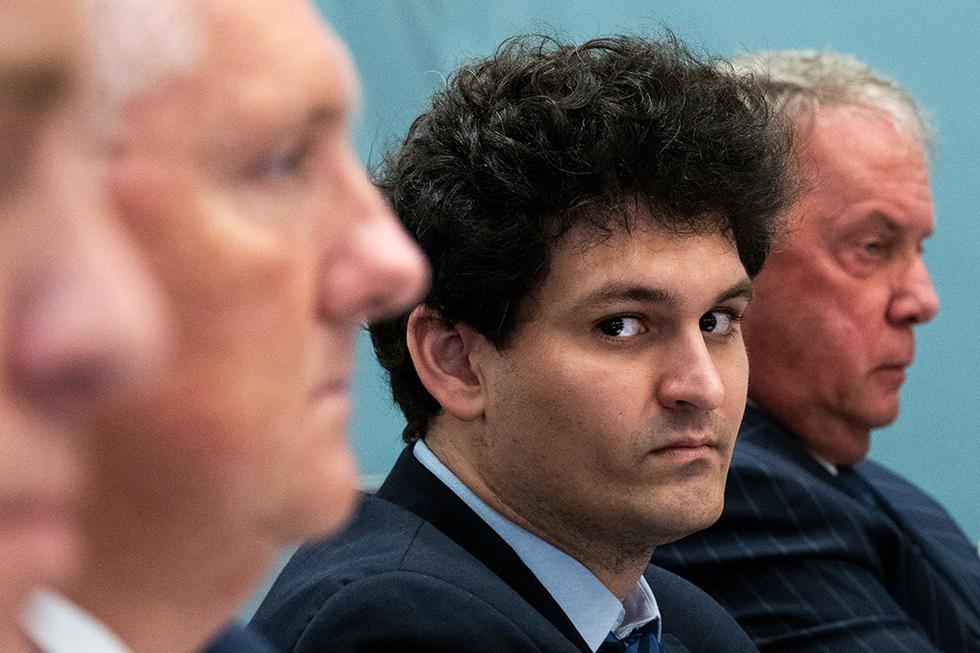
Former FTX CEO Sam Bankman-Fried has been found guilty of all seven charges against him by a New York jury, following approximately four hours of deliberation.
The charges include two counts of wire fraud, two counts of wire fraud conspiracy, one count of securities fraud, one count of commodities fraud conspiracy, and one count of money laundering conspiracy.
On March 28, 2024, Bankman-Fried is scheduled to return to court for sentencing, to be determined by New York District Judge Lewis Kaplan.
While government prosecutors will provide a sentencing recommendation, Judge Kaplan will have the final authority in this matter.
These charges carry severe penalties, ranging from five to 20 years in prison. In particular, wire fraud, wire fraud conspiracy, and money laundering conspiracy could result in a maximum sentence of 20 years behind bars.
During a press conference outside the courtroom, New York Southern District U.S. Attorney Damian Williams characterized Bankman-Fried’s actions as part of a “multibillion-dollar scheme designed to make him the king of crypto.”
He labeled it one of the most significant financial frauds in American history.
Bankman-Fried’s attorney, Mark Cohen, expressed respect for the jury’s decision but also disappointment with the outcome.
Cohen maintained that Bankman-Fried asserts his innocence and will vigorously continue to fight the charges against him.
Notably, other key FTX executives, including former Alameda CEO Caroline Ellison, FTX co-founder Gary Wang, and former FTX engineering head Nishad Singh, have pleaded guilty to various charges and collaborated with the government to testify against Bankman-Fried during the five-week trial.
Throughout the trial, Bankman-Fried consistently pleaded not guilty to all charges.
He also took the stand to assert his innocence and described FTX’s collapse in November 2022 as “a series of significant errors.”
Bankman-Fried distanced himself from pivotal decisions, attributing blame to Wang for creating a function that allowed Alameda to trade funds it didn’t possess.
Regarding Alameda’s ballooning line of credit during the 2022 crypto market downturn, he claimed to be uncertain about the details.
Bankman-Fried also shifted responsibility onto Ellison for neglecting risk management and denied defrauding FTX customers, characterizing the situation as Alameda borrowing funds from the exchange, rather than outright deception of customers.
On November 2, the Dubai Financial Services Authority (DFSA) made significant strides in the realm of digital assets by officially recognizing two additional tokens, XRP and Toncoin.
These tokens have now joined the ranks of Bitcoin, Ether, and Litecoin as officially recognized digital currencies within the Dubai International Financial Centre (DIFC).
This recognition brings with it the significant implication that financial institutions operating within the DIFC will be permitted to conduct transactions involving these newly recognized tokens.
The DIFC, a bustling special economic zone, is currently home to over 4,000 companies, making it a pivotal hub for financial activities in the region.
In 2020, Ripple, the company behind XRP, established its MENA headquarters within the DIFC, highlighting the strategic importance of this location.
Ripple, which boasts approximately 20% of its customer base in the MENA region, expressed its enthusiasm for this development.
Ripple’s CEO, Brad Garlinghouse, emphasized the importance of the DFSA’s decision in advancing Dubai’s status as a global financial services hub, fostering foreign investment, and propelling economic growth.
READ MORE: 3 Best Crypto & Blockchain PR Agencies
The DFSA, responsible for regulating the DIFC exclusively, initiated cryptocurrency regulations in October 2021 and further enhanced them in November 2022.
In late September, the DIFC introduced a proposed Digital Assets Law, which also included plans to repeal the existing 2005 Law of Security and the Financial Collateral Regulations.
Instead, the DIFC intends to introduce an updated Law of Security that encompasses collateral regulations in a more comprehensive manner.
This proposed digital assets law outlines the legal attributes of digital assets, their proprietary nature, as well as the protocols for their control, transfer, and handling by relevant parties.
These legal developments are currently undergoing a consultation period, set to conclude on November 5.
These advancements in digital asset regulation come shortly after the Abu Dhabi Global Market’s enactment of the Distributed Ledger Technology (DLT) Foundations Regulations, which became effective on November 1.
Meanwhile, in Dubai itself, the Dubai Virtual Asset Regulatory Authority was established in March 2022, acquiring jurisdiction over the entire emirate and its free trade zones, excluding the DIFC.
This move was accompanied by the introduction of a virtual assets law, signaling Dubai’s commitment to staying at the forefront of the evolving digital asset landscape.

The Securities and Futures Commission (SFC) of Hong Kong has taken significant steps to regulate the burgeoning field of digital asset tokenization.
In this regard, the SFC has issued two important circulars that provide comprehensive guidelines and directives for intermediaries involved in tokenized securities activities.
These circulars also outline the specific criteria that must be met when tokenizing investment products that are authorized by the SFC.
The SFC has firmly established its stance on tokenized securities, considering them to be equivalent to traditional securities but with an added layer of tokenization.
As a result, the legal and regulatory requirements that traditionally apply to securities markets also extend to tokenized securities.
To maintain regulatory compliance, the SFC has specified that tokenized securities offerings must adhere to the Companies Ordinance’s Prospectus Regime and the Securities and Futures Ordinance pertaining to offers of investment.
Furthermore, intermediaries engaged in activities such as providing advice on tokenized securities, managing tokenized funds, and facilitating secondary market trading on virtual asset trading platforms must adhere to the existing conduct requirements applicable to securities-related activities.
The issuance of these regulatory guidelines comes at a time when Hong Kong is actively exploring tokenization opportunities.
In February, the Hong Kong Monetary Authority made history by launching the world’s first tokenized green bond, successfully raising approximately $100 million.
The SFC’s circulars also address the security concerns associated with tokenized securities trading platforms.
READ MORE: Football Club Scores Big with Bitcoin Adoption
Trading platforms with licenses are required to establish SFC-approved compensation arrangements to safeguard against potential security token losses.
These protective measures can include transfer restrictions and whitelisting protocols, ensuring the security of tokenized securities.
The recent surge in discussions about tokenization has not gone unnoticed by the SFC.
The regulatory body has observed a heightened interest from financial institutions in tokenizing traditional financial instruments within the global financial markets.
In response, the SFC has been actively reviewing various proposals related to the tokenization of investment products, encompassing both primary offerings and secondary trading on SFC-licensed virtual asset trading platforms.
In conclusion, the SFC acknowledges the significant potential benefits of tokenization for financial markets, including increased efficiency, enhanced transparency, reduced settlement times, and lowered costs for traditional finance.
However, the regulatory body remains vigilant about the new risks associated with this technology and is committed to balancing innovation with safeguarding the integrity of financial markets.
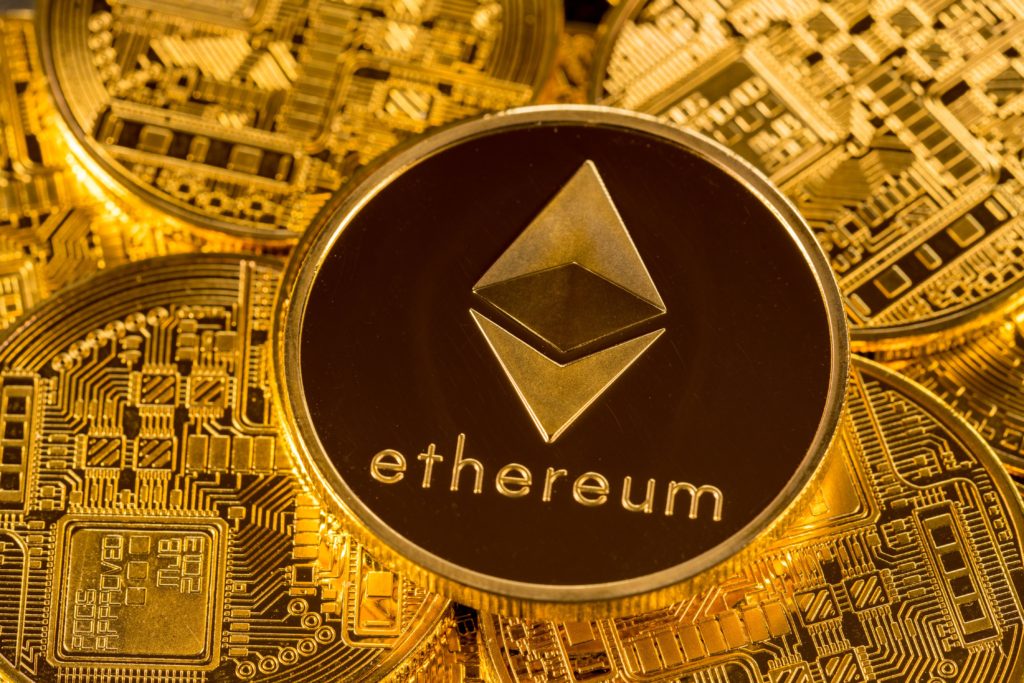
ProShares, a prominent issuer of exchange-traded funds (ETFs), has introduced a new financial product aimed at capitalizing on the fluctuating price of Ether, a leading cryptocurrency.
On November 2, the company unveiled the Short Ether Strategy ETF, which is set to commence trading on the New York Stock Exchange’s Arca platform, utilizing the ticker symbol SETH.
The Short Ether Strategy ETF, or SETH, is specifically designed to provide investors with a means of profiting from the inherent volatility in the price of Ether.
Much like ProShares’ other cryptocurrency-linked ETFs, SETH seeks to gain exposure to the cryptocurrency market by utilizing Ether futures contracts, as outlined in their official announcement.
ProShares CEO Michael Sapir emphasized the significance of this launch, stating that SETH addresses a persistent challenge for investors interested in taking a short position on Ether.
He noted that establishing such exposure can often be a burdensome and expensive endeavor.
With SETH’s launch, ProShares is facilitating accessibility to both profit opportunities during Ether’s price increases and declines, all within the framework of a traditional brokerage account.
SETH is the latest addition to ProShares’ expanding portfolio of ETFs linked to cryptocurrencies.
Notably, in October 2021, ProShares introduced the groundbreaking Bitcoin Strategy ETF, one of the earliest Bitcoin-linked ETFs to be offered in the United States.
READ MORE: Rising Institutional Demand Will Propel Bitcoin Price to $120,000 by Year’s End
Building on this success, the company later launched the Short Bitcoin Strategy ETF in June 2022, targeting investors interested in shorting Bitcoin following its decline below the $20,000 threshold.
In addition to SETH, ProShares offers various other crypto-related ETFs, including the ProShares Ether Strategy ETF, Bitcoin and Ether Market Cap Weight Strategy ETF, and Bitcoin & Ether Equal Weight Strategy ETF.
These diverse offerings enable investors to tailor their exposure to the cryptocurrency market according to their specific investment objectives and risk tolerances.
In summary, the introduction of the Short Ether Strategy ETF (SETH) by ProShares represents another significant step in the evolution of cryptocurrency investment opportunities in the traditional financial markets.
With the convenience of trading through traditional brokerage accounts, investors now have an accessible avenue to profit from Ether’s price movements, both upward and downward, in an increasingly dynamic digital asset landscape.

The Dubai Virtual Assets Regulatory Authority (VARA) has granted an “initial approval” license to crypto firm WadzPay, marking a significant milestone in the company’s pursuit of a Virtual Asset Service Provider (VASP) license for virtual asset services and activities.
Under the VARA license, WadzPay is now authorized to commence preparations for providing virtual asset services and activities related to Transfer and Settlement and Broker/Dealer activities.
However, it’s important to note that this license does not permit the company to offer any of its other virtual asset products and services. WadzPay’s platform caters to both businesses and individual users.
Dubai’s regulatory environment for cryptocurrencies has been evolving rapidly, with various operational licenses being issued to crypto exchanges and firms in recent months.
This development has solidified Dubai’s reputation as a crypto-friendly jurisdiction, thanks to its regulatory body and comprehensive rulebooks for VASPs.
The process to obtain a VARA license in Dubai involves three stages: provisional approval, a minimal viable product (MVP) license, and a total market product license.
In October, the cryptocurrency wallet Backpack received a VASP license, leading to the launch of Backpack Exchange.
READ MORE: Football Club Scores Big with Bitcoin Adoption
However, the VARA license granted to Backpack limits its operations to crypto exchange services exclusively within Dubai, excluding its other virtual asset offerings.
Notably, the newly introduced Backpack Exchange incorporates advanced features such as zero-knowledge proof-of-reserves, multi-party computation for custody, and high-speed order execution.
Komainu, a joint venture involving Nomura, CoinShares, and Ledger, also achieved a full operating license from Dubai’s VARA.
Komainu completed this final step in VARA’s licensing process approximately 10 months after securing its MVP license in November 2022.
Furthermore, Laser Digital, the cryptocurrency division of financial giant Nomura, secured an operating license from VARA in August.
This move is a strategic part of Nomura’s efforts to establish a presence in the digital asset sector.
Through its subsidiary, Laser Digital Middle East FZE, based in Dubai, the company unveiled its VASP license, allowing it to offer brokerage, virtual asset management, and investment services in the emirate.
It’s worth noting that Binance also obtained an operational MVP license from VARA, enabling it to operate cryptocurrency exchange and virtual asset broker-dealer services locally, further contributing to Dubai’s growing crypto ecosystem.
Former BitMEX CEO Arthur Hayes has openly acknowledged his recent purchase of Solana’s SOL cryptocurrency, despite its possible local peak in value.
Hayes remains bullish on the cryptocurrency’s future prospects. This move came after SOL had already experienced a remarkable 500% rebound from its December 2022 low of around $8.
Hayes’ purchase coincided with a prediction by VanEck, an asset management firm overseeing $76.4 billion in assets, forecasting a staggering 10,600% price increase for SOL by 2030.
This prediction was based on Solana’s potential to capture market share from its top competitor, Ethereum.
Furthermore, an analyst from FieryTrading suggested that SOL could see a 150% increase once it breaches the resistance level at $38.
In October 2023, SOL witnessed an impressive 80% price surge, reaching a 14-month high of approximately $46.75.
It appears that Hayes acquired SOL around this same price point, displaying confidence in its continued upward trajectory, possibly influenced by Solana’s ongoing scalability efforts.
READ MORE: Invesco and Galaxy’s BTCO Bitcoin ETF Moves Forward with DTCC Listing
However, caution is warranted as technical and fundamental indicators are signaling the possibility of a 30% price decline in November.
The daily relative strength index (RSI), a momentum indicator, has reached its most overbought levels since January 2023. Historically, such overbought RSI readings have preceded 35% to 50% price corrections throughout 2023.
In the event of a correction, the next support level to watch is near $30.25, which corresponds to the June-November 2022 support level and represents a 30% drop from current prices.
Notably, this level aligns with SOL’s 200-3D exponential moving average (200-3D EMA), denoted by the blue wave in the chart.
A break below this level could lead to a test of SOL’s ascending trendline support, situated near $26, marking a 37.50% decrease from current price levels.
Arthur Hayes’ bullish outlook on Solana remains intact, but the cryptocurrency market’s inherent volatility suggests the possibility of a significant correction in the near future.
SOL investors should monitor these technical and fundamental indicators closely to make informed decisions about their holdings.
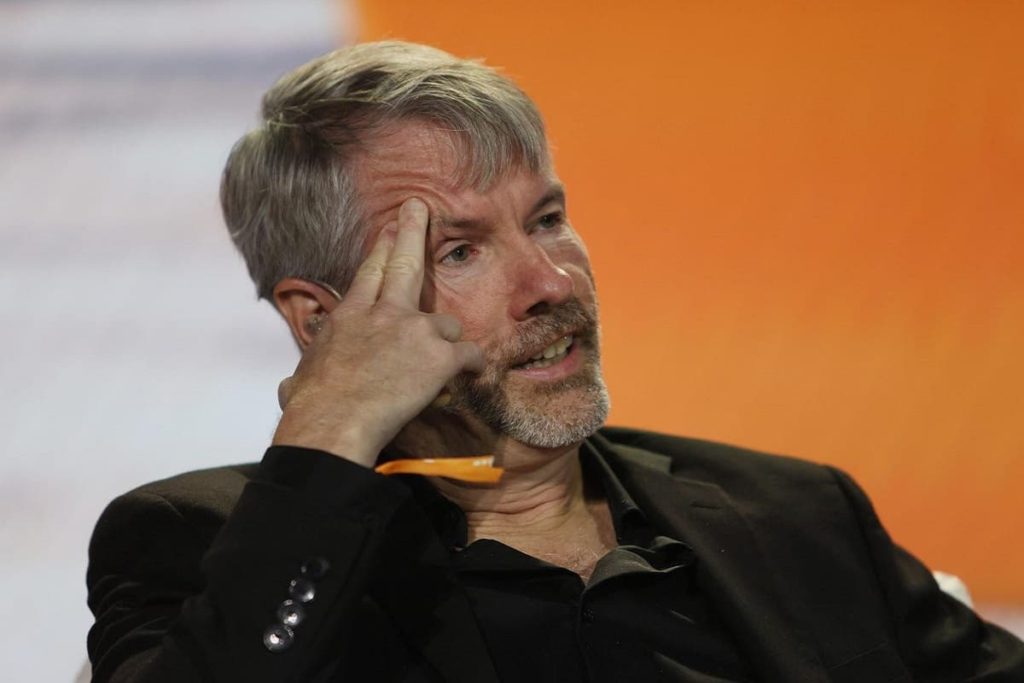
MicroStrategy, a prominent business intelligence firm, has witnessed a remarkable paper gain of $900 million on its substantial holding of 158,400 Bitcoins.
This significant surge in value has been primarily driven by the growing optimism surrounding the potential approval of spot Bitcoin exchange-traded funds (ETFs).
The company, founded by Michael Saylor, has continued to bolster its Bitcoin reserves, acquiring an additional 6,067 BTC since the third quarter, including a substantial purchase of 155 Bitcoins in October, as outlined in MicroStrategy’s November 1st financial report.
CEO Phong Le expressed the company’s unwavering commitment to its Bitcoin strategy, emphasizing that they have no plans to deviate from this path, especially with the promising prospect of increased institutional adoption on the horizon.
Despite a 3% year-on-year increase in revenue, reaching $129.5 million in the last quarter, MicroStrategy found itself in the red, reporting a net loss of $143.4 million.
This outcome highlights the company’s strong focus on accumulating and holding Bitcoin as a core part of its financial strategy.
During the third quarter (July 1 to Sept. 30), Bitcoin experienced a temporary dip, falling by 11.5% from $30,480 to $26,970.
READ MORE: Terraform Labs Co-Founder Do Kwon Challenges SEC Lawsuit
MicroStrategy seized this opportunity to increase its Bitcoin holdings by purchasing 6,067 BTC at an average price of $27,590.
In addition to their Bitcoin investments, MicroStrategy is also confident in the positioning of their artificial intelligence-integrated business analytics products.
Their software licenses and subscription services demonstrated impressive growth, rising by 16% and 28% year-over-year, respectively.
Phong Le expressed his belief in MicroStrategy’s ability to benefit from both the positive trends in the Bitcoin market and the expansion of their business intelligence (BI) offerings, stating,
“We believe MicroStrategy is well situated to capitalize on both the tailwinds in Bitcoin and growth in our BI business.”
Following the release of these financial results, MicroStrategy’s stock price (MSTR) surged by 2.7% in after-hours trading, reaching $438 according to Google Finance.
This upward movement underscores the market’s approval of the company’s strategic direction and its bullish stance on Bitcoin.

On October 19, Sheikh Saud bin Saqr Al Qasimi of Ras Al Khaimah launched the RAK Digital Assets Oasis (RAK DAO), a specialized economic free zone aimed at fostering companies in the digital and virtual assets space, including blockchain, Web3, and AI industries.
This initiative positions RAK DAO as a nurturing ground for service providers in cutting-edge technological areas such as metaverse development, blockchain infrastructure, utility tokens, virtual asset wallets, nonfungible tokens (NFTs), decentralized autonomous organizations (DAOs), decentralized applications, and broader Web3 domains.
Beyond infrastructure, RAK DAO is set to bolster its community with grant programs and targeted assistance spanning technology support to marketing and business growth strategies. In his inaugural address, Sheikh Saud articulated the ambition behind RAK DAO: to cultivate a thriving hub for digital asset innovation and enable trailblazing ideas to take shape. Recognizing the vast opportunities in the digital assets realm, he expressed intent for Ras Al Khaimah to be at the forefront of this burgeoning industry.
In a strategic move, an agreement was also struck between the Securities and Commodities Authority, led by CEO Maryam Buti Al Suwaidi, and RAK DAO’s CEO Sameer Al Ansari.
Ras Al Khaimah, traditionally known for its historical attractions, is expanding its economic portfolio with this focus on the digital asset sector.
The RAK DAO enters a competitive landscape, joining the ranks of established Web3-friendly free zones in the United Arab Emirates, such as those in Abu Dhabi and Dubai, which offer benefits like full business ownership, unique tax schemes, and regulatory autonomy under the umbrella of UAE’s criminal law.
Under Law No 2 of 2023, issued by Sheikh Saud, RAK DAO has been granted the necessary financial and legislative independence to operate as a tailored, innovation-driven free zone for virtual assets. According to the Emirates News Agency report from March, this law is a component of the region’s broader economic diversification and global outreach efforts.
To strengthen its foundation, RAK DAO has secured partnerships with entities like the HBAR Foundation, Rakbank, and Romanian AI company Humans.ai, reinforcing its commitment to establishing a robust and collaborative digital asset ecosystem.
The launch of the RAK DAO aligns with the Royal Family of Ras Al Khaimah’s broader mission to transform the emirate into a blockchain and tech hub, creating tens of thousands of high-skilled jobs and attracting innovative tech companies and business leaders.
Invesco and Galaxy’s spot Bitcoin exchange-traded fund (ETF), BTCO, has reached a notable milestone in its application process.
The ETF’s ticker, BTCO, has recently made its appearance on the Depository Trust and Clearing Corporation’s (DTCC) website, a development observed within the past six days. Comparatively, there was no record of BTCO listed on October 25.
However, it is essential to emphasize that the inclusion of a ticker in the “ETF Products” section of the DTCC’s site does not guarantee the eventual approval of the product.
A spokesperson from DTCC clarified that it is a customary practice for the organization to add securities to the NSCC (National Securities Clearing Corporation) security eligibility file “in preparation for the launch of a new ETF to the market.”
The spokesperson further noted that being listed does not serve as an indicator of the outcome of any pending regulatory or approval processes.
The application for the joint spot Bitcoin ETF, managed collaboratively by the global investment firm Invesco and the crypto asset fund Galaxy Digital, was reactivated on June 21.
This decision to renew the application occurred amidst a surge of similar filings for spot Bitcoin ETF products, a trend set in motion by the prominent investment firm BlackRock, which submitted its groundbreaking application for a spot Bitcoin ETF on June 15.
As the BTCO ticker finds its place on the DTCC’s website, it signifies a step forward in the application process, but the final outcome remains uncertain.
The ETF landscape continues to evolve, influenced by a wave of applications and regulatory developments, with industry players eagerly awaiting clarity on the future of these financial instruments.