

Do Kwon, the co-founder of Terraform Labs, has formally requested that a United States district judge dismiss a securities and fraud lawsuit initiated by the United States Securities and Exchange Commission (SEC), arguing that the SEC has failed to provide evidence of wrongdoing by him or his firm.
In a legal filing submitted on October 27th to the U.S. District Court for the Southern District of New York, legal representatives for both Do Kwon and Terraform presented their case, asserting that the cryptocurrencies associated with Terraform, namely Terra Classic (LUNC), TerraClassicUSD (USTC), Mirror Protocol (MIR), and the mirrored assets (mAssets), which replicate traditional stocks on the blockchain, should not be classified as securities as alleged by the SEC.
The lawyers emphasized that, despite an extensive two-year investigation, the completion of a thorough discovery process involving over 20 depositions and the exchange of more than two million documents and data, the SEC has failed to substantiate its claims of wrongdoing.
They contended that there is insufficient evidence to support many of the SEC’s allegations, suggesting that the regulator was aware that some of its claims were unfounded, particularly the allegation that Kwon and Terraform secretly transferred millions of dollars into Swiss bank accounts for personal gain.
READ MORE: Crypto Platform Expands Institutional Crypto Custody Services Amid Surging Demand
In the lawsuit filed against Kwon and Terraform in February, the SEC accused the duo of sending 10,000 Bitcoins to a Swiss financial institution and withdrawing $100 million, further alleging that they engaged in fraudulent activities by repeatedly making false and misleading statements.
Kwon’s legal team insisted that the SEC knew the falsity of this allegation when initiating the case, emphasizing that Terraform Labs had no customers and therefore, no customer funds.
The Terra ecosystem, valued at $40 billion, experienced a significant collapse in May 2022 due to the devaluation of TerraUSD (UST), its algorithmic stablecoin, which lost its peg to the U.S. dollar.
Additionally, Kwon and Terraform sought to exclude the opinions of SEC experts, including a report by Rutgers University economics professor Bruce Mizrach, which they criticized as “junk science.”
Judge Jed Rakoff, presiding over the case, had previously rejected Terraform’s attempt to have the lawsuit dismissed.
It’s worth noting that Do Kwon is currently detained in Montenegro and has previously requested that the court reject the SEC’s motion to extradite and interview him in the United States.
The Depository Trust and Clearing Corporation (DTCC) has added the ticker symbol for Invesco and Galaxy’s spot Bitcoin exchange-traded fund (ETF), known as BTCO, to its website, signaling a significant step forward in the application process for these two asset management firms.
This development has taken place within the last six days, as the web archiver Wayback Machine did not display any listing for the BTCO ticker on October 25.
It’s important to note that having a ticker added to the list of “ETF Products” on the DTCC’s website does not guarantee the future approval of the product.
A DTCC spokesperson emphasized that this is a standard practice aimed at preparing for the launch of a new ETF in the market.
READ MORE: Gary Gensler’s Critique of SEC’s Inconsistent Bitcoin ETF Approach Resurfaces
The spokesperson clarified that being listed is not indicative of the outcome of any pending regulatory or approval processes.
The joint spot Bitcoin ETF managed by Invesco, a global investment firm, and Galaxy Digital, a crypto asset fund, had its application reactivated on June 21.
This decision to resubmit the application to the Securities and Exchange Commission (SEC) occurred in response to a surge in similar filings for spot Bitcoin ETF products.
The wave of applications was initiated by BlackRock, a prominent investment giant, which submitted its groundbreaking application for a spot Bitcoin ETF on June 15.
The addition of BTCO to the DTCC’s list indicates the progress made by Invesco and Galaxy Digital in navigating the regulatory landscape for their Bitcoin ETF.
However, it’s essential to understand that regulatory approval remains a separate and crucial step in the process.
The ETF industry is closely watching these developments, as the potential approval of Bitcoin ETFs could open up new opportunities for investors and further legitimize cryptocurrencies as an asset class.
Bulgaria’s oldest football club, Botev Plovdiv FC, has taken a significant step towards cryptocurrency adoption by integrating Bitcoin (BTC) and the Lightning Network into its payment systems, as well as joining the decentralized protocol, Nostr.
This move aims to enhance fan engagement and bring the benefits of digital currencies to the world of sports.
Starting immediately, fans can make peer-to-peer payments using Bitcoin at Botev Plovdiv FC’s fan shops and stands during matches in the top-flight Bulgarian Parva Liga.
The club also has plans to expand Bitcoin payments for ticketing and its online store, making it easier for supporters to interact with the club.
Anton Zingarevich, the club’s president, expressed his excitement about the integration and the potential of the Lightning Network, stating that they envision Bitcoin payments becoming as commonplace as the internet in daily life.
He believes this initiative aligns with the club’s vision and offers unparalleled convenience to fans and stakeholders.
The adoption of Bitcoin was made possible through a partnership with BTCPay Server, a reputable Bitcoin payment processor known for its open-source architecture, secure infrastructure, and low merchant fees.
CryptoDesk.bg, in collaboration with Bitcoinize.com, provided the necessary payment hardware and point-of-sale devices.
READ MORE:Bitcoin Holds Steady at $34,000 Amidst Growing Macro Asset Comparisons
George Manolov, Bitcoin director at Botev Plovdiv FC, emphasized the vast opportunities that Bitcoin offers in terms of technology, social impact, and finance. He expressed enthusiasm for leading innovative initiatives in sports and elevating the club’s stature.
In addition to integrating Bitcoin, the club has revamped its online presence, updating its official website and expanding its English social media channels.
Furthermore, Botev Plovdiv FC has joined Nostr, a decentralized protocol that offers censorship-resistant social media, strengthening its commitment to decentralized technologies.
This move towards Bitcoin and decentralized technologies echoes the pioneering efforts of Real Bedford, a UK-based football club that was the world’s first to adopt Bitcoin.
Peter McCormack, chairman of Real Bedford, commended Botev Plovdiv FC’s decision, emphasizing how Bitcoin adoption can bring success to clubs while raising awareness about the cryptocurrency.
McCormack, who integrated Bitcoin at Real Bedford in 2021, believes that Bitcoin’s unique characteristics act as a “cheat code for life.”
He anticipates more football and sports teams to follow suit and adopt the “cheat code” strategy to build their clubs on solid financial foundations.
To celebrate their cryptocurrency adoption, Botev Plovdiv FC allowed fans attending their home game against Lokomotiv Plovdiv to pay using Bitcoin and the Lightning Network.
This announcement, made on Bitcoin white paper day, further underscores the club’s support for Bitcoin and its commitment to embracing innovation in the world of sports.
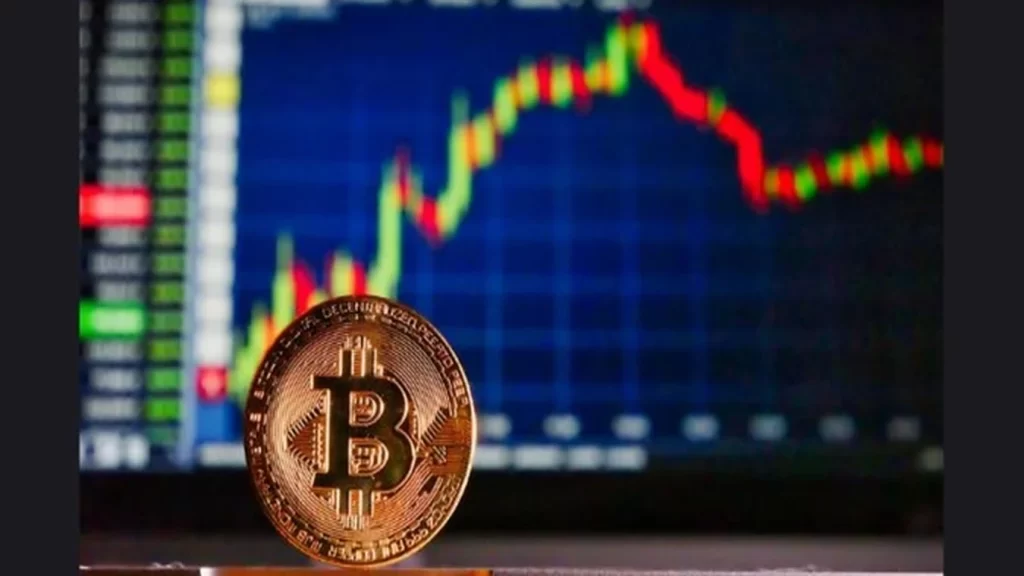
According to Mark Nuvelstijn, the CEO of Bitvavo, the looming Bitcoin mining reward halving in 2024 may not necessarily trigger a supply shock in the market due to the dynamics of supply and demand.
Nuvelstijn, who co-founded the Netherlands-based cryptocurrency exchange, shared his insights on the state of the Bitcoin market during the European Blockchain Convention in Barcelona.
Nuvelstijn’s perspective is grounded in the idea that as demand for Bitcoin grows, so does its price. He noted that this price increase will continue until it reaches equilibrium with demand.
Consequently, he is optimistic that exchanges like Bitvavo will be able to meet the demands of traders, as they act as intermediaries matching buy and sell orders.
In discussing Bitcoin exchange-traded fund (ETF) applications filed in the United States, Nuvelstijn highlighted the increasing attention and interest in the cryptocurrency market.
He pointed out that the recent substantial surge in the Bitcoin price, up by 20% to 30% over two weeks, is indicative of this growing interest. Bitvavo has also witnessed a surge in web traffic, customer visits, and app usage, resulting in an influx of new customers.
Nevertheless, the CEO emphasized that this is still a pre-event, as the ETF approvals have not materialized yet.
READ MORE:3 Best Cloud Mining Platforms 2023 (Earn Money at Home)
Bitvavo, primarily focused on the Netherlands and Belgium, has plans for expansion into other European jurisdictions such as France, Spain, and Italy.
Nuvelstijn anticipates that the European Union’s Markets in Crypto-Assets (MiCA) regulation will play a pivotal role in advancing market maturity and facilitating cross-border business operations.
MiCA is expected to harmonize regulations across European countries, simplifying the licensing process and promoting a more conducive environment for crypto and financial services.
Additionally, Nuvelstijn sees MiCA as a catalyst for greater integration between traditional financial services and cryptocurrency companies, predicting a blending of business models in the financial sector.
Furthermore, a report from a Standard Chartered analyst in July 2023 suggests that the rising institutional demand for Bitcoin may drive its price to approximately $120,000 by the end of the year.
This increase is attributed to enhanced mining profitability, reducing the necessity to sell newly mined coins.
As Bitcoin’s ecosystem continues to evolve, the industry remains dynamic, with market participants like Bitvavo adapting to meet the evolving demands of the crypto market.
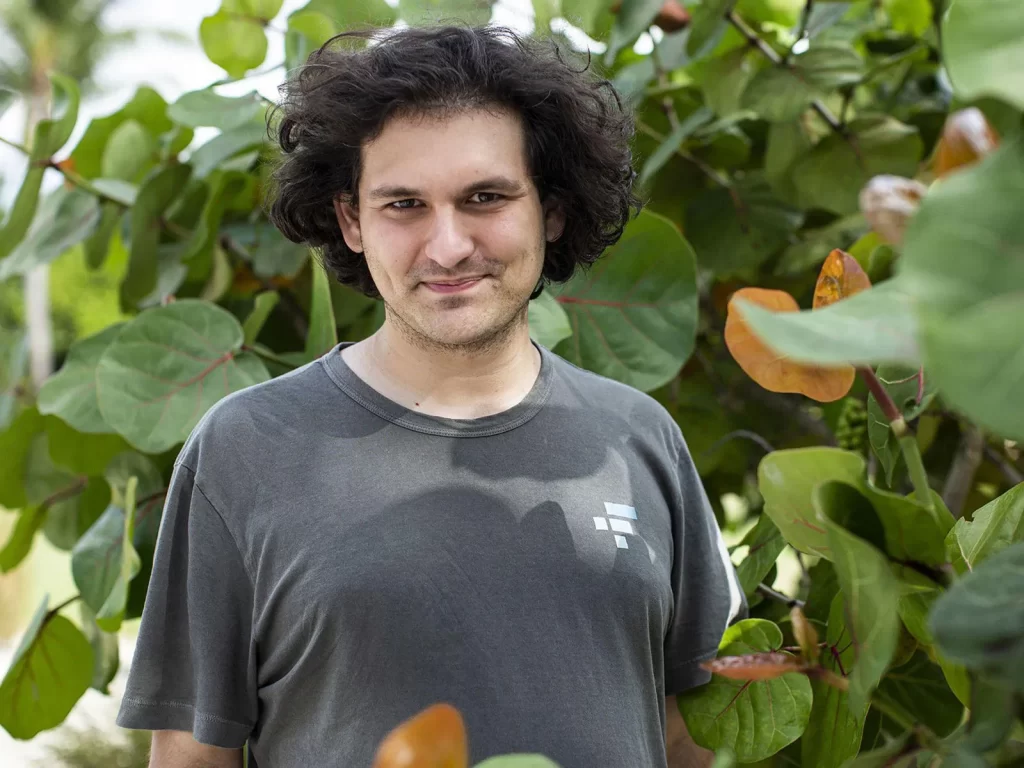
Former FTX CEO Sam Bankman-Fried’s legal team has once again appealed to the presiding judge, Judge Lewis Kaplan, in a bid to alter the jury instructions in his ongoing legal case.
The defense attorneys have specifically requested that the jury take into account the role of English law in shaping FTX’s terms of service.
In their proposal to Judge Kaplan, the defense team argues that in order for misappropriation to be established, there must have existed a trust, fiduciary, or similar relationship between FTX and its customers.
However, they highlight that FTX’s terms of service have explicitly stated that no such relationship existed between the company and its users.
The defense attorneys articulated their argument as follows: “Under English law, the Terms of Service do not create a trust relationship or similar fiduciary relationship between FTX and its customers.
Nor, under English law, do any representations made after a customer agreed to the Terms of Service create a trust relationship or similar fiduciary relationship.”
READ MORE: El Salvador Poised to Emerge as the Singapore of the Americas
They emphasized that even if a customer subjectively expected, understood, or believed in such a relationship, it does not legally create one under English law.
To bolster their case, the defense team cited precedents from various cases in the United Kingdom, underscoring the consistency of English law in not recognizing implied trust or fiduciary relationships based solely on subjective expectations.
Throughout the course of the case, Bankman-Fried’s legal representatives have made numerous requests to the judge, including appeals for early bail before the trial due to insufficient amenities for adequate preparation.
However, most of these requests have been denied by the court.
Sam Bankman-Fried, the former CEO of FTX, currently faces multiple charges related to fraud and misappropriation of customer funds for personal expenses.
Bankman-Fried has consistently maintained his innocence throughout the trial, vehemently denying any misuse of funds and asserting that he did not defraud his customers.
Additionally, he has faced previous allegations of witness tampering in connection to the ongoing legal proceedings.
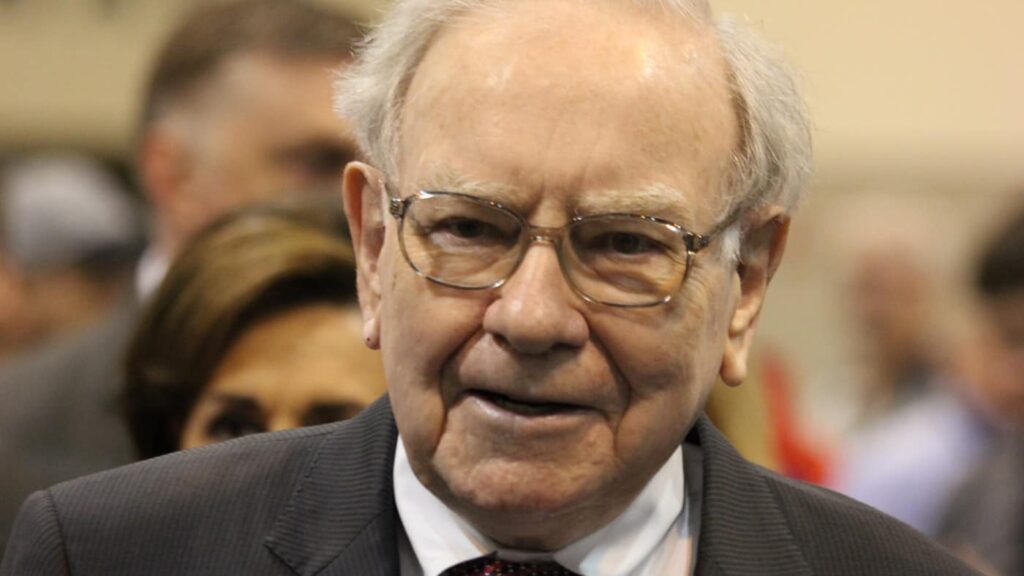
Warren Buffett, often critical of cryptocurrencies like Bitcoin, finds himself profiting from his investment in a crypto-friendly bank, Nu Holdings, in 2023.
The “Oracle of Omaha” acquired 107 million shares of Nu Holdings, the parent company of Nubank, a Brazil-based fintech company known for its crypto-friendly approach.
Berkshire Hathaway, Buffett’s firm, made two significant investments in Nu Holdings in 2021, totaling $750 million.
As of the second quarter of 2023, Berkshire Hathaway has not sold any of its Nu shares, and the investment has grown to approximately $879.50 million, despite peaking at over $1 billion in February 2022.
Nubank’s crypto-friendly reputation stems from divisions that provide crypto-related services to over 1.35 million users.
This indirect exposure to the cryptocurrency industry includes Easynvest, a trading platform offering a Bitcoin exchange-traded fund (ETF), and Nubank, a digital financial services platform that facilitates BTC and ETH trading.
READ MORE: Former FTX CEO Sam Bankman-Fried Testifies on Relationship and Political Donations in Trial
Nubank also launched a loyalty token on the Polygon blockchain and allocated 1% of its cash holdings to Bitcoin in May 2022, emphasizing its belief in Bitcoin’s potential to disrupt financial services in the region.
Nubank is the largest fintech bank in Latin America, boasting over 80 million customers in Brazil.
In terms of stock performance, Nu Holdings has outperformed other top holdings in Buffett’s portfolio, such as Amazon and Apple, which have seen gains of 54.65% and 36%, respectively.
Apple represents a significant portion of Berkshire Hathaway’s investment portfolio, constituting approximately 45% of its $354 billion portfolio as of September 2023.
Nu Holdings’ stocks have also outperformed Berkshire Hathaway’s stock, which has risen by 9.25% year-to-date.
Remarkably, in 2023, Bitcoin’s price performance has finally caught up with Nu Holdings’ stock, both experiencing a 106% increase year-to-date, coinciding with Bitcoin’s decoupling from the stock market in October.
While some view this as a bullish sign, others attribute Bitcoin’s recent price gains to optimism surrounding Bitcoin ETFs.
Historical data has shown a close correlation between Bitcoin and the stock market, and the recent “decoupling” may be driven by hopes for ETF approval.
However, some caution that a significant stock market downturn could bring Bitcoin back to earth, highlighting the complex interplay between traditional financial markets and the cryptocurrency world.
Bastion, a recently established cryptocurrency startup founded by former executives from Andreessen Horowitz (a16z), has achieved a significant milestone by obtaining two Money Transmitter Licenses (MTL) within the United States.
On October 31, Bastion proudly announced that it had successfully secured MTLs in New Hampshire and Arkansas, marking the first licenses the company has acquired.
These licenses, officially granted by the New Hampshire Banking Department and Arkansas Securities Department, empower Bastion to provide services related to fungible digital assets within these states.
The firm also revealed that it has pending applications for MTLs in various other U.S. states, indicating its intention to expand its operations nationwide.
With these licenses in hand, Bastion gains the ability to engage in activities such as the sale or issuance of payment instruments, stored value, prepaid access, and the receipt of money and digital currency to facilitate transactions with individuals and businesses in New Hampshire and Arkansas.
You can find further details about these licenses on the Nationwide Multistate Licensing System (NMLS) official website.
READ MORE: El Salvador Poised to Emerge as the Singapore of the Americas
This accomplishment comes a mere month after Bastion’s initial launch in September 2023, underscoring the company’s dedication to providing U.S. businesses with compliant exposure to digital assets like Bitcoin.
Bastion’s genesis can be attributed to two former a16z crypto division executives, Nassim Eddequiouaq and Riyaz Faizullabhoy, who embarked on a mission to integrate Web3 infrastructure with their existing enterprise technologies.
The company’s launch coincided with a successful $25 million seed funding round, spearheaded by a16z crypto.
Co-founder Nassim Eddequiouaq expressed his enthusiasm, stating, “The acquisition of MTLs in New Hampshire and Arkansas is a consequential step in realizing our long-term vision.”
He emphasized that this achievement is a testament to Bastion’s strength and rapid progress, and he looks forward to further expanding the company’s operational footprint.
By securing these MTLs, Bastion joins a growing list of cryptocurrency-related firms that have obtained such licenses, including Alchemy Pay, Coinbase, Block (formerly Jack Dorsey’s Square), MoonPay, and the bitFlyer exchange.
Additionally, in July 2023, Elon Musk’s payment subsidiary, X (formerly known as Twitter), reportedly received its first MTLs in Michigan, New Hampshire, and Missouri.
Around 25 individuals have allegedly fallen victim to a cryptocurrency heist amounting to a staggering $4.4 million, compromising 80 wallets.
The breach, which transpired in 2022, was attributed to vulnerabilities in the password storage software, LastPass.
On October 27, in a Twitter post, a pseudonymous on-chain researcher known as ZachXBT and MetaMask developer Taylor Monahan jointly revealed their tracking of the illicit fund movements across the compromised wallets.
Monahan pointed out that most of the victims had been long-standing users of LastPass and admitted to storing their crypto wallet keys or seeds within the compromised software.
The heist, which unfolded on October 25, 2023, alone resulted in the siphoning of approximately $4.4 million from over 25 victims who had fallen prey to the LastPass hack.
The severity of the situation prompted a stern warning from ZachXBT, urging anyone who may have entrusted their seed phrases or keys to LastPass to immediately transfer their crypto assets to more secure storage.
This troubling incident traces its origins back to December 2022 when LastPass publicly disclosed that an assailant had exploited information pilfered during a breach in August.
This data breach allowed the attacker to target a LastPass employee, acquiring their credentials and successfully decrypting stored customer data.
READ MORE; Bitcoin Holds Steady at $34,000 Amidst Growing Macro Asset Comparisons
Among the stolen assets was a backup of encrypted customer vault data, with LastPass sounding the alarm that this data could be decrypted if the attacker engaged in a brute-force guessing of the account’s master password.
The repercussions of this breach became shockingly evident when cybersecurity journalist Brian Krebs reported in September that several LastPass customer vaults had been seemingly breached, leading to the theft of over $35 million in crypto from approximately 150 victims.
The fallout from this security debacle extended into January when LastPass found itself embroiled in a class-action lawsuit.
The lawsuit, filed by affected individuals, alleged that the August 2022 breach had resulted in the theft of roughly $53,000 worth of Bitcoin (BTC).
In his most recent post, ZachXBT offered a final piece of advice to those who had ever entrusted their wallet seed or private keys to LastPass: “migrate your crypto assets immediately.”
The urgency of his words underscores the critical importance of safeguarding one’s digital assets in the face of relentless cyber threats.
The CEO and founder of Mintable, Zach Burks, has raised concerns about the United Kingdom’s approach to regulating nonfungible tokens (NFTs).
In a recent interview with Cointelegraph, Burks expressed his belief that a recent report from a U.K. parliamentary committee exaggerates the role of NFTs in copyright infringement and fails to recognize their broader potential beyond volatile digital images.
Burks highlighted the transition phase that NFTs are currently undergoing, shifting away from the speculative craze of profile picture NFTs (PFPs) towards more practical applications by brands across various domains.
He argued that NFT platforms should prioritize copyright protections and intellectual property rights for artists, much like Mintable’s own IP protection algorithm.
However, he emphasized that these issues are not unique to NFTs and are prevalent across the broader internet landscape.
He pointed out that established internet giants like Google have grappled with combating copyrighted material on platforms like YouTube, despite their vast resources.
Burks, who regularly communicates with U.K. government officials about NFTs, urged regulators to adopt a more nuanced perspective on NFTs and recognize their diverse applications beyond artwork and finance.
READ MORE: 3 Best Cloud Mining Platforms 2023 (Earn Money at Home)
In his view, NFTs represent a versatile technology that can be used for various purposes, including managing car records, property records, bank settlement documents, supply chain systems, and more.
He likened NFTs to websites, subject to the relevant laws based on their specific use cases.
Burks criticized the U.K. committee’s suggestion to implement the EU 17 copyright directive for NFTs, emphasizing that such a broad regulatory umbrella might not suit the multifaceted nature of NFT technology.
He cautioned against applying overarching regulatory frameworks that do not consider the unique characteristics of each NFT use case.
Instead, Burks advocated for an approach similar to Singapore, where regulators assess NFTs based on their specific functions and purposes. This approach allows for tailored regulation, treating NFTs as either securities or illicit goods depending on their actual use cases.
In conclusion, Burks urged the U.K. government to adopt a more flexible and case-specific approach to NFT regulation, acknowledging the technology’s potential beyond digital art and the importance of protecting intellectual property rights while avoiding overly broad regulations.

The Dubai Virtual Assets Regulatory Authority (VARA) has recently granted a Virtual Asset Service Provider (VASP) license to the cryptocurrency wallet company known as Backpack.
This development marks the inception of Backpack Exchange, a platform exclusively designed for crypto exchange services within the Dubai market.
Notably, the VARA license confines Backpack to offering only crypto exchange services and doesn’t encompass their other virtual asset-related products and services.
The newly launched Backpack Exchange boasts cutting-edge features, including zero-knowledge (ZK) proof-of-reserves, multi-party computation (MPC) for secure custody, and low-latency order execution.
In a significant revelation, it was disclosed that Backpack Exchange had successfully acquired operational licenses in multiple jurisdictions worldwide over the preceding five months.
While the flagship Backpack Wallet remains an unregulated product, it is strategically engineered to facilitate users’ transition from fiat to on-chain applications in the future.
Armani Ferrante, the CEO and co-founder of Backpack, emphasized his commitment to bringing greater transparency to crypto exchanges and eliminating opacity.
READ MORE: El Salvador Poised to Emerge as the Singapore of the Americas
He outlined the company’s vision, stating, “Using cryptographic techniques like zk-proofs, MPC, and state machine replication, Backpack Exchange hopes to raise the bar for transparency and compliance to demonstrate the best this technology has to offer. Don’t trust, verify.”
Existing users of Backpack and Mad Lads will have exclusive access to Backpack Exchange starting from November 2023, with plans to make it accessible to the general public in Q1 2024.
During this period, Backpack intends to introduce various trading functionalities, including derivatives, margin trading, and cross-collateralization, to enhance its service offerings.
As of now, Backpack has not responded to requests for comments from Cointelegraph.
Dubai’s VARA regulator has been actively granting operational licenses to numerous crypto exchanges over the past year, solidifying its reputation as a crypto-friendly jurisdiction.
In February 2023, the regulator introduced new guidelines for VASPs operating in the emirate, mandating adherence to marketing, advertising, and promotion regulations.
Violators will face fines ranging from 20,000 UAE dirhams ($5,500) to 200,000 dirhams ($55,000), with repeat offenders potentially subject to fines as high as 500,000 dirhams ($135,000).