


Bitcoin remains just below its all-time high of over $124,000, and institutional investors are closely watching its movements.
Strategy, the largest corporate holder of Bitcoin, has signaled plans to expand its holdings further even as the cryptocurrency consolidates.
Co-founder Michael Saylor recently indicated that more purchases are on the horizon.
The company already added 155 BTC on Monday for $18 million, lifting its total stash to 628,946 BTC worth more than $74.2 billion.
Strategy’s Investment Record
Strategy has become the go-to proxy for funds and retail investors who cannot or do not want to hold Bitcoin directly.
Its Bitcoin-first strategy has made the company one of the most prominent players in the digital asset space.
According to SaylorTracker, the firm is sitting on unrealized gains exceeding $28 billion, representing a return of more than 60% on its investment.
This strong performance underscores the success of its long-term accumulation model.
Accelerated Purchases Since 2024
Strategy’s Bitcoin buying spree accelerated after the U.S. presidential election in November 2024.
Since then, the firm has acquired 376,726 BTC in just nine months.
For perspective, it took more than four years to accumulate 252,220 BTC before this aggressive phase of buying began.
This shift shows how political and market conditions have influenced corporate treasury strategies.
Saylor’s Focus on Bitcoin
Despite the rise of companies adopting altcoin treasury strategies, Saylor remains firmly committed to Bitcoin.
“I still think the vast majority of the capital flowing into the space is flowing into Bitcoin,” he told Bloomberg in August.
“We’ve gone from about 60 companies capitalizing on Bitcoin to 160 companies just in the past six months; so, I’m laser-like focused on Bitcoin,” he added.
Saylor has repeatedly dismissed concerns about diversification, arguing that Bitcoin’s position as the dominant cryptocurrency gives it a unique moat.
Institutional Interest and Market Impact
Strategy’s accumulation strategy has positioned it as a cornerstone of Bitcoin’s corporate adoption.
Institutional funds unable to buy BTC directly often use Strategy shares as a proxy investment.
Retail investors also favor the stock as an alternative to self-custodying crypto.
The company’s commitment has sparked a wave of imitators, though none have matched its scale.
According to BitcoinTreasuries.NET, Strategy’s holdings surpass the combined total of the next 10 largest Bitcoin treasury firms.
This dominance has given the company significant influence in the sector.
Strategy’s Market Legacy
Since it began accumulating Bitcoin in 2020, Strategy’s share price has risen nearly 2,600%.
This growth has drawn a wide spectrum of investors, from institutional funds to everyday traders.
While Bitcoin’s future remains uncertain, Strategy’s conviction has created a template for how corporations can leverage digital assets.
With more purchases on the horizon, the company shows no signs of slowing down.
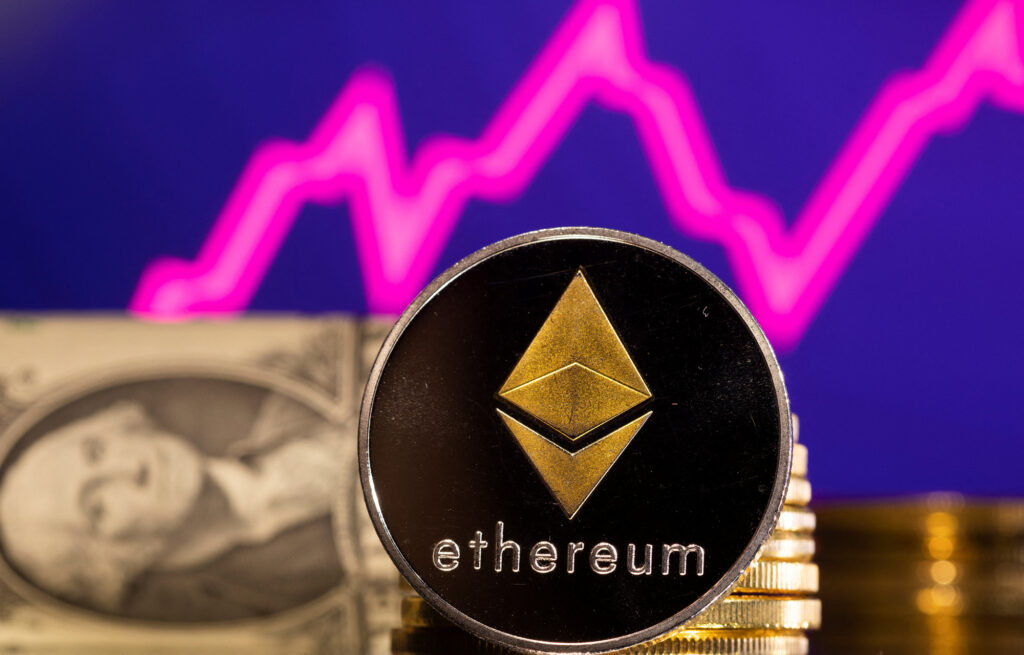
Institutional demand for Ether (ETH) continues to accelerate, with two entities acquiring a combined $882 million worth of the cryptocurrency in recent days.
Leading the wave of purchases is BitMine Immersion Technology, a publicly listed Bitcoin mining firm. In a matter of hours, the company acquired 106,485 ETH, valued at $470.5 million. These acquisitions, tracked by blockchain analytics firm Lookonchain, bring BitMine’s total holdings to 1.29 million ETH—worth approximately $5.75 billion.
The transactions reveal that BitMine relied on large over-the-counter deals and transfers from major intermediaries, including Galaxy Digital, FalconX, and BitGo.
Whale Activity Adds to Market Momentum
Adding to the surge, an unidentified whale accumulated 92,899 ETH—around $412 million—over a four-day period. On-chain data shows the entity created three new wallets before withdrawing funds from Kraken, indicating a strategy to secure assets for long-term storage.
This aligns with a broader trend of whales aggressively accumulating Ether during its recent rally. Last week, one entity purchased $1.3 billion worth of ETH across multiple wallets, setting a new benchmark for whale accumulation.
Corporate Capital Raises Highlight Market Confidence
The institutional push has been supported by major fundraising efforts. BitMine Immersion Technology is in the process of raising $24.5 billion through an at-the-market stock offering, while SharpLink announced the completion of a $389 million raise via common shares.
These developments reflect the growing acceptance of Ether as a corporate treasury asset, following a similar trajectory once seen with Bitcoin.
Banks Boost Long-Term ETH Forecasts
The intensified institutional activity has prompted traditional financial institutions to raise their projections for Ether’s price. Standard Chartered recently lifted its 2025 target from $4,000 to $7,500.
The bank also provided a long-term roadmap, forecasting ETH to hit $12,000 by 2026, $18,000 by 2027, and $25,000 by 2028. Analysts cited stronger institutional adoption and stablecoin growth under clearer U.S. regulations as primary drivers.
Early Profit-Taking Emerges
Despite this bullish momentum, signs of profit-taking have started to appear. The whale group known as “7 Siblings” sold 19,461 ETH—worth $88.2 million—within a single day at an average price of $4,532.
The Ethereum Foundation also took part, selling 2,795 ETH worth approximately $12.7 million through two transactions earlier in the week.
While these moves signal caution at higher price levels, the broader institutional inflows suggest long-term confidence in Ether’s role as a key digital asset.

Venture capital firm Digital Currency Group (DCG) has launched fresh legal action against two of its subsidiaries, intensifying the ongoing fallout from the collapse of Three Arrows Capital (3AC).
In a filing to the US Bankruptcy Court for the Southern District of New York, DCG alleged that Genesis Global Capital and Genesis Asia Pacific profited unfairly from a $1.1 billion promissory note tied to the 2022 default of 3AC.
The complaint argues that instead of suffering losses, the Genesis entities received “hundreds of millions of dollars” in gains, creating an obligation to return overpayments to their parent company.
Background to the Promissory Note
DCG issued the 10-year note in June 2022 to cover a potential equity shortfall in Genesis Asia Pacific following 3AC’s failure to meet obligations.
At the time, concerns loomed that the collapse of 3AC — one of Genesis’ largest borrowers — would trigger significant liquidity issues.
However, according to DCG, cryptocurrency markets later rebounded, increasing the value of collateral held against the loans.
That included shares in Grayscale’s Bitcoin Trust, which surged alongside Bitcoin’s recovery.
DCG claimed Genesis not only avoided financial damage but ultimately profited from 3AC’s collapse.
“[T]he incremental amounts realized by Genesis after issuance of the Note were … far more than sufficient to overcome the prior $1.1 billion collateral shortfall — and, on information and belief, allowed Genesis to profit from [3AC]’s default by recovering nearly $2.8 billion on the original $2.36 billion in [3AC] Loans,” the filing said.
Genesis Pushes Back
Genesis, however, has rejected the latest complaint, accusing DCG of attempting to rewrite history.
“DCG’s unfounded, haphazard and convenient about-face to withhold 3AC distributions is meritless,” said Luke Barefoot, partner at Cleary Gottlieb and counsel to Genesis.
“It flatly contradicts the written agreements, DCG’s representations to the bankruptcy court, and the fact that DCG already handed over $100M+ in distributions.”
This legal clash follows earlier suits filed by Genesis against DCG, its affiliates, and CEO Barry Silbert.
In May, Genesis sought $3.3 billion in damages, accusing its parent company of fraudulent transfers and insider enrichment in the lead-up to bankruptcy.
The Wider Market Context
The 3AC default was one of several shocks that rattled crypto markets in 2022.
The collapse of the Terra ecosystem triggered a cascade of failures, leaving investors with heavy losses and exposing vulnerabilities across the industry.
That same year, FTX — once one of the largest exchanges — imploded in spectacular fashion, with executives later indicted for fraud.
DCG’s filing referenced the wider turmoil, noting that even without 3AC’s collapse, Genesis would have struggled to survive.
“Even had [3AC] not defaulted in June 2022, [Genesis Global Capital] would not have had sufficient capital to withstand the unexpected and devastating market rout that followed the collapse of FTX in November 2022,” the filing stated.
Genesis halted withdrawals that month before officially declaring bankruptcy on January 19, 2023.
Restructuring and Recovery
After months of proceedings, Genesis completed its restructuring in August 2024.
The plan involved distributing approximately $4 billion to creditors and other affected parties.
While this was seen as a significant step toward closing one of the darkest chapters in crypto lending, disputes between Genesis and DCG remain unresolved.
DCG is now seeking more than $105 million plus interest from its subsidiaries, arguing the terms of the promissory note require repayment given the profits made from 3AC’s collateral.
Ongoing Legal Battle
The latest filing highlights the complex financial web left by crypto’s 2022 crash, with companies still grappling over responsibility for billions lost and gained.
For DCG and Genesis, the courtroom has become the battleground for settling questions of accountability.
The outcome of this case could have major implications, not just for the firms involved but also for creditors seeking clarity on how recoveries from failed borrowers are handled.
With tensions high, the dispute underscores how the ripple effects of 3AC’s collapse and the wider market downturn continue to haunt the sector.
Coinbase has completed its acquisition of Deribit, the world’s largest crypto options trading platform by volume, marking another significant step in the company’s efforts to broaden its global presence.
The $2.9 billion deal, first announced in May, officially closed this week.
Deribit recorded over $1 trillion in trading volume in 2024, drawing a dedicated base of institutional and sophisticated traders.
Coinbase said the platform’s strong client loyalty and market leadership made it a strategic addition to its expanding suite of services.
Building a One-Stop Crypto Hub
Coinbase has been steadily growing its offerings to serve diverse segments within the crypto sector.
The exchange now provides a perpetual futures platform, prime brokerage services, retail spot trading, institutional lending, and secure asset custody.
By integrating Deribit’s operations, Coinbase aims to bolster its derivatives capabilities while reinforcing its ambition to become a one-stop destination for digital asset services.
Despite the milestone, Coinbase’s stock slipped by roughly 2.5% in intraday trading following the deal’s closure.
This minor dip follows a broader pattern of market adjustments after major acquisitions.
Six Acquisitions in 2025
The Deribit purchase is one of six acquisitions made by Coinbase so far in 2025.
In January, the exchange acquired Spindle, a blockchain-based advertising platform designed to help creators boost their visibility online.
The same month, Coinbase brought on the team behind Roam, a blockchain-based web browser project.
In July, it added Liquifi, a platform focused on supporting early-stage token startups with management tools and resources.
These deals reflect Coinbase’s strategy of expanding into complementary areas of blockchain and crypto infrastructure.
Industry-Wide Expansion Trends
Coinbase’s aggressive growth mirrors a wider trend among major crypto exchanges branching into adjacent markets.
Kraken, for instance, launched tokenized stock trading for non-US residents in May, tapping into the emerging tokenized securities space.
The company also offers crypto futures, staking, asset custody, and over-the-counter services for institutions.
Robinhood has been blurring the line between traditional and digital finance by providing mixed-asset trading and announcing a layer-2 blockchain for tokenized stock trading in Europe.
Meanwhile, Binance continues to diversify its portfolio with retail and institutional offerings, including options, futures, and token launch platforms.
Since 2018, Binance has been actively acquiring crypto wallets, blockchain development teams, exchanges, and analytics firms.
Coinbase’s move for Deribit underscores the competitive race among major exchanges to expand capabilities and secure market share in the evolving global crypto economy.

Thumzup Media Corporation has announced plans to dramatically expand its presence in the cryptocurrency sector following a $50 million funding round.
The firm, which began as a social media marketing business, is now pivoting toward large-scale crypto mining and targeted blockchain investments.
New Strategy and Investments
The company revealed it will use part of the funding from its $10-per-share offering to develop “state-of-the-art cryptocurrency mining infrastructure.”
It is currently engaging with mining technology providers to accelerate the buildout.
Thumzup also confirmed it now holds 19.1 Bitcoin, having first entered the crypto market in early January.
This move aligns with a trend among public companies seeking to bolster their share value through cryptocurrency holdings.
Trump Family Connection
A notable shareholder in Thumzup is Donald Trump Jr., who purchased 350,000 shares in July for nearly $3.3 million, according to regulatory filings.
The purchase adds to the Trump family’s growing presence in the crypto space.
Bitcoin Price Surge
Thumzup’s expansion comes as Bitcoin hit an all-time high of $124,128 before slightly cooling to $123,683.
Market optimism has traders eyeing a potential push above $125,000.
Thumzup has also outlined plans to diversify its holdings to include Dogecoin, Litecoin, Solana, XRP, Ether, and USDC, with approval to hold up to $250 million in crypto.
Stock Market Performance
Shares in Thumzup rose 7.62% in after-hours trading on Wednesday to $10.87, recovering from earlier losses.
The stock is up nearly 195% in 2025, with its latest all-time high of $15.46 recorded on August 8.
However, it faced a sharp drop earlier in the week after announcing a preferred stock offering, which was later amended.
Global Crypto Holdings Trend
Other firms are also increasing their Bitcoin reserves despite the recent price surge.
Sweden’s H100 Group recently bought 45.8 BTC, bringing its total to 809.1 BTC — the fourth-largest holding among European public companies.
The move cements the ongoing trend of corporate Bitcoin accumulation, even at record-high prices.

Standard Chartered has sharply increased its Ether price target for 2025 to $7,500, up from a previous $4,000, citing rising institutional demand and regulatory clarity on stablecoins.
The bank’s report highlighted that Ether ETFs and corporate treasuries have bought 3.8% of all ETH in circulation since early June.
This pace is nearly double Bitcoin’s fastest rate of institutional accumulation during the 2024 US election period.
Catalysts for Growth
The bank said two major developments have boosted sentiment: strong industry engagement from the Ethereum Foundation and Etherialize, and Ethereum co-founder Vitalik Buterin’s plans to increase layer-1 throughput tenfold.
This would allow more high-value transactions to settle on the main chain while smaller ones move to layer-2 networks such as Arbitrum and Base.
Another driver is the GENIUS Act, passed in July, which sets a legal framework for stablecoins.
Stablecoins now account for 40% of blockchain fees, with over half issued on Ethereum.
Standard Chartered expects the stablecoin market to grow from its current size to $2 trillion by 2028, significantly increasing Ethereum’s usage.
Market Outlook
The bank forecasts Ether will break its previous all-time high in Q3 2025 and outperform Bitcoin, with the ETH-BTC ratio rising from 0.036 to 0.05.
Its long-term projections put ETH at $12,000 in 2026, $18,000 in 2027, and $25,000 by 2028.
At present, ETH trades at $4,692 — just below its 2021 record of $4,891.
Short-Term Market Moves
With Ether close to its all-time high, some large holders are taking profits.
The “7 Siblings” Ethereum whale group recently sold $88.2 million worth of ETH, unloading 19,461 coins at an average of $4,532.
Despite this selling pressure, Standard Chartered expects long-term demand drivers to outweigh short-term volatility.
Ethereum’s recent rally has prompted a wave of profit-taking among short-term holders, as the cryptocurrency continues to hover around the $4,300 mark.
On-chain analytics firm Glassnode reported that traders holding Ether for less than 155 days have been cashing out at a faster pace than long-term investors.
The firm’s data shows that the seven-day simple moving average of realized profits is approximately $553 million per day, with the majority of those gains coming from short-term holders.
“Short-term investors are realizing far more gains, driving the current wave,” Glassnode noted in a post on X.
Long-Term Holders Remain Steady
While short-term traders appear eager to lock in profits, Glassnode found that long-term holders are taking gains at levels comparable to December 2024.
This suggests that seasoned investors are not rushing to exit their positions, despite the recent surge.
Profit realization across the market remains roughly 39% lower than the peak levels recorded last month, when Ether traded near $3,500.
Price Performance and Market Sentiment
Ether has gained 43% over the past month, currently trading around $4,283 according to Nansen.
However, it still sits about 12.7% below its all-time high of $4,828, reached in November 2021.
Some traders remain cautious about a near-term push toward those highs.
Data from CoinGlass indicates that approximately $2.23 billion in positions could face liquidation if the price approaches $4,700.
The hesitancy stems in part from earlier struggles this year, when Ether dipped below $2,000 in March and several rally attempts faltered before the latest climb.
High-Profile Moves and Key Levels
On Saturday, BitMEX co-founder Arthur Hayes revealed he had bought back into Ether, just a week after selling $10.5 million worth when the token traded at $3,507.
Since Sunday, Ether has crossed above $4,300 multiple times, only to fall back below.
This level has become a focal point for traders watching for signs of a sustained breakout.
Institutional Interest and FOMO Risks
Institutional activity in Ethereum has been growing, with companies holding a combined 3.04 million ETH in their treasuries — worth about $13 billion.
Still, some analysts warn that public announcements of large institutional purchases can spark short-term volatility.
Santiment analyst Brian Quinlivan said that such news “can trigger FOMO that may briefly stall or even push Ether’s price down.”
The coming weeks will reveal whether Ethereum can maintain momentum or if profit-taking pressure will drive a pullback.

Cryptocurrency investment products attracted $572 million in inflows last week, rebounding after the prior week saw the end of a record-breaking 15-week inflow streak totaling $27.8 billion.
The data, published by European crypto asset manager CoinShares on Monday, shows that global crypto exchange-traded products (ETPs) benefited from a market recovery that pushed both Bitcoin and Ether prices higher.
Ether crossed the $4,000 mark for the first time since December 2024, while Bitcoin climbed back above $120,000.
Year-to-Date Flows Hit All-Time High
With last week’s inflows, total year-to-date (YTD) investment into crypto ETPs reached a record $30.7 billion.
Assets under management (AUM) also hit a historic peak of $226 billion.
These figures reflect renewed investor optimism following a volatile start to August.
401(k) Policy Shift Boosts Sentiment
James Butterfill, CoinShares’ head of research, attributed much of the week’s late inflows to a major policy announcement in the United States.
“In the latter half of the week, however, we saw $1.57 billion of inflows, likely spurred by the government’s announcement permitting digital assets in 401(k) retirement plans,” Butterfill said.
Earlier in the week, however, the market saw $1 billion in outflows, which he linked to concerns about slowing economic growth after weak U.S. payroll data.
Ether ETPs Lead the Market
Ether-based ETPs continued to outperform, bringing in nearly $270 million in inflows last week.
“This pushed year-to-date inflows to a new record of $8.2 billion, while recent price gains have driven total assets under management to an all-time high of $32.6 billion, up 82% so far this year,” Butterfill said.
The surge follows strong July performance, during which ETH-based products also led the market.
Bitcoin ETPs Recover After Outflows
Bitcoin ETPs saw $265 million in inflows, ending a two-week streak of outflows.
This recovery suggests that investors are regaining confidence in BTC’s near-term trajectory, particularly as institutional adoption deepens.
Altcoins Attract Investor Interest
ETPs tracking Solana (SOL), XRP, and Near Protocol (NEAR) also saw meaningful inflows.
Solana products brought in $21.6 million, XRP attracted $18.4 million, and NEAR saw $10.1 million in new investments.
BlackRock Approaches $100B in Crypto AUM
Among issuers, BlackRock’s iShares crypto ETFs led the way with $294 million in inflows.
While that’s down 61% from the prior week’s $749 million, the funds are now close to the $100 billion AUM milestone, ending Friday at $98.9 billion.
Grayscale Investments, the second-largest issuer with $35.4 billion in AUM, recorded $87 million in inflows.
Bitwise posted $95 million, while Fidelity Investments experienced the largest issuer-level outflows, losing $55 million.
Market Outlook
The return of inflows across multiple asset categories signals improving sentiment ahead of key macroeconomic events this quarter.
With U.S. policy shifts favoring broader crypto integration into retirement accounts, analysts expect ETP inflows to remain strong in the near term.

Bitcoin (BTC) approached $119,000 ahead of a key weekly close, sparking expectations of a strong start to the week among traders.
Weekend trading saw BTC/USD hit $118,760 on Bitstamp, setting new August highs.
Data from CoinGlass showed $350 million in crypto liquidations over 24 hours.
Support Levels and Resistance Targets
Analyst Rekt Capital noted that BTC is close to reclaiming $117,200 as a support level.
Popular trader BitBull said a 10% move higher could trigger $18 billion in short liquidations, potentially pushing BTC above $120,000.
He predicted a brief pullback early in the week before another push higher.
CME Gap Considerations
Investor Ted Pillows pointed out a CME gap around $116,500, suggesting BTC might dip to fill it before rallying to a new all-time high.
Daan Crypto Trades described weekend price action as “choppy” and expects BTC to take the spotlight if it breaks $120,000.
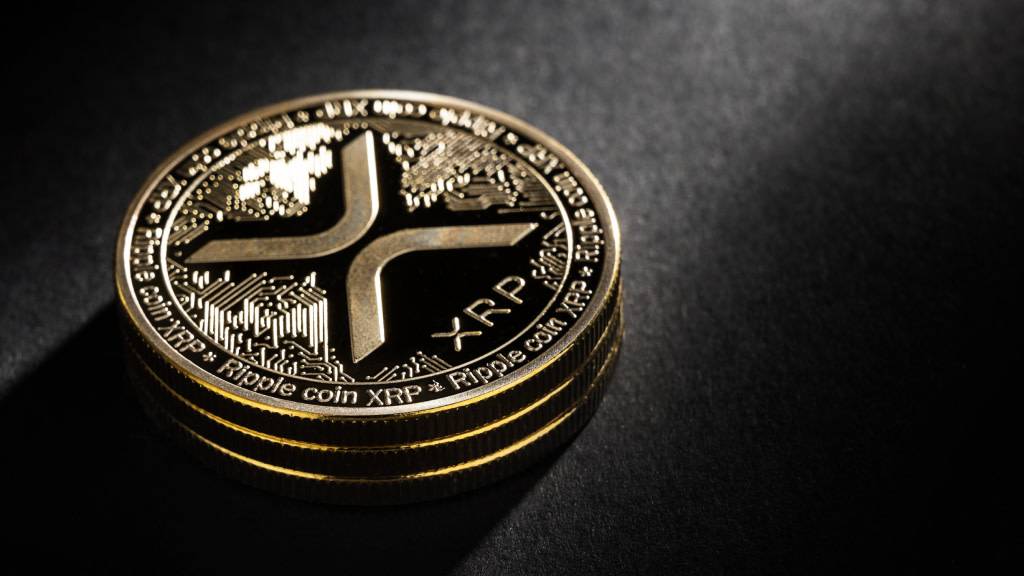
XRP has jumped more than 10% since Thursday, trading at $3.29 after Ripple and the U.S. Securities and Exchange Commission (SEC) agreed to dismiss their respective legal appeals.
The move brings an end to a multi-year legal battle that has weighed heavily on XRP’s market performance.
Market analysts say the resolution has reignited interest among traders and investors.
XRP Futures Activity Surpasses Solana
In the past 24 hours, XRP futures trading volume surged more than 200% to $12.4 billion, surpassing Solana’s $9.6 billion, according to on-chain data from Glassnode.
A sharp rise in futures volume is often linked to heightened speculative trading, particularly after significant news developments.
XRP open interest, reflecting the value of unsettled futures contracts, also increased 15% to around $5 billion.
Glassnode data showed XRP’s daily funding rate at 0.01%, indicating a tilt toward long positions as traders bet on continued price gains.
However, the analytics firm warned that heavy long positioning can magnify downside risks, with overleveraged traders vulnerable to forced liquidations if prices turn lower.
Key Support Levels Identified
Cost basis distribution data highlights the $2.80–$2.82 price range as a critical area of support.
More than 1.70 billion XRP tokens were acquired within this band, suggesting many holders are likely to defend their positions if prices decline.
Market watchers note that such concentrated buying zones can provide strong price floors.
Technical Patterns Point to 35% Upside
XRP’s recent price rally pushed it above the upper trendline of a bull flag formation.
Trading volumes have risen in tandem, supporting the breakout momentum.
Based on traditional chart analysis, the pattern suggests a potential move to over $4.50 — a gain of roughly 35% from current levels — by September or October.
Expectations of a Federal Reserve rate cut in September could further fuel appetite for risk assets, including cryptocurrencies.
Multiple analysts have issued bullish forecasts.
Mikybull Crypto has predicted XRP could climb to between $5 and $8 by the end of 2025, while another analyst, Dom, has projected a price of $10.