


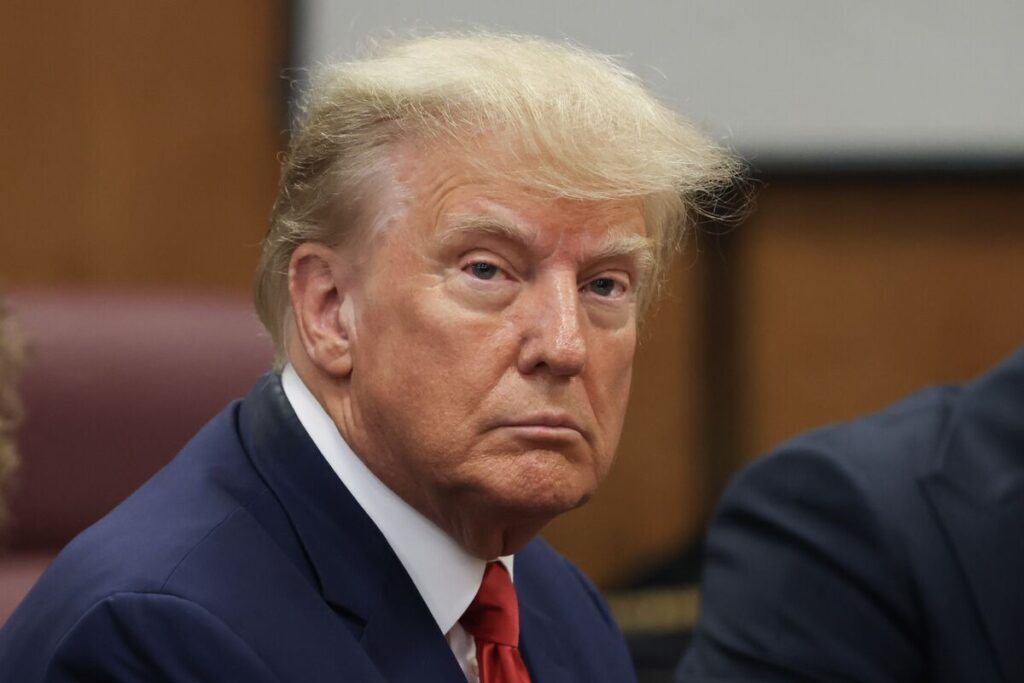
President Donald Trump signed a significant executive order on Thursday, allowing Americans to allocate cryptocurrencies and other alternative assets within their 401(k) retirement accounts and other defined-contribution plans.
The order directs the U.S. Department of Labor to reevaluate existing restrictions on investments such as digital assets, private equity, and real estate in these plans.
The change marks a shift in federal policy and has drawn both enthusiasm and concern from across the financial and crypto communities.
Trillions in Retirement Capital Now in Focus
As of Q1 2025, total U.S. retirement assets stood at $43.4 trillion, according to the Investment Company Institute and the Federal Reserve Board.
Of that, more than $12 trillion came from defined-contribution plans, including $8.7 trillion held in 401(k)s.
With such a massive capital base, even a small allocation to crypto could significantly impact the market.
Crypto Leaders Applaud the Decision
Matt Hougan, Chief Investment Officer at Bitwise, said the executive order could fundamentally reshape the crypto market.
He described the development as the beginning of a “slow, steady, consistent bid” from retirement savings that could lead to “higher returns and lower volatility.”
Hougan also emphasized the suitability of crypto in retirement portfolios, calling it “the best-performing asset class in the world over the past decade.”
Ji Hun Kim, CEO of the Crypto Council for Innovation (CCI), said the executive order signals crypto’s growing acceptance in mainstream finance.
“Americans should have the opportunity and freedom to include these investments within their retirement plans,” Kim stated.
He added that CCI appreciated the administration’s “continued commitment to clear policies” and making the U.S. “the crypto capital of the world.”
Infrastructure and Regulation Take Center Stage
Abdul Rafay Gadit, co-founder of ZIGChain, said the move paves the way for the infrastructure necessary to support tokenized investment products at scale.
He pointed out the increasing regulatory clarity under SEC Chairman Atkins, suggesting that a “unified framework” is starting to emerge.
However, not all reactions were without caution.
Michael Heinrich, CEO of 0G Labs, called the development a “watershed moment” for the industry.
Still, he warned of the dual nature of the shift, saying, “Done right, this could unlock trillions in retirement capital for Bitcoin and other compliant assets. Done poorly, it risks political and financial backlash.”
He stressed that critical implementation details—such as qualifying tokens, custody arrangements, and regulatory safeguards—would determine the success or failure of the initiative.
Bitcoin Seen as Early Beneficiary
Joshua Krüger of the dEURO Association believes Bitcoin will be the first asset to benefit from the change due to its institutional backing.
“Asset managers such as BlackRock, Fidelity and Franklin Templeton are already lined up with corresponding offerings,” he noted.
He said other cryptocurrencies may follow in the medium term, but only after establishing solid regulatory and technical foundations.
Tezos co-founder Arthur Breitman echoed these views, noting that the scale of the U.S. retirement market could help legitimize crypto as an asset class.
While supporting more options for savers, Breitman expressed concerns over misinformed investment choices.
He warned that private assets in retirement accounts often suffer from “high fees, hard-to-determine pricing, and manager manipulation to mask volatility.”
Critics Warn of Financial Risks
Peter Schiff, a long-time critic of crypto, voiced strong opposition to the move.
He argued that allowing crypto in 401(k)s could worsen the already serious U.S. retirement savings gap.
“Most Americans have saved far less than needed to have any hope of retirement,” Schiff posted on X.
“By allowing Americans to gamble what little retirement savings they have in their 401(k)s on Bitcoin and other cryptos, Trump just made this problem much worse.”
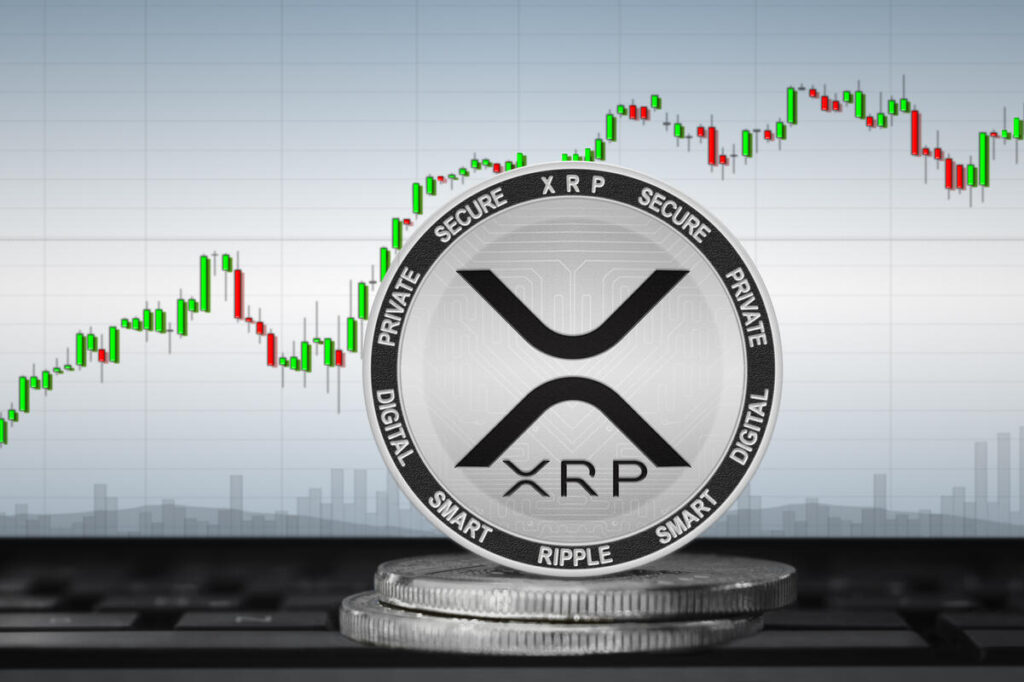
XRP surged past the $3 mark for the first time in over a week, driven by mounting optimism that the U.S. Securities and Exchange Commission (SEC) may soon dismiss its appeal against Ripple Labs.
The token climbed over 4.5% in 24 hours to hit $3.04 on Thursday, according to data from Cointelegraph.
The rebound came amid growing speculation that a resolution to the years-long legal battle between the SEC and Ripple is approaching.
Bill Morgan Predicts Appeal Dismissal
Investor sentiment was further bolstered by legal commentary from Bill Morgan, an attorney closely following the case.
Posting on X, Morgan suggested that the SEC is likely to drop its appeal before the August 15 deadline set by the U.S. Court of Appeals for the Second Circuit.
“Dismissal of the appeals may happen, and is more likely to happen than not, before the 15 August deadline to report to the appeal court on the status of the appeals,” he said.
Morgan pointed out that Ripple had already agreed to dismiss its own appeal and that both sides had previously signed a conditional settlement agreement.
Although the terms of that agreement were not satisfied at the time, the groundwork remains for a conclusion if court conditions are met.
While the parties could request an extension from the court, Morgan believes this is unlikely.
Legal Milestone Could End Years-Long Battle
The upcoming joint report from Ripple and the SEC to the Second Circuit could mark a critical turning point.
If the appeal is dismissed and the court grants approval, the case may be finalized and returned to the district court for formal settlement authorization.
That would effectively bring an end to one of the longest-running legal battles in crypto history.
SEC vs Ripple: A Pivotal Case in Crypto Regulation
The SEC originally filed its lawsuit against Ripple in December 2020, accusing the company of raising $1.3 billion through unregistered securities sales via XRP.
The case has since become a central issue in debates over crypto regulation.
In July 2023, Judge Analisa Torres ruled that XRP does not constitute a security when sold to retail investors, though it is a security in institutional sales.
That ruling marked a partial win for Ripple but also resulted in a $125 million fine levied in August 2024.
Settlement Efforts Underway
Efforts to resolve the dispute have continued.
On June 12, Ripple and the SEC filed a joint motion to release the $125 million held in escrow for settlement purposes.
The proposed split would allocate $50 million to the SEC and return $75 million to Ripple, pending court approval.
If accepted, the payment would likely close the case—ending nearly five years of legal friction that has weighed heavily on XRP’s price and investor confidence.
Broader Market Implications
The outcome of this case could have far-reaching consequences beyond Ripple.
Many in the crypto industry view it as a precedent-setting event that could clarify how digital assets are regulated in the United States.
A favorable resolution for Ripple may also encourage other crypto firms to challenge the SEC’s regulatory stance.

Bitcoin’s price may be on the verge of a major breakout as dwindling reserves on both exchanges and over-the-counter (OTC) desks create an imbalance between supply and demand.
Swing trader Bedlam Capital Pres has forecast a “supply shock” that could “uncork” Bitcoin’s next major rally.
OTC Balances Near Critical Lows
Bedlam Capital Pres, a strong advocate for Bitcoin treasury company Strategy (MSTR), pointed to rapid declines in OTC desk BTC holdings as a key driver of potential price gains.
“$MSTR buys most of its BTC from OTC trade desks. MSTR bought 182,391 BTC YTD,” the trader said, referencing a Cointelegraph report.
“OTC trade desks’ collective balances are down to around 155,000 BTC. As the OTC desks run low, the demand on the public exchanges will increase, and that is what will uncork BTC’s price.”
The analysis comes as corporate Bitcoin holdings continue to climb.
On Monday alone, treasuries added 630 BTC despite Bitcoin trading near three-week lows.
Strategy, the largest public company holder of Bitcoin, has been acquiring the asset almost every week this year regardless of market price.
Exchange Reserves Bottoming Out
Glassnode data shows combined exchange balances stood at 2.919 million BTC as of Tuesday, marking a significant reduction in available supply.
This trend has coincided with long-term holders taking profits during recent price dips.
“In sum, the market has shifted from euphoria to reassessment, with oversold conditions and seller exhaustion hinting at potential for a bounce,” Glassnode noted in its Market Pulse newsletter.
“However, fragility is growing, and the structure remains vulnerable to external negative catalysts or delayed demand revival.”
Profit-Taking Still Evident
Market participants remain wary of further corrections.
Glassnode calculated over $1 billion in realized profits over a 24-hour period this week.
“$362M (≈35.8%) came from ancient coins held for 7–10 years – a rare event that may reflect internal transfers or true exits,” the firm explained.
“Another $93M came from 1–2 year holders, also marking notable profit realization.”
With OTC liquidity thinning and exchange reserves nearing multi-year lows, analysts argue that even modest demand growth could drive substantial price appreciation in the coming months.

United States spot Ether exchange-traded funds (ETFs) experienced their steepest single-day net outflows on Monday, shedding nearly half a billion dollars.
According to investment firm Farside Investors, Ether ETFs posted $465 million in outflows, surpassing all previous daily records since the funds were introduced.
The mass withdrawal followed an earlier outflow of $152 million on Friday, which ended a strong 20-day streak of consistent inflows.
Investor Caution Following July Surge
The sudden reversal in flows may indicate a broader shift in investor sentiment after a particularly bullish July.
Last month, spot Ether ETFs attracted a record $5.43 billion in net inflows.
However, the pullback came as Ether prices dropped significantly, falling 12% from $3,858 on Thursday to $3,380 on Sunday.
By Tuesday, the token had recovered to $3,629, based on CoinGecko data.
BlackRock’s ETHA Takes the Hardest Hit
Among individual funds, BlackRock’s iShares Ethereum Trust (ETHA) bore the brunt of the outflows.
The fund alone lost nearly $375 million in net assets on Monday.
Despite the setback, ETHA retains a cumulative net inflow of $9.3 billion and total assets of $10.7 billion.
Fidelity’s Ethereum Fund (FETH) also experienced notable outflows, recording $55.11 million in net withdrawals for the day.
FETH currently holds $2.4 billion in assets and has a total net inflow of $2.2 billion since launch.
Grayscale Products Also See Withdrawals
Grayscale’s Ether-focused products were not spared.
The Grayscale Ethereum Mini Trust saw a net outflow of $28 million, while the Grayscale Ethereum Trust (ETHE) recorded $6.9 million in outflows.
Grayscale’s ETHE fund, which has been under pressure for months, now has a cumulative net outflow of $4.3 billion and net assets of $4.1 billion.
Meanwhile, the Ethereum Mini Trust maintains $2.3 billion in assets and a $1.1 billion net inflow.
Institutional Demand Remains Resilient
Despite ETF withdrawals, blockchain activity indicates continued institutional interest in ETH.
On Tuesday, blockchain analytics platform Lookonchain reported that three wallets—believed to be controlled by institutional players or whales—acquired a total of 63,837 ETH, valued at approximately $236 million.
These purchases were reportedly made through over-the-counter transactions facilitated by FalconX and Galaxy Digital.
Since July 9, Lookonchain has identified 14 new wallets collectively accumulating over 856,000 ETH—worth more than $3.1 billion.
Market Watching for Trend Reversal
The divergence between ETF flows and institutional activity highlights a mixed outlook for Ether in the near term.
Retail-driven ETF outflows suggest caution, while large-scale OTC purchases signal that sophisticated investors may be positioning for a longer-term play.
How the market interprets these conflicting signals could influence Ether’s price trajectory and ETF sentiment heading into the final months of the year.

As fresh tariff fears unsettle global markets, Eric Trump has reiterated his backing for Bitcoin and Ethereum, urging investors to seize the current price dip as a buying opportunity.
The son of U.S. President Donald Trump made similar remarks earlier this year when economic uncertainty was already clouded by tariff pressures.
At that time, he called it a “great time” to buy the two leading cryptocurrencies.
Market Swings Continue
Ethereum later plummeted below $1,400, hitting its lowest level since November 2023.
But a sharp reversal followed, driven by a mix of improving investor sentiment and increasing signs of corporate adoption.
By earlier this week, Ethereum had surged back to around $3,900.
However, the recovery has since stalled.
As of press time, Ethereum had pulled back to roughly $3,500, marking a 3% decline over the past 24 hours.
Bitcoin also saw a slight dip, trading near $113,500, according to CoinGecko.
Trump Family’s Crypto Exposure
Eric Trump’s vocal support for digital assets isn’t new, nor is it symbolic.
In December, he disclosed holdings in multiple cryptocurrencies—including Bitcoin, Ethereum, Solana, and Sui.
His involvement extends to crypto mining as well.
American Bitcoin, a mining company linked to both Eric and Donald Trump Jr., currently holds 215 BTC.
In another notable move, World Liberty Financial—a decentralized finance (DeFi) venture backed by the Trump family—reportedly acquired 77,226 ETH at an average entry price of $3,294 per coin.
Blockchain analytics firm Lookonchain revealed that some of these Ethereum holdings may have been sold at a loss during the April market dip.
Legislative Tailwinds Meet Volatility
Despite short-term volatility, the broader crypto market continues to find support in pro-crypto legislative developments and institutional moves.
Still, macroeconomic concerns, particularly around renewed tariff implementations, have tempered enthusiasm.
The U.S. administration’s latest trade posturing has triggered risk aversion across equities and digital assets alike.
Eric Trump, however, appears unfazed by the pullback.
By reiterating his confidence in Ethereum and Bitcoin, he’s aligning with the growing number of institutional voices that see crypto as a long-term hedge against policy-driven economic uncertainty.

Bitcoin ended July 2025 with its most impressive monthly close to date, registering $115,800 on Coinbase, according to Cointelegraph Markets Pro and TradingView.
Despite some turbulence caused by macroeconomic developments, the monthly candle solidified Bitcoin’s momentum and marked the first time the cryptocurrency finished a month above the $115,000 threshold.
The last-minute pullback in Bitcoin’s price did little to undermine its bullish trajectory.
Markets were shaken after U.S. President Donald Trump unveiled a range of new tariffs, including increasing those on Canadian imports from 25% to 35%.
These moves impacted risk assets across the board, with the S&P 500 continuing its four-day losing streak to close at 6,339.
Market Sentiment Cools Slightly
The market’s risk-off reaction was also reflected in the Fear & Greed Index, which dipped by 10 points to settle at 65 — still within the “greed” zone.
Despite these headwinds, analysts remain upbeat about Bitcoin’s trajectory.
Crypto analyst Mags interpreted the recent dip to $115,000 as a bullish retest of the neckline in an inverse head-and-shoulders pattern, suggesting that the uptrend remains intact.
“The measured target of this pattern on the weekly chart is $172,000,” Mags posted on X.
“It’s just a matter of time before Bitcoin price goes vertical.”
Traders Eye August for Further Gains
Michaël van de Poppe, a well-known crypto trader and entrepreneur, echoed similar optimism about the coming months.
“The markets have started correcting, which means that it’s time to accumulate your next positions for the next run,” van de Poppe stated on X.
“Perhaps August is a month of stabilization, and we’ll go back up later in the month for Altcoins and Bitcoin.”
Price Range Remains in Bullish Territory
Bitcoin continues to trade within a tight band of $115,000 to $121,000, with data suggesting that a larger breakout remains likely.
CoinGlass reported that BTC finished July with an 8.13% gain, aligning with historical post-halving trends.
However, the month of August traditionally hasn’t been as favorable, with average returns of only 1.61%.
Post-Halving Augusts Tell a Different Story
Despite August’s usual reputation, Bitcoin has historically performed strongly during post-halving years.
In 2013, 2017, and 2021, Bitcoin saw respective August gains of 30%, 65%, and 14%.
Analyst Alpha Finder pointed this out on X, saying, “In 2017 and 2021, $BTC did massive returns in the month of August.”
Another user, Crypto B, added, “If history repeats itself, get ready for a strong August.”
While past performance is no guarantee of future results, the historical context provides further support to bullish sentiment heading into the second half of Q3.
The Trump administration remains committed to building a strategic Bitcoin reserve, despite its absence in a recent digital asset policy report.
Robert “Bo” Hines, the executive director of the US President’s Council of Advisers on Digital Assets, reaffirmed the initiative during an appearance on the Crypto in America show.
“We do believe in accumulation,” Hines stated when asked directly about the Strategic Bitcoin Reserve.
He emphasized that such a reserve “has been established,” and also referenced a broader national digital assets stockpile.
According to Hines, Bitcoin holds a unique position in the digital asset space.
“Bitcoin is in a class of its own and everyone recognizes that,” he said.
Infrastructure Taking Shape Behind the Scenes
While critics noted the lack of mention of a Bitcoin reserve in the recently released White House report, Hines assured the public that efforts are still underway.
He explained that establishing the necessary infrastructure requires careful planning and significant labor.
“There are countless ways that we can accumulate,” he said.
“I think that people will be very pleased with the direction that we are going, and we’ll start moving on that in short order.”
The administration, he added, also wants to “give credence” to innovation across other blockchain ecosystems, though no specific altcoins or projects were named.
White House Focused on Broader Regulatory Framework
On Wednesday, the President’s Working Group on Digital Asset Markets unveiled its recommendations aimed at strengthening America’s leadership in digital financial technologies.
However, the document made no reference to a strategic Bitcoin reserve.
Instead, the report emphasized the need to develop a strong and transparent regulatory framework for the industry.
“We understand the importance of the strategic Bitcoin reserve,” Hines insisted in response.
“We’re enormous fans of Bitcoin and the Bitcoin community, we want to deliver for them as well, and I’m certain that we will.”
US Government Eyes More Bitcoin
Pressed on how much Bitcoin the federal government currently holds, Hines declined to disclose exact figures.
“I can’t discuss that right now,” he said.
“There are several reasons we’re not disclosing that right now, there might be a time when we do, but I will say we want as much as we can possibly get […] and we’re going to continue to work on that.”
According to blockchain analytics firm Nansen, the US government is estimated to hold around 198,000 BTC, valued at approximately $2.35 billion.
President Trump officially signed an executive order establishing the Strategic Bitcoin Reserve and the US Digital Asset Stockpile back in March.

Strategy, formerly known as MicroStrategy, has expanded its Bitcoin holdings significantly by acquiring 21,021 BTC following a massive capital raise.
The company, which already holds the largest Bitcoin treasury among publicly traded firms, revealed on Tuesday that it made the purchase at an average price of $117,256 per coin.
This latest move brings Strategy’s total Bitcoin holdings to 628,791 BTC.
According to data from BitcoinTreasuries.NET, this is the company’s largest acquisition since the end of March.
STRC IPO Becomes Biggest US Listing of 2025
Strategy financed the purchase through its fourth preferred stock offering — STRC — raising $2.5 billion.
The firm sold 28 million shares of its Variable Rate Series A Perpetual Preferred Stock at $90 per share, significantly upsizing the deal from its initial $500 million target.
The STRC issuance is now the largest US IPO of 2025 in terms of gross proceeds, surpassing the $1 billion offering from Circle Internet Group earlier this year.
Strategic Financing Model Draws Copycats
This latest acquisition is part of Strategy’s broader approach of using capital markets to increase its Bitcoin reserves.
Over the years, the company has deployed a mix of equity offerings, debt instruments, and convertible notes to fund its Bitcoin purchases.
This strategy has inspired at least 160 public companies to add cryptocurrencies to their balance sheets.
STRC to Begin Nasdaq Trading
Strategy confirmed that STRC would begin trading on the Nasdaq on Wednesday.
This marks the first perpetual preferred security issued by a Bitcoin treasury firm to be listed on a US exchange.
STRC will offer monthly board-adjusted dividends, making it attractive to income-oriented investors.
It joins a family of similar instruments from Strategy, including STRK, STRF, and STRD — each designed to meet different investment goals, with varying yields and dividend structures.
Shares Show Modest Reaction Ahead of Earnings
Shares of Strategy (MSTR) dipped 2.26% at Tuesday’s close but slightly recovered 0.52% in after-hours trading to reach $396.70.
So far in 2025, MSTR shares are up by 31.55%, a slower pace compared to the 358.55% surge seen in 2024.
This latest Bitcoin buy comes just ahead of the company’s second-quarter earnings report, due Thursday, which will detail how its fundraising and crypto investments have impacted its financials through June 30.

Shares in Canadian vape firm CEA Industries Inc. (VAPE) surged nearly 550% on Monday following the announcement of an ambitious plan to become the largest publicly traded BNB treasury holder in the United States.
VAPE closed at $57.59, marking a 549% jump from Friday’s closing price of $8.88.
The rally brought the stock to its highest close in more than three years, although it dipped slightly to $53.61 in after-hours trading.
$1.25 Billion to Acquire BNB
CEA Industries revealed it plans to raise $500 million through a share sale to private investors, with an additional $750 million potentially available through warrant exercises.
Altogether, the company may have access to $1.25 billion to acquire Binance Coin (BNB), which it said would enable institutional and retail investors to gain exposure to the BNB Chain ecosystem.
The deal is expected to close on Thursday.
Strategic Partners and Goals
CEA is working with 10X Capital and YZi Labs, which previously operated as the family office of Binance co-founder Changpeng Zhao.
YZi Labs recently partnered with 10X Capital to develop a U.S.-based BNB treasury vehicle.
Incoming CEA CEO David Namdar, also a senior partner at 10X Capital, explained the motivation behind the move.
“By creating a U.S.-listed treasury vehicle, we are opening the door for traditional investors to participate in a transparent way,” he said.
“BNB Chain is one of the most widely used blockchain ecosystems globally, yet institutional access has been limited until now.”
The company aims to build its BNB holdings using at-the-market offerings and revenue-generating strategies like staking and lending.
Broader Trend of Corporate Crypto Holdings
Several companies have pivoted toward accumulating crypto this year, often triggering surges in both company stock prices and token values.
In February, Zhao disclosed that 98.5% of his crypto holdings were in BNB, although he didn’t reveal the total value.
Forbes reported in June 2024 that Zhao and Binance collectively controlled around 71% of all BNB tokens in circulation.
Binance, which launched BNB and the BNB Chain in 2017, still offers perks for token holders on its platform.
Although Binance no longer develops the token or blockchain, investors may see BNB as a route to indirectly gain exposure to Binance’s ecosystem.
Leadership Overhaul at CEA
CEA Industries also announced that several 10X Capital executives would assume leadership roles within the company.
Namdar will become CEO, while 10X Capital’s Chief Investment Officer Russell Read will take on the same role at CEA.
Former Kraken executive Saad Naja will also join the management team.
CEA entered the Canadian nicotine vape market after acquiring Fat Panda, a retailer and manufacturer, in early June.

You can get lucky with DeFi trading, but more often than not, success requires expertise and careful planning. Successful DeFi traders possess comprehensive knowledge of blockchain, financial literacy, analytical skills, and a genuine interest in cryptocurrencies and their underlying mechanics. They are deeply familiar with concepts such as cryptography, decentralization, ledger technology, and consensus algorithms, and are aware of DeFi fundamentals, including asset allocation, market analysis, and risk management.
Expertise also involves familiarity with the latest data analytics tools to help one predict DeFi market trends and protocol movements. Experienced traders can utilize their skills for day trading, which requires a significant investment of time and a willingness to take risks. Day traders purchase and sell cryptocurrencies within short periods using tools like technical and fundamental analysis to profit from price fluctuations. This form of trading can lead to quick earnings, but it’s far from the only possible revenue stream for a trader with specialized knowledge.
1. Curated token baskets help novices leverage expertise and generate revenue
Novices almost always lose money when they start trading or investing in cryptocurrencies, as the market’s intricacies require time and experience. Token baskets involve leveraging the expertise of others to potentially profit in the cryptocurrency market. Mosaic Alpha was launched in 2022 as an intuitive, decentralized trading platform that connects professional traders and investors with individuals who lack the time or skills to start investing in the market.
Mosaic Alpha’s token baskets simplify the process, enabling beginners to invest alongside experienced traders and leverage their strategies and expertise. Users can invest in diversified baskets with low initial capital and gradually accumulate knowledge. Experienced traders create and manage their token baskets that others pay to use, and are rewarded when a basket performs well. They curate baskets based on their expertise and share them with novices, earning referral fees.
The performance fee is contingent upon the success of the token basket. Transaction costs are relatively low because Mosaic does not operate on the Ethereum network. The token baskets only include carefully selected cryptocurrencies to ensure the safety of user funds.
Copy trading is similar to token baskets in that it also leverages expertise. Platforms automatically synchronize trading decisions, ensuring that all trades are replicated within the user’s portfolio in real-time. Specialized software that also enables users to analyze various traders’ strategies and performance drives this process.
Each user decides how much to invest and can set a loss limit, as well as other parameters. No manual intervention is required once connected; all of the copied trader’s actions are executed automatically.
2. Address the dire need for quality educational content
One can only speculate how many people risk their funds without fully understanding the tools available in the DeFi ecosystem. There is a dire need for objective, high-quality educational content. A significant amount of content is biased and published on platforms that have a vested interest in attracting users. In other cases, articles purported to be written by knowledgeable individuals are, in fact, put together by complete novices.
A seasoned professional can make money by creating content that actually helps laypersons. Reliable knowledge bases contain comprehensive glossaries of terms and practical courses on DeFi trading, blockchain gaming, etc. Video tutorials and images accompany the content to make it easier for novices to absorb the details.
Education has always been the missing link between mass DeFi adoption and fiat users, which is why the misinformed and lingering perception of crypto as risky for all investors is not surprising.
3. Help projects gain traction through governance and metrics
A governance model can make or break a DeFi project, and an experienced trader can help make decisions and impact the project’s direction. Some protocols distribute a portion of their transaction fees to individuals who actively participate in voting. New DeFi projects are constantly being launched, yet many survive only briefly. Someone with expertise will know how to recognize a promising project.
Part of that involves metrics such as total value locked, or TVL, which indicates the value locked within a given protocol. TVL offers investors a means to assess the risks and viability of a specific DeFi platform. A platform with a large amount of assets leaves the impression of being secure and trustworthy.
A project’s TVL is analogous to the level of deposits held by a bank. However, it only provides a snapshot of the total asset value, and no information about activity levels is available. A high TVL combined with low activity may indicate that a limited number of stakeholders account for the TVL, which is often a red flag. A savvy investor will also review the data practices of third-party analytics platforms to ensure that TVL data is current.
4. Support transparent projects with a strong technological base
Experienced DeFi traders can profit by identifying and supporting transparent projects with a solid technological foundation, as these tend to inspire confidence and sustained adoption. Transparent, distributed ledgers developed using open-source software provide regulators, consumers, and investors with the transaction data they need. Automated processes further enhance these ledgers’ transparency and auditability, according to the US CFTC. Transaction and activity data are a prerequisite for the effective governance of DeFi ecosystems and projects.
Additionally, viable projects enable real-world use cases, like a native token that can be used outside the project ecosystem. Quality DeFi projects run on a solid foundation that includes smart contracts, blockchain technology, decentralized applications, and oracles.
5. Diversify investments
Finally, DeFi traders can mitigate risk and enhance profitability by diversifying their investments across multiple platforms and projects. Instead of putting all their funds into a single lending protocol, they will allocate some to token sales, yield farming, liquidity provision, etc. If one investment underperforms, others can offset the losses. Traders must also track the performance and interest rates of different lending protocols and stay current on regulatory changes.