



Bitcoin (BTC) is eyeing a climb toward $155,000 amid a bullish technical setup known as the “golden cross.”
On Thursday, trader Merlijn highlighted the recent development on X, formerly Twitter.
He noted that the 50-day simple moving average (SMA) has crossed above the 200-day SMA on the daily chart.
This golden cross pattern often signals strong bullish momentum in markets.
Merlijn emphasized its historical impact, saying:
“Every.
Single.
Time.
This signal shows up $BTC goes vertical.”
Past instances provide compelling context.
Both the 2017 and 2020 golden crosses preceded surges exceeding 2,000 percent.
The last golden cross emerged in October 2024 when Bitcoin hovered around $65,000.
Within three months, BTC reached near $110,000.
Merlijn argues that the current setup mirrors those high‑impact events.
This newer cross was confirmed on May 22.
Since then, Bitcoin has gained roughly 12 percent.
Based on patterns from 2016’s more short-lived golden cross, some analysts say the run could continue to $155,000.
The pattern shown on a weekly chart indicates more upside ahead.
Cointelegraph previously observed Bitcoin’s first-ever weekly golden cross at the start of 2024.
That event marked the onset of the current bull run.
However, technical signals are only part of the story.
For a stronger breakout, Bitcoin needs to break above the $120,000 resistance zone.
According to trader and analyst Rekt Capital, a daily close above this range high could confirm the move.
He told X:
“Daily Close above ~$120k Range High resistance followed by a post-breakout retest would see Bitcoin confirm a breakout to new highs.”
In addition, as BTC consolidates, capital appears to be rotating into altcoins.
But renewed interest in altcoins often supports the broader crypto rally.
For now, the golden cross continues to draw attention.
If history is any guide, the BTC price may follow its steepest inclines yet.
All eyes are now on both the $120,000 breakout and how long the 50-day SMA stays above the 200-day.

SharpLink Gaming, supported by Ethereum co-founder Joseph Lubin, has taken another aggressive step into the crypto market by drastically expanding its plans to acquire Ether (ETH).
The company has boosted the equity it intends to sell, signaling a deep commitment to building one of the world’s largest corporate ETH treasuries.
Equity Offering Expands from $1B to $6B
In a new filing submitted to the U.S. Securities and Exchange Commission (SEC) on Thursday, SharpLink revealed it would raise its common stock sale authorization by an additional $5 billion.
This brings the total offering size to $6 billion, up from the $1 billion target laid out in a previous May 30 filing.
The firm reaffirmed its intention to funnel most of the proceeds into buying Ether.
“We intend to contribute substantially all of the cash proceeds that we receive to acquire Ether,” the company stated in the prospectus supplement.
“We also intend to use the proceeds from this offering for working capital needs, general corporate purposes, operating expenses and core affiliate marketing operations.”
If SharpLink were to use the full $6 billion for ETH purchases at current prices, it would hold approximately 1.38% of the total circulating ETH supply.
SharpLink Sets Sights on 1 Million ETH
SharpLink recently claimed the title of largest corporate ETH holder.
In a recent post on X (formerly Twitter), the company suggested that it plans to eventually hold 1 million ETH.
As of Tuesday, the firm had accumulated more than 280,000 ETH.
Nearly all of it — 99.7% — has been staked, allowing the company to earn additional income from the network.
Between June 2 and July 15, SharpLink earned 415 ETH in staking rewards, valued at $1.49 million.
On the heels of its latest regulatory filing, SharpLink added another 32,892 ETH, worth about $115 million.
This brought its total ETH acquisitions over the past nine days to $515 million, according to blockchain analytics firm Lookonchain.
Implications for Ethereum Ecosystem
SharpLink’s aggressive accumulation has even outpaced the Ethereum Foundation’s own ETH holdings.
This milestone is seen as a bullish signal for Ethereum’s long-term fundamentals.
Galaxy Research described the move as a “positive catalyst for the ecosystem,” suggesting it demonstrates strong corporate conviction in Ethereum’s future.
SBET Shares Decline Despite Bullish ETH Play
Despite its crypto-heavy strategy, SharpLink’s stock (SBET) declined 2.62% on Thursday, closing at $36.40.
It dropped a further 4.95% in after-hours trading to finish at $34.60, according to Google Finance.
Year-to-date, SBET is still up 350%.
However, it has fallen 54% from its May 29 high of $79.21.
The company reported a 24% year-over-year decline in revenue for the March quarter.
Its net profit margin also took a significant hit, decreasing by 110%.
SharpLink is expected to report its next quarterly earnings on August 13, as listed on Nasdaq.

MicroStrategy (MSTR), led by Bitcoin advocate Michael Saylor, closed at a record market capitalization on Wednesday, driven by investor confidence and Bitcoin’s steady performance near all-time highs.
“MSTR just closed at an all-time high market cap,” Saylor posted on X, formerly Twitter, celebrating the company’s latest financial milestone.
MSTR Surges Alongside Bitcoin’s Bullish Momentum
MicroStrategy’s stock has seen significant appreciation in recent weeks.
According to Google Finance, the company’s shares climbed 21.52% over the past month, ending Wednesday’s session at $455.90.
Bitcoin, which underpins the firm’s strategy, has also gained 10% over the past 30 days.
It peaked at $122,884 earlier in the week before pulling back slightly to $118,413 at the time of writing, according to Nansen data.
The close correlation between Bitcoin’s performance and MSTR’s stock has been a consistent feature of the company’s market behavior.
Options trader Sean Trades shared optimism about MicroStrategy’s trajectory, stating the stock is “gearing up for the next leg to all-time highs.”
Despite Record Cap, MSTR Shares Still Below Peak
Although MicroStrategy now boasts a record valuation, its stock price remains nearly 19% below its all-time high of $543, last achieved in November 2021.
To fuel its aggressive Bitcoin acquisition strategy, the firm continues to raise capital by issuing new stock.
That approach has enabled it to significantly expand its digital asset holdings.
On Monday, the firm disclosed in a filing with the U.S. Securities and Exchange Commission that it had purchased 4,225 more Bitcoin, investing $472.5 million.
S&P 500 Qualification and Future Outlook
MicroStrategy’s ongoing growth could position it for entry into the S&P 500.
Jeff Walton, vice president at Strive Funds Bitcoin Strategy, highlighted on Wednesday that this marks the 11th consecutive day that MicroStrategy has qualified for inclusion in the index.
In a May Financial Times documentary titled Michael Saylor’s $40 Billion Bitcoin Bet, Walton predicted that Strategy could become “the number one publicly traded equity in the entire market,” citing its anticipated financial strength from Bitcoin.
The company is scheduled to release its latest earnings report on August 5.
Despite posting net losses over the past three quarters, the firm remains committed to its crypto-centric growth model.
With Bitcoin hovering near peak levels and the company’s strategy gaining institutional recognition, MicroStrategy’s trajectory remains closely tied to crypto market dynamics.

Efforts to advance three major crypto-related bills in the U.S. House hit a roadblock on Tuesday, as internal disagreements among Republican lawmakers forced a pause on a key procedural vote.
At the heart of the dispute is a push by some members of the GOP to include a ban on central bank digital currencies (CBDCs) in the legislation.
House Speaker Mike Johnson said he is hopeful the House will attempt to pass a procedural vote on Wednesday.
“It’s a priority of the White House, the Senate and the House to do all of these crypto bills,” he stated, as reported by Politico.
Disagreements on Strategy and Bill Structure
The package includes the GENIUS Act, aimed at regulating stablecoins, along with the Anti-CBDC Surveillance Act, and the CLARITY Act, which proposes a new market framework for crypto assets.
Some Republicans have argued that the bills should be bundled into one, but Speaker Johnson pushed back, warning the Senate would not approve such a move.
“We have to do them in succession,” Johnson reportedly said.
This legislative push is part of the Republican-led “Crypto Week,” intended to pass meaningful crypto regulation before Congress adjourns for a month-long break in August.
In response, Democrats have dubbed the effort “anti-crypto corruption week” to express their opposition.
CBDC Concerns Drive Republican Resistance
Tensions escalated on Tuesday when 13 Republicans, including House Majority Leader Steve Scalise, voted against considering the bills.
Among those dissenting were lawmakers such as Marjorie Taylor Greene, Andy Biggs, and Victoria Spartz.
Several lawmakers took to X to clarify that they weren’t opposed to crypto regulations in general, but refused to support the GENIUS Act without an explicit CBDC ban.
“I just voted NO on the Rule for the GENIUS Act because it does not include a ban on central bank digital currency and because Speaker Johnson did not allow us to submit amendments,” Greene said.
Biggs echoed the sentiment, warning that the current version of the bill could allow for a layered CBDC and lacked guarantees for self-custody.
“House Leadership must allow an open amendment process so Members can freely debate and improve the bill,” he added.
Past and Future of the GENIUS Act
The GENIUS Act had previously failed its first Senate vote in May due to Democratic concerns about Donald Trump’s involvement in crypto.
It eventually passed in June with bipartisan support.
Custodia Bank CEO Caitlin Long urged calm after Tuesday’s delay, noting that the Senate also required a second vote to move forward on the GENIUS Act.
“BEFORE Y’ALL FREAK OUT, don’t forget that the first procedural vote in the Senate on the GENIUS Act failed as well…the second one passed 11 days later,” she wrote on X.
Eleanor Terrett, host of the Crypto in America podcast, argued that the current bill already restricts the Federal Reserve from creating a retail CBDC.
Speaker Johnson Continues Talks
According to ABC News, Speaker Johnson is continuing discussions with Republican holdouts.
However, one of the main sticking points remains whether the three bills should be passed together or separately.
“They want to push that and merge them together,” Johnson said.
“We’re trying to work with the White House and with our Senate partners on this.”
The House is scheduled to reconvene on Wednesday to resume its legislative work.

Over the past month, corporate Ethereum treasuries have significantly expanded, collectively acquiring more than $1.6 billion in Ether (ETH).
Recent disclosures show that top firms have accumulated over 545,000 ETH in just 30 days, amid a surge in institutional interest driven by market optimism around Ethereum’s long-term utility.
One of the most notable disclosures came from BitMine Immersion Technologies.
The company, chaired by Fundstrat’s Tom Lee, reported total Ether holdings of 163,142 ETH.
At the current market valuation, this stash is worth approximately $480 million.
Lee compared this buying behavior to that of MicroStrategy’s Bitcoin strategy, suggesting that firms acquiring even 5% of Ethereum’s total supply may benefit from what he termed a “Wall Street put.”
He believes Ethereum is gaining similar institutional traction to what Bitcoin previously enjoyed.
SharpLink Leads Ethereum Accumulation
At the forefront of this Ethereum buying spree is SharpLink, a gaming platform founded by Joseph Lubin.
SharpLink purchased 10,000 ETH on July 11, followed by 16,370 ETH on July 13, and an additional 24,371 ETH worth $73.2 million on July 15.
These acquisitions bring its total ETH holdings to more than 255,000, making it the largest corporate holder of Ether to date.
Lubin, who is also the founder of Consensys, jokingly referred to himself as a “self-appointed representative of The League of Extraordinary ETH Accumulator Gentlemen,” acknowledging BitMine and others for ramping up their acquisitions.
Broader Corporate Interest in Ethereum
The Ethereum accumulation trend isn’t limited to just two firms.
Bit Digital, a digital asset platform, holds over 100,000 ETH.
Blockchain Technology Consensus Solutions (BTCS) has also moved aggressively, raising $62.4 million to grow its Ethereum reserves to 29,122 ETH.
Meanwhile, GameSquare announced on July 8 that it plans to build a $100 million Ethereum treasury as part of a broader strategic investment.
These moves reflect a growing belief in Ethereum’s role as a critical asset in the evolving digital economy.
ETH Funds See Record Inflows
This surge in corporate ETH acquisitions coincides with a strong performance in Ethereum-based digital investment funds.
CoinShares reported that these funds posted $990 million in inflows last week, marking their twelfth consecutive week of positive flows.
It was also the fourth-largest weekly inflow on record.
Year-to-date, Ethereum funds have attracted more than $4 billion in capital.
Nearly 30% of that came in the past two weeks alone, signaling a steep rise in institutional appetite.
According to CoinShares, Ethereum inflows now represent 19.5% of all assets under management for global Ether funds, compared to just 9.8% for Bitcoin funds.
ETH Price Action Reflects Growing Demand
Ethereum’s price climbed above $3,000 for the first time since February on July 11, though it later dipped slightly below that mark.
Despite the pullback, ETH still posted a 17% gain for the week, underlining renewed market confidence driven in part by these large-scale corporate and institutional investments.
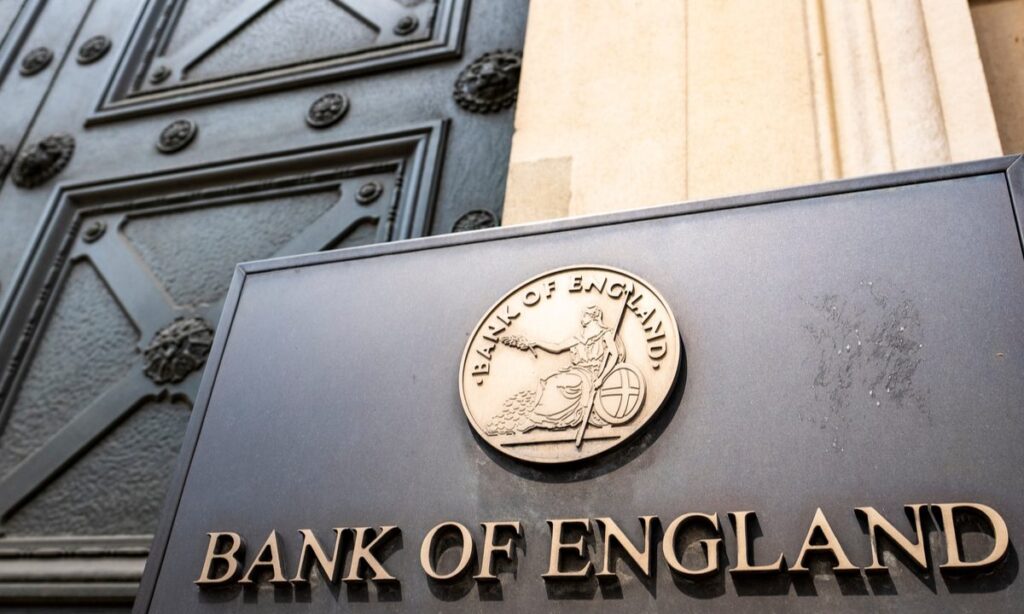
Bank of England (BoE) Governor Andrew Bailey has issued a stark warning regarding the growing role of stablecoins in the financial system, arguing that banks should avoid issuing these crypto-linked tokens due to the systemic risks they pose.
In an interview with The Sunday Times, Bailey said stablecoins could undermine the global financial system and weaken sovereign control over national currencies.
Instead, he believes the Bank of England should prioritize tokenizing deposits within traditional banking institutions.
Bailey emphasized that the UK central bank should not pursue a central bank digital currency (CBDC), distancing itself from the trend of government-backed digital assets.
New Role Brings Global Focus
Bailey’s remarks come as he steps into a new position as chairman of the Financial Stability Board (FSB), an international regulatory body tasked with monitoring and making recommendations about the global financial system.
This role gives him a platform to influence how stablecoins are treated not just in the UK but globally.
His comments suggest he may use the position to curb the rapid expansion of the stablecoin sector.
Stablecoins, which are typically pegged to fiat currencies like the US dollar or euro, are a dominant force in the crypto market.
They enable cross-border transactions without relying on traditional banking infrastructure, which can increase access to stable currencies in regions with weak financial systems.
U.S. Embraces Stablecoin Regulation
Bailey’s warning contrasts with the approach taken in the United States.
The Trump administration has placed stablecoin regulation high on its policy agenda, viewing the technology as a strategic asset.
At the White House Digital Asset Summit in March, US Treasury Secretary Scott Bessent said stablecoins would help cement the dollar’s role as the global reserve currency.
Stablecoins Backed by Traditional Assets
Most stablecoins in circulation are overcollateralized, backed by cash or highly liquid instruments like short-term U.S. Treasury bills.
This model has gained favor among U.S. regulators, who argue it could reduce inflationary pressure by increasing the global demand for American debt securities.
With widespread access to these instruments via mobile devices and digital wallets, the U.S. government sees an opportunity to expand dollar reach and influence.
Calls for Cohesive U.S. Policy
Federal Reserve Chair Jerome Powell has also voiced support for a comprehensive approach to stablecoin regulation in the U.S., calling for clearer and unified policy measures.
However, officials in Europe, including Bailey, have expressed concern that widespread adoption of dollar-based stablecoins could destabilize other currencies such as the euro.
There are growing fears within the EU that stablecoins could disrupt financial sovereignty and shift economic control away from national institutions.
Diverging Approaches Signal Global Debate
Bailey’s firm opposition to stablecoins, combined with his leadership role at the FSB, sets the stage for further regulatory scrutiny of the crypto industry.
While the U.S. moves to integrate stablecoins into its financial strategy, European officials are signaling resistance to allowing such assets to gain widespread use without stronger oversight.
The differing approaches suggest that stablecoins will remain a hot-button issue in global financial policy for the foreseeable future.
Despite Bitcoin hitting new all-time highs last week, retail investors have been notably absent from the action, according to market analysts.
Meanwhile, institutional interest has surged, particularly in the form of spot Bitcoin ETFs, which saw more than $1 billion in inflows on both Thursday and Friday — a back-to-back milestone never previously achieved.
Institutional Surge Behind Latest Price Move
Bitwise head of research André Dragosch observed in a Friday post that although Bitcoin is soaring, mainstream interest has yet to catch up.
“Bitcoin is at new all-time highs but retail is almost nowhere to be found,” he wrote, referencing data showing weak Google search trends for the term “Bitcoin.”
This suggests the current rally is primarily fueled by institutions, not individual investors.
Search Trends Fail to Reflect Price Surge
Google Trends data supports this narrative.
Between June 29–July 5 and July 6–12, global searches for “Bitcoin” increased by just 8%, even as Bitcoin’s price broke past its previous all-time high of $111,970 and continued climbing to $118,780 by Friday.
This subdued retail interest contrasts sharply with the surge seen in November 2024, when search interest peaked following Donald Trump’s election win.
At that time, retail engagement helped propel Bitcoin past the $100,000 mark for the first time.
Retail Sentiment: “Missed the Boat”
Some crypto commentators believe that retail investors are sitting out because they feel priced out of the market.
“I think a lot of retail folks find out the price of one Bitcoin is 117k and think, nahhh I missed the boat and don’t even give it a second thought,” said Bitcoin analyst Lindsay Stamp.
Cedric Youngelman, host of the Bitcoin Matrix podcast, shared a similar sentiment, asking his followers, “At what Bitcoin price do you think retail wakes up? I’ll go first. I don’t think they’re coming for a long time.”
Analysts Say Rally Still Has Momentum
Despite low retail participation, market experts believe the current rally has more room to run.
Bitcoin on-chain analyst Willy Woo commented, “This run has plenty of legs left in it.”
The continued interest from institutional players suggests that Bitcoin’s momentum is far from over.
Spot ETFs Remain the Main Driver
Spot Bitcoin ETFs had an exceptionally strong week, pulling in a total of $2.72 billion over five trading days, according to Farside data.
This wave of capital suggests institutional demand remains robust.
However, the trend has raised questions about how to measure actual retail interest in the current market landscape.
Cointelegraph recently noted that if the ultimate holders of Bitcoin ETF shares are retail investors, then interpreting on-chain data could become more complex.
Conclusion
While Bitcoin continues to scale new heights, the retail crowd appears hesitant to reenter the market.
Whether due to price anxiety or market fatigue, their absence is notable — especially in contrast to the flood of institutional capital pouring into ETFs.
As the rally unfolds, attention now turns to whether retail investors will follow — or continue to watch from the sidelines.

A political clash over cryptocurrency regulation is escalating in the U.S. Congress as top Democrats push back against Republican-led legislation scheduled for debate this week.
House Financial Services Committee ranking member Maxine Waters and subcommittee colleague Stephen Lynch announced their intention to oppose a package of bills that Republicans plan to fast-track starting Monday.
According to Waters, the proposed laws lack crucial consumer safeguards and threaten to expose the U.S. financial system to new vulnerabilities.
Accusations of Favoring Industry Interests
“[Republicans are] doubling down by fast-tracking a dangerous package of crypto legislation through Congress,” Waters said.
She further claimed that the bills would make lawmakers “complicit in Trump’s unprecedented crypto scam,” referencing the former president’s ventures in the digital asset space.
Legislative Package Includes Three Key Bills
The crypto package includes the GENIUS Act, which aims to regulate payment stablecoins and has already passed the Senate.
Also on the table are the CLARITY Act, which would establish digital asset market structure, and the Anti-CBDC Surveillance State Act, which seeks to block any development of a U.S. government-issued digital currency.
While Republicans hold a slim House majority, it remains uncertain whether they can gather enough support to pass all three bills, particularly in the face of unified Democratic opposition.
Concerns Over National Security and Oversight
Lynch criticized the GOP for prioritizing crypto industry interests over consumer protection.
“My Republican colleagues are eager to continue doing the bidding for the crypto industry while conveniently ignoring the vulnerabilities and opportunities for abuse that exist in crypto,” he said.
Many Democrats argue the legislation would reduce oversight by shifting regulatory authority away from the Securities and Exchange Commission (SEC) and toward the Commodity Futures Trading Commission (CFTC).
Trump’s Crypto Ties Complicate Debate
Trump’s connections to the crypto sector are also drawing attention.
Reports indicate his personal wealth has increased by roughly $620 million in recent months, driven largely by investments in crypto-related ventures, including World Liberty Financial.
This firm has reportedly launched its own stablecoin, USD1, raising further questions about the intersection of political influence and crypto regulation.
Senate to Take Up Market Structure Bill
While the GENIUS Act is likely to reach the president’s desk soon, momentum around the CLARITY Act appears to be shifting toward the Senate.
Senate Banking Committee Chair Tim Scott and Senators Cynthia Lummis and Kirsten Gillibrand are working toward a new draft of the bill with the goal of finalizing legislation by September 30.
House Financial Services Committee Chair French Hill said the revised draft will be the “best” version debated since 2023.
Regulatory Roles Could Shift
A comprehensive market structure bill would clarify regulatory jurisdiction between the SEC and CFTC.
Current drafts suggest handing more oversight to the CFTC, particularly for registering and supervising digital asset platforms.
This restructuring could significantly reshape how cryptocurrencies are governed in the United States moving forward.

A Chinese creditor has filed an objection to a motion by the FTX estate that seeks to halt distributions to creditors in countries with restrictive or unclear cryptocurrency regulations.
The objection, submitted to a U.S. bankruptcy court on Tuesday, comes from Weiwei Ji, a Chinese passport holder currently living in Singapore.
Ji stated that despite their current residence, they’ve been classified as a Chinese creditor due to their nationality.
According to the filing, Ji represents a group of more than 300 Chinese creditors with substantial claims.
FTX Repayment Restrictions Under Fire
FTX’s motion, filed on July 2 in the U.S. Bankruptcy Court in Delaware, seeks to temporarily halt repayments to creditors in 49 jurisdictions.
These include countries like China, Russia, Zimbabwe, and Moldova, where laws around cryptocurrency are either ambiguous or restrictive.
The estate argues that making payments to residents in these areas could potentially result in criminal penalties, financial fines, or personal liability for those administering the repayments.
Moldova, in particular, was cited as a risk example, where even auxiliary services involving virtual assets are deemed criminal offenses.
Claimants Argue Distribution Should Proceed
In the objection, Ji argued that digital assets are considered personal property in China, and U.S. dollar settlements are a recognized legal form of payment.
This, Ji claims, nullifies the rationale for withholding distributions.
“My family holds four KYC-verified accounts with aggregate claims exceeding $15 million USD,” Ji wrote.
“We have fully complied with every procedural requirement under the Plan. The proposed motion now jeopardizes our right to distribution in an arbitrary and inequitable manner.”
Wider Implications for Creditors Worldwide
The motion estimates that around 5% of the total value of approved claims belongs to residents in restricted regions.
The estate’s filing seeks to mitigate potential legal complications arising from international payouts.
However, creditors like Ji argue that the motion imposes unfair barriers and contradicts the spirit of the agreed-upon bankruptcy plan.
The objection brings attention to the complexities of cross-border bankruptcy proceedings involving digital assets.
FTX Repayments Already Underway
FTX began issuing repayments on February 18, prioritizing convenience class claimants.
These initial payments are based on the value of digital assets at the time of the company’s collapse in November 2022—a decision that has been criticized by some creditors.
While the estate continues to navigate legal and logistical hurdles, the backlash from international creditors could pose new challenges in the already controversial repayment process.

Bitcoin made an ambitious push toward the $110,000 mark on July 9, but selling pressure halted its advance just short of the milestone.
BTC/USD peaked at $109,777 on Bitstamp before reversing, according to data from Cointelegraph Markets Pro and TradingView.
The price remains constrained within a tight range, with liquidity clustering at key levels.
Order book data from CoinGlass indicated strong buying interest around $108,500 and heavy sell pressure near $110,500, which appears to be capping further gains for now.
Traders Signal Caution as Liquidity Concentrates
Despite the temporary pullback, many market participants are optimistic that Bitcoin may be preparing for another rally.
Trader Jelle noted the heavy liquidity above $110,000 and suggested a successful breakout could quickly push the price much higher.
“Almost all liquidity is to the upside. Stops above $110k are not safe,” he commented on X, forecasting a possible move to $130,000 if the resistance is broken.
Analyst BitBull highlighted technical indicators that might support this bullish scenario.
He pointed to a potential inverse head and shoulders pattern on the 3-day RSI and price charts.
“For breakout, we need one of these 2 things. Either a 3D close above $110K or a 3D RSI close above 70. After that, we’ll experience an up-only rally for 3-4 weeks,” he explained.
Volatility Expected as Macro Factors Weigh on Sentiment
Beyond technicals, broader macroeconomic factors are also expected to influence Bitcoin’s short-term trajectory.
QCP Capital, in its latest bulletin to Telegram subscribers, said the upcoming U.S. Consumer Price Index (CPI) report could introduce volatility in the crypto and equities markets.
The firm emphasized that recent strong jobs data had already cooled optimism around near-term interest rate cuts by the Federal Reserve.
“Markets have scaled back expectations to two cuts in 2025, down from 2.5 previously. A July cut is all but priced out. September odds have slipped from 90% to 70%,” the bulletin noted.
This shift in expectations has placed additional focus on upcoming economic data releases.
Despite these uncertainties, QCP described Bitcoin as “well bid,” supported by institutional inflows and a weakening U.S. dollar.
“With a reignited trade war, a more hawkish Fed, and tightening liquidity conditions, the stage is set for elevated volatility,” the firm added.
“Macro catalysts are lining up. Buckle up,” QCP concluded.
Outlook Hinges on Breaking $110K
While BTC has so far failed to close above $110,000 since June 11, traders remain alert for a breakout that could mark the beginning of a stronger bullish trend.
The presence of sell-side liquidity above the current level continues to pose a challenge, but the alignment of technical signals and macroeconomic catalysts may offer enough fuel for Bitcoin to attempt another leg higher.
Until then, investors appear to be watching liquidity zones and upcoming inflation data closely for signs of the next major move.