


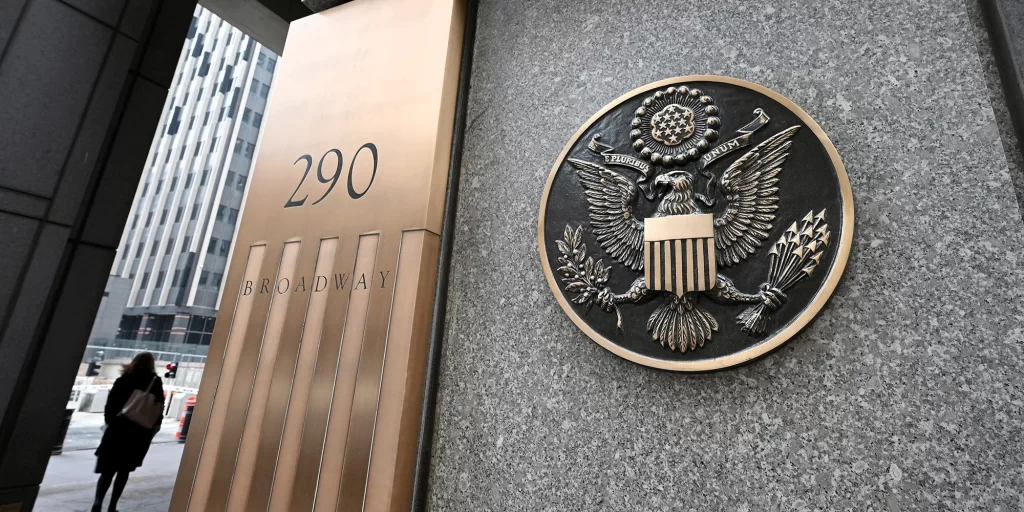
The United States Internal Revenue Service (IRS) has recently issued a significant ruling impacting crypto investors in the country.
According to Revenue Ruling 2023-14, crypto investors must report their earnings from staking digital assets as gross income in the year they receive them.
Gross income includes any form of income, be it in money, property, services, or even staking rewards.
This ruling applies to cash-method taxpayers who receive crypto as compensation for validating transactions on proof-of-stake blockchains, regardless of whether they stake cryptocurrency directly or through a centralized crypto exchange.
The ruling clarifies that the fair market value of the staking rewards should be added to the investors’ annual income and determined at the time they gain control over the rewards.
“Dominion” is defined as the moment when the investor gains control and can sell, exchange, or otherwise dispose of the cryptocurrency rewards.
Notably, the IRS previously subjected crypto-mining rewards to both income and capital gains tax, but staking rewards were not covered until now.
The crypto tax firm Koinly acknowledged the lack of provisions for staking rewards until this new ruling.
Messari founder Ryan Selkis praised the ruling for taxing staking rewards only when they become accessible for sale.
READ MORE: SEC Chairman Gary Gensler Raises Alarm Over Widespread Fraud in Crypto Market
This means that rewards that are accrued but locked will not be taxable until the investor gains “dominion and control” over them.
Selkis also highlighted that the IRS is treating crypto staking similarly to stock dividends.
However, some experts expressed their disappointment with the ruling. Jason Schwartz, tax partner and digital assets co-head at Fried Frank, stated that the ruling was unsurprising but disappointing.
He argued that tax law traditionally required the existence of a payer, such as an employer or counterparty, for income to be taxable, making this ruling a departure from that norm.
This ruling comes amidst increased regulatory scrutiny in the crypto space. U.S. federal regulators, including the Securities and Exchange Commission (SEC), have been targeting crypto-staking service providers and exchanges, alleging that they are engaging in illegal securities sales.
In conclusion, the IRS’s latest tax bulletin requires U.S. crypto investors to report staking rewards as gross income in the year they receive them.
This move aims to clarify the treatment of income earned from staking digital assets for taxation purposes and brings staking rewards into the fold of taxable crypto earnings.
Other Stories:
Liquid Staking Tokens Poised to Dethrone Ethereum’s Ether (ETH) as Dominant DeFi Asset
Bitcoin’s Reduced Volatility Sparks Anticipation for Exciting Long-Term Bull Signal

The Nigerian Securities and Exchange Commission (SEC) has issued a warning to local investors regarding the use of Binance, one of the world’s largest cryptocurrency exchanges.
This cautionary measure comes as a response to a previous circular issued against a fraudulent company that was illegally using the Binance brand.
On July 28, the SEC released a statement advising against investing with Binance, citing the absence of a valid license for operations in the country, thereby rendering its activities illegal.
The commission also emphasized the substantial risks associated with investing in cryptocurrencies, highlighting the potential for significant financial losses:
“Any member of the investing public dealing with the entity, making such solicitation is doing so at his/her own risk.”
This is not the first time the SEC has taken action against Binance.
In June, the commission published a similar circular, limiting the activities of Binance Nigeria, which was proven to be a fraudulent entity unaffiliated with the legitimate Binance exchange.
In response, Binance issued a cease and desist notice to Binance Nigeria.
READ MORE: SEC Chairman Gary Gensler Raises Alarm Over Widespread Fraud in Crypto Market
It’s worth noting that Nigeria has maintained a cautious approach to the crypto industry, despite its efforts to promote the central bank digital currency (CBDC), known as the eNaira, which was launched in 2021.
However, adoption rates of the eNaira have fallen below expectations, leading the central bank to explore options to boost its usage.
In July, the CBDC system was upgraded with near-field communication technology, enabling more convenient and secure contactless payments.
Furthermore, starting from May 2023, Nigeria implemented a 10% tax on gains from the sale of digital assets, including cryptocurrencies.
Local stakeholders criticized this measure as “premature.”
Cointelegraph sought further commentary from Binance regarding the SEC notice, but no additional statements have been provided at this time.
As for Binance and other unregistered platforms, the SEC demands an immediate cessation of services in Nigeria.
The regulatory body is determined to safeguard local investors and uphold the legality of financial activities within the country’s borders.
Other Stories:
Liquid Staking Tokens Poised to Dethrone Ethereum’s Ether (ETH) as Dominant DeFi Asset
Bitcoin’s Reduced Volatility Sparks Anticipation for Exciting Long-Term Bull Signal

The cryptocurrency market experienced its most challenging month in 2023, as revealed by a report from Web3 outlet De.Fi, shared with Cointelegraph.
Losses in July amounted to a staggering $486 million, surpassing the total losses from the entire year of 2022 by more than six times.
This alarming trend followed a series of high-profile hacks and exploits that occurred during the month, accompanied by a flurry of legislative activity surrounding the regulation of cryptocurrency and digital assets.
Unfortunately, the recovery efforts for the stolen funds proved insufficient, with only $6.15 million, representing a mere 1% of the total stolen amount, successfully reclaimed.
Researchers at De.Fi expressed their concern over the lack of effective measures to quickly recover lost funds.
They emphasized the critical role played by the cryptocurrency sector in recuperating stolen or lost assets, stating that it is vital in mitigating the adverse effects of such unfortunate incidents.
The report highlighted that the majority of the losses originated from the Ethereum network, accounting for $447 million lost across 36 cases.
Notable incidents included the Multichain hack, which resulted in $231 million in losses, and the Alphapo exploit, causing approximately $100 million in damages.
Following Ethereum, the network with the next highest losses was Base, where a single case led to $23 million being lost.
Binance took third place, reporting a loss of nearly $11 million across 18 cases.
READ MORE: BNB Smart Chain (BSC) Hit by Copycat Attacks
The report attributed the primary cause of the losses in July to “access control issues,” accounting for a significant portion of the funds lost at $364 million.
Additionally, there were over 38 reported cases of “rugpulls,” resulting in approximately $36 million in losses, and reentrancy attacks led to around $78 million in damages.
Despite the concerning statistics, there was a glimmer of positive news in the report:
July saw no reports of exit scams, providing a ray of hope amidst the otherwise bleak scenario.
The De.Fi team’s report underscored the urgency for improved security measures, regulatory efforts, and robust recovery strategies within the cryptocurrency space.
Without prompt and effective action, the market’s vulnerability to hacks and exploits may continue to exacerbate losses and hinder its overall growth and stability.
Other Stories:
Liquid Staking Tokens Poised to Dethrone Ethereum’s Ether (ETH) as Dominant DeFi Asset
SEC Chairman Gary Gensler Raises Alarm Over Widespread Fraud in Crypto Market
Bitcoin’s Reduced Volatility Sparks Anticipation for Exciting Long-Term Bull Signal

Curve Finance, the decentralized finance (DeFi) protocol, is facing another challenge in addition to recovering from a recent $47-million hack. Concerns have arisen among holders of the protocol’s token regarding a potential massive dump.
On August 1, Delphi Digital, a crypto research firm, revealed in a Twitter thread that Curve Finance founder Michael Egorov had taken loans backed by a significant portion of the circulating supply of Curve DAO (CRV).
These loans amount to around $100 million and are secured by 427.5 million CRV tokens.
One of the loans, on Aave, involves 305 million CRV supporting a 63.2-million Tether (USDT) loan.
Delphi Digital noted that if the CRV token’s price were to drop by 36%, the position could be liquidated at $0.3767, which is below the current trading price of CRV at approximately $0.5975.
On Frax Finance, Egorov holds 59 million CRV supporting a debt of 15.8 million Frax (FRAX).
The loan carries additional risks due to Fraxlend’s time-weighted variable interest rate, which doubles every 12 hours when the loan is at 100% utilization.
The interest rate can reach an alarming 10,000% in just 3.5 days, making liquidation a possibility regardless of the CRV token’s price.
To mitigate these risks, Egorov has been working to reduce the debt and utilization rate by paying 4 million FRAX in the last 24 hours.
However, users have been quick to withdraw their liquidity as soon as Egorov makes payments.
READ MORE: BNB Smart Chain (BSC) Hit by Copycat Attacks
To address this liquidity issue, Egorov implemented a Curve pool to incentivize liquidity in the lending market.
Within four hours of its launch, the pool attracted $2 million in liquidity and decreased the utilization rate from 100% to 89%.
The situation has drawn comparisons to FTX founder Sam Bankman-Fried using FTX Token (FTT) as collateral and raised concerns within the community, with some fearing that it could hinder the DeFi industry’s progress and discourage potential investors.
Cointelegraph attempted to reach out to Egorov for comment, but there was no immediate response.
In summary, Curve Finance’s CRV token holders are now facing worries about a potential massive token dump due to the significant loans taken by the protocol’s founder, backed by a substantial amount of CRV tokens.
Efforts are being made to manage the risks, but the situation has drawn attention and concern from the crypto community.
Other Stories:
2023 Ranking: 4 Best Crypto Projects To Buy
SEC Chairman Gary Gensler Raises Alarm Over Widespread Fraud in Crypto Market
Liquid Staking Tokens Poised to Dethrone Ethereum’s Ether (ETH) as Dominant DeFi Asset

The Ukrainian government has made a recent request to obtain financial information from local cryptocurrency companies.
The National Bank of Ukraine (NBU) has reached out to four crypto firms, including Kuna, CoinPay, GEO Pay, and Qmall, demanding financial statements for the first two quarters of 2023.
These crypto businesses have been asked to provide the required financial data within seven days of the request.
The NBU’s demand for information goes beyond just financial statements; they have also requested data on the operating volumes of these crypto firms and information about the receipt and transfer of funds.
Additionally, the NBU has asked the companies to issue statements for all accounts starting from the beginning of 2023.
Michael Chobanyan, the founder and CEO of Kuna exchange, shared this news with the public. He referred to a document distributed by the Ukrainian Telegram news channel, Politics of the country, as the source of the information.
Chobanyan confirmed the authenticity of the NBU’s request on his own Telegram channel, but he expressed uncertainty about the reasons behind the latest action from the NBU.
Chobanyan criticized the NBU’s actions, claiming that there was no precedent for such actions in Ukraine.
He also mentioned that Kuna exchange had previously left the business-to-customer market in Ukraine due to what he described as “predatory actions” by the NBU.
These actions caused a significant drop in exchange volumes for the company.
Despite the Ukrainian government’s apparent hostility towards the crypto industry, Chobanyan sees a silver lining in the situation.
READ MORE: BNB Smart Chain (BSC) Hit by Copycat Attacks
He stated that Kuna would now focus on the European market, particularly the business-to-business (B2B) sector.
He pointed out that Kuna recently launched a crypto-acquiring service called KunaPay, which might have influenced the NBU’s actions.
However, the NBU has not yet provided any clarifications or comments regarding its recent request for financial information from the crypto firms.
As the situation develops, this article will be updated to include any new information or statements from the NBU.
In summary, the Ukrainian government’s National Bank has requested financial information from several local cryptocurrency companies, raising questions about its motives and impact on the crypto industry in the country.
While there are concerns about the NBU’s actions, some companies like Kuna see this as an opportunity to focus on the European B2B market.
The NBU’s response to these developments remains pending.
Other Stories:
Liquid Staking Tokens Poised to Dethrone Ethereum’s Ether (ETH) as Dominant DeFi Asset
Bitcoin’s Reduced Volatility Sparks Anticipation for Exciting Long-Term Bull Signal
SEC Chairman Gary Gensler Raises Alarm Over Widespread Fraud in Crypto Market

A zero transfer phishing attack recently orchestrated by a scammer resulted in the theft of $20 million worth of Tether (USDT) on August 1.
The incident unfolded when the scammer managed to get hold of 20 million USDT from the victim’s address, which was identified as 0x4071…9Cbc.
The victim intended to send the money to address 0xa7B4BAC8f0f9692e56750aEFB5f6cB5516E90570, but due to the scammer’s cunning manipulation, it was redirected to a phishing address, 0xa7Bf48749D2E4aA29e3209879956b9bAa9E90570.
The scammer’s ploy started with the victim’s wallet receiving $10 million from a Binance account. After sending it to another address, the victim unknowingly fell prey to the scammer’s trickery.
The scammer initiated a fabricated Zero USDT token transfer from the victim’s account to the phishing address.
When the victim later attempted to transfer 20 million USDT, they mistakenly believed they were sending it to their desired address.
However, they were, in fact, transferring the amount to the scammer.
Upon discovering the scam, Tether promptly blacklisted the victim’s wallet, raising concerns about the swiftness of the issuer’s response.
READ MORE: Liquid Staking Tokens Poised to Dethrone Ethereum’s Ether (ETH) as Dominant DeFi Asset
The success of this type of phishing attack is partially attributed to the common practice among users of only checking the first or last five digits of a wallet address, rather than verifying the entire address. This oversight causes them to send assets to a phishing address unknowingly.
The mechanics of the zero transfer scam can be explained as follows: When a victim sends a certain amount of coins to an address for an exchange deposit, the attacker duplicates a similar-looking address under their control.
They then execute a transaction for zero coins from the victim’s wallet to this mimic address.
When the victim reviews their transaction history, they might mistake the phishing address for the actual deposit address and proceed to send their coins to it.
Unfortunately, such zero transfer phishing scams have become increasingly common within the cryptocurrency ecosystem over the past year.
In fact, the first known instance of this type of scam occurred in December 2022, and it has since caused losses exceeding $40 million due to various reported attacks.
In conclusion, the prevalence of zero transfer phishing attacks highlights the need for increased vigilance and awareness among cryptocurrency users.
By verifying complete wallet addresses and staying informed about emerging scam techniques, users can better protect their digital assets from falling into the hands of malicious actors.
Additionally, issuers and platforms within the crypto industry should continue to develop robust security measures to mitigate the impact of these scams and safeguard their users’ funds.
Other Stories:
BNB Smart Chain (BSC) Hit by Copycat Attacks
Bitcoin’s Reduced Volatility Sparks Anticipation for Exciting Long-Term Bull Signal
SEC Chairman Gary Gensler Raises Alarm Over Widespread Fraud in Crypto Market

ConsenSys, a blockchain technology firm, has publicly launched its “Diligence Fuzzing” tool for smart contract testing, as revealed in an announcement on August 1.
This new tool is designed to identify vulnerabilities in contracts before they are deployed by generating “random and invalid data points.”
The release comes in the wake of significant losses in decentralized finance hacks, which surpassed $2.8 billion in 2022.
The escalating financial implications of these hacks have prompted developers to seek more sophisticated testing tools to proactively discover vulnerabilities before malicious attackers do.
Previously available as a closed beta version with access approval requirements, ConsenSys has now made Diligence Fuzzing accessible to all developers without any restrictions.
Additionally, the tool has been integrated with the smart contract toolkit Foundry, and developers can test it out for free before committing to any expenses.
Liz Daldalian, the lead of ConsenSys security services, elaborated on the functioning of the tool in an interview with Cointelegraph.
Developers can utilize “Scribble,” a machine language developed by ConsenSys, to annotate their contracts.
READ MORE:SEC Chairman Gary Gensler Raises Alarm Over Widespread Fraud in Crypto Market
These annotations allow the fuzzing tool to comprehend the contract’s logic and generate “unexpected” inputs to test whether the contract produces unintended actions under various scenarios.
The ConsenSys security researcher, Gonçalo Sá, clarified that Diligence Fuzzing is not a “black box fuzzer,” meaning it doesn’t employ completely random data.
Instead, it functions as a “grey-box fuzzer” that leverages an understanding of the contract’s current state to optimize the data produced and enhance the tool’s efficiency.
Sá observed an increasing interest in fuzzing among developers, particularly with the growing popularity of Foundry’s default black-box fuzzer.
Many users, however, seek a more sophisticated fuzzer than the default one, which Diligence Fuzzer aims to provide.
Sá emphasized that people are recognizing the power of fuzzing and are seeking more potent tools to fortify their security measures.
Smart contract hacks remain a persistent issue for users, with Web3 security vulnerabilities resulting in over $471.43 million in losses during the first half of 2023, excluding rug pulls and phishing scams.
While Diligence Fuzzing is not a foolproof solution to eradicate all smart contract hacks, Daldalian asserted that it represents one essential tool in developers’ arsenal to create more secure smart contracts.
By adopting such tools, the Web3 community can take significant strides towards mitigating losses from these attacks.
Other Stories:
Bitcoin’s Reduced Volatility Sparks Anticipation for Exciting Long-Term Bull Signal
Liquid Staking Tokens Poised to Dethrone Ethereum’s Ether (ETH) as Dominant DeFi Asset

Meta, the parent company of Facebook and Instagram, is planning to launch advanced artificial intelligence (AI) chatbots that exhibit human-like personalities, as part of its efforts to enhance user retention.
According to the Financial Times, insiders revealed that prototypes of these chatbots are already in development, with the final products capable of engaging in discussions with users at a level comparable to human interaction.
Expected to be released as early as next month, the chatbots will come in various personalities, referred to as “personas” by Meta staff.
The bots will take the form of different characters, including one that mimics the speech style of former United States president Abraham Lincoln and another designed to provide travel advice with a surfer’s vernacular.
The main purpose of these chatbots, according to sources, will be to offer recommendations and introduce new search functionalities, while also serving as an enjoyable interactive product for users.
Cointelegraph reached out to Meta for additional comments on the matter, but no response was received at the time of publication.
To ensure accuracy and prevent any rule-breaking speech, the company may automate checks on the chatbots’ outputs, as stated by a source from the Financial Times.
This move comes as Meta places significant emphasis on user retention.
READ MORE: SEC Chairman Gary Gensler Raises Alarm Over Widespread Fraud in Crypto Market
During the recent second-quarter earnings call on July 26, Meta’s CEO, Mark Zuckerberg, highlighted the company’s latest product, Threads, which has seen an unexpected increase in daily user engagement. Zuckerberg emphasized that Meta is primarily focused on user retention for Threads.
Additionally, the earnings call disclosed an investment of $3.7 billion into the development of the metaverse.
The introduction of these sophisticated chatbots also opens up opportunities for Meta to collect substantial amounts of user data.
However, it is worth noting that OpenAI, the creator of the popular AI chatbot ChatGPT, has faced legal challenges, including a class-action lawsuit alleging data theft by its own bots.
Meta’s initiative to integrate AI chatbots with human-like personalities reflects the growing importance of AI in user engagement and the potential for innovative advancements in the field of artificial intelligence.
Nevertheless, concerns surrounding data privacy and security will continue to be closely monitored, considering the impact of AI on user data collection and usage.
Other Stories:
Bitcoin’s Reduced Volatility Sparks Anticipation for Exciting Long-Term Bull Signal
BNB Smart Chain (BSC) Hit by Copycat Attacks
Liquid Staking Tokens Poised to Dethrone Ethereum’s Ether (ETH) as Dominant DeFi Asset
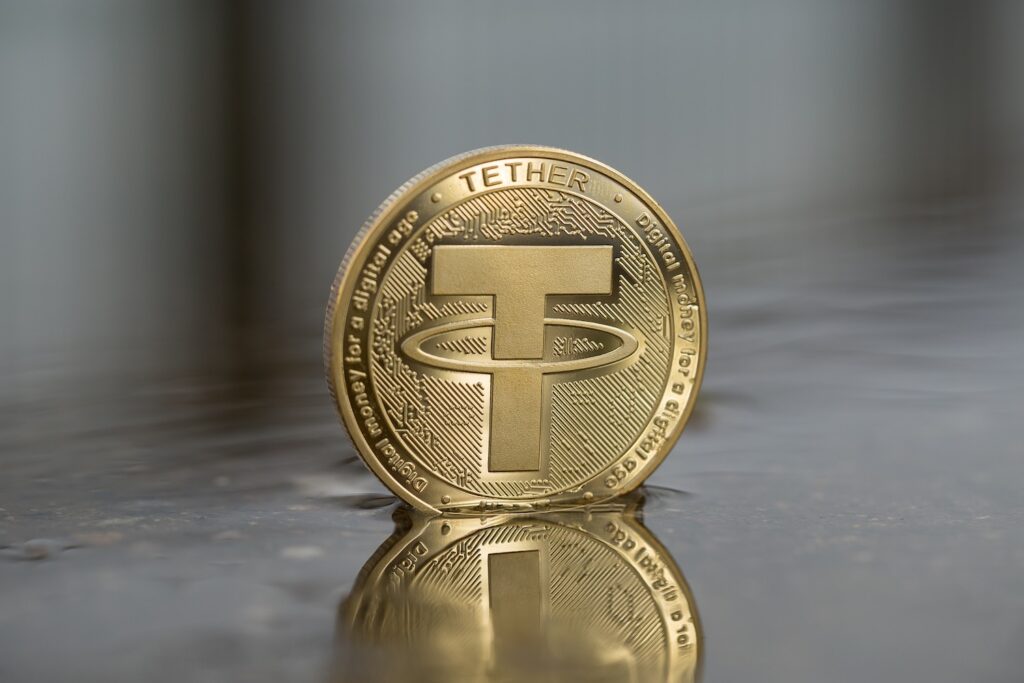
Circle’s USD Coin (USDC) and other stablecoins are facing potential compliance challenges due to a new amendment in the 2024 National Defense Authorization Act (NDAA) recently passed by the United States Senate.
According to Berenberg analyst Mark Palmer’s July 31 investment note, the amendment could introduce new Know Your Customer (KYC) and Anti-Money Laundering (AML) measures that stablecoin issuers might struggle to comply with.
The proposed amendment requires the U.S. Treasury Secretary to establish examination standards for crypto assets to ensure compliance with money laundering and sanctions laws.
If it remains in the final version of the NDAA, it could present problems for stablecoin issuers.
Palmer pointed out that identifying stablecoin holders is only possible during issuance and redemption, and this requirement could lead to a deterioration in USDC’s market cap.
Over the past few months, USDC’s market cap has declined by approximately 39%, amounting to $17.5 billion since March 5.
This development not only impacts Circle but also poses challenges for Coinbase.
READ MORE: Bitcoin’s Reduced Volatility Sparks Anticipation for Exciting Long-Term Bull Signal
Palmer highlighted that in the first quarter of the year, 27% of Coinbase’s net revenue came from interest income on USDC. The potential setbacks for both Circle and Coinbase could be concerning for investors.
Coinbase’s shares have shown significant outperformance in the traditional equities market since the beginning of the year, surging 170% from $33 on January 1 to $98.61 at the time of the publication of the investment note.
Berenberg attributed this outperformance to favorable rulings for Ripple Labs and the interest generated by major institutions like BlackRock and Fidelity in filing for spot Bitcoin exchange-traded funds (ETFs).
However, the bullish factors for Coinbase might be on shaky ground. SEC Chair Gary Gensler’s recent comments have raised uncertainty among investors.
Gensler stated that cryptocurrencies could fall under the purview of the SEC, implying that regulations might be on the horizon.
Additionally, his response to Bitcoin ETF applications suggested potential opposition to their approvals.
Despite these uncertainties, Berenberg maintained a “hold” rating for Coinbase stock.
The company’s large balance of cash and equivalents offers financial cushion and flexibility for navigating the uncertain landscape of the cryptocurrency market.
Other Stories:
BNB Smart Chain (BSC) Hit by Copycat Attacks
SEC Chairman Gary Gensler Raises Alarm Over Widespread Fraud in Crypto Market
Liquid Staking Tokens Poised to Dethrone Ethereum’s Ether (ETH) as Dominant DeFi Asset
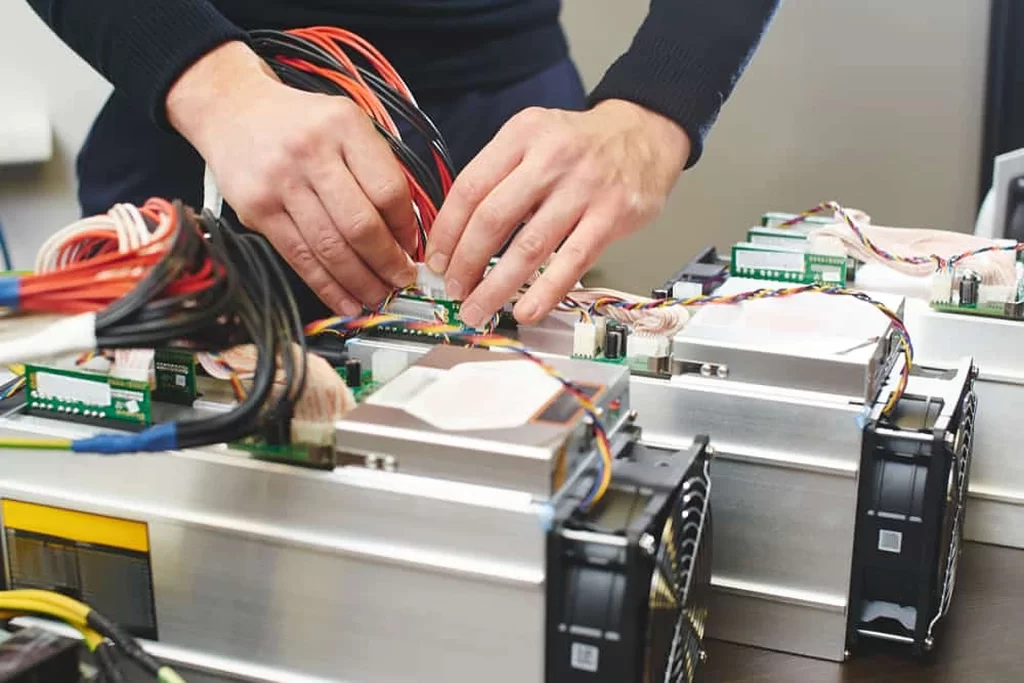
In Miri, Borneo, authorities have taken decisive action against an illegal cryptocurrency mining operation, thanks to a tip-off from the public.
The operation, discovered by Sarawak Energy, involved 34 cryptocurrency mining servers that were illicitly powered through cable tapping, using stolen electricity.
Following the tip-off, a swift crackdown ensued, resulting in the seizure of all equipment used in the illegal mining endeavor, including servers and tapping cables.
Local police have initiated an investigation into the matter, marking a significant victory against cryptocurrency-related crimes on the island.
According to Sarawak Energy’s estimates, the operation was siphoning approximately 6,000 Malaysian ringgits per month (equivalent to $1300) worth of stolen electricity.
This incident sheds light on the persistent issue of energy theft, despite the fact that Sarawak offers some of the lowest energy prices in Malaysia.
Interestingly, this was not the only instance of cryptocurrency mining illegalities in the region.
Earlier in 2023, another public tip-off led to the seizure of more than 137 cryptocurrency mining servers in the nearby state of Senadin, where Miri is situated.
Meanwhile, the global cryptocurrency market, particularly Bitcoin (BTC), has been experiencing a prolonged bear market that has strained many mining operations.
READ MORE: SEC Suffers Setback as Court Overturns Ruling on SPIKES Index Securities Classification
Consequently, numerous mining firms and operators have resorted to selling BTC in unprecedented amounts to cope with the challenging market conditions.
On the other hand, the Bitcoin mining ecosystem has reached significant milestones in terms of network hash rate, which hit all-time highs in 2023, along with record network difficulty levels.
While this generally indicates the network’s resilience and increased competition among miners, it also poses challenges for smaller operators lacking the economies of scale enjoyed by larger players.
Operators benefiting from lower electricity prices tend to be more profitable, which is a contributing factor driving illegal mining operators to resort to stealing electricity from the grid.
By eliminating electricity costs, unlawful operators can generate profits and offset hardware expenses more easily.
As authorities continue their efforts to combat illegal cryptocurrency mining, the incident in Miri serves as a reminder of the importance of public vigilance and cooperation in safeguarding communities from such illicit activities.
Additionally, the broader cryptocurrency mining landscape must find ways to support smaller operators and address the challenges posed by volatile market conditions, ensuring a more sustainable and secure future for the industry.
Other Stories:
Margot Robbie’s Comparison of Bitcoin to Ken from Barbie Ignites Debate
Blockchain Could Save Financial Institutions $10 Billion by 2030: Ripple-FPC Report
Tech Firms Call on European Union to Support Open-Source AI in New Regulations