



Binance, a major cryptocurrency exchange, has achieved a significant regulatory milestone in its relationship with authorities in the United Arab Emirates (UAE) by obtaining a new license in Dubai.
The license was granted to Binance’s Dubai-based subsidiary, Binance FZE, by Dubai’s Virtual Asset Regulatory Authority (VARA) on July 31.
With this operational minimum viable product (MVP) license, Binance is now officially permitted to offer cryptocurrency exchange and virtual asset broker-dealer services in Dubai.
However, the services allowed by the license are currently limited to institutional and qualified retail investors within Dubai.
Eligible investors in the region can access authorized services, including crypto-to-fiat exchanges that comply with the guidelines set by the intergovernmental Financial Action Task Force (FATF).
To become a user of Binance in Dubai, an investor must hold the status of a “qualified retail client” and meet specific criteria.
This includes being at least 21 years old and having a net liquid asset value of 500,000 United Arab Emirates dirhams ($136,000), supported by relevant documentation such as bank statements and proof of funds.
Qualified investors also need to provide valid identification documents like passports, visas, and proof of a valid UAE address with contact details.
Binance’s Dubai entity can now offer a range of services, including crypto-to-fiat exchange and conversions, transfers and custody, brokerage, and virtual asset payments and remittance services.
This latest regulatory achievement for Binance builds upon the progression from the provisional MVP license issued by VARA in March 2022, as well as the preparatory MVP license obtained in September 2022.
READ MORE: Tech Firms Call on European Union to Support Open-Source AI in New Regulations
In April 2023, VARA requested more information from Binance about its business requirements, aiming to enhance regulatory standards in Dubai.
Binance complied with the request and expressed its willingness to cooperate further with VARA as they prepare for the next phase of licensing.
It’s worth noting that the preparatory MVP license previously granted by VARA only allowed exchanges to serve a restricted set of accredited investors.
This limitation was highlighted by some crypto exchanges, such as Bybit, earlier this year.
The news of Binance’s new license comes shortly after VAR suspended the operational license of another crypto exchange, BitOasis, for not meeting regulatory conditions within specified timeframes.
BitOasis is currently working with VARA to fulfill the remaining conditions.
Binance emphasized that VARA’s framework includes compulsory rulebooks related to general operations, compliance, and market conduct requirements.
Key highlights of these regulations were published by VARA in 2023.
As Binance moves forward with its operations in Dubai, it will continue to comply with the regulatory standards set by the UAE authorities.
Other Stories:
SEC Suffers Setback as Court Overturns Ruling on SPIKES Index Securities Classification
Margot Robbie’s Comparison of Bitcoin to Ken from Barbie Ignites Debate
Blockchain Could Save Financial Institutions $10 Billion by 2030: Ripple-FPC Report

On July 30, several liquidity pools within Curve Finance, a significant decentralized finance (DeFi) protocol, were targeted in an attack stemming from a vulnerability discovered in the Vyper programming language.
Vyper is specifically designed for the Ethereum Virtual Machine (EVM) to facilitate smart contract development.
Curve Finance’s prominence in the DeFi space is largely attributed to its vital liquidity services.
However, the recent code vulnerability jeopardized approximately $100 million worth of digital assets, raising concerns within the community.
The flaw was identified in versions 0.2.15, 0.2.16, and 0.3.0 of the Vyper language, resulting in a malfunctioning reentrancy lock.
As a consequence, millions of dollars were drained from four Curve pools, namely aETH/ETH, msETH/ETH, pETH/ETH, and CRV/ETH.
Moreover, the impact of this vulnerability on three of its variations has the potential to affect other protocols in the DeFi ecosystem.
Following the attack, the native token of Curve Finance, CRV, experienced a sharp decline in value on decentralized exchanges.
However, the situation was salvaged when centralized exchange price feeds came into play.
READ MORE: SEC Suffers Setback as Court Overturns Ruling on SPIKES Index Securities Classification
The CRV price plummeted to $0.086 on decentralized exchanges, while maintaining a trading value of $0.60 on centralized exchanges (CEXs), thereby preventing the token’s total collapse.
The recovery was attributed to the integration of Chainlink’s oracle system within Curve pools, which incorporates price feeds from various sources, including centralized exchanges.
If it weren’t for the CEX price feed, Curve Finance would have faced a complete collapse.
This irony caught the attention of Binance CEO Changpeng Zhao, who found humor in the fact that a CEX price feed ultimately saved the DeFi protocol.
Zhao clarified that the Vyper vulnerability had no impact on Binance, as the exchange had promptly updated its code to the latest version. He also emphasized the significance of regularly upgrading code libraries to maintain robust security measures.
The bug within the earlier Vyper versions is estimated to be at least 1.5 years old, suggesting that the attacker invested substantial time and resources in exploiting this weakness within a high-value protocol.
A Vyper program contributor on Twitter even suggested that the level of effort put into the exploit indicated a potential state-sponsored attack.
As the DeFi space continues to evolve and gain traction, incidents like these underscore the importance of thorough code audits, prompt upgrades, and vigilance in the face of potential vulnerabilities to ensure the security and resilience of decentralized finance protocols.
Other Stories:
Margot Robbie’s Comparison of Bitcoin to Ken from Barbie Ignites Debate
Blockchain Could Save Financial Institutions $10 Billion by 2030: Ripple-FPC Report
Tech Firms Call on European Union to Support Open-Source AI in New Regulations

The Bank of Korea has reportedly shortlisted three regions, excluding Seoul, for conducting a trial of its central bank digital currency (CBDC), as stated by a local South Korean media outlet.
The chosen locations are Jeju, Busan, and Incheon, which have been designated as potential “private target CBDC test beds.”
The bank’s long-term plan involves selecting one of these regions to experiment with payments and distribution on a public scale, aiming to secure franchises that can accept CBDC payments.
This move is expected to enable not only local residents but also tourists and civilians to participate in CBDC transactions through the CBDC electronic wallet app.
The Bank of Korea has mentioned that the regional closed tests for the CBDC will follow a similar pattern to the current local currency scheme that has been implemented in different parts of South Korea.
This local currency scheme was introduced during the COVID-19 pandemic to address basic income and relief payments.
Notably, the regions shortlisted for the pilot—Jeju, Busan, and Incheon—all currently issue and distribute their own local currencies such as “Tamranjeon,” “Dongbaekjeon,” and “Incheon e-Eum,” respectively.
An official from a commercial bank in Korea has revealed that Busan, due to its large population of eligible citizens, poses challenges for the Bank of Korea.
READ MORE: SEC Suffers Setback as Court Overturns Ruling on SPIKES Index Securities Classification
Consequently, the selection appears to be leaning towards Jeju, which has the second-largest population.
Comparatively, the local currency scheme presents fewer “technical barriers” in contrast to CBDCs, as reported by the local media.
This observation highlights the importance of conducting trials in different regions to identify potential hurdles and find effective solutions for a nationwide rollout of the CBDC.
Furthermore, various banks in South Korea have expressed interest in stablecoins as potential alternatives to CBDCs, aiming to enhance operational efficiency.
In summary, the Bank of Korea’s decision to narrow down its CBDC pilot to Jeju, Busan, and Incheon reflects the strategic approach towards testing and refining the digital currency.
By conducting regional closed tests, the bank aims to gain valuable insights and establish a robust system for CBDC adoption in the future.
The initiative aligns with the growing interest in exploring alternative payment methods, emphasizing the country’s commitment to staying at the forefront of financial innovation.
Other Stories:
Tech Firms Call on European Union to Support Open-Source AI in New Regulations
Blockchain Could Save Financial Institutions $10 Billion by 2030: Ripple-FPC Report
Margot Robbie’s Comparison of Bitcoin to Ken from Barbie Ignites Debate

The Curve Finance exploit that occurred recently resulted in one of the largest ever maximal extractable value (MEV) reward blocks, totaling 584.05 Ether (ETH).
Ethereum core developer, known as “eric.eth,” reported on July 31 that the day had witnessed some of the most substantial MEV reward blocks in the history of Ethereum, all of which were caused by the exploitation of Curve Finance stable pools on July 30.
However, it’s worth noting that a larger MEV reward block of 692 ETH was recorded back in March.
MEV bots are responsible for generating additional revenue by reordering or inserting transactions within a regular block, effectively creating arbitrage opportunities.
These bots can also identify pending liquidation transactions and front-run them, purchasing the liquidated assets at discounted prices.
To carry out such actions, MEV bots pay a considerable amount of ETH to the block producer to secure a position at the front of the transaction line.
Validators propose a block using a relay, outsourcing block production to specialized entities that extract this extra revenue.
In return for allowing MEV bots to front-run transactions, validators receive a share of the generated revenue, commonly known as the “block reward.”
One of the highest MEV bot block rewards amounted to 584.05 ETH, approximately valued at $1 million. This reward was confirmed at 1.34 am UTC on July 31, according to Beaconcha.in.
There were also other notable block rewards of 345 ETH and 247 ETH around the same time.
READ MORE: Pro-XRP Lawyer Alleges SEC’s Actions Driven by Safeguarding Corporate Capitalism
In response to the news, moral concerns were raised regarding the implications of potentially illicit funds being used to pay validators, allowing for the front-running of transactions.
Some individuals questioned the ethics of MEV rewards going to miners, particularly when these rewards are essentially sourced from hacked funds.
Prior instances have shown how MEV exploitation can lead to significant profits.
For example, in April, a Subway-themed trading bot leveraged “sandwich attacks” during the memecoin trading frenzy, making millions in extractable value.
These recent developments in the MEV landscape have sparked discussions about the ethical considerations surrounding such practices and how they may affect the overall integrity and trustworthiness of blockchain ecosystems.
Other Stories:
Worldcoin’s Iris Scanning Project Raises Privacy and Sovereignty Concern
French Data Protection Agency Investigates Worldcoin
Kyrgyzstan Expands Cryptocurrency Mining with Government Backing at Hydro Power Plant
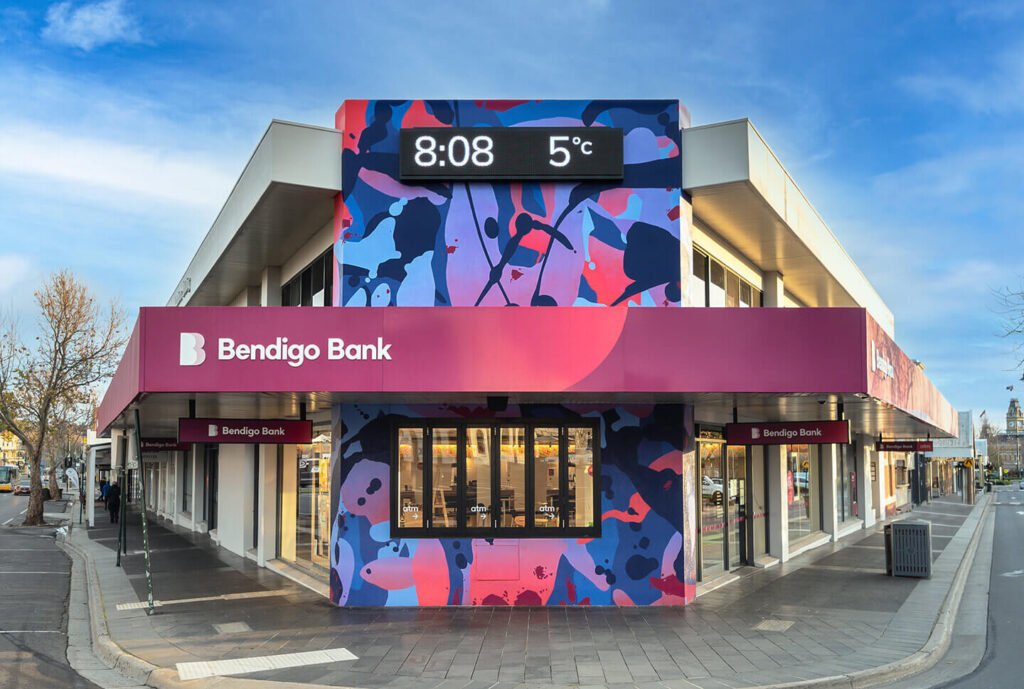
Australia’s Bendigo Bank has joined the ranks of major banks in the country by announcing blocks on “high-risk crypto payments” in an effort to safeguard its 2.3 million customers from investment scams.
The move, disclosed on July 31 by Jason Gordon, the bank’s head of fraud, entails implementing new rules on instant payments to crypto exchanges to add “friction to certain genuine payments.”
While the bank has stated its intentions to combat fraudulent transactions and enhance customer protections, it has not disclosed specific details about the high-risk transactions being targeted or the exchanges that may be affected.
This comes after similar actions were taken in recent months by three of Australia’s major banks—Commonwealth Bank, National Australia Bank (NAB), and Westpac.
Chainalysis APAC Policy Head Chengyi Ong warned in an earlier interview that such actions could force Australia’s crypto community to resort to offshore exchanges for their transactions.
Ong argued that blocking exchanges alone would not deter criminal actors, as they could simply shift to other platforms—crypto or otherwise.
READ MORE:Pro-XRP Lawyer Alleges SEC’s Actions Driven by Safeguarding Corporate Capitalism
Moreover, uncertainty over banking access might push crypto exchanges and users beyond the reach of regulatory authorities.
Ong proposed a more holistic approach, calling for cooperation between banks, regulators, telecommunication providers, and social media platforms to tackle every potential point of interaction between scam victims and perpetrators.
Dr. Aaron Lane, a senior lecturer with the RMIT Blockchain Innovation Hub, echoed this sentiment, suggesting that banks should work constructively with exchanges rather than taking a blanket approach of debanking the entire industry or asset class.
He recommended reserving debanking as a risk tool for individual cases of serious and unacceptable risk.
Australia has been considering crypto-specific laws for over three years, prompting Dr. Lane to call on lawmakers to move crypto law reform “out of the too-hard basket.”
The Department of the Treasury also issued a statement in June expressing similar concerns, highlighting that inaction on debanking could impede financial services competition and innovation, potentially driving businesses to operate solely in cash.
In conclusion, Bendigo Bank’s decision to block high-risk crypto payments aligns with actions taken by other major Australian banks.
While the move is intended to protect customers from investment scams, experts argue that a more comprehensive approach involving cooperation between various stakeholders is needed to address the issue effectively.
Other Stories:
Kyrgyzstan Expands Cryptocurrency Mining with Government Backing at Hydro Power Plant
French Data Protection Agency Investigates Worldcoin
Worldcoin’s Iris Scanning Project Raises Privacy and Sovereignty Concern

On July 30th, a significant security breach occurred on Curve Finance, a decentralized finance (DeFi) platform, resulting in the exploitation of several stable pools and causing losses exceeding $47 million.
The exploit was related to vulnerabilities in Vyper, a contract-oriented programming language utilized on the Ethereum Virtual Machine (EVM), specifically affecting versions 0.2.15, 0.2.16, and 0.3.0.
Vyper, known for its Pythonic characteristics, has been a popular choice for Python developers entering the world of Web3.
However, the investigation revealed that the affected versions failed to implement the reentrancy guard correctly.
This guard is crucial in preventing multiple functions from executing simultaneously, thereby safeguarding contracts from reentrancy attacks, which can deplete all funds from the contract.
Ancilia, a security firm, analyzed the affected contracts and reported that 136 contracts were using Vyper 0.2.15 with reentrant protection, 98 contracts used Vyper 0.2.16, and 226 contracts used Vyper 0.3.0. Vyper urged all projects relying on these versions to reach out immediately for further guidance and support.
Several DeFi projects were impacted by the exploit. For instance, decentralized exchange Ellipsis reported the exploitation of a small number of stable pools with BNB using an outdated Vyper compiler.
Additionally, Alchemix’s alETH-ETH witnessed an outflow of $13.6 million, while JPEGd’s pETH-ETH pool suffered an $11.4 million loss, and Metronome’s sETH-ETH pool lost $1.6 million.
READ MORE: Pro-XRP Lawyer Alleges SEC’s Actions Driven by Safeguarding Corporate Capitalism
Moreover, Curve Finance’s CEO, Michael Egorov, confirmed that over $22 million worth of CRV tokens (32 million CRV tokens) were drained from the swap pool in a Telegram channel.
The security breach sent shockwaves through the DeFi ecosystem, leading to a flurry of transactions across pools and prompting white hat hackers to launch a rescue operation.
As a consequence of the news, Curve DAO (CRV), the utility token for Curve Finance, experienced a decline of over 5% in value, as reported by CoinMarketCap.
CRV’s liquidity had already dwindled in previous months, making it susceptible to significant price fluctuations.
Despite the severity of the attack, certain pools like crvUSD contracts remained unaffected.
Nevertheless, this incident added to a series of attacks and incidents that have targeted the Curve Finance ecosystem.
Just days prior to this breach, Conic Finance, a platform built on Curve Finance’s omnipool, was exploited, resulting in a theft of $3.26 million in Ether (ETH).
The DeFi space has faced numerous attacks and scams in recent months, with a staggering $204 million reportedly swindled in the second quarter of 2023 alone, according to a report by De.Fi, a Web3 portfolio app.
These incidents highlight the importance of robust security measures and continual efforts to fortify DeFi protocols against potential threats.
Other Stories:
Kyrgyzstan Expands Cryptocurrency Mining with Government Backing at Hydro Power Plant
French Data Protection Agency Investigates Worldcoin
Worldcoin’s Iris Scanning Project Raises Privacy and Sovereignty Concern

Coinbase, the prominent cryptocurrency exchange, was reportedly urged by the United States Securities and Exchange Commission (SEC) to remove all cryptocurrencies from its platform, except for Bitcoin (BTC).
This revelation came to light during a recent interview with Coinbase CEO Brian Armstrong published by the Financial Times on July 31.
According to Armstrong, the SEC demanded the delisting of nearly 250 tokens on Coinbase before initiating legal action against the exchange.
The SEC’s stance was based on its belief that “every asset other than Bitcoin is a security.”
However, Armstrong disagreed with this interpretation, challenging the regulator to explain their reasoning, but they refused, insisting on the complete removal of all tokens besides Bitcoin.
This viewpoint aligns with SEC Chair Gary Gensler’s assertion made in a prior interview that everything apart from Bitcoin falls under the agency’s regulatory purview as a security.
Agreeing to the SEC’s request, Armstrong argued, would have set a dangerous precedent and potentially led to the demise of the entire crypto industry in the United States.
As a result, Coinbase opted to challenge the SEC’s position in court to seek legal clarity.
READ MORE: French Data Protection Agency Investigates Worldcoin
The SEC filed a lawsuit against Coinbase in early June, accusing the exchange of operating without proper registration and identifying 13 cryptocurrencies offered on the platform as unregistered securities.
Coincidentally, the regulator also lodged a similar complaint against Binance.
Responding to the situation, the SEC clarified that while its enforcement division does not formally request companies to delist crypto assets, its staff may share their views on actions that might breach securities laws.
Regulation of the crypto industry in the United States has been somewhat ambiguous, with both the Commodity Futures Trading Commission (CFTC) and the SEC exercising regulatory authority over various aspects of the sector.
To address this regulatory uncertainty, legislation aiming to grant primary jurisdiction over cryptocurrencies to the CFTC and define the SEC’s role concerning crypto was passed by the House Agricultural Committee on July 27, following earlier approval by the House Financial Services Committee.
However, further steps are required for it to become law.
In summary, Coinbase’s confrontation with the SEC regarding the delisting of cryptocurrencies other than Bitcoin reflects the ongoing struggle to establish clear and comprehensive regulations for the crypto industry in the United States.
The outcome of this legal battle could have significant implications for the entire crypto market in the country.
Other Stories:
Pro-XRP Lawyer Alleges SEC’s Actions Driven by Safeguarding Corporate Capitalism
Kyrgyzstan Expands Cryptocurrency Mining with Government Backing at Hydro Power Plant
Worldcoin’s Iris Scanning Project Raises Privacy and Sovereignty Concern
In a recent hacking incident involving the decentralized finance (DeFi) protocol, Curve Finance, an ethical hacker successfully reclaimed approximately 2,879 Ether (ETH), equivalent to around $5.4 million, from a hacker.
Curve Finance experienced an exploit of several stablepools due to malfunctioning reentrancy locks in certain versions of the Vyper programming language on July 30.
The damages Curve Finance faced are speculated to be around $47 million.
Simultaneously, other DeFi protocols that were utilizing the susceptible versions of Vyper were exploited as well, posing a significant challenge to the DeFi ecosystem.
Identified as “c0ffeebabe.eth”, an operator of a maximal extractable value bot, used a front-running bot against the malevolent hacker, securing nearly 3,000 ETH. These reclaimed funds were returned to the Curve deployer address, the expected rightful holder.
READ MORE: SEC Suffers Setback as Court Overturns Ruling on SPIKES Index Securities Classification
In the aftermath of this incident, fraudulent refund schemes are being propagated on Twitter.
Impersonators of Curve Finance and victims of the hack are advocating a counterfeit refund scheme, aiming at those who already suffered losses due to the hack. Curve Finance’s official account has yet to discuss a refund plan.
Simultaneously, BNB Smart Chain has encountered similar attacks due to the Vyper vulnerability, as shared by BlockSec, a blockchain security firm. An approximate amount of $73,000 was stolen in three different exploits.
In related news, the U.S. Securities and Exchange Commission has enforced new regulations for cybersecurity incidents involving publicly-traded U.S. companies.
These rules mandate disclosure of a cyberattack four days after it’s deemed “material” and also periodic reporting on policies to manage and identify cybersecurity risks.
Other Stories:
Tech Firms Call on European Union to Support Open-Source AI in New Regulations
Blockchain Could Save Financial Institutions $10 Billion by 2030: Ripple-FPC Report
Margot Robbie’s Comparison of Bitcoin to Ken from Barbie Ignites Debate
Liquid staking tokens (LSTs) are on track to replace Ethereum’s native cryptocurrency, Ether (ETH).
While ETH currently stands at $1,869, the LST market has already reached an impressive value of approximately $17 billion since Ethereum’s Merge.
The advantages of LSTs over traditional ETH are becoming increasingly evident to liquidity providers (LPs), signaling a new era of LST dominance.
Following the Merge, ETH can be staked to yield around 4% annually, depending on various factors.
This development is significant, considering ETH’s stability compared to more volatile cryptocurrencies. ETH now offers a combination of staking yields and gradual price stability and appreciation.
This new ability to stake ETH and earn yield presents ETH holders with a dilemma: should they provide liquidity with their ETH and hope for fees, or should they stake their ETH for a surefire yield?
LSTs offer a solution for LPs, as they unlock the value of staked tokens, providing a liquid “receipt” token that can be freely traded and used as collateral within decentralized finance (DeFi) protocols.
\LSTs grant tokenholders flexibility to participate in various activities across different networks while still earning ETH staking rewards.
LPs can now earn staking yields from ETH while utilizing LSTs to provide liquidity in automated market makers (AMMs).
READ MORE: French Data Protection Agency Investigates Worldcoin
Additionally, LSTs offer a more accessible entry point than regular ETH staking, appealing to new audiences and smaller investors.
The argument that LSTs will replace ETH in DeFi becomes apparent when considering that supplying ETH to an AMM instead of an LST results in sacrificing roughly 4% APR.
As the crypto space continues to evolve, LSTs offer a more effective way to earn yield, making their adoption highly likely.
While the transition to LSTs will take time, early trends indicate a growing interest in liquid staking platforms.
The Ethereum Shanghai upgrade, enabling easy unstaking, has paved the way for LSTs’ potential growth.
Already, protocols like Lido and Swell Network are experiencing significant increases in staked ETH.
The widespread adoption of LSTs could lead to their dominance in decentralized exchanges, potentially replacing ETH altogether as the go-to token in crypto.
Embracing LSTs could attract new users and inject new life into the industry after a period of stagnation.
In conclusion, while ETH remains familiar to many, LSTs offer a compelling alternative in the DeFi space.
Exploring the emerging LST ecosystem presents a unique opportunity for investors to maximize their impact and potentially contribute to a positive transformation in the industry.
With the rise of LSTFi, the crypto landscape may witness a shift where all ETH is staked through liquid staking protocols, and LSTs become the primary choice for trading and other activities.
Other Stories:
Worldcoin’s Iris Scanning Project Raises Privacy and Sovereignty Concern
Kyrgyzstan Expands Cryptocurrency Mining with Government Backing at Hydro Power Plant

Bitcoin (BTC) experienced reduced volatility as it approached the July 30 weekly close, leaving traders anticipating a significant long-term bullish signal.
Over the weekend, BTC/USD exhibited sideways movement, trading within a narrow $150 range.
Despite several macroeconomic data events throughout the week, the market remained calm, leading to speculations of an imminent breakdown.
Pseudonymous trader Daan Crypto Trades highlighted that the compression in price action had not been seen since the beginning of 2023, suggesting that a substantial move might be on the horizon.
Comparisons were drawn to earlier in the year when Bitcoin’s Bollinger Bands resembled the current conditions before the price surged 70% in the first quarter.
Analysis of the Binance BTC/USD order book by monitoring resource Material Indicators revealed that whales’ buying pressure coincided with increased resistance near $30,000.
However, they expected significant support to remain until the weekly and monthly candle closes on July 29.
READ MORE: Pro-XRP Lawyer Alleges SEC’s Actions Driven by Safeguarding Corporate Capitalism
The potential bullish cross on Bitcoin’s monthly moving average convergence/divergence (MACD) indicator drew significant attention as market observers noted its proximity to confirmation.
Historical patterns indicated that this could lead to upside gains in the future.
Although the cross held positive implications, Trading resource Stockmoney Lizards cautioned that Bitcoin might still be in its summer correction mode.
A chart presented by Stockmoney Lizards displayed a prior monthly MACD cross in late 2015, which preceded Bitcoin’s surge two years later, resulting in the previous cycle’s all-time high of $20,000.
The cross signaled preparations for the significant price movement that followed.
While lower-timeframe MACD crosses can sometimes be false alarms, the significance of a weekly cross in August 2021 was evident as it preceded the move to Bitcoin’s current all-time highs in November of that year.
As the weekly close approached, traders kept a close eye on Bitcoin’s price action, hoping to witness the potential bull signal and foreseeing the implications it might have on the future trajectory of the cryptocurrency.
Other Stories:
Worldcoin’s Iris Scanning Project Raises Privacy and Sovereignty Concern
Kyrgyzstan Expands Cryptocurrency Mining with Government Backing at Hydro Power Plant