



As Litecoin’s halving approaches in less than two weeks, traders are expressing concerns about whether the anticipated scarcity effect will be sufficient to maintain LTC’s price above the $90 mark.
Currently, Litecoin’s price stands at $93.38, representing a 19% decline over the past 18 days.
However, the cryptocurrency has shown a positive performance of 31% throughout the year, with significant gains observed between June 29 and July 2, resulting in a 34% rally and pushing the price to a 14-month high of $115.
A worrying statistic is emerging from the derivatives market, indicating that a sharp correction may be on the horizon.
Historical data reveals that in each of the three instances where Litecoin futures open interest dropped below $500 million, substantial price drops of 38% or higher occurred. This pattern appears to align with the current scenario.
During the recent surge in Litecoin futures’ aggregate open interest, from $300 million on June 29 to $615 million on July 2, there was a notable increase in demand for leveraged futures contracts.
READ MORE: China’s Digital Yuan Soars: Business Travelers Can Now Pay for Flights with CBDC
Although the price reached a 14-month high on July 2, it subsequently declined 20% to $92. Despite the open interest remaining above the $500 million mark, which suggests buyers added margin to avoid liquidation, the risk of a sharp correction remains.
High active contracts (open interest) are generally positive as they allow for larger price swings due to leverage, but they also pose a risk of potential liquidations when traders’ positions are closed due to insufficient margin.
Looking back at the November 2021 crash and open interest, it becomes evident that Litecoin’s open interest dropping below the $500 million threshold has been a reliable indicator of investors’ waning interest, leading to drastic corrections in each instance.
On November 10, 2021, Litecoin’s open interest surpassed $500 million, coinciding with a six-month price high of $289.
Following the subsequent drop below $500 million on November 14, 2021, Litecoin’s price experienced a 48% crash in the following 24 days.
Similar patterns were observed in February and May 2021, where Litecoin’s open interest breached the $500 million threshold, resulting in significant price drawdowns shortly afterward.
These events suggest that if Litecoin’s open interest declines from its current $500 million level, there may be a potential 30% drawdown from $94 to $62.
While it is essential to consider historical trends, it is crucial for traders and investors to keep a close eye on Litecoin’s open interest to assess potential risks and make informed decisions in the volatile cryptocurrency market.
Other Stories:
Vermont Department of Financial Regulation Issues Stark Crypto Warning

On July 20, a British court granted an appeal to Craig Wright, allowing him the opportunity to argue that the Bitcoin file format deserves copyright protection. Since 2016, Wright has asserted that he is the original creator of Bitcoin, using the pseudonym Satoshi Nakamoto.
In his legal action, Wright filed a lawsuit against 13 Bitcoin Core developers and several companies, including Blockstream, Coinbase, and Block, alleging that they infringed on his copyright to the Bitcoin white paper, the file format, and database rights associated with the Bitcoin blockchain.
This recent court decision comes as a reversal of a previous ruling from February, which deemed Wright’s arguments insufficient to demonstrate the initial recording, or fixation, of the Bitcoin file format, a crucial concept in copyright law.
Wright’s tweet on July 20 emphasized the importance of protecting intellectual property to support creators and innovators, encouraging the generation of new ideas and creative works, although he didn’t explicitly mention the court’s decision.
The legal representation for the developers, the Bitcoin Legal Defense Fund (BLDF), countered Wright’s claims by arguing that he has failed to provide any evidence supporting his assertion of being Satoshi Nakamoto.
READ MORE: Vermont Department of Financial Regulation Issues Stark Crypto Warning
BLDF stated that Wright must first prove his identity as Nakamoto before the court can proceed with the primary claims of the lawsuit. The trial is anticipated to take place in early 2024.
One significant point of contention in the case is that the Bitcoin code is open-source and distributed freely under the Massachusetts Institute of Technology license.
This means that users have the right to reuse the code for any purpose, including in proprietary software.
However, Wright argues that the Bitcoin Core developers act as a centralized entity, referred to as the “Bitcoin Partnership,” which allegedly controls the Bitcoin network.
BLDF expressed concern over the court’s decision to hear Wright’s arguments, as they believe it sets a dangerous precedent not only for the crypto community but for the entire world.
Allowing developers to be sued for purportedly violating the file format of open-source software claimed by someone else could have far-reaching implications for the software development industry.
As the legal battle continues, the outcome of this case could have significant ramifications for the protection of intellectual property rights in the realm of open-source software and the broader cryptocurrency community.
Other Stories:
2023 Ranking: 4 Best Crypto Projects To Invest In
China’s Digital Yuan Soars: Business Travelers Can Now Pay for Flights with CBDC

AI21 Labs has recently introduced a novel question-answering engine called “Contextual Answers,” designed to enhance the performance of large language models (LLMs).
This new engine enables users to upload their own data libraries, which effectively constrains the LLM’s responses to specific information, thereby increasing trustworthiness and usability.
The introduction of AI products like ChatGPT has transformed the AI industry. However, many businesses remain hesitant to adopt such technologies due to concerns about their reliability.
Research indicates that employees spend a significant portion of their workdays searching for information, making chatbots with search capabilities a valuable proposition.
Unfortunately, most chatbots lack the sophistication required for enterprise-level applications.
AI21 has addressed this issue by creating Contextual Answers, which bridges the gap between general-use chatbots and enterprise-level question-answering services.
Users can now incorporate their own data and document libraries, enabling more specialized and accurate responses without the need for model retraining.
READ MORE: 2023 Ranking: 4 Best Crypto Projects To Invest In
This approach significantly reduces the obstacles to AI adoption that many businesses face, including high costs, complexity, and mismatches with organizational data.
One of the major challenges in developing effective LLMs, like OpenAI’s ChatGPT and Google’s Bard, is training them to express uncertainty when they lack sufficient information to provide factual answers.
Instead of admitting they don’t know, LLMs may “hallucinate,” generating fabricated information that doesn’t exist in their datasets, much like humans seeing things that aren’t there.
AI21 claims that Contextual Answers eliminates the hallucination problem by either providing relevant information based on user-provided documentation or refraining from giving any response at all.
This ensures that the AI output remains accurate and avoids misleading users with erroneous information.
Sectors like finance and law, where accuracy is paramount, have had mixed results with generative pretrained transformer (GPT) systems.
In finance, experts remain cautious due to the potential for hallucinations and information conflation, even when GPT systems can access the internet and external sources.
In the legal sector, a lawyer was recently sanctioned for relying on outputs from ChatGPT during a case.
AI21’s data-frontloading approach and intervention to prevent hallucinations offer promising solutions for these sectors.
The financial industry, especially fintech, may see increased adoption of GPT technology, which traditional institutions have been hesitant to embrace.
Similarly, the cryptocurrency and blockchain communities, which have had limited success with chatbots, could benefit from AI21’s novel approach.
Overall, AI21’s Contextual Answers represents a significant step towards improving the reliability and usability of LLMs, opening up new possibilities for their adoption in various industries where accuracy and precision are crucial.
Other Stories:
Vermont Department of Financial Regulation Issues Stark Crypto Warning
China’s Digital Yuan Soars: Business Travelers Can Now Pay for Flights with CBDC
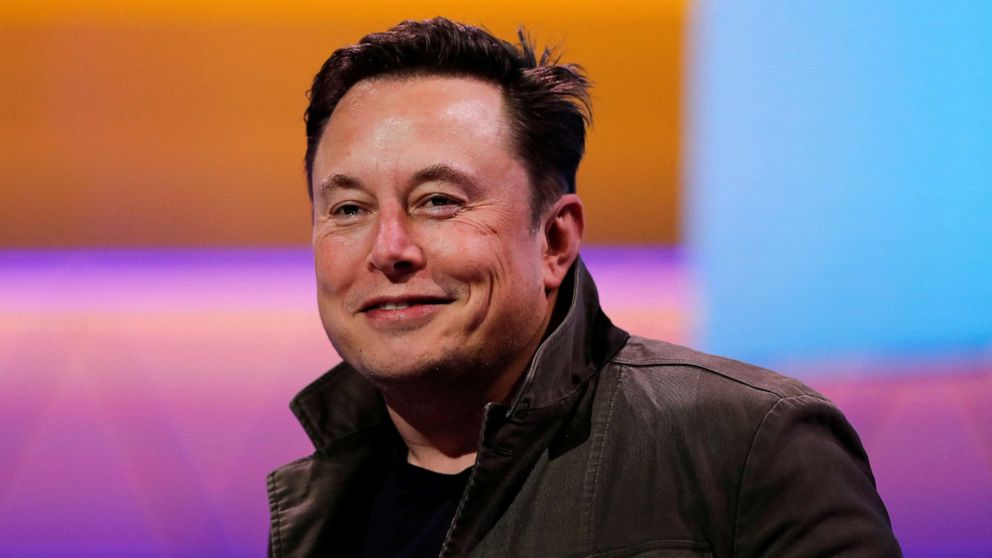
Twitter is set to implement controversial changes that will affect unverified users on its platform.
In a tweet on July 21, Twitter Support announced that they will be introducing daily direct message (DM) limits for unverified accounts in an effort to reduce spam in DMs.
However, the specific daily limits have not been disclosed.
The announcement has garnered a negative reaction from users, both verified and unverified, who have expressed their opinions on the upcoming change.
One prominent comment by a user named Adam received over 1000 likes and criticized the move, stating that limiting basic features for users goes against the essence of Twitter.
Some users believe that this change is merely a tactic to push more users into subscribing to Twitter Blue, the platform’s subscription service, rather than genuinely combating spam.
Others have argued that the new restrictions could backfire, with verified accounts potentially using the opportunity to spam DMs since they won’t be subject to the same limitations.
This has led some to speculate that the change is more about Twitter’s financial interests, aiming to drive more users to pay for verification to cover their operational costs.
These changes come amidst a series of radical alterations to the platform since Elon Musk took ownership.
On July 1, Twitter implemented significant rate limits on the number of daily posts users could see, aiming to prevent data scraping and system manipulation.
This move led to the emergence of Meta’s Twitter alternative, Threads, which initially gained considerable traction but eventually followed suit by introducing its own rate limits on July 18.
In addition to these changes, Twitter had previously rolled out content monetization settings in April, allowing creators to monetize all types of posts on a global scale.
With Twitter constantly evolving under new ownership and facing various reactions to its alterations, it remains to be seen how these latest changes will impact user behavior and the overall dynamics of the platform.
Other Stories:
China’s Digital Yuan Soars: Business Travelers Can Now Pay for Flights with CBDC
Vermont Department of Financial Regulation Issues Stark Crypto Warning
Dubai, UAE, July 23rd, 2023, Chainwire
The world’s first loyalty token tailored for telecom carrier businesses, Zeebu (ZBU), has been successfully listed on global cryptocurrency exchange LBank. From today, users of the LBank Exchange can officially trade the ZBU/USDT trading pair.
The milestone marks a significant step in the journey of Zeebu, whose goal is to empower telecom carriers with loyalty rewards and streamline invoice settlements within its ecosystem.
Listing Details:
- Trading Pair: ZBU/USDT
- Start Deposit: 07:00 on July 21, 2023 (UTC)
- Start Trading: 12:00 on July 21, 2023 (UTC)
- Start Withdrawal: 07:00 on July 22, 2023 (UTC)
The Zeebu loyalty token is specifically designed to revolutionize the telecom carrier industry by incentivizing and rewarding telecom carriers within its eponymous ecosystem. With a robust and redeemable loyalty token, Zeebu empowers carriers by simplifying and accelerating invoice settlements, among other advantages.
The ZBU token represents a reward for both customers and merchants, with every successful invoice settlement triggering token rewards, which can in turn be used to settle invoices or alternatively, swiftly converted on token exchanges.
The Zeebu platform’s commitment to creating a user-friendly loyalty and rewards system ensures a seamless fit with the unique demands of the telecom carrier market. By facilitating fast, frictionless transactions, Zeebu brings meaningful benefits to carriers and paves the way for a more interconnected telecom ecosystem.
By eliminating the need for traditional banking channels and intermediaries in cross-border settlements, the unified settlement platform unlocks significant cost savings for high-volume carrier businesses, potentially boosting their bottom line by up to 120%. Moreover, the removal of complexities ensures a streamlined settlement process to maximize efficiency.
All telecom carriers and enthusiasts are invited to join the Zeebu ecosystem and be a part of the telecom revolution. For more information, please visit www.zeebu.com.
About Zeebu
Zeebu is the world’s first loyalty token rewards system tailored for telecom carrier businesses. By transforming the settlement experience for users, Zeebu aims to empower telecom carriers with loyalty rewards, streamline invoice settlements, and unlock innovation.
Contact
Sneha Biradar
[email protected]

Nigerian social payments app Bundle has recently announced the discontinuation of its crypto exchange services.
The decision, communicated through a statement on July 20 on the company’s blog, comes as part of a strategic restructuring effort to shift focus towards their payment solution called Cashlink.
According to the statement, the move was prompted by the observed growth of the Web3 and blockchain community.
Bundle’s shareholders deemed it necessary to pivot the business to meet the evolving needs of the ecosystem, concentrating on payment solutions that align better with the current trends.
With this change, users will no longer be able to register on Bundle’s platform, deposit assets into their Bundle wallet, or execute asset swaps within the wallet (except for Tether (USDT)).
Furthermore, users won’t be able to withdraw their assets with Cashlink unless they have Nigerian naira or other fiat currencies stored within their Bundle wallet.
The company has set a deadline for users to withdraw their assets from the app. Users are advised to complete this process on or before September 12, 2023.
To facilitate a smooth withdrawal, Bundle has outlined specific steps for users in Nigeria, Ghana, Kenya, and other francophone-speaking countries.
READ MORE: Vermont Department of Financial Regulation Issues Stark Crypto Warning
For users in these locations, the withdrawal process involves transferring their funds from Bundle to any preferred exchange.
Nigerian users, in particular, have the option to withdraw their naira using Cashlink or conduct bank transfers through P2P express. If their balance is less than $10, an easily accessible link is provided to initiate the withdrawal process.
The closure of Bundle’s crypto exchange arm follows the footsteps of another Nigerian crypto payment startup, LazerPay, which ceased its operations in April and made its intellectual property available for sale.
In conclusion, Bundle’s decision to shut down its crypto exchange services is driven by the desire to adapt to the rapidly evolving crypto and blockchain landscape.
By focusing on their payment solution, Cashlink, the company aims to cater better to the needs of the Web3 community.
Users are urged to withdraw their assets before the designated deadline, and specific guidelines have been provided for a seamless withdrawal process in various countries.
Other Stories:
2023 Ranking: 4 Best Crypto Projects To Invest In
China’s Digital Yuan Soars: Business Travelers Can Now Pay for Flights with CBDC

OpenAI recently made an exciting announcement on July 21, unveiling its plan to launch an Android version of the popular AI chatbot, ChatGPT. Following its successful release to iOS users in May, the company is expanding its reach to the Android platform.
The announcement was made via a tweet, where OpenAI also provided a preorder page in the Google Play Store.
This page allows interested users to register for the app’s installation once it becomes available for download.
OpenAI’s decision to launch on Android comes amidst the company’s continuous efforts to enhance the safety and transparency of its AI tools. Measures like content watermarking have been implemented to address concerns about misinformation generated by AI.
One of the key features of the Android app is its improved security measures when compared to the web version.
Additionally, it will offer users the convenience of conversation history synchronization across devices, a feature already available on the iOS version.
The move to introduce both Android and iOS apps puts OpenAI in direct competition with Microsoft’s Bing Chat, which also utilizes OpenAI’s GPT-4 technology.
These apps present an alternative way for users to test large language models (LLMs) without the need for a web browser.
Coinciding with OpenAI’s Android launch, Google has been rolling out its own chatbot called Bard in the European Union and Brazil.
Moreover, other competitors, such as Anthropic with its Claude 2 assistant, have been emerging. Claude 2 offers functionalities that surpass OpenAI’s paid version of ChatGPT.
Despite its prior popularity, ChatGPT witnessed a decline in traffic in June, marking the first such occurrence since its launch.
In a broader context, the crypto community has warmly embraced ChatGPT and other AI chatbots, with some enthusiasts even utilizing the technology to develop new tokens.
In conclusion, OpenAI’s decision to launch an Android version of ChatGPT marks a significant step in expanding the availability of this popular AI chatbot.
With its enhanced security measures and convenient features, it competes directly with other players in the market.
As the AI landscape continues to evolve, it will be interesting to see how ChatGPT and similar technologies shape the future of communication and information exchange.
Other Stories:
China’s Digital Yuan Soars: Business Travelers Can Now Pay for Flights with CBDC
2023 Ranking: 4 Best Crypto Projects To Invest In
Vermont Department of Financial Regulation Issues Stark Crypto Warning

A plea agreement has been reached between the husband and wife implicated in the laundering of billions of dollars worth of Bitcoin linked to the 2016 Bitfinex hack and U.S. authorities.
Ilya Lichtenstein and Heather Morgan are set to appear for an arraignment and hearing on August 3, following records filed with the U.S. District Court for the District of Columbia on July 21.
This agreement comes as they faced charges of money laundering conspiracy and conspiracy to defraud the U.S., and as part of the deal, they will be forfeiting digital assets associated with the case.
The criminal activities stem from the notorious hack of the cryptocurrency exchange Bitfinex in August 2016, during which approximately 119,754 Bitcoin (BTC), valued at $29,841 at that time, were stolen.
Subsequently, Lichtenstein and Morgan allegedly engaged in a series of intricate transactions across multiple accounts and platforms, laundering over 94,643 BTC of the stolen funds.
In February 2022, the authorities arrested the couple in New York and seized the BTC.
At the time of the hack, the confiscated Bitcoin was worth roughly $54 million, but by the time of the current publication, the value had surged to $3.6 billion.
The arrests and the subsequent seizure of laundered Bitcoin marked the most significant financial seizure ever carried out by the U.S. Department of Justice.
Though some small amounts of BTC connected to the hack have been occasionally traced and moved, only a limited portion has been returned to Bitfinex by the authorities to aid in the restoration of victims’ funds.
READ MORE: Vermont Department of Financial Regulation Issues Stark Crypto Warning
This plea agreement may bring some semblance of closure to the complex case, allowing the legal process to move forward while addressing the consequences of the vast cryptocurrency theft and its impact on the victims.
However, it also highlights the need for continued vigilance and security measures within the cryptocurrency space to safeguard against such high-profile hacks and money laundering schemes.
Other Stories:
2023 Ranking: 4 Best Crypto Projects To Invest In
China’s Digital Yuan Soars: Business Travelers Can Now Pay for Flights with CBDC
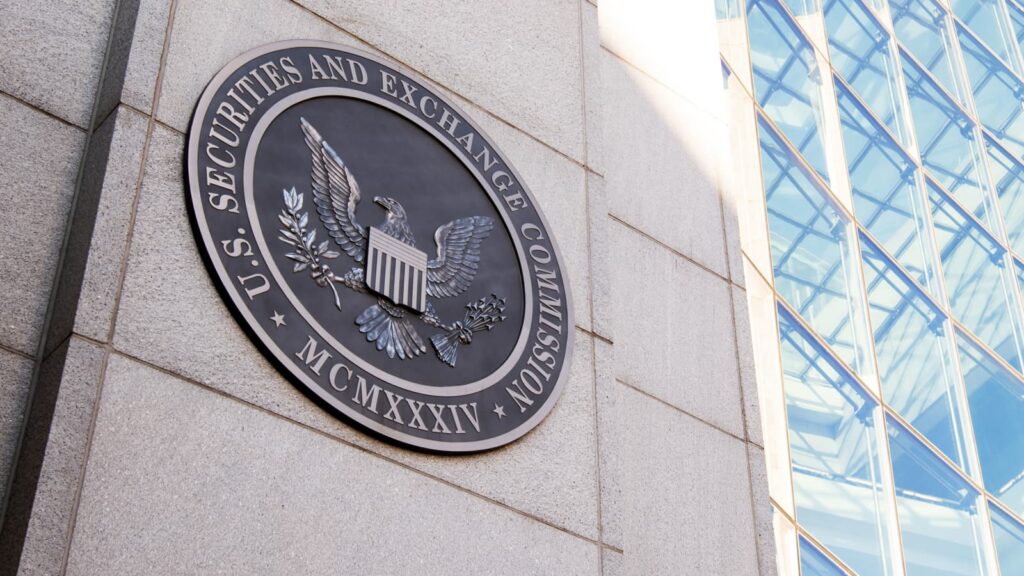
The United States Securities and Exchange Commission (SEC) is considering the possibility of appealing a recent ruling in the case against Ripple Labs, which determined that XRP (XRP) is not classified as a security when sold to retail investors.
The SEC is arguing that this ruling contradicts “fundamental securities laws principles,” including the Howey test, which is used to ascertain if something falls under the category of an investment contract.
The recent comments from the SEC on the Ripple Labs lawsuit were made during a separate lawsuit involving Terraform Labs and its founder, Do Kwon, who are accused of orchestrating a multi-billion dollar crypto asset securities fraud.
In response to a motion to dismiss from Terraform Labs, where the Ripple Labs ruling was referenced by the defendants, the SEC pointed out various issues it has with the court’s decision on XRP.
The SEC acknowledged that parts of the Ripple ruling support its claims in the Terraform Labs case but disagreed with the aspects related to the Programmatic and other sales.
READ MORE: China’s Digital Yuan Soars: Business Travelers Can Now Pay for Flights with CBDC
The SEC stated that these portions of the Ripple ruling were wrongly decided, and it does not want the court to follow them.
The SEC staff is considering available options for further review and intends to recommend that the SEC seek such review.
The SEC Chair, Gary Gensler, expressed disappointment over the court’s classification of XRP as not being a security when sold to retail investors.
He mentioned that while the court recognized XRP as a security for institutional investors, he was unhappy with the ruling regarding retail investors. The SEC is still evaluating the matter.
In a talk on artificial intelligence, Gensler was questioned about the need for clear regulations in the industry, to which he did not provide a specific answer.
It’s worth noting that the SEC’s stance on the Howey test has been questioned, as the agency’s own website has acknowledged that federal courts require commonality, but the SEC itself does not view commonality as a distinct part of Howey in its analysis.
In conclusion, the SEC is considering the possibility of appealing the ruling that XRP is not a security when sold to retail investors, arguing that it conflicts with established securities laws principles.
The agency’s statements come in the wake of its disappointment with the court’s decision and raise questions about the need for clearer regulations in the industry.
Other Stories:
Vermont Department of Financial Regulation Issues Stark Crypto Warning

In 2023, Bitcoin miners have been facing an uphill battle as the cryptocurrency market experiences volatility and uncertainty.
The past year has seen a surge in BTC being sent to centralized exchanges by miners to cover their operational costs.
The Bitcoin mining industry had a momentous year, earning a staggering $184 million from transaction fees in the second quarter of 2023.
This increase was attributed to the rebound in BTC’s price and the growing excitement surrounding BRC-20 tokens.
However, despite this revenue boost, prominent mining firms’ stocks outperformed Bitcoin’s market value by a significant margin, with their market capitalization rising by 257% since the start of the year.
To cope with the prolonged bear market, miners have been forced to sell mined BTC to cover expenses. June 2023 witnessed a record $128 million worth of Bitcoin sent to exchanges, leading experts to highlight miners’ tendency to cash out, cover costs, and secure profits.
Reports from Bitfinex indicate that mining companies are engaging in derisking strategies by offloading BTC to exchanges.
These strategies involve hedging activities in the derivatives market, conducting over-the-counter orders, or transferring funds through exchanges for various purposes.
READ MORE: Vermont Department of Financial Regulation Issues Stark Crypto Warning
Cointelegraph reached out to prominent mining companies for insights into the current mining climate. Hut8’s CEO, Jaime Leverton, revealed that the company had been pursuing a merger with USBTC, which hindered its capital-raising efforts through at-the-market offerings.
To meet its operating costs, Hut8 sold a portion of its Bitcoin holdings and newly produced BTC.
Nevertheless, Leverton assured that the company still held more than 9,100 BTC (equivalent to $271 million) and remained bullish on Bitcoin, maintaining one of the largest self-mined Bitcoin reserves among publicly traded companies.
Foundry’s senior manager, Charles Chong, pointed out that current market conditions differed from previous bull markets, where miners could hold onto their BTC due to abundant external capital and higher production margins.
Now, with scarce external funding and reduced margins of 15-30%, miners are compelled to liquidate their Bitcoin to sustain operations.
Chong also noted that comparing the current market to the bear markets following the 2017 and 2021 peaks was challenging.
Bitcoin mining operates in cycles, with miners overinvesting in ASIC mining equipment during favorable times.
The recent all-time high in Bitcoin mining difficulty indicated a robust network, with new, more efficient mining equipment entering the market, requiring miners to update their fleets to remain profitable.
Despite market challenges, industry participants’ continuous deployment of machines and increasing hashrates signals their optimism regarding Bitcoin’s future price appreciation.
Difficulty increases, driven by rising hashrates, reflect miners’ confidence in potential upside for BTC’s price.
Unfortunately, the tough market conditions led to the closure of some major mining firms, including Core Scientific, which filed for chapter 11 bankruptcy in June 2023.
However, the company managed to raise substantial capital to initiate a reorganization plan slated for September 2023.
Other Stories:
China’s Digital Yuan Soars: Business Travelers Can Now Pay for Flights with CBDC